

- Industry Size (2026)
- USD 37.9 Bn
- Forecast (2036)
- USD 59.1 Bn
- CAGR (2026 to 2036)
- 4.5%
Demand for Petroleum Liquid Feedstock in United Kingdom Forecast and Outlook 2026 to 2036
The petroleum liquid feedstock market in the United Kingdom is forecast to grow from USD 37.9 billion in 2026 to USD 59.1 billion by 2036, at a CAGR of 4.5%. Regional demand concentration influences growth outcomes by aligning feedstock availability with refining and petrochemical capacity in established industrial hubs, with the highest demand originating from industrial hubs where petroleum feedstock is essential for refining and chemical production. Uneven regional adoption reflects differences in refinery density, port-linked crude access, and devolved energy policy priorities across UK regions, leading to varying growth rates.
Areas with cost advantages in logistics or access to raw materials are expected to capture a larger share of the market, as they offer more competitive pricing and efficient supply chains. Companies with operations in regions with favorable geographic advantages will have a strategic edge, allowing them to leverage lower transportation costs and reduce production expenses. As such, understanding regional dynamics will be crucial for vendors aiming to optimize market positioning and profitability.
Quick Stats for the Demand for Petroleum Liquid Feedstock in United Kingdom
- Petroleum Liquid Feedstock in United Kingdom Value (2026): USD 37.9 billion
- Petroleum Liquid Feedstock in United Kingdom Forecast Value (2036): USD 59.1 billion
- Petroleum Liquid Feedstock in United Kingdom Forecast CAGR (2026 to 2036): 4.5%
- Petroleum Liquid Feedstock in United Kingdom Leading Segment: Crude Oil-Derived Feedstock (63.2% share)
- Key Growth Regions of Petroleum Liquid Feedstock in United Kingdom: England
- Top Players of Petroleum Liquid Feedstock in United Kingdom: ExxonMobil Corporation, Saudi Aramco, Royal Dutch Shell plc, TotalEnergies SE, Reliance Industries Limited
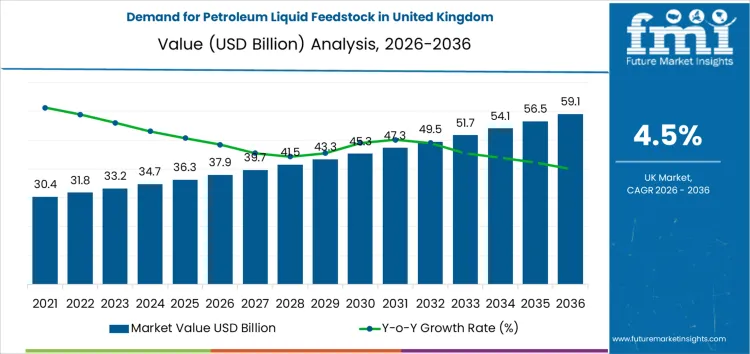
What is the Growth Forecast for Petroleum Liquid Feedstock in United Kingdom through 2036?
Demand for petroleum liquid feedstock in the United Kingdom is expected to expand steadily through the forecast period, supported by its continued importance in downstream chemical production and industrial manufacturing. Refineries and petrochemical operators will maintain consistent demand as petroleum-derived feedstocks remain essential for producing fuels, solvents, polymers, and other key industrial inputs. Growth is expected to stay moderate, reflecting stable industrial consumption and ongoing supply chain reliance on conventional feedstocks.
However, the competitive environment is shifting as renewable feedstocks and low-carbon alternatives gain traction across the UK’s energy and materials landscape. Policy pressure, sustainability targets, and investment in circular and bio-based inputs are likely to gradually reduce petroleum’s relative dominance, especially in segments where substitutes become commercially viable. Despite this, petroleum liquid feedstock will retain a strong position in the near to mid-term, supported by existing infrastructure, processing capabilities, and industrial dependence during the transition period.
Key Takeaways for Demand for Petroleum Liquid Feedstock in United Kingdom
| Metric | Value |
|---|---|
| Industry Sales Value (2026) | USD 37.9 billion |
| Industry Forecast Value (2036) | USD 59.1 billion |
| Industry Forecast CAGR (2026 to 2036) | 4.5% |
Why is Demand for Petroleum Liquid Feedstock in United Kingdom Growing?
Demand for petroleum liquid feedstock in the United Kingdom has expanded from historical levels as the refining and petrochemical sectors adjusted to evolving energy and industrial needs. Historically, petroleum liquid feedstock was primarily used as a raw material in crude oil refineries to produce fuels such as gasoline, diesel, and jet fuel. Over recent years, the structure of demand in the UK has reflected broader changes in energy consumption patterns and industrial output. The refining sector continued to require significant volumes of liquid feedstock to meet domestic fuel requirements and to support export activities.
Industrial users of petrochemicals also relied on petroleum feedstock as a base for producing intermediates used in plastics, solvents, and other chemical products. Shifts in global crude patterns and trading flows influenced the types and volumes of feedstock processed in UK facilities, with refiners adjusting operations to optimise yields in response to changing market conditions. These historical patterns established a baseline demand for petroleum liquid feedstock linked to both domestic energy needs and downstream industrial activities.
Looking ahead, demand for petroleum liquid feedstock in the United Kingdom is expected to evolve as energy transition and regulatory factors influence the broader energy landscape. While traditional fuel production will remain a significant driver in the near term, growth rates may moderate as alternative energy sources and electrification reduce reliance on liquid fuels in segments such as light duty transport. Petrochemical production that uses petroleum feedstock is likely to sustain demand, particularly for applications where alternatives are limited.
Investment in technologies that improve refining efficiency and reduce carbon intensity may support continued use of liquid feedstock. In addition, evolving trade patterns and shifting regional supply sources will shape feedstock demand as UK refiners and chemical producers adapt to global market dynamics. Regulatory focus on emissions and carbon pricing could influence product mixes and feedstock choices, encouraging incremental changes in how petroleum liquids are sourced and processed.
What Are the Key Segments in the Demand for Petroleum Liquid Feedstock in the United Kingdom?
Demand for petroleum liquid feedstock in the United Kingdom is primarily driven by source type and product type. Crude oil-derived feedstock leads the source type segment with 63.2%, while heavy naphtha dominates the product type segment at 35%. Other sources like natural gas-derived feedstock and coal- or biomass-to-liquids, along with product types such as light naphtha and gas oil, also play significant roles. These segments are influenced by evolving energy policies, industrial needs, and shifts toward cleaner energy alternatives.
What Is the Source Type Segment of Demand for Petroleum Liquid Feedstock in the United Kingdom?
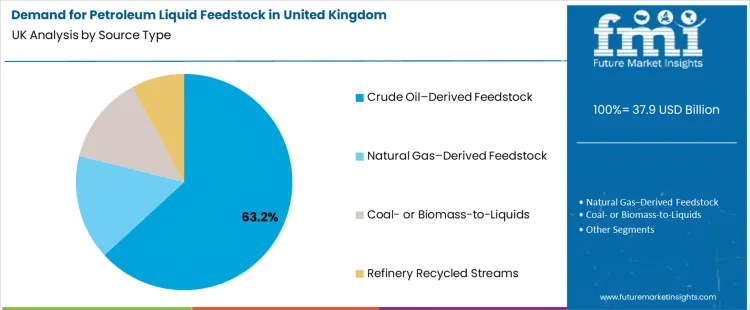
The source type segment for petroleum liquid feedstock in the United Kingdom is dominated by crude oil-derived feedstock, which makes up 63.2% of the market share. Crude oil remains the primary source for liquid feedstocks, supporting industries such as petrochemicals, refining, and energy production. Crude oil's high availability and energy density make it the most cost-effective and widely used source for producing various feedstocks, including naphtha, gas oil, and natural gas liquids. The continued reliance on crude oil highlights the UK’s dependency on global oil markets and refining capacities. In contrast, natural gas-derived feedstock represents a smaller portion of the market but is gaining attention due to its cleaner-burning properties and use in the production of liquefied natural gas (LNG) and other petrochemical products.
The use of coal- or biomass-to-liquids feedstock is more niche, primarily driven by sustainability efforts and the desire to reduce carbon emissions in fuel production. This feedstock type involves converting coal or biomass into liquid fuels through processes such as Fischer-Tropsch synthesis, though it remains less competitive compared to crude oil. Refinery recycled streams, while still a crucial source, represent a smaller fraction of the market. These streams are derived from byproducts of refining processes and are often used within the same refinery or sold for use in other industries. The demand for alternative feedstock sources continues to grow, driven by environmental concerns and the push for more sustainable fuel production methods, but crude oil remains the dominant feedstock in the UK.
What Is the Product Type Segment of Demand for Petroleum Liquid Feedstock in the United Kingdom?
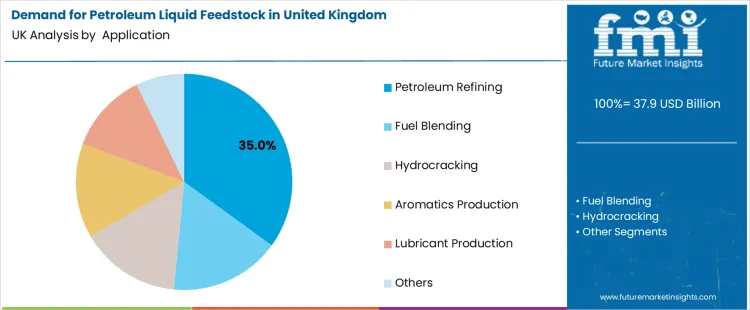
The product type segment for petroleum liquid feedstock in the United Kingdom is led by heavy naphtha, which captures 35% of the market share. Heavy naphtha is a critical component in the production of gasoline and petrochemical products, making it essential to the UK’s energy and manufacturing sectors. It is used in the production of both fuels and as a feedstock for further refining into higher-value products such as plastics and synthetic materials. The demand for heavy naphtha reflects the continued reliance on gasoline and the importance of petrochemicals in various industrial processes. Light naphtha follows as another significant product type, used primarily in gasoline blending and as a feedstock for the production of ethylene, propylene, and other valuable petrochemicals.
Gas oil, used in the production of diesel and heating oil, also plays a crucial role in the UK’s energy infrastructure, though its demand is more sensitive to shifts toward cleaner fuels and energy alternatives. Natural gas liquids (NGLs), which include ethane, propane, and butane, are used in the petrochemical industry for producing a range of products, including plastics and synthetic rubbers. The demand for NGLs continues to rise as industries seek to diversify their feedstock options and reduce dependence on crude oil. The variety of product types reflects the need for different refining processes to meet the demands of the UK’s energy, transportation, and manufacturing sectors. Each product type plays a unique role in fueling the UK economy, with heavy naphtha leading due to its broad industrial use and critical role in both fuels and petrochemicals.
What are the Key Dynamics in the Demand for Petroleum Liquid Feedstock in the United Kingdom?
Demand for petroleum liquid feedstock in the United Kingdom is driven by its essential role in refining and petrochemical production. Liquid feedstocks, such as naphtha and gas oil, are processed into transportation fuels, solvents, and chemical intermediates. UK refineries rely on these feedstocks, which are either sourced domestically or imported to support refinery output. The demand for petroleum liquid feedstock is influenced by fuel consumption in transport sectors, the output of petrochemical industries, and evolving energy policies. Furthermore, global supply dynamics and shifts in energy demand play a key role in shaping the market.
What are the Key Drivers for Petroleum Liquid Feedstock Demand in the United Kingdom?
Several factors are contributing to the demand for petroleum liquid feedstock in the United Kingdom. The demand for refined fuels, particularly for road transport, aviation, and marine sectors, directly supports the need for liquid feedstock inputs. Increased use of petrochemical products such as plastics, solvents, and other industrial chemicals drives feedstock demand within the refining sector. The need to maintain domestic refining capacity and meet energy security requirements prompts continued reliance on liquid feedstocks. Additionally, global trade in crude oil and refined products contributes to ensuring a steady supply of feedstock for UK refineries.
What are the Restraints on Petroleum Liquid Feedstock Demand in the United Kingdom?
Despite strong demand, the petroleum liquid feedstock market in the United Kingdom faces several constraints. Environmental regulations aimed at reducing carbon emissions and promoting cleaner energy sources are reducing the reliance on traditional petroleum feedstocks. Volatile global crude oil prices can create uncertainty, affecting procurement costs and refinery decisions on feedstock processing. The growth of alternative fuels, such as biofuels and electric vehicle adoption, limits future demand for conventional petroleum-based feedstocks. Furthermore, challenges associated with ageing refinery infrastructure and post-Brexit trade complexities impact the flexibility and sourcing of feedstocks, potentially constraining long-term market stability.
What are the Key Trends in Petroleum Liquid Feedstock Demand in the United Kingdom?
Key trends influencing the demand for petroleum liquid feedstock in the United Kingdom include the growing integration of petrochemical feedstocks, with increasing demand for chemical intermediates in the production of plastics and industrial products. Refining technology advancements are aimed at balancing the need for low-carbon fuels while meeting regulatory requirements, which impacts the types and volumes of feedstocks processed. The transition towards renewable and alternative liquid fuels, encouraged by policy changes, is also influencing feedstock demand, as long-term shifts in energy sources shape the broader market landscape.
What is the Country-Wise Demand for Petroleum Liquid Feedstock in the United Kingdom?
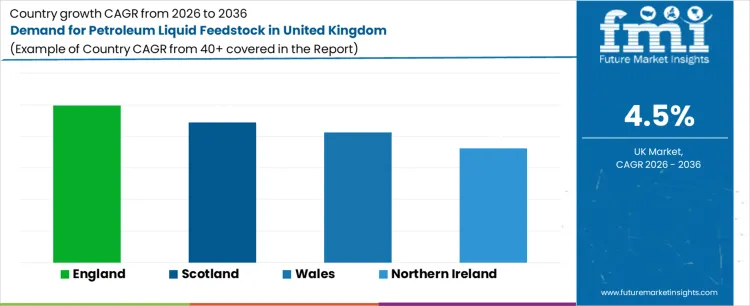
The country-wise demand for petroleum liquid feedstock in the United Kingdom shows varying levels of adoption across different regions. England leads the market, supported by its large industrial base, including refining, petrochemicals, and manufacturing. Scotland, Wales, and Northern Ireland also demonstrate steady demand, driven by the energy and chemical industries. Petroleum liquid feedstock plays a crucial role in the production of fuels, lubricants, and chemicals, and its demand is influenced by the growth of these sectors. While England remains the dominant market, the increasing reliance on petroleum-based products for industrial and commercial applications is fueling steady growth across all regions.
| Country | CAGR (2026 to 2036) |
|---|---|
| England | 5.0% |
| Scotland | 4.4% |
| Wales | 4.1% |
| Northern Ireland | 3.6% |
What is Driving the Demand for Petroleum Liquid Feedstock in England?
England records the strongest growth trajectory, with petroleum liquid feedstock demand expanding at a 5.0% CAGR over the 2026 to 2036 period. As the largest market, England's demand is driven by its extensive industrial sector, including petroleum refining, petrochemical production, and energy generation. Petroleum liquid feedstock is used as a raw material in the production of fuels, lubricants, and chemicals, all of which are essential for both industrial and commercial applications. The country’s significant refining capacity, coupled with its strategic location for energy trade, continues to position England as the leading market for petroleum liquid feedstock. Furthermore, England's growing demand for transportation fuels and chemical products is expected to sustain market growth. As industries evolve and demand for more energy-efficient and cost-effective solutions rises, the need for petroleum liquid feedstock in England will likely remain strong, driven by continued industrialization and energy consumption.
How is the Demand for Petroleum Liquid Feedstock Performing in Scotland?
Petroleum liquid feedstock demand in Scotland is forecast to increase steadily, registering a 4.4% CAGR between 2026 and 2036. Scotland’s oil and gas industry, which plays a central role in the regional economy, is the primary driver of this demand. Petroleum liquid feedstock is crucial for refining and petrochemical production, with applications spanning fuels, lubricants, and chemicals. The Scottish refining sector continues to expand, with growing capacity to produce various petroleum products for both domestic and export markets. Additionally, as demand for energy and chemical products rises in Scotland, the need for petroleum liquid feedstock to meet industrial requirements continues to increase. As the transition to cleaner energy sources progresses, the reliance on petroleum-based products will likely persist, albeit with a gradual shift towards more sustainable alternatives. This is expected to support continued growth in demand for petroleum liquid feedstock in Scotland.
What Are the Growth Drivers for Petroleum Liquid Feedstock in Wales?
Growth in Wales remains moderate, as petroleum liquid feedstock demand advances at a 4.1% CAGR through the forecast window. The primary drivers of this demand are the energy and chemical industries, where petroleum liquid feedstock is essential for refining and producing various fuels, lubricants, and chemicals. The Welsh manufacturing sector, which relies on petroleum-based products for its industrial operations, continues to grow, supporting the need for feedstock materials. Additionally, Wales’ increasing focus on energy efficiency and sustainable production methods is likely to maintain demand for petroleum products, particularly in sectors such as transportation and industrial manufacturing. As the market for chemical products and industrial energy solutions grows, the demand for petroleum liquid feedstock in Wales is expected to increase steadily. Although smaller than in England and Scotland, the growing industrial base in Wales will continue to support this demand over the next decade.
What is the Outlook for Petroleum Liquid Feedstock Demand in Northern Ireland?
Compared with other UK regions, Northern Ireland shows slower momentum, with petroleum liquid feedstock demand rising at a 3.6% CAGR from 2026 to 2036. While Northern Ireland has a smaller market share compared to the rest of the United Kingdom, its demand is driven by the region’s refining capacity and energy needs. Petroleum liquid feedstock is used in the production of fuels and chemicals, and its demand is particularly strong in the transportation and manufacturing sectors. Northern Ireland’s ongoing reliance on petroleum-based products, coupled with its manufacturing base, supports the steady demand for feedstock materials. However, as the region continues to explore renewable energy sources, the demand for petroleum liquid feedstock may grow at a slower rate compared to other parts of the UK. Nevertheless, the continued need for petroleum-based products for industrial and commercial applications will ensure a steady market for petroleum liquid feedstock in Northern Ireland.
What is the Competitive Landscape for Demand for Petroleum Liquid Feedstock in the United Kingdom?
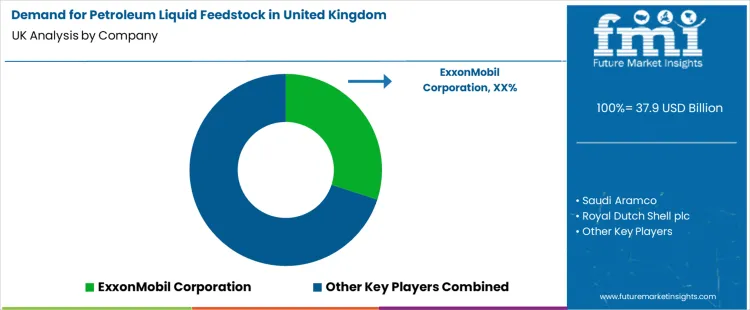
Demand for petroleum liquid feedstock in the United Kingdom is underpinned by refining needs to supply transport fuels, petrochemical inputs, and industrial fuels across domestic and export markets. Demand is sustained by the existing refining infrastructure, including major facilities that process crude into naphtha, gas oil, and other liquid feedstocks used in fuel and chemical production. United Kingdom demand shows moderate growth linked to refinery operations that supply both domestic fuel requirements and feedstock for petrochemical production. The United Kingdom imports a significant share of crude and feedstock to support these operations as regional refining capacity adjusts to market conditions and regulatory requirements. Domestic energy data indicate that oil remains a major contributor to energy demand, with petroleum products meeting transport and industrial consumption.
ExxonMobil Corporation holds a leading position through integrated exploration, refining, and distribution channels, anchored by major refinery assets that supply petroleum liquid feedstocks into UK markets. Product specifications and supply terms are documented in corporate materials used by procurement teams. Saudi Aramco competes through strategic crude supply arrangements and term contracts with refiners, influencing feedstock availability and pricing. Royal Dutch Shell plc supports demand via refining throughput and commercial supply agreements, with technical briefs that detail feedstock quality metrics relevant for downstream processing.
Total Energies SE participates through refining operations and global crude sourcing that feeds into UK refining requirements. Reliance Industries Limited, while primarily based outside Europe, influences feedstock supply through global crude purchases and spot cargo deliveries that adjust feedstock flows into European refining hubs. Buyers in the United Kingdom evaluate suppliers based on documented feedstock quality attributes, delivery reliability, and contractual terms that appear in supplier documentation used during tender evaluations.
Key Players of the Demand for Petroleum Liquid Feedstock in United Kingdom
- ExxonMobil Corporation
- Saudi Aramco
- Royal Dutch Shell plc
- TotalEnergies SE
- Reliance Industries Limited
Scope of the Report
| Items | Values |
|---|---|
| Quantitative Units (2026) | USD Billion |
| Product Type | Heavy Naphtha, Light Naphtha, Gas Oil, Natural Gas Liquids, Others |
| Application | Petroleum Refining, Fuel Blending, Hydrocracking, Aromatics Production, Lubricant Production, Others |
| Source Type | Crude Oil-Derived Feedstock, Natural Gas-Derived Feedstock, Coal- or Biomass-to-Liquids, Refinery Recycled Streams |
| Companies | ExxonMobil Corporation, Saudi Aramco, Royal Dutch Shell plc, TotalEnergies SE, Reliance Industries Limited |
| Regions Covered | United Kingdom |
| Countries Covered | England, Scotland, Wales, Northern Ireland |
| Additional Attributes | Dollar by sales by product type, application, source type, and region. Includes market trends towards energy efficiency, regulatory compliance, and the role of petroleum liquid feedstocks in various industrial applications. |
Demand for Petroleum Liquid Feedstock in United Kingdom
Product Type
- Heavy Naphtha
- Light Naphtha
- Gas Oil
- Natural Gas Liquids
Application
- Petroleum Refining
- Fuel Blending
- Hydrocracking
- Aromatics Production
- Lubricant Production
- Others
Source Type
- Crude Oil-Derived Feedstock
- Natural Gas-Derived Feedstock
- Coal- or Biomass-to-Liquids
- Refinery Recycled Streams
Countries
- England
- Scotland
- Wales
- Northern Ireland
Bibliography
- Department for Energy Secur
- ity and Net Zero. (2025). Digest of UK energy statistics 2025: Chapter 3, oil and oil products. Department for Energy Security and Net Zero.
- House of Commons Library. (2025). The future of the oil refining sector (Commons Library Debate Pack CDP-2025-0235). UK Parliament.
- International Energy Agency. (2024).
- Oil 2024: Analysis and forecast to 2030. International Energy Agency.
Frequently Asked Questions
How big is the demand for petroleum liquid feedstock in United Kingdom in 2026?
The demand for petroleum liquid feedstock in United Kingdom is estimated to be valued at USD 37.9 billion in 2026.
What will be the size of petroleum liquid feedstock in United Kingdom in 2036?
The market size for the petroleum liquid feedstock in United Kingdom is projected to reach USD 59.1 billion by 2036.
How much will be the demand for petroleum liquid feedstock in United Kingdom growth between 2026 and 2036?
The demand for petroleum liquid feedstock in United Kingdom is expected to grow at a 4.5% CAGR between 2026 and 2036.
What are the key product types in the petroleum liquid feedstock in United Kingdom?
The key product types in petroleum liquid feedstock in United Kingdom are heavy naphtha, light naphtha, gas oil and natural gas liquids.
Which application segment is expected to contribute significant share in the petroleum liquid feedstock in United Kingdom in 2026?
In terms of application, petroleum refining segment is expected to command 35.0% share in the petroleum liquid feedstock in United Kingdom in 2026.
Preview the report firsthand - request a free sample
Get SampleGet the brochure for pricing and purchase details.
Get PDFTable of Content
- Executive Summary
- UK Market Outlook
- Demand-side Trends
- Supply-side Trends
- Technology Roadmap Analysis
- Analysis and Recommendations
- Market Overview
- Market Coverage / Taxonomy
- Market Definition / Scope / Limitations
- Market Background
- Market Dynamics
- Drivers
- Restraints
- Opportunity
- Trends
- Scenario Forecast
- Demand in Optimistic Scenario
- Demand in Likely Scenario
- Demand in Conservative Scenario
- Opportunity Map Analysis
- Product Life Cycle Analysis
- Supply Chain Analysis
- Investment Feasibility Matrix
- Value Chain Analysis
- PESTLE and Porter’s Analysis
- Regulatory Landscape
- Regional Parent Market Outlook
- Production and Consumption Statistics
- Import and Export Statistics
- Market Dynamics
- UK Market Analysis 2021 to 2025 and Forecast, 2026 to 2036
- Historical Market Size Value (USD Million) Analysis, 2021 to 2025
- Current and Future Market Size Value (USD Million) Projections, 2026 to 2036
- Y-o-Y Growth Trend Analysis
- Absolute $ Opportunity Analysis
- UK Market Pricing Analysis 2021 to 2025 and Forecast 2026 to 2036
- UK Market Analysis 2021 to 2025 and Forecast 2026 to 2036, By Product Type
- Introduction / Key Findings
- Historical Market Size Value (USD Million) Analysis By Product Type , 2021 to 2025
- Current and Future Market Size Value (USD Million) Analysis and Forecast By Product Type , 2026 to 2036
- Heavy Naphtha
- Light Naphtha
- Gas Oil
- Natural Gas Liquids
- Heavy Naphtha
- Y-o-Y Growth Trend Analysis By Product Type , 2021 to 2025
- Absolute $ Opportunity Analysis By Product Type , 2026 to 2036
- UK Market Analysis 2021 to 2025 and Forecast 2026 to 2036, By Application
- Introduction / Key Findings
- Historical Market Size Value (USD Million) Analysis By Application, 2021 to 2025
- Current and Future Market Size Value (USD Million) Analysis and Forecast By Application, 2026 to 2036
- Petroleum Refining
- Fuel Blending
- Hydrocracking
- Aromatics Production
- Lubricant Production
- Others
- Petroleum Refining
- Y-o-Y Growth Trend Analysis By Application, 2021 to 2025
- Absolute $ Opportunity Analysis By Application, 2026 to 2036
- UK Market Analysis 2021 to 2025 and Forecast 2026 to 2036, By Source Type
- Introduction / Key Findings
- Historical Market Size Value (USD Million) Analysis By Source Type, 2021 to 2025
- Current and Future Market Size Value (USD Million) Analysis and Forecast By Source Type, 2026 to 2036
- Crude Oil-Derived Feedstock
- Natural Gas-Derived Feedstock
- Coal- or Biomass-to-Liquids
- Refinery Recycled Streams
- Crude Oil-Derived Feedstock
- Y-o-Y Growth Trend Analysis By Source Type, 2021 to 2025
- Absolute $ Opportunity Analysis By Source Type, 2026 to 2036
- Market Structure Analysis
- Competition Dashboard
- Competition Benchmarking
- Market Share Analysis of Top Players
- By Regional
- By Product Type
- By Application
- By Source Type
- Competition Analysis
- Competition Deep Dive
- ExxonMobil Corporation
- Overview
- Product Portfolio
- Profitability by Market Segments (Product/Age /Sales Channel/Region)
- Sales Footprint
- Strategy Overview
- Marketing Strategy
- Product Strategy
- Channel Strategy
- Saudi Aramco
- Royal Dutch Shell plc
- TotalEnergies SE
- Reliance Industries Limited
- ExxonMobil Corporation
- Competition Deep Dive
- Assumptions & Acronyms Used
- Research Methodology


