

- Industry Size (2026)
- USD 33.7 Mn
- Forecast (2036)
- USD 52.4 Mn
- CAGR (2026 to 2036)
- 4.5%
Demand for Thermostatic Radiator Valves in United Kingdom Forecast and Outlook 2026 to 2036
The thermostatic radiator valves (TRV) market in the United Kingdom is projected to grow from USD 33.7 million in 2026 to USD 52.4 million by 2036, at a CAGR of 4.5%. This category holds strategic importance within the broader heating and HVAC industry due to its role in optimizing energy consumption and enhancing. TRVs are essential components in regulating temperature and reducing energy costs, making them critical in the context of increasing sustainability regulations and rising energy prices. Control points such as product innovation, regulatory compliance, and supply chain efficiency will shape the competitive landscape.
Dependency on skilled labor, advanced manufacturing technologies, and raw materials also plays a crucial role in shaping production capabilities. Strategic trade-offs will arise between cost efficiency and product performance, as companies balance market demands for energy-saving solutions with the need to maintain competitive pricing. Vendors who can navigate these complexities will position themselves for sustained success.
Quick Stats for the Demand for Thermostatic Radiator Valves in United Kingdom
- Thermostatic Radiator Valves in United Kingdom Value (2026): USD 33.7 million
- Thermostatic Radiator Valves in United Kingdom Forecast Value (2036): USD 52.4 million
- Thermostatic Radiator Valves in United Kingdom Forecast CAGR (2026 to 2036): 4.5%
- Thermostatic Radiator Valves in United Kingdom Leading Segment: Residential (70% share)
- Key Growth Regions of Thermostatic Radiator Valves in United Kingdom: England
- Top Players of Thermostatic Radiator Valves in United Kingdom: Danfoss A/S, Honeywell International Inc., Schneider Electric SE, IMI Hydronic Engineering, Siemens AG
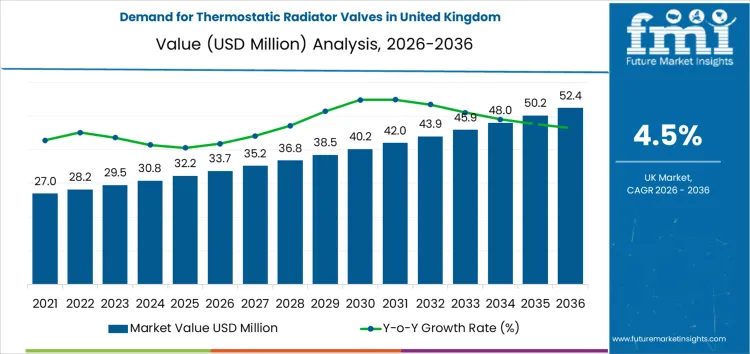
What is the Growth Forecast for Thermostatic Radiator Valves in United Kingdom through 2036?
Demand for thermostatic radiator valves in the United Kingdom is expected to strengthen steadily through the forecast period, driven by the country’s continued focus on improving heating efficiency in residential and commercial buildings. As households and building operators look for practical ways to reduce heating costs without major system upgrades, thermostatic radiator valves remain a simple and widely adopted solution. Replacement demand will also remain strong, supported by ongoing refurbishment of older housing stock and gradual modernization of heating controls across rental and owner-occupied properties.
Growth is expected to remain stable overall, though minor fluctuations may emerge as energy policy and heating technology evolve. Rising adoption of smart heating ecosystems, including connected thermostats and zoning solutions, is creating opportunities for more advanced valve systems that offer better control and user convenience. At the same time, shifts in energy prices and tighter building efficiency requirements can influence purchase decisions year to year. Manufacturers that provide reliable valves with smart compatibility, easy installation, and proven energy-saving performance are likely to benefit most as the UK continues to prioritize lower energy consumption and improved indoor comfort.
Key Takeaways for Demand for Thermostatic Radiator Valves in United Kingdom
| Metric | Value |
|---|---|
| Industry Sales Value (2026) | USD 33.7 million |
| Industry Forecast Value (2036) | USD 52.4 million |
| Industry Forecast CAGR (2026 to 2036) | 4.5% |
Why is Demand for Thermostatic Radiator Valves in United Kingdom Growing?
Demand for thermostatic radiator valves in the United Kingdom has increased from earlier levels as building energy efficiency and heating control requirements evolved. Historically, thermostatic radiator valves were installed mainly in new residential construction to provide basic room by room temperature regulation and improve comfort. Over recent years, regulatory shifts aimed at reducing energy consumption in buildings have influenced heating system upgrades across both domestic and commercial properties. Owners and facilities managers sought improved control over heat distribution, driven by higher energy costs and a desire to reduce fuel use.
The heating, ventilation and air conditioning (HVAC) sector in the UK responded with broader adoption of thermostatic radiator valves that allow occupants to regulate individual radiator output. Maintenance and retrofit activity in older properties also contributed to demand, as replacing manual valves with thermostatic versions became a practical measure for enhancing performance and reducing wasted energy. Installed base growth was supported by a network of manufacturers and distributors able to supply a range of valve sizes and performance features for varied building types.
Looking ahead, demand for thermostatic radiator valves in the United Kingdom is expected to continue rising as energy performance standards and consumer expectations evolve. Upcoming building regulations and energy related building codes encourage more precise heating control in both new installations and refurbishment projects. Greater emphasis on lowering operational heating costs in the face of fluctuating energy prices will support further uptake.
Smart home integration and compatibility with advanced heating controls could broaden appeal among technology oriented end users seeking automated temperature regulation. Commercial property owners looking to demonstrate energy performance credentials may also specify thermostatic radiator valves as part of broader HVAC optimization strategies. The combination of regulatory influence, ongoing retrofit activity, and heightened focus on efficient heat management points to sustained demand growth.
What Are the Key Segments in the Demand for Thermostatic Radiator Valves in the United Kingdom?
Demand for thermostatic radiator valves (TRVs) in the United Kingdom is influenced by application and distribution channel. Residential applications dominate the market, accounting for 70%, while offline distribution leads the way with 61.4% of market share. Commercial applications, along with online and OEM supply channels, also contribute significantly. These trends reflect a growing interest in energy efficiency and climate control solutions across both residential and commercial sectors, with distribution preferences varying by customer type.
What Is the Application Segment of Demand for Thermostatic Radiator Valves in the United Kingdom?
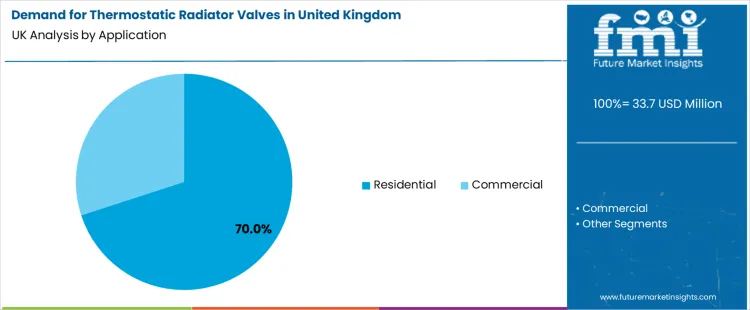
The application segment for thermostatic radiator valves (TRVs) in the United Kingdom is predominantly led by the residential sector, which holds 70% of the market share. Residential demand is driven by the increasing focus on energy efficiency and temperature control in homes. TRVs are widely used in residential heating systems to regulate the temperature of individual radiators, enabling homeowners to manage energy use more effectively and reduce heating costs. As energy prices rise and sustainability becomes a growing concern, the adoption of TRVs in residential buildings is expected to continue to rise, particularly in new builds and retrofits.
The commercial sector also plays a role, though to a lesser extent. In commercial buildings, TRVs are often installed to optimize heating systems in offices, hotels, and retail spaces, where efficient temperature regulation can enhance comfort and reduce operational costs. The demand for TRVs in the commercial sector is largely driven by the need for temperature control in larger, often more complex HVAC systems. As building regulations become more stringent, both residential and commercial sectors are expected to increasingly rely on TRVs to meet energy efficiency standards and reduce environmental impact. The continued growth in both applications highlights the versatility and importance of TRVs in improving heating system efficiency across various types of properties.
What Is the Distribution Channel Segment of Demand for Thermostatic Radiator Valves in the United Kingdom?
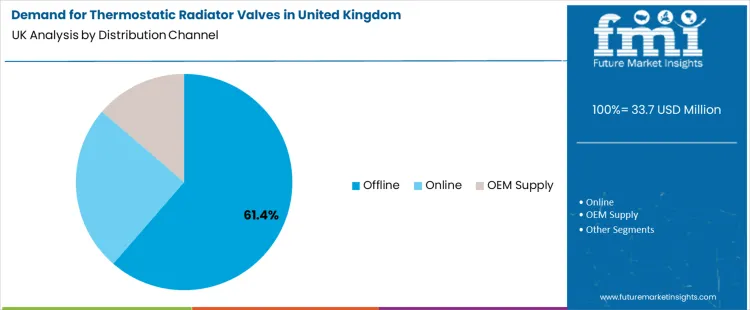
The distribution channel segment for thermostatic radiator valves in the United Kingdom is dominated by offline channels, which account for 61.4% of the market. Offline retail channels, including hardware stores, home improvement centers, and plumbing supply outlets, remain the primary source for consumers and professionals purchasing TRVs. These channels offer customers the opportunity to see and purchase the valves in person, providing access to a variety of brands and models for immediate installation or stock. The offline market is particularly strong in residential applications, where homeowners and contractors seek reliable, locally available products for heating system upgrades or new installations.
Online channels follow as an important segment, driven by the convenience and variety they offer. Online sales allow for easy comparison shopping and direct-to-door delivery, catering to consumers who prefer to make purchases from home. This channel is growing rapidly, particularly among residential customers who are comfortable with online shopping for home improvement products. OEM supply channels, though a smaller segment, are significant for large-scale installations and new building projects, where TRVs are integrated into the heating systems of newly constructed homes and commercial buildings. The increasing focus on energy efficiency and comfort is expected to further drive demand across all distribution channels, with offline channels maintaining their stronghold while online and OEM supply channels continue to grow.
What are the Key Dynamics in the Demand for Thermostatic Radiator Valves in the United Kingdom?
Demand for thermostatic radiator valves (TRVs) in the United Kingdom is shaped by building heating requirements, regulatory emphasis on energy efficiency, and the retrofit market for existing boiler systems. TRVs are integral to hydronic heating systems, allowing room by room temperature control and reducing energy consumption. Investment in residential and commercial refurbishment supports uptake, as owners seek lower operating costs. Government and industry guidelines on energy performance in buildings influence specification of TRVs. Seasonal demand patterns relate to colder months when heating system upgrades and replacements are typically scheduled.
What are the Key Drivers for Thermostatic Radiator Valve Demand in the United Kingdom?
Several factors drive demand for thermostatic radiator valves in the United Kingdom. National and local energy efficiency standards encourage the installation of controls that reduce fuel use and carbon emissions, making TRVs attractive to installers and building owners. Rising energy prices increase the appeal of devices that improve heat regulation and lower utility bills. Growth in home improvement and retrofit activity in both owner occupied and rented housing sectors supports replacement of outdated manual radiator valves with thermostatic models. The expansion of heating service and maintenance businesses, which recommend TRV upgrades as part of system optimization, also contributes to sustained demand.
What are the Restraints on Thermostatic Radiator Valve Demand in the United Kingdom?
Despite steady interest, several restraints affect demand for thermostatic radiator valves in the United Kingdom. Upfront cost considerations can deter some homeowners and small property managers from replacing existing valving, particularly where tight budgets limit investment in ancillary components. Awareness gaps among end users about the benefits of TRVs, including potential energy savings, can slow adoption. In commercial installations with centralized climate control, integration complexity with building management systems may reduce specification of independent radiator valves. Supply chain volatility for components and competition from alternative heating control products can also temper near term sales growth.
What are the Key Trends in Thermostatic Radiator Valve Demand in the United Kingdom?
Key trends influencing demand for thermostatic radiator valves in the United Kingdom include the integration of smart home and connected heating controls. TRVs with wireless connectivity and app based programming are increasingly specified as part of whole home energy management systems. Manufacturers are focusing on models with improved precision and compatibility with modern condensing boilers and heat pumps. The retrofit segment continues to expand, driven by consumer interest in reducing energy costs and achieving greater comfort control. Sustainability considerations, including alignment with net zero and decarbonization goals for buildings, reinforce TRVs as a component of broader efficiency strategies in both residential and light commercial heating applications.
What is the Country-Wise Demand for Thermostatic Radiator Valves in the United Kingdom?
The country-wise demand for thermostatic radiator valves (TRVs) in the United Kingdom reflects varying levels of adoption across different regions. England leads the market, driven by its large residential and commercial sectors, where energy efficiency and temperature control are increasingly prioritized. Scotland, Wales, and Northern Ireland also exhibit demand growth, driven by the growing focus on energy-saving technologies and building regulations. As the UK continues to embrace sustainable heating solutions, the demand for TRVs is expected to increase across all regions. While England remains the largest market, all regions are likely to experience steady growth in response to rising energy costs and government incentives for energy-efficient home and commercial heating systems.
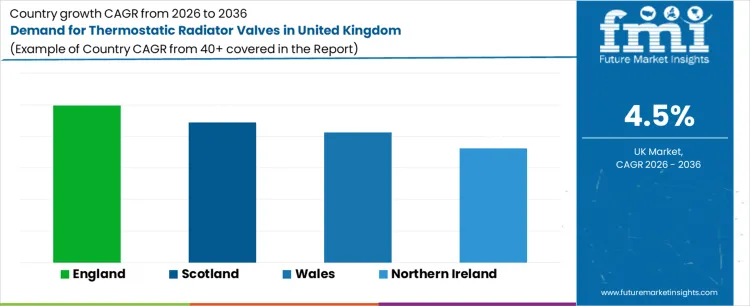
| Country | CAGR (2026 to 2036) |
|---|---|
| England | 5.0% |
| Scotland | 4.4% |
| Wales | 4.1% |
| Northern Ireland | 3.6% |
What is Driving the Demand for Thermostatic Radiator Valves in England?
England represents the fastest expanding regional pocket, with thermostatic radiator valve demand advancing at a 5.0% CAGR between 2026 and 2036. England leads the market, driven by the increasing emphasis on energy efficiency in both residential and commercial buildings. TRVs are key components in regulating heating systems, allowing for precise temperature control and reducing energy consumption. As rising energy costs continue to motivate consumers and businesses to adopt energy-saving solutions, TRVs are becoming a standard feature in new builds and retrofit projects. Government incentives for energy-efficient heating systems and building regulations requiring better temperature control are further boosting demand. Additionally, the growing awareness of sustainability and energy conservation is driving the adoption of TRVs as part of broader efforts to reduce carbon footprints.
How is the Demand for Thermostatic Radiator Valves Performing in Scotland?
Thermostatic radiator valve uptake in Scotland is forecast to rise steadily, registering a 4.4% CAGR over the forecast horizon. The growth in demand is largely driven by Scotland’s commitment to reducing energy consumption and improving heating system efficiency. TRVs help consumers control heating costs by ensuring rooms are heated to the desired temperature without unnecessary energy waste. As energy efficiency standards become more stringent, the adoption of TRVs is expected to rise. Scotland’s housing market, including both new builds and retrofitting of existing homes, is also contributing to this growth. The increasing focus on sustainable building practices and environmental responsibility among both residents and developers in Scotland is expected to drive continued demand for TRVs in the region.
What Are the Growth Drivers for Thermostatic Radiator Valves in Wales?
Growth in Wales remains moderate, as thermostatic radiator valve demand expands at a 4.1% CAGR through 2036. The Welsh market is experiencing steady growth, driven by similar factors seen in other regions, such as rising energy costs and the growing emphasis on energy-efficient heating solutions. TRVs are becoming more popular as they offer a simple yet effective way to regulate room temperature and optimize energy use. Wales' commitment to reducing carbon emissions and improving energy efficiency in both residential and commercial buildings is further supporting this growth. As more Welsh homes and businesses adopt energy-saving technologies, the demand for TRVs is expected to increase, driven by both regulatory requirements and the desire to reduce heating costs.
What is the Outlook for Thermostatic Radiator Valves Demand in Northern Ireland?
Compared with other UK regions, Northern Ireland shows slower momentum, with thermostatic radiator valve demand increasing at a 3.6% CAGR from 2026 to 2036. While Northern Ireland represents the smallest market compared to the rest of the United Kingdom, the demand for TRVs is steadily increasing as the region’s focus on energy efficiency continues to grow. The adoption of TRVs in residential and commercial properties is being driven by rising energy costs and the need for more precise heating control. As Northern Ireland aligns with broader UK energy efficiency targets, the demand for TRVs is expected to rise, although at a slower pace compared to England and Scotland. The region’s commitment to sustainable heating solutions, coupled with government initiatives to improve energy efficiency, will contribute to steady growth in the market for TRVs over the coming decade.
What is the Competitive Landscape for Demand for Thermostatic Radiator Valves in the United Kingdom?
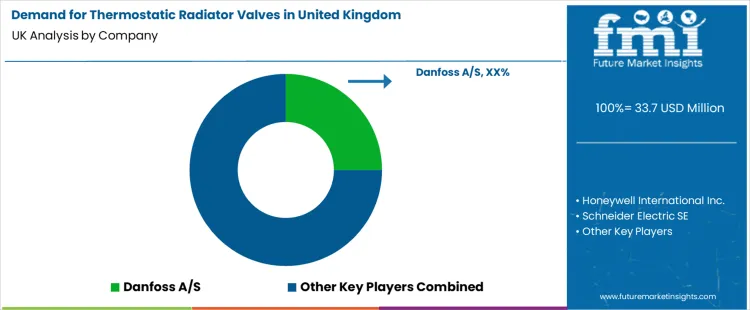
Demand for thermostatic radiator valves (TRVs) in the United Kingdom is influenced by heating system upgrades, energy efficiency awareness, and regulatory emphasis on controlling indoor temperatures. Market data indicate that the United Kingdom TRV segment is forecast to expand with revenue growth from around $137.7 million to $242.7 million over several years, reflecting steady demand for both mechanical and advanced control valves. This growth occurs as residential and commercial buildings adopt devices that regulate radiator flow and improve heating performance. TRVs are used to adjust heat output room by room, and their adoption has expanded with rising attention to cost savings on energy bills and improved thermal comfort.
Buyers in the United Kingdom evaluate suppliers against documented valve performance metrics, lead time commitments, and compliance with applicable standards. Procurement teams examine specification sheets that list temperature control ranges, connection sizing, and materials of construction to guide supplier selection. Brochures and technical literature serve as reference points in tender documentation used by installers and specifiers to ensure products meet design criteria. Demand is supported by retrofit markets where existing radiator systems are upgraded to include thermostatic control heads or electronic modules. United Kingdom heating professionals rely on detailed product guides provided by suppliers to match valve characteristics with specific system requirements.
Danfoss A/S holds a leading position among suppliers in the United Kingdom TRV market, with documented product lines covering manual, programmable, and electronic valves. Brochures from Danfoss detail mechanical specifications, actuator types, and compatibility with hydronic heating systems. Honeywell International Inc. competes with documented valve series that include thermostatic bodies and control heads designed for residential and commercial use. Schneider Electric SE’s offerings are accompanied by technical sheets that describe integration possibilities with building management systems. IMI Hydronic Engineering supplies valves and control solutions supported by literature specifying temperature response characteristics and installation parameters.
Siemens AG participates with thermostatic and electronic radiator control products, with brochures outlining actuator performance and connectivity options. Buyers compare documented performance values and supply terms from these companies during specification review and procurement cycles. Lead times and service support terms are outlined in supplier documentation, which inform contract commitments. Broad availability of technical brochures from key players assists heating engineers and procurement professionals in aligning TRV selection with project requirements across the United Kingdom.
Key Players of the Demand for Thermostatic Radiator Valves in United Kingdom
- Danfoss A/S
- Honeywell International Inc.
- Schneider Electric SE
- IMI Hydronic Engineering
- Siemens AG
Scope of the Report
| Items | Values |
|---|---|
| Quantitative Units (2026) | USD Million |
| Product Type | Electric Operated, Manually Operated |
| Application | Residential, Commercial |
| Distribution Channel | Offline, Online, OEM Supply |
| Companies | Danfoss A/S, Honeywell International Inc., Schneider Electric SE, IMI Hydronic Engineering, Siemens AG |
| Regions Covered | United Kingdom |
| Countries Covered | England, Scotland, Wales, Northern Ireland |
| Additional Attributes | Dollar by sales by product type, application, distribution channel, and region. Includes market trends towards energy efficiency, cost-effectiveness, and the role of thermostatic radiator valves in improving heating control and comfort. |
Demand for Thermostatic Radiator Valves in United Kingdom
Product Type
- Electric Operated
- Manually Operated
Application
- Residential
- Commercial
- OEM Supply
Distribution Channel
- Offline
- Online
Countries
- England
- Scotland
- Wales
- Northern Ireland
Bibliography
- Office of Gas and Electricity Markets. (2024, July 18). ECO4 scores (Version 6). Ofgem.
- Department for Energy Security and Net Zero. (2025, November 18). Draft: Heat network technical standard (TS1). Department for Energy Security and Net Zero.
- Welsh Government. (2024, May). Building regulations: Approved Document L, volume 1 (dwellings). Welsh Government.
Frequently Asked Questions
How big is the demand for thermostatic radiator valves in United Kingdom in 2026?
The demand for thermostatic radiator valves in United Kingdom is estimated to be valued at USD 33.7 million in 2026.
What will be the size of thermostatic radiator valves in United Kingdom in 2036?
The market size for the thermostatic radiator valves in United Kingdom is projected to reach USD 52.4 million by 2036.
How much will be the demand for thermostatic radiator valves in United Kingdom growth between 2026 and 2036?
The demand for thermostatic radiator valves in United Kingdom is expected to grow at a 4.5% CAGR between 2026 and 2036.
What are the key product types in the thermostatic radiator valves in United Kingdom?
The key product types in thermostatic radiator valves in United Kingdom are electric operated and manually operated.
Which application segment is expected to contribute significant share in the thermostatic radiator valves in United Kingdom in 2026?
In terms of application, residential segment is expected to command 70.0% share in the thermostatic radiator valves in United Kingdom in 2026.
Preview the report firsthand - request a free sample
Get SampleGet the brochure for pricing and purchase details.
Get PDFTable of Content
- Executive Summary
- UK Market Outlook
- Demand-side Trends
- Supply-side Trends
- Technology Roadmap Analysis
- Analysis and Recommendations
- Market Overview
- Market Coverage / Taxonomy
- Market Definition / Scope / Limitations
- Market Background
- Market Dynamics
- Drivers
- Restraints
- Opportunity
- Trends
- Scenario Forecast
- Demand in Optimistic Scenario
- Demand in Likely Scenario
- Demand in Conservative Scenario
- Opportunity Map Analysis
- Product Life Cycle Analysis
- Supply Chain Analysis
- Investment Feasibility Matrix
- Value Chain Analysis
- PESTLE and Porter’s Analysis
- Regulatory Landscape
- Regional Parent Market Outlook
- Production and Consumption Statistics
- Import and Export Statistics
- Market Dynamics
- UK Market Analysis 2021 to 2025 and Forecast, 2026 to 2036
- Historical Market Size Value (USD Million) Analysis, 2021 to 2025
- Current and Future Market Size Value (USD Million) Projections, 2026 to 2036
- Y-o-Y Growth Trend Analysis
- Absolute $ Opportunity Analysis
- UK Market Pricing Analysis 2021 to 2025 and Forecast 2026 to 2036
- UK Market Analysis 2021 to 2025 and Forecast 2026 to 2036, By Product Type
- Introduction / Key Findings
- Historical Market Size Value (USD Million) Analysis By Product Type , 2021 to 2025
- Current and Future Market Size Value (USD Million) Analysis and Forecast By Product Type , 2026 to 2036
- Electric Operated
- Manually Operated
- Electric Operated
- Y-o-Y Growth Trend Analysis By Product Type , 2021 to 2025
- Absolute $ Opportunity Analysis By Product Type , 2026 to 2036
- UK Market Analysis 2021 to 2025 and Forecast 2026 to 2036, By Application
- Introduction / Key Findings
- Historical Market Size Value (USD Million) Analysis By Application, 2021 to 2025
- Current and Future Market Size Value (USD Million) Analysis and Forecast By Application, 2026 to 2036
- Residential
- Commercial
- Residential
- Y-o-Y Growth Trend Analysis By Application, 2021 to 2025
- Absolute $ Opportunity Analysis By Application, 2026 to 2036
- UK Market Analysis 2021 to 2025 and Forecast 2026 to 2036, By Distribution Channel
- Introduction / Key Findings
- Historical Market Size Value (USD Million) Analysis By Distribution Channel, 2021 to 2025
- Current and Future Market Size Value (USD Million) Analysis and Forecast By Distribution Channel, 2026 to 2036
- Offline
- Online
- OEM Supply
- Offline
- Y-o-Y Growth Trend Analysis By Distribution Channel, 2021 to 2025
- Absolute $ Opportunity Analysis By Distribution Channel, 2026 to 2036
- Market Structure Analysis
- Competition Dashboard
- Competition Benchmarking
- Market Share Analysis of Top Players
- By Regional
- By Product Type
- By Application
- By Distribution Channel
- Competition Analysis
- Competition Deep Dive
- Danfoss A/S
- Overview
- Product Portfolio
- Profitability by Market Segments (Product/Age /Sales Channel/Region)
- Sales Footprint
- Strategy Overview
- Marketing Strategy
- Product Strategy
- Channel Strategy
- Honeywell International Inc.
- Schneider Electric SE
- IMI Hydronic Engineering
- Siemens AG
- Danfoss A/S
- Competition Deep Dive
- Assumptions & Acronyms Used
- Research Methodology


