

- Industry Size (2025)
- USD 3.6 Bn
- Forecast (2035)
- USD 5.3 Bn
- CAGR (2025 to 2035)
- 3.9%
Demand for Organic Cocoa in USA Forecast and Outlook 2025 to 2035
Demand for organic cocoa in the USA is expected to grow from USD 3.6 billion in 2025 to USD 5.3 billion by 2035, reflecting a compound annual growth rate (CAGR) of 3.9%. This growth is driven by the increasing consumer preference for organic and sustainably sourced food products. As awareness of health and environmental concerns grows, more consumers are opting for organic cocoa, which is seen as a healthier and more environmentally friendly alternative to conventional cocoa. Market for organic cocoa is also supported by its expanding use across product categories such as chocolates, beverages, and health-conscious snacks.
The market is further supported by increasing demand from the food and beverage industry for clean-label products and a growing trend of incorporating organic ingredients in premium and artisanal products. As the availability of organic cocoa expands and consumer demand for healthier food options rises, the market for organic cocoa in the USA is expected to continue to expand steadily over the next decade.
Quick Stats of the Demand for Organic Cocoa in USA
- Demand for Organic Cocoa in USA Value (2025): USD 3.6 billion
- Demand for Organic Cocoa in USA Forecast Value (2035): USD 5.3 billion
- Demand for Organic Cocoa in USA Forecast CAGR (2025-2035): 3.9%
- Demand for Organic Cocoa in USA Leading Form: Cocoa Butter (50%)
- Demand for Organic Cocoa in USA Key Growth Regions: West USA, South USA, Northeast USA, Midwest USA
- Demand for Organic Cocoa in USA Key Players: Cargill Incorporated, Kraft Foods Inc., Barry Callebaut, Tradin Organic Agriculture, Olam Cocoa
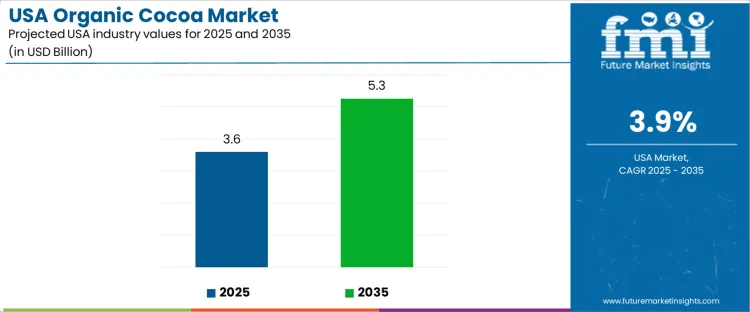
What is the Growth Forecast for the Organic Cocoa Market through 2035?
The saturation point analysis for the organic cocoa market in the USA indicates steady growth with signs of approaching market maturity as demand continues to increase. Starting at USD 3.6 billion in 2025, the market grows gradually, reaching USD 3.7 billion in 2026 and USD 3.9 billion in 2027. This early period reflects a moderate rise in consumer interest in organic cocoa as it becomes more widely available and as consumers increasingly seek organic food options.
From 2028 onward, growth continues at a steady pace, with the market reaching USD 4.0 billion in 2028, USD 4.2 billion in 2029, and USD 4.3 billion in 2030. The market shows signs of slowing growth as it reaches a saturation point around the 2030 mark, where demand stabilizes. In the later years of the forecast period, the market continues to grow but at a more moderate rate, reaching USD 4.5 billion in 2031, USD 4.7 billion in 2032, and USD 4.9 billion in 2033. By 2035, the market reaches USD 5.3 billion, indicating that while the demand for organic cocoa continues, growth rates have slowed as the market becomes more mature and widespread, with the saturation point marking the beginning of a more stable growth phase.
USA Organic Cocoa Industry Key Takeaways
| Metric | Value |
|---|---|
| Industry Sales Value (2025) | USD 3.6 billion |
| Industry Forecast Value (2035) | USD 5.3 billion |
| Industry Forecast CAGR (2025-2035) | 3.9% |
Why is the Demand for Organic Cocoa Growing in the USA?
Demand for organic cocoa in the USA is rising as American consumers increasingly prioritise health, sustainability, and ethical sourcing in their food choices. More people are seeking “clean label” and minimally processed products, which makes organic cocoa-free from synthetic pesticides and fertilizers-attractive for those concerned about food quality and environmental impact. The growing popularity of dark chocolate, specialty confectionery, vegan and plant based diets, and functional foods also drives interest in organic cocoa because of its perceived nutritional benefits and rich flavor profile.
On top of consumer preferences, structural shifts in the food and confectionery industry are supporting expansion of the organic cocoa market in the USA. Food processors, chocolatiers, bakeries, and beverage companies are increasingly using organic cocoa powder, cocoa butter, and cocoa liquor in premium chocolates, baked goods, drinks, and natural ingredient products. There is also rising demand from the cosmetics and personal care sector, where cocoa butter-often derived from cocoa-is valued for its moisturizing and antioxidant properties, feeding into the broader organic and natural product trend.
As health and environmental awareness continues to grow, combined with rising interest in premium and ethically sourced foods and products, the organic cocoa market in the USA is expected to expand steadily over the coming years.
What Are the Key Segments in Organic Cocoa Market in the USA?
The organic cocoa market in the USA is segmented by form and end-use application. Cocoa butter leads the form segment, holding 50% of the market share. In terms of end-use application, food service is the largest segment, accounting for 20% of the market. The growing demand for organic products, particularly in the food industry and personal care sector, is driving the adoption of organic cocoa across various applications in the USA.
Which Form Drives Organic Cocoa Demand in the USA?
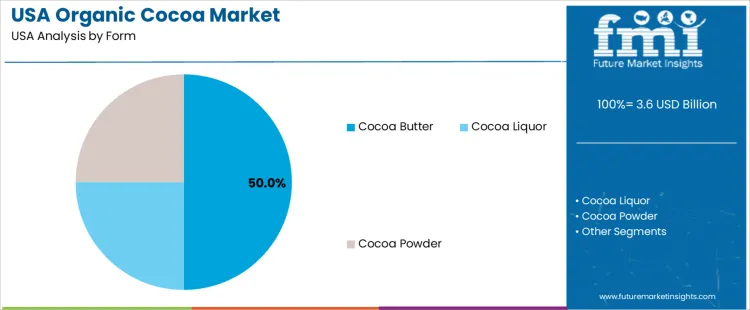
Cocoa butter dominates the organic cocoa market in the USA, representing 50% of the total market share. Cocoa butter is a key ingredient in the production of chocolate, confections, and personal care products. Its smooth texture and ability to solidify at room temperature make it ideal for use in chocolate production, skin care products, and cosmetics. The demand for organic cocoa butter has increased due to the growing preference for natural and organic ingredients in both food and personal care products. While cocoa liquor and cocoa powder are also important, cocoa butter remains the most widely used form due to its versatility and broad application range, particularly in the chocolate and cosmetic industries.
Which End-Use Application Drives Organic Cocoa Demand in the USA?
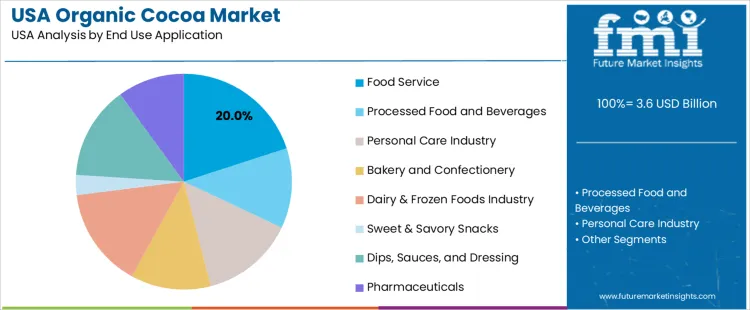
Food service is the leading end-use application for organic cocoa in the USA, holding 20% of the market share. The demand for organic cocoa in food service is driven by the increasing popularity of organic ingredients in restaurants, catering services, and ready-to-eat food products. Organic cocoa is often used in gourmet chocolates, beverages, and desserts offered by health-conscious consumers. Other significant applications include the processed food and beverages industry, bakery and confectionery, and the personal care industry, which all contribute to the increasing use of organic cocoa. The rise of organic and clean-label trends in the food and cosmetic sectors continues to support the demand for organic cocoa, particularly for its health benefits and natural properties in various products, including snacks, sauces, and pharmaceuticals.
What is the Demand for Organic Cocoa in USA?
The demand for organic cocoa in the USA is growing as consumers become more conscious of the environmental and health benefits of organic products. Organic cocoa is sourced from farms that use sustainable farming practices and avoid synthetic chemicals, making it a popular choice for environmentally aware consumers. With increasing interest in healthier, natural ingredients in food products, organic cocoa is being incorporated into a wide range of products, from chocolate to beverages and health foods. As consumer demand for organic food continues to rise, the market for organic cocoa in the USA is expected to expand further.
What are the Drivers of Demand for Organic Cocoa in USA?
Several factors are driving the growing demand for organic cocoa in the USA. First, the increasing consumer preference for organic and natural products, driven by concerns over pesticides and chemicals in food, is promoting the growth of the organic cocoa market. Second, the rise of plant-based and clean-label diets, where consumers seek transparency in ingredient sourcing, is encouraging the use of organic cocoa in a variety of food products, including plant-based chocolates and health-conscious snacks. Third, the growing awareness of the environmental benefits of organic farming, such as improved soil health and reduced chemical runoff, is driving demand for organic cocoa. Finally, as more food manufacturers adopt organic ingredients, the availability and use of organic cocoa is increasing, further supporting market growth.
What are the Restraints on Demand for Organic Cocoa in USA?
Despite its growing demand, several factors limit the widespread adoption of organic cocoa in the USA. One major restraint is the higher cost of organic cocoa compared to conventional cocoa, which can make products containing organic cocoa more expensive for consumers. This price premium may deter some price-sensitive buyers, especially in markets where cost is a significant consideration. Another challenge is the limited supply of certified organic cocoa, as it requires specific farming practices and certification processes, which can be more time-consuming and expensive for producers. Additionally, fluctuations in global cocoa prices, particularly in regions where organic farming is less established, can affect the availability and cost of organic cocoa, further influencing demand.
What are the Key Trends Influencing Demand for Organic Cocoa in USA?
Several key trends are shaping the demand for organic cocoa in the USA. A major trend is the growing shift toward healthier, more sustainable food options, with organic cocoa being seen as a healthier and more environmentally friendly choice compared to conventional cocoa. Another trend is the increasing use of organic cocoa in premium chocolate products and artisanal goods, as consumers seek high-quality, ethically sourced ingredients. The rise of plant-based diets and clean-label foods is also influencing the demand for organic cocoa, as it is a key ingredient in many vegan and plant-based products. Additionally, the expansion of e-commerce and online retail platforms is making organic cocoa products more accessible to a wider audience, contributing to the growth of the market.
What is the Regional Demand Outlook for the Organic Cocoa Market in the USA?
The Organic Cocoa market in the USA is projected to grow steadily, with the West USA leading the way at a projected CAGR of 4.5%. South USA follows closely with a growth rate of 4.0%, while the Northeast USA is expected to grow at 3.6%. The Midwest USA shows more moderate growth with a CAGR of 3.1%. The increasing consumer preference for healthier, sustainable, and organic products is driving the demand for organic cocoa. As awareness of the environmental and health benefits of organic products continues to rise, the market for organic cocoa is expected to expand across the United States.
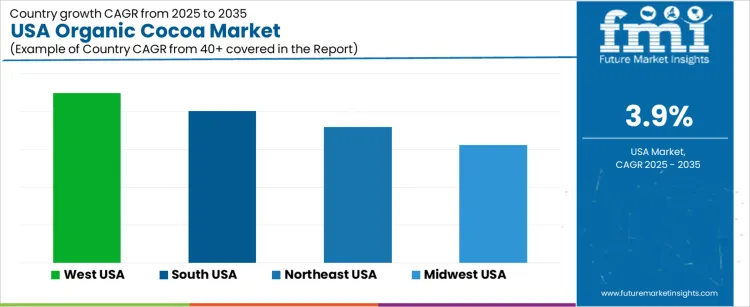
| Region | CAGR (2025-2035) |
|---|---|
| West USA | 4.5% |
| South USA | 4% |
| Northeast USA | 3.6% |
| Midwest USA | 3.1% |
What is Driving the Growth of Organic Cocoa in the West USA?
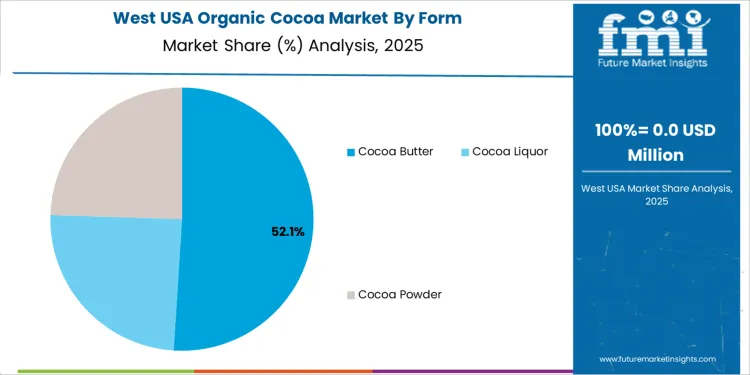
The West USA is projected to experience the highest growth in the Organic Cocoa market, with a projected CAGR of 4.5%. The region’s strong emphasis on sustainability, healthy eating, and organic products is a key factor driving this growth. States like California, Oregon, and Washington have a large consumer base that increasingly values organic and fair-trade food products, including organic cocoa. The growing demand for organic chocolates, beverages, and other cocoa-based products is contributing to the rise of organic cocoa in the region. Additionally, the West’s focus on environmentally friendly farming practices and the increasing availability of organic cocoa in both retail stores and online platforms are helping to fuel the market. As the region continues to prioritize health-conscious and eco-friendly lifestyles, the demand for organic cocoa is expected to continue growing.
Why is the Organic Cocoa Market Expanding in South USA?
In South USA, the demand for organic cocoa is projected to grow at a CAGR of 4.0%. The region’s increasing interest in organic and natural food products is driving the adoption of organic cocoa. States like Texas, Florida, and Georgia are experiencing rising consumer demand for healthier, more sustainable food options, which includes organic cocoa. As consumers in the South seek out organic alternatives to conventional products, organic cocoa is becoming more popular in a wide variety of applications, including organic chocolate, snacks, and beverages. Additionally, the South’s growing awareness of the environmental and health benefits of organic farming practices is contributing to the demand for organic cocoa. As organic certification becomes more widespread and consumers increasingly prioritize wellness and sustainability, the organic cocoa market in the South is expected to see continued growth.
How is the Organic Cocoa Market Growing in Northeast USA?
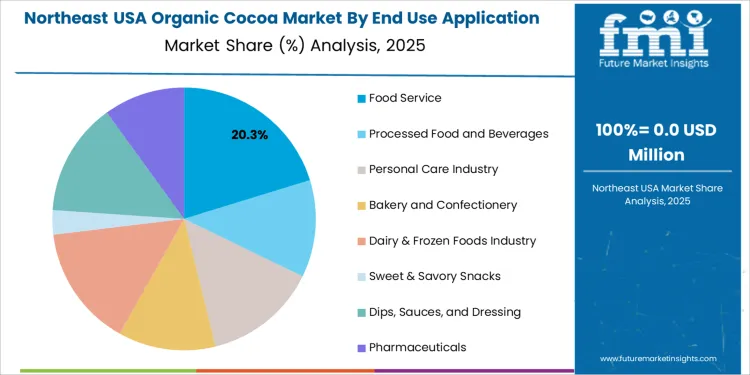
In Northeast USA, the Organic Cocoa market is projected to grow at a CAGR of 3.6%. The region’s strong consumer base, which increasingly values organic, fair-trade, and health-conscious products, is contributing to the rising demand for organic cocoa. Major cities like New York, Boston, and Philadelphia have a growing population of eco-conscious consumers who are driving the trend toward organic food products. As the Northeast embraces healthier eating habits, organic cocoa is gaining popularity in products such as organic chocolates, baked goods, and beverages. The growing availability of organic cocoa in supermarkets and specialty stores, along with increased consumer education about the benefits of organic products, is further fueling the market. The region’s focus on sustainable food practices and increasing demand for high-quality organic ingredients are expected to continue driving growth in the organic cocoa market.
What is Contributing to the Growth of Organic Cocoa in Midwest USA?
In Midwest USA, the Organic Cocoa market is expected to grow at a more moderate rate of 3.1%. While the Midwest has traditionally been slower to adopt organic products compared to other regions, the increasing awareness of the health and environmental benefits of organic food is driving gradual market expansion. States like Illinois, Ohio, and Michigan are seeing growing interest in organic products, including organic cocoa, as more consumers seek healthier food options. The Midwest’s expanding retail channels for organic food and beverages, including large grocery chains and natural food stores, are making organic cocoa more accessible to consumers. As the region continues to embrace wellness and sustainable farming practices, the demand for organic cocoa is expected to continue growing at a steady pace.
What is the Competitive Landscape for the Demand for Organic Cocoa in the USA?
Demand for organic cocoa in the USA has been rising as consumers increasingly prefer clean label, sustainably produced, and health conscious food products. Awareness of environmental impact, ethical sourcing, and benefits associated with organic farming drives interest in organic cocoa among both manufacturers and end consumers. As chocolate, confectionery, baking, and beverage producers seek organic ingredients to meet consumer demand for natural and premium products, the share of organic cocoa in overall cocoa usage has expanded. The broader growth in USA cocoa consumption-driven by rising demand for premium chocolates, specialty confectionery, and cocoa based beverages-supports increased uptake of organic cocoa.
On the supply side, several major global cocoa and commodity firms compete to supply organic cocoa to the USA market. According to your list, Cargill Incorporated leads among the identified players, followed by Kraft Foods Inc., Barry Callebaut, Tradin Organic Agriculture, and Olam Cocoa. These companies supply organic cocoa beans and downstream organic cocoa products-cocoa powder, liquor, butter-to confectionery, chocolate, bakery, and beverage manufacturers. Competition among suppliers centers on certification and traceability (organic, sustainable, fair trade), consistency in supply volume and quality, transparency in supply chains, and ability to meet growing demand for organic-grade raw materials.
Firms that combine robust sourcing networks, reliable supply of certified organic cocoa, and relationships with large-scale manufacturers are best positioned to capture growth. Those that invest in traceability, sustainability credentials, and capacity to supply stable volumes will likely lead as demand for organic food ingredients continues to grow in the United States.
Key Players of the Organic Cocoa Industry in USA
- Cargill Incorporated
- Kraft Foods Inc.
- Cargill Incorporated
- Barry Callebaut
- Tradin Organic Agriculture
- Olam Cocoa
Scope of the Report
| Items | Details |
|---|---|
| Quantitative Units | USD Billion |
| Regions Covered | USA |
| Form | Cocoa Butter; Cocoa Liquor; Cocoa Powder |
| End Use Application | Food Service; Processed Food & Beverages; Personal Care Industry; Bakery & Confectionery; Dairy & Frozen Foods Industry; Sweet & Savory Snacks; Dips, Sauces & Dressings; Pharmaceuticals |
| Key Companies Profiled | Cargill Incorporated; Kraft Foods Inc.; Barry Callebaut; Tradin Organic Agriculture; Olam Cocoa |
| Additional Attributes | Dollar sales by form and application show rising demand for organic cocoa powder and butter-especially in processed foods, bakery/confectionery, and personal care. Growth is driven by increasing consumer preference for organic, clean label and sustainable ingredients, and rising demand for premium chocolate and cocoa based products. |
Key Segments in the Demand for Organic Cocoa in USA
Form
- Cocoa Butter
- Cocoa Liquor
- Cocoa Powder
End Use Application
- Food Service
- Processed Food and Beverages
- Personal Care Industry
- Bakery and Confectionery
- Dairy & Frozen Foods Industry
- Sweet & Savory Snacks
- Dips, Sauces, and Dressing
- Pharmaceuticals
Region
- Northeast USA
- West USA
- Midwest USA
- South USA
Frequently Asked Questions
How big is the demand for organic cocoa in USA in 2025?
The demand for organic cocoa in USA is estimated to be valued at USD 3.6 billion in 2025.
What will be the size of organic cocoa in USA in 2035?
The market size for the organic cocoa in USA is projected to reach USD 5.3 billion by 2035.
How much will be the demand for organic cocoa in USA growth between 2025 and 2035?
The demand for organic cocoa in USA is expected to grow at a 3.9% CAGR between 2025 and 2035.
What are the key product types in the organic cocoa in USA?
The key product types in organic cocoa in USA are cocoa butter, cocoa liquor and cocoa powder.
Which end use application segment is expected to contribute significant share in the organic cocoa in USA in 2025?
In terms of end use application, food service segment is expected to command 20.0% share in the organic cocoa in USA in 2025.
Preview the report firsthand - request a free sample
Get SampleGet the brochure for pricing and purchase details.
Get PDFTable of Content
- Executive Summary
- USA Market Outlook
- Demand-side Trends
- Supply-side Trends
- Technology Roadmap Analysis
- Analysis and Recommendations
- Market Overview
- Market Coverage / Taxonomy
- Market Definition / Scope / Limitations
- Market Background
- Market Dynamics
- Drivers
- Restraints
- Opportunity
- Trends
- Scenario Forecast
- Demand in Optimistic Scenario
- Demand in Likely Scenario
- Demand in Conservative Scenario
- Opportunity Map Analysis
- Product Life Cycle Analysis
- Supply Chain Analysis
- Investment Feasibility Matrix
- Value Chain Analysis
- PESTLE and Porter’s Analysis
- Regulatory Landscape
- Regional Parent Market Outlook
- Production and Consumption Statistics
- Import and Export Statistics
- Market Dynamics
- USA Market Analysis 2020 to 2024 and Forecast, 2025 to 2035
- Historical Market Size Value (USD Million) Analysis, 2020 to 2024
- Current and Future Market Size Value (USD Million) Projections, 2025 to 2035
- Y-o-Y Growth Trend Analysis
- Absolute $ Opportunity Analysis
- USA Market Pricing Analysis 2020 to 2024 and Forecast 2025 to 2035
- USA Market Analysis 2020 to 2024 and Forecast 2025 to 2035, By Form
- Introduction / Key Findings
- Historical Market Size Value (USD Million) Analysis By Form , 2020 to 2024
- Current and Future Market Size Value (USD Million) Analysis and Forecast By Form , 2025 to 2035
- Cocoa Butter
- Cocoa Liquor
- Cocoa Powder
- Y-o-Y Growth Trend Analysis By Form , 2020 to 2024
- Absolute $ Opportunity Analysis By Form , 2025 to 2035
- USA Market Analysis 2020 to 2024 and Forecast 2025 to 2035, By End Use Application
- Introduction / Key Findings
- Historical Market Size Value (USD Million) Analysis By End Use Application, 2020 to 2024
- Current and Future Market Size Value (USD Million) Analysis and Forecast By End Use Application, 2025 to 2035
- Food Service
- Processed Food and Beverages
- Personal Care Industry
- Bakery and Confectionery
- Dairy & Frozen Foods Industry
- Sweet & Savory Snacks
- Dips, Sauces, and Dressing
- Pharmaceuticals
- Y-o-Y Growth Trend Analysis By End Use Application, 2020 to 2024
- Absolute $ Opportunity Analysis By End Use Application, 2025 to 2035
- Market Structure Analysis
- Competition Dashboard
- Competition Benchmarking
- Market Share Analysis of Top Players
- By Regional
- By Form
- By End Use Application
- Competition Analysis
- Competition Deep Dive
- Kraft Foods Inc.
- Overview
- Product Portfolio
- Profitability by Market Segments (Product/Age /Sales Channel/Region)
- Sales Footprint
- Strategy Overview
- Marketing Strategy
- Product Strategy
- Channel Strategy
- Cargill Incorporated
- Barry Callebaut
- Tradin Organic Agriculture
- Olam Cocoa
- Kraft Foods Inc.
- Competition Deep Dive
- Assumptions & Acronyms Used
- Research Methodology


