

- Industry Size (2025)
- USD 477.6 Mn
- Forecast (2035)
- USD 646.5 Mn
- CAGR (2025 to 2035)
- 3.1%
Demand for Organic Cocoa in Japan Forecast and Outlook 2025 to 2035
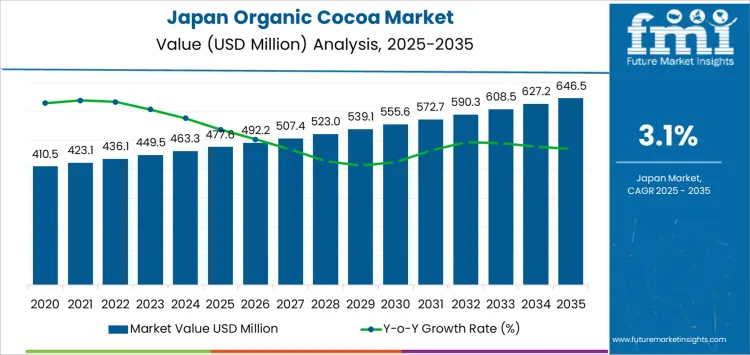
Demand for organic cocoa in Japan is valued at USD 477.6 million in 2025 and is projected to reach USD 646.5 million by 2035, expanding at a CAGR of 3.1%. Import dependence defines the supply structure, with cocoa butter holding the largest form share, followed by cocoa liquor and cocoa powder. Bakery and confectionery manufacturing represents the core end-use sector, supported by dairy and frozen desserts, processed foods, personal care formulations, and pharmaceutical excipients. Consumption is concentrated across Kanto, Kansai, and Chubu due to the clustering of premium chocolate processors and branded food manufacturers. Japan sourcing channels are tightly linked to producing regions in Ghana, Ecuador, and the Dominican Republic through long-term certified organic supply contracts.
From 2030, value growth reflects slower volume expansion but steady price realization in premium organic chocolate, couverture, and specialty beverage applications. Foodservice demand strengthens within pastry, café, and dessert chains focused on clean-label positioning. Personal care formulations using organic cocoa butter expand selectively in lip care and body products. Distribution flows through large trading houses, food ingredient distributors, and direct procurement by multinational processors. Key companies shaping competition include Barry Callebaut, Cargill, Olam Cocoa, Kraft Foods, and Tradin Organic Agriculture. Competitive positioning rests on certification control, traceability systems, fermentation quality consistency, and reliable shipment scheduling aligned with Japanese industrial procurement standards.
Quick Stats of the Organic Cocoa in Japan
- Organic Cocoa in Japan Value (2025): USD 477.6 million
- Organic Cocoa in Japan Forecast Value (2035): USD 646.5 million
- Organic Cocoa in Japan Forecast CAGR (2025–2035): 3.1%
- Organic Cocoa in Japan Leading Form: Cocoa Butter (50%)
- Organic Cocoa in Japan Key Growth Regions: Kyushu & Okinawa, Kanto, Kansai, Chubu
- Organic Cocoa in Japan Top Players: Kraft Foods Inc., Cargill Incorporated, Barry Callebaut, Tradin Organic Agriculture, Olam Cocoa
What is the Demand Forecast for Organic Cocoa in Japan through 2035?
Demand for organic cocoa in Japan reaches USD 477.6 million in 2025 and advances to USD 539.1 million by 2030, adding USD 61.5 million in fresh value within the first five years. The progression from USD 410.5 million in 2020 reflects steady strengthening of clean-label confectionery, premium chocolate gifting, and artisanal bakery formats rather than mass chocolate volume growth. Organic cocoa is increasingly routed into bean-to-bar chocolate studios, specialty dessert cafés, and premium export-oriented confectionery manufacturers. Imports remain the backbone of supply, with procurement stability tied to long-term sourcing relationships across West Africa and Latin America. Demand expansion in this phase is shaped more by value-per-unit lift and brand positioning than by sheer tonnage growth.
From 2030 to 2035, demand rises from USD 539.1 million to USD 646.5 million, delivering a larger USD 107.4 million value gain in the second half of the outlook. Annual value increments accelerate as organic formulation becomes embedded across broader chocolate portfolios, not limited to premium SKUs. Growth is reinforced by the expansion of organic-certified ready desserts, functional cocoa beverages, and tourist-driven premium souvenir chocolates. Price premiums widen as traceability, fermentation quality, and origin-specific cocoa command higher contract values. By 2035, organic cocoa demand in Japan reflects structurally higher willingness to pay for certified, origin-linked ingredients rather than a temporary premium food trend.
Organic Cocoa Industry in Japan Key Takeaways
| Metric | Value |
|---|---|
| Industry Value (2025) | USD 477.6 million |
| Forecast Value (2035) | USD 646.5 million |
| Forecast CAGR (2025-2035) | 3.1% |
What Is Driving the Demand for Organic Cocoa in Japan?
The demand for organic cocoa in Japan is shaped by premium food culture, strict ingredient scrutiny, and long standing consumer trust in certification systems. Historically, cocoa consumption in Japan has been dominated by confectionery, bakery, and premium beverage applications where flavor consistency and safety carry strong weight. As food labeling standards tightened and awareness of pesticide residue increased, organic cocoa moved from a niche import into a recognized premium ingredient. Artisanal chocolate makers, high end patisseries, and specialty beverage brands were early adopters, using organic cocoa to support clean ingredient positioning without altering traditional flavor profiles. Retailers also played a role by expanding organic private label ranges in chocolate bars, hot cocoa mixes, and baking ingredients.
Future demand for organic cocoa in Japan will be shaped by expansion of premium indulgence, gift driven food consumption, and health aligned indulgent products rather than mass volume substitution. Growth will continue in functional chocolates with reduced sugar, plant based desserts, and cocoa based wellness drinks where organic sourcing supports overall product credibility. Export oriented Japanese confectioners will also reinforce demand to meet overseas clean label expectations. Barriers include higher procurement cost, limited availability of traceable organic cocoa supply, and price sensitivity in everyday snack categories. Long term demand will depend on how well Japanese brands balance organic sourcing with flavor consistency, stable supply contracts, and consumer willingness to pay for verified agricultural integrity.
What Is the Demand for Organic Cocoa in Japan by Form and End Use Application?
The demand for organic cocoa in Japan is shaped by premium confectionery production, controlled ingredient sourcing, and steady growth in health oriented food categories. Cocoa butter leads by form due to its role in high quality chocolate, bakery fats, and cosmetic applications. Food service represents the leading end use because cafés, patisseries, and specialty dessert chains actively promote organic ingredient positioning. Procurement is driven by confectionery manufacturers, bakery chains, and specialty food importers. Import reliance remains high due to limited domestic cocoa sourcing. Substitution pressure from conventional cocoa persists under cost constraints. Demand stability is supported by premium gifting culture, seasonal product launches, and consistent café consumption.
Why does cocoa butter dominate the demand for organic cocoa in Japan by form?
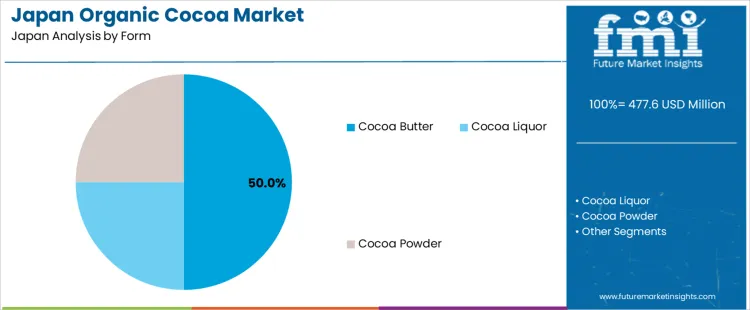
Cocoa butter accounts for 50% of the demand for organic cocoa in Japan by form, reflecting its central role in premium chocolate formulation and texture control. Consumption intensity is driven by artisanal chocolatiers, high end bakery operations, and functional food manufacturers seeking clean label fat sources. Usage remains stable because cocoa butter defines mouthfeel, melting behavior, and flavor release in finished products. Procurement is dominated by specialty ingredient traders and long term contracts with certified organic processors. Price sensitivity remains moderate because cocoa butter cost is absorbed within premium product pricing. Specification control emphasizes fatty acid profile consistency, deodorization stability, and oxidative resistance during storage.
Cocoa butter also generates steady repeat demand through continuous seasonal chocolate production and limited edition confectionery launches. Repeat utilization remains predictable because gift driven consumption cycles occur multiple times annually. Buyers favor standardized butter grades to stabilize tempering and crystallization performance. Margin structure remains controlled due to volatile cocoa bean pricing. Regulatory exposure centers on organic certification verification and food safety compliance. Import reliance remains high across all supply tiers. Substitution pressure from vegetable fat replacements exists in lower cost segments, though organic cocoa butter retains dominance in premium formulations where clean ingredient positioning remains essential.
What drives food service to lead the demand for organic cocoa in Japan by end use application?
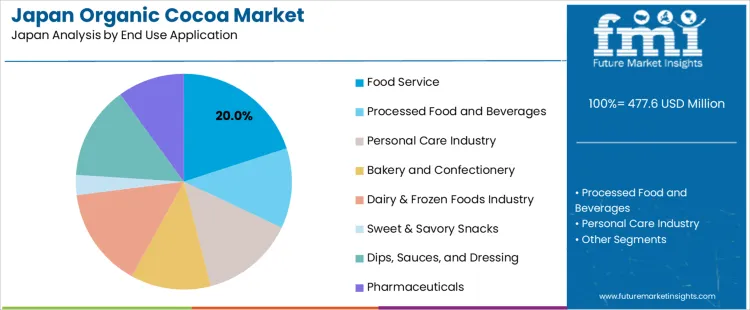
Food service represents 20.0% of the demand for organic cocoa in Japan by end use application, reflecting strong use across cafés, bakeries, dessert lounges, and hotel patisserie operations. Consumption intensity is driven by made to order beverages, plated desserts, and seasonal menu rotations that emphasize ingredient transparency. Usage remains stable because cafés rely on cocoa based drinks and chocolate flavored desserts throughout the year. Procurement is managed through specialty food distributors and importers serving urban hospitality clusters. Price sensitivity remains moderate because organic cocoa supports menu differentiation and premium pricing. Specification control emphasizes flavor consistency, solubility behavior, and stability under hot beverage preparation conditions.
Food service also supports recurring demand through daily beverage turnover and short shelf life dessert production. Repeat procurement remains high due to continuous footfall and menu refresh schedules. Buyers favor multi format supply including butter, liquor, and powder to support varied recipes. Margin structure remains tight due to high raw material cost exposure and competitive café pricing. Regulatory exposure centers on food hygiene and allergen disclosure. Import reliance persists for all cocoa inputs. Substitution pressure from conventional cocoa remains present during cost surges, though organic positioning remains critical for premium hospitality operators in major Japanese cities.
What Is Driving the Demand for Organic Cocoa in Japan Premium Confectionery and Health-Oriented Consumption?
Demand for organic cocoa in Japan is shaped by premium chocolate branding, ingredient transparency expectations, and growing interest in low-additive foods. Specialty chocolatiers, bean-to-bar producers, and gift-focused confectionery brands increasingly specify organic cocoa to support origin storytelling and purity claims. Health-conscious consumers associate organic cocoa with lower pesticide exposure and higher polyphenol value, reinforcing demand in dark chocolate, cacao drinks, and functional snacks. Department stores, seasonal gifting, and tourism-driven souvenir sales further support usage. Demand is therefore anchored in premium positioning, trust-based labeling, and controlled indulgence rather than mass-volume confectionery consumption.
How Are Bean-to-Bar Chocolatiers and Craft Brands Reshaping Sourcing Behavior?
Japan expanding bean-to-bar chocolate segment relies heavily on direct-trade and organic-certified cocoa to differentiate flavor, ethics, and traceability. Small-batch producers emphasize fermentation profile, terroir character, and contaminant-free positioning to justify premium pricing. Organic cocoa supports these narratives and reduces risk in quality audits. Limited-edition regional releases and seasonal assortments amplify short-run sourcing demand. This craft-led structure creates fragmented but high-value demand that prioritizes consistency and origin integrity over bulk supply economics.
Why Is Health-Positioned Cocoa Consumption Supporting Non-Confectionery Use?
Organic cocoa is increasingly used in Japan health beverages, protein snacks, and wellness-focused desserts. Consumers link cocoa flavanols to circulation, cognitive function, and antioxidant intake, driving usage beyond traditional chocolate. Fitness studios, vegan cafés, and specialty grocery stores promote cacao drinks made with organic powder as part of clean-label menus. This shifts demand into daily wellness routines rather than restricting it to gifting and confectionery indulgence alone.
How Do Price Sensitivity, Import Dependence, and Certification Constraints Restrain Growth?
Demand for organic cocoa in Japan is restrained by higher import costs, currency exposure, and limited certified supply from origin countries. Organic certification adds procurement complexity and narrows available supplier pools. Mass confectionery producers remain price-sensitive and continue to rely on conventional cocoa for volume lines. In addition, flavor variability across organic harvests complicates standardization. These structural factors keep organic cocoa concentrated in premium and wellness segments rather than across mainstream chocolate production.
What is the Demand for Organic Cocoa in Japan by Region?
| Region | CAGR (%) |
|---|---|
| Kyushu & Okinawa | 3.8% |
| Kanto | 3.5% |
| Kansai | 3.1% |
| Chubu | 2.7% |
| Tohoku | 2.4% |
| Rest of Japan | 2.3% |
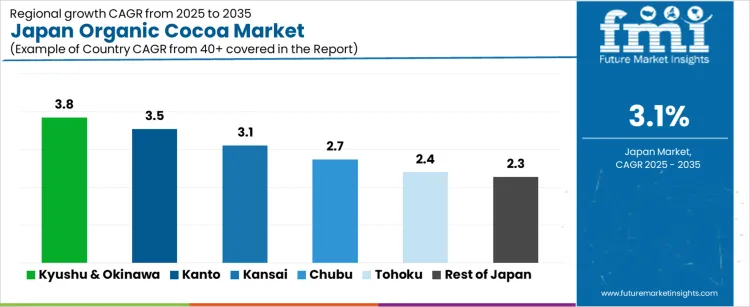
The demand for organic cocoa in Japan is rising gradually across all regions, led by Kyushu and Okinawa at a 3.8% CAGR. Growth in this region is supported by increasing production of premium confectionery, tourism driven café demand, and growing consumer preference for clean label chocolate products. Kanto follows at 3.5%, driven by dense urban consumption, specialty dessert chains, and expanding imports for artisanal chocolate manufacturing. Kansai records 3.1% growth, reflecting steady demand from bakery manufacturers and mid scale confectionery producers. Chubu at 2.7% shows moderate uptake linked to regional food processing and private label desserts. Tohoku and the Rest of Japan, at 2.4% and 2.3%, reflect slower expansion shaped by lower premium product penetration and conservative consumer spending patterns on organic indulgent foods.
How Are Premium Confectionery and Tourism Retail Driving Organic Cocoa Demand in Kyushu and Okinawa?
Demand for organic cocoa in Kyushu and Okinawa is advancing at a CAGR of 3.8% through 2035, driven by strong premium confectionery production, tourist led specialty chocolate sales, and expanding organic food retail formats. Local craft chocolatiers and resort based food outlets show rising preference for certified organic cocoa inputs. This region contrasts with Kanto through higher reliance on tourism related consumption rather than daily urban retail turnover. Demand growth reflects increased use in artisanal chocolates, organic bakery items, and gift oriented confectionery products tied to regional tourism flows.
- Craft confectionery producers anchor organic cocoa usage
- Resort retail supports premium chocolate sales
- Organic bakery products drive steady ingredient demand
- Gift oriented chocolate packaging sustains seasonal volumes
Why Is Urban Health Conscious Consumption Supporting Organic Cocoa Growth in Kanto?
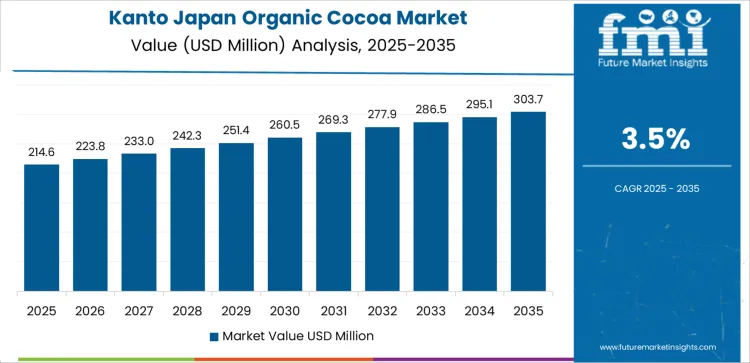
Demand for organic cocoa in Kanto is expanding at a CAGR of 3.5% through 2035, supported by dense health food retail, functional beverage formulation, and rising consumer focus on clean label indulgence in Tokyo and surrounding cities. Kanto leads in organic cocoa use for protein drinks, functional snacks, and premium dessert products. This region differs from Kyushu and Okinawa through stronger everyday consumption rather than tourist driven purchases. Growth is reinforced by supermarket private label expansion and e commerce platforms promoting organic confectionery and beverage mixes.
- Health food stores sustain daily organic cocoa sales
- Functional beverages expand ingredient applications
- Private label desserts drive volume oriented growth
- E commerce platforms strengthen nationwide distribution
What Is Sustaining Balanced Organic Cocoa Utilization Across Kansai Food Manufacturing?
Demand for organic cocoa in Kansai is advancing at a CAGR of 3.1% through 2035, supported by traditional confectionery brands, steady bakery product output, and restrained but stable organic food adoption in Osaka and Kyoto. Kansai shows moderate use of organic cocoa across premium sweets and seasonal festive products. This region contrasts with Kanto through slower integration into functional beverage categories. Demand remains anchored in traditional dessert manufacturing, premium chocolate gifting, and specialty bakery items produced by mid sized food processors.
- Traditional confectionery brands anchor organic cocoa demand
- Premium gifting chocolates support seasonal sales surges
- Specialty bakeries sustain repeat ingredient purchases
- Mid sized processors guide stable production volumes
How Is Foodservice and Institutional Baking Shaping Organic Cocoa Demand in Chubu?
Demand for organic cocoa in Chubu is progressing at a CAGR of 2.7% through 2035, supported by institutional baking, café chains, and regional dessert manufacturing linked to industrial workforce consumption. Aichi anchors demand through bakery supply chains and foodservice chocolate usage. Chubu contrasts with Kansai through stronger emphasis on bulk foodservice applications rather than premium retail confectionery. Adoption remains focused on organic cocoa powder for bakery mixes, beverage syrups, and institutional dessert production rather than finished branded chocolates.
- Bakery supply chains sustain baseline organic cocoa use
- Cafe beverage mixes support recurring ingredient demand
- Institutional dessert production anchors steady volumes
- Bulk powder formats dominate product preference
Why Is Slower Retail Turnover Moderating Organic Cocoa Growth in Tohoku?
Demand for organic cocoa in Tohoku is advancing at a CAGR of 2.4% through 2035, supported by limited but stable organic food retail, modest premium dessert consumption, and small scale bakery activity. Miyagi leads regional demand through health food stores and specialty dessert shops. Tohoku differs from Kanto through lower impulse chocolate purchases and reduced exposure to functional food trends. Organic cocoa usage remains concentrated in niche bakeries, seasonal gift chocolates, and limited beverage applications.
- Health food stores anchor niche organic cocoa demand
- Small bakeries sustain intermittent ingredient purchases
- Seasonal gifting supports short term demand spikes
- Lower retail density limits rapid volume growth
How Is Distributed Small City Retail Influencing Organic Cocoa Demand in Rest of Japan?
Demand for organic cocoa in Rest of Japan is advancing at a CAGR of 2.3% through 2035, supported by gradual expansion of organic grocery formats, steady household dessert preparation, and limited penetration of premium confectionery brands. These areas contrast with Kanto through slower adoption of functional cocoa beverages and cleaner label indulgence products. Organic cocoa demand remains focused on home baking, small gift assortments, and select regional confectionery brands. Growth is steady and volume remains restrained by lower disposable income patterns and limited specialty retail access.
- Home baking supports baseline organic cocoa consumption
- Small grocery outlets dominate organic product distribution
- Regional confectionery brands sustain limited demand
- Lower discretionary spending moderates premium product uptake
What Is Driving the Demand for Organic Cocoa in Japan and Which Suppliers Shape Raw Material Access
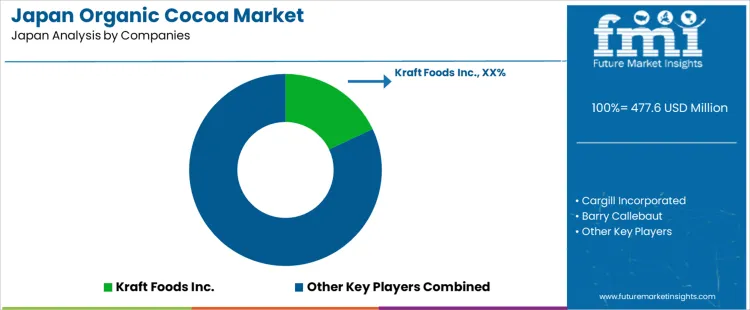
The demand for organic cocoa in Japan is shaped by steady growth in premium chocolate consumption, clean label positioning in confectionery, and rising use of certified ingredients in bakery and beverage applications. Barry Callebaut holds a central supply role through industrial chocolate programs serving Japanese confectionery majors and specialty chocolate brands. Cargill supports demand through cocoa liquor, butter, and powder supplied to processors focused on functional and premium product lines. Olam Cocoa participates through traceable organic bean supply integrated into Japanese trading house networks. Tradin Organic Agriculture serves niche volume for craft chocolate makers and organic focused food brands. Kraft Foods participates indirectly through imported branded chocolate products positioned in premium retail.
Procurement in Japan is governed by organic certification recognition, pesticide residue thresholds, fermentation consistency, and flavor uniformity across harvest cycles. Buyer preference favors suppliers that can provide stable lot continuity, Japanese language documentation, and audit ready traceability back to cooperative level. Product development favors mild acidity, low bitterness, and clean cocoa aroma suited to Japanese palate profiles. Demand visibility tracks premium chocolate gifting cycles, private label organic expansion in supermarkets, and steady growth in bean to bar manufacturers concentrated in Tokyo, Kyoto, and regional tourist hubs. Expansion is also linked to inbound tourism recovery and rising export demand for Japanese crafted chocolate products using certified organic inputs.
Key Players in the Organic Cocoa Industry in Japan
- Kraft Foods Inc.
- Cargill Incorporated
- Barry Callebaut
- Tradin Organic Agriculture
- Olam Cocoa
Scope of the Report
| Items | Values |
|---|---|
| Quantitative Units (2025) | USD million |
| Form | Cocoa Butter, Cocoa Liquor, Cocoa Powder |
| End Use Application | Food Service, Processed Food and Beverages, Personal Care Industry, Bakery and Confectionery, Dairy & Frozen Foods Industry, Sweet & Savory Snacks, Dips, Sauces, and Dressing, Pharmaceuticals |
| Region | Kyushu & Okinawa, Kanto, Kansai, Chubu, Tohoku, Rest of Japan |
| Countries Covered | Japan |
| Key Companies Profiled | Kraft Foods Inc., Cargill Incorporated, Barry Callebaut, Tradin Organic Agriculture, Olam Cocoa |
| Additional Attributes | Dollar by sales by form and end-use; Regional CAGR and growth drivers; Import reliance and sourcing countries (Ghana, Ecuador, Dominican Republic); Certification and traceability requirements; Fermentation and flavor consistency; Seasonal gifting and tourism-driven consumption; Retail vs foodservice adoption; Repeat procurement cycles in café, bakery, and specialty chocolate manufacturing; Price sensitivity and premium positioning; Clean-label and functional chocolate adoption; Impact of inbound tourism and export-oriented demand; Regulatory compliance for organic certification |
Organic Cocoa Industry in Japan Segmentation
Form:
- Cocoa Butter
- Cocoa Liquor
- Cocoa Powder
End Use Application:
- Food Service
- Processed Food and Beverages
- Personal Care Industry
- Bakery and Confectionery
- Dairy & Frozen Foods Industry
- Sweet & Savory Snacks
- Dips, Sauces, and Dressing
- Pharmaceuticals
Region:
- Kyushu & Okinawa
- Kanto
- Kansai
- Chubu
- Tohoku
- Rest of Japan
Frequently Asked Questions
How big is the demand for organic cocoa in Japan in 2025?
The demand for organic cocoa in Japan is estimated to be valued at USD 477.6 million in 2025.
What will be the size of organic cocoa in Japan in 2035?
The market size for the organic cocoa in Japan is projected to reach USD 646.5 million by 2035.
How much will be the demand for organic cocoa in Japan growth between 2025 and 2035?
The demand for organic cocoa in Japan is expected to grow at a 3.1% CAGR between 2025 and 2035.
What are the key product types in the organic cocoa in Japan?
The key product types in organic cocoa in Japan are cocoa butter, cocoa liquor and cocoa powder.
Which end use application segment is expected to contribute significant share in the organic cocoa in Japan in 2025?
In terms of end use application, food service segment is expected to command 20.0% share in the organic cocoa in Japan in 2025.
Preview the report firsthand - request a free sample
Get SampleGet the brochure for pricing and purchase details.
Get PDFTable of Content
- Executive Summary
- Japan Market Outlook
- Demand-side Trends
- Supply-side Trends
- Technology Roadmap Analysis
- Analysis and Recommendations
- Market Overview
- Market Coverage / Taxonomy
- Market Definition / Scope / Limitations
- Market Background
- Market Dynamics
- Drivers
- Restraints
- Opportunity
- Trends
- Scenario Forecast
- Demand in Optimistic Scenario
- Demand in Likely Scenario
- Demand in Conservative Scenario
- Opportunity Map Analysis
- Product Life Cycle Analysis
- Supply Chain Analysis
- Investment Feasibility Matrix
- Value Chain Analysis
- PESTLE and Porter’s Analysis
- Regulatory Landscape
- Regional Parent Market Outlook
- Production and Consumption Statistics
- Import and Export Statistics
- Market Dynamics
- Japan Market Analysis 2020 to 2024 and Forecast, 2025 to 2035
- Historical Market Size Value (USD Million) Analysis, 2020 to 2024
- Current and Future Market Size Value (USD Million) Projections, 2025 to 2035
- Y-o-Y Growth Trend Analysis
- Absolute $ Opportunity Analysis
- Japan Market Pricing Analysis 2020 to 2024 and Forecast 2025 to 2035
- Japan Market Analysis 2020 to 2024 and Forecast 2025 to 2035, By Form
- Introduction / Key Findings
- Historical Market Size Value (USD Million) Analysis By Form , 2020 to 2024
- Current and Future Market Size Value (USD Million) Analysis and Forecast By Form , 2025 to 2035
- Cocoa Butter
- Cocoa Liquor
- Cocoa Powder
- Y-o-Y Growth Trend Analysis By Form , 2020 to 2024
- Absolute $ Opportunity Analysis By Form , 2025 to 2035
- Japan Market Analysis 2020 to 2024 and Forecast 2025 to 2035, By End Use Application
- Introduction / Key Findings
- Historical Market Size Value (USD Million) Analysis By End Use Application, 2020 to 2024
- Current and Future Market Size Value (USD Million) Analysis and Forecast By End Use Application, 2025 to 2035
- Food Service
- Processed Food and Beverages
- Personal Care Industry
- Bakery and Confectionery
- Dairy & Frozen Foods Industry
- Sweet & Savory Snacks
- Dips, Sauces, and Dressing
- Pharmaceuticals
- Y-o-Y Growth Trend Analysis By End Use Application, 2020 to 2024
- Absolute $ Opportunity Analysis By End Use Application, 2025 to 2035
- Market Structure Analysis
- Competition Dashboard
- Competition Benchmarking
- Market Share Analysis of Top Players
- By Regional
- By Form
- By End Use Application
- Competition Analysis
- Competition Deep Dive
- Kraft Foods Inc.
- Overview
- Product Portfolio
- Profitability by Market Segments (Product/Age /Sales Channel/Region)
- Sales Footprint
- Strategy Overview
- Marketing Strategy
- Product Strategy
- Channel Strategy
- Cargill Incorporated
- Barry Callebaut
- Tradin Organic Agriculture
- Olam Cocoa
- Kraft Foods Inc.
- Competition Deep Dive
- Assumptions & Acronyms Used
- Research Methodology


