

- Industry Size (2025)
- USD 692.7 Mn
- Forecast (2035)
- USD 986.6 Mn
- CAGR (2025 to 2035)
- 3.6%
Vinyl Sliding Window Market Forecast and Outlook 2025 to 2035
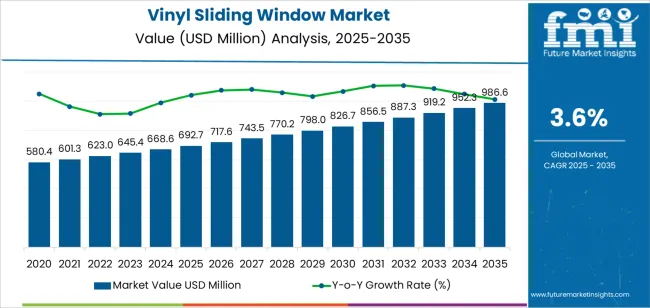
The global vinyl sliding window market is projected to reach USD 986.6 million by 2035, reflecting an absolute increase of USD 293.9 million over the forecast period. The vinyl sliding window market, valued at USD 692.7 million in 2025, is expected to grow at a CAGR of 3.6%. This growth is primarily driven by the increasing demand for energy-efficient, low-maintenance, and cost-effective window solutions in residential, commercial, and industrial buildings.
Vinyl sliding windows are widely used for their ease of operation, durability, and affordability. They are popular in both new construction and renovation projects due to their simple design and ability to maximize natural light and ventilation. The growing preference for sliding windows is driven by their space-saving design, particularly in areas where conventional hinged windows may not be practical. Vinyl frames offer excellent insulation, reducing energy costs and improving indoor comfort, which is contributing to the rising demand for vinyl sliding windows in energy-conscious markets.
As energy efficiency remains a priority for homeowners, businesses, and building owners, vinyl sliding windows are increasingly seen as a smart choice for their superior thermal insulation. Additionally, the growing focus on low-maintenance and durable window solutions, as vinyl does not require frequent painting or staining, is contributing to the market’s growth. Vinyl sliding windows are also resistant to fading, cracking, and warping, making them a preferred option for regions with extreme weather conditions.
Quick Stats for Vinyl Sliding Window Market
- Vinyl Sliding Window Market Value (2025): USD 692.7 million
- Vinyl Sliding Window Market Forecast Value (2035): USD 986.6 million
- Vinyl Sliding Window Market Forecast CAGR (2025 to 2035): 3.6%
- Leading Type in Vinyl Sliding Window Market: Single-Slider
- Key Growth Regions in Vinyl Sliding Window Market: Asia Pacific, Europe, and North America
- Top Players in Vinyl Sliding Window Market: MILGARD, Andersen Windows, Pella, YKK AP, JELD WEN, ProVia, Stanek, Ply Gem, Simonton, Atrium, Paradigm Windows, MI Windows, Vinylmax, Champion Windows, OKNA Windows, Alside, Great Lakes Window, Rosati Windows
What is the Growth Forecast for the Vinyl Sliding Window Market through 2035?
Between 2025 and 2030, the vinyl sliding window market is projected to grow from USD 692.7 million to approximately USD 828.4 million, adding USD 135.7 million, which accounts for about 46.2% of the total forecasted growth for the decade. This period will be marked by increased adoption in both residential and commercial sectors, driven by the demand for energy-efficient and low-maintenance window solutions.
From 2030 to 2035, the market is expected to expand from approximately USD 828.4 million to USD 986.6 million, adding USD 158.2 million, which constitutes about 53.8% of the overall growth. This phase will see sustained growth in demand for vinyl sliding windows, particularly as building codes and consumer preferences continue to emphasize energy savings and durability in window solutions. Further innovations in materials and manufacturing processes will also contribute to this growth.
Vinyl Sliding Window Market Key Takeaways
| Metric | Value |
|---|---|
| Market Value (2025) | USD 692.7 million |
| Market Forecast Value (2035) | USD 986.6 million |
| Forecast CAGR (2025 to 2035) | 3.6% |
Why is the Vinyl Sliding Window Market Growing?
The vinyl sliding window market is growing due to the increasing demand for energy-efficient, durable, and low-maintenance window solutions in both residential and commercial construction. Vinyl sliding windows, known for their smooth sliding operation and space-saving design, are a popular choice for modern homes and buildings. Their energy efficiency, due to the insulating properties of vinyl, is particularly valued in regions with extreme weather conditions, where thermal performance is essential.
The rising trend of home renovation and new construction projects is a major factor driving the demand for vinyl sliding windows. As the focus on reducing energy consumption and improving indoor comfort increases, homeowners and builders are opting for windows that provide high insulation and reduce heating and cooling costs. Vinyl windows, which are resistant to rot, fading, and warping, offer a durable and low-maintenance solution, making them a favored choice in the market.
Advancements in window manufacturing technology, such as improved vinyl formulations and energy-efficient glazing options, are contributing to the market’s growth. Additionally, the aesthetic versatility of vinyl sliding windows, which can complement a wide range of architectural styles, has expanded their adoption in both residential and commercial settings. Despite challenges such as competition from other window materials and price sensitivity, the vinyl sliding window market is expected to continue its growth as the demand for energy-efficient and easy-to-maintain windows rises.
What is the Segment-Wise Analysis of the Vinyl Sliding Window Market?
The market is segmented by type, application, and region. By type, the market is divided into single-slider, double-slider, and others, with single-slider leading the market. Based on application, the market is categorized into residential, commercial, and others, with residential representing the largest segment in terms of market share. Regionally, the market is divided into North America, Europe, Asia Pacific, and other key regions.
Why is the Single-Slider Segment Leading the Market?
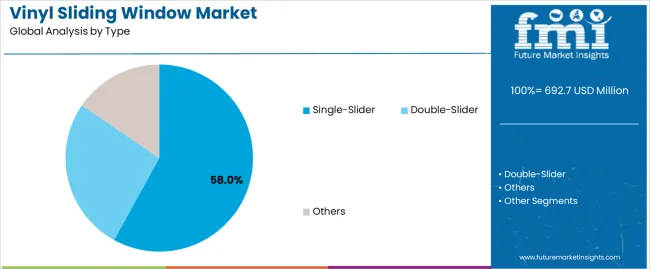
The single-slider segment leads the vinyl sliding window market, holding 58% of the total market share. This dominance is driven by the design simplicity and cost-effectiveness of single-slider windows. Single-slider windows are widely used in residential buildings due to their ease of operation, space-saving design, and affordability. These windows open horizontally, providing smooth and efficient ventilation while taking up less space compared to other window types.
The single-slider design also offers flexibility, making it a suitable choice for a variety of home layouts. It’s particularly popular for smaller spaces or areas where the window may not need to open fully. Additionally, the simplicity of the single-slider mechanism makes it easier to install and maintain, further driving its popularity in both new construction and home renovation projects. As demand for practical, affordable, and efficient window solutions continues to grow, the single-slider segment remains dominant in the market.
How is the Growth of the Residential Sector Driving Market Demand?
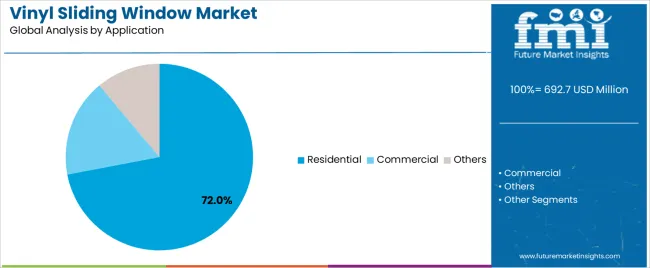
The residential application dominates the vinyl sliding window market, holding 72% of the total market share. This growth is driven by the increasing demand for affordable, energy-efficient, and aesthetically pleasing window solutions for homes. Vinyl sliding windows, particularly single-slider types, are popular in residential buildings due to their low maintenance, durability, and thermal insulation properties. These windows help maintain comfortable indoor temperatures, contributing to energy efficiency and cost savings in residential homes.
With the continued growth of the residential construction market, especially in urban areas, the demand for vinyl sliding windows remains strong. Homeowners increasingly seek windows that combine functionality with modern design, making vinyl sliding windows an ideal choice. The expansion of housing projects, along with the trend towards home renovation, ensures that the residential sector continues to drive significant demand for vinyl sliding windows in the market.
What are the Key Trends, Drivers, and Restraints in the Vinyl Sliding Window Market?
Vinyl sliding windows offer features such as low‑maintenance PVC frames, smooth horizontal sliding operation, and improved energy‑efficiency when paired with double‑ or triple‑glaze units. Key drivers include rising construction activity, stricter building codes for thermal insulation, and growing renovation and replacement volumes. Restraints stem from limited size/structural capacity of vinyl frames in large openings, aesthetic and finish perceptions compared to wood or aluminum, and cost pressures in premium segments.
Why are Vinyl Sliding Windows Gaining Popularity in Modern Construction?
Vinyl sliding windows are gaining popularity because they blend operational ease and modern design with practical advantages: weather‑resistant frames, no painting required, and space‑saving horizontal slide action. As homeowners and builders seek efficient ventilation and unobstructed views combined with minimal upkeep, sliding vinyl units meet these needs effectively. Coupled with energy‑saving glazing systems, these windows support compliance with modern energy codes and help reduce lifecycle maintenance. Their appeal in renovations where replacement can be done without altering structural openings further propels adoption.
How are Technological and Material Innovations Driving Growth in This Segment?
Material and technological innovations are key to the growth of the vinyl sliding window segment. Improvements in PVC profile design including multi‑chambered frames for better thermal insulation and reinforced vinyl with integrated steel allow larger sliding units while maintaining structural integrity. Enhanced sealing, low‑friction tracks, and advanced glazing (low‑E coatings, argon fills) improve performance in energy and sound insulation. Cosmetic upgrades such as wood‑grain finishes, colour alternatives, and slimmer sashes are making vinyl sliding windows more attractive in design‑oriented projects. Together, these developments expand application scope and justify higher‑spec models.
What Are the Key Challenges Limiting Adoption of Vinyl Sliding Windows?
The structural limits of vinyl profiles make them less suited for very large openings or heavy glass stacks, where aluminum or wood‑aluminum hybrids are preferred. Perceptions of vinyl aesthetic and durability especially in high‑end architectural markets can restrict acceptance in premium segments. Installation in retrofit scenarios may still require adjustment of openings, complicating replacement. Furthermore, price competition from basic sliding aluminium systems in lower‑cost regions may suppress adoption of higher‑spec vinyl models, and regional manufacturing or supply constraints can affect availability or lead‑times in emerging markets.
What is the Country-Wise Growth Outlook for the Vinyl Sliding Window Market?
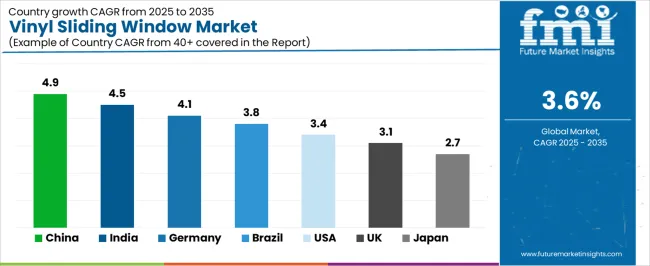
| Country | CAGR (%) |
|---|---|
| China | 4.9% |
| India | 4.5% |
| Germany | 4.1% |
| Brazil | 3.8% |
| USA | 3.4% |
| UK | 3.1% |
| Japan | 2.7% |
The vinyl sliding window market is growing across key countries, with China leading at a 4.9% CAGR. This growth is driven by the increasing demand for energy-efficient, low-maintenance windows in both residential and commercial sectors. India follows at 4.5%, supported by rising construction activity and growing interest in affordable, durable window solutions. Germany shows a 4.1% CAGR, fueled by its demand for energy-efficient building materials and a preference for low-maintenance solutions. Brazil records a 3.8% CAGR, driven by the construction industry's growth and a rising demand for quality window products. The USA, UK, and Japan experience moderate growth at 3.4%, 3.1%, and 2.7%, respectively, as consumer demand for vinyl windows continues to increase due to their durability and insulation properties.
What is Driving Growth in China’s Vinyl Sliding Window Market?
China is leading the vinyl sliding window market with a 4.9% CAGR. The rapid urbanization and increasing construction activity across residential and commercial sectors are key drivers of this growth. As more people move to urban areas and new infrastructure projects are developed, the demand for energy-efficient and low-maintenance window solutions like vinyl sliding windows continues to rise. These windows are favored for their ability to offer excellent insulation, durability, and ease of operation.
The growing emphasis on energy efficiency in building materials and the country's expanding middle class are contributing to the demand for vinyl windows. Additionally, with China’s booming construction sector, vinyl sliding windows are increasingly being used in both new builds and renovation projects. As the country continues to focus on reducing energy consumption and improving indoor comfort, the vinyl sliding window market is expected to maintain strong growth.
What is Influencing Growth in India’s Vinyl Sliding Window Market?
India is experiencing steady growth in the vinyl sliding window market with a 4.5% CAGR. The country’s growing construction sector and increasing demand for energy-efficient and durable building materials are driving this market. As the demand for affordable housing and commercial spaces rises, vinyl sliding windows are becoming increasingly popular due to their low maintenance, durability, and excellent insulation properties. These windows help improve energy efficiency, making them attractive to consumers and builders alike.
The growing awareness of energy conservation, along with rising disposable incomes and urbanization, is further contributing to the demand for vinyl sliding windows. With the Indian government’s push for energy-efficient construction practices and the rise in residential and commercial development, the market for vinyl windows is expected to continue growing. The expanding middle class, along with increasing investments in infrastructure, will continue to drive the adoption of vinyl sliding windows in India.
How is Germany Contributing to the Vinyl Sliding Window Market?
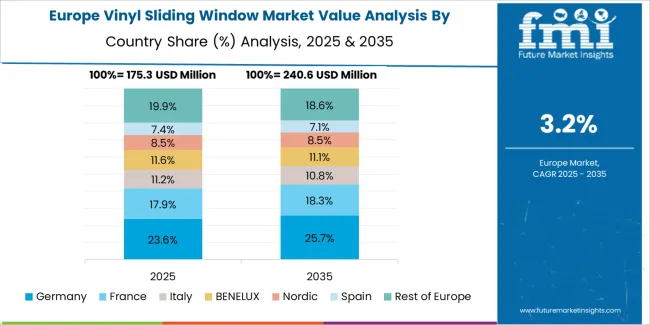
Germany is seeing steady growth in the vinyl sliding window market with a 4.1% CAGR. The country’s strong demand for energy-efficient building materials is a key driver of this growth. With increasing emphasis on sustainable construction and energy-efficient solutions, vinyl sliding windows are gaining popularity due to their excellent insulation properties, which help improve energy efficiency in both residential and commercial buildings. Germany’s commitment to reducing energy consumption in buildings makes vinyl windows an attractive option.
Germany’s well-established construction and renovation sectors are fueling the demand for vinyl sliding windows. With a large number of existing buildings being retrofitted to meet energy standards, vinyl windows are becoming a preferred choice for improving thermal insulation and reducing energy costs. As the country continues to focus on sustainability in the building sector, the vinyl sliding window market will continue to see steady growth.
What is Driving Growth in Brazil’s Vinyl Sliding Window Market?
Brazil is experiencing moderate growth in the vinyl sliding window market, with a 3.8% CAGR. The growing demand for energy-efficient and low-maintenance windows, particularly in new residential and commercial construction, is driving this market. As Brazil’s construction industry expands and more homes and buildings are developed, vinyl sliding windows, which offer durability, ease of use, and insulation benefits, are becoming an increasingly popular choice.
The country's economic growth and the rise in urbanization are contributing to a demand for cost-effective and energy-efficient solutions, which vinyl sliding windows offer. As Brazil continues to invest in infrastructure and urban development, the need for high-quality, durable window solutions like vinyl sliding windows is expected to rise. This growing demand is expected to continue driving the market for vinyl sliding windows in Brazil.
What is Influencing Growth in the USA’s Vinyl Sliding Window Market?
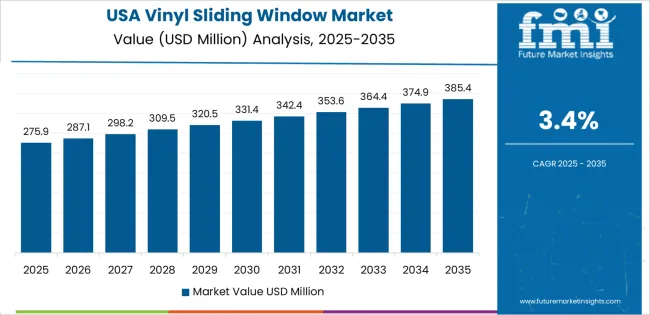
The USA is seeing steady growth in the vinyl sliding window market, with a 3.4% CAGR. The increasing demand for energy-efficient windows in both residential and commercial buildings is one of the primary factors driving this market. Vinyl sliding windows are valued for their low maintenance, insulation properties, and durability, which make them an ideal choice for homeowners and businesses seeking energy-efficient solutions.
As the trend toward energy-efficient homes and green building practices continues to grow in the USA, the demand for vinyl sliding windows will rise. As more homes and buildings are renovated or upgraded to improve energy efficiency, vinyl sliding windows are becoming an increasingly popular choice. With a strong focus on reducing energy consumption and improving indoor comfort, the vinyl sliding window market in the USA is expected to grow steadily.
What is Driving Growth in the UK’s Vinyl Sliding Window Market?
The UK is witnessing moderate growth in the vinyl sliding window market with a 3.1% CAGR. The rising demand for energy-efficient, low-maintenance windows in both new builds and renovations is fueling this market. Vinyl sliding windows are particularly popular in the UK due to their excellent thermal insulation, durability, and ease of use. As more homes and buildings are renovated to meet energy efficiency standards, the demand for vinyl sliding windows is growing.
The UK’s focus on sustainability and energy conservation is also contributing to the rise in popularity of vinyl windows. As consumers and developers increasingly prioritize energy-efficient building materials, vinyl sliding windows are becoming a preferred option for improving the energy performance of buildings. The growing trend of home renovations and the demand for affordable housing will continue to drive steady growth in the vinyl sliding window market in the UK.
What is Influencing Growth in Japan’s Vinyl Sliding Window Market?
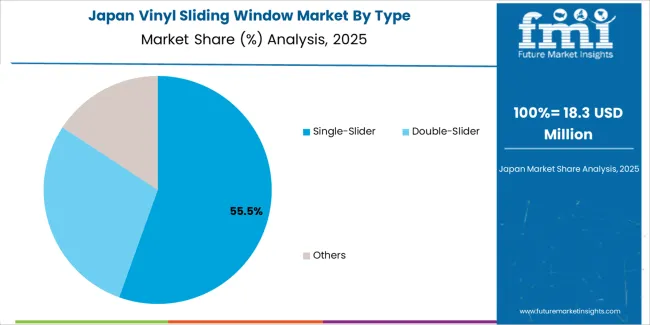
Japan’s vinyl sliding window market is growing at a steady pace with a 2.7% CAGR. The demand for energy-efficient windows is a key factor driving this growth, as Japan places a strong emphasis on energy conservation and reducing environmental impact. Vinyl sliding windows, known for their durability and insulation properties, are becoming a popular choice for both residential and commercial buildings looking to improve energy efficiency.
The rise of urbanization, along with Japan’s focus on sustainable construction and energy-efficient buildings, is contributing to the growing demand for vinyl windows. Additionally, the country’s aging infrastructure and the need to retrofit older buildings to meet modern energy standards further drive the demand for vinyl sliding windows. As Japan continues to prioritize energy efficiency and sustainable construction practices, the vinyl sliding window market is expected to maintain steady growth.
What Does the Competitive Landscape Look Like in the Vinyl Sliding Window Market?
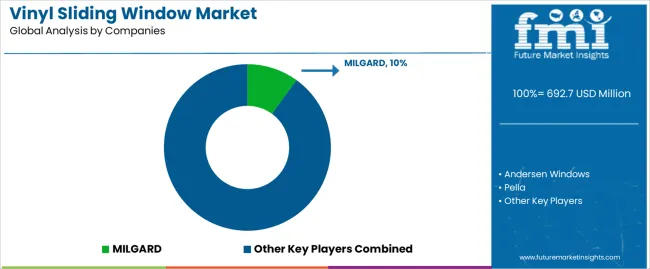
The vinyl sliding window market is growing as demand for energy-efficient, low-maintenance, and aesthetically versatile windows rises across residential and commercial sectors. MILGARD leads the market with a 10% share, recognized for its high-quality vinyl windows that combine durability, performance, and design flexibility. MILGARD’s strong brand reputation, energy-efficient offerings, and commitment to customer satisfaction position it as a dominant player in this market.
Other key players in the market include Andersen Windows, Pella, and YKK AP, each offering a variety of vinyl sliding window solutions for different building needs. Andersen Windows is known for its energy-efficient vinyl windows that provide both style and performance, while Pella offers vinyl sliding windows with a focus on high-quality construction and a wide range of customizable options. YKK AP provides reliable, high-performance vinyl windows with innovative features, particularly in the commercial and large-scale construction sectors.
Companies such as JELD-WEN, ProVia, and Stanek contribute to the market by providing durable, energy-efficient vinyl sliding windows that cater to both residential and commercial applications. Ply Gem, Simonton, and Atrium also compete with a range of cost-effective, high-performance vinyl windows, offering solutions designed to meet the needs of budget-conscious consumers without compromising on quality.
Other notable players such as Paradigm Windows, MI Windows, Vinylmax, Champion Windows, and OKNA Windows offer competitive products, focusing on energy efficiency, durability, and design versatility. Alside, Great Lakes Window, and Rosati Windows round out the competition, providing quality vinyl sliding windows with strong customer support and various customizable features.
Key Players in the Vinyl Sliding Window Market
- MILGARD
- Andersen Windows
- Pella
- YKK AP
- JELD‑WEN
- ProVia
- Stanek
- Ply Gem
- Simonton
- Atrium
- Paradigm Windows
- MI Windows
- Vinylmax
- Champion Windows
- OKNA Windows
- Alside
- Great Lakes Window
- Rosati Windows
Scope of the Report
| Items | Values |
|---|---|
| Quantitative Units (2025) | USD million |
| Type | Single-Slider, Double-Slider, Others |
| Application | Residential, Commercial, Others |
| Regions Covered | Asia Pacific, Europe, North America, Latin America, Middle East & Africa |
| Countries Covered | China, Japan, South Korea, India, Australia & New Zealand, ASEAN, Rest of Asia Pacific, Germany, United Kingdom, France, Italy, Spain, Nordic, BENELUX, Rest of Europe, United States, Canada, Mexico, Brazil, Chile, Rest of Latin America, Kingdom of Saudi Arabia, Other GCC Countries, Turkey, South Africa, Other African Union, Rest of Middle East & Africa |
| Key Companies Profiled | MILGARD, Andersen Windows, Pella, YKK AP, JELD-WEN, ProVia, Stanek, Ply Gem, Simonton, Atrium, Paradigm Windows, MI Windows, Vinylmax, Champion Windows, OKNA Windows, Alside, Great Lakes Window, Rosati Windows |
| Additional Attributes | Dollar sales by type and application categories, market growth trends, market adoption by classification and application segments, regional adoption trends, competitive landscape, advancements in vinyl sliding window technologies, integration with residential and commercial construction projects. |
Vinyl Sliding Window Market by Segments
Type:
- Single‑Slider
- Double‑Slider
- Others
Application:
- Residential
- Commercial
- Others
Region:
- Asia Pacific
- China
- Japan
- South Korea
- India
- Australia & New Zealand
- ASEAN
- Rest of Asia Pacific
- Europe
- Germany
- United Kingdom
- France
- Italy
- Spain
- Nordic
- BENELUX
- Rest of Europe
- North America
- United States
- Canada
- Mexico
- Latin America
- Brazil
- Chile
- Rest of Latin America
- Middle East & Africa
- Kingdom of Saudi Arabia
- Other GCC Countries
- Turkey
- South Africa
- Other African Union
- Rest of Middle East & Africa
Frequently Asked Questions
How big is the vinyl sliding window market in 2025?
The global vinyl sliding window market is estimated to be valued at USD 692.7 million in 2025.
What will be the size of vinyl sliding window market in 2035?
The market size for the vinyl sliding window market is projected to reach USD 986.6 million by 2035.
How much will be the vinyl sliding window market growth between 2025 and 2035?
The vinyl sliding window market is expected to grow at a 3.6% CAGR between 2025 and 2035.
What are the key product types in the vinyl sliding window market?
The key product types in vinyl sliding window market are single-slider, double-slider and others.
Which application segment to contribute significant share in the vinyl sliding window market in 2025?
In terms of application, residential segment to command 72.0% share in the vinyl sliding window market in 2025.
Preview the report firsthand - request a free sample
Get SampleGet the brochure for pricing and purchase details.
Get PDFTable of Content
- Executive Summary
- Global Market Outlook
- Demand-side Trends
- Supply-side Trends
- Technology Roadmap Analysis
- Analysis and Recommendations
- Market Overview
- Market Coverage / Taxonomy
- Market Definition / Scope / Limitations
- Market Background
- Market Dynamics
- Drivers
- Restraints
- Opportunity
- Trends
- Scenario Forecast
- Demand in Optimistic Scenario
- Demand in Likely Scenario
- Demand in Conservative Scenario
- Opportunity Map Analysis
- Product Life Cycle Analysis
- Supply Chain Analysis
- Investment Feasibility Matrix
- Value Chain Analysis
- PESTLE and Porter’s Analysis
- Regulatory Landscape
- Regional Parent Market Outlook
- Production and Consumption Statistics
- Import and Export Statistics
- Market Dynamics
- Global Market Analysis 2020 to 2024 and Forecast, 2025 to 2035
- Historical Market Size Value (USD Million) Analysis, 2020 to 2024
- Current and Future Market Size Value (USD Million) Projections, 2025 to 2035
- Y-o-Y Growth Trend Analysis
- Absolute $ Opportunity Analysis
- Global Market Pricing Analysis 2020 to 2024 and Forecast 2025 to 2035
- Global Market Analysis 2020 to 2024 and Forecast 2025 to 2035, By Type
- Introduction / Key Findings
- Historical Market Size Value (USD Million) Analysis By Type , 2020 to 2024
- Current and Future Market Size Value (USD Million) Analysis and Forecast By Type , 2025 to 2035
- Single-Slider
- Double-Slider
- Others
- Y-o-Y Growth Trend Analysis By Type , 2020 to 2024
- Absolute $ Opportunity Analysis By Type , 2025 to 2035
- Global Market Analysis 2020 to 2024 and Forecast 2025 to 2035, By Application
- Introduction / Key Findings
- Historical Market Size Value (USD Million) Analysis By Application, 2020 to 2024
- Current and Future Market Size Value (USD Million) Analysis and Forecast By Application, 2025 to 2035
- Residential
- Commercial
- Others
- Y-o-Y Growth Trend Analysis By Application, 2020 to 2024
- Absolute $ Opportunity Analysis By Application, 2025 to 2035
- Global Market Analysis 2020 to 2024 and Forecast 2025 to 2035, By Region
- Introduction
- Historical Market Size Value (USD Million) Analysis By Region, 2020 to 2024
- Current Market Size Value (USD Million) Analysis and Forecast By Region, 2025 to 2035
- North America
- Latin America
- Western Europe
- Eastern Europe
- East Asia
- South Asia and Pacific
- Middle East & Africa
- Market Attractiveness Analysis By Region
- North America Market Analysis 2020 to 2024 and Forecast 2025 to 2035, By Country
- Historical Market Size Value (USD Million) Trend Analysis By Market Taxonomy, 2020 to 2024
- Market Size Value (USD Million) Forecast By Market Taxonomy, 2025 to 2035
- By Country
- USA
- Canada
- Mexico
- By Type
- By Application
- By Country
- Market Attractiveness Analysis
- By Country
- By Type
- By Application
- Key Takeaways
- Latin America Market Analysis 2020 to 2024 and Forecast 2025 to 2035, By Country
- Historical Market Size Value (USD Million) Trend Analysis By Market Taxonomy, 2020 to 2024
- Market Size Value (USD Million) Forecast By Market Taxonomy, 2025 to 2035
- By Country
- Brazil
- Chile
- Rest of Latin America
- By Type
- By Application
- By Country
- Market Attractiveness Analysis
- By Country
- By Type
- By Application
- Key Takeaways
- Western Europe Market Analysis 2020 to 2024 and Forecast 2025 to 2035, By Country
- Historical Market Size Value (USD Million) Trend Analysis By Market Taxonomy, 2020 to 2024
- Market Size Value (USD Million) Forecast By Market Taxonomy, 2025 to 2035
- By Country
- Germany
- UK
- Italy
- Spain
- France
- Nordic
- BENELUX
- Rest of Western Europe
- By Type
- By Application
- By Country
- Market Attractiveness Analysis
- By Country
- By Type
- By Application
- Key Takeaways
- Eastern Europe Market Analysis 2020 to 2024 and Forecast 2025 to 2035, By Country
- Historical Market Size Value (USD Million) Trend Analysis By Market Taxonomy, 2020 to 2024
- Market Size Value (USD Million) Forecast By Market Taxonomy, 2025 to 2035
- By Country
- Russia
- Poland
- Hungary
- Balkan & Baltic
- Rest of Eastern Europe
- By Type
- By Application
- By Country
- Market Attractiveness Analysis
- By Country
- By Type
- By Application
- Key Takeaways
- East Asia Market Analysis 2020 to 2024 and Forecast 2025 to 2035, By Country
- Historical Market Size Value (USD Million) Trend Analysis By Market Taxonomy, 2020 to 2024
- Market Size Value (USD Million) Forecast By Market Taxonomy, 2025 to 2035
- By Country
- China
- Japan
- South Korea
- By Type
- By Application
- By Country
- Market Attractiveness Analysis
- By Country
- By Type
- By Application
- Key Takeaways
- South Asia and Pacific Market Analysis 2020 to 2024 and Forecast 2025 to 2035, By Country
- Historical Market Size Value (USD Million) Trend Analysis By Market Taxonomy, 2020 to 2024
- Market Size Value (USD Million) Forecast By Market Taxonomy, 2025 to 2035
- By Country
- India
- ASEAN
- Australia & New Zealand
- Rest of South Asia and Pacific
- By Type
- By Application
- By Country
- Market Attractiveness Analysis
- By Country
- By Type
- By Application
- Key Takeaways
- Middle East & Africa Market Analysis 2020 to 2024 and Forecast 2025 to 2035, By Country
- Historical Market Size Value (USD Million) Trend Analysis By Market Taxonomy, 2020 to 2024
- Market Size Value (USD Million) Forecast By Market Taxonomy, 2025 to 2035
- By Country
- Kingdom of Saudi Arabia
- Other GCC Countries
- Turkiye
- South Africa
- Other African Union
- Rest of Middle East & Africa
- By Type
- By Application
- By Country
- Market Attractiveness Analysis
- By Country
- By Type
- By Application
- Key Takeaways
- Key Countries Market Analysis
- USA
- Pricing Analysis
- Market Share Analysis, 2024
- By Type
- By Application
- Canada
- Pricing Analysis
- Market Share Analysis, 2024
- By Type
- By Application
- Mexico
- Pricing Analysis
- Market Share Analysis, 2024
- By Type
- By Application
- Brazil
- Pricing Analysis
- Market Share Analysis, 2024
- By Type
- By Application
- Chile
- Pricing Analysis
- Market Share Analysis, 2024
- By Type
- By Application
- Germany
- Pricing Analysis
- Market Share Analysis, 2024
- By Type
- By Application
- UK
- Pricing Analysis
- Market Share Analysis, 2024
- By Type
- By Application
- Italy
- Pricing Analysis
- Market Share Analysis, 2024
- By Type
- By Application
- Spain
- Pricing Analysis
- Market Share Analysis, 2024
- By Type
- By Application
- France
- Pricing Analysis
- Market Share Analysis, 2024
- By Type
- By Application
- India
- Pricing Analysis
- Market Share Analysis, 2024
- By Type
- By Application
- ASEAN
- Pricing Analysis
- Market Share Analysis, 2024
- By Type
- By Application
- Australia & New Zealand
- Pricing Analysis
- Market Share Analysis, 2024
- By Type
- By Application
- China
- Pricing Analysis
- Market Share Analysis, 2024
- By Type
- By Application
- Japan
- Pricing Analysis
- Market Share Analysis, 2024
- By Type
- By Application
- South Korea
- Pricing Analysis
- Market Share Analysis, 2024
- By Type
- By Application
- Russia
- Pricing Analysis
- Market Share Analysis, 2024
- By Type
- By Application
- Poland
- Pricing Analysis
- Market Share Analysis, 2024
- By Type
- By Application
- Hungary
- Pricing Analysis
- Market Share Analysis, 2024
- By Type
- By Application
- Kingdom of Saudi Arabia
- Pricing Analysis
- Market Share Analysis, 2024
- By Type
- By Application
- Turkiye
- Pricing Analysis
- Market Share Analysis, 2024
- By Type
- By Application
- South Africa
- Pricing Analysis
- Market Share Analysis, 2024
- By Type
- By Application
- USA
- Market Structure Analysis
- Competition Dashboard
- Competition Benchmarking
- Market Share Analysis of Top Players
- By Regional
- By Type
- By Application
- Competition Analysis
- Competition Deep Dive
- MILGARD
- Overview
- Product Portfolio
- Profitability by Market Segments (Product/Age /Sales Channel/Region)
- Sales Footprint
- Strategy Overview
- Marketing Strategy
- Product Strategy
- Channel Strategy
- Andersen Windows
- Pella
- YKK AP
- JELD-WEN
- ProVia
- Stanek
- Ply Gem
- Simonton
- Atrium
- Paradigm Windows
- MI Windows
- Vinylmax
- Champion Windows
- OKNA Windows
- Alside
- Great Lakes Window
- Rosati Windows
- MILGARD
- Competition Deep Dive
- Assumptions & Acronyms Used
- Research Methodology


