

- Industry Size (2025)
- USD 1.7 Bn
- Forecast (2035)
- USD 2.5 Bn
- CAGR (2025 to 2035)
- 4.1%
Sliding Patio Glass Door Market Forecast and Outlook (2025-2035)
The sliding patio glass door market is valued at USD 1.7 billion in 2025 and is expected to reach USD 2.5 billion by 2035, supported by increased adoption of natural-light architectural spaces, upgraded residential renovation cycles, and consumer preference for visually expansive indoor–outdoor transitions. Sliding patio glass doors are becoming standard in both new construction and retrofit applications, particularly in homes and hospitality environments where spatial openness, daylight access, and energy-efficient envelope performance are prioritized. Growth is further strengthened by improvement in glazing configurations, frame reinforcement technologies, and sealing systems that enhance weather resistance and acoustic insulation while supporting modern aesthetic requirements.
From 2025 to 2030, the market rises from USD 1.7 billion to approximately USD 2.0 billion, adding USD 0.3 billion and accounting for 45 percent of the total decade expansion. Demand during this phase is driven by widespread use of low-emissivity glass, thermally broken aluminum frames, and double-glazed insulating units. From 2030 to 2035, growth continues from USD 2.0 billion to USD 2.5 billion, adding USD 0.5 billion or 55 percent of the decade’s expansion. The latter period is shaped by increased adoption of smart glass integration, automated sliding systems, and building code alignment, emphasizing energy savings and carbon reduction. Manufacturers capable of offering customizable panel configurations, enhanced security locking systems, and compatibility with modern architectural design workflows remain competitively advantaged as sliding patio glass doors shift from premium feature to mainstream residential design element.
Quick Stats for Sliding Patio Glass Door Market
- Sliding Patio Glass Door Market Value (2025): USD 1.7 billion
- Sliding Patio Glass Door Market Forecast Value (2035): USD 2.5 billion
- Sliding Patio Glass Door Market Forecast CAGR: 4.1%
- Leading Frame Material in Sliding Patio Glass Door Market: Vinyl Frames
- Key Growth Regions in Sliding Patio Glass Door Market: East Asia, South Asia Pacific, and North America
- Top Key Players in Sliding Patio Glass Door Market: Assa Abloy, Stanley, MILGARD, Western Window Systems, Atrium
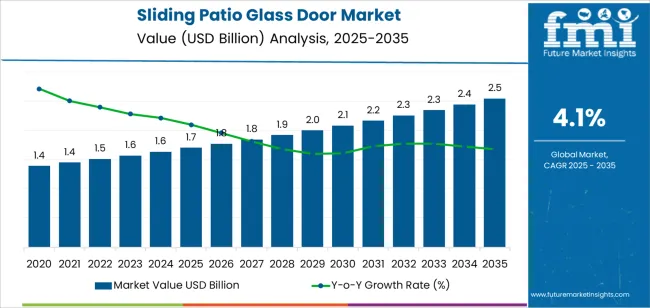
The latter half (2030-2035) will witness continued growth from USD 2.0 billion to USD 2.5 billion, representing an addition of USD 0.5 billion or 55% of the decade's expansion. This period will be defined by mass market penetration of triple-glazed technologies, integration with smart home platforms, and seamless compatibility with existing building infrastructure. The market trajectory signals fundamental shifts in how residential and commercial properties approach natural lighting and indoor-outdoor connectivity, with participants positioned to benefit from growing demand across multiple frame material types and application segments.
Regional dynamics reveal distinct adoption patterns: developed markets lead technological advancement, while emerging economies show accelerating growth through construction modernization programs. North American markets maintain steady expansion supported by residential renovation activity and replacement demand, while Asian markets demonstrate rapid growth driven by urbanization trends and rising living standards. European markets are experiencing moderate growth, driven by stringent energy-efficiency regulations and building performance standards.
Construction industry evolution drives fundamental changes in sliding patio door specifications, with builders and architects increasingly prioritizing products that combine thermal efficiency, structural integrity, and operational convenience. The decade ahead will witness a transformation from basic glazing solutions toward sophisticated fenestration systems with advanced weather sealing, automated operation features, and integrated security systems that meet diverse residential and commercial requirements.
Where revenue comes from - now vs next (industry-level view)
| Period | Primary Revenue Buckets | Share | Notes |
|---|---|---|---|
| Today | New product sales (vinyl, aluminum frames) | 52% | Replacement-driven, energy efficiency focus |
| Commercial installations | 23% | Office buildings, retail spaces | |
| Renovation & retrofit projects | 18% | Upgrade existing installations | |
| Parts & hardware accessories | 7% | Rollers, locks, weather sealing | |
| Future (3-5 yrs) | Energy-efficient systems | 45-48% | Triple glazing, low-E coatings |
| Smart integration features | 12-15% | Automated operation, sensors | |
| Commercial applications | 20-24% | Growing office, hospitality demand | |
| Renovation market | 15-18% | Aging housing stock replacement | |
| Customization services | 5-8% | Architectural specifications | |
| Maintenance contracts | 3-5% | Service agreements for commercial |
Sliding Patio Glass Door Market Key Takeaways
At-a-Glance Metrics
| Metric | Value |
|---|---|
| Market Value (2025) | USD 1.7 billion |
| Market Forecast (2035) | USD 2.5 billion |
| Growth Rate | 4.1% CAGR |
| Leading Frame Material | Vinyl Frames |
| Primary Application | Residential Segment |
The market demonstrates strong fundamentals with vinyl frame systems capturing a dominant share through superior energy efficiency capabilities and residential construction optimization. Residential applications drive primary demand, supported by increasing construction activity and renovation requirements. Geographic expansion remains concentrated in developed markets with established construction infrastructure, while emerging economies show accelerating adoption rates driven by urbanization initiatives and rising quality standards.
Construction trends favor sliding patio doors that integrate thermal performance with architectural flexibility, creating opportunities for manufacturers offering comprehensive product portfolios. The decade ahead presents expansion potential across residential segments, commercial developments, and renovation projects, with market participants positioned to capitalize on growing demand for energy-efficient fenestration solutions that meet evolving building performance standards and consumer preferences.
Imperatives for Stakeholders in Sliding Patio Glass Door Market
Design for energy standards, not just aesthetics
- Offer comprehensive performance packages: products with thermal testing certifications, energy rating documentation, installation guidelines, and warranty programs.
- Preconfigured systems: weather sealing protocols, glazing specifications, thermal break designs, and condensation resistance ratings for construction applications.
Product line versatility
- Multiple frame material options, customizable dimensions, hardware finish selections, and glazing configurations that accommodate diverse architectural requirements.
Quality assurance approach
- Factory testing protocols, performance validation systems, quality control procedures, and product certification programs that ensure consistent manufacturing standards.
Value-based positioning
- Clear base product pricing with transparent upgrade options (glazing types, hardware selections, finish choices); energy savings calculators and lifecycle cost comparisons.
What factors drive the dominance of the Vinyl Frames and Residential segments in their respective categories?
Primary Classification: The market segments by frame material type into vinyl frames, aluminum frames, and others, representing the evolution from traditional frame materials to modern fenestration solutions for comprehensive residential and commercial construction optimization.
Secondary Classification: Application segmentation divides the market into residential and commercial sectors, reflecting distinct requirements for design flexibility, performance standards, and installation specifications.
Regional Classification: Geographic distribution covers North America, Latin America, Western Europe, Eastern Europe, East Asia, South Asia Pacific, and Middle East & Africa, with developed markets leading adoption while emerging economies show accelerating growth patterns driven by construction modernization programs.
The classification structure reveals technology progression from standard frame materials toward sophisticated fenestration systems with enhanced thermal performance and durability capabilities, while application diversity spans from residential properties to commercial developments requiring precise energy efficiency solutions.
By Frame Material Type, the Vinyl Frames Segment Accounts for Dominant Market Share
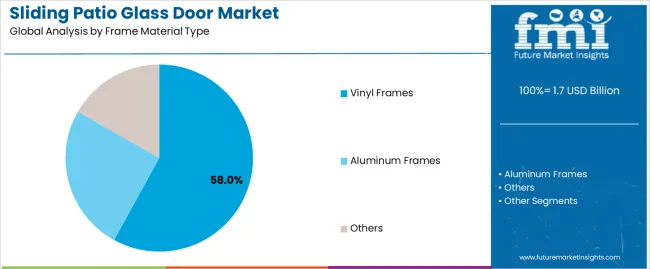
Market Position: Vinyl frame systems command the leading position in the market with 58.0% market share through advanced insulation features, including superior thermal performance, low maintenance requirements, and residential construction optimization that enable properties to achieve optimal energy efficiency across diverse residential and commercial environments.
Value Drivers: The segment benefits from construction industry preference for cost-effective frame materials that provide consistent thermal performance, weather resistance, and operational durability without requiring significant maintenance investments. Advanced design features enable enhanced insulation properties, moisture resistance, and integration with various glazing systems, where energy performance and lifecycle costs represent critical property requirements.
Competitive Advantages: Vinyl frame systems differentiate through proven durability characteristics, consistent thermal properties, and compatibility with residential construction standards that enhance property effectiveness while maintaining optimal energy efficiency suitable for diverse climate applications.
Key market characteristics:
- Advanced extrusion designs with optimized thermal configuration and insulation capabilities
- Enhanced energy effectiveness, enabling superior U-factor performance with consistent thermal characteristics
- Construction compatibility, including weather sealing integration, glazing retention systems, and structural reinforcement for frame assemblies
Aluminum Frames Show Specialized Market Growth
Aluminum frame systems maintain a 28.0% market position in the market due to their structural strength properties and architectural design advantages. These systems appeal to projects requiring enhanced load-bearing capacity with competitive pricing for commercial applications. Market growth is driven by commercial construction expansion, emphasizing durable frame solutions and operational longevity through optimized structural designs.
Other Frame Materials Demonstrate Niche Growth
Other frame materials including wood and composite systems capture 14.0% market share through specialized architectural requirements in premium residential properties, heritage restoration projects, and custom design applications. These projects demand distinctive aesthetic characteristics capable of delivering traditional appearance while providing effective thermal capabilities and architectural authenticity.
By Application, the Residential Segment Shows Fastest Growth
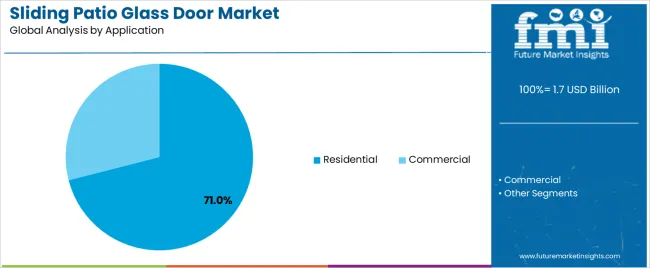
Market Context: Residential applications demonstrate 71.0% market share with 4.5% CAGR due to widespread adoption of home improvement solutions and increasing focus on energy efficiency optimization, property value enhancement, and indoor-outdoor living applications that maximize natural lighting while maintaining thermal comfort standards.
Appeal Factors: Residential property owners prioritize product versatility, aesthetic appeal, and integration with existing home architecture that enables coordinated renovation operations across multiple property improvement projects. The segment benefits from substantial renovation investment and construction activity that emphasize the acquisition of sliding patio doors for energy efficiency improvement and lifestyle enhancement applications.
Growth Drivers: Housing market expansion programs incorporate sliding patio doors as standard features for new construction, while aging housing stock increases demand for replacement products that comply with energy standards and minimize operational complexity.
Market Challenges: Varying architectural styles and installation complexity may limit product standardization across different property types or regional scenarios.
Application dynamics include:
- Strong growth in residential renovation and new construction requiring energy-efficient fenestration capabilities
- Increasing adoption in property value enhancement and energy savings applications for homeowners
- Rising integration with home automation systems for operational convenience and security assurance
Commercial Applications Maintain Steady Demand
Commercial applications capture market shares through specialized fenestration requirements in office buildings, hospitality facilities, and retail developments. These properties demand durable sliding door systems capable of operating with high traffic volumes while providing effective thermal access and structural reliability capabilities.
What are the Drivers, Restraints, and Key Trends of the Sliding Patio Glass Door Market?
| Category | Factor | Impact | Why It Matters |
|---|---|---|---|
| Driver | Residential construction growth & renovation activity | ★★★★★ | New housing developments and aging housing stock replacement drive consistent demand for energy-efficient fenestration solutions with enhanced thermal performance. |
| Driver | Energy efficiency regulations & building codes | ★★★★★ | Stringent thermal performance standards transform advanced glazing systems from optional to mandatory; manufacturers providing certified products gain competitive advantage. |
| Driver | Indoor-outdoor living trends & architectural preferences | ★★★★☆ | Growing consumer preference for natural lighting and patio access increases demand for large-format sliding doors with minimal visual obstruction. |
| Restraint | Installation complexity & skilled labor requirements | ★★★★☆ | Proper installation critical for performance; shortage of qualified installers limits market expansion and increases project costs. |
| Restraint | Material cost fluctuations & supply chain dependencies | ★★★☆☆ | Raw material price volatility affects product pricing; manufacturers face margin pressure during cost escalation periods. |
| Trend | Smart home integration & automation features | ★★★★★ | Automated operation, sensor technology, and security integration transform product expectations; connectivity becomes core value proposition. |
| Trend | Customization demand & architectural specifications | ★★★★☆ | Growing preference for tailored solutions and unique dimensions drives manufacturers toward flexible production capabilities and custom order processing. |
Analysis of the Sliding Patio Glass Door Market by Key Country
The market demonstrates varied regional dynamics with Growth Leaders including China (5.5% growth rate) and India (5.1% growth rate) driving expansion through residential construction initiatives and urbanization development. Steady Performers encompass Germany (4.7% growth rate), Brazil (4.3% growth rate), and developed regions, benefiting from established construction industries and renovation market adoption. Mature Markets feature United States (3.9% growth rate) and United Kingdom (3.5% growth rate), where replacement demand and energy efficiency programs support consistent growth patterns.
Regional synthesis reveals East Asian markets leading adoption through construction expansion and residential development, while North American countries maintain steady expansion supported by renovation activity and energy efficiency requirements. European markets show moderate growth driven by building regulation compliance and thermal performance integration trends.
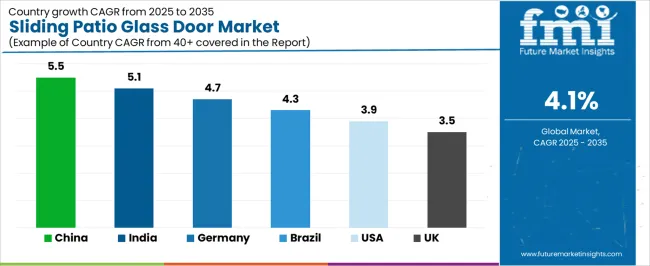
| Region/Country | 2025-2035 Growth | How to win | What to watch out |
|---|---|---|---|
| China | 5.5% | Lead with competitive pricing | Local brand competition |
| India | 5.1% | Focus on value segments | Distribution challenges |
| Germany | 4.7% | Offer premium efficiency | Strict certification costs |
| Brazil | 4.3% | Value-oriented models | Economic volatility |
| USA | 3.9% | Provide energy certifications | Price competition |
| UK | 3.5% | Push thermal performance | Post-Brexit logistics |
Why does China drive the fastest market growth?
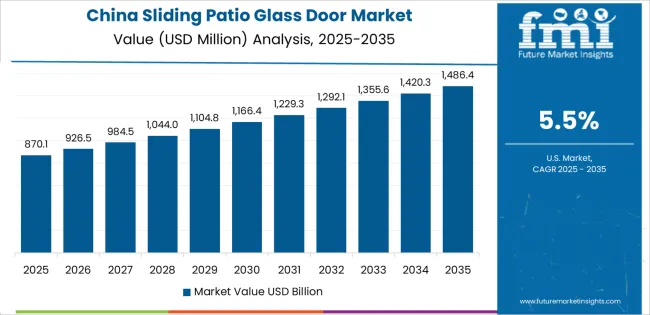
China establishes fastest market growth through aggressive residential construction programs and comprehensive urbanization development, integrating sliding patio glass doors as standard components in apartment buildings and residential property installations. The country's 5.5% growth rate reflects government initiatives promoting modern housing standards and urban development capabilities that mandate the use of quality fenestration systems in residential and commercial facilities. Growth concentrates in major urban centers, including Beijing, Shanghai, and Guangzhou, where construction activity showcases modern building designs that appeal to property developers seeking enhanced living space capabilities and natural lighting applications.
Chinese manufacturers are developing cost-competitive products that combine domestic production advantages with improved quality features, including multi-point locking systems and enhanced weather sealing capabilities. Distribution channels through building material retailers and construction supply distributors expand market access, while government support for housing construction supports adoption across diverse residential and commercial segments.
Strategic Market Indicators:
- Residential developments leading adoption with 76% deployment rate in urban apartment and housing sectors
- Government housing programs providing substantial funding for construction technology advancement
- Local manufacturers capturing 62% market share through competitive pricing and regional distribution networks
- Export market development for mid-range products targeting emerging Asian markets
Why does India emerge as a high-growth market?
In Mumbai, Delhi, and Bangalore, residential properties and commercial buildings are implementing sliding patio glass doors as standard features for natural lighting and space utilization applications, driven by increasing middle-class housing demand and construction modernization programs that emphasize the importance of quality building materials. The market holds a 5.1% growth rate, supported by government housing initiatives and urban infrastructure development programs that promote modern fenestration systems for residential and commercial facilities. Indian consumers are adopting products that provide effective thermal insulation and operational convenience features, particularly appealing in urban regions where living space optimization and energy efficiency represent critical property requirements.
Market expansion benefits from growing construction capabilities and technology adoption patterns that enable broader availability of quality sliding door systems for residential and commercial applications. Product adoption follows patterns established in building materials, where value pricing and performance reliability drive purchasing decisions and installation deployment.
Market Intelligence Brief:
- Residential and commercial segments are driving initial adoption with 52% annual growth in product installations
- Construction modernization programs emphasizing quality fenestration for energy efficiency and aesthetic appeal
- Local manufacturers partnering with international brands for technology development
- Urban developments implementing sliding doors for property value enhancement and living space optimization
How does Germany maintain technology leadership?
Germany establishes technology leadership through comprehensive building energy programs and advanced construction standards, integrating sliding patio glass doors across residential and commercial applications. The country's 4.7% growth rate reflects established construction industry relationships and mature building technology adoption that supports widespread use of high-performance fenestration systems in residential renovation and new construction facilities. Growth concentrates in major urban centers, including Munich, Hamburg, and Berlin, where building technology showcases mature energy-efficient installations that appeal to property owners seeking proven thermal performance capabilities and operational reliability applications.
German manufacturers leverage engineering expertise and comprehensive testing protocols, including certification programs and performance validation that create product credibility and technical advantages. The market benefits from stringent building codes and energy efficiency requirements that mandate high-performance fenestration while supporting technology advancement and product innovation.
Market Intelligence Brief:
- Residential and commercial facilities maintaining 84% adoption rate with mature installation deployment
- Established building regulations providing consistent demand for technology advancement
- Renovation market networks capturing 58% market share through energy upgrade programs
- Technology integration programs expanding thermal performance capabilities in building scenarios
How does Brazil show strong regional leadership?
Brazil's market expansion benefits from diverse residential demand, including housing construction in São Paulo and Rio de Janeiro, property renovation upgrades, and middle-class housing programs that increasingly incorporate sliding patio doors for living space enhancement applications. The country maintains a 4.3% growth rate, driven by rising construction activity and increasing recognition of fenestration technology benefits, including natural ventilation and indoor-outdoor connectivity.
Market dynamics focus on affordable products that balance adequate performance with cost considerations important to Brazilian property developers. Growing residential construction creates continued demand for modern fenestration systems in new housing infrastructure and property improvement projects.
Strategic Market Considerations:
- Residential and commercial segments leading growth with focus on space optimization and natural lighting applications
- Regional construction requirements driving a diverse product portfolio from basic systems to enhanced performance options
- Import dependency challenges offset by potential local manufacturing partnerships with international suppliers
- Government housing initiatives beginning to influence building standards and product requirements
How does the United States show mature market stability?
The United States establishes mature market position through comprehensive renovation programs and established construction infrastructure, integrating sliding patio glass doors across residential and commercial applications. The country's 3.9% growth rate reflects replacement demand cycles and energy efficiency adoption that supports consistent use of modern fenestration systems in residential properties and commercial facilities. Growth concentrates in major metropolitan areas and suburban regions, where property improvement activity showcases mature product deployment that appeals to homeowners seeking proven energy savings capabilities and property value enhancement applications.
American manufacturers leverage established distribution networks and comprehensive service capabilities, including installation support and warranty programs that create customer relationships and market advantages. The market benefits from mature building codes and energy standards that support fenestration system use while encouraging technology improvement and performance optimization.
Market Intelligence Brief:
- Residential properties maintaining 81% adoption rate with established replacement cycles
- Energy efficiency programs providing consistent demand for performance upgrade products
- Renovation contractors capturing 64% market share through installation services and product distribution
- Building code compliance programs expanding thermal performance requirements in residential scenarios
Why does the United Kingdom show moderate growth patterns?
The United Kingdom's construction technology market demonstrates established sliding patio glass door deployment with documented thermal effectiveness in residential applications and commercial properties through integration with existing building systems and energy efficiency infrastructure. The country maintains a 3.5% growth rate. Urban centers, including London, Manchester, and Birmingham, showcase quality installations where sliding doors integrate with comprehensive home improvement platforms and property management systems to optimize energy operations and living space effectiveness.
British manufacturers prioritize thermal efficiency and building regulation compliance in product development, creating demand for certified systems with advanced features, including weather performance ratings and security integration capabilities. The market benefits from established construction infrastructure and renovation activity that provides consistent operational benefits and compliance with national building standards.
Market Intelligence Brief:
- Engineering focuses on thermal bridging reduction and weather resistance, driving premium segment adoption
- Building regulation partnerships providing faster certification cycles
- Technology collaboration between British manufacturers and European suppliers
- Installer training programs expanding product integration in residential scenarios
What is the market split by country in Europe?
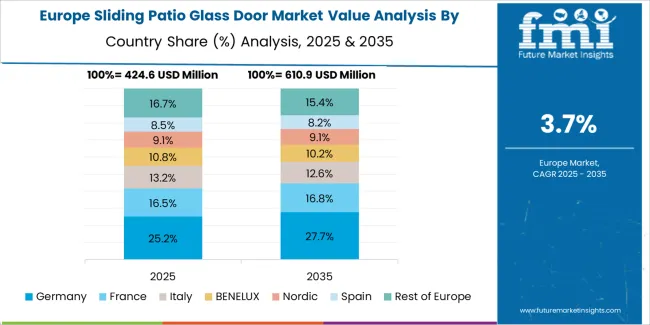
The sliding patio glass door market in Europe is projected to grow from USD 578.8 million in 2025 to USD 1,088.3 million by 2035, registering a CAGR of 6.5% over the forecast period. Germany is expected to maintain its leadership position with a 34.2% market share in 2025, supported by its advanced construction standards and major building technology centers.
United Kingdom follows with a 21.5% share in 2025, driven by comprehensive renovation programs and energy efficiency initiatives. France holds a 19.1% share through residential construction applications and building performance requirements. Italy commands a 13.8% share, while Spain accounts for 11.4% in 2025. The Rest of Europe region is anticipated to gain momentum, expanding its collective share from 7.8% to 8.9% by 2035, attributed to increasing product adoption in Nordic countries and emerging Eastern European markets implementing construction modernization programs.
How does Japan show advanced technology adoption?
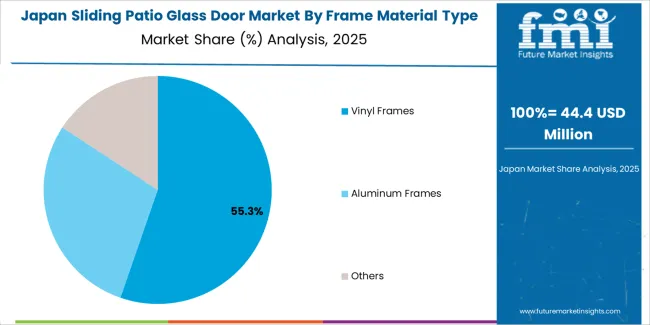
Japan demonstrates sophisticated sliding patio glass door deployment through premium residential construction and earthquake-resistant building requirements. The market maintains steady growth driven by replacement demand in aging housing stock and new construction in urban centers. Japanese manufacturers emphasize precision engineering and seismic performance features that meet stringent building codes. Technology partnerships with glass manufacturers enable advanced thermal and structural performance characteristics suitable for Japanese climate conditions and construction standards.
How does South Korea exhibit strong urban development?
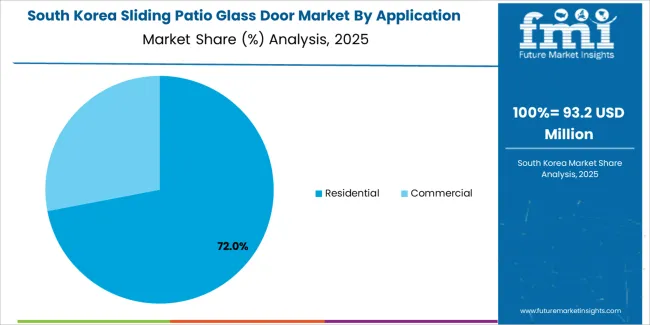
South Korea shows robust market expansion through intensive apartment construction and urban redevelopment programs. Seoul, Busan, and Incheon lead adoption with high-rise residential projects incorporating modern fenestration systems. The market benefits from government housing initiatives and construction industry modernization that promote quality building materials. Korean manufacturers focus on space-efficient designs and thermal performance features aligned with energy efficiency regulations and consumer preferences for contemporary living environments.
What defines the competitive landscape of the sliding patio glass door market?
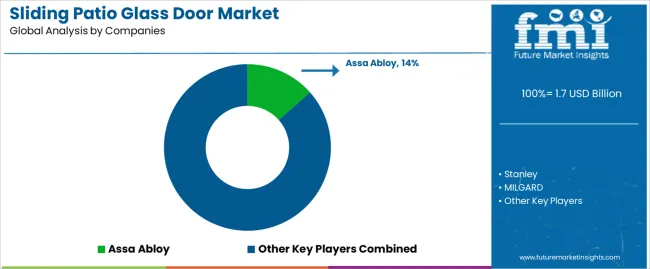
The market features approximately 20-25 established manufacturers, with the top 5-7 companies controlling roughly 55-60% of global revenue. Market leadership depends on distribution network coverage, product line breadth, and manufacturing efficiency rather than proprietary technology advantages. Competition centers on pricing strategies, delivery capabilities, and installer relationships that drive market share across regional construction markets.
Basic frame extrusion processes and standard glazing configurations have become commoditized, with manufacturers differentiating through hardware quality, finish options, and customer service capabilities. Margin opportunities exist in premium segments offering advanced thermal performance, custom dimensions, and specialized architectural features that command higher pricing. Companies maintaining strong contractor relationships and efficient logistics operations capture market advantages through consistent product availability and competitive lead times.
Global manufacturers leverage scale advantages for material procurement and multi-regional distribution, though regional specialists often compete effectively through localized customer service and installation support. Technology innovation focuses on incremental improvements in energy efficiency, weather sealing, and operational convenience rather than breakthrough developments. Market consolidation continues gradually as larger companies acquire regional manufacturers to expand geographic coverage and product portfolios.
Service capabilities increasingly differentiate competitors, with leading manufacturers providing technical support, warranty programs, and installer training that strengthen customer relationships. Digital tools for product selection, ordering, and tracking become standard expectations rather than competitive advantages. The market favors participants balancing manufacturing efficiency with distribution effectiveness while maintaining product quality standards that meet building code requirements and customer performance expectations.
| Stakeholder | What they actually control | Typical strengths | Typical blind spots |
|---|---|---|---|
| Global platforms | Multi-region distribution, broad product lines, volume production | Consistent availability, competitive pricing, established brands | Innovation pace; regional customization |
| Technology innovators | Engineering capabilities; energy-efficient systems; advanced features | Performance leadership; attractive to premium segments | Distribution density; price competition |
| Regional specialists | Local relationships, fast delivery, installation networks | Customer proximity; responsive service; market knowledge | Scale limitations; technology gaps |
| Value competitors | Cost efficiency, simplified product lines, direct channels | Competitive pricing; straightforward offerings | Brand recognition; product breadth |
Key Players in the Sliding Patio Glass Door Market
- Assa Abloy
- Stanley
- MILGARD
- Western Window Systems
- Atrium
- Pella
- Andersen Windows
- JELD-WEN
- MI Windows
- VEKA Group
- Aluprof SA
- Kolbe
- LaCantina Doors
- Marvin
- ProVia
- Therma-Tru Doors
- Simonton
Scope of the Report
| Item | Value |
|---|---|
| Quantitative Units | USD 1.7 billion |
| Frame Material Type | Vinyl Frames, Aluminum Frames, Others |
| Application | Residential, Commercial |
| Regions Covered | North America, Latin America, Western Europe, Eastern Europe, East Asia, South Asia Pacific, Middle East & Africa |
| Countries Covered | United States, China, Germany, India, United Kingdom, Japan, Brazil, France, Canada, South Korea, and 25+ additional countries |
| Key Companies Profiled | Assa Abloy, Stanley, MILGARD, Western Window Systems, Atrium, Pella, Andersen Windows, JELD-WEN, MI Windows, VEKA Group, Aluprof SA, Kolbe, LaCantina Doors, Marvin |
| Additional Attributes | Dollar sales by frame material and application categories, regional adoption trends across North America, East Asia, and Western Europe, competitive landscape with building material manufacturers and fenestration suppliers, property owner preferences for energy efficiency and operational convenience, integration with residential construction standards and building systems, innovations in glazing technology and thermal performance enhancement, and development of automated operation solutions with enhanced performance and energy optimization capabilities. |
Sliding Patio Glass Door Market by Segments
Frame Material Type:
- Vinyl Frames
- Aluminum Frames
- Others
Application:
- Residential
- Commercial
Region:
- North America
- United States
- Canada
- Mexico
- Latin America
- Brazil
- Chile
- Rest of Latin America
- Western Europe
- Germany
- United Kingdom
- France
- Italy
- Spain
- Nordic
- BENELUX
- Rest of Western Europe
- Eastern Europe
- Russia
- Poland
- Rest of Eastern Europe
- East Asia
- China
- Japan
- South Korea
- South Asia Pacific
- India
- ASEAN
- Australia & New Zealand
- Rest of South Asia Pacific
- Middle East & Africa
- Kingdom of Saudi Arabia
- Other GCC Countries
- Turkey
- South Africa
- Other African Union
- Rest of Middle East & Africa
Frequently Asked Questions
How big is the sliding patio glass door market in 2025?
The global sliding patio glass door market is estimated to be valued at USD 1.7 billion in 2025.
What will be the size of sliding patio glass door market in 2035?
The market size for the sliding patio glass door market is projected to reach USD 2.5 billion by 2035.
How much will be the sliding patio glass door market growth between 2025 and 2035?
The sliding patio glass door market is expected to grow at a 4.1% CAGR between 2025 and 2035.
What are the key product types in the sliding patio glass door market?
The key product types in sliding patio glass door market are vinyl frames, aluminum frames and others.
Which application segment to contribute significant share in the sliding patio glass door market in 2025?
In terms of application, residential segment to command 71.0% share in the sliding patio glass door market in 2025.
Preview the report firsthand - request a free sample
Get SampleGet the brochure for pricing and purchase details.
Get PDFTable of Content
- Executive Summary
- Global Market Outlook
- Demand-side Trends
- Supply-side Trends
- Technology Roadmap Analysis
- Analysis and Recommendations
- Market Overview
- Market Coverage / Taxonomy
- Market Definition / Scope / Limitations
- Market Background
- Market Dynamics
- Drivers
- Restraints
- Opportunity
- Trends
- Scenario Forecast
- Demand in Optimistic Scenario
- Demand in Likely Scenario
- Demand in Conservative Scenario
- Opportunity Map Analysis
- Product Life Cycle Analysis
- Supply Chain Analysis
- Investment Feasibility Matrix
- Value Chain Analysis
- PESTLE and Porter’s Analysis
- Regulatory Landscape
- Regional Parent Market Outlook
- Production and Consumption Statistics
- Import and Export Statistics
- Market Dynamics
- Global Market Analysis 2020 to 2024 and Forecast, 2025 to 2035
- Historical Market Size Value (USD Million) Analysis, 2020 to 2024
- Current and Future Market Size Value (USD Million) Projections, 2025 to 2035
- Y-o-Y Growth Trend Analysis
- Absolute $ Opportunity Analysis
- Global Market Pricing Analysis 2020 to 2024 and Forecast 2025 to 2035
- Global Market Analysis 2020 to 2024 and Forecast 2025 to 2035, By Frame Material Type
- Introduction / Key Findings
- Historical Market Size Value (USD Million) Analysis By Frame Material Type , 2020 to 2024
- Current and Future Market Size Value (USD Million) Analysis and Forecast By Frame Material Type , 2025 to 2035
- Vinyl Frames
- Aluminum Frames
- Others
- Y-o-Y Growth Trend Analysis By Frame Material Type , 2020 to 2024
- Absolute $ Opportunity Analysis By Frame Material Type , 2025 to 2035
- Global Market Analysis 2020 to 2024 and Forecast 2025 to 2035, By Application
- Introduction / Key Findings
- Historical Market Size Value (USD Million) Analysis By Application, 2020 to 2024
- Current and Future Market Size Value (USD Million) Analysis and Forecast By Application, 2025 to 2035
- Residential
- Commercial
- Y-o-Y Growth Trend Analysis By Application, 2020 to 2024
- Absolute $ Opportunity Analysis By Application, 2025 to 2035
- Global Market Analysis 2020 to 2024 and Forecast 2025 to 2035, By Region
- Introduction
- Historical Market Size Value (USD Million) Analysis By Region, 2020 to 2024
- Current Market Size Value (USD Million) Analysis and Forecast By Region, 2025 to 2035
- North America
- Latin America
- Western Europe
- Eastern Europe
- East Asia
- South Asia and Pacific
- Middle East & Africa
- Market Attractiveness Analysis By Region
- North America Market Analysis 2020 to 2024 and Forecast 2025 to 2035, By Country
- Historical Market Size Value (USD Million) Trend Analysis By Market Taxonomy, 2020 to 2024
- Market Size Value (USD Million) Forecast By Market Taxonomy, 2025 to 2035
- By Country
- USA
- Canada
- Mexico
- By Frame Material Type
- By Application
- By Country
- Market Attractiveness Analysis
- By Country
- By Frame Material Type
- By Application
- Key Takeaways
- Latin America Market Analysis 2020 to 2024 and Forecast 2025 to 2035, By Country
- Historical Market Size Value (USD Million) Trend Analysis By Market Taxonomy, 2020 to 2024
- Market Size Value (USD Million) Forecast By Market Taxonomy, 2025 to 2035
- By Country
- Brazil
- Chile
- Rest of Latin America
- By Frame Material Type
- By Application
- By Country
- Market Attractiveness Analysis
- By Country
- By Frame Material Type
- By Application
- Key Takeaways
- Western Europe Market Analysis 2020 to 2024 and Forecast 2025 to 2035, By Country
- Historical Market Size Value (USD Million) Trend Analysis By Market Taxonomy, 2020 to 2024
- Market Size Value (USD Million) Forecast By Market Taxonomy, 2025 to 2035
- By Country
- Germany
- UK
- Italy
- Spain
- France
- Nordic
- BENELUX
- Rest of Western Europe
- By Frame Material Type
- By Application
- By Country
- Market Attractiveness Analysis
- By Country
- By Frame Material Type
- By Application
- Key Takeaways
- Eastern Europe Market Analysis 2020 to 2024 and Forecast 2025 to 2035, By Country
- Historical Market Size Value (USD Million) Trend Analysis By Market Taxonomy, 2020 to 2024
- Market Size Value (USD Million) Forecast By Market Taxonomy, 2025 to 2035
- By Country
- Russia
- Poland
- Hungary
- Balkan & Baltic
- Rest of Eastern Europe
- By Frame Material Type
- By Application
- By Country
- Market Attractiveness Analysis
- By Country
- By Frame Material Type
- By Application
- Key Takeaways
- East Asia Market Analysis 2020 to 2024 and Forecast 2025 to 2035, By Country
- Historical Market Size Value (USD Million) Trend Analysis By Market Taxonomy, 2020 to 2024
- Market Size Value (USD Million) Forecast By Market Taxonomy, 2025 to 2035
- By Country
- China
- Japan
- South Korea
- By Frame Material Type
- By Application
- By Country
- Market Attractiveness Analysis
- By Country
- By Frame Material Type
- By Application
- Key Takeaways
- South Asia and Pacific Market Analysis 2020 to 2024 and Forecast 2025 to 2035, By Country
- Historical Market Size Value (USD Million) Trend Analysis By Market Taxonomy, 2020 to 2024
- Market Size Value (USD Million) Forecast By Market Taxonomy, 2025 to 2035
- By Country
- India
- ASEAN
- Australia & New Zealand
- Rest of South Asia and Pacific
- By Frame Material Type
- By Application
- By Country
- Market Attractiveness Analysis
- By Country
- By Frame Material Type
- By Application
- Key Takeaways
- Middle East & Africa Market Analysis 2020 to 2024 and Forecast 2025 to 2035, By Country
- Historical Market Size Value (USD Million) Trend Analysis By Market Taxonomy, 2020 to 2024
- Market Size Value (USD Million) Forecast By Market Taxonomy, 2025 to 2035
- By Country
- Kingdom of Saudi Arabia
- Other GCC Countries
- Turkiye
- South Africa
- Other African Union
- Rest of Middle East & Africa
- By Frame Material Type
- By Application
- By Country
- Market Attractiveness Analysis
- By Country
- By Frame Material Type
- By Application
- Key Takeaways
- Key Countries Market Analysis
- USA
- Pricing Analysis
- Market Share Analysis, 2024
- By Frame Material Type
- By Application
- Canada
- Pricing Analysis
- Market Share Analysis, 2024
- By Frame Material Type
- By Application
- Mexico
- Pricing Analysis
- Market Share Analysis, 2024
- By Frame Material Type
- By Application
- Brazil
- Pricing Analysis
- Market Share Analysis, 2024
- By Frame Material Type
- By Application
- Chile
- Pricing Analysis
- Market Share Analysis, 2024
- By Frame Material Type
- By Application
- Germany
- Pricing Analysis
- Market Share Analysis, 2024
- By Frame Material Type
- By Application
- UK
- Pricing Analysis
- Market Share Analysis, 2024
- By Frame Material Type
- By Application
- Italy
- Pricing Analysis
- Market Share Analysis, 2024
- By Frame Material Type
- By Application
- Spain
- Pricing Analysis
- Market Share Analysis, 2024
- By Frame Material Type
- By Application
- France
- Pricing Analysis
- Market Share Analysis, 2024
- By Frame Material Type
- By Application
- India
- Pricing Analysis
- Market Share Analysis, 2024
- By Frame Material Type
- By Application
- ASEAN
- Pricing Analysis
- Market Share Analysis, 2024
- By Frame Material Type
- By Application
- Australia & New Zealand
- Pricing Analysis
- Market Share Analysis, 2024
- By Frame Material Type
- By Application
- China
- Pricing Analysis
- Market Share Analysis, 2024
- By Frame Material Type
- By Application
- Japan
- Pricing Analysis
- Market Share Analysis, 2024
- By Frame Material Type
- By Application
- South Korea
- Pricing Analysis
- Market Share Analysis, 2024
- By Frame Material Type
- By Application
- Russia
- Pricing Analysis
- Market Share Analysis, 2024
- By Frame Material Type
- By Application
- Poland
- Pricing Analysis
- Market Share Analysis, 2024
- By Frame Material Type
- By Application
- Hungary
- Pricing Analysis
- Market Share Analysis, 2024
- By Frame Material Type
- By Application
- Kingdom of Saudi Arabia
- Pricing Analysis
- Market Share Analysis, 2024
- By Frame Material Type
- By Application
- Turkiye
- Pricing Analysis
- Market Share Analysis, 2024
- By Frame Material Type
- By Application
- South Africa
- Pricing Analysis
- Market Share Analysis, 2024
- By Frame Material Type
- By Application
- USA
- Market Structure Analysis
- Competition Dashboard
- Competition Benchmarking
- Market Share Analysis of Top Players
- By Regional
- By Frame Material Type
- By Application
- Competition Analysis
- Competition Deep Dive
- Assa Abloy
- Overview
- Product Portfolio
- Profitability by Market Segments (Product/Age /Sales Channel/Region)
- Sales Footprint
- Strategy Overview
- Marketing Strategy
- Product Strategy
- Channel Strategy
- Stanley
- MILGARD
- Western Window Systems
- Atrium
- Pella
- Andersen Windows
- JELD-WEN
- MI Windows
- VEKA Group
- Aluprof SA
- Kolbe
- LaCantina Doors
- Marvin
- ProVia
- Therma-Tru Doors
- Simonton
- Assa Abloy
- Competition Deep Dive
- Assumptions & Acronyms Used
- Research Methodology


