

- Industry Size (2025)
- USD 386.1 Mn
- Forecast (2035)
- USD 529.0 Mn
- CAGR (2025 to 2035)
- 3.2%
Wood Awning Window Market Forecast and Outlook 2025 to 2035
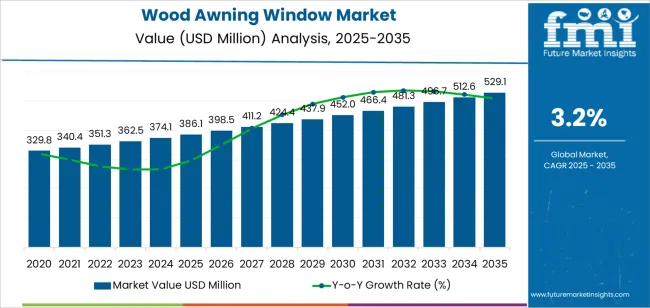
The global wood awning window market is forecast to reach USD 529 million by 2035, reflecting an absolute increase of USD 142.9 million over the forecast period. The market, valued at USD 386.1 million in 2025, is expected to grow at a CAGR of 3.2%. This growth is primarily driven by the increasing demand for aesthetically appealing, energy-efficient, and durable window solutions, particularly in residential and commercial building projects.
Wood awning windows, hinged at the top and opening outward, offer enhanced ventilation while protecting against rain and debris. They are particularly popular for their classic aesthetic appeal and ability to blend well with a wide range of architectural styles, making them a preferred choice for homeowners and architects aiming for a more traditional look. Wood frames are known for their natural beauty and insulating properties, helping to regulate indoor temperatures and reduce energy consumption in buildings.
Quick Stats for Wood Awning Window Market
- Wood Awning Window Market Value (2025): USD 386.1 million
- Wood Awning Window Market Forecast Value (2035): USD 529.0 million
- Wood Awning Window Market Forecast CAGR (2025 to 2035): 3.2%
- Leading Type in Wood Awning Window Market: Crank-operated Type
- Key Growth Regions in Wood Awning Window Market: Asia Pacific, Europe, and North America
- Top Players in Wood Awning Window Market: Andersen Windows, JELD-WEN, Pella, Milgard, Harvey Windows & Doors, PGT, MI Windows, Ply Gem, Sierra Pacific, VEKA, TAFCO, Rosati Windows, Prime Window Systems, Oridow Industrial, Champion Windows
What is the Growth Forecast for the Wood Awning Window Market through 2035?
The increasing demand for energy-efficient solutions in both new construction and renovation projects is contributing significantly to market growth. Wood, as a natural material, provides superior thermal insulation, making wood awning windows a popular choice for energy-conscious homeowners. The rising trend of home improvement, particularly in markets like North America and Europe, is driving the adoption of wood window solutions, as these windows combine functionality with style.
Technological advancements, such as the development of more durable wood treatments and finishes that enhance the longevity and weather resistance of wood awning windows, are also contributing to market growth. These innovations make wood windows more appealing to homeowners and businesses looking for low-maintenance yet high-performance window solutions.
Between 2025 and 2030, the wood awning window market is projected to grow from USD 386.1 million to approximately USD 452.9 million, adding USD 66.8 million, which accounts for about 46.8% of the total forecasted growth for the decade. This period will see continued demand for aesthetically pleasing and energy-efficient window solutions, particularly in residential construction and renovation projects, where wood windows are a popular choice.
From 2030 to 2035, the market is expected to expand from approximately USD 452.9 million to USD 529 million, adding USD 76.1 million, which constitutes about 53.2% of the overall growth. This phase will see continued demand for wood awning windows, driven by the ongoing trend in energy-efficient building solutions and the growing focus on creating aesthetically pleasing, functional living spaces. Innovations in wood treatments and finishes will further enhance the appeal and durability of wood windows, boosting their adoption in the market.
Wood Awning Window Market Key Takeaways
| Metric | Value |
|---|---|
| Market Value (2025) | USD 386.1 million |
| Market Forecast Value (2035) | USD 529.0 million |
| Forecast CAGR (2025 to 2035) | 3.2% |
Why is the Wood Awning Window Market Growing?
The wood awning window market is growing as homeowners and builders increasingly seek aesthetically pleasing, energy-efficient, and durable window solutions. Wood awning windows, known for their classic appeal and ability to complement traditional and modern architectural styles, are gaining popularity in both residential and commercial buildings. These windows, which open outward from the bottom with a hinged top, provide effective ventilation and natural light while offering protection from rain, making them ideal for areas with unpredictable weather.
The demand for wood awning windows is being driven by the continued growth of the home renovation and new construction markets, where aesthetic value and energy efficiency are key considerations. Wood windows are highly sought after for their natural appearance and the warmth they bring to interiors, making them a preferred choice for high-end residential properties. Wood’s natural insulating properties help improve energy efficiency by reducing heat loss, making wood awning windows an attractive option for energy-conscious consumers.
Advancements in wood window manufacturing processes, such as improved finishes and coatings, are further enhancing the durability and weather resistance of wood awning windows, expanding their use in various climates. Despite challenges such as higher maintenance requirements compared to other materials like vinyl, the market is expected to continue growing as the demand for aesthetically pleasing, high-performance windows rises.
What is the Segment-Wise Analysis of the Wood Awning Window Market?
The market is segmented by type, application, and region. By type, the market is divided into crank-operated type and push-out type, with crank-operated type leading the market. Based on application, the market is categorized into residential and commercial, with residential representing the largest segment in terms of market share. Regionally, the market is divided into North America, Europe, Asia Pacific, and other key regions.
Why is the Crank-Operated Type Segment Leading the Market?
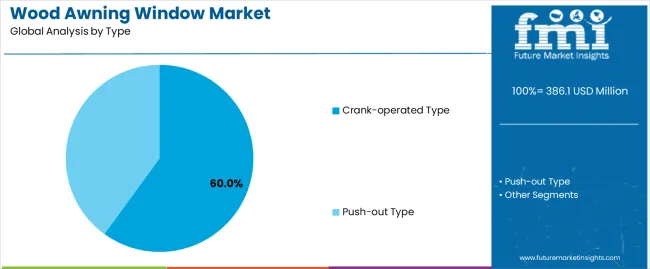
The crank-operated type segment leads the wood awning window market, holding 60% of the total market share. This is due to the convenience, functionality, and reliability of crank-operated windows, which allow users to easily open and close windows, even in hard-to-reach places. Crank-operated wood awning windows are especially popular in residential buildings, as they provide excellent ventilation while offering a secure seal when closed, ensuring energy efficiency and protection from the elements.
Crank-operated windows are also favored for their ability to provide consistent and smooth operation over time, which is particularly important in wood window systems, where durability and ease of use are essential. As homeowners increasingly seek windows that offer both aesthetic appeal and practicality, the crank-operated segment remains the dominant choice, especially in residential applications, where natural materials like wood are preferred for their timeless appeal and insulation properties.
How is the Growth of the Residential Sector Driving Market Demand?
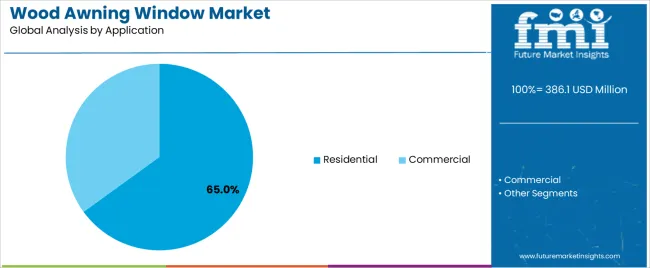
The residential application dominates the wood awning window market, accounting for 65% of the total market share. This growth is largely driven by the rising demand for high-quality, energy-efficient window solutions in homes. Wood awning windows, particularly crank-operated types, are highly sought after for their combination of traditional aesthetic appeal, natural insulation properties, and practicality. They provide excellent ventilation while ensuring that homes remain sealed from the weather, making them ideal for residential buildings in various climates.
As homeowners increasingly prioritize energy efficiency, sustainability, and design, wood windows remain a popular choice for both new construction and renovation projects. The growing trend of using wood in home design and the increasing demand for sustainable materials further fuel the demand for wood awning windows. This trend ensures that the residential sector continues to drive the growth of the wood awning window market, with increased demand for durable, high-performance windows that enhance both functionality and home aesthetics.
What are the Key Trends, Drivers, and Restraints in the Wood Awning Window Market?
Wood Awning Window combine natural wood aesthetics and excellent thermal insulation with the functional advantages of top‑hinged outward operation, offering ventilation even during rainfall and enhanced design flexibility. Key drivers include growing renovation activity, rising interest in sustainable building materials, and stricter energy‑efficiency standards that favour wood frames. Restraints include higher cost compared to vinyl or aluminum windows, susceptibility of untreated wood to weathering in harsh climates, and limited awareness of awning‑style benefits in some retrofit markets.
Why are Wood Awning Windows Gaining Popularity in Building Projects?
Wood awning windows are gaining popularity as they provide a blend of natural elegance and performance. Homeowners and architects increasingly prefer wood for its aesthetic value, warmth, and sustainability credentials. The awning opening style offers practical advantages: better ventilation control, protection from rain while open, and compatibility with modern architectural designs favouring larger glazed areas. In the premium renovation segment, replacing older single‑hung or sliding windows with wood awning units enables both visual upgrade and improved energy performance. The emphasis on eco‑friendly, high‑end materials further drives the preference for wood awning windows over standard alternatives.
How are Material and Technological Innovations Driving Growth in This Segment?
Innovations are accelerating growth in the wood awning window segment through advanced material treatments, improved hardware, and integrated glazing technologies. Manufacturers are using engineered wood with protective cladding or coatings to enhance durability, reduce maintenance, and resist weathering in exterior applications. Advanced hinge and gasket systems ensure smoother operation and tighter seals for top‑hinged sash styles. When combined with high‑performance glazing (low‑E, argon fill) and precision manufacturing, wood awning windows meet tougher energy‑efficiency and performance standards. These technical enhancements enable wood awning windows to perform reliably in diverse climates and appeal to design‑conscious buyers seeking both function and aesthetics.
What are the Key Challenges Limiting Adoption of Wood Awning Windows?
One major challenge is higher upfront cost wood frames and premium architectural hardware often cost more than vinyl or aluminium alternatives, limiting uptake in cost‑sensitive segments. Maintenance concerns also pose a restraint, as untreated or poorly finished wood may degrade in harsh climates or require refinishing, which can deter buyers in certain regions. Installation complexity of awning‑type sashes (clearance, hinges, outward swing) may restrict retrofit use in older buildings. Finally, limited awareness of the functional benefits of awning windows compared to more common styles means some buyers overlook this option.
What is the Country-Wise Growth Outlook for the Wood Awning Window Market?
| Country | CAGR (%) |
|---|---|
| China | 4.3% |
| India | 4.0% |
| Germany | 3.7% |
| Brazil | 3.4% |
| USA | 3.0% |
| UK | 2.7% |
| Japan | 2.4% |
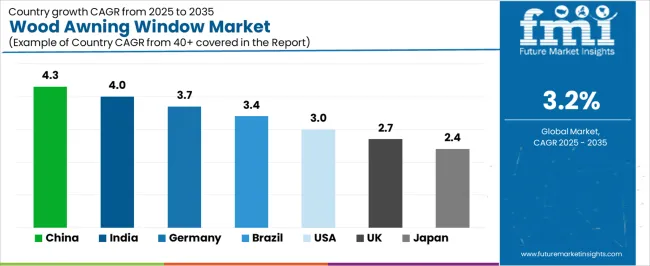
The wood awning window market is growing across key countries, with China leading at a 4.3% CAGR. The demand for these windows is driven by a growing preference for natural materials in construction and the rise of energy-efficient, aesthetically pleasing designs. India follows closely with a 4.0% CAGR, supported by rapid urbanization and the increasing adoption of wood products in modern architecture. Germany is growing at 3.7%, fueled by strong demand for sustainable, high-quality building materials. Brazil shows a 3.4% CAGR, driven by residential and commercial construction growth. The USA, UK, and Japan experience moderate growth at 3.0%, 2.7%, and 2.4%, respectively, with rising interest in home improvements and energy-efficient window solutions.
What is Driving Growth in China’s Wood Awning Window Market?
China leads the wood awning window market with a 4.3% CAGR. The country's increasing demand for eco-friendly and aesthetically pleasing building materials is a key driver of this growth. Wood windows, known for their insulation properties and natural appeal, are becoming increasingly popular in residential and commercial construction projects. As China’s construction sector continues to expand, there is a growing preference for materials that blend traditional aesthetics with modern energy efficiency, positioning wood awning windows as an ideal choice.
China’s increasing focus on sustainable development and green construction practices is contributing to the rise in demand for wood awning windows. The government’s push for energy-efficient buildings and eco-friendly materials has accelerated the adoption of wood products in construction. As consumers and builders seek more environmentally conscious building solutions, wood awning windows are expected to see continued growth. With urbanization driving residential construction and a growing middle class valuing quality. China’s wood awning window market is positioned for sustained expansion.
What is Influencing Growth in India’s Wood Awning Window Market?
India is experiencing steady growth in the wood awning window market, with a 4.0% CAGR. The country's rapid urbanization and the growing demand for modern, sustainable building materials are key factors driving this market. As urban areas expand, there is increasing interest in natural materials like wood, which are known for their aesthetic appeal and energy efficiency. Wood awning windows, which offer better insulation and natural ventilation, are becoming a popular choice for both new construction and renovation projects.
The rising awareness of energy conservation and environmental sustainability is fueling the demand for energy-efficient products in India. As consumers and builders seek durable, eco-friendly materials, wood windows are gaining traction in both residential and commercial sectors. The increasing disposable income of the Indian middle class and the growing trend of modern home design are also contributing to the market’s growth. As the demand for eco-friendly and energy-efficient window solutions continues to rise, India’s wood awning window market is set for continued growth.
How is Germany Contributing to the Wood Awning Window Market?
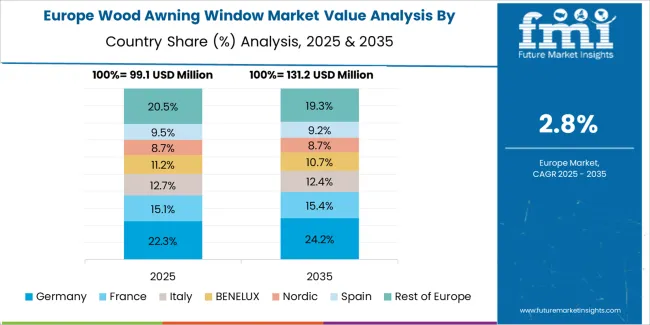
Germany is experiencing moderate growth in the wood awning window market with a 3.7% CAGR. The country’s strong demand for sustainable, high-quality building materials is driving the market for wood awning windows. German consumers and builders are increasingly focused on energy efficiency and the aesthetic appeal of natural materials like wood. Wood windows are a popular choice in Germany due to their excellent insulation properties and their ability to enhance the visual appeal of both modern and traditional architecture.
Germany’s commitment to green building practices and its push for energy-efficient construction further contribute to the rise in demand for wood products. With the country’s focus on reducing energy consumption and promoting environmentally friendly construction, wood windows are being incorporated into residential and commercial buildings more frequently. As consumers continue to prioritize sustainability and high-quality materials, the wood awning window market in Germany is expected to continue to grow steadily in the coming years.
What is Driving Growth in Brazil’s Wood Awning Window Market?
Brazil is witnessing moderate growth in the wood awning window market with a 3.4% CAGR. The country’s growing construction sector, particularly in residential and commercial buildings, is contributing to the demand for wood awning windows. Brazilian consumers and builders are increasingly opting for natural materials like wood, which are valued for their durability, aesthetic appeal, and insulation properties. Wood awning windows offer an attractive solution for homes and buildings looking to combine traditional materials with modern functionality.
Brazil’s rising focus on sustainability and energy efficiency is further driving the demand for wood windows. As the construction industry in Brazil continues to grow, more builders are incorporating wood windows into their designs to meet the increasing demand for eco-friendly and energy-efficient products. With the increasing awareness of climate change and energy conservation, the market for wood awning windows in Brazil is expected to expand in the coming years, driven by both consumer preferences and regulatory support for sustainable construction practices.
What is Influencing Growth in the USA’s Wood Awning Window Market?
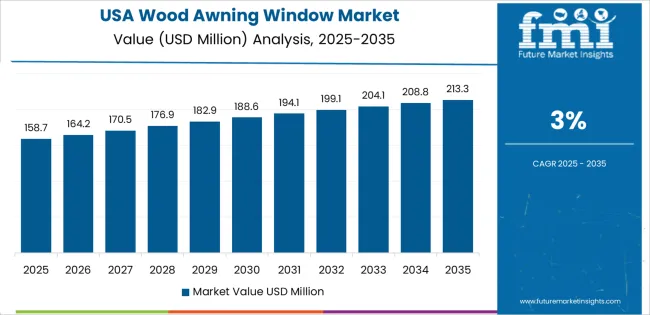
The USA is experiencing moderate growth in the wood awning window market with a 3.0% CAGR. The increasing demand for energy-efficient window solutions, particularly in home renovation and construction projects, is a key factor contributing to this growth. Wood windows, known for their superior insulation properties and aesthetic appeal, are becoming a popular choice for homeowners looking to improve their home’s energy performance while maintaining a natural, classic look. The growing interest in sustainable building materials also supports the demand for wood awning windows.
The USA’s focus on energy-efficient construction and home improvement is further fueling the market for wood windows. As consumers become more conscious of their environmental impact, the demand for windows that offer both energy savings and visual appeal is rising. With the growing trend of energy-efficient home renovations and a preference for natural materials, the wood awning window market in the USA is expected to experience steady growth in the coming years.
What is Driving Growth in the UK’s Wood Awning Window Market?
The UK is experiencing steady growth in the wood awning window market with a 2.7% CAGR. The market is primarily driven by the increasing demand for sustainable building materials and energy-efficient windows. Wood awning windows are valued for their aesthetic charm and excellent thermal insulation properties, making them a popular choice for both modern and traditional homes. As homeowners and builders in the UK focus on improving energy efficiency and reducing their environmental footprint, wood windows are gaining popularity as part of the broader trend toward sustainable construction.
The UK’s regulatory focus on green building practices and energy-efficient construction materials is contributing to the market’s growth. As demand for energy-efficient home improvements continues to rise, more consumers are opting for natural materials like wood for their windows. With the UK government’s push for carbon-neutral housing and sustainable development, the demand for wood awning windows is expected to grow steadily in the future.
What is Influencing Growth in Japan’s Wood Awning Window Market?
Japan’s wood awning window market is growing at a steady rate, with a 2.4% CAGR. The demand for wood windows in Japan is driven by a growing preference for natural materials and energy-efficient building solutions. Wood awning windows are popular in Japan due to their aesthetic appeal, insulation properties, and ability to provide natural ventilation while offering protection against the elements. As consumers and builders seek sustainable and high-quality materials for both residential and commercial construction, wood windows are becoming an increasingly popular choice.
Japan’s focus on energy efficiency and sustainable construction practices is also contributing to the growth of the wood awning window market. With a strong emphasis on reducing energy consumption and promoting green building initiatives, the demand for energy-efficient windows continues to rise. As more homeowners and businesses in Japan look for ways to reduce their environmental impact, the wood awning window market is expected to continue expanding, driven by both consumer demand and regulatory support for eco-friendly building materials.
What Does the Competitive Landscape Look Like in the Wood Awning Window Market?
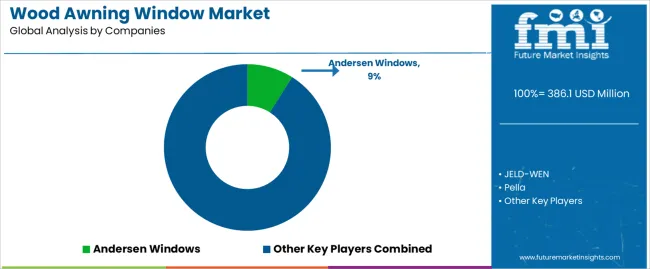
The wood awning window market is a key segment in the window and door industry, valued for its aesthetic appeal, insulation properties, and durability. Andersen Windows leads the market with a 9% share, offering a range of high-quality wood awning windows known for their energy efficiency, craftsmanship, and design flexibility. Andersen’s long-standing reputation for producing durable and visually appealing windows solidifies its position as a leader in the wood awning window market.
Other major players in the market include JELD-WEN, Pella, and Milgard, each providing a wide range of wood awning windows that cater to various design preferences and functional requirements. JELD-WEN offers wood awning windows that combine performance with classic design, focusing on energy efficiency and sustainability. Pella is known for its premium wood window solutions, emphasizing advanced technology and long-lasting performance. Milgard competes with its innovative wood windows, providing customizable solutions that combine the natural beauty of wood with modern performance features.
Regional players such as Harvey Windows & Doors, PGT, and MI Windows contribute significantly to the market, offering wood awning windows designed for various climates and architectural styles. Ply Gem and Sierra Pacific also provide high-quality wood windows that emphasize durability, energy efficiency, and design flexibility for both residential and commercial applications.
Other companies such as VEKA, TAFCO, Rosati Windows, Prime Window Systems, Oridow Industrial, and Champion Windows offer competitive wood window solutions, catering to diverse market needs and focusing on customization and reliability. The competition in the wood awning window market is driven by factors such as energy efficiency, aesthetic appeal, product durability, and the growing demand for eco-friendly, high-performance building materials.
Key Players in the Wood Awning Window Market
- Andersen Windows
- JELD‑WEN
- Pella
- Milgard
- Harvey Windows & Doors
- PGT
- MI Windows
- Ply Gem
- Sierra Pacific
- VEKA
- TAFCO
- Rosati Windows
- Prime Window Systems
- Oridow Industrial
- Champion Windows
Scope of the Report
| Items | Values |
|---|---|
| Quantitative Units (2025) | USD million |
| Type | Crank-operated Type, Push-out Type |
| Application | Residential, Commercial |
| Regions Covered | Asia Pacific, Europe, North America, Latin America, Middle East & Africa |
| Countries Covered | China, Japan, South Korea, India, Australia & New Zealand, ASEAN, Rest of Asia Pacific, Germany, United Kingdom, France, Italy, Spain, Nordic, BENELUX, Rest of Europe, United States, Canada, Mexico, Brazil, Chile, Rest of Latin America, Kingdom of Saudi Arabia, Other GCC Countries, Turkey, South Africa, Other African Union, Rest of Middle East & Africa |
| Key Companies Profiled | Andersen Windows, JELD-WEN, Pella, Milgard, Harvey Windows & Doors, PGT, MI Windows, Ply Gem, Sierra Pacific, VEKA, TAFCO, Rosati Windows, Prime Window Systems, Oridow Industrial, Champion Windows |
| Additional Attributes | Dollar sales by type and application categories, market growth trends, market adoption by classification and application segments, regional adoption trends, competitive landscape, advancements in wood awning window technologies, integration with residential and commercial construction projects. |
Wood Awning Window Market by Segments
Type:
- Crank‑operated Type
- Push‑out Type
Application:
- Residential
- Commercial
Region:
- Asia Pacific
- China
- Japan
- South Korea
- India
- Australia & New Zealand
- ASEAN
- Rest of Asia Pacific
- Europe
- Germany
- United Kingdom
- France
- Italy
- Spain
- Nordic
- BENELUX
- Rest of Europe
- North America
- United States
- Canada
- Mexico
- Latin America
- Brazil
- Chile
- Rest of Latin America
- Middle East & Africa
- Kingdom of Saudi Arabia
- Other GCC Countries
- Turkey
- South Africa
- Other African Union
- Rest of Middle East & Africa
Frequently Asked Questions
How big is the wood awning window market in 2025?
The global wood awning window market is estimated to be valued at USD 386.1 million in 2025.
What will be the size of wood awning window market in 2035?
The market size for the wood awning window market is projected to reach USD 529.1 million by 2035.
How much will be the wood awning window market growth between 2025 and 2035?
The wood awning window market is expected to grow at a 3.2% CAGR between 2025 and 2035.
What are the key product types in the wood awning window market?
The key product types in wood awning window market are crank-operated type and push-out type.
Which application segment to contribute significant share in the wood awning window market in 2025?
In terms of application, residential segment to command 65.0% share in the wood awning window market in 2025.
Preview the report firsthand - request a free sample
Get SampleGet the brochure for pricing and purchase details.
Get PDFTable of Content
- Executive Summary
- Global Market Outlook
- Demand-side Trends
- Supply-side Trends
- Technology Roadmap Analysis
- Analysis and Recommendations
- Market Overview
- Market Coverage / Taxonomy
- Market Definition / Scope / Limitations
- Market Background
- Market Dynamics
- Drivers
- Restraints
- Opportunity
- Trends
- Scenario Forecast
- Demand in Optimistic Scenario
- Demand in Likely Scenario
- Demand in Conservative Scenario
- Opportunity Map Analysis
- Product Life Cycle Analysis
- Supply Chain Analysis
- Investment Feasibility Matrix
- Value Chain Analysis
- PESTLE and Porter’s Analysis
- Regulatory Landscape
- Regional Parent Market Outlook
- Production and Consumption Statistics
- Import and Export Statistics
- Market Dynamics
- Global Market Analysis 2020 to 2024 and Forecast, 2025 to 2035
- Historical Market Size Value (USD Million) Analysis, 2020 to 2024
- Current and Future Market Size Value (USD Million) Projections, 2025 to 2035
- Y-o-Y Growth Trend Analysis
- Absolute $ Opportunity Analysis
- Global Market Pricing Analysis 2020 to 2024 and Forecast 2025 to 2035
- Global Market Analysis 2020 to 2024 and Forecast 2025 to 2035, By Type
- Introduction / Key Findings
- Historical Market Size Value (USD Million) Analysis By Type , 2020 to 2024
- Current and Future Market Size Value (USD Million) Analysis and Forecast By Type , 2025 to 2035
- Crank-operated Type
- Push-out Type
- Y-o-Y Growth Trend Analysis By Type , 2020 to 2024
- Absolute $ Opportunity Analysis By Type , 2025 to 2035
- Global Market Analysis 2020 to 2024 and Forecast 2025 to 2035, By Application
- Introduction / Key Findings
- Historical Market Size Value (USD Million) Analysis By Application, 2020 to 2024
- Current and Future Market Size Value (USD Million) Analysis and Forecast By Application, 2025 to 2035
- Residential
- Commercial
- Y-o-Y Growth Trend Analysis By Application, 2020 to 2024
- Absolute $ Opportunity Analysis By Application, 2025 to 2035
- Global Market Analysis 2020 to 2024 and Forecast 2025 to 2035, By Region
- Introduction
- Historical Market Size Value (USD Million) Analysis By Region, 2020 to 2024
- Current Market Size Value (USD Million) Analysis and Forecast By Region, 2025 to 2035
- North America
- Latin America
- Western Europe
- Eastern Europe
- East Asia
- South Asia and Pacific
- Middle East & Africa
- Market Attractiveness Analysis By Region
- North America Market Analysis 2020 to 2024 and Forecast 2025 to 2035, By Country
- Historical Market Size Value (USD Million) Trend Analysis By Market Taxonomy, 2020 to 2024
- Market Size Value (USD Million) Forecast By Market Taxonomy, 2025 to 2035
- By Country
- USA
- Canada
- Mexico
- By Type
- By Application
- By Country
- Market Attractiveness Analysis
- By Country
- By Type
- By Application
- Key Takeaways
- Latin America Market Analysis 2020 to 2024 and Forecast 2025 to 2035, By Country
- Historical Market Size Value (USD Million) Trend Analysis By Market Taxonomy, 2020 to 2024
- Market Size Value (USD Million) Forecast By Market Taxonomy, 2025 to 2035
- By Country
- Brazil
- Chile
- Rest of Latin America
- By Type
- By Application
- By Country
- Market Attractiveness Analysis
- By Country
- By Type
- By Application
- Key Takeaways
- Western Europe Market Analysis 2020 to 2024 and Forecast 2025 to 2035, By Country
- Historical Market Size Value (USD Million) Trend Analysis By Market Taxonomy, 2020 to 2024
- Market Size Value (USD Million) Forecast By Market Taxonomy, 2025 to 2035
- By Country
- Germany
- UK
- Italy
- Spain
- France
- Nordic
- BENELUX
- Rest of Western Europe
- By Type
- By Application
- By Country
- Market Attractiveness Analysis
- By Country
- By Type
- By Application
- Key Takeaways
- Eastern Europe Market Analysis 2020 to 2024 and Forecast 2025 to 2035, By Country
- Historical Market Size Value (USD Million) Trend Analysis By Market Taxonomy, 2020 to 2024
- Market Size Value (USD Million) Forecast By Market Taxonomy, 2025 to 2035
- By Country
- Russia
- Poland
- Hungary
- Balkan & Baltic
- Rest of Eastern Europe
- By Type
- By Application
- By Country
- Market Attractiveness Analysis
- By Country
- By Type
- By Application
- Key Takeaways
- East Asia Market Analysis 2020 to 2024 and Forecast 2025 to 2035, By Country
- Historical Market Size Value (USD Million) Trend Analysis By Market Taxonomy, 2020 to 2024
- Market Size Value (USD Million) Forecast By Market Taxonomy, 2025 to 2035
- By Country
- China
- Japan
- South Korea
- By Type
- By Application
- By Country
- Market Attractiveness Analysis
- By Country
- By Type
- By Application
- Key Takeaways
- South Asia and Pacific Market Analysis 2020 to 2024 and Forecast 2025 to 2035, By Country
- Historical Market Size Value (USD Million) Trend Analysis By Market Taxonomy, 2020 to 2024
- Market Size Value (USD Million) Forecast By Market Taxonomy, 2025 to 2035
- By Country
- India
- ASEAN
- Australia & New Zealand
- Rest of South Asia and Pacific
- By Type
- By Application
- By Country
- Market Attractiveness Analysis
- By Country
- By Type
- By Application
- Key Takeaways
- Middle East & Africa Market Analysis 2020 to 2024 and Forecast 2025 to 2035, By Country
- Historical Market Size Value (USD Million) Trend Analysis By Market Taxonomy, 2020 to 2024
- Market Size Value (USD Million) Forecast By Market Taxonomy, 2025 to 2035
- By Country
- Kingdom of Saudi Arabia
- Other GCC Countries
- Turkiye
- South Africa
- Other African Union
- Rest of Middle East & Africa
- By Type
- By Application
- By Country
- Market Attractiveness Analysis
- By Country
- By Type
- By Application
- Key Takeaways
- Key Countries Market Analysis
- USA
- Pricing Analysis
- Market Share Analysis, 2024
- By Type
- By Application
- Canada
- Pricing Analysis
- Market Share Analysis, 2024
- By Type
- By Application
- Mexico
- Pricing Analysis
- Market Share Analysis, 2024
- By Type
- By Application
- Brazil
- Pricing Analysis
- Market Share Analysis, 2024
- By Type
- By Application
- Chile
- Pricing Analysis
- Market Share Analysis, 2024
- By Type
- By Application
- Germany
- Pricing Analysis
- Market Share Analysis, 2024
- By Type
- By Application
- UK
- Pricing Analysis
- Market Share Analysis, 2024
- By Type
- By Application
- Italy
- Pricing Analysis
- Market Share Analysis, 2024
- By Type
- By Application
- Spain
- Pricing Analysis
- Market Share Analysis, 2024
- By Type
- By Application
- France
- Pricing Analysis
- Market Share Analysis, 2024
- By Type
- By Application
- India
- Pricing Analysis
- Market Share Analysis, 2024
- By Type
- By Application
- ASEAN
- Pricing Analysis
- Market Share Analysis, 2024
- By Type
- By Application
- Australia & New Zealand
- Pricing Analysis
- Market Share Analysis, 2024
- By Type
- By Application
- China
- Pricing Analysis
- Market Share Analysis, 2024
- By Type
- By Application
- Japan
- Pricing Analysis
- Market Share Analysis, 2024
- By Type
- By Application
- South Korea
- Pricing Analysis
- Market Share Analysis, 2024
- By Type
- By Application
- Russia
- Pricing Analysis
- Market Share Analysis, 2024
- By Type
- By Application
- Poland
- Pricing Analysis
- Market Share Analysis, 2024
- By Type
- By Application
- Hungary
- Pricing Analysis
- Market Share Analysis, 2024
- By Type
- By Application
- Kingdom of Saudi Arabia
- Pricing Analysis
- Market Share Analysis, 2024
- By Type
- By Application
- Turkiye
- Pricing Analysis
- Market Share Analysis, 2024
- By Type
- By Application
- South Africa
- Pricing Analysis
- Market Share Analysis, 2024
- By Type
- By Application
- USA
- Market Structure Analysis
- Competition Dashboard
- Competition Benchmarking
- Market Share Analysis of Top Players
- By Regional
- By Type
- By Application
- Competition Analysis
- Competition Deep Dive
- Andersen Windows
- Overview
- Product Portfolio
- Profitability by Market Segments (Product/Age /Sales Channel/Region)
- Sales Footprint
- Strategy Overview
- Marketing Strategy
- Product Strategy
- Channel Strategy
- JELD-WEN
- Pella
- Milgard
- Harvey Windows & Doors
- PGT
- MI Windows
- Ply Gem
- Sierra Pacific
- VEKA
- TAFCO
- Rosati Windows
- Prime Window Systems
- Oridow Industrial
- Champion Windows
- Andersen Windows
- Competition Deep Dive
- Assumptions & Acronyms Used
- Research Methodology


