

- Market Size (2026)
- USD 33.4 Bn
- Forecast (2036)
- USD 66.3 Bn
- CAGR (2026 to 2036)
- 7.1%
Water Gel Market Size, Market Forecast and Outlook By FMI
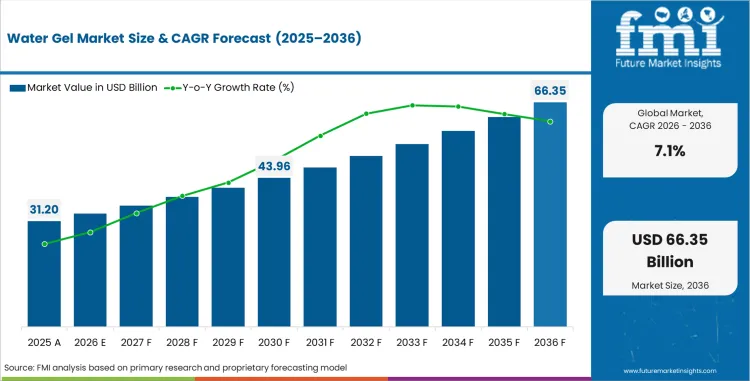
The water gel market was valued at USD 31.2 billion in 2025. The market is set to reach USD 33.4 billion by 2026-end and grow at a CAGR of 7.1% between 2026-2036 to reach USD 66.3 billion by 2036. Hydrating Water Gels will dominate with a 34.0% share, while Dryness will lead with a 29.0% share.
Key Takeaways, Market Size, and Forecast
- The Water Gel market was valued at USD 31.20 billion in 2025.
- By 2036, the Water Gel Market is expected to be worth USD 66.35 billion.
- From 2026 to 2036, the market is projected to expand at a CAGR of 7.1%.
- The market is projected to create an incremental opportunity of USD 32.93 billion between 2026 and 2036.
- In 2026, Hydrating Water Gels is expected to account for 34.0% of the Product, driven by broad consumer demand for lightweight, fast-absorbing hydration products that serve as daily moisturizers across all skin types and climate conditions.
- China (7.6%) and India (7.4%) are two of the fastest growing markets in the world.
Summary of the Water Gel Market
- Demand and Growth Drivers
- Growing consumer preference for lightweight, water-based skincare formulations that provide hydration without the heaviness of traditional creams is sustaining demand across all skin types and age demographics.
- The expansion of K-beauty influenced multi-step skincare routines into Western markets is driving adoption of water gels as a dedicated hydration layer in daily skincare regimens.
- After-sun care and therapeutic applications are creating seasonal and condition-specific demand channels that complement the year-round daily skincare base.
- Product and Segment View
- Hydrating water gels account for 34.0% of the product segment, supported by broad consumer demand for daily moisturizers that deliver lightweight hydration across all skin types without oily residue.
- By skin concern, dryness holds 29.0% share, reflecting the primary consumer motivation for water gel purchase as a hydration solution for dehydrated and moisture-depleted skin conditions.
- Skincare leads the application segment at 46.0%, confirming that daily face and body moisturizing remains the dominant use case ahead of after-sun, therapeutic, and cosmetic formulation applications.
- Geography and Competitive Outlook
- China is projected to grow at 7.6% through 2036, supported by the scale of consumer skincare spending, growing K-beauty influence on hydration routines, and the expansion of lightweight gel formulations across mass and premium retail channels.
- India follows at 7.4%, reflecting growing consumer awareness of skincare hydration benefits and the expansion of affordable water gel products through pharmacy and online distribution.
- Companies that combine brand heritage in skincare, product formulation expertise in lightweight hydration, and distribution reach across pharmacy, mass retail, and online channels are positioned to gain traction during the forecast period.
- Analyst Opinion
- The water gel market is evolving from a K-beauty import trend into a mainstream skincare staple as global consumers adopt lightweight hydration as a daily routine step. The success of water gels reflects a broader shift in consumer preference away from heavy, occlusive moisturizers toward formulations that deliver hydration without disrupting skin feel or makeup application. Companies that can deliver clinically validated hydration performance at accessible price points while building brand loyalty through transparent ingredient communication are positioned to capture share from traditional cream-based moisturizer brands. The competitive advantage is shifting from texture novelty to formulation efficacy backed by dermatological evidence.
- The Water Gel Market is moving from a supply driven model toward a demand responsive structure where end user requirements shape product development.
- Adoption is increasing due to evolving consumer expectations and expanding distribution channel accessibility across online and retail formats.
- Growth reflects the structural shift toward higher specification products and more informed purchasing behavior driven by online research and reviews.
- Demand is further supported by changing lifestyle preferences and growing awareness of product quality and performance differences across brands.
Water Gel Market Definition
The water gel market covers lightweight, water-based skincare formulations including hydrating gels, cooling gels, aloe vera gels, and anti-aging gels designed to deliver moisture without heavy, occlusive texture. Products are formulated for multiple skin concerns and distributed through online, retail, pharmacy, and specialty beauty channels.
Water Gel Market Inclusions
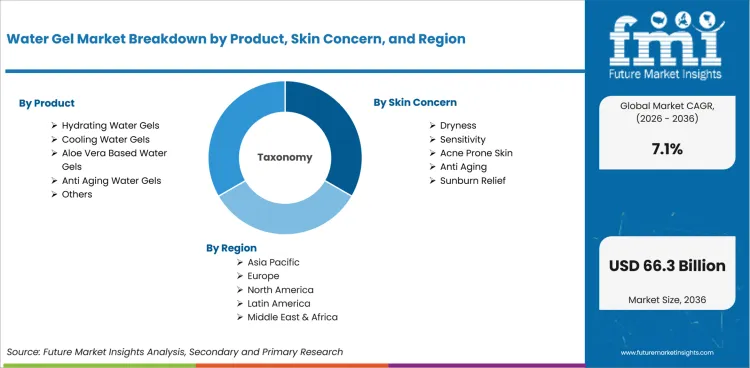
Market scope encompasses all commercially traded products categorized by Product (Hydrating Water Gels, Cooling Water Gels, Aloe Vera Based Water Gels, Anti Aging Water Gels, Others); Skin Concern (Dryness, Sensitivity, Acne Prone Skin, Anti Aging, Sunburn Relief); Sales Channel (Online, Supermarkets and Hypermarkets, Pharmacies and Drug Stores, Specialty Stores, Others); Application (Skincare, After Sun Care, Therapeutic Use, Cosmetic Formulations); Packaging (Tubes, Jars, Bottles). Revenue estimates cover the forecast period from 2026 to 2036.
Water Gel Market Exclusions
The scope does not include heavy cream moisturizers, petroleum-based skin protectants, prescription dermatological gels, or shower gels and body wash products marketed primarily as cleansing rather than skincare formulations.
Water Gel Market Research Methodology
- Primary Research: FMI analysts conducted interviews with skincare brand product developers, dermatological consultants, retail beauty category managers, and cosmetic ingredient suppliers across key markets to validate demand patterns, pricing structures, and procurement dynamics.
- Desk Research: Research combined data from cosmetic industry production statistics, dermatological research publications, and retail beauty market tracking data, with cross referencing against publicly available industry databases and regulatory filings.
- Market Sizing and Forecasting: Market sizing uses a hybrid bottom up and top down approach, aggregating demand across product, skin concern, sales channel, application, packaging with regional adoption curves.
- Data Validation: Data was validated quarterly against production statistics, trade data, and manufacturer disclosures to maintain forecast accuracy.
Why is the Water Gel Market Growing?
- Growing consumer preference for lightweight, fast-absorbing skincare formulations that deliver hydration without heavy texture is sustaining demand for water gels across all skin types and demographics globally.
- K-beauty influence on multi-step skincare routines is driving adoption of water gels as a dedicated hydration layer, expanding the category from Asian markets into North America, Europe, and other regions.
- China leads growth at 7.6%, supported by the scale of consumer skincare spending, growing K-beauty influence on hydration routines, and the expansion of lightweight gel formulations across mass and premium retail.
The water gel market is expanding as consumer skincare preferences shift toward lightweight, water-based formulations that deliver hydration without the occlusive heaviness of traditional creams and lotions. Water gels are formulated to absorb rapidly, leaving a clean, non-greasy skin feel that is compatible with makeup application and comfortable in humid climates. This texture advantage has driven adoption across all skin types, converting water gels from a niche K-beauty trend into a mainstream moisturizing category.
Hydrating water gels lead the product segment at 34.0% share, followed by cooling gels, aloe vera formulations, and anti-aging water gels. Dryness is the primary skin concern addressed at 29.0%, followed by sensitivity and acne-prone skin applications. Online sales lead distribution at 38.0%, reflecting the digital-native purchasing behavior of skincare consumers who research ingredients and read reviews before purchasing.
Neutrogena holds an estimated 23.0% market share through its Hydro Boost water gel franchise that established mass-market accessibility for the category. Clinique, L'Oreal Paris, and Laneige compete across different price tiers and positioning strategies. The competitive landscape rewards brands that combine clinically validated hydration claims with accessible pricing and effective digital marketing.
Market Segmentation Analysis
- Hydrating Water Gels accounts for 34.0% of the Product segment, supported by established procurement patterns and application requirements.
- Dryness holds 29.0% of the Skin Concern segment, reflecting concentrated demand in core use cases.
The Water Gel market is segmented by product, skin concern, sales channel, application, packaging. Demand patterns reflect the concentration of procurement in established application areas and the growing diversification of end use requirements.
Insights into the Product Segment
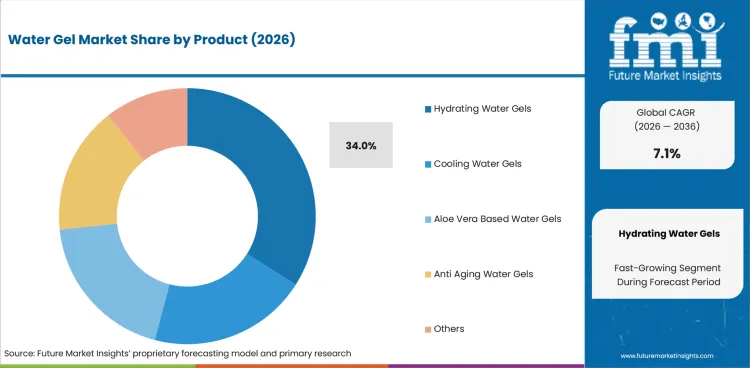
In 2026, Hydrating Water Gels is expected to hold 34.0% of the product segment. Cooling Water Gels and Aloe Vera Based Water Gels represent additional sub-segments with growing procurement activity. Demand patterns within this segment reflect the concentration of procurement in established use cases and the evolving requirements of end users across different regions.
Insights into the Skin Concern Segment
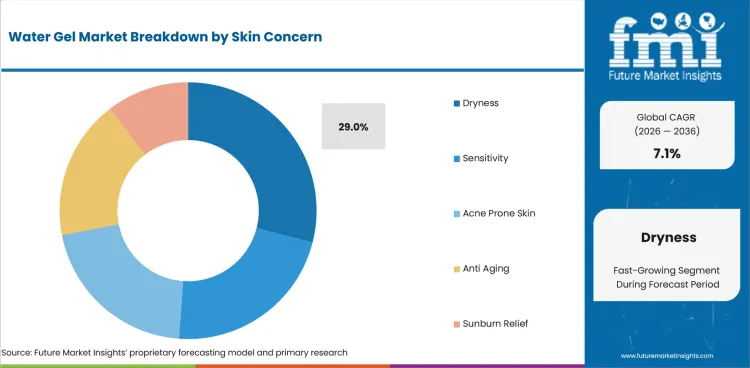
In 2026, Dryness is expected to hold 29.0% of the skin concern segment. Sensitivity and Acne Prone Skin represent additional sub-segments with growing procurement activity. Demand patterns within this segment reflect the concentration of procurement in established use cases and the evolving requirements of end users across different regions.
Water Gel Market Drivers, Restraints, and Opportunities
- Neutrogena holds an estimated 23.0% market share through its Hydro Boost franchise that established mass-market accessibility for the water gel skincare category globally.
- Clinique, L'Oreal Paris, and Laneige compete across prestige, mass, and K-beauty segments with distinct formulation and brand positioning strategies.
- The competitive landscape is shaped by ingredient transparency and clinical efficacy claims, with consumers increasingly selecting products based on formulation evidence rather than brand heritage alone.
The Water Gel market is shaped by demand drivers, supply constraints, and emerging opportunities. Growth is supported by expanding application requirements, while cost pressures and competitive dynamics influence adoption rates.
Primary Demand Drivers
Growing consumer preference for lightweight, water-based skincare formulations that provide hydration without the heaviness of traditional creams is sustaining demand across all skin types and age demographics.
Supply and Cost Dynamics
The expansion of K-beauty influenced multi-step skincare routines into Western markets is driving adoption of water gels as a dedicated hydration layer in daily skincare regimens.
Emerging Growth Opportunities
After-sun care and therapeutic applications are creating seasonal and condition-specific demand channels that complement the year-round daily skincare base.
Analysis of Water Gel Market By Key Countries
.webp "Top Country Growth Comparison Water Gel Market Cagr (2026 2036)")
| Country | CAGR |
|---|---|
| China | 7.6% |
| India | 7.4% |
| USA | 7.1% |
| Germany | 7.0% |
| UK | 6.9% |
Source: FMI analysis based on primary research and proprietary forecasting model
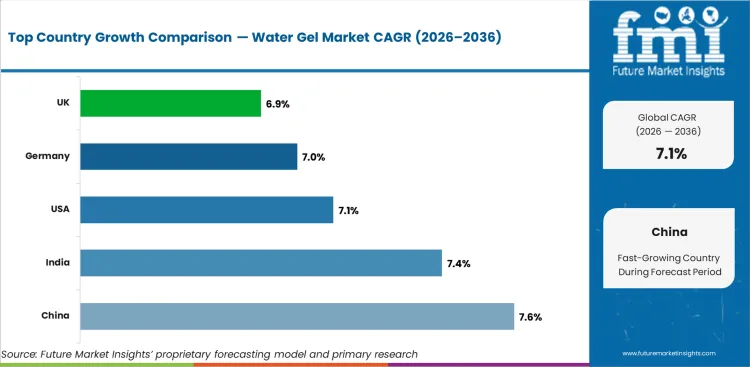
- China at 7.6%: supported by local market conditions and sector investment.
- India at 7.4%: supported by local market conditions and sector investment.
- USA at 7.1%: supported by local market conditions and sector investment.
- Germany at 7.0%: supported by local market conditions and sector investment.
The global water gel market is expected to grow at a rate of 7.1% per year from 2026 to 2036. The study covers more than 30 countries, and the main markets are listed below.
Demand Outlook for Water Gel Market in China
China is projected to grow at 7.6% through 2036. The scale of consumer skincare spending, K-beauty hydration trend influence, and the expansion of mass-market water gel products through both domestic brands and international entrants create the largest growth opportunity in the global water gel market.
- The scale of consumer skincare spending and the penetration of K-beauty hydration routines through both domestic and international brands create the largest demand base for water gel products globally.
- Domestic brand development in the water gel category is accelerating as Chinese manufacturers invest in formulation capability that rivals imported products at more accessible price points.
- E-commerce platforms including Tmall and JD.com provide efficient distribution infrastructure that enables rapid brand building and consumer access to the full range of water gel products.
Future Outlook for Water Gel Market in India
India is projected to grow at 7.4% through 2036. Rising urban skincare awareness, growing demand for lightweight formulations suited to tropical and humid climate conditions, and the expansion of affordable water gel products through online and pharmacy distribution channels sustain market growth.
- Rising urban skincare awareness among millennial and Gen Z consumers is creating a growing addressable market for lightweight hydration products suited to the Indian tropical climate.
- The expansion of affordable water gel products through pharmacy and online channels is reducing price barriers that previously limited adoption to premium consumer segments.
- Dermatologist influence on skincare purchasing behavior is growing as consumers seek professional guidance on hydration routines, creating clinical credibility requirements for competing brands.
Opportunity Analysis of Water Gel Market in the United States
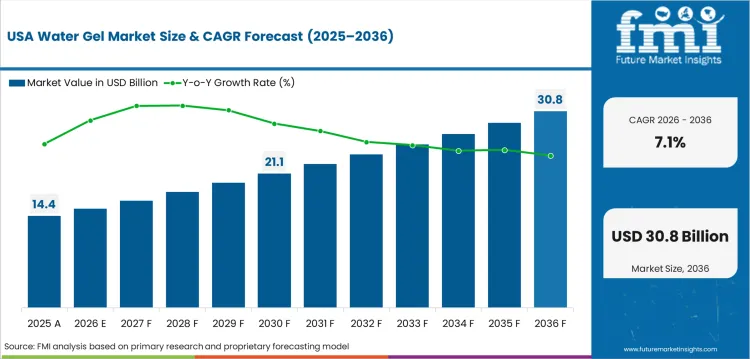
The United States is projected to grow at 7.1% through 2036. Neutrogena Hydro Boost and competing mass-market brands have established water gel as a mainstream moisturizer category, while growing consumer interest in ingredient-driven skincare sustains demand across pharmacy, retail, and online channels.
- Neutrogena Hydro Boost established the mass-market water gel category in the US, creating consumer awareness and retail shelf space that subsequent entrants have expanded.
- Growing consumer interest in ingredient-driven skincare and hyaluronic acid awareness is sustaining demand for water gel formulations that communicate specific hydration mechanisms.
- Pharmacy and mass retail channels provide broad distribution access, while online direct-to-consumer brands are capturing share through ingredient transparency and subscription models.
In-depth Analysis of Water Gel Market in Germany
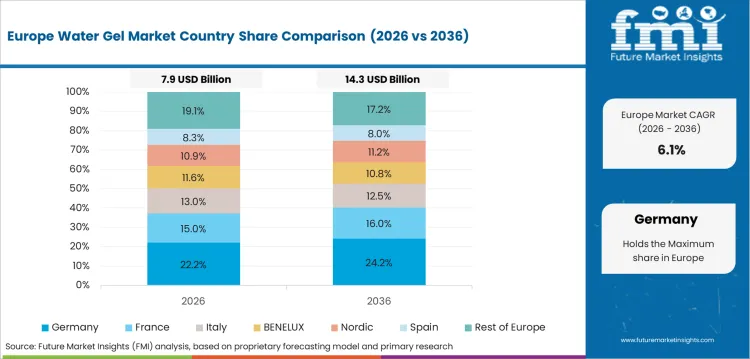
Germany is projected to grow at 6.1% through 2036. Consumer preference for dermatologically tested, lightweight skincare formulations and the strength of pharmacy-based distribution for skincare products sustain demand for water gel moisturizers across clinical and daily care applications.
- Consumer preference for dermatologically tested skincare creates demand for water gels with clinical validation and pharmacy-channel distribution suitability.
- The Apotheke distribution model provides a trusted channel for skincare products with demonstrated efficacy, supporting water gel positioning as a clinically credible hydration solution.
- Growing awareness of lightweight formulation benefits for daily skincare routines is expanding the water gel category beyond condition-specific use to mainstream daily moisturizing.
Sales Analysis of Water Gel Market in UK
The United Kingdom is projected to grow at 6.9% through 2036. Growing consumer sophistication in skincare ingredient knowledge and the expansion of affordable active hydration brands through online retail are broadening water gel accessibility beyond premium beauty channels.
- Ingredient-aware consumers are driving demand for water gels that communicate specific hydration mechanisms and active ingredient benefits through transparent labeling.
- Online beauty retail growth enables direct brand access and product comparison that supports informed purchasing of water gel products across price tiers.
- The clean beauty movement is creating demand for water gels formulated with minimal synthetic ingredients, supporting natural and organic positioning in the category.
Competitive Landscape and Strategic Positioning
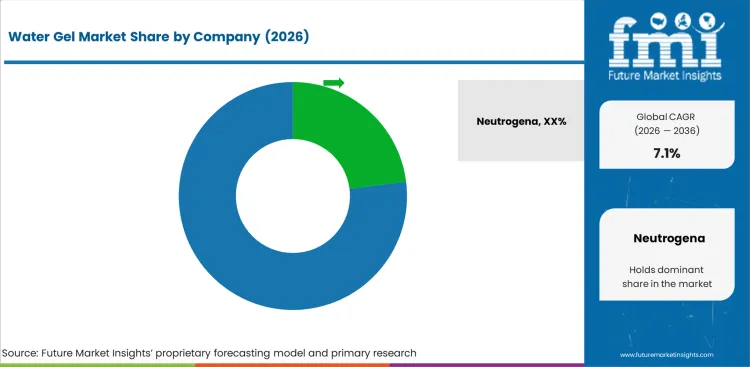
- Neutrogena holds an estimated 23.0% market share through its Hydro Boost franchise that established mass-market accessibility for the water gel skincare category globally.
- Clinique, L'Oreal Paris, and Laneige compete across prestige, mass, and K-beauty segments with distinct formulation and brand positioning strategies.
- The competitive landscape is shaped by ingredient transparency and clinical efficacy claims, with consumers increasingly selecting products based on formulation evidence rather than brand heritage alone.
Neutrogena holds an estimated 23.0% market share through its Hydro Boost water gel range, which established the category in mass retail and pharmacy channels globally. The brand's association with dermatological credibility supports consumer trust.
Clinique competes through its Moisture Surge water gel positioning in the prestige channel. L'Oreal Paris offers water gel formulations in its mass skincare portfolio. Laneige leverages K-beauty heritage and water-based hydration expertise.
The competitive landscape is increasingly influenced by ingredient-focused brands and direct-to-consumer entrants that communicate formulation details to educated skincare consumers through digital channels.
Key Companies in the Water Gel Market
Key global companies leading the water gel market include:
- Neutrogena, Clinique, L'Oréal Paris, Laneige hold established positions through product portfolios, brand recognition, and distribution relationships.
- Belif, Origins (Estee Lauder), Peter Thomas Roth are specialized players focusing on differentiation and niche positioning in specific product categories.
- Dr. Jart+, Tatcha represent emerging participants with growth potential through technology or design advancement.
Competitive Benchmarking: Water Gel Market
| Company | Formulation Quality | Brand Heritage | Channel Breadth | Price Position |
|---|---|---|---|---|
| Neutrogena | High | Strong | Mass-Pharmacy | Mass |
| Clinique | High | Strong | Prestige | Premium |
| L'Oreal Paris | High | Strong | Mass | Mass-Premium |
| Laneige | High | Strong | Premium-Online | Premium |
Source: Future Market Insights competitive analysis, 2026.
Key Developments in Water Gel Market
- In 2025, Neutrogena launched an updated Hydro Boost water gel formulation with enhanced hyaluronic acid concentration targeting deeper skin hydration performance.
- In 2025, Laneige expanded its water gel product range with a new sleeping mask format combining overnight hydration with anti-aging peptide ingredients.
Key Players in the Water Gel Market
Major Global Players
- Neutrogena
- Clinique
- L'Oréal Paris
- Laneige
Emerging Players/Startups
- Belif
- Origins (Estee Lauder)
- Peter Thomas Roth
- Dr. Jart+
- Tatcha
Report Scope and Coverage
| Parameter | Details |
|---|---|
| Quantitative Units | USD 33.42 Billion to USD 66.35 Billion, at a CAGR of 7.1% |
| Market Definition | The water gel market covers lightweight, water-based skincare formulations including hydrating gels, cooling gels, aloe vera gels, and anti-aging gels designed to deliver moisture without heavy, occlusive texture. |
| Regions Covered | North America, Latin America, Europe, East Asia, South Asia and Pacific, Middle East and Africa |
| Countries Covered | China, India, USA, Germany, UK, 30 plus countries |
| Key Companies Profiled | Neutrogena, Clinique, L'Oréal Paris, Laneige |
| Forecast Period | 2026 to 2036 |
| Approach | Hybrid bottom up and top down methodology starting with verified transaction data, projecting adoption velocity across segments and regions. |
Market Segmentation Analysis
Water Gel Market Segmented by Product:
- Hydrating Water Gels
- Daily Moisturizing Gels
- Deep Hydration Gels
- Cooling Water Gels
- Instant Cooling Gels
- Post Workout Cooling Gels
- Aloe Vera Based Water Gels
- Pure Aloe Gels
- Herbal Aloe Blends
- Anti Aging Water Gels
- Collagen Boosting Gels
- Firming Water Gels
- Others
- Vitamin Enriched Gels
- Multi Purpose Gels
Water Gel Market Segmented by Skin Concern:
- Dryness
- Dehydrated Skin Care
- Moisture Barrier Repair
- Sensitivity
- Soothing Care
- Redness Reduction
- Acne Prone Skin
- Oil Control Care
- Pore Refining Care
- Anti Aging
- Wrinkle Reduction
- Skin Firming
- Sunburn Relief
- Post Sun Repair
- Cooling Relief Care
Water Gel Market Segmented by Sales Channel:
- Online
- E Commerce Platforms
- Brand Websites
- Supermarkets and Hypermarkets
- Large Retail Chains
- Mass Merchandisers
- Pharmacies and Drug Stores
- Retail Pharmacies
- Health Stores
- Specialty Stores
- Beauty Stores
- Skin Care Stores
- Others
- Convenience Stores
- Department Stores
Water Gel Market Segmented by Application:
- Skincare
- Daily Skin Care
- Night Care Routine
- After Sun Care
- Sun Exposure Recovery
- Cooling Skin Repair
- Therapeutic Use
- Dermatology Use
- Medical Skin Relief
- Cosmetic Formulations
- Beauty Product Base
- Professional Salon Use
Water Gel Market Segmented by Packaging:
- Tubes
- Travel Size Tubes
- Standard Use Tubes
- Jars
- Wide Mouth Jars
- Premium Glass Jars
- Bottles
- Pump Bottles
- Flip Top Bottles
Water Gel Market by Region:
- North America
- USA
- Canada
- Mexico
- Latin America
- Brazil
- Chile
- Rest of Latin America
- Western Europe
- Germany
- UK
- Italy
- Spain
- France
- Nordic
- BENELUX
- Rest of Western Europe
- Eastern Europe
- Russia
- Poland
- Hungary
- Balkan & Baltic
- Rest of Eastern Europe
- East Asia
- China
- Japan
- South Korea
- South Asia and Pacific
- India
- ASEAN
- Australia & New Zealand
- Rest of South Asia and Pacific
- Middle East & Africa
- Kingdom of Saudi Arabia
- Other GCC Countries
- Turkiye
- South Africa
- Other African Union
- Rest of Middle East & Africa
Research Sources and Bibliography
- 1. International Federation of Societies of Cosmetic Chemists. (2025). IFSCC Skincare Formulation Technology Report. IFSCC.
- 2. Euromonitor International. (2025). Global Skincare Market Data: Moisturizers. Euromonitor.
- 3. American Academy of Dermatology. (2024). AAD Skincare Hydration Guidelines. AAD.
- 4. L'Oreal. (2025). Annual Report 2024: Skincare Division. L'Oreal.
- 5. World Health Organization. (2025). WHO Skin Health and Dermatology Report. WHO.
This bibliography is provided for reader reference. The full Future Market Insights report contains the complete reference list with publication dates, URLs, and supporting data for all cited works.
This Report Answers
- Estimating the size of the market and revenue from 2026 to 2036.
- Segmentation by product, skin concern, sales channel, application, packaging.
- Insights about more than 30 markets in the region.
- Analysis of trends shaping the market.
- Assessment of the competitive landscape.
- Finding investment opportunities across key application areas.
- Supply chain and procurement pattern tracking.
- Delivery of data in PDF and Excel formats.
Frequently Asked Questions
How big is the water gel market in 2026?
The global water gel market is estimated to be valued at USD 33.4 billion in 2026.
What will be the size of water gel market in 2036?
The market size for the water gel market is projected to reach USD 66.3 billion by 2036.
How much will be the water gel market growth between 2026 and 2036?
The water gel market is expected to grow at a 7.1% CAGR between 2026 and 2036.
What are the key product types in the water gel market?
The key product types in water gel market are hydrating water gels, daily moisturizing gels, deep hydration gels, cooling water gels, instant cooling gels, post workout cooling gels, aloe vera based water gels, pure aloe gels, herbal aloe blends, anti aging water gels, collagen boosting gels, firming water gels, others, vitamin enriched gels and multi purpose gels.
Which skin concern segment is expected to contribute significant share in the water gel market in 2026?
In terms of skin concern, dryness segment is expected to command 29.0% share in the water gel market in 2026.
Preview the report firsthand - request a free sample
Get SampleGet the brochure for pricing and purchase details.
Get PDFTable of Content
- Executive Summary
- Global Market Outlook
- Demand-side Trends
- Supply-side Trends
- Technology Roadmap Analysis
- Analysis and Recommendations
- Market Overview
- Market Coverage / Taxonomy
- Market Definition / Scope / Limitations
- Research Methodology
- Chapter Orientation
- Analytical Lens and Working Hypotheses
- Market Structure, Signals, and Trend Drivers
- Benchmarking and Cross-market Comparability
- Market Sizing, Forecasting, and Opportunity Mapping
- Research Design and Evidence Framework
- Desk Research Programme (Secondary Evidence)
- Company Annual and Sustainability Reports
- Peer-reviewed Journals and Academic Literature
- Corporate Websites, Product Literature, and Technical Notes
- Earnings Decks and Investor Briefings
- Statutory Filings and Regulatory Disclosures
- Technical White Papers and Standards Notes
- Trade Journals, Industry Magazines, and Analyst Briefs
- Conference Proceedings, Webinars, and Seminar Materials
- Government Statistics Portals and Public Data Releases
- Press Releases and Reputable Media Coverage
- Specialist Newsletters and Curated Briefings
- Sector Databases and Reference Repositories
- FMI Internal Proprietary Databases and Historical Market Datasets
- Subscription Datasets and Paid Sources
- Social Channels, Communities, and Digital Listening Inputs
- Additional Desk Sources
- Expert Input and Fieldwork (Primary Evidence)
- Primary Modes
- Qualitative Interviews and Expert Elicitation
- Quantitative Surveys and Structured Data Capture
- Blended Approach
- Why Primary Evidence is Used
- Field Techniques
- Interviews
- Surveys
- Focus Groups
- Observational and In-context Research
- Social and Community Interactions
- Stakeholder Universe Engaged
- C-suite Leaders
- Board Members
- Presidents and Vice Presidents
- R&D and Innovation Heads
- Technical Specialists
- Domain Subject-matter Experts
- Scientists
- Physicians and Other Healthcare Professionals
- Governance, Ethics, and Data Stewardship
- Research Ethics
- Data Integrity and Handling
- Primary Modes
- Tooling, Models, and Reference Databases
- Desk Research Programme (Secondary Evidence)
- Data Engineering and Model Build
- Data Acquisition and Ingestion
- Cleaning, Normalisation, and Verification
- Synthesis, Triangulation, and Analysis
- Quality Assurance and Audit Trail
- Market Background
- Market Dynamics
- Drivers
- Restraints
- Opportunity
- Trends
- Scenario Forecast
- Demand in Optimistic Scenario
- Demand in Likely Scenario
- Demand in Conservative Scenario
- Opportunity Map Analysis
- Product Life Cycle Analysis
- Supply Chain Analysis
- Investment Feasibility Matrix
- Value Chain Analysis
- PESTLE and Porter’s Analysis
- Regulatory Landscape
- Regional Parent Market Outlook
- Production and Consumption Statistics
- Import and Export Statistics
- Market Dynamics
- Global Market Analysis 2021 to 2025 and Forecast, 2026 to 2036
- Historical Market Size Value (USD Million) Analysis, 2021 to 2025
- Current and Future Market Size Value (USD Million) Projections, 2026 to 2036
- Y-o-Y Growth Trend Analysis
- Absolute $ Opportunity Analysis
- Global Market Pricing Analysis 2021 to 2025 and Forecast 2026 to 2036
- Global Market Analysis 2021 to 2025 and Forecast 2026 to 2036, By Product
- Introduction / Key Findings
- Historical Market Size Value (USD Million) Analysis By Product , 2021 to 2025
- Current and Future Market Size Value (USD Million) Analysis and Forecast By Product , 2026 to 2036
- Hydrating Water Gels
- Daily Moisturizing Gels
- Deep Hydration Gels
- Cooling Water Gels
- Instant Cooling Gels
- Post Workout Cooling Gels
- Aloe Vera Based Water Gels
- Pure Aloe Gels
- Herbal Aloe Blends
- Anti Aging Water Gels
- Collagen Boosting Gels
- Firming Water Gels
- Others
- Vitamin Enriched Gels
- Multi Purpose Gels
- Hydrating Water Gels
- Y-o-Y Growth Trend Analysis By Product , 2021 to 2025
- Absolute $ Opportunity Analysis By Product , 2026 to 2036
- Global Market Analysis 2021 to 2025 and Forecast 2026 to 2036, By Skin Concern
- Introduction / Key Findings
- Historical Market Size Value (USD Million) Analysis By Skin Concern, 2021 to 2025
- Current and Future Market Size Value (USD Million) Analysis and Forecast By Skin Concern, 2026 to 2036
- Dryness
- Dehydrated Skin Care
- Moisture Barrier Repair
- Sensitivity
- Soothing Care
- Redness Reduction
- Acne Prone Skin
- Oil Control Care
- Pore Refining Care
- Anti Aging
- Wrinkle Reduction
- Skin Firming
- Sunburn Relief
- Post Sun Repair
- Cooling Relief Care
- Dryness
- Y-o-Y Growth Trend Analysis By Skin Concern, 2021 to 2025
- Absolute $ Opportunity Analysis By Skin Concern, 2026 to 2036
- Global Market Analysis 2021 to 2025 and Forecast 2026 to 2036, By Sales Channel
- Introduction / Key Findings
- Historical Market Size Value (USD Million) Analysis By Sales Channel, 2021 to 2025
- Current and Future Market Size Value (USD Million) Analysis and Forecast By Sales Channel, 2026 to 2036
- Online
- E Commerce Platforms
- Brand Websites
- Supermarkets and Hypermarkets
- Large Retail Chains
- Mass Merchandisers
- Pharmacies and Drug Stores
- Retail Pharmacies
- Health Stores
- Specialty Stores
- Beauty Stores
- Skin Care Stores
- Others
- Convenience Stores
- Department Stores
- Online
- Y-o-Y Growth Trend Analysis By Sales Channel, 2021 to 2025
- Absolute $ Opportunity Analysis By Sales Channel, 2026 to 2036
- Global Market Analysis 2021 to 2025 and Forecast 2026 to 2036, By Application
- Introduction / Key Findings
- Historical Market Size Value (USD Million) Analysis By Application, 2021 to 2025
- Current and Future Market Size Value (USD Million) Analysis and Forecast By Application, 2026 to 2036
- Skincare
- Daily Skin Care
- Night Care Routine
- After Sun Care
- Sun Exposure Recovery
- Cooling Skin Repair
- Therapeutic Use
- Dermatology Use
- Medical Skin Relief
- Cosmetic Formulations
- Beauty Product Base
- Professional Salon Use
- Skincare
- Y-o-Y Growth Trend Analysis By Application, 2021 to 2025
- Absolute $ Opportunity Analysis By Application, 2026 to 2036
- Global Market Analysis 2021 to 2025 and Forecast 2026 to 2036, By Packaging
- Introduction / Key Findings
- Historical Market Size Value (USD Million) Analysis By Packaging, 2021 to 2025
- Current and Future Market Size Value (USD Million) Analysis and Forecast By Packaging, 2026 to 2036
- Tubes
- Travel Size Tubes
- Standard Use Tubes
- Jars
- Wide Mouth Jars
- Premium Glass Jars
- Bottles
- Pump Bottles
- Flip Top Bottles
- Tubes
- Y-o-Y Growth Trend Analysis By Packaging, 2021 to 2025
- Absolute $ Opportunity Analysis By Packaging, 2026 to 2036
- Global Market Analysis 2021 to 2025 and Forecast 2026 to 2036, By Region
- Introduction
- Historical Market Size Value (USD Million) Analysis By Region, 2021 to 2025
- Current Market Size Value (USD Million) Analysis and Forecast By Region, 2026 to 2036
- North America
- Latin America
- Western Europe
- Eastern Europe
- East Asia
- South Asia and Pacific
- Middle East & Africa
- Market Attractiveness Analysis By Region
- North America Market Analysis 2021 to 2025 and Forecast 2026 to 2036, By Country
- Historical Market Size Value (USD Million) Trend Analysis By Market Taxonomy, 2021 to 2025
- Market Size Value (USD Million) Forecast By Market Taxonomy, 2026 to 2036
- By Country
- USA
- Canada
- Mexico
- By Product
- By Skin Concern
- By Sales Channel
- By Application
- By Packaging
- By Country
- Market Attractiveness Analysis
- By Country
- By Product
- By Skin Concern
- By Sales Channel
- By Application
- By Packaging
- Key Takeaways
- Latin America Market Analysis 2021 to 2025 and Forecast 2026 to 2036, By Country
- Historical Market Size Value (USD Million) Trend Analysis By Market Taxonomy, 2021 to 2025
- Market Size Value (USD Million) Forecast By Market Taxonomy, 2026 to 2036
- By Country
- Brazil
- Chile
- Rest of Latin America
- By Product
- By Skin Concern
- By Sales Channel
- By Application
- By Packaging
- By Country
- Market Attractiveness Analysis
- By Country
- By Product
- By Skin Concern
- By Sales Channel
- By Application
- By Packaging
- Key Takeaways
- Western Europe Market Analysis 2021 to 2025 and Forecast 2026 to 2036, By Country
- Historical Market Size Value (USD Million) Trend Analysis By Market Taxonomy, 2021 to 2025
- Market Size Value (USD Million) Forecast By Market Taxonomy, 2026 to 2036
- By Country
- Germany
- UK
- Italy
- Spain
- France
- Nordic
- BENELUX
- Rest of Western Europe
- By Product
- By Skin Concern
- By Sales Channel
- By Application
- By Packaging
- By Country
- Market Attractiveness Analysis
- By Country
- By Product
- By Skin Concern
- By Sales Channel
- By Application
- By Packaging
- Key Takeaways
- Eastern Europe Market Analysis 2021 to 2025 and Forecast 2026 to 2036, By Country
- Historical Market Size Value (USD Million) Trend Analysis By Market Taxonomy, 2021 to 2025
- Market Size Value (USD Million) Forecast By Market Taxonomy, 2026 to 2036
- By Country
- Russia
- Poland
- Hungary
- Balkan & Baltic
- Rest of Eastern Europe
- By Product
- By Skin Concern
- By Sales Channel
- By Application
- By Packaging
- By Country
- Market Attractiveness Analysis
- By Country
- By Product
- By Skin Concern
- By Sales Channel
- By Application
- By Packaging
- Key Takeaways
- East Asia Market Analysis 2021 to 2025 and Forecast 2026 to 2036, By Country
- Historical Market Size Value (USD Million) Trend Analysis By Market Taxonomy, 2021 to 2025
- Market Size Value (USD Million) Forecast By Market Taxonomy, 2026 to 2036
- By Country
- China
- Japan
- South Korea
- By Product
- By Skin Concern
- By Sales Channel
- By Application
- By Packaging
- By Country
- Market Attractiveness Analysis
- By Country
- By Product
- By Skin Concern
- By Sales Channel
- By Application
- By Packaging
- Key Takeaways
- South Asia and Pacific Market Analysis 2021 to 2025 and Forecast 2026 to 2036, By Country
- Historical Market Size Value (USD Million) Trend Analysis By Market Taxonomy, 2021 to 2025
- Market Size Value (USD Million) Forecast By Market Taxonomy, 2026 to 2036
- By Country
- India
- ASEAN
- Australia & New Zealand
- Rest of South Asia and Pacific
- By Product
- By Skin Concern
- By Sales Channel
- By Application
- By Packaging
- By Country
- Market Attractiveness Analysis
- By Country
- By Product
- By Skin Concern
- By Sales Channel
- By Application
- By Packaging
- Key Takeaways
- Middle East & Africa Market Analysis 2021 to 2025 and Forecast 2026 to 2036, By Country
- Historical Market Size Value (USD Million) Trend Analysis By Market Taxonomy, 2021 to 2025
- Market Size Value (USD Million) Forecast By Market Taxonomy, 2026 to 2036
- By Country
- Kingdom of Saudi Arabia
- Other GCC Countries
- Turkiye
- South Africa
- Other African Union
- Rest of Middle East & Africa
- By Product
- By Skin Concern
- By Sales Channel
- By Application
- By Packaging
- By Country
- Market Attractiveness Analysis
- By Country
- By Product
- By Skin Concern
- By Sales Channel
- By Application
- By Packaging
- Key Takeaways
- Key Countries Market Analysis
- USA
- Pricing Analysis
- Market Share Analysis, 2025
- By Product
- By Skin Concern
- By Sales Channel
- By Application
- By Packaging
- Canada
- Pricing Analysis
- Market Share Analysis, 2025
- By Product
- By Skin Concern
- By Sales Channel
- By Application
- By Packaging
- Mexico
- Pricing Analysis
- Market Share Analysis, 2025
- By Product
- By Skin Concern
- By Sales Channel
- By Application
- By Packaging
- Brazil
- Pricing Analysis
- Market Share Analysis, 2025
- By Product
- By Skin Concern
- By Sales Channel
- By Application
- By Packaging
- Chile
- Pricing Analysis
- Market Share Analysis, 2025
- By Product
- By Skin Concern
- By Sales Channel
- By Application
- By Packaging
- Germany
- Pricing Analysis
- Market Share Analysis, 2025
- By Product
- By Skin Concern
- By Sales Channel
- By Application
- By Packaging
- UK
- Pricing Analysis
- Market Share Analysis, 2025
- By Product
- By Skin Concern
- By Sales Channel
- By Application
- By Packaging
- Italy
- Pricing Analysis
- Market Share Analysis, 2025
- By Product
- By Skin Concern
- By Sales Channel
- By Application
- By Packaging
- Spain
- Pricing Analysis
- Market Share Analysis, 2025
- By Product
- By Skin Concern
- By Sales Channel
- By Application
- By Packaging
- France
- Pricing Analysis
- Market Share Analysis, 2025
- By Product
- By Skin Concern
- By Sales Channel
- By Application
- By Packaging
- India
- Pricing Analysis
- Market Share Analysis, 2025
- By Product
- By Skin Concern
- By Sales Channel
- By Application
- By Packaging
- ASEAN
- Pricing Analysis
- Market Share Analysis, 2025
- By Product
- By Skin Concern
- By Sales Channel
- By Application
- By Packaging
- Australia & New Zealand
- Pricing Analysis
- Market Share Analysis, 2025
- By Product
- By Skin Concern
- By Sales Channel
- By Application
- By Packaging
- China
- Pricing Analysis
- Market Share Analysis, 2025
- By Product
- By Skin Concern
- By Sales Channel
- By Application
- By Packaging
- Japan
- Pricing Analysis
- Market Share Analysis, 2025
- By Product
- By Skin Concern
- By Sales Channel
- By Application
- By Packaging
- South Korea
- Pricing Analysis
- Market Share Analysis, 2025
- By Product
- By Skin Concern
- By Sales Channel
- By Application
- By Packaging
- Russia
- Pricing Analysis
- Market Share Analysis, 2025
- By Product
- By Skin Concern
- By Sales Channel
- By Application
- By Packaging
- Poland
- Pricing Analysis
- Market Share Analysis, 2025
- By Product
- By Skin Concern
- By Sales Channel
- By Application
- By Packaging
- Hungary
- Pricing Analysis
- Market Share Analysis, 2025
- By Product
- By Skin Concern
- By Sales Channel
- By Application
- By Packaging
- Kingdom of Saudi Arabia
- Pricing Analysis
- Market Share Analysis, 2025
- By Product
- By Skin Concern
- By Sales Channel
- By Application
- By Packaging
- Turkiye
- Pricing Analysis
- Market Share Analysis, 2025
- By Product
- By Skin Concern
- By Sales Channel
- By Application
- By Packaging
- South Africa
- Pricing Analysis
- Market Share Analysis, 2025
- By Product
- By Skin Concern
- By Sales Channel
- By Application
- By Packaging
- USA
- Market Structure Analysis
- Competition Dashboard
- Competition Benchmarking
- Market Share Analysis of Top Players
- By Regional
- By Product
- By Skin Concern
- By Sales Channel
- By Application
- By Packaging
- Competition Analysis
- Competition Deep Dive
- Neutrogena
- Overview
- Product Portfolio
- Profitability by Market Segments (Product/Age /Sales Channel/Region)
- Sales Footprint
- Strategy Overview
- Marketing Strategy
- Product Strategy
- Channel Strategy
- Clinique
- L'Oréal Paris
- Laneige
- Other Companies
- Neutrogena
- Competition Deep Dive
- Assumptions & Acronyms Used


