

- Market Size (2026)
- USD 5.6 Bn
- Forecast (2036)
- USD 21.9 Bn
- CAGR (2026 to 2036)
- 14.6%
Zonal Wiring Harness Platforms for Software-Defined Vehicles Market Size, Market Forecast and Outlook By FMI
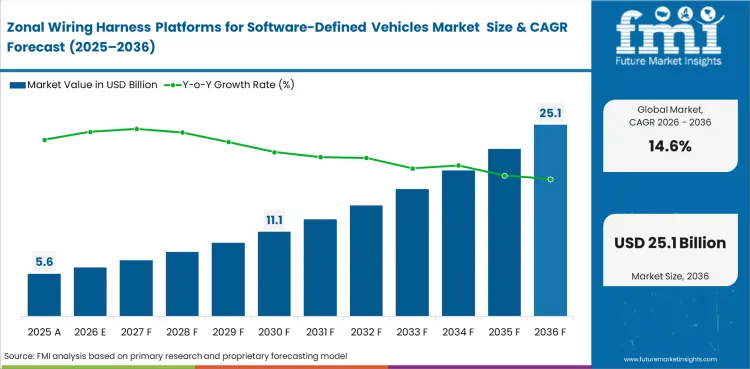
The zonal wiring harness platforms for software-defined vehicles market was valued at USD 4.9 billion in 2025. The market value is projected to reach USD 5.6 billion in 2026 and USD 21.9 billion by 2036 at a 14.6% CAGR. Copper is projected to lead the conductor material segment with 67.0% share in 2026, while passenger vehicles are estimated to account for 58.0% of vehicle-type demand in 2026.
Summary of the Zonal Wiring Harness Platforms for Software-Defined Vehicles Market
- Demand and Growth Drivers
- UN vehicle rules on cybersecurity and software updates formalize lifecycle control and support architectures built for centralized software management.
- Electric car sales topped 17 million in 2024 and are expected to exceed 20 million in 2025, lifting power and data loads across vehicle platforms.
- Product and Segment View
- Copper is estimated to lead conductor material demand with 67.0% share in 2026 as validation history and service reliability stay central in series programs.
- Passenger vehicles are projected to account for 58.0% of demand in 2026 as SDV functions move first into higher-volume passenger nameplates.
- 12V and 48V low-voltage layers are estimated to represent 55.0% of 2026 demand as zonal layouts first reorganize body and comfort loads before wider high-voltage expansion.
- Geography and Competitive Outlook
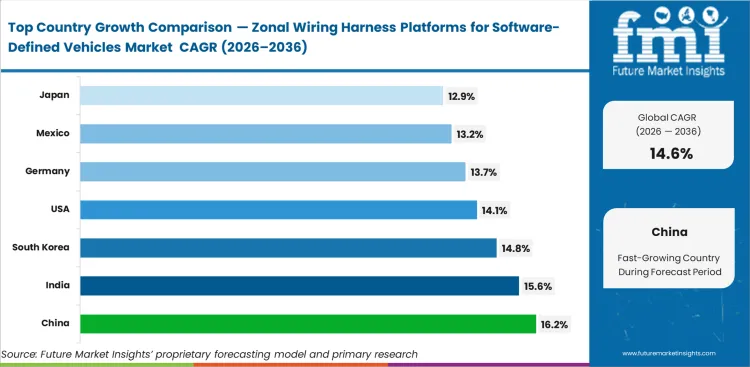
- China is projected to lead country expansion with 16.2% CAGR through 2036, supported by high production of vehicles in 2024 and a very high EV mix.
- India is projected to record 15.6% CAGR through 2036, supported by fresh SDV engineering investment from global suppliers.
- Aptiv and Lear bring architecture integration capabilities, while Leoni and Yazaki add harness engineering depth, and Sumitomo Wiring Systems with Motherson plus TE Connectivity, contribute scaled manufacturing strength.
- Analyst Opinion
- Nikhil Kaitwade, Principal Consultant at FMI says, “Demand is moving from electrical content expansion into architecture redesign. Zonal harness platforms are gaining priority as OEMs seek lower mass and simpler control paths. Suppliers with harness engineering plus zone control know-how are best placed for broader platform wins.”
- Zonal Wiring Harness Platforms for Software-Defined Vehicles Market Value Analysis
- Market value is moving from isolated premium SDV programs into a broader electrical platform sourcing category.
- Adoption is supported by higher power distribution stress from cameras and compute nodes; additional support comes from software‑managed body electronics.
- Value creation is strengthened by OEM interest in lighter harness layouts and more automated harness subassembly methods.
- Demand is further supported by lifecycle software obligations rewarding simpler and more modular vehicle electrical layouts.
Key Takeaways
- Zonal wiring harness platform demand is estimated at USD 4.9 billion in 2025 after back-calculating the pre-forecast year from the 2026 base value and forecast CAGR.
- Global market value is projected to reach USD 21.9 billion by 2036.
- Revenue is projected to advance at a 14.6% CAGR during 2026 to 2036.
- Incremental opportunity is estimated at USD 16.3 billion between 2026 and 2036.
- Copper is projected to command 67.0% of conductor material demand in 2026 due to durability, validation familiarity, and broad OEM qualification depth.
- China is projected to post the fastest country CAGR at 16.2% through 2036, while India is projected to follow at 15.6%.
Zonal Wiring Harness Platforms for Software-Defined Vehicles Market Definition
This market includes vehicle wiring harness platforms designed around zonal electrical and electronic architectures for software-defined vehicles. Scope covers sub-harness kits, power and data routing layouts, localized distribution links, connectorized zone interfaces, and integration-ready harness platforms used by passenger and commercial vehicle OEM programs. Demand in this space also aligns with broader zonal harness systems adoption across next-generation vehicle electrical platforms.
Zonal Wiring Harness Platforms for Software-Defined Vehicles Market Inclusions
Scope includes hybrid zonal and full zonal harness platforms, copper and aluminum-hybrid conductor sets, low-voltage and high-voltage routing layers, and OEM program supply for new vehicle platforms or major carryover electrical refreshes. Vehicle applications include passenger vehicles, light commercial vehicles, and heavy commercial vehicles with centralized or semi-centralized E/E architectures. This scope also aligns with broader automotive wiring harness demand across vehicle programs adopting higher electrical complexity and architecture consolidation.
Zonal Wiring Harness Platforms for Software-Defined Vehicles Market Exclusions
Scope excludes generic legacy harness assemblies built for fully distributed ECU layouts. Standalone connectors, standalone zone controllers, battery busbars, and aftermarket repair harnesses are excluded unless sold as part of an integrated zonal harness platform. This boundary keeps the scope separate from standalone automotive zonal gateway ECU demand connected with centralized vehicle control programs.
Zonal Wiring Harness Platforms for Software-Defined Vehicles Market Research Methodology
- Primary Research: Interviews were structured around OEM electrical architecture teams, harness engineers, connector specialists, and tier-one suppliers influential in SDV platform programs.
- Desk Research: Analysis used OICA production data, IEA EV outlook data, UNECE software and cybersecurity regulations, and current supplier disclosures on zonal architecture design.
- Market Sizing and Forecasting: Sizing uses a bottom-up model built from vehicle production, zonal platform penetration, average harness platform value, and region-level adoption curves.
- Data Validation: Estimates were cross-checked against supplier positioning, architecture transition timing, EV mix trends, and official statements on zonal harness automation or power distribution redesign.
Why is the Zonal Wiring Harness Platforms for Software-Defined Vehicles Market Growing?
- UN R155 and R156 push automakers toward vehicle architectures built for traceable cyber management and software update governance.
- EV adoption is raising onboard electrical demand and pushing 12V systems closer to practical limits in many feature-rich vehicles.
- Zonal harness designs simplify routing and raise harness automation potential, which improves the commercial case for conversion on new vehicle platforms.
Vehicle power architecture faces a heavier load as automakers add advanced sensing and richer cabins. Additional strain comes from more software‑managed functions across modern vehicle electrical systems. TE says a move from 12V to 48V can cut current to one quarter for the same power demand and theoretically save over 85% copper in the harness, materially changing harness design choices in next‑generation vehicle programs.
Market Segmentation Analysis
- Passenger vehicles are estimated to account for 58.0% of 2026 demand across vehicle type segmentation.
- Copper is projected to represent 67.0% of conductor material demand in 2026.
- 12V and 48V low-voltage layers are estimated to hold 55.0% share in 2026.
- New platform programs are projected to capture 54.0% of program-type demand in 2026.
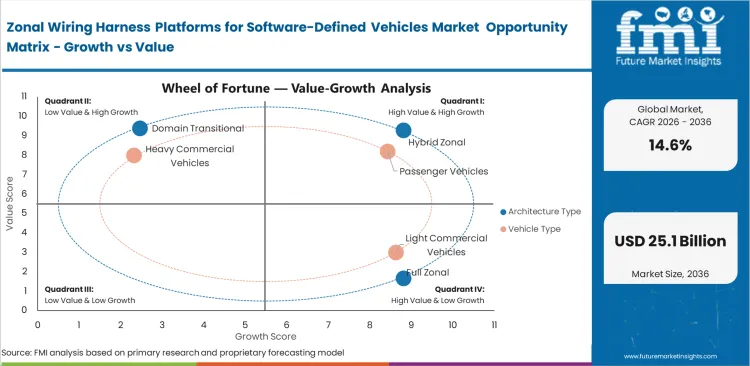
The market for zonal wiring harness platforms for software-defined vehicles is divided into groups based on architecture type, vehicle type, conductor material, voltage layer, program type, and region. There are hybrid zonal, full zonal, and domain transitional architectures. By vehicle type, the market includes passenger vehicles, light commercial vehicles, and heavy commercial vehicles. By conductor material, the market covers copper and aluminum hybrid. By voltage layer, it includes 12V and 48V low-voltage systems and high-voltage integration. By program type, the market is segmented into new platforms and carryover refresh.
Insights into the Hybrid Zonal Architecture Segment
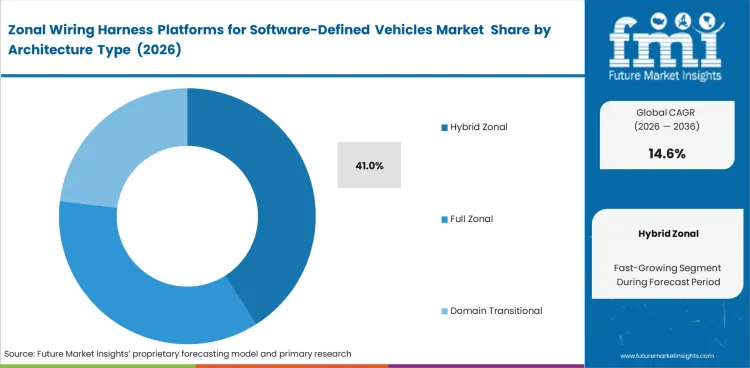
- Hybrid zonal platforms are projected to capture 41.0% of architecture-type demand in 2026 as OEMs convert selected zones before full electrical redesign.
- Adoption is strongest in programs needing software flexibility with a partial compute and power distribution reset instead of a full redesign.
Insights into the Passenger Vehicle Segment
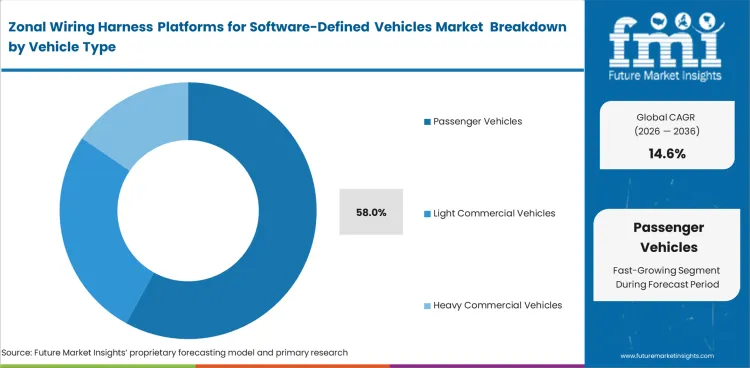
- Passenger vehicles are estimated to hold 58.0% of 2026 demand due to faster feature rollouts and higher electrical complexity per unit.
- Program density in premium and upper mainstream passenger lines supports earlier conversion compared with most commercial vehicle platforms.
Insights into the Copper Segment
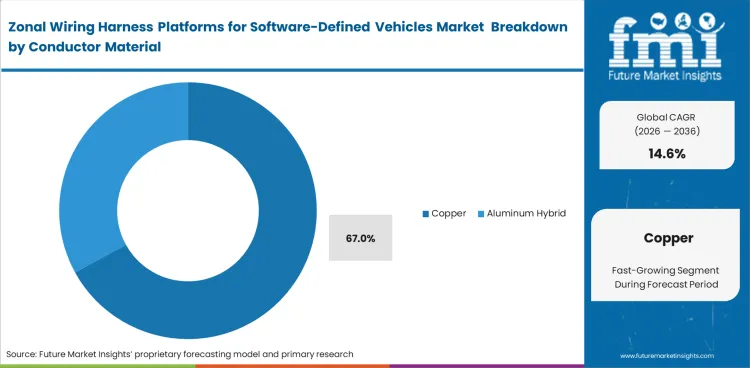
- Copper is projected to command 67.0% share in 2026 as thermal behavior and validation familiarity are important in early zonal rollouts.
- Aluminum hybrid sets are gaining attention, and copper is central in high-reliability routing and connector termination decisions.
Insights into the 12V and 48V Low-Voltage Segment
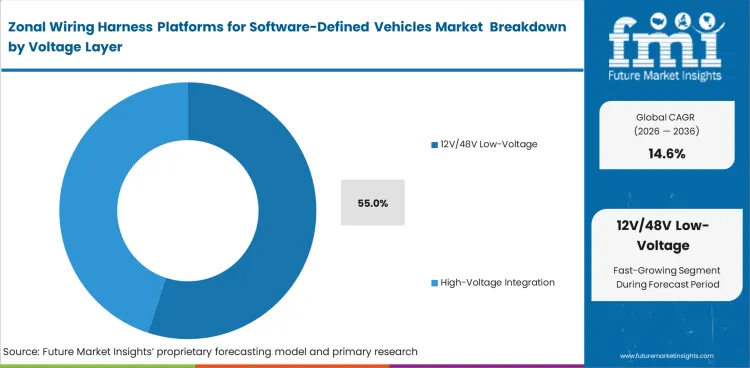
- 12V and 48V low-voltage layers are estimated to account for 55.0% of demand in 2026 as body electronics move first.
- TE frames 48V plus zonal design as a scalable answer to higher electrical loads and more modular power distribution.
Insights into the New Platform Programs Segment
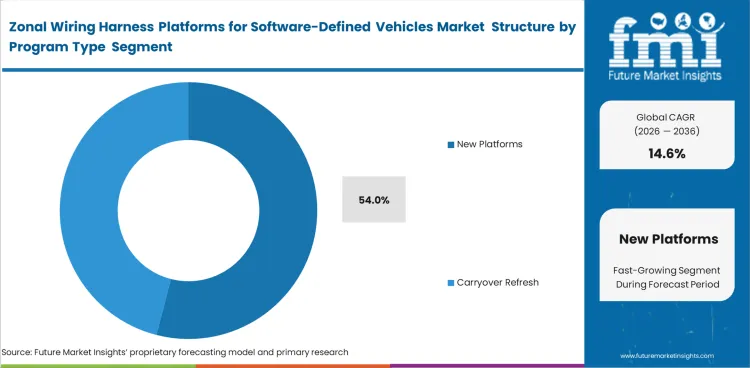
- New platform programs are projected to represent 54.0% of 2026 demand as validation budgets align better with clean-sheet electrical layouts.
- Carryover programs continue to play a role in selected body zones, as full zonal harness conversion is more common in new launches.
Zonal Wiring Harness Platforms for Software-Defined Vehicles Market Drivers, Restraints, and Opportunities
- Software lifecycle compliance is raising the value of modular electrical architecture decisions.
- Harness mass and routing pressure are lifting OEM interest in zonal conversion and smarter power distribution.
- Manufacturing automation and near-plant sourcing create room for margin improvement in zonal harness programs.
Zonal wiring harness platforms for software defined vehicles keep growing because vehicle functions are managed more through software and EV electrical loads are rising. Lifecycle software rules are pushing OEMs toward modular electrical architectures. High validation effort raises development burden. Architecture revision complexity and redesign costs can slow adoption. Growth continues through 48V backbones and new platform launches.
Software-Centric Vehicle Platforms
Software-centric vehicles reward architectures with fewer long branches and more localized control. UNECE rules on cybersecurity and software updates place accountability at the vehicle lifecycle level. Zonal harness platforms support cleaner partitioning of power and data paths during design and validation.
Validation and Change-Control Load
A restraint comes from the amount of validation work tied to every electrical architecture change. Zonal harness conversion affects connectors and controller placement across modern vehicle electrical systems. It influences service access and thermal performance during vehicle design and validation phases. Software mapping is impacted by zonal harness conversion across integrated vehicle platforms. Programs with limited redesign budgets often delay full conversion until the next clean-sheet vehicle cycle.
Zonal Wiring Harness Platforms for Software-Defined Vehicles Market By Key Countries
.webp "Top Country Growth Comparison Zonal Wiring Harness Platforms For Software Defined Vehicles Market Cagr (2026 2036)")
| Country | CAGR |
|---|---|
| China | 16.2% |
| India | 15.6% |
| South Korea | 14.8% |
| United States | 14.1% |
| Germany | 13.7% |
| Mexico | 13.2% |
| Japan | 12.9% |
Zonal Wiring Harness Platforms for Software-Defined Vehicles Market CAGR Analysis By Country
- China is projected to lead forecast expansion with 16.2% CAGR through 2036 under high vehicle output and rapid software-defined vehicle platform rollout.
- India is projected to follow with 15.6% CAGR as local engineering capacity and platform localization activity strengthen across future vehicle programs.
- South Korea is projected to record 14.8% CAGR through 2036, supported by strong electronics capability and export related vehicle platform development.
- The United States is projected to expand at 14.1% CAGR through 2036 as software-managed vehicle features raise demand for advanced electrical architectures.
- Germany is projected to witness 13.7% CAGR through 2036, supported by premium vehicle engineering depth and wider electrical architecture redesign activity.
- Mexico is projected to post 13.2% CAGR through 2036 as North American vehicle assembly programs support stronger harness platform localization.
- Japan is projected to record the slowest pace among the listed countries at 12.9% CAGR through 2036, reflecting a more measured platform conversion cycle.
Demand Outlook for Zonal Wiring Harness Platforms for Software-Defined Vehicles Market in China
China is projected to expand at a 16.2% CAGR through 2036. Vehicle production reached 31.28 million units in 2024, and IEA expects electric cars to approach about 60% of national car sales in 2025. The mix supports higher electrical content and accelerates zonal conversion on domestic platforms.
- Local OEM scale supports faster electrical platform resets.
- High EV penetration lifts demand for denser power and data distribution.
Future Outlook for Zonal Wiring Harness Platforms for Software-Defined Vehicles Market in India
India is estimated to record 15.6% CAGR during the forecast period. National vehicle production reached 6,014,548 units in 2024, and Aptiv opened a Chennai technical center in 2025 which will support up to 500 engineers by 2026 for SDV-related development work.
- Local engineering depth is improving across software and electrical integration.
- New platform launches drive earlier adoption relative to simple carryover programs.
Sales Outlook for Zonal Wiring Harness Platforms for Software-Defined Vehicles Market in South Korea
South Korea is projected to post 14.8% CAGR by 2036. Vehicle production reached 4.13 million units in 2024, which supports a sizable export-related base for advanced electrical architecture sourcing. Strong electronics capability supports steady zonal harness adoption in future programs.
- Export programs demand scalable electrical layouts across multiple trims.
- Domestic supplier capability supports advanced E/E integration work.
Opportunity Analysis for Zonal Wiring Harness Platforms for Software-Defined Vehicles Market in the United States
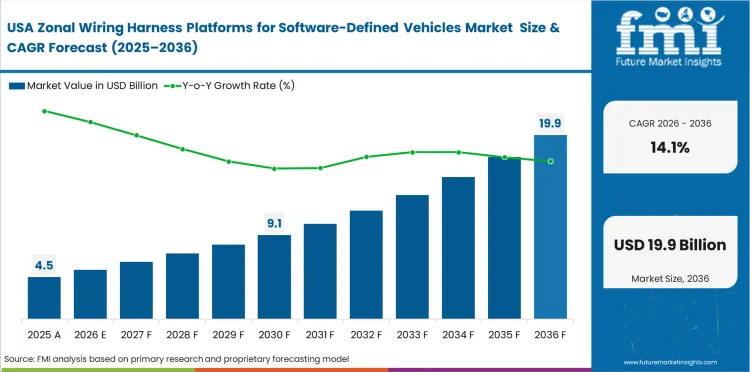
The United States is projected to advance at 14.1% CAGR over the forecast years. Vehicle production stood at 10,562,188 million units in 2024, and the IEA says electric car sales continued to increase in 2024, with growth slowing versus the prior year.
- Higher feature density supports stronger zonal content in passenger vehicles.
- Supplier design activity is strong across software-managed vehicle platforms.
Opportunity Analysis of Zonal Wiring Harness Platforms for Software-Defined Vehicles Market in Germany
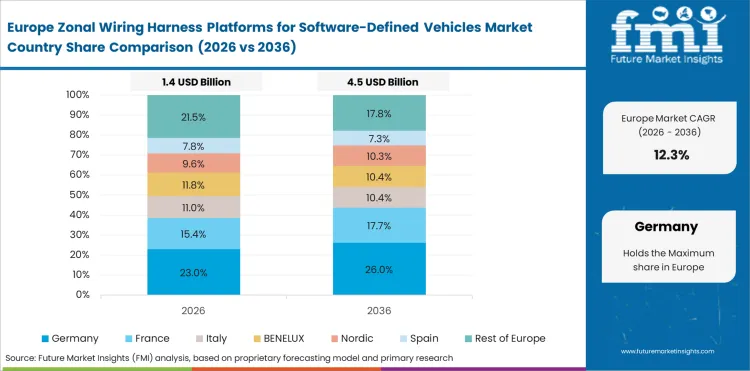
The Germany zonal wiring harness platforms for software-defined vehicles market is projected to grow steadily through the forecast period. This is due to premium vehicle engineering depth, strong electrical architecture redesign capability, and a disciplined validation environment across advanced vehicle programs.
• Premium vehicle programs support faster adoption of modular electrical layouts.
• Strong engineering capability supports advanced zonal harness development.
• Validation discipline supports demand for established suppliers with platform integration depth.
Production Outlook for Zonal Wiring Harness Platforms for Software-Defined Vehicles Market in Mexico
Mexico is estimated to post 13.2% CAGR during the assessment period. Domestic passenger vehicle reached 4.20 million units in 2024, which supports a strong manufacturing role in North American vehicle programs and harness supply chains.
- Regional assembly depth supports higher harness program localization.
- Cross-border OEM programs favor suppliers with North American manufacturing reach.
Demand Analysis of Zonal Wiring Harness Platforms for Software-Defined Vehicles Market in Japan
Japan is projected to grow at 12.9% CAGR during the forecast years. Vehicle production reached 8.23 million units in 2024, and Sumitomo Electric highlights copper harness capabilities suited to advanced vehicle applications. The company also highlights aluminum and optical harness capabilities suited to advanced vehicle applications. Adoption pace is solid, and platform turnover is more measured as compared to China or India.
- Supplier capability is strong across advanced harness materials and data links.
- Forecast pace is moderated by a more gradual architecture conversion cycle.
Competitive Landscape and Strategic Positioning
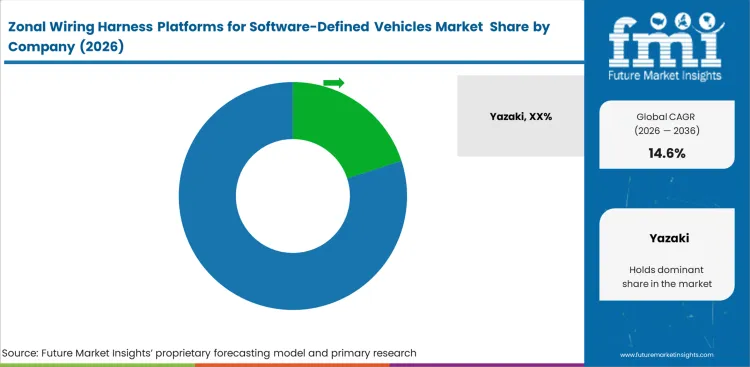
- Aptiv and Lear pair wiring distribution capability with zone control and power management offerings.
- Leoni focuses on zonal harness engineering and states zonal architecture can materially increase harness production automation.
- Yazaki and Sumitomo Wiring Systems maintain strong relevance through global harness scale and OEM manufacturing access. Motherson is also highly relevant due to extensive harness scale and broad OEM manufacturing access.
Competition is taking a more defined shape across this market as harness suppliers and system integrators approach vehicle programs with different strengths. Harness-focused companies bring strong execution in layout engineering and launch support, and decisions around automotive zonal gateway ECU now influence harness design earlier in platform planning. This change elevates suppliers capable of spanning electrical packaging and control architecture within a single customer program.
Product positioning extends well beyond assembly scale as OEMs seek suppliers able to support future electrical architecture choices with stronger technical depth. Demand favors companies with an understanding of software defined vehicle requirements alongside power distribution design and connector density planning. Suppliers with this broader capability are anticipated to secure a stronger standing in future sourcing discussions.
Key Companies
- Harness Platform Leaders: Yazaki, Leoni, and Sumitomo Wiring Systems hold strong positions through global harness engineering depth, long OEM ties, and broad production footprints.
- Architecture Integrators: Aptiv, Lear, and TE Connectivity hold strong relevance through zone control, electrical distribution, and 48V connectivity solutions related to next-generation vehicle architecture.
- Regional Scale Manufacturers: Motherson adds scale through its wiring harness footprint and strong domestic OEM access in India, which supports platform localization and launch execution.
Competitive Benchmarking
| Company | Zonal Harness Design | Power and Data Integration | OEM Footprint | Manufacturing Automation |
|---|---|---|---|---|
| Yazaki | High | Medium | Strong | Medium |
| Aptiv | High | High | Strong | High |
| Lear | High | High | Strong | High |
| Leoni | High | Medium | Strong | High |
| Sumitomo Wiring Systems | High | Medium | Strong | Medium |
| Motherson | Medium | Medium | Strong | Medium |
| TE Connectivity | Medium | High | Strong | Medium |
Source: Future Market Insights, 2026.
Key Developments in Zonal Wiring Harness Platforms for Software-Defined Vehicles Market
- In April 2025, Lear won a PACE Award for its Zone Control Module with Algorithmic Circuit Protection, which supports software-defined circuit protection in zonal vehicle layouts.
- In January 2025, Leoni opened an Agadir plant optimized for truck and powertrain wiring systems. The company said the site could create up to 3,000 jobs.
- In January 2026, Aptiv named its planned independent Electrical Distribution Systems company Versigent with separation targeted for April 1, 2026.
Key Players in the Zonal Wiring Harness Platforms for Software-Defined Vehicles Market
Harness Platform Leaders
- Yazaki
- Leoni
- Sumitomo Wiring Systems
Architecture Integrators
- Aptiv
- Lear
- TE Connectivity
Regional Scale Manufacturers
- Motherson
Report Scope and Coverage
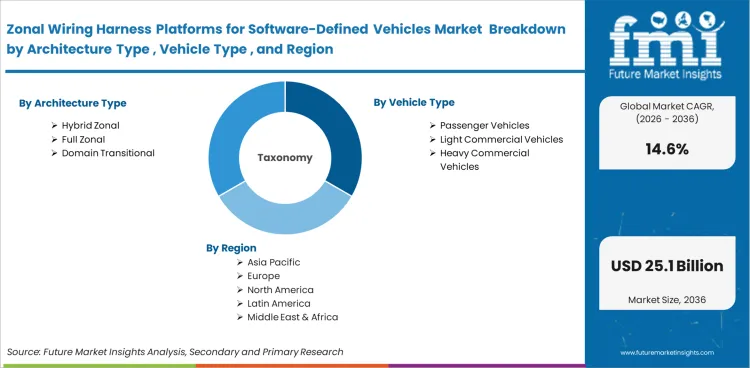
Zonal Wiring Harness Platforms for Software-Defined Vehicles Market Breakdown by Architecture Type, Vehicle Type, and Region
| Parameter | Details |
|---|---|
| Quantitative Units | USD 5.6 billion to USD 21.9 billion, at a CAGR of 14.6% |
| Market Definition | Integrated zonal wiring harness platforms for SDV-ready vehicle electrical architectures |
| Regions Covered | North America, Latin America, Europe, East Asia, South Asia and Pacific, Middle East and Africa |
| Countries Covered | China, India, South Korea, United States, Germany, Mexico, Japan, 30+ countries |
| Key Companies Profiled | Yazaki, Aptiv, Lear, Leoni, Sumitomo Wiring Systems, Motherson, TE Connectivity |
| Forecast Period | 2026 to 2036 |
| Approach | Hybrid bottom-up and top-down methodology starting with verified vehicle production data and platform adoption estimates |
Zonal Wiring Harness Platforms for Software-Defined Vehicles Market by Segments
Zonal Wiring Harness Platforms for Software-Defined Vehicles Market Segmented by Architecture Type
- Hybrid Zonal
- Full Zonal
- Domain Transitional
Zonal Wiring Harness Platforms for Software-Defined Vehicles Market Segmented by Vehicle Type
- Passenger Vehicles
- Light Commercial Vehicles
- Heavy Commercial Vehicles
Zonal Wiring Harness Platforms for Software-Defined Vehicles Market Segmented by Conductor Material
- Copper
- Aluminum Hybrid
Zonal Wiring Harness Platforms for Software-Defined Vehicles Market Segmented by Voltage Layer
- 12V/48V Low-Voltage
- High-Voltage Integration
Zonal Wiring Harness Platforms for Software-Defined Vehicles Market Segmented by Program Type
- New Platforms
- Carryover Refresh
Zonal Wiring Harness Platforms for Software-Defined Vehicles Market by Region
- North America
- United States
- Mexico
- Canada
- Europe
- Germany
- France
- United Kingdom
- East Asia
- China
- Japan
- South Korea
- South Asia and Pacific
- India
- ASEAN
- Australia and New Zealand
- Middle East and Africa
- Morocco
- GCC
- South Africa
Research Sources and Bibliography
- UNECE. (2024, January 26). UN extends its cyber security management regulation to cover more vehicle categories.
- Lear Corporation. (2025, April 16). Lear wins 2025 Automotive News PACE Award for its innovative Zone Control Module.
- Leoni AG. (2025, January 21). Leoni strengthens its impact in the commercial vehicle market.
- Aptiv PLC. (2026, January 27). Aptiv announces leadership appointments and company name for new independent Electrical Distribution Systems company.
- TE Connectivity. (2025). Powering the future: The rise of 48V and the transformation of automotive E/E architecture.
This Report Answers
- What value is projected for zonal wiring harness platforms in software-defined vehicles by 2036?
- Which parent segment is estimated to lead conductor material demand in 2026?
- Why are passenger vehicle programs converting faster than many commercial vehicle platforms?
- How do UN software and cybersecurity rules support modular electrical architecture choices?
- Which countries are projected to expand faster than the global average through 2036?
- How do 48V systems change harness weight, current load, and routing economics?
- Which suppliers combine zonal harness capability with zone control or power distribution know-how?
Why do new platform launches account for a larger share of zonal harness demand than carryover refresh programs?
Frequently Asked Questions
What is driving demand for zonal wiring harness platforms?
Demand is rising as software-managed vehicle functions, EV electrical loads, and lifecycle software rules push OEMs toward more modular electrical architectures.
What market value is projected for 2036?
Market value is projected to reach USD 21.9 billion by 2036 from an estimated USD 5.6 billion in 2026.
Which segment leads conductor material demand?
Copper is projected to lead conductor material demand with 67.0% share in 2026 due to qualification depth and broad reliability acceptance.
Which country is projected to expand fastest?
China is projected to post the fastest pace at 16.2% CAGR through 2036, supported by vehicle scale and very high EV penetration.
Why do new platform programs lead adoption?
New vehicle programs allow OEMs to redesign harness geometry, controller placement, and service architecture together instead of forcing compromise around legacy layouts.
How does zonal architecture help harness manufacturing?
Leoni states zonal architecture can lift harness automation to well over 50%, which improves productivity and near-plant manufacturing economics.
Leoni states zonal architecture can lift harness automation to well over 50%, which improves productivity and near-plant manufacturing economics.
Aptiv, Lear, Yazaki, Leoni, Sumitomo Wiring Systems, Motherson, and TE Connectivity hold strong relevance through architecture design, scaled manufacturing, or power-data integration capability.
Preview the report firsthand - request a free sample
Get SampleGet the brochure for pricing and purchase details.
Get PDFTable of Content
- Executive Summary
- Global Market Outlook
- Demand-side Trends
- Supply-side Trends
- Technology Roadmap Analysis
- Analysis and Recommendations
- Market Overview
- Market Coverage / Taxonomy
- Market Definition / Scope / Limitations
- Research Methodology
- Chapter Orientation
- Analytical Lens and Working Hypotheses
- Market Structure, Signals, and Trend Drivers
- Benchmarking and Cross-market Comparability
- Market Sizing, Forecasting, and Opportunity Mapping
- Research Design and Evidence Framework
- Desk Research Programme (Secondary Evidence)
- Company Annual and Sustainability Reports
- Peer-reviewed Journals and Academic Literature
- Corporate Websites, Product Literature, and Technical Notes
- Earnings Decks and Investor Briefings
- Statutory Filings and Regulatory Disclosures
- Technical White Papers and Standards Notes
- Trade Journals, Industry Magazines, and Analyst Briefs
- Conference Proceedings, Webinars, and Seminar Materials
- Government Statistics Portals and Public Data Releases
- Press Releases and Reputable Media Coverage
- Specialist Newsletters and Curated Briefings
- Sector Databases and Reference Repositories
- FMI Internal Proprietary Databases and Historical Market Datasets
- Subscription Datasets and Paid Sources
- Social Channels, Communities, and Digital Listening Inputs
- Additional Desk Sources
- Expert Input and Fieldwork (Primary Evidence)
- Primary Modes
- Qualitative Interviews and Expert Elicitation
- Quantitative Surveys and Structured Data Capture
- Blended Approach
- Why Primary Evidence is Used
- Field Techniques
- Interviews
- Surveys
- Focus Groups
- Observational and In-context Research
- Social and Community Interactions
- Stakeholder Universe Engaged
- C-suite Leaders
- Board Members
- Presidents and Vice Presidents
- R&D and Innovation Heads
- Technical Specialists
- Domain Subject-matter Experts
- Scientists
- Physicians and Other Healthcare Professionals
- Governance, Ethics, and Data Stewardship
- Research Ethics
- Data Integrity and Handling
- Primary Modes
- Tooling, Models, and Reference Databases
- Desk Research Programme (Secondary Evidence)
- Data Engineering and Model Build
- Data Acquisition and Ingestion
- Cleaning, Normalisation, and Verification
- Synthesis, Triangulation, and Analysis
- Quality Assurance and Audit Trail
- Market Background
- Market Dynamics
- Drivers
- Restraints
- Opportunity
- Trends
- Scenario Forecast
- Demand in Optimistic Scenario
- Demand in Likely Scenario
- Demand in Conservative Scenario
- Opportunity Map Analysis
- Product Life Cycle Analysis
- Supply Chain Analysis
- Investment Feasibility Matrix
- Value Chain Analysis
- PESTLE and Porter’s Analysis
- Regulatory Landscape
- Regional Parent Market Outlook
- Production and Consumption Statistics
- Import and Export Statistics
- Market Dynamics
- Global Market Analysis 2021 to 2025 and Forecast, 2026 to 2036
- Historical Market Size Value (USD Million) Analysis, 2021 to 2025
- Current and Future Market Size Value (USD Million) Projections, 2026 to 2036
- Y-o-Y Growth Trend Analysis
- Absolute $ Opportunity Analysis
- Global Market Pricing Analysis 2021 to 2025 and Forecast 2026 to 2036
- Global Market Analysis 2021 to 2025 and Forecast 2026 to 2036, By Architecture Type
- Introduction / Key Findings
- Historical Market Size Value (USD Million) Analysis By Architecture Type , 2021 to 2025
- Current and Future Market Size Value (USD Million) Analysis and Forecast By Architecture Type , 2026 to 2036
- Hybrid Zonal
- Full Zonal
- Domain Transitional
- Hybrid Zonal
- Y-o-Y Growth Trend Analysis By Architecture Type , 2021 to 2025
- Absolute $ Opportunity Analysis By Architecture Type , 2026 to 2036
- Global Market Analysis 2021 to 2025 and Forecast 2026 to 2036, By Vehicle Type
- Introduction / Key Findings
- Historical Market Size Value (USD Million) Analysis By Vehicle Type, 2021 to 2025
- Current and Future Market Size Value (USD Million) Analysis and Forecast By Vehicle Type, 2026 to 2036
- Passenger Vehicles
- Light Commercial Vehicles
- Heavy Commercial Vehicles
- Passenger Vehicles
- Y-o-Y Growth Trend Analysis By Vehicle Type, 2021 to 2025
- Absolute $ Opportunity Analysis By Vehicle Type, 2026 to 2036
- Global Market Analysis 2021 to 2025 and Forecast 2026 to 2036, By Conductor Material
- Introduction / Key Findings
- Historical Market Size Value (USD Million) Analysis By Conductor Material, 2021 to 2025
- Current and Future Market Size Value (USD Million) Analysis and Forecast By Conductor Material, 2026 to 2036
- Copper
- Aluminum Hybrid
- Copper
- Y-o-Y Growth Trend Analysis By Conductor Material, 2021 to 2025
- Absolute $ Opportunity Analysis By Conductor Material, 2026 to 2036
- Global Market Analysis 2021 to 2025 and Forecast 2026 to 2036, By Voltage Layer
- Introduction / Key Findings
- Historical Market Size Value (USD Million) Analysis By Voltage Layer, 2021 to 2025
- Current and Future Market Size Value (USD Million) Analysis and Forecast By Voltage Layer, 2026 to 2036
- 12V/48V Low-Voltage
- High-Voltage Integration
- 12V/48V Low-Voltage
- Y-o-Y Growth Trend Analysis By Voltage Layer, 2021 to 2025
- Absolute $ Opportunity Analysis By Voltage Layer, 2026 to 2036
- Global Market Analysis 2021 to 2025 and Forecast 2026 to 2036, By Program Type
- Introduction / Key Findings
- Historical Market Size Value (USD Million) Analysis By Program Type, 2021 to 2025
- Current and Future Market Size Value (USD Million) Analysis and Forecast By Program Type, 2026 to 2036
- New Platforms
- Carryover Refresh
- New Platforms
- Y-o-Y Growth Trend Analysis By Program Type, 2021 to 2025
- Absolute $ Opportunity Analysis By Program Type, 2026 to 2036
- Global Market Analysis 2021 to 2025 and Forecast 2026 to 2036, By Region
- Introduction
- Historical Market Size Value (USD Million) Analysis By Region, 2021 to 2025
- Current Market Size Value (USD Million) Analysis and Forecast By Region, 2026 to 2036
- North America
- Latin America
- Western Europe
- Eastern Europe
- East Asia
- South Asia and Pacific
- Middle East & Africa
- Market Attractiveness Analysis By Region
- North America Market Analysis 2021 to 2025 and Forecast 2026 to 2036, By Country
- Historical Market Size Value (USD Million) Trend Analysis By Market Taxonomy, 2021 to 2025
- Market Size Value (USD Million) Forecast By Market Taxonomy, 2026 to 2036
- By Country
- USA
- Canada
- Mexico
- By Architecture Type
- By Vehicle Type
- By Conductor Material
- By Voltage Layer
- By Program Type
- By Country
- Market Attractiveness Analysis
- By Country
- By Architecture Type
- By Vehicle Type
- By Conductor Material
- By Voltage Layer
- By Program Type
- Key Takeaways
- Latin America Market Analysis 2021 to 2025 and Forecast 2026 to 2036, By Country
- Historical Market Size Value (USD Million) Trend Analysis By Market Taxonomy, 2021 to 2025
- Market Size Value (USD Million) Forecast By Market Taxonomy, 2026 to 2036
- By Country
- Brazil
- Chile
- Rest of Latin America
- By Architecture Type
- By Vehicle Type
- By Conductor Material
- By Voltage Layer
- By Program Type
- By Country
- Market Attractiveness Analysis
- By Country
- By Architecture Type
- By Vehicle Type
- By Conductor Material
- By Voltage Layer
- By Program Type
- Key Takeaways
- Western Europe Market Analysis 2021 to 2025 and Forecast 2026 to 2036, By Country
- Historical Market Size Value (USD Million) Trend Analysis By Market Taxonomy, 2021 to 2025
- Market Size Value (USD Million) Forecast By Market Taxonomy, 2026 to 2036
- By Country
- Germany
- UK
- Italy
- Spain
- France
- Nordic
- BENELUX
- Rest of Western Europe
- By Architecture Type
- By Vehicle Type
- By Conductor Material
- By Voltage Layer
- By Program Type
- By Country
- Market Attractiveness Analysis
- By Country
- By Architecture Type
- By Vehicle Type
- By Conductor Material
- By Voltage Layer
- By Program Type
- Key Takeaways
- Eastern Europe Market Analysis 2021 to 2025 and Forecast 2026 to 2036, By Country
- Historical Market Size Value (USD Million) Trend Analysis By Market Taxonomy, 2021 to 2025
- Market Size Value (USD Million) Forecast By Market Taxonomy, 2026 to 2036
- By Country
- Russia
- Poland
- Hungary
- Balkan & Baltic
- Rest of Eastern Europe
- By Architecture Type
- By Vehicle Type
- By Conductor Material
- By Voltage Layer
- By Program Type
- By Country
- Market Attractiveness Analysis
- By Country
- By Architecture Type
- By Vehicle Type
- By Conductor Material
- By Voltage Layer
- By Program Type
- Key Takeaways
- East Asia Market Analysis 2021 to 2025 and Forecast 2026 to 2036, By Country
- Historical Market Size Value (USD Million) Trend Analysis By Market Taxonomy, 2021 to 2025
- Market Size Value (USD Million) Forecast By Market Taxonomy, 2026 to 2036
- By Country
- China
- Japan
- South Korea
- By Architecture Type
- By Vehicle Type
- By Conductor Material
- By Voltage Layer
- By Program Type
- By Country
- Market Attractiveness Analysis
- By Country
- By Architecture Type
- By Vehicle Type
- By Conductor Material
- By Voltage Layer
- By Program Type
- Key Takeaways
- South Asia and Pacific Market Analysis 2021 to 2025 and Forecast 2026 to 2036, By Country
- Historical Market Size Value (USD Million) Trend Analysis By Market Taxonomy, 2021 to 2025
- Market Size Value (USD Million) Forecast By Market Taxonomy, 2026 to 2036
- By Country
- India
- ASEAN
- Australia & New Zealand
- Rest of South Asia and Pacific
- By Architecture Type
- By Vehicle Type
- By Conductor Material
- By Voltage Layer
- By Program Type
- By Country
- Market Attractiveness Analysis
- By Country
- By Architecture Type
- By Vehicle Type
- By Conductor Material
- By Voltage Layer
- By Program Type
- Key Takeaways
- Middle East & Africa Market Analysis 2021 to 2025 and Forecast 2026 to 2036, By Country
- Historical Market Size Value (USD Million) Trend Analysis By Market Taxonomy, 2021 to 2025
- Market Size Value (USD Million) Forecast By Market Taxonomy, 2026 to 2036
- By Country
- Kingdom of Saudi Arabia
- Other GCC Countries
- Turkiye
- South Africa
- Other African Union
- Rest of Middle East & Africa
- By Architecture Type
- By Vehicle Type
- By Conductor Material
- By Voltage Layer
- By Program Type
- By Country
- Market Attractiveness Analysis
- By Country
- By Architecture Type
- By Vehicle Type
- By Conductor Material
- By Voltage Layer
- By Program Type
- Key Takeaways
- Key Countries Market Analysis
- USA
- Pricing Analysis
- Market Share Analysis, 2025
- By Architecture Type
- By Vehicle Type
- By Conductor Material
- By Voltage Layer
- By Program Type
- Canada
- Pricing Analysis
- Market Share Analysis, 2025
- By Architecture Type
- By Vehicle Type
- By Conductor Material
- By Voltage Layer
- By Program Type
- Mexico
- Pricing Analysis
- Market Share Analysis, 2025
- By Architecture Type
- By Vehicle Type
- By Conductor Material
- By Voltage Layer
- By Program Type
- Brazil
- Pricing Analysis
- Market Share Analysis, 2025
- By Architecture Type
- By Vehicle Type
- By Conductor Material
- By Voltage Layer
- By Program Type
- Chile
- Pricing Analysis
- Market Share Analysis, 2025
- By Architecture Type
- By Vehicle Type
- By Conductor Material
- By Voltage Layer
- By Program Type
- Germany
- Pricing Analysis
- Market Share Analysis, 2025
- By Architecture Type
- By Vehicle Type
- By Conductor Material
- By Voltage Layer
- By Program Type
- UK
- Pricing Analysis
- Market Share Analysis, 2025
- By Architecture Type
- By Vehicle Type
- By Conductor Material
- By Voltage Layer
- By Program Type
- Italy
- Pricing Analysis
- Market Share Analysis, 2025
- By Architecture Type
- By Vehicle Type
- By Conductor Material
- By Voltage Layer
- By Program Type
- Spain
- Pricing Analysis
- Market Share Analysis, 2025
- By Architecture Type
- By Vehicle Type
- By Conductor Material
- By Voltage Layer
- By Program Type
- France
- Pricing Analysis
- Market Share Analysis, 2025
- By Architecture Type
- By Vehicle Type
- By Conductor Material
- By Voltage Layer
- By Program Type
- India
- Pricing Analysis
- Market Share Analysis, 2025
- By Architecture Type
- By Vehicle Type
- By Conductor Material
- By Voltage Layer
- By Program Type
- ASEAN
- Pricing Analysis
- Market Share Analysis, 2025
- By Architecture Type
- By Vehicle Type
- By Conductor Material
- By Voltage Layer
- By Program Type
- Australia & New Zealand
- Pricing Analysis
- Market Share Analysis, 2025
- By Architecture Type
- By Vehicle Type
- By Conductor Material
- By Voltage Layer
- By Program Type
- China
- Pricing Analysis
- Market Share Analysis, 2025
- By Architecture Type
- By Vehicle Type
- By Conductor Material
- By Voltage Layer
- By Program Type
- Japan
- Pricing Analysis
- Market Share Analysis, 2025
- By Architecture Type
- By Vehicle Type
- By Conductor Material
- By Voltage Layer
- By Program Type
- South Korea
- Pricing Analysis
- Market Share Analysis, 2025
- By Architecture Type
- By Vehicle Type
- By Conductor Material
- By Voltage Layer
- By Program Type
- Russia
- Pricing Analysis
- Market Share Analysis, 2025
- By Architecture Type
- By Vehicle Type
- By Conductor Material
- By Voltage Layer
- By Program Type
- Poland
- Pricing Analysis
- Market Share Analysis, 2025
- By Architecture Type
- By Vehicle Type
- By Conductor Material
- By Voltage Layer
- By Program Type
- Hungary
- Pricing Analysis
- Market Share Analysis, 2025
- By Architecture Type
- By Vehicle Type
- By Conductor Material
- By Voltage Layer
- By Program Type
- Kingdom of Saudi Arabia
- Pricing Analysis
- Market Share Analysis, 2025
- By Architecture Type
- By Vehicle Type
- By Conductor Material
- By Voltage Layer
- By Program Type
- Turkiye
- Pricing Analysis
- Market Share Analysis, 2025
- By Architecture Type
- By Vehicle Type
- By Conductor Material
- By Voltage Layer
- By Program Type
- South Africa
- Pricing Analysis
- Market Share Analysis, 2025
- By Architecture Type
- By Vehicle Type
- By Conductor Material
- By Voltage Layer
- By Program Type
- USA
- Market Structure Analysis
- Competition Dashboard
- Competition Benchmarking
- Market Share Analysis of Top Players
- By Regional
- By Architecture Type
- By Vehicle Type
- By Conductor Material
- By Voltage Layer
- By Program Type
- Competition Analysis
- Competition Deep Dive
- Yazaki
- Overview
- Product Portfolio
- Profitability by Market Segments (Product/Age /Sales Channel/Region)
- Sales Footprint
- Strategy Overview
- Marketing Strategy
- Product Strategy
- Channel Strategy
- Leoni
- Sumitomo Wiring Systems
- Aptiv
- Lear
- TE Connectivity
- Yazaki
- Competition Deep Dive
- Assumptions & Acronyms Used


