

- Industry Size (2026)
- USD 1.4 Bn
- Forecast (2036)
- USD 4.2 Bn
- CAGR (2026 to 2036)
- 11.4%
Pre-Assembled Harness Modules for Skateboard EV Platforms Market Size, Market Forecast and Outlook By FMI
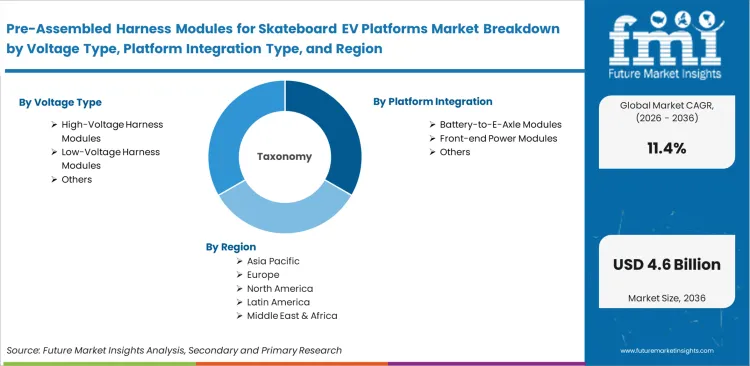
The pre-assembled harness modules for skateboard EV platforms market reached USD 1.3 billion in 2025. It is expected to be valued at USD 1.4 billion in 2026 and rise to USD 4.2 billion by 2036, reflecting a CAGR of 11.4% over the forecast period.
Manufacturing directors at major automotive operations face intense pressure to abandon manual wire routing across flat-floor chassis layouts. Flat-floor architectures force immense consolidation of power and signal routing into incredibly tight modular layers. Operations directors at new-mobility startups are moving away from manual line assembly, treating pre-assembled trays as the most practical way to scale EV platform production while managing thermal and quality risks. Securing these fully integrated rigid trays allows assembly plants to drop entire electrical arteries onto the chassis in minutes rather than hours. Manufacturers that continue threading loose cables through floor pans face assembly line delays and higher warranty costs.
Summary of Pre-Assembled Harness Modules for Skateboard EV Platforms Market
- Pre-Assembled Harness Modules for Skateboard EV Platforms Market Definition
- These are rigid, fully integrated electrical routing assemblies developed for direct drop-in installation on flat-floor electric vehicle chassis. They are built to simplify vehicle assembly by combining structured cable pathways, connectors, and protective elements into a pre-configured module. The design supports faster installation, better layout consistency, and improved production efficiency across skateboard EV platforms. Such assemblies are commonly used where manufacturers need scalable, repeatable integration of electrical systems within compact chassis architectures.
- Demand Drivers in the Market
- Labor bottlenecks on assembly lines force manufacturing directors to abandon manual wire threading.
- Strict electromagnetic interference parameters require precisely spaced, factory-sealed routing environments.
- Flat-floor architectures demand extreme vertical compression of electrical lines, necessitating specialized rigid tray designs.
- Key Segments Analyzed in the FMI Report
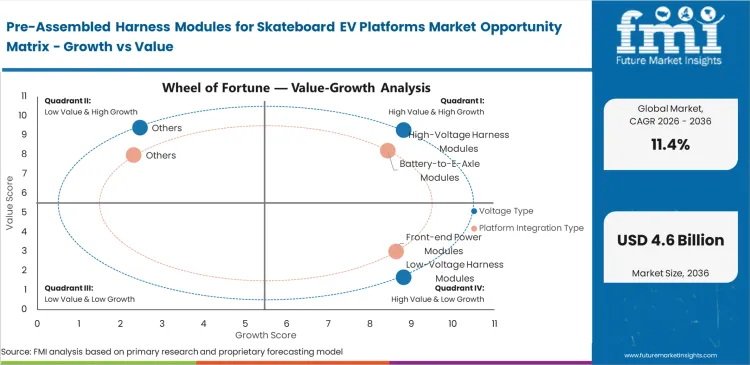
- Voltage Type: High-voltage harness module is expected to hold 54.0% share in 2026, driven by the immediate physical danger of manual high-current cable routing.
- Platform Integration Type: Battery-to-e-axle modules are anticipated to lead platform integration choices, connecting the two most critical components of the chassis.
- Vehicle Type: Electric vans and delivery vehicles are set to capture 32.0% share, representing the highest volume application for standardized flat-floor platforms.
- Assembly Format: Pre-routed modules are projected to account for 41.0% share, reflecting massive factory integration dominance over loose assembly.
- China: 12.5% compound growth, supported by massive localized manufacturing expansion for domestic commercial fleets.
- Analyst Opinion at FMI
- Nikhil Kaitwade, Principal Analyst, Automotive and Transportation, at FMI, answers what is the forecast for skateboard EV harness modules by noting: "Generalist assumptions suggest pure material cost remains the primary barrier to advanced harness adoption in flat-floor platforms. True structural friction actually exists within diagnostic capabilities on the factory floor. Once a systems engineer specifies a complex sealed tray, legacy continuity testing protocols become entirely obsolete. Re-qualifying automated diagnostic algorithms requires entirely new quality assurance cycles spanning months. Production managers at legacy builders treat this lengthy diagnostic transition as a functional bottleneck, prioritizing familiar loose splices over highly advanced sealed modularity simply to maintain short-term assembly line velocity."
- Strategic Implications / Executive Takeaways
- Supply teams need to lock in dedicated component supply early, before wider electrification programs tighten connector availability.
- Engineering leaders face critical decisions regarding modularity transition when updating legacy chassis networks to zonal architectures.
- Assembly plant managers gain significant throughput advantages by mandating pre-tested tray modules across all new platform lines.
- Methodology
- Primary Research: Sourcing executives, chief platform engineers, and assembly plant managers at global electric vehicle manufacturing facilities.
- Desk Research: Technical platform patents, supplier assembly conformity documentation, and harsh environment vibration testing standards.
- Market-Sizing and Forecasting: Copper tonnage and rigid tray unit volumes cross-referenced against annual flat-floor chassis production schedules.
- Data Validation and Update Cycle: Tier-1 supplier financial disclosures and quarterly factory tooling reports validate regional volume estimates annually.
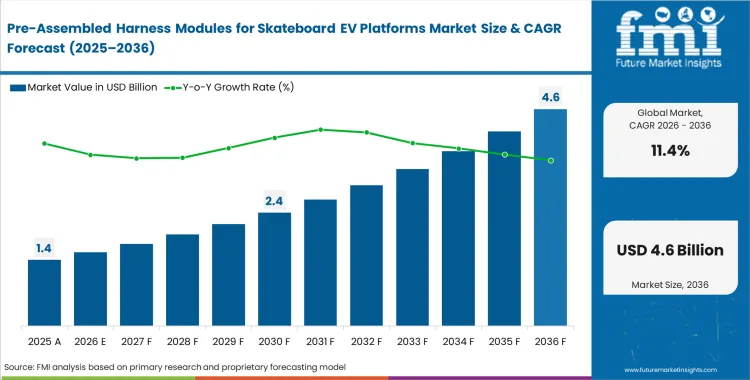
Vehicle manufacturers competing for fleet business are under pressure to scale without adding assembly delays. As transport authorities tighten zero-emission fleet quotas, procurement teams are shifting toward rigid drop-in trays that support faster installation. Hand-routing complex cables can create bottlenecks that disrupt electric truck order timelines. Connectorized modules help simplify the process and make electrical installation a more consistent production step.
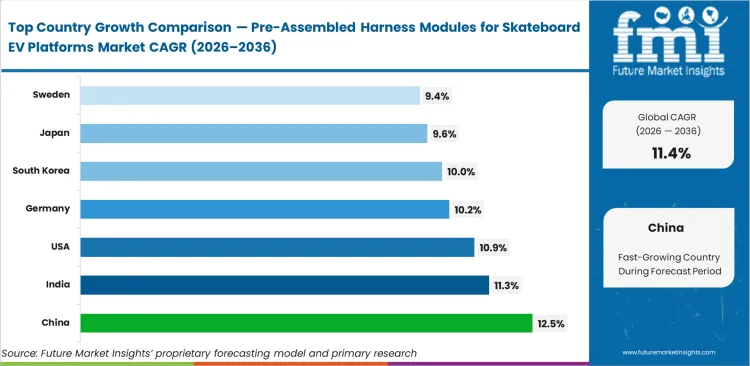
China posts the highest growth at 12.5%, driven by large-scale standardization of floor-mounted electrical routing among domestic commercial vehicle makers. India follows at 11.3% as local production rules support the expansion of urban mobility chassis programs. The United States advances at 10.9% on the back of major investment by legacy automotive brands upgrading their commercial fleet facilities. Germany reaches 10.2% and South Korea 10.0% through continued improvements in premium passenger vehicle design. Japan records 9.6%, while Sweden comes in at 9.4%, with both markets concentrating on highly reliable routing for safety-critical automated transport applications.
Pre-Assembled Harness Modules for Skateboard EV Platforms Market Definition
A skateboard EV platform harness module refers to a fully integrated electrical routing assembly engineered for flat-floor EV architectures. These modules feature a rigid structural format and are delivered to the assembly line already populated with essential power and signal lines. The segment covers drop-in systems only, where installation readiness is mandatory. It excludes incomplete harnesses, conventional loose wiring bundles, and components lacking defined structural integration for skateboard chassis platforms.
Pre-Assembled Harness Modules for Skateboard EV Platforms Market Inclusions
The market scope includes rigid plastic or composite trays that hold pre-assembled EV harness modules, low-voltage communication wiring, and structural mounting elements. Included systems feature integrated thermal shielding and mechanical protection for under-floor installation conditions. FMI defines this segment around wiring networks physically combined into one installable assembly linking the main battery pack with terminal drive units. Excluded from scope are unframed cable bundles, separate protection parts, and harness elements supplied outside a unified module.
Pre-Assembled Harness Modules for Skateboard EV Platforms Market Exclusions
Automotive wire spools and standalone connectors lacking structural integration do not fall within the scope of this segment. FMI also excludes conventional wiring harnesses designed for internal combustion engine firewall applications. Charging cable accessories intended for consumer use remain outside coverage, as the methodology focuses strictly on unified platform-level assemblies engineered for direct installation within vehicle architecture.
Pre-Assembled Harness Modules for Skateboard EV Platforms Market Research Methodology
- Primary Research: Sourcing executives, chief platform engineers, and assembly plant managers at global electric vehicle manufacturing facilities.
- Desk Research: Technical platform patents, supplier assembly conformity documentation, and extreme environment vibration testing standards.
- Market-Sizing and Forecasting: Copper tonnage and rigid tray unit volumes cross-referenced against annual flat-floor chassis production schedules.
- Data Validation and Update Cycle: Tier-1 supplier financial disclosures and quarterly factory tooling reports validate regional volume estimates annually.
Segmental Analysis
Pre-Assembled Harness Modules for Skateboard EV Platforms Market Analysis by Voltage Type
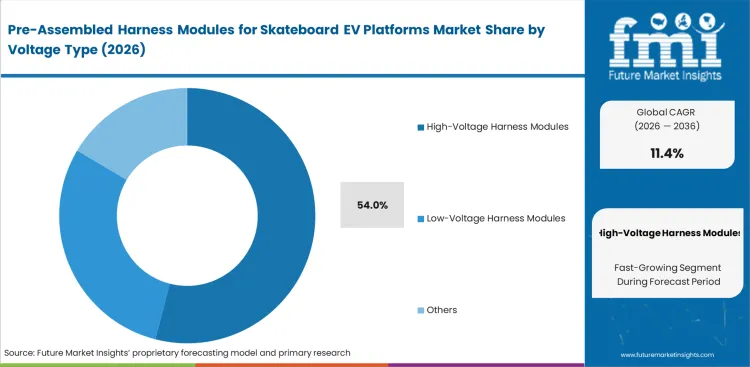
The safe routing of high electrical current across an EV floor structure shapes both material requirements and spacing design. High-voltage harness modules account for 54.0% share because assembly plants place tight restrictions on manual handling of thick-gauge traction cables. To reduce risk, manufacturers isolate these high-voltage networks inside rigid orange composite trays before final vehicle assembly begins. Pre-tested and sealed modules help ensure insulation integrity before chassis marriage. Purchasing teams understand that a single damaged high-voltage line can bring the entire assembly process to a halt. FMI notes that low-voltage communication modules face entirely different scaling pressures. Dense sensor networks require hundreds of tiny pins to seat perfectly within complex automotive connectors simultaneously. Design teams attempting to merge high and low voltage lines within identical physical trays battle severe magnetic interference. Without heavy EMI shielding in high voltage EV harness modules, signal integrity degrades completely before the vehicle even powers on.
- Safety mandate protocols: Factory safety officers refuse to allow human hands to route stiff traction cables. Production managers utilize robotic arms to lower complete pre-assembled trays, eliminating ergonomic injuries entirely.
- Thermal spacing constraints: Thick copper cables generate massive localized heat during fast charging. Packaging engineers design specific rigid channels to enforce exact physical air gaps between adjacent lines continuously.
- Signal integrity preservation: Massive current fluctuations distort nearby communication signals instantly. Electrical architects specify physical shielding layers inside mixed modules to guarantee autonomous driving data survives transmission.
Pre-Assembled Harness Modules for Skateboard EV Platforms Market Analysis by Platform Integration Type
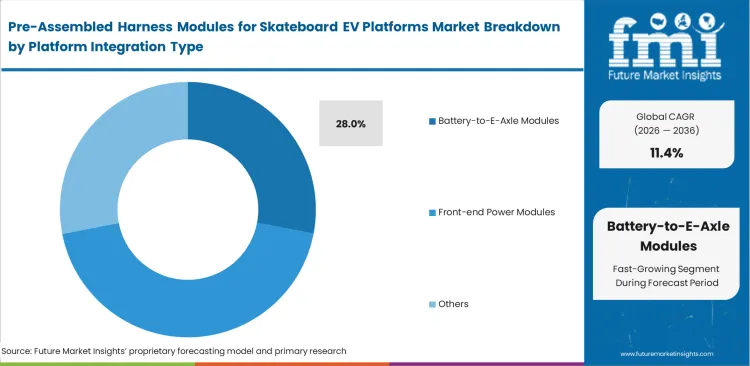
The battery to inverter harness module holds 28.0% share as it forms the fundamental nervous system of any flat-floor architecture. Chassis designers depend entirely on these heavy-duty cable assemblies to bridge the physical gap between centrally mounted energy storage and terminal drive units. Sourcing these specific segments as pre-tested modules eliminates the highest-risk connection points on the assembly line. What commodity buyers consistently misunderstand is how lateral routing slowly cannibalizes traditional central floor layouts as digital architectures evolve. Engineering teams transitioning to an electric vehicle powertrain with corner-mounted motors require complex zonal harness modules EV rather than simple longitudinal spines. When buyers debate a zonal harness vs traditional harness EV approach, they realize that approving obsolete linear trays for modern corner-drive chassis forces massive re-engineering costs during pilot builds. Executing a true flat EV platform wiring design requires corner-to-corner intelligent distribution.
- Component bridging criticality: Connecting central batteries to perimeter motors represents the highest failure risk. Assembly directors demand pre-certified connections to bypass factory-floor validation bottlenecks entirely.
- Lateral routing complexities: Corner-motor architectures demand heavy cross-vehicle wiring paths. Structural engineers design specialized lateral trays that double as physical chassis cross-members to save weight.
- Zonal architecture shifts: Centralized compute models push intelligence to the corners of the vehicle. Electrical planners specify intelligent distribution boxes integrated directly into the harness tray structure.
Pre-Assembled Harness Modules for Skateboard EV Platforms Market Analysis by Vehicle Type
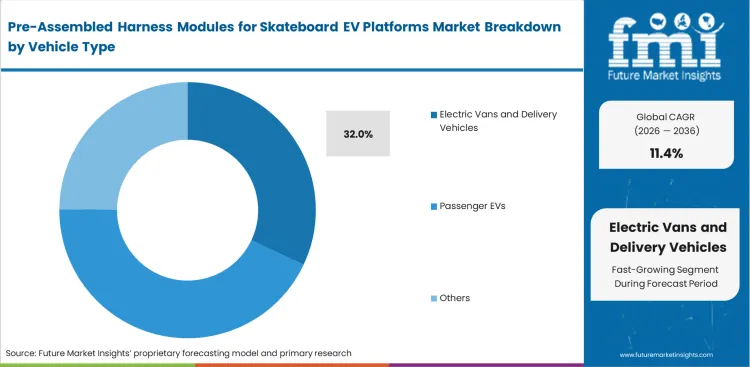
Developing EV harness modules for electric vans accounts for 32.0% share simply due to the intense pressure to scale production rapidly for commercial fleet buyers. Formulators design modular electric light commercial vehicle platforms targeting logistics operators who demand hundreds of identical units delivered simultaneously. Securing an electric delivery van fleet contract requires production velocities that manual wiring cannot physically support, fueling extreme commercial EV skateboard platform growth. Based on FMI's assessment, commercial dominance obscures the rapid innovation happening within specialty autonomous mobility platforms. Passenger shuttles lack traditional steering columns, requiring entirely novel routing paths for drive-by-wire systems. Integrating advanced software defined vehicle electrical architecture forces vehicle architects to abandon legacy topologies entirely; ignoring these unique requirements produces unmanufacturable designs requiring thousands of hours of hand-modification.
- Fleet volume velocities: Commercial logistics buyers demand massive simultaneous deliveries. Plant managers prioritize fully modular assembly formats to maintain continuous line speeds without human routing delays.
- Drive-by-wire redundancy: Autonomous platforms lack mechanical fallbacks for steering and braking. Systems engineers mandate dual-redundant routing paths separated by physical rigid barriers inside the tray.
- Payload spatial optimization: Delivery vehicles require completely flat cargo floors without internal wiring humps. Packaging directors bury all electrical modules deep within the subframe structure.
Pre-Assembled Harness Modules for Skateboard EV Platforms Market Analysis by Assembly Format
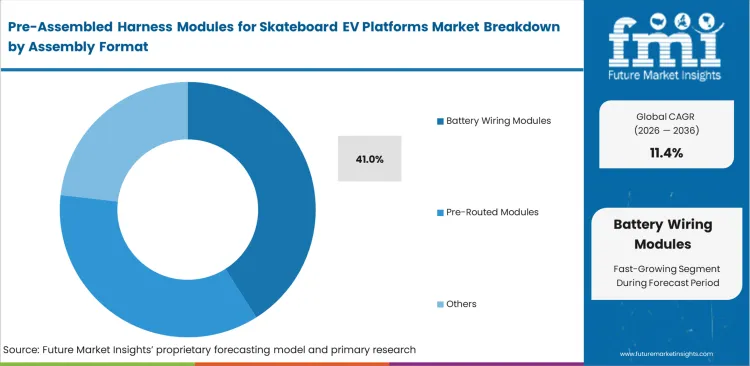
In modern automotive manufacturing, installation speed often determines which harness formats remain practical. Battery wiring modules for EV skateboard chassis hold 41.0% share because complete electrical backbones can be delivered in transport racks directly to the chassis marriage point. Technicians place these rigid assemblies onto the battery enclosure and connect them through a single interface that supports the wider battery management network. The approach fits high-volume production far better than loose cable routing. Engineers know that unsecured wires running through older subframes can create pinching risk and serious safety issues. Modular connectorized formats carry a higher upfront cost, though they simplify validation and reduce assembly difficulty for contract manufacturers.
- Marriage station efficiency: Mating the body to the skateboard chassis leaves zero room for manual adjustment. Manufacturing engineers require flush-mounted rigid trays that seat perfectly on the first attempt.
- Pinch-point elimination: Loose wires inevitably fall into structural mounting holes during automated assembly. Without rigid plastic containment channels, loose wires can fall into mounting holes during automated assembly and create short-circuit risks that quality control teams must address.
- Contract manufacturing flexibility: Third-party assemblers build multiple vehicle brands on single lines. Operations directors utilize standardized plug-and-play modules to switch production profiles without retraining line workers.
Pre-Assembled Harness Modules for Skateboard EV Platforms Market Analysis by Sales Channel
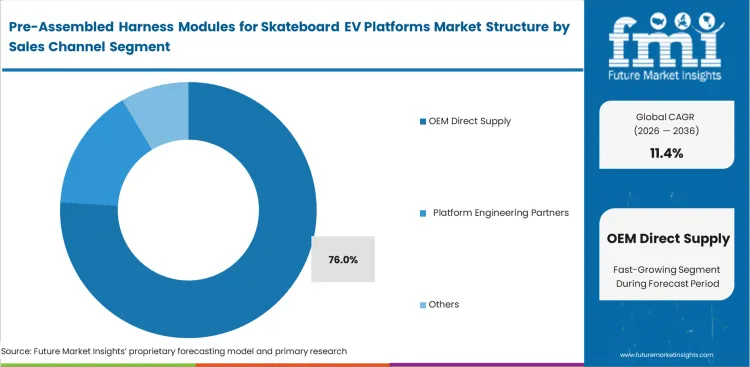
Significant platform development costs make the main electrical backbone difficult to modify once the vehicle is in service. Structural harness trays are embedded into the chassis crash architecture and are not designed for easy replacement. Factory engineers and tier-one EV harness suppliers define these systems during the earliest concept and design stages. As a result, OEM direct supply holds 76.0% share. Fleet buyers recognize that replacing a main structural harness later would require extensive disassembly. That is why sourcing teams work with major battery wiring module suppliers to secure complex, vehicle-specific systems during original production. The aftermarket remains concentrated in smaller repair items such as sensor pigtails and accessible exterior leads. Most technicians patch localized wire damage instead of replacing full structural trays.
- Conceptual integration timing: Structural harness trays require exact physical alignment with chassis hardpoints. Engineering directors finalize wire routing years before the first metal is stamped.
- Crash structure dependencies: Rigid plastic wiring trays often provide secondary impact absorption properties. Safety officers refuse to authorize non-factory replacements that alter the validated crash pulse of the platform.
- Serviceability restrictions: Accessing a floor-mounted tray requires removing the entire high-voltage battery. Maintenance depots authorize localized splicing kits specifically to avoid total vehicle teardowns.
Pre-Assembled Harness Modules for Skateboard EV Platforms Market Drivers, Restraints, and Opportunities
Pre-assembled harness modules are gaining ground in EV manufacturing largely because assembly line labor is under pressure. New vehicle platforms need thousands of circuits for advanced software, infotainment, and driver assistance functions. Production teams are responding by sourcing pre-assembled trays that reduce the need for skilled electrical installation work on the line. Manual cable threading can quickly cut into output speed. As a result, fully populated drop-in modules are becoming essential for efficient production rather than optional improvements.
Legacy diagnostic protocols create immense operational friction slowing the rapid transition toward modular architectures. Once systems engineers specify complex, fully sealed wiring trays, traditional point-to-point continuity testing methods become useless. Engineering teams must compare skateboard EV harness and conventional harness fault-tracing methods. Re-qualifying electronic diagnostic algorithms requires entirely new testing hardware on factory floors.
Opportunities in the Pre-Assembled Harness Modules for Skateboard EV Platforms Market
- Zonal compute optimization: Designing localized data hubs reduces total copper weight drastically, driving essential harness weight reduction in skateboard EVs. Engineering directors command massive margin improvements by utilizing zonal architecture trays that process sensor data before sending it to central computers.
- Thermal runway containment: Integrating specialized fire-retardant materials directly into the tray structure prevents battery fires from destroying critical steering cables. Systems architects bypass crowded safety segments by offering unassailable physical protection guarantees.
- Automated recycling disassembly: Engineering trays that release completely from the chassis with a single robotic command opens massive circular economy value. R&D heads capture new revenue by selling easily extractable copper bundles at the end of the vehicle lifecycle.
Regional Analysis
Based on regional analysis, Pre-Assembled Harness Modules for Skateboard EV Platforms is segmented into East Asia, South Asia, North America, and Europe.
.webp "Top Country Growth Comparison Pre Assembled Harness Modules For Skateboard Ev Platforms Market Cagr (2026 2036)")
| Country | CAGR (2026 to 2036) |
|---|---|
| China | 12.5% |
| India | 11.3% |
| United States | 10.9% |
| Germany | 10.2% |
| South Korea | 10.0% |
| Japan | 9.6% |
| Sweden | 9.4% |
Source: Future Market Insights (FMI) analysis, based on proprietary forecasting model and primary research
East Asia Pre-Assembled Harness Modules for Skateboard EV Platforms Market Analysis
State-mandated electrification pivots sharp focus toward high-volume commercial fleet development across massive industrial zones. Legacy manufacturing hubs leverage existing factory layouts to deliver next-generation flat-floor delivery vehicles. Supply chain managers utilize these established assembly lines to integrate complex rigid electrical trays directly onto bare chassis rails. According to FMI estimates, facilities historically dedicated to simple stamping now allocate significant capacity to heavy electrical tray marriage stations. This capability transition creates intense competition for specialized high-voltage components among regional processors.
- China: In China, state-backed battery manufacturing is giving commercial vehicle electrification a stronger industrial base, especially in urban delivery and logistics fleets. That scale is helping manufacturers move faster on electric van programs while giving fleet buyers better visibility into battery supply and vehicle availability. The advantage is especially clear in city transport markets, where stricter zero-emission rules are pushing operators to replace conventional delivery vehicles. The China market is projected to grow at a CAGR of 12.5%, supported by rising demand for electrified fleet platforms and stronger alignment between battery production capacity and commercial vehicle deployment.
- South Korea: South Korea’s battery and power electronics capabilities are helping manufacturers bring more integrated harness tray designs to market in less time. Faster coordination between these systems is reducing development delays and making it easier to scale supply into regional EV programs. That has also improved the country’s position in long-term sourcing discussions, with buyers using this technical strength as a basis for multi-year contracts. As a result, the South Korea market is expected to register 10.0% CAGR through the forecast period, supported by stronger supply visibility and a firmer foothold in expanding EV platform programs.
- Japan: In Japan, demanding quality standards continue to shape how autonomous sensor routing systems are designed, tested, and approved. Suppliers operating in this environment are placing greater emphasis on signal integrity, routing precision, and stable long-term performance, since buyers in advanced vehicle systems tend to be less tolerant of inconsistency. That focus is helping Japanese manufacturers build solutions that are not only technically reliable at home but also well regarded in export markets. This is expected to support a 9.6% CAGR for Japan, as global demand rises for control and routing systems that can meet tighter performance and validation requirements.
South Asia Pre-Assembled Harness Modules for Skateboard EV Platforms Market Analysis
Large urban mobility initiatives are reshaping localized manufacturing activity across key markets. Domestic vehicle makers are scaling quickly to serve growing demand for electric three-wheelers and light commercial vehicles, replacing volumes that previously came from internal combustion platforms. Sourcing teams are strengthening this shift by contracting directly with regional wire suppliers for vertically integrated tray systems. FMI analysis indicates that local sourcing is helping manufacturers move around conventional global supply chains and cut transport costs. That change is giving domestic OEMs more room to manage pricing competitively.
- India: In India, the rapid expansion of last-mile electric vehicle fleets is creating stronger demand for modular tray systems in high-volume chassis applications. That demand is giving manufacturers more confidence to build local assembly capacity and support vehicle programs closer to end markets. A stronger domestic base helps reduce shipping dependence, improve response times, and keep production schedules more stable as fleet orders rise. Against this backdrop, the India market for modular tray supply is expected to grow at 11.3% CAGR, supported by expanding urban EV deployment and the growing need for reliable, locally supported chassis integration.
North America Pre-Assembled Harness Modules for Skateboard EV Platforms Market Analysis
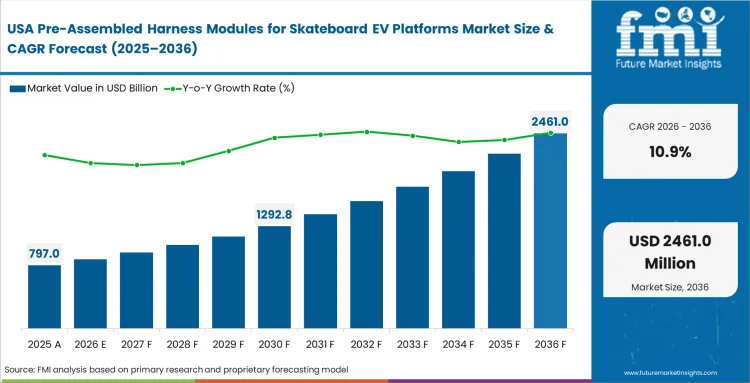
Modernization across domestic fleets is forcing local manufacturers to rethink traditional wiring approaches. Basic analog systems are giving way to multiplexed trays designed to handle more targeted data flows for autonomous vehicle operation. At the same time, R&D teams are joining with major technology partners to validate telemetry performance in specialized commercial settings. FMI finds that these advanced data-routing systems can command stronger premiums from fleet buyers looking for a more differentiated logistics offering. Companies moving in this direction are steadily reducing their exposure to simpler volume-led harness competition.
- United States: In the United States, closer coordination between established equipment makers and software developers is helping advance skateboard floor architectures with more built-in intelligence. Manufacturers are using that collaboration to integrate telemetry and control functions more directly into the platform itself, which improves data visibility and speeds up system response. It also supports smarter vehicle coordination as EV platforms become more connected and functionally dense. This is expected to support 10.9% CAGR in the USA skateboard floor architecture market, as automakers place greater value on floor-level integration that can improve control, feedback, and overall platform capability.
Europe Pre-Assembled Harness Modules for Skateboard EV Platforms Market Analysis
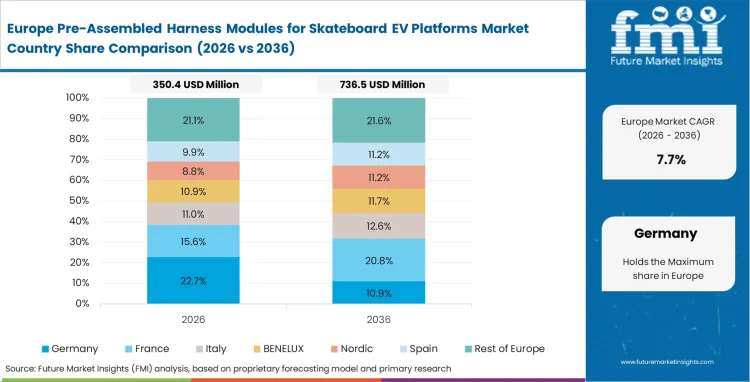
Strict environmental legislation dictates component material choices across massive passenger and commercial sectors. Engineering teams eliminate halogenated plastics from wire jacketing to comply with aggressive recycling mandates. Purchasing executives secure specialized tray components built with highly sustainable, yet physically strong, synthetic compounds. FMI analysts observe that European manufacturers lead the global transition toward fully recyclable, non-toxic heavy-duty vehicle wiring.
- Germany: In Germany, strong engineering capabilities are helping advance compact, high-density platform layouts within flat-floor battery systems. These designs are becoming more important as manufacturers try to fit more functions into tighter vehicle packaging without compromising electrical stability or assembly consistency. Better routing efficiency and cleaner platform integration are central to that effort, particularly in battery architectures where space is tightly managed. The Germany market is projected to grow at a CAGR of 10.2%, supported by continued demand for platform designs that improve fit, routing density, and system organization.
- Sweden: In Sweden, experience from heavy commercial truck design is carrying over into newer electric bus and delivery vehicle platforms. That background is shaping a stronger preference for structural trays that can withstand demanding duty cycles, heavier loads, and tougher operating environments. For vehicle makers that compete on reliability and service life, proven durability matters as much as design efficiency. This is expected to support 9.4% CAGR in Sweden, as tray concepts developed for truck applications find wider use across adjacent commercial transport segments.
Competitive Aligners for Market Players
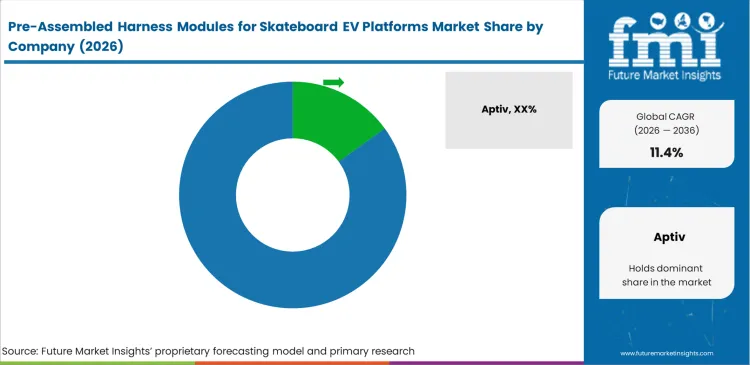
Raw material processing capacity plays a larger role in supplier positioning than connector assembly alone. Companies with metallurgical refining agreements tend to secure better access to premium wire inputs and maintain more stable production economics. Procurement teams evaluating EV harness module suppliers are placing greater attention on upstream material access, especially when pricing conditions tighten. This has made vertically integrated supply models more relevant in supplier assessment for platform-level electrical assemblies.
Established harness manufacturers continue to benefit from proprietary vibration, durability, and mechanical fatigue data built over many years of field use. While newer entrants may acquire similar wire extrusion or assembly equipment, they still need long qualification cycles to meet OEM approval standards. R&D teams at major vehicle and equipment brands often require validated life-cycle performance before approving a supplier change. These historical testing records remain an important factor in supplier retention, even when newer competitors offer comparable tray designs.
Large OEMs are addressing this concentration by supporting modular assembly approaches and more standardized EV connector interfaces. Sourcing teams are using standardization to improve supplier flexibility and reduce dependence on tightly integrated incumbent designs. This shift is gradually changing platform economics by making it easier to compare suppliers across vehicle programs. Assemblers that do not adapt to open architecture expectations may face tighter margins as OEMs expand sourcing options across regional and global platforms.
Key Players in Pre-Assembled Harness Modules for Skateboard EV Platforms Market
- Aptiv
- Samvardhana Motherson
- Yazaki Corporation
- Sumitomo Electric Industries
- LEONI
- Lear Corporation
- TE Connectivity
Scope of the Report
| Metric | Value |
|---|---|
| Quantitative Units | USD 1.4 billion to USD 4.2 billion, at a CAGR of 11.4% |
| Market Definition | Rigidly framed, fully integrated electrical routing assemblies designed explicitly for drop-in installation onto flat-floor electric vehicle chassis. |
| Segmentation | Voltage Type, Platform Integration Type, Vehicle Type, Assembly Format, Sales Channel, Region |
| Regions Covered | North America, Latin America, Western Europe, Eastern Europe, Asia Pacific |
| Countries Covered | China, United States, Germany, South Korea, Japan, India, Sweden |
| Key Companies Profiled | Aptiv, Samvardhana Motherson, Yazaki Corporation, Sumitomo Electric Industries, LEONI, Lear Corporation, TE Connectivity |
| Forecast Period | 2026 to 2036 |
| Approach | Copper tonnage and rigid tray unit volumes cross-referenced against annual flat-floor chassis production schedules. |
Source: Future Market Insights (FMI) analysis, based on proprietary forecasting model and primary research
Pre-Assembled Harness Modules for Skateboard EV Platforms Market Analysis by Segments
Voltage Type:
- High-voltage harness modules
- Low-voltage harness modules
- Mixed-voltage integrated modules
- Battery pack harness modules
- Charging and power distribution modules
Platform Integration Type:
- Battery-to-e-axle modules
- Front-end power modules
- Central floor harness modules
- Rear platform modules
- Cross-vehicle zonal modules
Vehicle Type:
- Electric vans and delivery vehicles
- Passenger EVs
- Commercial EV chassis cabs
- Autonomous delivery platforms
- Specialty mobility platforms
Assembly Format:
- Pre-routed modules
- Plug-and-play connectorized modules
- Shielded cable assemblies
- Battery wiring modules
- Subframe-mounted harness sets
Sales Channel:
- OEM direct supply
- Platform engineering partners
- Contract manufacturing
- Aftermarket service modules
- Prototype and pilot builds
Region:
- North America
- Latin America
- Western Europe
- Eastern Europe
- Asia Pacific
Bibliography
- Lear Corporation. (2026). Form 10-K for the fiscal year ended December 31, 2025. USA Securities and Exchange Commission.
- Aptiv PLC. (2025). Form 10-K / annual report for the fiscal year ended December 31, 2024. USA Securities and Exchange Commission.
- REE Automotive Ltd. (2025). Form 20-F for the fiscal year ended December 31, 2024. USA Securities and Exchange Commission.
- REE Automotive Ltd. (2024). REE Automotive named CES 2025 Innovation Award honoree for software-defined vehicle technology.
- Xos, Inc. (2025). Form 10-K for the fiscal year ended December 31, 2024. USA Securities and Exchange Commission.
This bibliography is provided for reader reference. The full FMI report contains the complete reference list with primary source documentation.
This Report Addresses
- Specific labor bottlenecks forcing automotive assembly plants to abandon manual wire routing across flat-floor chassis structures.
- Thermal runaway vulnerabilities exposing high-voltage traction cables to severe degradation without rigid protective trays.
- Localized Indian manufacturing strategies heavily outmaneuvering traditional global component import networks.
- Zonal architecture optimization securing massive weight reduction improvements over traditional central electrical distribution.
- Exclusive diagnostic protocol friction slowing the transition between point-to-point wiring and advanced multiplexed modular trays.
- Electromagnetic interference challenges destroying signal integrity when high and low voltage lines share identical physical routing channels.
- Contract manufacturing flexibility enabling third-party assemblers to build multiple vehicle brands on single production lines via plug-and-play modules.
- Recycling disassembly technologies opening massive circular economy value by extracting copper bundles seamlessly at the end of the vehicle lifecycle.
Frequently Asked Questions
What is the difference between zonal and conventional EV harnesses?
Conventional harnesses rely on massive central bundles running the entire length of the vehicle. Zonal harnesses divide the vehicle into physical quadrants, processing data locally through intelligent hubs and drastically reducing the total length of copper wiring required.
Why do EV makers choose a zonal harness vs traditional harness EV strategy?
Zonal architectures slash total vehicle weight and simplify assembly. By processing signals at the corners of the chassis, engineers eliminate thousands of individual wires crossing the floor pan, replacing them with a single high-speed data backbone.
What drives the 11.4% CAGR through 2036?
Stringent emission regulations and rapid commercial fleet electrification force equipment manufacturers to massively increase production volumes. Sourcing directors scramble to secure highly durable, modular routing trays to bypass severe assembly line bottlenecks caused by manual wire threading.
Why do high-voltage harness modules hold 54.0% share?
Assembly plant safety protocols strictly prohibit manual manipulation of live or potentially live thick-gauge traction cables. Manufacturing engineers completely isolate these volatile networks inside rigid composite trays before reaching the final vehicle assembly line.
How do battery-to-e-axle modules lead platform integration?
Connecting central batteries to perimeter motors represents the fundamental nervous system of any flat-floor architecture. Chassis designers depend entirely on these heavy-duty assemblies to bridge physical gaps safely, making them the most critical drop-in component.
What secures OEM direct supply 76.0% share?
Massive installation complexity prevents significant aftermarket modification of primary electrical backbones. Modern harness trays snake deep inside machine frames and integrate into crash structures, making factory assembly the only viable integration point.
Why do electric vans account for 32.0% volume?
Commercial logistics buyers demand massive simultaneous fleet deliveries. Formulators design modular platforms targeting operators who demand hundreds of identical units, requiring production velocities that manual wiring cannot physically support.
What accelerates expansion in China at 12.5%?
Massive state-funded battery manufacturing enables rapid commercial fleet electrification. Operations directors push massive volumes by capturing high-margin delivery van contracts while satisfying strict zero-emission urban logistics targets across domestic mega-cities.
How does India achieve 11.3% compound growth?
Aggressive last-mile delivery electrification creates massive predictable chassis volumes. Purchasing managers secure modular tray supply lines, establishing highly efficient local assembly operations that outmaneuver imported platforms completely.
What creates operational friction during architecture transitions?
Multiplexed harness topologies render traditional point-to-point continuity testing methods useless. Re-qualifying electronic diagnostic algorithms requires entirely new testing hardware, forcing production managers to treat lengthy retooling protocols as severe functional bottlenecks.
How do massive OEMs resist supplier consolidation?
Large machinery conglomerates aggressively fund alternative modular assembly technologies. Sourcing executives intentionally cultivate standardized connector interfaces to maintain pricing leverage against traditional incumbents, decoupling chassis architecture from single-supplier dependency.
Why do manual wire cables fail in flat-floor platforms?
Loose wires can slip into mounting holes during automated assembly. Without rigid plastic channels to keep them in place, quality teams risk short circuits, wire pinching, and preventable assembly faults.
What dictates material choice for high-voltage trays?
Thick copper cables generate massive localized heat during fast charging. Packaging engineers design specific rigid channels to enforce exact physical air gaps between adjacent lines continuously, preventing thermal runaway and insulation melting.
How do corner-motor architectures change tray designs?
Corner-motor chassis demand robust cross-vehicle wiring paths. Structural engineers must design specialized lateral routing trays that double as physical chassis cross-members to save weight, cannibalizing traditional longitudinal floor layouts.
What threatens wire bundles running along the vehicle floor?
Massive current fluctuations distort nearby communication signals instantly. Electrical architects must specify heavy physical shielding layers inside mixed modules to guarantee autonomous driving data survives transmission without electromagnetic interference.
How do contract manufacturers leverage modular trays?
Third-party assemblers build multiple vehicle brands on single lines. Operations directors utilize standardized plug-and-play modules to switch production profiles rapidly without retraining line workers on complex manual routing diagrams.
Why do hybrid mixed-voltage systems face integration challenges?
Merging high and low voltage lines within identical physical spaces causes extreme electromagnetic interference. Electrical architects attempting to force power and signal through identical trays often destroy data integrity before the vehicle even powers on.
What limits rapid expansion of aftermarket harness replacement?
Accessing a floor-mounted tray requires removing the entire high-voltage battery electric vehicle pack. Operations relying on complete structural replacements face massive labor bills that often exceed the depreciated value of the chassis.
How do autonomous control networks alter tray design?
Autonomous platforms lack mechanical fallbacks for steering and braking. Systems engineers mandate dual-redundant routing paths separated by physical rigid barriers inside the tray to provide undeniable safety proof for driverless operations.
What role do proprietary testing databases play in vendor selection?
Incumbent manufacturers possess massive testing libraries spanning decades of field vibration data. R&D directors refuse vendor switches without these exhaustive simulated life-cycle profiles, effectively blocking new entrants lacking proven mechanical fatigue trials.
Why do circular economy initiatives focus on harness trays?
Engineering trays that release completely from the chassis with a single robotic command simplifies end-of-life teardowns. R&D heads capture new revenue by selling easily extractable copper bundles automatically during vehicle recycling processes.
How do Swedish operations justify premium structural tray costs?
Heavy commercial truck legacy translates into extreme requirements for new delivery platforms. Quality assurance heads mandate bulletproof structural trays to maintain zero-failure tolerance policies across automated urban transport configurations.
What forces European manufacturers toward new jacketing materials?
Strict environmental legislation dictates component material choices. Engineering teams eliminate halogenated plastics from wire jacketing to comply with aggressive recycling mandates, pushing adoption of sustainable synthetic compounds.
Why do engineers avoid placing loose sensor wires near power lines?
Modern autonomous units require pristine data streams. Engineering directors struggle to maintain signal clarity when communication pins are subjected to the intense magnetic fields generated by unshielded high-current traction cables.
Preview the report firsthand - request a free sample
Get SampleGet the brochure for pricing and purchase details.
Get PDFTable of Content
- Executive Summary
- Global Market Outlook
- Demand-side Trends
- Supply-side Trends
- Technology Roadmap Analysis
- Analysis and Recommendations
- Market Overview
- Market Coverage / Taxonomy
- Market Definition / Scope / Limitations
- Research Methodology
- Chapter Orientation
- Analytical Lens and Working Hypotheses
- Market Structure, Signals, and Trend Drivers
- Benchmarking and Cross-market Comparability
- Market Sizing, Forecasting, and Opportunity Mapping
- Research Design and Evidence Framework
- Desk Research Programme (Secondary Evidence)
- Company Annual and Sustainability Reports
- Peer-reviewed Journals and Academic Literature
- Corporate Websites, Product Literature, and Technical Notes
- Earnings Decks and Investor Briefings
- Statutory Filings and Regulatory Disclosures
- Technical White Papers and Standards Notes
- Trade Journals, Industry Magazines, and Analyst Briefs
- Conference Proceedings, Webinars, and Seminar Materials
- Government Statistics Portals and Public Data Releases
- Press Releases and Reputable Media Coverage
- Specialist Newsletters and Curated Briefings
- Sector Databases and Reference Repositories
- FMI Internal Proprietary Databases and Historical Market Datasets
- Subscription Datasets and Paid Sources
- Social Channels, Communities, and Digital Listening Inputs
- Additional Desk Sources
- Expert Input and Fieldwork (Primary Evidence)
- Primary Modes
- Qualitative Interviews and Expert Elicitation
- Quantitative Surveys and Structured Data Capture
- Blended Approach
- Why Primary Evidence is Used
- Field Techniques
- Interviews
- Surveys
- Focus Groups
- Observational and In-context Research
- Social and Community Interactions
- Stakeholder Universe Engaged
- C-suite Leaders
- Board Members
- Presidents and Vice Presidents
- R&D and Innovation Heads
- Technical Specialists
- Domain Subject-matter Experts
- Scientists
- Physicians and Other Healthcare Professionals
- Governance, Ethics, and Data Stewardship
- Research Ethics
- Data Integrity and Handling
- Primary Modes
- Tooling, Models, and Reference Databases
- Desk Research Programme (Secondary Evidence)
- Data Engineering and Model Build
- Data Acquisition and Ingestion
- Cleaning, Normalisation, and Verification
- Synthesis, Triangulation, and Analysis
- Quality Assurance and Audit Trail
- Market Background
- Market Dynamics
- Drivers
- Restraints
- Opportunity
- Trends
- Scenario Forecast
- Demand in Optimistic Scenario
- Demand in Likely Scenario
- Demand in Conservative Scenario
- Opportunity Map Analysis
- Product Life Cycle Analysis
- Supply Chain Analysis
- Investment Feasibility Matrix
- Value Chain Analysis
- PESTLE and Porter’s Analysis
- Regulatory Landscape
- Regional Parent Market Outlook
- Production and Consumption Statistics
- Import and Export Statistics
- Market Dynamics
- Global Market Analysis 2021 to 2025 and Forecast, 2026 to 2036
- Historical Market Size Value (USD Million) Analysis, 2021 to 2025
- Current and Future Market Size Value (USD Million) Projections, 2026 to 2036
- Y-o-Y Growth Trend Analysis
- Absolute $ Opportunity Analysis
- Global Market Pricing Analysis 2021 to 2025 and Forecast 2026 to 2036
- Global Market Analysis 2021 to 2025 and Forecast 2026 to 2036, By Voltage Type
- Introduction / Key Findings
- Historical Market Size Value (USD Million) Analysis By Voltage Type , 2021 to 2025
- Current and Future Market Size Value (USD Million) Analysis and Forecast By Voltage Type , 2026 to 2036
- High-Voltage Harness Modules
- Low-Voltage Harness Modules
- Others
- High-Voltage Harness Modules
- Y-o-Y Growth Trend Analysis By Voltage Type , 2021 to 2025
- Absolute $ Opportunity Analysis By Voltage Type , 2026 to 2036
- Global Market Analysis 2021 to 2025 and Forecast 2026 to 2036, By Platform Integration Type
- Introduction / Key Findings
- Historical Market Size Value (USD Million) Analysis By Platform Integration Type, 2021 to 2025
- Current and Future Market Size Value (USD Million) Analysis and Forecast By Platform Integration Type, 2026 to 2036
- Battery-to-E-Axle Modules
- Front-end Power Modules
- Others
- Battery-to-E-Axle Modules
- Y-o-Y Growth Trend Analysis By Platform Integration Type, 2021 to 2025
- Absolute $ Opportunity Analysis By Platform Integration Type, 2026 to 2036
- Global Market Analysis 2021 to 2025 and Forecast 2026 to 2036, By Vehicle Type
- Introduction / Key Findings
- Historical Market Size Value (USD Million) Analysis By Vehicle Type, 2021 to 2025
- Current and Future Market Size Value (USD Million) Analysis and Forecast By Vehicle Type, 2026 to 2036
- Electric Vans and Delivery Vehicles
- Passenger EVs
- Others
- Electric Vans and Delivery Vehicles
- Y-o-Y Growth Trend Analysis By Vehicle Type, 2021 to 2025
- Absolute $ Opportunity Analysis By Vehicle Type, 2026 to 2036
- Global Market Analysis 2021 to 2025 and Forecast 2026 to 2036, By Assembly Format
- Introduction / Key Findings
- Historical Market Size Value (USD Million) Analysis By Assembly Format, 2021 to 2025
- Current and Future Market Size Value (USD Million) Analysis and Forecast By Assembly Format, 2026 to 2036
- Battery Wiring Modules
- Pre-Routed Modules
- Others
- Battery Wiring Modules
- Y-o-Y Growth Trend Analysis By Assembly Format, 2021 to 2025
- Absolute $ Opportunity Analysis By Assembly Format, 2026 to 2036
- Global Market Analysis 2021 to 2025 and Forecast 2026 to 2036, By Sales Channel
- Introduction / Key Findings
- Historical Market Size Value (USD Million) Analysis By Sales Channel, 2021 to 2025
- Current and Future Market Size Value (USD Million) Analysis and Forecast By Sales Channel, 2026 to 2036
- OEM Direct Supply
- Platform Engineering Partners
- Others
- OEM Direct Supply
- Y-o-Y Growth Trend Analysis By Sales Channel, 2021 to 2025
- Absolute $ Opportunity Analysis By Sales Channel, 2026 to 2036
- Global Market Analysis 2021 to 2025 and Forecast 2026 to 2036, By Region
- Introduction
- Historical Market Size Value (USD Million) Analysis By Region, 2021 to 2025
- Current Market Size Value (USD Million) Analysis and Forecast By Region, 2026 to 2036
- North America
- Latin America
- Western Europe
- Eastern Europe
- East Asia
- South Asia and Pacific
- Middle East & Africa
- Market Attractiveness Analysis By Region
- North America Market Analysis 2021 to 2025 and Forecast 2026 to 2036, By Country
- Historical Market Size Value (USD Million) Trend Analysis By Market Taxonomy, 2021 to 2025
- Market Size Value (USD Million) Forecast By Market Taxonomy, 2026 to 2036
- By Country
- USA
- Canada
- Mexico
- By Voltage Type
- By Platform Integration Type
- By Vehicle Type
- By Assembly Format
- By Sales Channel
- By Country
- Market Attractiveness Analysis
- By Country
- By Voltage Type
- By Platform Integration Type
- By Vehicle Type
- By Assembly Format
- By Sales Channel
- Key Takeaways
- Latin America Market Analysis 2021 to 2025 and Forecast 2026 to 2036, By Country
- Historical Market Size Value (USD Million) Trend Analysis By Market Taxonomy, 2021 to 2025
- Market Size Value (USD Million) Forecast By Market Taxonomy, 2026 to 2036
- By Country
- Brazil
- Chile
- Rest of Latin America
- By Voltage Type
- By Platform Integration Type
- By Vehicle Type
- By Assembly Format
- By Sales Channel
- By Country
- Market Attractiveness Analysis
- By Country
- By Voltage Type
- By Platform Integration Type
- By Vehicle Type
- By Assembly Format
- By Sales Channel
- Key Takeaways
- Western Europe Market Analysis 2021 to 2025 and Forecast 2026 to 2036, By Country
- Historical Market Size Value (USD Million) Trend Analysis By Market Taxonomy, 2021 to 2025
- Market Size Value (USD Million) Forecast By Market Taxonomy, 2026 to 2036
- By Country
- Germany
- UK
- Italy
- Spain
- France
- Nordic
- BENELUX
- Rest of Western Europe
- By Voltage Type
- By Platform Integration Type
- By Vehicle Type
- By Assembly Format
- By Sales Channel
- By Country
- Market Attractiveness Analysis
- By Country
- By Voltage Type
- By Platform Integration Type
- By Vehicle Type
- By Assembly Format
- By Sales Channel
- Key Takeaways
- Eastern Europe Market Analysis 2021 to 2025 and Forecast 2026 to 2036, By Country
- Historical Market Size Value (USD Million) Trend Analysis By Market Taxonomy, 2021 to 2025
- Market Size Value (USD Million) Forecast By Market Taxonomy, 2026 to 2036
- By Country
- Russia
- Poland
- Hungary
- Balkan & Baltic
- Rest of Eastern Europe
- By Voltage Type
- By Platform Integration Type
- By Vehicle Type
- By Assembly Format
- By Sales Channel
- By Country
- Market Attractiveness Analysis
- By Country
- By Voltage Type
- By Platform Integration Type
- By Vehicle Type
- By Assembly Format
- By Sales Channel
- Key Takeaways
- East Asia Market Analysis 2021 to 2025 and Forecast 2026 to 2036, By Country
- Historical Market Size Value (USD Million) Trend Analysis By Market Taxonomy, 2021 to 2025
- Market Size Value (USD Million) Forecast By Market Taxonomy, 2026 to 2036
- By Country
- China
- Japan
- South Korea
- By Voltage Type
- By Platform Integration Type
- By Vehicle Type
- By Assembly Format
- By Sales Channel
- By Country
- Market Attractiveness Analysis
- By Country
- By Voltage Type
- By Platform Integration Type
- By Vehicle Type
- By Assembly Format
- By Sales Channel
- Key Takeaways
- South Asia and Pacific Market Analysis 2021 to 2025 and Forecast 2026 to 2036, By Country
- Historical Market Size Value (USD Million) Trend Analysis By Market Taxonomy, 2021 to 2025
- Market Size Value (USD Million) Forecast By Market Taxonomy, 2026 to 2036
- By Country
- India
- ASEAN
- Australia & New Zealand
- Rest of South Asia and Pacific
- By Voltage Type
- By Platform Integration Type
- By Vehicle Type
- By Assembly Format
- By Sales Channel
- By Country
- Market Attractiveness Analysis
- By Country
- By Voltage Type
- By Platform Integration Type
- By Vehicle Type
- By Assembly Format
- By Sales Channel
- Key Takeaways
- Middle East & Africa Market Analysis 2021 to 2025 and Forecast 2026 to 2036, By Country
- Historical Market Size Value (USD Million) Trend Analysis By Market Taxonomy, 2021 to 2025
- Market Size Value (USD Million) Forecast By Market Taxonomy, 2026 to 2036
- By Country
- Kingdom of Saudi Arabia
- Other GCC Countries
- Turkiye
- South Africa
- Other African Union
- Rest of Middle East & Africa
- By Voltage Type
- By Platform Integration Type
- By Vehicle Type
- By Assembly Format
- By Sales Channel
- By Country
- Market Attractiveness Analysis
- By Country
- By Voltage Type
- By Platform Integration Type
- By Vehicle Type
- By Assembly Format
- By Sales Channel
- Key Takeaways
- Key Countries Market Analysis
- USA
- Pricing Analysis
- Market Share Analysis, 2025
- By Voltage Type
- By Platform Integration Type
- By Vehicle Type
- By Assembly Format
- By Sales Channel
- Canada
- Pricing Analysis
- Market Share Analysis, 2025
- By Voltage Type
- By Platform Integration Type
- By Vehicle Type
- By Assembly Format
- By Sales Channel
- Mexico
- Pricing Analysis
- Market Share Analysis, 2025
- By Voltage Type
- By Platform Integration Type
- By Vehicle Type
- By Assembly Format
- By Sales Channel
- Brazil
- Pricing Analysis
- Market Share Analysis, 2025
- By Voltage Type
- By Platform Integration Type
- By Vehicle Type
- By Assembly Format
- By Sales Channel
- Chile
- Pricing Analysis
- Market Share Analysis, 2025
- By Voltage Type
- By Platform Integration Type
- By Vehicle Type
- By Assembly Format
- By Sales Channel
- Germany
- Pricing Analysis
- Market Share Analysis, 2025
- By Voltage Type
- By Platform Integration Type
- By Vehicle Type
- By Assembly Format
- By Sales Channel
- UK
- Pricing Analysis
- Market Share Analysis, 2025
- By Voltage Type
- By Platform Integration Type
- By Vehicle Type
- By Assembly Format
- By Sales Channel
- Italy
- Pricing Analysis
- Market Share Analysis, 2025
- By Voltage Type
- By Platform Integration Type
- By Vehicle Type
- By Assembly Format
- By Sales Channel
- Spain
- Pricing Analysis
- Market Share Analysis, 2025
- By Voltage Type
- By Platform Integration Type
- By Vehicle Type
- By Assembly Format
- By Sales Channel
- France
- Pricing Analysis
- Market Share Analysis, 2025
- By Voltage Type
- By Platform Integration Type
- By Vehicle Type
- By Assembly Format
- By Sales Channel
- India
- Pricing Analysis
- Market Share Analysis, 2025
- By Voltage Type
- By Platform Integration Type
- By Vehicle Type
- By Assembly Format
- By Sales Channel
- ASEAN
- Pricing Analysis
- Market Share Analysis, 2025
- By Voltage Type
- By Platform Integration Type
- By Vehicle Type
- By Assembly Format
- By Sales Channel
- Australia & New Zealand
- Pricing Analysis
- Market Share Analysis, 2025
- By Voltage Type
- By Platform Integration Type
- By Vehicle Type
- By Assembly Format
- By Sales Channel
- China
- Pricing Analysis
- Market Share Analysis, 2025
- By Voltage Type
- By Platform Integration Type
- By Vehicle Type
- By Assembly Format
- By Sales Channel
- Japan
- Pricing Analysis
- Market Share Analysis, 2025
- By Voltage Type
- By Platform Integration Type
- By Vehicle Type
- By Assembly Format
- By Sales Channel
- South Korea
- Pricing Analysis
- Market Share Analysis, 2025
- By Voltage Type
- By Platform Integration Type
- By Vehicle Type
- By Assembly Format
- By Sales Channel
- Russia
- Pricing Analysis
- Market Share Analysis, 2025
- By Voltage Type
- By Platform Integration Type
- By Vehicle Type
- By Assembly Format
- By Sales Channel
- Poland
- Pricing Analysis
- Market Share Analysis, 2025
- By Voltage Type
- By Platform Integration Type
- By Vehicle Type
- By Assembly Format
- By Sales Channel
- Hungary
- Pricing Analysis
- Market Share Analysis, 2025
- By Voltage Type
- By Platform Integration Type
- By Vehicle Type
- By Assembly Format
- By Sales Channel
- Kingdom of Saudi Arabia
- Pricing Analysis
- Market Share Analysis, 2025
- By Voltage Type
- By Platform Integration Type
- By Vehicle Type
- By Assembly Format
- By Sales Channel
- Turkiye
- Pricing Analysis
- Market Share Analysis, 2025
- By Voltage Type
- By Platform Integration Type
- By Vehicle Type
- By Assembly Format
- By Sales Channel
- South Africa
- Pricing Analysis
- Market Share Analysis, 2025
- By Voltage Type
- By Platform Integration Type
- By Vehicle Type
- By Assembly Format
- By Sales Channel
- USA
- Market Structure Analysis
- Competition Dashboard
- Competition Benchmarking
- Market Share Analysis of Top Players
- By Regional
- By Voltage Type
- By Platform Integration Type
- By Vehicle Type
- By Assembly Format
- By Sales Channel
- Competition Analysis
- Competition Deep Dive
- Aptiv
- Overview
- Product Portfolio
- Profitability by Market Segments (Product/Age /Sales Channel/Region)
- Sales Footprint
- Strategy Overview
- Marketing Strategy
- Product Strategy
- Channel Strategy
- Samvardhana Motherson
- Yazaki Corporation
- Sumitomo Electric Industries
- LEONI
- Lear Corporation
- TE Connectivity
- Aptiv
- Competition Deep Dive
- Assumptions & Acronyms Used


