

- Market Size (2026)
- USD 11.1 Bn
- Forecast (2036)
- USD 25.3 Bn
- CAGR (2026 to 2036)
- 8.6%
How big is Battery Management System Market in 2026?
Demand is projected to expand at 8.6% CAGR from 2026 to 2036. Market value rises from USD 10.2 billion in 2025 to USD 11.08 billion in 2026 and USD 25.3 billion by 2036.
A buyer purchases these controls to monitor the battery and manage charging, protection and operating information within a particular vehicle, storage installation or equipment system. The commercial requirements therefore follow the pack design and its operating duty, with lithium-ion batteries creating a substantial need for cell-level measurement and coordinated control. China's standard for manufacturing supervision of storage BMS and South Korea's electric-propulsion ship requirements illustrate how the application shapes the supporting documentation. [1][2] Suppliers also need to make the hardware and embedded software work together within the larger installation, which gives integration support continuing importance after component selection. India's inclusion of BMS among eligible PLI-Auto products adds a component-manufacturing opportunity. [4] Through 2036, demand is likely to follow battery programs that need reliable information and control over a long operating life, with diagnostics and manageable integration helping distinguish the supplier's proposition.
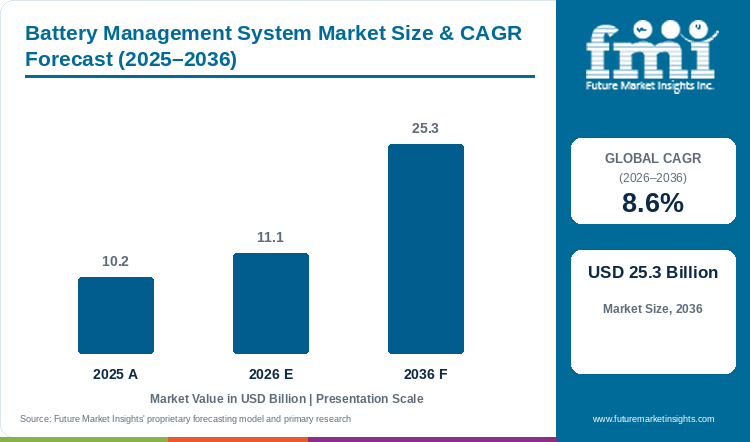
Key Market Trends & Insights
- Battery chemistry and pack architecture determine how measurement, protection and communication functions are combined within a BMS.
- Vehicle and stationary-storage programs create different integration and qualification requirements for battery controls. [1][4]
- Useful diagnostics and clear interfaces can extend a supplier's role throughout the battery system's operating life.
Regional Highlights
- China's battery manufacturing and stationary-storage activity give BMS suppliers a purchasing environment that spans high-volume components and application-specific control systems (FMI outlook: 12.4% CAGR, 2026 to 2036).
- India's PLI-Auto framework explicitly includes battery-management systems among eligible products, giving component suppliers a defined manufacturing category within the country's vehicle-development priorities (FMI outlook: 11.2% CAGR, 2026 to 2036).
- South Korea's electric-propulsion ship standard provides a concrete application for battery monitoring beyond passenger vehicles, describing BMS functions around current, voltage, temperature and abnormal operation (FMI outlook: 8.6% CAGR, 2026 to 2036).
Market Size & Forecast
Table 1: Market Size and Forecast for Battery Management System Market (USD billion and percentage), 2025 to 2036
| Metric | Value |
|---|---|
| 2025 market value | USD 10.2 billion |
| 2026 market value | USD 11.08 billion |
| 2036 market value | USD 25.3 billion |
| CAGR 2026 to 2036 | 8.6% |
| Revenue increase 2026 to 2036 | USD 14.22 billion |
| Market expansion 2026 to 2036 | 2.28 times |
The market covers hardware and software for battery monitoring and balancing, protection and state estimation, and control. Electric-vehicle and cell-factory growth alone does not establish BMS adoption.
Operators offering battery leasing services need useful information on the packs they maintain, creating a commercial role for monitoring and diagnostic data throughout the battery's time in service.
BMS qualification differs by application
Battery-management requirements depend on the equipment using the pack, with storage, road vehicles and marine propulsion creating distinct qualification settings. China's storage-specific supervision standard and South Korea's electric-propulsion ship standard illustrate that application focus, while India's PLI-Auto material adds a manufacturing context for vehicle components. [1][2][4] Japan's product registry provides a separate example of information attached to a particular connected BMS. [3]
Table 2: Industry evidence relevant to the battery management system market
| Indicator | Data point or observation | Market relevance | Source |
|---|---|---|---|
| Storage-specific BMS standard | China published DL/T 2918-2025 on manufacturing supervision of energy-storage battery-management systems. | Storage equipment creates a defined application route for controls and their associated qualification work. | [1] |
| Electric-vehicle incentives | India's public PLI-Auto material identifies eligible advanced automotive products, including relevant battery-management activity. | Vehicle programs create a purchasing setting in which battery controls form part of the wider electrical architecture. | [4] |
| Connected-product registry | Japan's JC-STAR registry includes a named BESS-container BMS product entry. | A product-specific registry gives purchasers information to examine for the particular connected equipment under review. | [3] |
| Marine electric propulsion | South Korea published the electric-propulsion ship standard under Notice 2025-92. | Marine applications add an equipment-specific setting for evaluating the battery-control functions used in propulsion systems. | [2] |
Analyst Perspective
"Battery-management decisions begin with the pack and the operating conditions that its controls must handle. Suppliers need to make sensing, safety functions and diagnostics work within that installation, with clear integration and continuing support becoming especially useful when the battery system changes during development or service."
- Sudip Saha, Co-founder, Future Market Insights
How is the Battery Management System Market segmented?
The market is segmented by Type, Topology, Application, and Region.
Type coverage comprises Lithium-Ion BMS, Lead-Acid BMS, Nickel-Cadmium BMS, Nickel-Metal Hydride BMS, and Others. Topology separates Centralized, Modular, and Distributed arrangements, while Application covers Automotive, Military, Consumer Electronics, Telecom, Energy, and Others. Battery chemistry determines the control requirements, topology describes how the monitoring architecture is organized, and application establishes the operating setting in which the system is purchased.
Why does the Lithium-Ion BMS segment account for a substantial share of type demand?
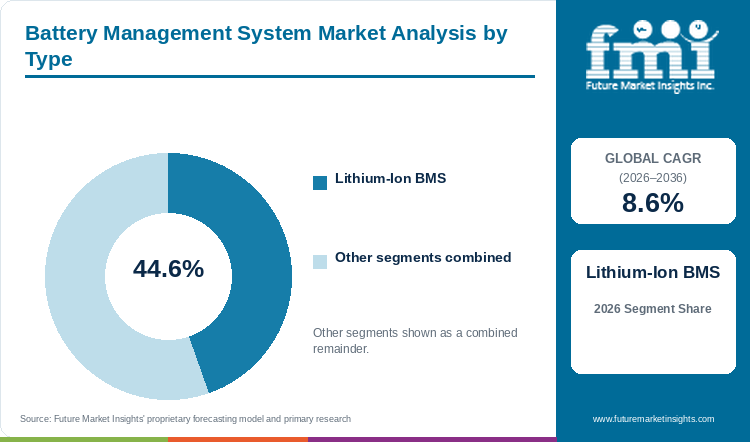
Table 3: Type Share for Battery Management System Market (percentage share), 2026
| Type | Estimated share (2026) |
|---|---|
| Lithium-Ion BMS | 44.6% |
| Other type segments | 55.4% |
| Total | 100.0% |
Table 4: Segment Position and Market Growth for Battery Management System Market, 2026 to 2036
| Metric | Value |
|---|---|
| Global CAGR (2026 to 2036) | 8.6% |
| Profiled type segment | Lithium-Ion BMS |
Lithium-ion packs require information from individual cells to support charging, balancing and protection across the wider system, creating an identifiable role for battery-management hardware and software. The purchasing requirement becomes more demanding as a vehicle or storage installation combines many cells with changing temperatures and loads. China's storage-BMS supervision standard specifically addresses lithium-ion systems, illustrating the manufacturing attention given to this control function. [1] The Lithium-Ion BMS segment is estimated to account for 44.6% of type demand in 2026 as those applications sustain component and system procurement. Suppliers can strengthen their position through accurate measurement, a manageable interface with the host controller and useful diagnostic information, allowing the customer to integrate the controls within its intended battery design.
The Lithium-Ion BMS segment is projected to account for 44.6% of type demand in 2026.
- Lithium-Ion BMS: 44.6% of type demand (2026 estimate), supported by monitoring and control requirements across vehicle and storage packs.
- China's DL/T 2918-2025 addresses manufacturing supervision for lithium-ion storage BMS, giving buyers a defined reference for the relevant production setting. [1]
How do automotive programs sustain demand for battery controls?
Table 5: Application Share for Battery Management System Market (percentage share), 2026
| Application | Estimated share (2026) |
|---|---|
| Automotive | 39.0% |
| Other applications | 61.0% |
| Total | 100.0% |
Vehicle battery controls have to work within a broader development program that connects the pack, charging system and vehicle electronics. A component selected for measurement accuracy still needs suitable communication and protection behavior in the customer's operating environment, making integration and qualification important parts of the purchase. The Automotive segment is estimated to represent 39.0% of application demand in 2026 as battery-powered vehicle programs create recurring requirements for those functions. India's explicit inclusion of BMS in its PLI-Auto eligibility list illustrates the policy attention directed toward this component category. [4] Suppliers consequently benefit from a clear account of their hardware and software responsibilities, with engineering support helping customers carry a selected design through validation and continuing production.
The Automotive segment is projected to account for 39.0% of application demand in 2026.
- Automotive: 39.0% of application demand (2026 estimate), reflecting the role of battery controls within vehicle development and production programs.
- Vehicle buyers assess measurement, communication, protection and integration support together because the BMS operates within the wider pack and vehicle system.
- A vehicle's battery controller exchanges operating information with wider electronics, connecting automotive SoC integration with the interfaces used to interpret battery status and coordinate the vehicle's functions.
What are the drivers, restraints, and opportunities in the Battery Management System Market?
A battery-management purchase brings chemistry, pack design and operating duty into one control requirement, making integration support central to the supplier's value. Vehicle and stationary-storage programs create different routes to demand, while diagnostics and understandable interfaces help customers maintain the design over time. Manufacturing and assurance references add documentation requirements within their specific application settings. [1][2][3]
Driver
Battery packs need continuing information on cell conditions and a coordinated response to changing operating loads, creating demand for monitoring and control hardware. Vehicle, storage and marine systems place those functions within different equipment architectures, making application knowledge important to the supplier. China's storage-BMS supervision reference and South Korea's electric-propulsion ship standard illustrate the attention given to battery controls within defined installations. [1][2]
Restraint
Integration requires the customer to coordinate measurement components, embedded software and the host equipment, which can add engineering work before a design reaches production. A pack with many cells also creates communication and diagnostic requirements that influence the architecture selected. Buyers therefore need a clear proposal covering the supplier's functions and the interfaces remaining with the system integrator, with development support helping control the cost and timing of qualification.
Opportunity
Suppliers can develop longer customer relationships through architectures that make battery information useful throughout the operating life of the equipment. Diagnostics and clear interfaces help a vehicle or storage customer manage the selected design as configurations evolve. India's inclusion of BMS among eligible PLI-Auto products adds a component-manufacturing route, while Japan's product registry illustrates assurance information relevant to connected storage controls. [4][3]
Battery-control validation can use environmental test chambers to examine operation across temperature and humidity conditions, making test planning part of the customer's integration work.
Which country CAGRs are profiled in the Battery Management System Market?
Table 6: Country CAGR Comparison for Battery Management System Market (CAGR percentage), 2026 to 2036
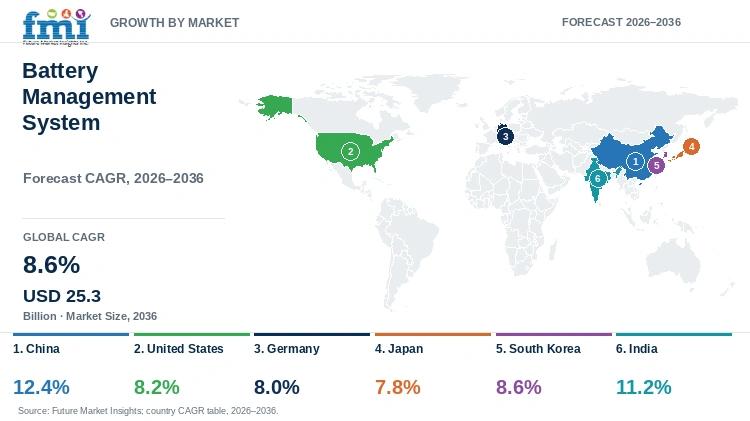
| Country | CAGR |
|---|---|
| China | 12.4% |
| United States | 8.2% |
| Germany | 8.0% |
| Japan | 7.8% |
| South Korea | 8.6% |
| India | 11.2% |
Country-wise Analysis
China Battery Management System Market Outlook (2026 to 2036)
China's battery manufacturing and stationary-storage activity give BMS suppliers a purchasing environment that spans high-volume components and application-specific control systems. DL/T 2918-2025 establishes a manufacturing-supervision reference for lithium-ion storage BMS, with implementation from December 2025, making production documentation part of the commercial discussion. [1] Customers need the proposed system to fit the pack architecture and communicate usefully with the wider installation. Suppliers able to combine component availability with engineering support can therefore address both production requirements and the practical work of integrating a BMS within the customer's equipment.
United States Battery Management System Market Outlook (2026 to 2036)
Stationary storage and vehicle programs create distinct BMS purchasing requirements in the United States, with the size and operating duty of the pack influencing the monitoring architecture. A storage operator needs useful information over repeated operating cycles, while a vehicle developer has to coordinate battery controls with charging and the rest of the vehicle electronics. Suppliers consequently compete on measurement capability, communication and the engineering support available during integration. A clear division of responsibility between the component supplier and system integrator helps customers maintain the chosen design as software, battery configurations and operating requirements develop.
Germany Battery Management System Market Outlook (2026 to 2036)
Automotive engineering gives German buyers a reason to examine battery controls as part of a coordinated vehicle program, with the chosen BMS influencing measurement, protection and the information available to other controllers. Purchasing therefore extends into validation and production support, since a suitable component must remain workable within the pack architecture over the program's life. Industrial and energy-storage installations add a different operating duty, allowing suppliers to address several customer groups through appropriately configured architectures. Engineering assistance and clear product documentation help buyers compare the actual scope of each proposal and plan the remaining integration work.
Japan Battery Management System Market Outlook (2026 to 2036)
Connected storage equipment brings cybersecurity into Japan's BMS purchasing discussion alongside the battery's monitoring and protection functions. The JC-STAR registry includes a BESS-container BMS entry, providing an example of the product-level assurance information that a buyer can examine when selecting connected equipment. [3] The customer still needs the architecture to fit the battery and communicate with the host installation, giving engineering support a practical role in procurement. Suppliers can address that requirement through clear interfaces and documentation that explains the control functions and the specific assurance attached to the proposed product.
South Korea Battery Management System Market Outlook (2026 to 2036)
South Korea's electric-propulsion ship standard provides a concrete application for battery monitoring beyond passenger vehicles, describing BMS functions around current, voltage, temperature and abnormal operation. [2] Marine equipment buyers need those controls to work within the vessel's battery installation, making system integration and the clarity of operating information important to selection. Automotive and storage programs add other purchasing routes, each with its own pack design and operating duty. Suppliers therefore benefit from understanding the customer's complete installation and supporting the engineering work that turns individual monitoring components into a usable control system.
India Battery Management System Market Outlook (2026 to 2036)
India's PLI-Auto framework explicitly includes battery-management systems among eligible products, giving component suppliers a defined manufacturing category within the country's vehicle-development priorities. [4] The opportunity also depends on customers selecting a design that suits the battery pack, charging arrangement and intended vehicle duty. Local production support can help buyers manage component availability and integration questions during a program's development. Suppliers consequently compete through the practical combination of hardware, embedded software and engineering assistance, with the customer's production schedule and continuing support needs shaping the commercial relationship.
Who are the notable companies in the Battery Management System Market?
Texas Instruments; Analog Devices; Infineon Technologies; NXP Semiconductors; STMicroelectronics
Battery-management suppliers enter equipment programs through the measurement, protection and communication functions required by the selected pack architecture. Component choices consequently interact with the customer's control software and qualification work, making integration knowledge commercially valuable alongside the electronics themselves. Vehicle and stationary-storage customers create distinct application routes, reflected in India's electric-vehicle incentive coverage and China's storage-specific BMS standard. [1][4] Semiconductor suppliers can strengthen their position through components and engineering information that help the equipment maker maintain a coherent battery-control design.
Competitive Benchmarking: Battery Management System Market
Table 7: Competitive positioning for the battery management system market
| Company | Positioning | Commercial distinction |
|---|---|---|
| Texas Instruments | Battery-management electronics | Component function and integration scope |
| Analog Devices | Battery-monitoring electronics | Measurement and control-system interface |
| Infineon Technologies | Battery-control components | Application qualification and hardware scope |
| NXP Semiconductors | Battery-management components | System integration and control functions |
| STMicroelectronics | Battery-management electronics | Configuration and application support |
Key Developments in the Battery Management System Market
- Ministry of Heavy Industries / Press Information Bureau (2026-02-13): The ministry explicitly lists the battery-management system among eligible products under PLI-Auto. [4]
- Information-technology Promotion Agency (IPA) (2025-10-21): The government conformity registry lists a BESS-container battery-management system, BMS NeS, under the STAR-1 cybersecurity labelling tier. [3]
- National Energy Administration / official industry-standards registry (2025-06-30): DL/T 2918-2025 was issued on 30 June 2025 with implementation from 30 December 2025. Its stated scope is manufacturing supervision of BMS for electrical energy storage. [1]
Key Players in the Battery Management System Market
Battery-management electronics
- Texas Instruments
Battery-monitoring electronics
- Analog Devices
Battery-control components
- Infineon Technologies
Battery-management components
- NXP Semiconductors
Battery-management electronics
- STMicroelectronics
Battery Management System Market Report Scope
Table 8: Report Scope for Battery Management System Market, 2026 to 2036
| Coverage field | Report scope |
|---|---|
| Market definition | The market covers hardware and software for battery monitoring and balancing, protection and state estimation, and control. Electric-vehicle and cell-factory growth alone does not establish BMS adoption. |
| Quantitative units | USD billion |
| Historical reference year | 2025 |
| Forecast period | 2026 to 2036 |
| Market breakdown | Type; Topology; Application; Region |
| Countries profiled | China; United States; Germany; Japan; South Korea; India |
| Regions covered | North America; Latin America; Western Europe; Eastern Europe; East Asia; South Asia and Pacific; Middle East and Africa |
| Key companies profiled | Texas Instruments; Analog Devices; Infineon Technologies; NXP Semiconductors; STMicroelectronics |
Battery Management System Market Research Methodology
Table 9: Research Methodology for Battery Management System Market, 2026 edition
| Method | Approach |
|---|---|
| Market definition | The market covers hardware and software for battery monitoring and balancing, protection and state estimation, and control. Electric-vehicle and cell-factory growth alone does not establish BMS adoption. |
| Secondary research | Public institutional reports, regulator publications, technical literature and supplier documentation provide the operating context for the market. |
| Quantitative coverage | Market values are expressed in USD billion, with a 2025 base value, a 2026 estimate and a projection for 2036. |
| Segment and country assessment | Segment categories retain distinct demand measures, while each country profile is linked with its estimated CAGR for 2026 to 2036. |
| Company comparison | Representative participants are compared by the product or service offered, the customer application and the implementation requirements relevant to procurement. |
Battery Management System Market by Segments
Battery Management System Market segmented by Type:
- Lithium-Ion BMS
- Lead-Acid BMS
- Nickel-Cadmium BMS
- Nickel-Metal Hydride BMS
- Others
Battery Management System Market segmented by Topology:
- Centralized
- Modular
- Distributed
Battery Management System Market segmented by Application:
- Automotive
- Military
- Consumer Electronics
- Telecom
- Energy
- Others
Battery Management System Market by Region
- North America
- United States
- Canada
- Latin America
- Brazil
- Mexico
- Argentina
- Chile
- Western Europe
- Germany
- France
- United Kingdom
- Italy
- Spain
- Benelux
- Nordics
- Eastern Europe
- Poland
- Czech Republic
- Romania
- Hungary
- East Asia
- China
- Japan
- South Korea
- South Asia and Pacific
- India
- ASEAN
- Australia and New Zealand
- Middle East and Africa
- GCC Countries
- South Africa
- Türkiye
- Israel
Research Sources and Bibliography
- [1] National Energy Administration / official industry-standards registry. 30 June 2025. DL/T 2918-2025: manufacturing supervision of battery-management systems for electrical energy storage
- [2] Ministry of Oceans and Fisheries / National Law Information Center. 29 May 2025. Electric-propulsion ship standard, Notice 2025-92
- [3] Information-technology Promotion Agency. 21 October 2025. JC-STAR conformity registry: BESS-container BMS NeS
- [4] Ministry of Heavy Industries / Press Information Bureau. 13 February 2026. Promotion of electric vehicles: eligible products under PLI-Auto
This Report Answers
- How large is the Battery Management System Market in 2026?
- What is the growth outlook for the Battery Management System Market through 2036?
- What is the 2026 share of Lithium-Ion BMS?
- What is the 2026 share of Automotive?
- Which profiled market has the highest projected growth?
- Who are the notable participants in the Battery Management System Market?
Frequently Asked Questions
How large is the Battery Management System Market in 2026?
The market is estimated at USD 11.08 billion in 2026, compared with USD 10.2 billion in 2025.
What is the growth outlook for the Battery Management System Market through 2036?
The market is projected to reach USD 25.3 billion by 2036, representing a CAGR of 8.6% from 2026 to 2036.
What is the 2026 share of Lithium-Ion BMS?
The Lithium-Ion BMS segment is estimated to account for 44.6% of type demand in 2026. China's DL/T 2918-2025 addresses manufacturing supervision for lithium-ion storage BMS, giving buyers a defined reference for the relevant production setting. [1]
What is the 2026 share of Automotive?
The Automotive segment is estimated to account for 39% of application demand in 2026. Vehicle buyers assess measurement, communication, protection and integration support together because the BMS operates within the wider pack and vehicle system.
Which profiled market has the highest projected growth?
China has the highest projected rate among the markets profiled, at 12.4% CAGR from 2026 to 2036.
Who are the notable participants in the Battery Management System Market?
Representative participants include Texas Instruments, Analog Devices, Infineon Technologies, NXP Semiconductors, STMicroelectronics.
Preview the report firsthand - request a free sample
Get SampleGet the brochure for pricing and purchase details.
Get PDFTable of Content
- Key Takeaways
- Market Size and CAGR
- Top Growth Driver
- Fastest Growing Segment
- Leading Region
- Key Companies
- Emerging Opportunities
- Executive Summary
- Global Market Outlook
- Demand-side Trends
- Supply-side Trends
- Technology Roadmap Analysis
- Analysis and Recommendations
- Analyst Perspective (What is happening? Why now? What should investors know?)
- Key Questions Answered
- How large is the market?
- What is the CAGR?
- What are key trends?
- Which region dominates?
- Who are the leaders?
- Market Overview
- Market Coverage / Taxonomy
- Market Definition / Scope / Limitations
- Research Methodology
- Chapter Orientation
- Analytical Lens and Working Hypotheses
- Market Structure, Signals, and Trend Drivers
- Benchmarking and Cross-market Comparability
- Market Sizing, Forecasting, and Opportunity Mapping
- Research Design and Evidence Framework
- Desk Research Programme (Secondary Evidence)
- Expert Input and Fieldwork (Primary Evidence)
- Tooling, Models, and Reference Databases
- Data Engineering and Model Build
- Quality Assurance and Audit Trail
- Market Background
- Market Dynamics (Drivers, Restraints, Opportunity, Trends)
- Scenario Forecast (Optimistic, Likely, Conservative)
- Impact Analysis
- AI Impact
- Sustainability Impact
- Regulatory Impact
- Technology Impact
- Consumer / Buyer Analysis
- Purchase Drivers
- Adoption Barriers
- Buyer Journey
- Opportunity Map Analysis
- Product Life Cycle Analysis
- Supply Chain Analysis
- Investment Feasibility Matrix
- Value Chain Analysis
- PESTLE and Porter's Analysis
- Regulatory Landscape
- Regional Parent Market Outlook
- Production and Consumption Statistics
- Import and Export Statistics
- Global Market Analysis and Forecast, 2021 to 2036
- Historical Market Size Value (USD Billion) Analysis, 2021 to 2025
- Current and Future Market Size Value (USD Billion) Projections, 2026 to 2036
- Y-o-Y Growth Trend Analysis
- Absolute $ Opportunity Analysis
- Global Market Pricing Analysis, 2021 to 2036
- Global Market Analysis and Forecast, By Type, 2021 to 2036
- Introduction / Key Findings
- Historical Market Size Value (USD Billion) Analysis By Type, 2021 to 2025
- Current and Future Market Size Value (USD Billion) Analysis and Forecast By Type, 2026 to 2036
- Lithium-Ion BMS
- Lead-Acid BMS
- Nickel-Cadmium BMS
- Nickel-Metal Hydride BMS
- Others
- Y-o-Y Growth Trend Analysis By Type, 2021 to 2025
- Absolute $ Opportunity Analysis By Type, 2026 to 2036
- Global Market Analysis and Forecast, By Topology, 2021 to 2036
- Introduction / Key Findings
- Historical Market Size Value (USD Billion) Analysis By Topology, 2021 to 2025
- Current and Future Market Size Value (USD Billion) Analysis and Forecast By Topology, 2026 to 2036
- Centralized
- Modular
- Distributed
- Y-o-Y Growth Trend Analysis By Topology, 2021 to 2025
- Absolute $ Opportunity Analysis By Topology, 2026 to 2036
- Global Market Analysis and Forecast, By Application, 2021 to 2036
- Introduction / Key Findings
- Historical Market Size Value (USD Billion) Analysis By Application, 2021 to 2025
- Current and Future Market Size Value (USD Billion) Analysis and Forecast By Application, 2026 to 2036
- Automotive
- Military
- Consumer Electronics
- Telecom
- Energy
- Others
- Y-o-Y Growth Trend Analysis By Application, 2021 to 2025
- Absolute $ Opportunity Analysis By Application, 2026 to 2036
- Global Market Analysis and Forecast, By Region, 2021 to 2036
- Introduction
- Historical Market Size Value (USD Billion) Analysis By Region, 2021 to 2025
- Current Market Size Value (USD Billion) Analysis and Forecast By Region, 2026 to 2036
- North America
- Latin America
- Western Europe
- Eastern Europe
- East Asia
- South Asia and Pacific
- Middle East and Africa
- Market Attractiveness Analysis By Region
- North America Market Analysis and Forecast, By Country, 2021 to 2036
- Historical Market Size Value (USD Billion) Trend Analysis By Market Taxonomy, 2021 to 2025
- Market Size Value (USD Billion) Forecast By Market Taxonomy, 2026 to 2036
- By Country
- United States
- Canada
- By Type
- By Topology
- By Application
- By Country
- Market Attractiveness Analysis
- By Country
- By Type
- By Topology
- By Application
- Key Takeaways
- Latin America Market Analysis and Forecast, By Country
- Historical Market Size Value (USD Billion) Trend Analysis By Market Taxonomy, 2021 to 2025
- Market Size Value (USD Billion) Forecast By Market Taxonomy, 2026 to 2036
- By Country
- Brazil
- Mexico
- Argentina
- Chile
- By Type
- By Topology
- By Application
- By Country
- Market Attractiveness Analysis
- By Country
- By Type
- By Topology
- By Application
- Key Takeaways
- Western Europe Market Analysis and Forecast, By Country
- Historical Market Size Value (USD Billion) Trend Analysis By Market Taxonomy, 2021 to 2025
- Market Size Value (USD Billion) Forecast By Market Taxonomy, 2026 to 2036
- By Country
- Germany
- France
- United Kingdom
- Italy
- Spain
- Benelux
- Nordics
- By Type
- By Topology
- By Application
- By Country
- Market Attractiveness Analysis
- By Country
- By Type
- By Topology
- By Application
- Key Takeaways
- Eastern Europe Market Analysis and Forecast, By Country
- Historical Market Size Value (USD Billion) Trend Analysis By Market Taxonomy, 2021 to 2025
- Market Size Value (USD Billion) Forecast By Market Taxonomy, 2026 to 2036
- By Country
- Poland
- Czech Republic
- Romania
- Hungary
- By Type
- By Topology
- By Application
- By Country
- Market Attractiveness Analysis
- By Country
- By Type
- By Topology
- By Application
- Key Takeaways
- East Asia Market Analysis and Forecast, By Country
- Historical Market Size Value (USD Billion) Trend Analysis By Market Taxonomy, 2021 to 2025
- Market Size Value (USD Billion) Forecast By Market Taxonomy, 2026 to 2036
- By Country
- China
- Japan
- South Korea
- By Type
- By Topology
- By Application
- By Country
- Market Attractiveness Analysis
- By Country
- By Type
- By Topology
- By Application
- Key Takeaways
- South Asia and Pacific Market Analysis and Forecast, By Country
- Historical Market Size Value (USD Billion) Trend Analysis By Market Taxonomy, 2021 to 2025
- Market Size Value (USD Billion) Forecast By Market Taxonomy, 2026 to 2036
- By Country
- India
- ASEAN
- Australia and New Zealand
- By Type
- By Topology
- By Application
- By Country
- Market Attractiveness Analysis
- By Country
- By Type
- By Topology
- By Application
- Key Takeaways
- Middle East and Africa Market Analysis and Forecast, By Country
- Historical Market Size Value (USD Billion) Trend Analysis By Market Taxonomy, 2021 to 2025
- Market Size Value (USD Billion) Forecast By Market Taxonomy, 2026 to 2036
- By Country
- GCC Countries
- South Africa
- Türkiye
- Israel
- By Type
- By Topology
- By Application
- By Country
- Market Attractiveness Analysis
- By Country
- By Type
- By Topology
- By Application
- Key Takeaways
- Key Countries Market Analysis
- United States
- Pricing Analysis
- Market Share Analysis, 2025
- By Type
- By Topology
- By Application
- Canada
- Pricing Analysis
- Market Share Analysis, 2025
- By Type
- By Topology
- By Application
- Mexico
- Pricing Analysis
- Market Share Analysis, 2025
- By Type
- By Topology
- By Application
- Brazil
- Pricing Analysis
- Market Share Analysis, 2025
- By Type
- By Topology
- By Application
- Chile
- Pricing Analysis
- Market Share Analysis, 2025
- By Type
- By Topology
- By Application
- Germany
- Pricing Analysis
- Market Share Analysis, 2025
- By Type
- By Topology
- By Application
- United Kingdom
- Pricing Analysis
- Market Share Analysis, 2025
- By Type
- By Topology
- By Application
- Italy
- Pricing Analysis
- Market Share Analysis, 2025
- By Type
- By Topology
- By Application
- Spain
- Pricing Analysis
- Market Share Analysis, 2025
- By Type
- By Topology
- By Application
- France
- Pricing Analysis
- Market Share Analysis, 2025
- By Type
- By Topology
- By Application
- India
- Pricing Analysis
- Market Share Analysis, 2025
- By Type
- By Topology
- By Application
- ASEAN
- Pricing Analysis
- Market Share Analysis, 2025
- By Type
- By Topology
- By Application
- Australia and New Zealand
- Pricing Analysis
- Market Share Analysis, 2025
- By Type
- By Topology
- By Application
- China
- Pricing Analysis
- Market Share Analysis, 2025
- By Type
- By Topology
- By Application
- Japan
- Pricing Analysis
- Market Share Analysis, 2025
- By Type
- By Topology
- By Application
- South Korea
- Pricing Analysis
- Market Share Analysis, 2025
- By Type
- By Topology
- By Application
- Poland
- Pricing Analysis
- Market Share Analysis, 2025
- By Type
- By Topology
- By Application
- Hungary
- Pricing Analysis
- Market Share Analysis, 2025
- By Type
- By Topology
- By Application
- Türkiye
- Pricing Analysis
- Market Share Analysis, 2025
- By Type
- By Topology
- By Application
- South Africa
- Pricing Analysis
- Market Share Analysis, 2025
- By Type
- By Topology
- By Application
- United States
- Market Structure Analysis
- Competition Dashboard
- Competition Benchmarking
- Market Share Analysis of Top Players
- By Regional
- By Type
- By Topology
- By Application
- Emerging Startups
- Innovation Benchmarking
- Competition Analysis
- Competition Deep Dive
- Texas Instruments
- Overview
- Product Portfolio
- Profitability by Market Segments
- Sales Footprint
- Strategy Overview
- Marketing Strategy
- Product Strategy
- Channel Strategy
- Analog Devices
- Infineon Technologies
- NXP Semiconductors
- STMicroelectronics
- Texas Instruments
- Case Studies
- Success Stories
- Recent Developments
- Competition Deep Dive
- Assumptions & Acronyms Used


