


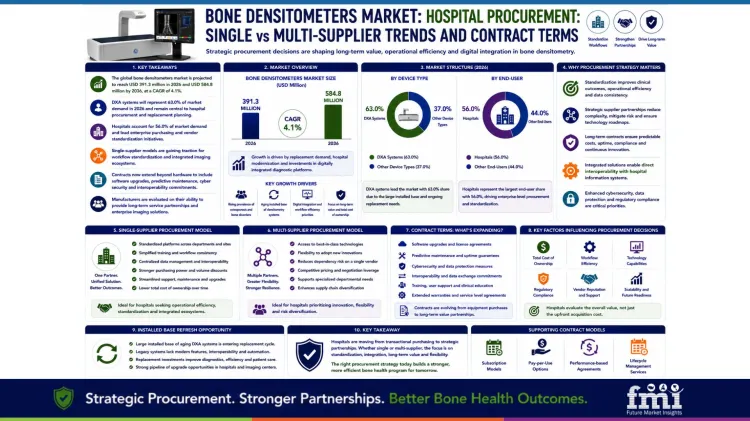
- The global bone densitometers market is projected to reach USD 391.3 million in 2026, growing at a CAGR of 4.1% to reach USD 584.8 million by 2036. More and more, procurement activity is being driven by efforts to modernize equipment and integrate digital capabilities.
- DXA systems will represent 63.0% of market demand in 2026 and will be a focus of hospital procurement strategies and long-term replacement planning.
- Hospitals account for 56.0% of the market demand and large healthcare networks are the main drivers of enterprise purchasing contracts and vendor standardization initiatives.
- Multi-supplier models still have advantages in terms of technological flexibility and pricing leverage, but single-supplier procurement models are increasingly being adopted by hospitals looking to standardize workflows and develop integrated imaging ecosystems.
- Along with the purchase of hardware, contract structures are expanding to include software upgrades, predictive maintenance, cyber security protections and pledges of interoperability.
- It’s increasingly about manufacturers’ ability to provide long-term service partnerships and enterprise imaging solutions, not standalone densitometry systems.
Introduction
The focus on digital integration, efficiency and long-term management of technology is increasingly becoming a priority for health systems, which is driving massive changes in the way hospitals procure bone densitometers. Bone densitometers are now seen as strategic components of the enterprise imaging infrastructure, rather than being purchased primarily as stand-alone diagnostic systems.
The global bone densitometers market is expected to reach USD 391.3 million by 2026 and USD 584.8 million by 2036, at a CAGR of 4.1%. The market is driven by replacement demand, hospital modernization initiatives and investment in digitally integrated diagnostic platforms.
As a result, buying strategies are becoming more sophisticated as healthcare organizations attempt to optimize the efficiency of their diagnostics while managing capital expenditures. Hospitals are focusing more on supplier relationships, technical interoperability and long-term service contracts.
Changing procurement priorities are reshaping the competitive market across the market and the ways in which manufacturers interact with institutional buyers.
Market Context
Increasing prevalence of osteoporosis and age-related bone disorders is expected to drive the demand for bone mineral density testing technologies. Healthcare providers are also challenged to increase patient throughput, improve diagnostic workflows, and integrate imaging technologies into broader digital ecosystems.
This has increased the strategic importance of bone densitometers in the hospital imaging infrastructure.
The market structure indicates the significance of institutional purchase decisions. Hospitals are the largest end-user segment and the key drivers of procurement activity accounting for 56.0% of the market demand in 2026. Similarly, DXA systems account for 63.0% of the market demand and continue to be the leading technology category for new purchases and replacement spending.
Hospitals tend to keep equipment for a long time, so decisions on buying new equipment can have ramifications for 10 years or more. Hence, the choice of suppliers is more and more related to strategic issues besides equipment performance and acquisition costs. Long-term partnerships that support modernization goals and enterprise technology integration initiatives are trending procurement strategies.
Single-Supplier Procurement Strategies
Bone densitometry technologies Single-supplier procurement arrangements are becoming more popular with many healthcare organizations.
Single-supplier models have a number of operational benefits. Standardized equipment platforms across multiple facilities are easier to train users and reduce variability in workflow and improve consistency in patient management protocols.
Enterprise agreements also provide centralised software standardisation and maintenance management. Hospitals increasingly value these benefits, as they reduce operational complexity and enable integrated diagnostic workflows.
Many large health systems undergoing digital transformation initiatives prefer single-vendor solutions that can provide direct interoperability between their densitometry systems and their existing imaging infrastructure.
Single-source strategies can also increase purchasing leverage. Preferential pricing, implementation support, longer warranties and long term service commitments that reduce total ownership costs may also be included in enterprise contracts.
As hospitals seek more and more to standardize enterprise imaging, buying from fewer suppliers becomes a more attractive procurement strategy.
Multi-Supplier Procurement Trends
Many healthcare organizations still use multi-supplier procurement models, but there is an increasing appeal of supplier consolidation.
Many large academic medical centers and integrated delivery networks have relationships with more than one vendor to enable technological flexibility and reduce dependency risks.
Multi-supplier strategies offer hospitals the chance to trial new innovations and to also secure access to specialized capabilities. Many procurement teams view having diversified vendor relationships as a way to reduce technology lock-in and maintain competitive pricing.
High vendor concentration is another supply chain risk for healthcare organizations. In addition, having a number of suppliers can improve robustness and reduce operational risk.
Multi-vendor approaches are particularly attractive to healthcare systems with heterogeneous imaging environments looking for specific solutions for specific clinical departments or facilities.
This leaves hospitals still debating the efficiencies of standardization versus the strategic flexibility of vendor diversification.
Contract Terms Are Becoming More Comprehensive
Contract structures within the bone densitometers market have evolved considerably.
Historically, procurement contracts have primarily addressed hardware purchase, installation and servicing. Contemporary procurement contracts frequently include software functionality, interoperability support, cybersecurity requirements, and lifecycle management services.
Healthcare providers increasingly seek contractual assurances regarding:
- Software upgrade pathways
- System interoperability capabilities
- Service response times
- Predictive maintenance programs
- Cybersecurity protections
- Regulatory compliance support
- User training programs
- Performance guarantees
Long-term service agreements are becoming increasingly common as hospitals seek to maximize equipment utilization and extend operational lifecycles.
Performance-based service metrics are also receiving greater attention. Procurement teams increasingly expect vendors to demonstrate commitments regarding uptime, implementation timelines, and ongoing technical support.
These expanded contract requirements reflect the growing strategic importance of densitometry technologies within healthcare organizations.
Segment Insights
DXA systems will account for 63.0% of market demand in 2026 and will continue to be the central focus of hospital procurement activities.
Their prominence is a direct statement to their being the clinical standard for osteoporosis diagnosis and fracture risk assessment. DXA systems are often long-term infrastructure investments, so scalability, interoperability and future upgrade capabilities are increasingly important considerations in procurement decisions.
The importance of replacement demand is growing. Many hospitals are still running aging DXA platforms that lack contemporary digital features and workflow automation.
The market is very focused on DXA technology, so there’s a lot of opportunity for manufacturers that can offer integrated solutions and a full-service contract.
Hospitals, accounting for 56.0% of market demand, are increasingly adopting enterprise procurement strategies that bundle densitometry investments with larger imaging modernization projects.
Buyer Behavior and Decision-Making
Procurement decision making in the bone densitometers market is becoming more multidisciplinary.
Clinical leaders focus on diagnostic accuracy, efficiency of workflow and patient experience. Information technology teams will evaluate interoperability and cybersecurity requirements. Financial stakeholders are concerned with total cost of ownership and long term return on investment
Such wider stakeholder involvement has meant procurement complexity much higher.
Hospitals are increasingly looking for suppliers that can be strategic technology partners, not just vendors of equipment. Long-term support capabilities, innovation roadmaps and service quality are increasingly influencing the purchase decision.
Vendor stability and long-term product development commitments also carry more weight with enterprise purchasing committees.
These changing expectations are reshaping supplier engagement strategies across the market.
Competitive Implications
Procurement transformation is drastically changing competitive dynamics in the market for bone densitometers.
Integrated solution and enterprise support service providers are winning more competitive advantages. Vendors that can help healthcare providers with long-term digital transformation efforts are becoming popular.
Single-supplier procurement trends create opportunities for larger vendors with broad product portfolios and deep service infrastructures.
Multi-supplier strategies, on the other hand, allow space for specialized manufacturers that can bring advanced technologies and differentiated user experiences.
Competitive differentiation is increasingly based on ecosystem capabilities, software services, interoperability support and lifecycle management offerings rather than just hardware performance.
With replacement demand increasing, procurement effectiveness and long term customer relationships will become even more important drivers of success in the market.
Strategic Implications
The future structure of the bone densitometers market is largely determined by hospital procurement strategies
Healthcare providers are increasingly looking for technologies that support enterprise integration, workflow efficiency and long-term operational resilience. Now the decisions about procurement go beyond the acquisition of equipment and are associated with the digital transformation and modernization of healthcare infrastructure.
Those manufacturers that can align their commercial strategies with the evolving expectations of procurement will be best positioned to capitalize on replacement opportunities and build stronger institutional relationships.
The moderately growing market and high share of installed equipment indicate that procurement excellence and lifecycle management capabilities will be increasingly important sources of competitive advantage during the forecast period.
Bottom Line
In the bone densitometers market, procurement practices are moving away from transactional purchasing to strategic partnerships. While single-supplier agreements are gaining ground in hospitals for standardization and integration, multi-supplier models offer flexibility and competitive leverage. As hospital investments in aging densitometry infrastructure change and enterprise imaging strategies mature, contract terms, interoperability capabilities and long-term service commitments will become more important determinants of supplier competitiveness and procurement value.

