


- Sports nutrition products should be built around use occasion, not only product type.
- Pre-workout, intra-workout, post-workout recovery, daily protein, hydration, meal replacement, and wellness use cases require different formulas, claims, formats, and channels.
- FMI’s sports nutrition data shows protein supplements and powder as leading segments, but future growth depends on building clearer consumer routines around multiple occasions.
- Occasion architecture matters because mainstream users often do not shop like competitive athletes or bodybuilders.
- Brands need to distinguish performance intensity from lifestyle convenience, otherwise the portfolio becomes confusing and cannibalizes itself.
- The misconception to avoid is that one sports nutrition formula can serve every active consumer. The strongest portfolios map ingredients, format, and claims to the moment of use.
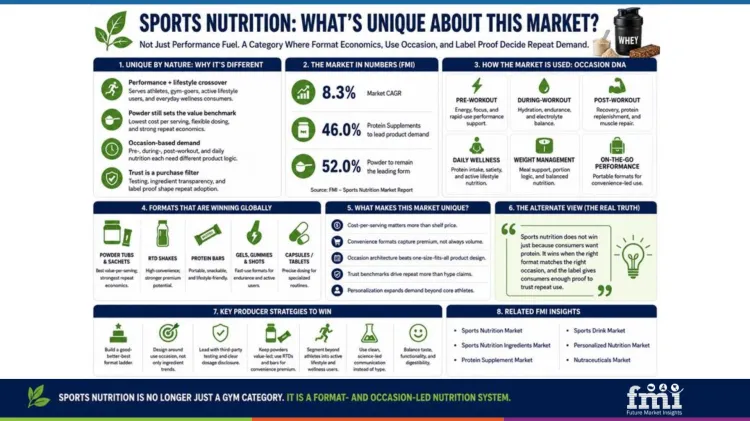
Sports nutrition has expanded beyond professional athletes and bodybuilders into active lifestyle users, gym beginners, runners, cyclists, team-sport participants, weight-management consumers, and healthy aging groups. That wider audience creates opportunity, but it also makes the category harder to manage. In the Sports Nutrition Market , the product cannot be designed only around the broad idea of performance. It must be designed around a specific use occasion.
This is why occasion-based product architecture is a stronger angle than generic e-commerce or brand-share analysis. A pre-workout powder, hydration tablet, protein shake, recovery bar, creatine product, endurance gel, and daily wellness protein are all sports nutrition products. But they do not solve the same problem. They are bought at different moments, evaluated by different criteria, and consumed with different expectations.
The first occasion is pre-workout. The consumer wants energy, focus, pump, endurance support, or motivation before training. Ingredients such as caffeine, beta-alanine, citrulline, creatine, electrolytes, and carbohydrates may appear depending on the product promise. The challenge is not simply to add more actives. The challenge is to balance perceived effect, tolerability, flavor, sweetness, and regulatory comfort. A product that feels too aggressive may alienate mainstream users, while a product that feels too mild may disappoint performance users.
The Pre-Workout Supplements Market is relevant because pre-workout products carry high expectation for noticeable effect. They sit closer to performance psychology than daily nutrition. Users often judge them quickly: Did I feel energy? Did it upset my stomach? Did the taste work? Was the effect predictable? This makes dosing clarity and claim discipline important.
The second occasion is during-workout. This includes hydration powders, electrolyte tablets, carbohydrate gels, chews, isotonic drinks, and endurance products. These products are judged by speed of use, stomach comfort, portability, flavor fatigue, sweat-loss relevance, and training duration. A marathon runner, cyclist, gym user, and casual walker do not need the same during-workout product. The formula must match the use case.
The third occasion is post-workout recovery. This is where protein remains central. Consumers want muscle repair, satiety, convenience, and routine. FMI identifies protein supplements as the leading product type in the Sports Nutrition Market, which confirms the role of recovery and daily protein intake as the category’s backbone. But post-workout recovery is no longer only a shaker moment. It can be a powder, RTD, bar, yogurt-style product, fortified snack, or meal replacement.
The Protein Supplement Market supports this broader recovery logic because sports remains a leading application area. However, protein users now include athletes, active consumers, seniors, weight-management users, and wellness buyers. A product designed for a serious lifter may not work for a busy office consumer looking for a high-protein snack.
The fourth occasion is daily protein. This is where sports nutrition starts to overlap with mainstream health and wellness. A consumer may use protein in breakfast smoothies, meal replacement shakes, evening snacks, or general nutrition routines without connecting it to a workout. This is commercially important because it shifts the category from episodic use to habitual use. Powder remains important, but RTDs, bars, and fortified foods become more relevant.
The Sports Food Market is useful because it shows how sports nutrition is becoming food-like. When products move into bars, snacks, protein cookies, fortified beverages, and daily meal solutions, the purchase logic changes. Taste, texture, sugar content, portability, and satiety become as important as performance claims.
The fifth occasion is lifestyle wellness. This includes products positioned around energy, active aging, lean muscle maintenance, weight management, gut health, collagen, immunity, or personalized routines. These products may borrow sports nutrition credibility, but they are often bought by consumers who are not training intensely. The formulation must be easier to understand, less intimidating, and more compatible with everyday health language.
The Personalized Nutrition Market connects with this shift because sports nutrition is moving toward more tailored guidance. Active measurement, digital programs, fitness apps, wearables, and goal-specific product bundles can help consumers choose products for their body type, training goal, or lifestyle pattern. However, personalization only works when the product recommendation is simple enough to act on.
A practical portfolio architecture should therefore start with the occasion map. Which products serve before training? Which serve during training? Which serve recovery? Which serve daily protein? Which serve weight management? Which serve endurance? Which serve active aging? Without this structure, brands often create overlapping SKUs that confuse consumers and retailers.
Format must also match occasion. Powders are strong for planned routines and high active delivery. RTDs are strong for immediate consumption. Bars are strong for portable snacking. Gels and chews are strong for endurance and event use. Capsules are useful for specific active ingredients but less effective for sensory-led nutrition. Multi-serve tubs suit loyal users, while single-serve sachets support trial and travel.
Claims must also be occasion-specific. A recovery product can lead with protein quality and muscle support. A hydration product should lead with electrolytes and fluid replacement. A pre-workout product should be clear about energy and stimulation. A daily protein product should not overuse extreme performance language if the target consumer is lifestyle wellness. The wrong claim can make a product look stronger but reduce trust.
Channel strategy follows the same logic. Gyms and specialty stores can support performance education. Mass retail supports mainstream adoption. Convenience stores support RTDs and bars. Online channels support replenishment, flavor discovery, bundles, and subscription-like repeat behavior. Sports events support endurance and hydration formats. A single channel plan cannot work equally well for all occasions.
The misconception to avoid is that one formula can stretch across every active consumer. Sports nutrition is now too broad for one-size-fits-all positioning. A bodybuilder, runner, Gen Z gym beginner, weekend cyclist, busy parent, and older protein user may all buy sports nutrition, but they are not buying the same solution.
Bottom line: sports nutrition growth will increasingly comQe from occasion precision. Brands that build clear pre, during, post, daily, and wellness architectures will be easier for consumers to understand, easier for retailers to merchandise, and more resilient in repeat purchase.

