
- Market Size (2026)
- USD 5.5 Bn
- Forecast (2036)
- USD 7.9 Bn
- CAGR (2026 to 2036)
- 3.7%
How big is Clad Pipe Market in 2026?
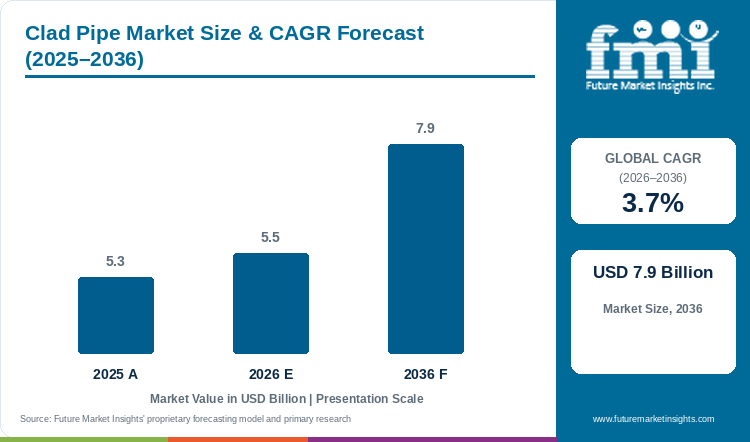
Demand is projected to expand at 3.7% CAGR from 2026 to 2036. Market value rises from USD 5.3 billion in 2025 to USD 5.5 billion in 2026 and USD 7.9 billion by 2036.
The market is estimated at USD 5.5 billion in 2026 and projected to reach USD 7.9 billion by 2036, at a CAGR of 3.7% from 2026 to 2036. Clad pipe combines a structural backing with a corrosion-resistant layer, allowing the material facing the fluid to perform a different role from the outer wall. Within the broader steel pipe industry, this construction serves projects where corrosion exposure makes the internal material choice commercially significant. [1][4] Metallurgically bonded pipe holds the leading profiled type share, while grade 316 leads the grade category, with both selections depending on the intended service. Manufacturers also offer mechanically lined and weld-overlay routes, giving engineers alternatives with different fabrication characteristics. [1][2] The purchase extends to joining, inspection and installation requirements, because the integrity of the complete piping system depends on how sections and components fit together. NobelClad's spools and elbows illustrate the role of fabricated configurations in process applications. [3] Demand follows energy and industrial projects handling corrosive media, with replacement programs and new installations creating different order patterns. Over the forecast period, suppliers can compete through suitable material combinations, manufacturing capability and technical support that helps a specified piping system progress from engineering into reliable project delivery. [1][2]
Key Market Trends & Insights
- Project teams compare metallurgical bonding, mechanical lining and weld overlay against the intended fluid and installation conditions, keeping manufacturing route central to material selection. [1][2]
- Supplier offerings extend from straight pipe into fabricated spools and fittings, allowing purchasing to address a larger part of the installed piping arrangement. [1][2][3]
- Corrosion-sensitive energy and process applications sustain attention to the internal alloy layer, while the structural backing remains a separate part of the engineering specification. [4]
Regional Highlights
- Indian refinery and gas-network investment creates orders in which fluid conditions and the intended asset life influence material selection, while Chinese petrochemical projects require coordination between pipe dimensions and fabricated components. [1][2]
- BUTTING’s German manufacturing portfolio includes mechanically lined and metallurgically clad constructions, giving buyers distinct production routes to assess against fabrication and installation requirements. [1]
- US replacement work must fit the duty and equipment already installed, while Japanese industrial projects draw on an established specialist supply base for specified clad-pipe applications. [3]
Market Size & Forecast
Table 1: Market Size and Forecast for Clad Pipe Market (USD billion and percentage), 2025 to 2036
| Metric | Value |
|---|---|
| 2025 market value | USD 5.3 billion |
| 2026 market value | USD 5.5 billion |
| 2036 market value | USD 7.9 billion |
| CAGR 2026 to 2036 | 3.7% |
| Revenue increase 2026 to 2036 | USD 2.4 billion |
| Market expansion 2026 to 2036 | 1.44 times |
The projected 3.7% CAGR from 2026 to 2036 depends on project activity in corrosive service and on the ability to supply a construction suitable for the intended duty. Carbon capture and storage adds engineering questions about transported-fluid composition and materials compatibility, while the actual pipe specification remains project-specific. Demand can therefore expand through new applications as well as conventional energy and process work, with suppliers needing to connect material selection, fabrication and delivery requirements throughout the order. [1][2][3][4]
How do construction methods determine the commercial role of clad pipe?
BUTTING distinguishes mechanically lined products from pipe manufactured using metallurgically bonded material, while Cladtek documents a weld-overlay route for pipes and fittings. NobelClad extends the comparison to reactive-metal clad spools and elbows. These offerings show why construction method and supplied configuration matter alongside the alloy designation, with each order needing to fit its actual process and installation requirements. [1][2][3]
Table 2: Industry evidence relevant to the clad pipe market
| Indicator | Data point or observation | Market relevance | Source |
|---|---|---|---|
| Construction route | BUTTING offers mechanically lined and metallurgically clad pipe | The relationship between liner and backing depends on the manufacturing method | [1] |
| Weld overlay | Cladtek applies CRA overlay to pipe and fittings | Corrosion protection extends across different piping components | [2] |
| Fabricated supply | NobelClad offers clad spools and elbows | A purchase can address an installable configuration rather than straight pipe alone | [3] |
Analyst Perspective
"The clad pipe market is shifting toward qualification-led purchasing where bond integrity and inspection records matter more than base pipe availability."
- Nikhil Kaitwade, Principal Consultant for Oil and Gas, FMI
How is the Clad Pipe Market segmented?
The market is segmented by Pipe Type, Grade, Outer Diameter, Wall Thickness, Service Environment, and Region.
By pipe type, the market includes Metallurgical Bonded, Mechanically Lined, Weld Overlay. By grade, the market includes 316, 625, 825, Others. By outer diameter, the market includes 4 to 12 Inch, 12 to 24 Inch, 24 to 48 Inch, 48 to 60 Inch, 60 to 120 Inch. By wall thickness, the market includes 3 to 6 mm, 6 to 18 mm, 18 to 36 mm, 36 to 60 mm, 60 to 120 mm. By service environment, the market includes Standard Process Service, Harsh Duty Service.
Why does the Metallurgical Bonded segment hold a strong position within the pipe type category?
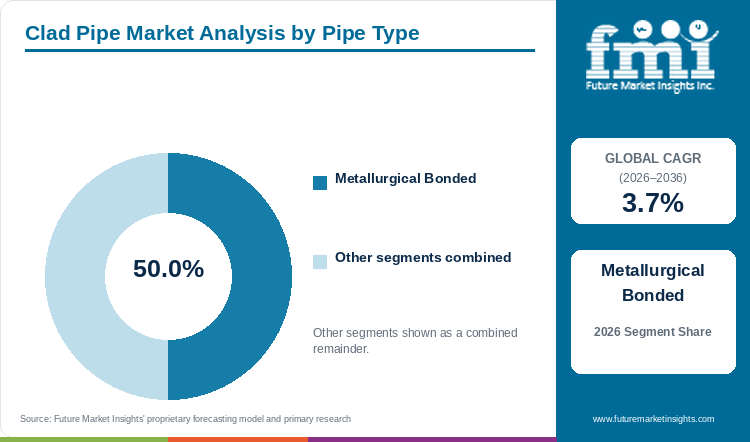
The Metallurgical Bonded segment is projected to account for 50.0% of pipe type demand in 2026.
Table 3: Pipe Type Share for Clad Pipe Market (percentage share), 2026
| Pipe Type | Estimated share (2026) |
|---|---|
| Metallurgical Bonded | 50.0% |
| Other pipe type segments | 50.0% |
| Total | 100.0% |
Table 4: Segment Position and Market Growth for Clad Pipe Market, 2026 to 2036
| Metric | Value |
|---|---|
| Global CAGR (2026 to 2036) | 3.7% |
| Profiled pipe type segment | Metallurgical Bonded |
Metallurgically bonded pipe joins the corrosion-resistant layer to the backing through a metallurgical connection, giving the construction a defined place in demanding piping specifications. BUTTING describes products manufactured from clad plate in which the layers are bonded through a diffusion bridge. [1] The segment's projected share reflects its established use where the relationship between the layers is important to the selected fabrication and operating conditions. Engineers still need to assess the material combination and joining details against the intended service, because the bonding route is one part of the complete specification. The commercial appeal lies in providing structural capacity and a suitable internal surface within one engineered product, with inspection information and consistent manufacture supporting its use in a larger piping system. [2][4]
- The Metallurgical Bonded segment is projected to account for 50.0% of pipe type demand in 2026, reflecting its established position in project specifications requiring a metallurgical connection between the corrosion-resistant layer and backing.
- Material pairing, joining details and inspection requirements need to fit the intended operating duty and the installation method selected for the project. [1][4]
Why does the Grade 316 segment hold a strong position within the grade category?
The Grade 316 segment is projected to account for 40.0% of grade demand in 2026.
Table 5: Grade Share for Clad Pipe Market (percentage share), 2026
| Grade | Estimated share (2026) |
|---|---|
| Grade 316 | 40.0% |
| Other grade segments | 60.0% |
| Total | 100.0% |
Grade 316 serves a range of industrial piping applications where its corrosion behavior is suitable for the particular fluid and operating environment, supporting its projected position within the grade category. Clad construction allows that corrosion-resistant material to be used with a structural backing, making alloy selection and the amount of material required relevant to the project comparison. [1][4] Suitability still depends on the service conditions, including temperature and fluid composition, so a grade designation alone does not settle the engineering decision. Nickel alloy alternatives such as 625 and 825 give buyers additional choices for different service requirements. Demand for grade 316 consequently follows applications where the specification can balance the necessary internal material performance with fabrication practicality and the economics of the installed piping system. [2]
- The Grade 316 segment is projected to account for 40.0% of grade demand in 2026, as industrial buyers select an internal material suited to the fluid exposure and fabrication requirements of the piping system.
- The choice between grade 316 and higher-alloy categories follows actual service conditions, with the clad construction and backing assessed as part of the same specification. [1][2][4]
What are the drivers, restraints, and opportunities in the Clad Pipe Market?
The order becomes more demanding when the specified corrosion-resistant layer must continue through fittings, spools and joining details across a piping system. Manufacturing route and the delivered configuration then affect project coordination, giving suppliers an opportunity to address a larger engineering package while making material consistency and fabrication capability consequential to the contract. [1][2][3][4]
Driver
Corrosive fluids create a material-selection problem for energy and process projects, supporting demand for pipe that combines structural capacity with an appropriate internal alloy layer. [1][4] Projects evaluating Acid resistant piping also need to match the material exposed to the fluid with the intended duty, making compatibility part of the engineering comparison. For clad pipe, the commercial case becomes stronger where the project requires a substantial piping system and can evaluate the corrosion-resistant layer alongside fabrication, inspection and installation costs. [2][3]
Restraint
Clad construction adds manufacturing and joining requirements to a pipe order, with material combinations and bonding methods needing to remain consistent through fabrication. A project may also require fittings and spools whose details match the straight pipe, increasing the importance of engineering coordination. [1][2][3][4] These requirements can narrow the suitable supplier pool and affect delivery schedules, particularly when an order includes specialized dimensions or alloy combinations that a mill does not routinely produce.
Opportunity
Suppliers can expand through fabricated piping configurations that reduce the amount of coordination required between separately purchased components, while preserving the material requirements of the intended service. [1][2][3] An order that includes spools and fittings can address joining and configuration requirements earlier in the project, giving the purchaser a clearer relationship between material selection and the delivered installation package. The opportunity for clad-pipe manufacturers lies in carrying that specification through manufacture, inspection and delivery for replacement work and new process applications with demanding corrosion conditions. [4]
Which country CAGRs are profiled in the Clad Pipe Market?
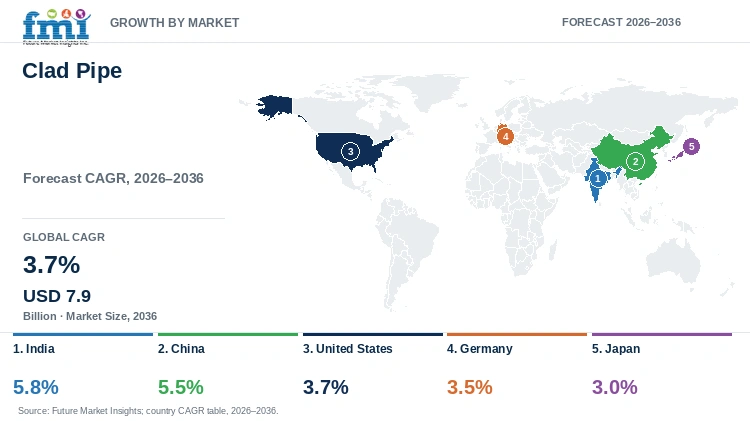
Table 6: Country CAGR Comparison for Clad Pipe Market (CAGR percentage), 2026 to 2036
| Country | CAGR | Forecast period |
|---|---|---|
| India | 5.8% | 2026 to 2036 |
| China | 5.5% | 2026 to 2036 |
| United States | 3.7% | 2026 to 2036 |
| Germany | 3.5% | 2026 to 2036 |
| Japan | 3.0% | 2026 to 2036 |
Country-wise Analysis
India Clad Pipe Market Outlook (2026 to 2036)
India's refinery and gas-network investment creates a purchasing context in which the fluid specification and intended asset life influence the choice of pipe construction. A corrosion-resistant inner layer can address the process environment while carbon steel supplies the structural backing, giving project engineers a way to examine alloy use across a substantial piping program. [1][4] Demand is projected at 5.8% CAGR from 2026 to 2036. The commercial requirement includes pipe and joining details that fabrication teams can implement, because an otherwise suitable material combination still needs to fit the installation. Suppliers able to support that engineering work can participate as projects move from material selection into purchasing, with manufacturing availability and inspection documentation affecting the schedule for delivery. [2][3]
China Clad Pipe Market Outlook (2026 to 2036)
Chinese petrochemical and energy projects create demand for pipe that can carry corrosive fluids across production, processing and transfer systems. The required alloy and bonding route depend on the particular service, making the relationship between process conditions and material selection important before a mill receives an order. The forecast projects 5.5% CAGR from 2026 to 2036. A larger project can involve several pipe dimensions and fabricated components, so coordination between the specification, manufacturing route and installation plan influences purchasing. [1][2][3][4] This gives suppliers a reason to offer consistent technical information across straight pipe and associated fittings, while the project team compares the complete piping arrangement against its operating requirements and the delivery sequence needed at the site.
United States Clad Pipe Market Outlook (2026 to 2036)
US demand includes replacement and modernization within established energy and chemical assets, where a new piping section must fit the process duty and the equipment already installed. The carbon-steel backing and corrosion-resistant layer perform different roles, making the service environment and joining arrangement central to material selection. [1][4] Market growth is projected at 3.7% CAGR from 2026 to 2036. NobelClad's process-piping offering illustrates a route extending to clad spools and elbows, which can be relevant when a project requires fabricated sections ready for installation. [3] Buyers consequently assess the supplied configuration alongside inspection and fabrication information, with the commercial value shaped by how the product fits a defined maintenance or capital project rather than by pipe availability alone.
Germany Clad Pipe Market Outlook (2026 to 2036)
Germany has an established engineering and manufacturing base for clad piping, illustrated by BUTTING's mechanically lined and metallurgically clad product ranges. [1] The distinction matters to buyers because each construction joins the corrosion-resistant layer and structural backing through a different manufacturing route, with implications for the intended installation and service. Demand is projected at 3.5% CAGR from 2026 to 2036. Process-industry purchasing can therefore focus on the material combination, dimensional requirements and fabricated components needed for a particular duty. [1][2][3] An experienced supplier may support both product manufacture and the engineering detail surrounding the order, while the buyer examines whether the proposed construction is suitable for the pressure, fluid and fabrication conditions of the actual piping system.
Japan Clad Pipe Market Outlook (2026 to 2036)
Japanese demand comes from an established industrial setting in which a clad-pipe purchase is closely tied to a defined process or energy application. The Japan Steel Works and other experienced producers operate within this specialized supplier environment, where material and manufacturing capability influence the available choices. The projected outlook is 3.0% CAGR from 2026 to 2036. A buyer considering grade 316 or a nickel-alloy category needs to relate that choice to the fluid and operating conditions, with the bonding route and joining details assessed as part of the same specification. [1][2][4] This favors a technically developed order that can pass from engineering into fabrication with clear requirements, while replacement programs and selected new installations provide different sources of demand.
Who are the notable companies in the Clad Pipe Market?
BUTTING; Cladtek; NobelClad; The Japan Steel Works; Tenaris
BUTTING, Cladtek and NobelClad illustrate different construction and supply routes, spanning lined pipe, weld overlay and fabricated reactive-metal clad components. The Japan Steel Works and Tenaris add specialized industrial and energy-pipe capabilities. [1][2][3] Buyers can compare material combinations, manufacturing processes and the form in which the product is delivered. A supplier offering straight pipe and one supplying ready-to-install spools may serve different parts of the same project, making the proposed scope important to commercial comparison.
Competitive Benchmarking: Clad Pipe Market
Table 7: Competitive positioning for the clad pipe market
| Company | Positioning | Commercial distinction |
|---|---|---|
| BUTTING | Mechanically lined and metallurgically clad pipe | Manufactures distinct lined and metallurgically bonded pipe configurations and clad spools. [1] |
| Cladtek | Weld-overlay piping and fittings | Supplies CRA weld-overlay pipe, fittings and flanges for demanding process service. [2] |
| NobelClad | Clad pipe spools and elbows | DetaPipe addresses corrosive process applications through reactive-metal clad piping. [3] |
| The Japan Steel Works | Specialty clad-pipe manufacturing | Supplies clad-pipe products within its advanced industrial materials portfolio. |
| Tenaris | Energy tubular products | Participates in specialized pipe supply for oil and gas project requirements. |
Key Developments in the Clad Pipe Market
- BUTTING currently documents mechanically lined and metallurgically clad products alongside SmartClad and fabricated spools, illustrating continuing development across different construction and supply formats. [1]
- Cladtek’s current weld-overlay offering extends across pipes, fittings and flanges, supporting the specification of corrosion-resistant surfaces through several parts of a piping system. [2]
- NobelClad continues to present DetaPipe spools and elbows for corrosive process applications, giving industrial buyers an option for engineered fabricated piping configurations. [3]
Key Players in the Clad Pipe Market
Mechanically lined and metallurgically clad pipe
- BUTTING
Weld-overlay piping and fittings
- Cladtek
Clad pipe spools and elbows
- NobelClad
Specialty clad-pipe manufacturing
- The Japan Steel Works
Energy tubular products
- Tenaris
Clad Pipe Market - Report Scope
Table 8: Report Scope for Clad Pipe Market, 2026 to 2036
| Coverage field | Report scope |
|---|---|
| Market | Clad Pipe Market |
| Currency and unit | USD billion; market revenue |
| Historical reference year | 2025 |
| Base year | 2026 |
| Forecast period | 2026 to 2036 |
| Segmentation | Pipe Type, Grade, Outer Diameter, Wall Thickness, Service Environment |
| Country profiles | India; China; United States; Germany; Japan |
| Competitive coverage | BUTTING; Cladtek; NobelClad; The Japan Steel Works; Tenaris |
| Geographic coverage | North America; Latin America; Western Europe; Eastern Europe; East Asia; South Asia and Pacific; Middle East & Africa |
Clad Pipe Market - Research Methodology
Table 9: Research Methodology for Clad Pipe Market, 2026 edition
| Method | Approach |
|---|---|
| Market definition | The market covers clad or lined metal pipe combining structural backing and a corrosion-resistant layer; plain carbon steel, solid alloy pipe and installation services are distinct. |
| Desk research | Published FMI market data, official institutional material and direct manufacturer documentation form the research base. |
| Segment assessment | Pipe construction, internal grade, outer diameter, wall thickness and service environment are assessed separately, retaining the units and categories of the published market scope. |
| Country assessment | Country profiles examine the local care, purchasing or operating conditions relevant to demand, with growth periods aligned to 2026–2036. |
| Competitive comparison | Documented offerings and commercial roles support comparison of the named companies, without assigning unsupported performance ratings. |
| Forecast assessment | Historical reference values, forecast endpoints and growth expectations are assessed consistently within the stated currency, units and market boundary. |
Clad Pipe Market by Segments
Clad Pipe Market segmented by Pipe Type:
- Metallurgical Bonded
- Mechanically Lined
- Weld Overlay
Clad Pipe Market segmented by Grade:
- 316
- 625
- 825
- Others
Clad Pipe Market segmented by Outer Diameter:
- 4 to 12 Inch
- 12 to 24 Inch
- 24 to 48 Inch
- 48 to 60 Inch
- 60 to 120 Inch
Clad Pipe Market segmented by Wall Thickness:
- 3 to 6 mm
- 6 to 18 mm
- 18 to 36 mm
- 36 to 60 mm
- 60 to 120 mm
Clad Pipe Market segmented by Service Environment:
- Standard Process Service
- Harsh Duty Service
Clad Pipe Market by Region
- North America
- United States
- Canada
- Latin America
- Brazil
- Mexico
- Argentina
- Chile
- Western Europe
- Germany
- France
- United Kingdom
- Italy
- Spain
- Benelux
- Nordics
- Eastern Europe
- Poland
- Czech Republic
- Romania
- Hungary
- East Asia
- China
- Japan
- South Korea
- South Asia and Pacific
- India
- ASEAN
- Australia and New Zealand
- Middle East and Africa
- GCC Countries
- South Africa
- Türkiye
- Israel
Research Sources and Bibliography
- [1] BUTTING. Accessed 15 October 2026. Clad pipes
- [2] Cladtek. Accessed 15 October 2026. Weld overlay clad pipes and fittings
- [3] NobelClad. Accessed 15 October 2026. Clad pipe spools and elbows
- [4] American Petroleum Institute. Accessed 15 October 2026. CRA clad or lined steel pipe specification 5LD
This Report Answers
- How big is the clad pipe market in 2026?
- What is the outlook for the clad pipe market through 2036?
- Which pipe type category is profiled?
- Which countries are included in the growth comparison?
- Which companies are profiled?
Table of Content
Table of Content
- Key Takeaways
- Market Size and CAGR
- Top Growth Driver
- Fastest Growing Segment
- Leading Region
- Key Companies
- Emerging Opportunities
- Executive Summary
- Global Market Outlook
- Demand-side Trends
- Supply-side Trends
- Technology Roadmap Analysis
- Analysis and Recommendations
- Analyst Perspective (What is happening? Why now? What should investors know?)
- Key Questions Answered
- How large is the market?
- What is the CAGR?
- What are key trends?
- Which region dominates?
- Who are the leaders?
Read More...
- Market Overview
- Market Coverage / Taxonomy
- Market Definition / Scope / Limitations
- Research Methodology
- Chapter Orientation
- Analytical Lens and Working Hypotheses
- Market Structure, Signals, and Trend Drivers
- Benchmarking and Cross-market Comparability
- Market Sizing, Forecasting, and Opportunity Mapping
- Research Design and Evidence Framework
- Desk Research Programme (Secondary Evidence)
- Expert Input and Fieldwork (Primary Evidence)
- Tooling, Models, and Reference Databases
- Data Engineering and Model Build
- Quality Assurance and Audit Trail
- Market Background
- Market Dynamics (Drivers, Restraints, Opportunity, Trends)
- Scenario Forecast (Optimistic, Likely, Conservative)
- Impact Analysis
- AI Impact
- Sustainability Impact
- Regulatory Impact
- Technology Impact
- Consumer / Buyer Analysis
- Purchase Drivers
- Adoption Barriers
- Buyer Journey
- Opportunity Map Analysis
- Product Life Cycle Analysis
- Supply Chain Analysis
- Investment Feasibility Matrix
- Value Chain Analysis
- PESTLE and Porter's Analysis
- Regulatory Landscape
- Regional Parent Market Outlook
- Production and Consumption Statistics
- Import and Export Statistics
- Global Market Analysis and Forecast, 2021 to 2036
- Historical Market Size Value (USD Billion) Analysis, 2021 to 2025
- Current and Future Market Size Value (USD Billion) Projections, 2026 to 2036
- Y-o-Y Growth Trend Analysis
- Absolute $ Opportunity Analysis
- Global Market Pricing Analysis, 2021 to 2036
- Global Market Analysis and Forecast, By Pipe Type, 2021 to 2036
- Introduction / Key Findings
- Historical Market Size Value (USD Billion) Analysis By Pipe Type, 2021 to 2025
- Current and Future Market Size Value (USD Billion) Analysis and Forecast By Pipe Type, 2026 to 2036
- Metallurgical Bonded
- Mechanically Lined
- Weld Overlay
- Y-o-Y Growth Trend Analysis By Pipe Type, 2021 to 2025
- Absolute $ Opportunity Analysis By Pipe Type, 2026 to 2036
- Global Market Analysis and Forecast, By Grade, 2021 to 2036
- Introduction / Key Findings
- Historical Market Size Value (USD Billion) Analysis By Grade, 2021 to 2025
- Current and Future Market Size Value (USD Billion) Analysis and Forecast By Grade, 2026 to 2036
- 316
- 625
- 825
- Others
- Y-o-Y Growth Trend Analysis By Grade, 2021 to 2025
- Absolute $ Opportunity Analysis By Grade, 2026 to 2036
- Global Market Analysis and Forecast, By Outer Diameter, 2021 to 2036
- Introduction / Key Findings
- Historical Market Size Value (USD Billion) Analysis By Outer Diameter, 2021 to 2025
- Current and Future Market Size Value (USD Billion) Analysis and Forecast By Outer Diameter, 2026 to 2036
- 4 to 12 Inch
- 12 to 24 Inch
- 24 to 48 Inch
- 48 to 60 Inch
- 60 to 120 Inch
- Y-o-Y Growth Trend Analysis By Outer Diameter, 2021 to 2025
- Absolute $ Opportunity Analysis By Outer Diameter, 2026 to 2036
- Global Market Analysis and Forecast, By Wall Thickness, 2021 to 2036
- Introduction / Key Findings
- Historical Market Size Value (USD Billion) Analysis By Wall Thickness, 2021 to 2025
- Current and Future Market Size Value (USD Billion) Analysis and Forecast By Wall Thickness, 2026 to 2036
- 3 to 6 mm
- 6 to 18 mm
- 18 to 36 mm
- 36 to 60 mm
- 60 to 120 mm
- Y-o-Y Growth Trend Analysis By Wall Thickness, 2021 to 2025
- Absolute $ Opportunity Analysis By Wall Thickness, 2026 to 2036
- Global Market Analysis and Forecast, By Service Environment, 2021 to 2036
- Introduction / Key Findings
- Historical Market Size Value (USD Billion) Analysis By Service Environment, 2021 to 2025
- Current and Future Market Size Value (USD Billion) Analysis and Forecast By Service Environment, 2026 to 2036
- Standard Process Service
- Harsh Duty Service
- Y-o-Y Growth Trend Analysis By Service Environment, 2021 to 2025
- Absolute $ Opportunity Analysis By Service Environment, 2026 to 2036
- Global Market Analysis and Forecast, By Region, 2021 to 2036
- Introduction
- Historical Market Size Value (USD Billion) Analysis By Region, 2021 to 2025
- Current Market Size Value (USD Billion) Analysis and Forecast By Region, 2026 to 2036
- North America
- Latin America
- Western Europe
- Eastern Europe
- East Asia
- South Asia and Pacific
- Middle East & Africa
- Market Attractiveness Analysis By Region
- North America Market Analysis and Forecast, By Country, 2021 to 2036
- Historical Market Size Value (USD Billion) Trend Analysis By Market Taxonomy, 2021 to 2025
- Market Size Value (USD Billion) Forecast By Market Taxonomy, 2026 to 2036
- By Country
- United States
- Canada
- Mexico
- By Pipe Type
- By Grade
- By Outer Diameter
- By Wall Thickness
- By Service Environment
- By Country
- Market Attractiveness Analysis
- By Country
- By Pipe Type
- By Grade
- By Outer Diameter
- By Wall Thickness
- By Service Environment
- Key Takeaways
- Latin America Market Analysis and Forecast, By Country
- Historical Market Size Value (USD Billion) Trend Analysis By Market Taxonomy, 2021 to 2025
- Market Size Value (USD Billion) Forecast By Market Taxonomy, 2026 to 2036
- By Country
- Brazil
- Chile
- Rest of Latin America
- By Pipe Type
- By Grade
- By Outer Diameter
- By Wall Thickness
- By Service Environment
- By Country
- Market Attractiveness Analysis
- By Country
- By Pipe Type
- By Grade
- By Outer Diameter
- By Wall Thickness
- By Service Environment
- Key Takeaways
- Western Europe Market Analysis and Forecast, By Country
- Historical Market Size Value (USD Billion) Trend Analysis By Market Taxonomy, 2021 to 2025
- Market Size Value (USD Billion) Forecast By Market Taxonomy, 2026 to 2036
- By Country
- Germany
- United Kingdom
- Italy
- Spain
- France
- Nordic
- BENELUX
- Rest of Western Europe
- By Pipe Type
- By Grade
- By Outer Diameter
- By Wall Thickness
- By Service Environment
- By Country
- Market Attractiveness Analysis
- By Country
- By Pipe Type
- By Grade
- By Outer Diameter
- By Wall Thickness
- By Service Environment
- Key Takeaways
- Eastern Europe Market Analysis and Forecast, By Country
- Historical Market Size Value (USD Billion) Trend Analysis By Market Taxonomy, 2021 to 2025
- Market Size Value (USD Billion) Forecast By Market Taxonomy, 2026 to 2036
- By Country
- Russia
- Poland
- Hungary
- Balkan & Baltic
- Rest of Eastern Europe
- By Pipe Type
- By Grade
- By Outer Diameter
- By Wall Thickness
- By Service Environment
- By Country
- Market Attractiveness Analysis
- By Country
- By Pipe Type
- By Grade
- By Outer Diameter
- By Wall Thickness
- By Service Environment
- Key Takeaways
- East Asia Market Analysis and Forecast, By Country
- Historical Market Size Value (USD Billion) Trend Analysis By Market Taxonomy, 2021 to 2025
- Market Size Value (USD Billion) Forecast By Market Taxonomy, 2026 to 2036
- By Country
- China
- Japan
- South Korea
- By Pipe Type
- By Grade
- By Outer Diameter
- By Wall Thickness
- By Service Environment
- By Country
- Market Attractiveness Analysis
- By Country
- By Pipe Type
- By Grade
- By Outer Diameter
- By Wall Thickness
- By Service Environment
- Key Takeaways
- South Asia and Pacific Market Analysis and Forecast, By Country
- Historical Market Size Value (USD Billion) Trend Analysis By Market Taxonomy, 2021 to 2025
- Market Size Value (USD Billion) Forecast By Market Taxonomy, 2026 to 2036
- By Country
- India
- ASEAN
- Australia & New Zealand
- Rest of South Asia and Pacific
- By Pipe Type
- By Grade
- By Outer Diameter
- By Wall Thickness
- By Service Environment
- By Country
- Market Attractiveness Analysis
- By Country
- By Pipe Type
- By Grade
- By Outer Diameter
- By Wall Thickness
- By Service Environment
- Key Takeaways
- Middle East & Africa Market Analysis and Forecast, By Country
- Historical Market Size Value (USD Billion) Trend Analysis By Market Taxonomy, 2021 to 2025
- Market Size Value (USD Billion) Forecast By Market Taxonomy, 2026 to 2036
- By Country
- Kingdom of Saudi Arabia
- Other GCC Countries
- Turkiye
- South Africa
- Other African Union
- Rest of Middle East & Africa
- By Pipe Type
- By Grade
- By Outer Diameter
- By Wall Thickness
- By Service Environment
- By Country
- Market Attractiveness Analysis
- By Country
- By Pipe Type
- By Grade
- By Outer Diameter
- By Wall Thickness
- By Service Environment
- Key Takeaways
- Key Countries Market Analysis
- United States
- Pricing Analysis
- Market Share Analysis, 2025
- By Pipe Type
- By Grade
- By Outer Diameter
- By Wall Thickness
- By Service Environment
- Canada
- Pricing Analysis
- Market Share Analysis, 2025
- By Pipe Type
- By Grade
- By Outer Diameter
- By Wall Thickness
- By Service Environment
- Mexico
- Pricing Analysis
- Market Share Analysis, 2025
- By Pipe Type
- By Grade
- By Outer Diameter
- By Wall Thickness
- By Service Environment
- Brazil
- Pricing Analysis
- Market Share Analysis, 2025
- By Pipe Type
- By Grade
- By Outer Diameter
- By Wall Thickness
- By Service Environment
- Chile
- Pricing Analysis
- Market Share Analysis, 2025
- By Pipe Type
- By Grade
- By Outer Diameter
- By Wall Thickness
- By Service Environment
- Germany
- Pricing Analysis
- Market Share Analysis, 2025
- By Pipe Type
- By Grade
- By Outer Diameter
- By Wall Thickness
- By Service Environment
- United Kingdom
- Pricing Analysis
- Market Share Analysis, 2025
- By Pipe Type
- By Grade
- By Outer Diameter
- By Wall Thickness
- By Service Environment
- Italy
- Pricing Analysis
- Market Share Analysis, 2025
- By Pipe Type
- By Grade
- By Outer Diameter
- By Wall Thickness
- By Service Environment
- Spain
- Pricing Analysis
- Market Share Analysis, 2025
- By Pipe Type
- By Grade
- By Outer Diameter
- By Wall Thickness
- By Service Environment
- France
- Pricing Analysis
- Market Share Analysis, 2025
- By Pipe Type
- By Grade
- By Outer Diameter
- By Wall Thickness
- By Service Environment
- India
- Pricing Analysis
- Market Share Analysis, 2025
- By Pipe Type
- By Grade
- By Outer Diameter
- By Wall Thickness
- By Service Environment
- ASEAN
- Pricing Analysis
- Market Share Analysis, 2025
- By Pipe Type
- By Grade
- By Outer Diameter
- By Wall Thickness
- By Service Environment
- Australia & New Zealand
- Pricing Analysis
- Market Share Analysis, 2025
- By Pipe Type
- By Grade
- By Outer Diameter
- By Wall Thickness
- By Service Environment
- China
- Pricing Analysis
- Market Share Analysis, 2025
- By Pipe Type
- By Grade
- By Outer Diameter
- By Wall Thickness
- By Service Environment
- Japan
- Pricing Analysis
- Market Share Analysis, 2025
- By Pipe Type
- By Grade
- By Outer Diameter
- By Wall Thickness
- By Service Environment
- South Korea
- Pricing Analysis
- Market Share Analysis, 2025
- By Pipe Type
- By Grade
- By Outer Diameter
- By Wall Thickness
- By Service Environment
- Russia
- Pricing Analysis
- Market Share Analysis, 2025
- By Pipe Type
- By Grade
- By Outer Diameter
- By Wall Thickness
- By Service Environment
- Poland
- Pricing Analysis
- Market Share Analysis, 2025
- By Pipe Type
- By Grade
- By Outer Diameter
- By Wall Thickness
- By Service Environment
- Hungary
- Pricing Analysis
- Market Share Analysis, 2025
- By Pipe Type
- By Grade
- By Outer Diameter
- By Wall Thickness
- By Service Environment
- Kingdom of Saudi Arabia
- Pricing Analysis
- Market Share Analysis, 2025
- By Pipe Type
- By Grade
- By Outer Diameter
- By Wall Thickness
- By Service Environment
- South Africa
- Pricing Analysis
- Market Share Analysis, 2025
- By Pipe Type
- By Grade
- By Outer Diameter
- By Wall Thickness
- By Service Environment
- United States
- Market Structure Analysis
- Competition Dashboard
- Competition Benchmarking
- Market Share Analysis of Top Players
- By Regional
- By Pipe Type
- By Grade
- By Outer Diameter
- By Wall Thickness
- By Service Environment
- Emerging Startups
- Innovation Benchmarking
- Competition Analysis
- Competition Deep Dive
- BUTTING
- Overview
- Product Portfolio
- Profitability by Market Segments
- Sales Footprint
- Strategy Overview
- Marketing Strategy
- Product Strategy
- Channel Strategy
- Cladtek
- NobelClad
- The Japan Steel Works
- Tenaris
- BUTTING
- Case Studies
- Success Stories
- Recent Developments
- Competition Deep Dive
- Assumptions & Acronyms Used
List of Tables
- Table 1: Global Market Value (USD Billion) Forecast by Region, 2021 to 2036
- Table 2: Global Market Value (USD Billion) Forecast by Pipe Type, 2021 to 2036
- Table 3: Global Market Value (USD Billion) Forecast by Grade, 2021 to 2036
- Table 4: Global Market Value (USD Billion) Forecast by Outer Diameter, 2021 to 2036
- Table 5: Global Market Value (USD Billion) Forecast by Wall Thickness, 2021 to 2036
- Table 6: Global Market Value (USD Billion) Forecast by Service Environment, 2021 to 2036
- Table 7: North America Market Value (USD Billion) Forecast by Country, 2021 to 2036
- Table 8: North America Market Value (USD Billion) Forecast by Pipe Type, 2021 to 2036
- Table 9: North America Market Value (USD Billion) Forecast by Grade, 2021 to 2036
- Table 10: North America Market Value (USD Billion) Forecast by Outer Diameter, 2021 to 2036
- Table 11: North America Market Value (USD Billion) Forecast by Wall Thickness, 2021 to 2036
- Table 12: North America Market Value (USD Billion) Forecast by Service Environment, 2021 to 2036
- Table 13: Latin America Market Value (USD Billion) Forecast by Country, 2021 to 2036
- Table 14: Latin America Market Value (USD Billion) Forecast by Pipe Type, 2021 to 2036
- Table 15: Latin America Market Value (USD Billion) Forecast by Grade, 2021 to 2036
- Table 16: Latin America Market Value (USD Billion) Forecast by Outer Diameter, 2021 to 2036
- Table 17: Latin America Market Value (USD Billion) Forecast by Wall Thickness, 2021 to 2036
- Table 18: Latin America Market Value (USD Billion) Forecast by Service Environment, 2021 to 2036
- Table 19: Western Europe Market Value (USD Billion) Forecast by Country, 2021 to 2036
- Table 20: Western Europe Market Value (USD Billion) Forecast by Pipe Type, 2021 to 2036
- Table 21: Western Europe Market Value (USD Billion) Forecast by Grade, 2021 to 2036
- Table 22: Western Europe Market Value (USD Billion) Forecast by Outer Diameter, 2021 to 2036
- Table 23: Western Europe Market Value (USD Billion) Forecast by Wall Thickness, 2021 to 2036
- Table 24: Western Europe Market Value (USD Billion) Forecast by Service Environment, 2021 to 2036
- Table 25: Eastern Europe Market Value (USD Billion) Forecast by Country, 2021 to 2036
- Table 26: Eastern Europe Market Value (USD Billion) Forecast by Pipe Type, 2021 to 2036
- Table 27: Eastern Europe Market Value (USD Billion) Forecast by Grade, 2021 to 2036
- Table 28: Eastern Europe Market Value (USD Billion) Forecast by Outer Diameter, 2021 to 2036
- Table 29: Eastern Europe Market Value (USD Billion) Forecast by Wall Thickness, 2021 to 2036
- Table 30: Eastern Europe Market Value (USD Billion) Forecast by Service Environment, 2021 to 2036
- Table 31: East Asia Market Value (USD Billion) Forecast by Country, 2021 to 2036
- Table 32: East Asia Market Value (USD Billion) Forecast by Pipe Type, 2021 to 2036
- Table 33: East Asia Market Value (USD Billion) Forecast by Grade, 2021 to 2036
- Table 34: East Asia Market Value (USD Billion) Forecast by Outer Diameter, 2021 to 2036
- Table 35: East Asia Market Value (USD Billion) Forecast by Wall Thickness, 2021 to 2036
- Table 36: East Asia Market Value (USD Billion) Forecast by Service Environment, 2021 to 2036
- Table 37: South Asia and Pacific Market Value (USD Billion) Forecast by Country, 2021 to 2036
- Table 38: South Asia and Pacific Market Value (USD Billion) Forecast by Pipe Type, 2021 to 2036
- Table 39: South Asia and Pacific Market Value (USD Billion) Forecast by Grade, 2021 to 2036
- Table 40: South Asia and Pacific Market Value (USD Billion) Forecast by Outer Diameter, 2021 to 2036
- Table 41: South Asia and Pacific Market Value (USD Billion) Forecast by Wall Thickness, 2021 to 2036
- Table 42: South Asia and Pacific Market Value (USD Billion) Forecast by Service Environment, 2021 to 2036
- Table 43: Middle East & Africa Market Value (USD Billion) Forecast by Country, 2021 to 2036
- Table 44: Middle East & Africa Market Value (USD Billion) Forecast by Pipe Type, 2021 to 2036
- Table 45: Middle East & Africa Market Value (USD Billion) Forecast by Grade, 2021 to 2036
- Table 46: Middle East & Africa Market Value (USD Billion) Forecast by Outer Diameter, 2021 to 2036
- Table 47: Middle East & Africa Market Value (USD Billion) Forecast by Wall Thickness, 2021 to 2036
- Table 48: Middle East & Africa Market Value (USD Billion) Forecast by Service Environment, 2021 to 2036
List of Figures
- Figure 1: Global Market Pricing Analysis
- Figure 2: Global Market Value (USD Billion) Forecast 2021-2036
- Figure 3: Global Market Value Share and BPS Analysis by Pipe Type, 2026 and 2036
- Figure 4: Global Market Y-o-Y Growth Comparison by Pipe Type, 2026-2036
- Figure 5: Global Market Attractiveness Analysis by Pipe Type
- Figure 6: Global Market Value Share and BPS Analysis by Grade, 2026 and 2036
- Figure 7: Global Market Y-o-Y Growth Comparison by Grade, 2026-2036
- Figure 8: Global Market Attractiveness Analysis by Grade
- Figure 9: Global Market Value Share and BPS Analysis by Outer Diameter, 2026 and 2036
- Figure 10: Global Market Y-o-Y Growth Comparison by Outer Diameter, 2026-2036
- Figure 11: Global Market Attractiveness Analysis by Outer Diameter
- Figure 12: Global Market Value Share and BPS Analysis by Wall Thickness, 2026 and 2036
- Figure 13: Global Market Y-o-Y Growth Comparison by Wall Thickness, 2026-2036
- Figure 14: Global Market Attractiveness Analysis by Wall Thickness
- Figure 15: Global Market Value Share and BPS Analysis by Service Environment, 2026 and 2036
- Figure 16: Global Market Y-o-Y Growth Comparison by Service Environment, 2026-2036
- Figure 17: Global Market Attractiveness Analysis by Service Environment
- Figure 18: Global Market Value (USD Billion) Share and BPS Analysis by Region, 2026 and 2036
- Figure 19: Global Market Y-o-Y Growth Comparison by Region, 2026-2036
- Figure 20: Global Market Attractiveness Analysis by Region
- Figure 21: North America Market Incremental Dollar Opportunity, 2026-2036
- Figure 22: Latin America Market Incremental Dollar Opportunity, 2026-2036
- Figure 23: Western Europe Market Incremental Dollar Opportunity, 2026-2036
- Figure 24: Eastern Europe Market Incremental Dollar Opportunity, 2026-2036
- Figure 25: East Asia Market Incremental Dollar Opportunity, 2026-2036
- Figure 26: South Asia and Pacific Market Incremental Dollar Opportunity, 2026-2036
- Figure 27: Middle East & Africa Market Incremental Dollar Opportunity, 2026-2036
- Figure 28: North America Market Value Share and BPS Analysis by Country, 2026 and 2036
- Figure 29: North America Market Value Share and BPS Analysis by Pipe Type, 2026 and 2036
- Figure 30: North America Market Y-o-Y Growth Comparison by Pipe Type, 2026-2036
- Figure 31: North America Market Attractiveness Analysis by Pipe Type
- Figure 32: North America Market Value Share and BPS Analysis by Grade, 2026 and 2036
- Figure 33: North America Market Y-o-Y Growth Comparison by Grade, 2026-2036
- Figure 34: North America Market Attractiveness Analysis by Grade
- Figure 35: North America Market Value Share and BPS Analysis by Outer Diameter, 2026 and 2036
- Figure 36: North America Market Y-o-Y Growth Comparison by Outer Diameter, 2026-2036
- Figure 37: North America Market Attractiveness Analysis by Outer Diameter
- Figure 38: North America Market Value Share and BPS Analysis by Wall Thickness, 2026 and 2036
- Figure 39: North America Market Y-o-Y Growth Comparison by Wall Thickness, 2026-2036
- Figure 40: North America Market Attractiveness Analysis by Wall Thickness
- Figure 41: North America Market Value Share and BPS Analysis by Service Environment, 2026 and 2036
- Figure 42: North America Market Y-o-Y Growth Comparison by Service Environment, 2026-2036
- Figure 43: North America Market Attractiveness Analysis by Service Environment
- Figure 44: Latin America Market Value Share and BPS Analysis by Country, 2026 and 2036
- Figure 45: Latin America Market Value Share and BPS Analysis by Pipe Type, 2026 and 2036
- Figure 46: Latin America Market Y-o-Y Growth Comparison by Pipe Type, 2026-2036
- Figure 47: Latin America Market Attractiveness Analysis by Pipe Type
- Figure 48: Latin America Market Value Share and BPS Analysis by Grade, 2026 and 2036
- Figure 49: Latin America Market Y-o-Y Growth Comparison by Grade, 2026-2036
- Figure 50: Latin America Market Attractiveness Analysis by Grade
- Figure 51: Latin America Market Value Share and BPS Analysis by Outer Diameter, 2026 and 2036
- Figure 52: Latin America Market Y-o-Y Growth Comparison by Outer Diameter, 2026-2036
- Figure 53: Latin America Market Attractiveness Analysis by Outer Diameter
- Figure 54: Latin America Market Value Share and BPS Analysis by Wall Thickness, 2026 and 2036
- Figure 55: Latin America Market Y-o-Y Growth Comparison by Wall Thickness, 2026-2036
- Figure 56: Latin America Market Attractiveness Analysis by Wall Thickness
- Figure 57: Latin America Market Value Share and BPS Analysis by Service Environment, 2026 and 2036
- Figure 58: Latin America Market Y-o-Y Growth Comparison by Service Environment, 2026-2036
- Figure 59: Latin America Market Attractiveness Analysis by Service Environment
- Figure 60: Western Europe Market Value Share and BPS Analysis by Country, 2026 and 2036
- Figure 61: Western Europe Market Value Share and BPS Analysis by Pipe Type, 2026 and 2036
- Figure 62: Western Europe Market Y-o-Y Growth Comparison by Pipe Type, 2026-2036
- Figure 63: Western Europe Market Attractiveness Analysis by Pipe Type
- Figure 64: Western Europe Market Value Share and BPS Analysis by Grade, 2026 and 2036
- Figure 65: Western Europe Market Y-o-Y Growth Comparison by Grade, 2026-2036
- Figure 66: Western Europe Market Attractiveness Analysis by Grade
- Figure 67: Western Europe Market Value Share and BPS Analysis by Outer Diameter, 2026 and 2036
- Figure 68: Western Europe Market Y-o-Y Growth Comparison by Outer Diameter, 2026-2036
- Figure 69: Western Europe Market Attractiveness Analysis by Outer Diameter
- Figure 70: Western Europe Market Value Share and BPS Analysis by Wall Thickness, 2026 and 2036
- Figure 71: Western Europe Market Y-o-Y Growth Comparison by Wall Thickness, 2026-2036
- Figure 72: Western Europe Market Attractiveness Analysis by Wall Thickness
- Figure 73: Western Europe Market Value Share and BPS Analysis by Service Environment, 2026 and 2036
- Figure 74: Western Europe Market Y-o-Y Growth Comparison by Service Environment, 2026-2036
- Figure 75: Western Europe Market Attractiveness Analysis by Service Environment
- Figure 76: Eastern Europe Market Value Share and BPS Analysis by Country, 2026 and 2036
- Figure 77: Eastern Europe Market Value Share and BPS Analysis by Pipe Type, 2026 and 2036
- Figure 78: Eastern Europe Market Y-o-Y Growth Comparison by Pipe Type, 2026-2036
- Figure 79: Eastern Europe Market Attractiveness Analysis by Pipe Type
- Figure 80: Eastern Europe Market Value Share and BPS Analysis by Grade, 2026 and 2036
- Figure 81: Eastern Europe Market Y-o-Y Growth Comparison by Grade, 2026-2036
- Figure 82: Eastern Europe Market Attractiveness Analysis by Grade
- Figure 83: Eastern Europe Market Value Share and BPS Analysis by Outer Diameter, 2026 and 2036
- Figure 84: Eastern Europe Market Y-o-Y Growth Comparison by Outer Diameter, 2026-2036
- Figure 85: Eastern Europe Market Attractiveness Analysis by Outer Diameter
- Figure 86: Eastern Europe Market Value Share and BPS Analysis by Wall Thickness, 2026 and 2036
- Figure 87: Eastern Europe Market Y-o-Y Growth Comparison by Wall Thickness, 2026-2036
- Figure 88: Eastern Europe Market Attractiveness Analysis by Wall Thickness
- Figure 89: Eastern Europe Market Value Share and BPS Analysis by Service Environment, 2026 and 2036
- Figure 90: Eastern Europe Market Y-o-Y Growth Comparison by Service Environment, 2026-2036
- Figure 91: Eastern Europe Market Attractiveness Analysis by Service Environment
- Figure 92: East Asia Market Value Share and BPS Analysis by Country, 2026 and 2036
- Figure 93: East Asia Market Value Share and BPS Analysis by Pipe Type, 2026 and 2036
- Figure 94: East Asia Market Y-o-Y Growth Comparison by Pipe Type, 2026-2036
- Figure 95: East Asia Market Attractiveness Analysis by Pipe Type
- Figure 96: East Asia Market Value Share and BPS Analysis by Grade, 2026 and 2036
- Figure 97: East Asia Market Y-o-Y Growth Comparison by Grade, 2026-2036
- Figure 98: East Asia Market Attractiveness Analysis by Grade
- Figure 99: East Asia Market Value Share and BPS Analysis by Outer Diameter, 2026 and 2036
- Figure 100: East Asia Market Y-o-Y Growth Comparison by Outer Diameter, 2026-2036
- Figure 101: East Asia Market Attractiveness Analysis by Outer Diameter
- Figure 102: East Asia Market Value Share and BPS Analysis by Wall Thickness, 2026 and 2036
- Figure 103: East Asia Market Y-o-Y Growth Comparison by Wall Thickness, 2026-2036
- Figure 104: East Asia Market Attractiveness Analysis by Wall Thickness
- Figure 105: East Asia Market Value Share and BPS Analysis by Service Environment, 2026 and 2036
- Figure 106: East Asia Market Y-o-Y Growth Comparison by Service Environment, 2026-2036
- Figure 107: East Asia Market Attractiveness Analysis by Service Environment
- Figure 108: South Asia and Pacific Market Value Share and BPS Analysis by Country, 2026 and 2036
- Figure 109: South Asia and Pacific Market Value Share and BPS Analysis by Pipe Type, 2026 and 2036
- Figure 110: South Asia and Pacific Market Y-o-Y Growth Comparison by Pipe Type, 2026-2036
- Figure 111: South Asia and Pacific Market Attractiveness Analysis by Pipe Type
- Figure 112: South Asia and Pacific Market Value Share and BPS Analysis by Grade, 2026 and 2036
- Figure 113: South Asia and Pacific Market Y-o-Y Growth Comparison by Grade, 2026-2036
- Figure 114: South Asia and Pacific Market Attractiveness Analysis by Grade
- Figure 115: South Asia and Pacific Market Value Share and BPS Analysis by Outer Diameter, 2026 and 2036
- Figure 116: South Asia and Pacific Market Y-o-Y Growth Comparison by Outer Diameter, 2026-2036
- Figure 117: South Asia and Pacific Market Attractiveness Analysis by Outer Diameter
- Figure 118: South Asia and Pacific Market Value Share and BPS Analysis by Wall Thickness, 2026 and 2036
- Figure 119: South Asia and Pacific Market Y-o-Y Growth Comparison by Wall Thickness, 2026-2036
- Figure 120: South Asia and Pacific Market Attractiveness Analysis by Wall Thickness
- Figure 121: South Asia and Pacific Market Value Share and BPS Analysis by Service Environment, 2026 and 2036
- Figure 122: South Asia and Pacific Market Y-o-Y Growth Comparison by Service Environment, 2026-2036
- Figure 123: South Asia and Pacific Market Attractiveness Analysis by Service Environment
- Figure 124: Middle East & Africa Market Value Share and BPS Analysis by Country, 2026 and 2036
- Figure 125: Middle East & Africa Market Value Share and BPS Analysis by Pipe Type, 2026 and 2036
- Figure 126: Middle East & Africa Market Y-o-Y Growth Comparison by Pipe Type, 2026-2036
- Figure 127: Middle East & Africa Market Attractiveness Analysis by Pipe Type
- Figure 128: Middle East & Africa Market Value Share and BPS Analysis by Grade, 2026 and 2036
- Figure 129: Middle East & Africa Market Y-o-Y Growth Comparison by Grade, 2026-2036
- Figure 130: Middle East & Africa Market Attractiveness Analysis by Grade
- Figure 131: Middle East & Africa Market Value Share and BPS Analysis by Outer Diameter, 2026 and 2036
- Figure 132: Middle East & Africa Market Y-o-Y Growth Comparison by Outer Diameter, 2026-2036
- Figure 133: Middle East & Africa Market Attractiveness Analysis by Outer Diameter
- Figure 134: Middle East & Africa Market Value Share and BPS Analysis by Wall Thickness, 2026 and 2036
- Figure 135: Middle East & Africa Market Y-o-Y Growth Comparison by Wall Thickness, 2026-2036
- Figure 136: Middle East & Africa Market Attractiveness Analysis by Wall Thickness
- Figure 137: Middle East & Africa Market Value Share and BPS Analysis by Service Environment, 2026 and 2036
- Figure 138: Middle East & Africa Market Y-o-Y Growth Comparison by Service Environment, 2026-2036
- Figure 139: Middle East & Africa Market Attractiveness Analysis by Service Environment
- Figure 140: Global Market - Tier Structure Analysis
- Figure 141: Global Market - Company Share Analysis
Frequently Asked Questions
How big is the clad pipe market in 2026?
The market is estimated at USD 5.5 billion in 2026, compared with USD 5.3 billion in 2025.
What is the outlook for the clad pipe market through 2036?
Demand is projected to reach USD 7.9 billion by 2036, with 3.7% CAGR from 2026 to 2036.
Which pipe type category is profiled?
The Metallurgical Bonded segment is projected to hold 50.0% of pipe type demand in 2026.
Which countries are included in the growth comparison?
The comparison covers India, China, United States, Germany, Japan, with country or regional-market CAGRs for 2026–2036.
Which companies are profiled?
The report profiles BUTTING, Cladtek, NobelClad, The Japan Steel Works, Tenaris and compares their relevant products or services.
Preview the report firsthand - request a free sample
Get SampleGet the brochure for pricing and purchase details.
Get PDF
