

- Industry Size (2026)
- USD 390 Mn
- Forecast (2036)
- USD 984.3 Mn
- CAGR (2026 to 2036)
- 9.7%
Active Oxygen Scavenger Labels Market Forecast and Outlook 2026 to 2036
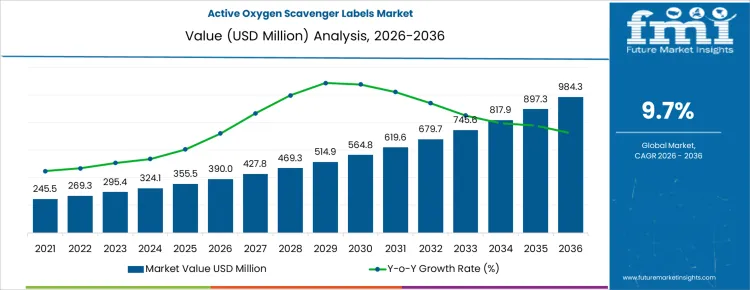
The global active oxygen scavenger labels market is forecasted to grow from USD 390 million in 2026 to USD 984.3 million by 2036, with a CAGR of 9.7%. The market is primarily driven by demand in fresh food & meat packaging, which leads the segment with a 42% share, followed by sectors like cheese & bakery, FMCG food, packaged foods, and meat exports. In terms of label types, self-adhesive scavenger labels dominate, holding a 45% share, owing to their ease of use and adaptability across different packaging materials. Other notable types include sachet-integrated labels, label & patch inserts, and small oxygen absorber labels, all of which contribute to the market's diverse product offerings. These labels are especially crucial in extending shelf life and preserving product quality for oxygen-sensitive items.
Quick Stats for Active Oxygen Scavenger Labels Market
- Active Oxygen Scavenger Labels Market Value (2026): USD 390 million
- Active Oxygen Scavenger Labels Market Forecast Value (2036): USD 984.3 million
- Active Oxygen Scavenger Labels Market Forecast CAGR: 9.7%
- Top Label Type in Active Oxygen Scavenger Labels Market: Self-adhesive scavenger labels
- Key Growth Regions in Active Oxygen Scavenger Labels Market: Asia Pacific, North America, Europe, Latin America
- Key Players in Active Oxygen Scavenger Labels Market: Multisorb, Avery Dennison, BASF, Mitsubishi Gas Chemical, Yantai Jereh, Flexituff, Local converters
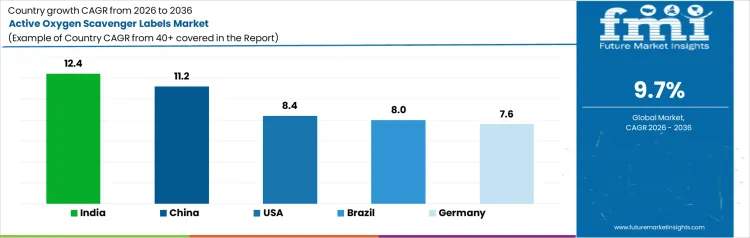
India is leading the market with a 12.4% CAGR, driven by the increasing demand for extended shelf life in food, pharmaceuticals, and consumer goods packaging. China follows closely with an 11.2% CAGR, fueled by industrial growth and packaging expansion. The USA (8.4%) and Germany (7.6%) show steady growth due to stringent regulatory requirements and the focus on improving packaging sustainability. Brazil (8%) also contributes to the market growth, particularly in food and beverage packaging. The growing shift towards sustainable and cost-efficient packaging solutions, alongside the increased adoption of smart packaging technologies, is expected to drive the continued expansion of the active oxygen scavenger labels market globally.
Active Oxygen Scavenger Labels Market Key Takeaways
| Metric | Value |
|---|---|
| Industry Value (2026) | USD 390 million |
| Forecast Value (2036) | USD 984.3 million |
| Forecast CAGR (2026 to 2036) | 9.7% |
How is the Global Active Oxygen Scavenger Labels Sector Advancing?
The global active oxygen scavenger labels market is growing steadily as businesses seek solutions to extend product shelf life and preserve quality, especially in oxygen-sensitive items like food, pharmaceuticals, and electronics. Active oxygen scavenger labels are integrated into packaging to absorb excess oxygen, preventing oxidation, spoilage, and microbial growth. This helps maintain product freshness, nutritional value, and efficacy. While traditional barrier packaging limits oxygen exposure, scavenger labels actively eliminate residual oxygen, further enhancing preservation, especially in packaged foods and health products.
Demand for these labels is increasing due to stricter regulations on food safety and the rising consumer preference for fresh, longer-lasting products. Moreover, the shift toward sustainable and cost-efficient packaging solutions is contributing to market growth. Advances in label technology have improved oxygen absorption rates and material compatibility with various packaging formats without affecting the product’s visual appeal or overall packaging functionality.
Demand is expected to expand as global logistics and cold-chain networks grow, creating more demand for packaging solutions that can withstand longer transportation times. Challenges such as balancing cost with performance and ensuring compatibility with recycling systems may impact adoption rates. The emphasis on quality preservation and sustainability will continue to drive the active oxygen scavenger labels market globally.
What Is the Segment-Wise Analysis for the Global Active Oxygen Scavenger Labels Market?
The global active oxygen scavenger labels market is segmented by end-use and label type. Fresh food & meat packaging leads with a 42% share, followed by cheese & bakery, FMCG food, packaged foods, and meat exports. In terms of label types, self-adhesive scavenger labels hold the largest share at 45%, with sachet-integrated labels, label & patch inserts, small oxygen absorber labels, and others also contributing to the market.
How Do Fresh Food & Meat Packaging Lead the Global Active Oxygen Scavenger Labels Market?
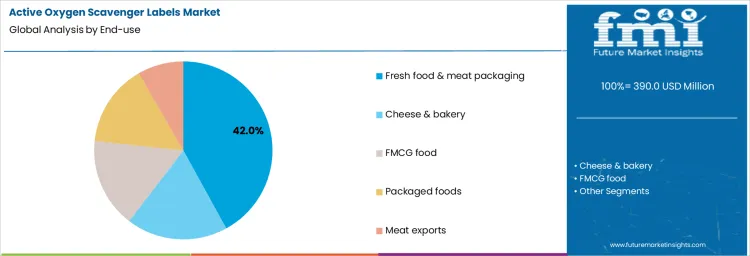
Fresh food & meat packaging leads the global active oxygen scavenger labels market with a 42% share, driven by the growing demand for extended shelf life and preservation of freshness in perishable products. Oxygen scavenger labels play a crucial role in absorbing excess oxygen, thus reducing spoilage and maintaining the quality of meat and fresh food. As consumers demand fresher products with longer shelf lives, and sustainability becomes a key factor in packaging, oxygen scavenger labels offer a solution. This growing emphasis on freshness and quality, combined with eco-conscious packaging trends, significantly contributes to the leadership of fresh food and meat packaging in the market.
Why Do Self-Adhesive Scavenger Labels Hold the Largest Market Share in the Global Active Oxygen Scavenger Labels Market?
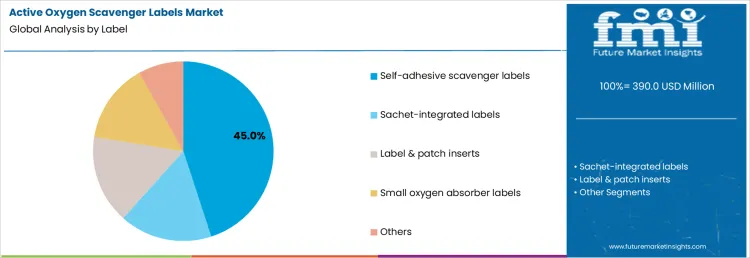
Self-adhesive scavenger labels hold the largest share of 45% in the global active oxygen scavenger labels market due to their ease of use, versatility, and convenience in food packaging. These labels can be applied to various materials such as plastic, glass, and metal, making them highly adaptable across different packaging types. Their self-adhesive design ensures secure attachment, providing long-lasting effectiveness throughout the product’s shelf life. By efficiently absorbing oxygen, self-adhesive scavenger labels help preserve freshness, reduce spoilage, and extend product longevity. Their broad application in food packaging drives their dominance in the market, especially in sectors like fresh food, meat, and packaged goods.
What is Driving Demand in the Active Oxygen Scavenger Labels Market?
The active oxygen scavenger labels market is driven by the critical need to extend shelf life and preserve quality in oxygen sensitive products such as food, pharmaceuticals, and electronics. These labels actively absorb residual oxygen inside packaging, slowing oxidation, moisture damage, and microbial growth without direct contact with the product. Rising consumer demand for fresher food with reduced preservatives, increasing temperature variations in global supply chains, and stringent safety standards are accelerating adoption. In pharmaceuticals and biologics, oxygen control ensures potency and stability, creating added demand for reliable scavenger label solutions.
What Are the Key Restraints Limiting Growth of the Active Oxygen Scavenger Labels Market?
Growth in this market is restrained by cost pressures and concerns around integration with existing packaging. Active oxygen scavenger labels are more expensive than passive barrier films, making them challenging for cost sensitive segments or low margin products. Compatibility with diverse packaging formats and ensuring consistent performance across varied environmental conditions requires careful design and validation, which can slow implementation. Regulatory requirements for food and pharmaceutical contact materials vary by region and may complicate approval. Some manufacturers may hesitate to switch without clear ROI data tied to reduced spoilage and wastage.
What Key Trends Are Shaping the Active Oxygen Scavenger Labels Market?
Key trends include the rising adoption of smart and active packaging that combines oxygen scavenger labels with moisture control, time temperature indicators, or RFID traceability for real time quality feedback. Advances in label chemistry are improving reactivity at low residual oxygen concentrations and enabling scavenging without metal catalysts or heavy chemicals. There’s growing use of bio based and food safe scavenger chemistries to align with sustainable packaging goals. Integration into flexible, recyclable packages and adoption in e commerce cold chain logistics are expanding market opportunities, especially as direct to consumer delivery grows.
What is the Growth Outlook for the Active Oxygen Scavenger Labels Market by Country?
| Country | CAGR (%) |
|---|---|
| USA | 8.4% |
| Germany | 7.6% |
| China | 11.2% |
| India | 12.4% |
| Brazil | 8% |
The active oxygen scavenger labels market is growing steadily, with India leading at a 12.4% CAGR, driven by the increasing demand for extended shelf life in food, pharmaceuticals, and consumer goods packaging. China follows closely with 11.2%, supported by the rapid industrialization and growth of the packaging sector. The USA’s market grows at 8.4%, fueled by the need for improved preservation of products across various industries. Germany’s market grows at 7.6%, driven by stringent regulations and the demand for sustainable packaging solutions. Brazil’s market grows at 8%, supported by increasing consumer demand for longer-lasting, high-quality products.
Why is India Leading in the Active Oxygen Scavenger Labels Market?
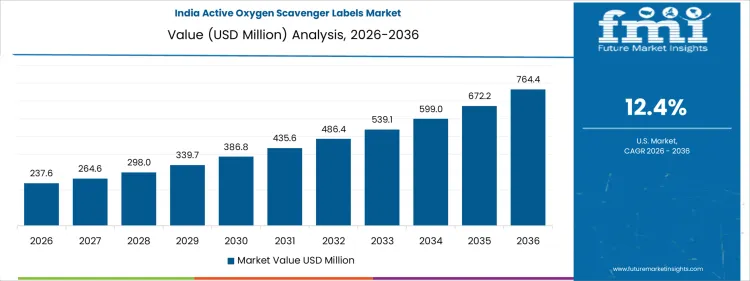
India’s active oxygen scavenger labels market is growing at 12.4%, driven by the expanding packaging industry, particularly in food, pharmaceuticals, and consumer goods sectors. With a rapidly growing population and an increasing demand for fresh and long-lasting products, India is seeing a rise in the adoption of packaging technologies that extend product shelf life. Active oxygen scavenger labels are gaining traction as they help preserve product quality by controlling oxygen levels inside packaging. As Indian manufacturers focus on meeting international standards for food and pharmaceutical safety, the demand for these labels is increasing. As the country embraces more sustainable packaging solutions and innovation, the market for active oxygen scavenger labels is expected to continue growing.
What is Driving the Growth of the Active Oxygen Scavenger Labels Market in China?
China’s active oxygen scavenger labels market is growing at 11.2%, supported by the country’s rapid industrial growth and expanding packaging industry. China’s demand for packaging solutions that extend product shelf life is increasing, especially in food and pharmaceutical sectors. The rising consumption of packaged goods, coupled with a growing focus on product quality and safety, is driving the need for active oxygen scavenger labels. These labels play a crucial role in maintaining the freshness and effectiveness of products by preventing oxidation. With China’s emphasis on advancing packaging technology and addressing consumer demand for longer-lasting products, the market for active oxygen scavenger labels is expected to continue expanding.
How is the Active Oxygen Scavenger Labels Market Expanding in the USA?
The USA’s active oxygen scavenger labels market is growing at 8.4%, driven by the increasing need for efficient preservation solutions across various sectors, including food, pharmaceuticals, and health products. As consumer demand for fresh and high-quality products rises, the adoption of oxygen scavenger technologies is increasing. The USA has a well-established packaging industry that is focused on extending the shelf life of products and reducing waste. Active oxygen scavenger labels are becoming a preferred choice in packaging as they help maintain the quality and safety of products throughout their shelf life. With the rise of sustainability-focused consumer preferences and stricter regulations, the market for these labels in the USA is expected to grow steadily.
What is Contributing to the Growth of the Active Oxygen Scavenger Labels Market in Germany?

Germany’s active oxygen scavenger labels market is growing at 7.6%, driven by the country’s strong regulatory framework focused on food safety and sustainability. As the demand for longer-lasting products increases, particularly in food and pharmaceuticals, German companies are adopting advanced packaging solutions, including oxygen scavenger labels, to improve product preservation. These labels prevent oxidation and extend shelf life, which is crucial in maintaining the freshness of perishable goods. Germany’s commitment to sustainable packaging and its emphasis on reducing waste are also contributing factors, as more consumers and businesses demand eco-friendly, efficient packaging solutions. As the market for high-quality and long-lasting products grows, the demand for active oxygen scavenger labels is expected to continue rising.
What is Driving the Growth of the Active Oxygen Scavenger Labels Market in Brazil?
Brazil’s active oxygen scavenger labels market is growing at 8%, supported by the increasing demand for packaging solutions that help preserve the quality of food and other perishable products. As Brazil’s middle class expands and consumer demand for fresh, high-quality products rises, the adoption of packaging technologies that extend shelf life is becoming more prevalent. Active oxygen scavenger labels are seen as a key solution for maintaining product freshness, particularly in the food and beverage sectors. With Brazil’s agricultural exports growing and the push for more sustainable packaging, the demand for these labels is expected to increase. The market is driven by both domestic consumer trends and the need for compliance with international packaging standards.
What’s Driving Competition in the Active Oxygen Scavenger Labels Market?
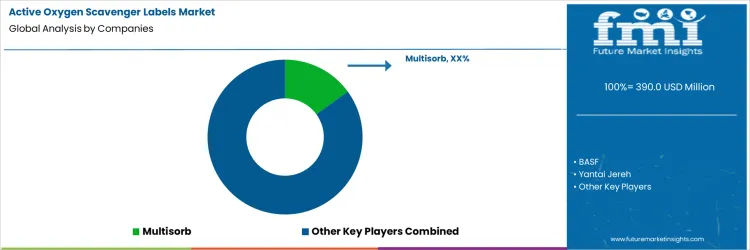
In the active oxygen scavenger labels market Multisorb, Avery Dennison, BASF, Mitsubishi Gas Chemical, Yantai Jereh, Flexituff, and local converters compete with product brochures that showcase oxygen absorbing label solutions designed to protect packaged goods from oxidative damage. Multisorb / Avery Dennison materials highlight integrated label chemistries that combine barrier performance with user friendly application formats. Brochures present oxygen removal rates, safe handling notes, and guidance on matching label types to specific packaging needs. Clear tables and visual summaries are used to help brand owners and converters evaluate performance and shelf life benefits. BASF literature describes oxygen scavenger label resins and additives engineered for consistent scavenging capacity in varied environmental conditions. Technical pages include activation cues, expected oxygen uptake, and compatibility with film and label substrates.
Mitsubishi Gas Chemical brochures focus on proprietary oxygen absorber technologies incorporated into label systems. Performance data is shown with relative uptake curves and placement examples for sensitive items like pharmaceuticals and oxygen sensitive foods. Yantai Jereh product briefs present cost competitive scavenger labels with specifications on absorption range and physical formats. Simple usage guidance and safety notes are included to support adoption by food packers and manufacturers. Flexituff collateral emphasizes rugged label formats suitable for industrial applications, with clear charts that compare label types and expected performance under fluctuating storage conditions. Local converters are featured with regionally tailored solutions, bespoke label sizes, and application support that appeals to smaller brands and niche markets.
Key Players Active Oxygen Scavenger Labels Market
- Multisorb
- BASF
- Mitsubishi Gas Chemical
- Yantai Jereh
- Flexituff
- Local converters
Scope of Report
| Items | Values |
|---|---|
| Quantitative Units (2026) | USD million |
| End-use | Fresh food & meat packaging, Cheese & bakery, FMCG food, Packaged foods, Meat exports |
| Label | Self-adhesive scavenger labels, Sachet-integrated labels, Label & patch inserts, Small oxygen absorber labels, Others |
| Regions Covered | Asia Pacific, Europe, North America, Latin America, Middle East & Africa |
| Countries Covered | USA, China, Japan, South Korea, India, Australia & New Zealand, ASEAN, Germany, UK, France, Italy, Spain, Nordic, BENELUX, Brazil, Chile, Mexico, Saudi Arabia, Other GCC Countries, Turkey, South Africa, Other African Union |
| Key Companies Profiled | Multisorb, Avery Dennison, BASF, Mitsubishi Gas Chemical, Yantai Jereh, Flexituff, Local converters |
| Additional Attributes | Dollar sales by end-use, label type, and region; regional CAGR and growth outlook; distribution channels including food packaging, FMCG, and meat exports; innovation trends in active oxygen scavenger materials; competitive positioning of global vs regional suppliers. |
Active Oxygen Scavenger Labels Market by Segments
By End-use:
- Fresh food & meat packaging
- Cheese & bakery
- FMCG food
- Packaged foods
- Meat exports
By Label:
- Self-adhesive scavenger labels
- Sachet-integrated labels
- Label & patch inserts
- Small oxygen absorber labels
- Others
By Region:
- Asia Pacific
- China
- Japan
- South Korea
- India
- Australia & New Zealand
- ASEAN
- Rest of Asia Pacific
- Europe
- Germany
- United Kingdom
- France
- Italy
- Spain
- Nordic
- BENELUX
- Rest of Europe
- North America
- United States
- Canada
- Mexico
- Latin America
- Brazil
- Chile
- Rest of Latin America
- Middle East & Africa
- Kingdom of Saudi Arabia
- Other GCC Countries
- Turkey
- South Africa
- Other African Union
- Rest of Middle East & Africa
Frequently Asked Questions
How big is the active oxygen scavenger labels market in 2026?
The global active oxygen scavenger labels market is estimated to be valued at USD 390.0 million in 2026.
What will be the size of active oxygen scavenger labels market in 2036?
The market size for the active oxygen scavenger labels market is projected to reach USD 984.3 million by 2036.
How much will be the active oxygen scavenger labels market growth between 2026 and 2036?
The active oxygen scavenger labels market is expected to grow at a 9.7% CAGR between 2026 and 2036.
What are the key product types in the active oxygen scavenger labels market?
The key product types in active oxygen scavenger labels market are fresh food & meat packaging, cheese & bakery, fmcg food, packaged foods and meat exports.
Which label segment to contribute significant share in the active oxygen scavenger labels market in 2026?
In terms of label , self-adhesive scavenger labels segment to command 45.0% share in the active oxygen scavenger labels market in 2026.
Preview the report firsthand - request a free sample
Get SampleGet the brochure for pricing and purchase details.
Get PDFTable of Content
- Executive Summary
- Global Market Outlook
- Demand-side Trends
- Supply-side Trends
- Technology Roadmap Analysis
- Analysis and Recommendations
- Market Overview
- Market Coverage / Taxonomy
- Market Definition / Scope / Limitations
- Market Background
- Market Dynamics
- Drivers
- Restraints
- Opportunity
- Trends
- Scenario Forecast
- Demand in Optimistic Scenario
- Demand in Likely Scenario
- Demand in Conservative Scenario
- Opportunity Map Analysis
- Product Life Cycle Analysis
- Supply Chain Analysis
- Investment Feasibility Matrix
- Value Chain Analysis
- PESTLE and Porter’s Analysis
- Regulatory Landscape
- Regional Parent Market Outlook
- Production and Consumption Statistics
- Import and Export Statistics
- Market Dynamics
- Global Market Analysis 2021 to 2025 and Forecast, 2026 to 2036
- Historical Market Size Value (USD Million) Analysis, 2021 to 2025
- Current and Future Market Size Value (USD Million) Projections, 2026 to 2036
- Y-o-Y Growth Trend Analysis
- Absolute $ Opportunity Analysis
- Global Market Pricing Analysis 2021 to 2025 and Forecast 2026 to 2036
- Global Market Analysis 2021 to 2025 and Forecast 2026 to 2036, By End-use
- Introduction / Key Findings
- Historical Market Size Value (USD Million) Analysis By End-use , 2021 to 2025
- Current and Future Market Size Value (USD Million) Analysis and Forecast By End-use , 2026 to 2036
- Fresh food & meat packaging
- Cheese & bakery
- FMCG food
- Packaged foods
- Meat exports
- Y-o-Y Growth Trend Analysis By End-use , 2021 to 2025
- Absolute $ Opportunity Analysis By End-use , 2026 to 2036
- Global Market Analysis 2021 to 2025 and Forecast 2026 to 2036, By Label
- Introduction / Key Findings
- Historical Market Size Value (USD Million) Analysis By Label, 2021 to 2025
- Current and Future Market Size Value (USD Million) Analysis and Forecast By Label, 2026 to 2036
- Self-adhesive scavenger labels
- Sachet-integrated labels
- Label & patch inserts
- Small oxygen absorber labels
- Others
- Y-o-Y Growth Trend Analysis By Label, 2021 to 2025
- Absolute $ Opportunity Analysis By Label, 2026 to 2036
- Global Market Analysis 2021 to 2025 and Forecast 2026 to 2036, By Region
- Introduction
- Historical Market Size Value (USD Million) Analysis By Region, 2021 to 2025
- Current Market Size Value (USD Million) Analysis and Forecast By Region, 2026 to 2036
- North America
- Latin America
- Western Europe
- Eastern Europe
- East Asia
- South Asia and Pacific
- Middle East & Africa
- Market Attractiveness Analysis By Region
- North America Market Analysis 2021 to 2025 and Forecast 2026 to 2036, By Country
- Historical Market Size Value (USD Million) Trend Analysis By Market Taxonomy, 2021 to 2025
- Market Size Value (USD Million) Forecast By Market Taxonomy, 2026 to 2036
- By Country
- USA
- Canada
- Mexico
- By End-use
- By Label
- By Country
- Market Attractiveness Analysis
- By Country
- By End-use
- By Label
- Key Takeaways
- Latin America Market Analysis 2021 to 2025 and Forecast 2026 to 2036, By Country
- Historical Market Size Value (USD Million) Trend Analysis By Market Taxonomy, 2021 to 2025
- Market Size Value (USD Million) Forecast By Market Taxonomy, 2026 to 2036
- By Country
- Brazil
- Chile
- Rest of Latin America
- By End-use
- By Label
- By Country
- Market Attractiveness Analysis
- By Country
- By End-use
- By Label
- Key Takeaways
- Western Europe Market Analysis 2021 to 2025 and Forecast 2026 to 2036, By Country
- Historical Market Size Value (USD Million) Trend Analysis By Market Taxonomy, 2021 to 2025
- Market Size Value (USD Million) Forecast By Market Taxonomy, 2026 to 2036
- By Country
- Germany
- UK
- Italy
- Spain
- France
- Nordic
- BENELUX
- Rest of Western Europe
- By End-use
- By Label
- By Country
- Market Attractiveness Analysis
- By Country
- By End-use
- By Label
- Key Takeaways
- Eastern Europe Market Analysis 2021 to 2025 and Forecast 2026 to 2036, By Country
- Historical Market Size Value (USD Million) Trend Analysis By Market Taxonomy, 2021 to 2025
- Market Size Value (USD Million) Forecast By Market Taxonomy, 2026 to 2036
- By Country
- Russia
- Poland
- Hungary
- Balkan & Baltic
- Rest of Eastern Europe
- By End-use
- By Label
- By Country
- Market Attractiveness Analysis
- By Country
- By End-use
- By Label
- Key Takeaways
- East Asia Market Analysis 2021 to 2025 and Forecast 2026 to 2036, By Country
- Historical Market Size Value (USD Million) Trend Analysis By Market Taxonomy, 2021 to 2025
- Market Size Value (USD Million) Forecast By Market Taxonomy, 2026 to 2036
- By Country
- China
- Japan
- South Korea
- By End-use
- By Label
- By Country
- Market Attractiveness Analysis
- By Country
- By End-use
- By Label
- Key Takeaways
- South Asia and Pacific Market Analysis 2021 to 2025 and Forecast 2026 to 2036, By Country
- Historical Market Size Value (USD Million) Trend Analysis By Market Taxonomy, 2021 to 2025
- Market Size Value (USD Million) Forecast By Market Taxonomy, 2026 to 2036
- By Country
- India
- ASEAN
- Australia & New Zealand
- Rest of South Asia and Pacific
- By End-use
- By Label
- By Country
- Market Attractiveness Analysis
- By Country
- By End-use
- By Label
- Key Takeaways
- Middle East & Africa Market Analysis 2021 to 2025 and Forecast 2026 to 2036, By Country
- Historical Market Size Value (USD Million) Trend Analysis By Market Taxonomy, 2021 to 2025
- Market Size Value (USD Million) Forecast By Market Taxonomy, 2026 to 2036
- By Country
- Kingdom of Saudi Arabia
- Other GCC Countries
- Turkiye
- South Africa
- Other African Union
- Rest of Middle East & Africa
- By End-use
- By Label
- By Country
- Market Attractiveness Analysis
- By Country
- By End-use
- By Label
- Key Takeaways
- Key Countries Market Analysis
- USA
- Pricing Analysis
- Market Share Analysis, 2025
- By End-use
- By Label
- Canada
- Pricing Analysis
- Market Share Analysis, 2025
- By End-use
- By Label
- Mexico
- Pricing Analysis
- Market Share Analysis, 2025
- By End-use
- By Label
- Brazil
- Pricing Analysis
- Market Share Analysis, 2025
- By End-use
- By Label
- Chile
- Pricing Analysis
- Market Share Analysis, 2025
- By End-use
- By Label
- Germany
- Pricing Analysis
- Market Share Analysis, 2025
- By End-use
- By Label
- UK
- Pricing Analysis
- Market Share Analysis, 2025
- By End-use
- By Label
- Italy
- Pricing Analysis
- Market Share Analysis, 2025
- By End-use
- By Label
- Spain
- Pricing Analysis
- Market Share Analysis, 2025
- By End-use
- By Label
- France
- Pricing Analysis
- Market Share Analysis, 2025
- By End-use
- By Label
- India
- Pricing Analysis
- Market Share Analysis, 2025
- By End-use
- By Label
- ASEAN
- Pricing Analysis
- Market Share Analysis, 2025
- By End-use
- By Label
- Australia & New Zealand
- Pricing Analysis
- Market Share Analysis, 2025
- By End-use
- By Label
- China
- Pricing Analysis
- Market Share Analysis, 2025
- By End-use
- By Label
- Japan
- Pricing Analysis
- Market Share Analysis, 2025
- By End-use
- By Label
- South Korea
- Pricing Analysis
- Market Share Analysis, 2025
- By End-use
- By Label
- Russia
- Pricing Analysis
- Market Share Analysis, 2025
- By End-use
- By Label
- Poland
- Pricing Analysis
- Market Share Analysis, 2025
- By End-use
- By Label
- Hungary
- Pricing Analysis
- Market Share Analysis, 2025
- By End-use
- By Label
- Kingdom of Saudi Arabia
- Pricing Analysis
- Market Share Analysis, 2025
- By End-use
- By Label
- Turkiye
- Pricing Analysis
- Market Share Analysis, 2025
- By End-use
- By Label
- South Africa
- Pricing Analysis
- Market Share Analysis, 2025
- By End-use
- By Label
- USA
- Market Structure Analysis
- Competition Dashboard
- Competition Benchmarking
- Market Share Analysis of Top Players
- By Regional
- By End-use
- By Label
- Competition Analysis
- Competition Deep Dive
- Multisorb
- Overview
- Product Portfolio
- Profitability by Market Segments (Product/Age /Sales Channel/Region)
- Sales Footprint
- Strategy Overview
- Marketing Strategy
- Product Strategy
- Channel Strategy
- BASF
- Yantai Jereh
- Flexituff
- Local converters
- Multisorb
- Competition Deep Dive
- Assumptions & Acronyms Used
- Research Methodology


