

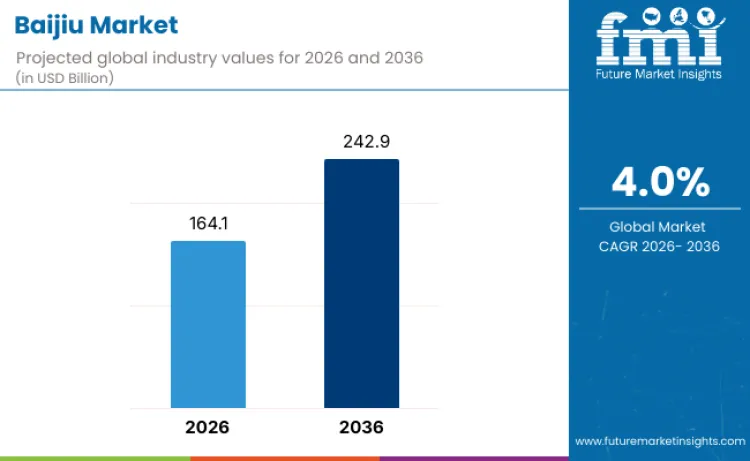
- Industry Size (2026)
- USD 164.1 Bn
- Forecast (2036)
- USD 242.9 Bn
- CAGR (2026 to 2036)
- 4.0%
Baijiu Market Size, Market Forecast and Outlook By FMI
Baijiu industry valuation is set to reach USD 164.1 billion in 2026, driven by sustained domestic consumption patterns and cultural significance deeply embedded in Chinese social traditions. Revenue from the sales of baijiu is projected to expand at a steady CAGR of 4.0% through 2036, pushing total sector worth beyond USD 242.9 billion by the conclusion of this assessment period. Growing premiumization trends and brand consolidation, as per FMI’s projection, act as primary catalysts for this financial trajectory.
Manufacturers are channeling significant capital into quality enhancement initiatives, aiming to elevate product positioning through heritage storytelling and craftsmanship emphasis without compromising traditional production methods. Product developers are shifting focus from volume-driven approaches to premium brand building, redefining consumer engagement strategies in tier-one cities and expanding middle-class demographics. Such behavioral changes encourage distilleries to introduce limited-edition collections utilizing traditional fermentation techniques refined through centuries of expertise.
Rising affluence and changing gifting preferences are significantly influencing industry expansion. Master distillers emphasize terroir authenticity, utilizing specific regional grains and mineral-rich water sources to create distinctive flavor profiles reflecting geographical origins. Consumer research investigating the cultural significance of baijiu in business entertainment and ceremonial occasions is creating demand for premium expressions, instilling confidence among international distributors regarding export market potential.
Quick Stats for Baijiu Market
- Baijiu Industry Value (2026): USD 164.1 Billion
- Baijiu Industry Forecast Value (2036): USD 242.9 Billion
- Baijiu Industry Forecast CAGR: 4.0%
- Baijiu Industry Leading Distribution Channel: Off-Trade (63%)
- Baijiu Industry Key Growth Regions: China, India, Germany
- Baijiu Industry Top Players: Kweichow Moutai Co., Ltd., Wuliangye Yibin Co., Ltd., Luzhou Laojiao Co., Ltd., Yanghe Distillery Co., Ltd., Jiannanchun Group Co., Ltd.
Growing appreciation for traditional Chinese liquor craftsmanship continues to fuel demand for artisanal production methods, creating sustained opportunities for heritage brand storytelling and premium positioning. Government initiatives supporting cultural preservation are facilitating wider recognition of baijiu as national treasure worthy of international appreciation. Companies are witnessing robust growth potential in younger demographic segments, where modern packaging and marketing approaches align with traditional values and social media engagement strategies.
Researchers are combining traditional fermentation techniques with modern quality control systems to ensure consistent flavor profiles across production batches. Development of premium aging facilities is gaining momentum, addressing maturation requirements for ultra-premium expressions targeting affluent consumer segments. Focus is shifting toward comprehensive heritage preservation strategies that document traditional production methods while enabling scalable manufacturing. Advancements in flavor analysis enable master distillers to maintain consistency while preserving distinctive regional characteristics, enhancing brand authenticity while reducing seasonal production variations. These innovations are pivotal in shaping a future where traditional craftsmanship meets modern consumer expectations for quality and consistency.
Baijiu Market Key Takeaways
| Metric | Value |
|---|---|
| Industry Size (2026) | USD 164.1 Billion |
| Industry Size (2036) | USD 242.9 Billion |
| CAGR (2026-2036) | 4.0% |
Source: FMI analysis based on primary research and proprietary forecasting model
What Drivers Are Accelerating Mid-Premium Adoption?
Shift toward experiential consumption is serving as a significant catalyst for broader acceptance of premium baijiu expressions among younger demographics. Recent innovations in packaging design have complemented traditional distillation protocols by modernizing visual appeal while preserving authentic flavor profiles. This strategic approach appeals to consumers seeking cultural connection without compromising contemporary lifestyle preferences, and FMI is of the opinion that experiential value is becoming central to mid-premium adoption.
Marketing success of celebrity endorsements and social media campaigns has expanded brand awareness beyond traditional consumer segments. Education programs highlighting the complexity of baijiu production techniques are driving appreciation among spirits connoisseurs. Luxury hospitality venues are capitalizing on these trends by featuring curated baijiu selections in high-end establishments. Integrating baijiu cocktail culture into modern bartending practices is becoming standard, ensuring traditional spirits adapt to contemporary consumption occasions while maintaining cultural authenticity.
How Is the Baijiu Market Segmented Across Key Categories?
Global landscape is intricately segmented to address diverse requirements of the Chinese spirits industry, categorizing sector by price point and distribution channel preferences. Structural division allows stakeholders to identify specific consumption patterns, such as rising demand for premium expressions in gifting occasions or preference for accessible pricing in daily consumption scenarios. By analyzing these segments, manufacturers can tailor production strategies to meet distinct needs of ceremonial purchasers versus casual consumers. Segmentation also highlights shift from economy positioning to premium and ultra-premium expressions reflecting growing disposable incomes. As industry matures, granular segmentation becomes essential for understanding regional preferences and consumption behaviors, ensuring brand positioning aligns with evolving consumer sophistication levels.
Why Do Mid-Premium Expressions Maintain Dominance?
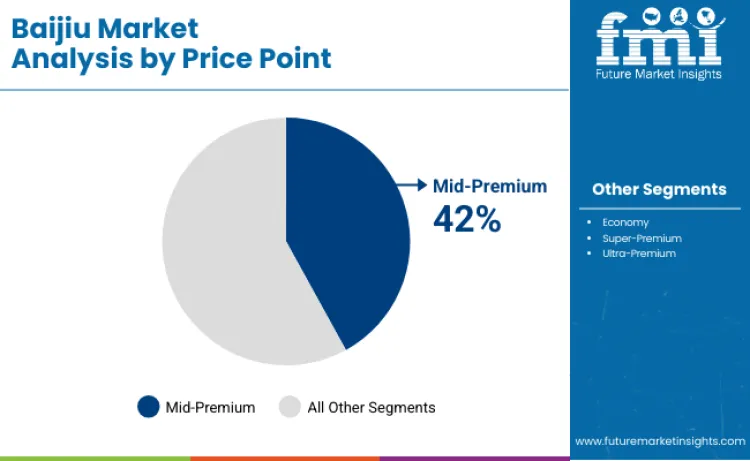
Mid-Premium segment accounts for 42% of market share in 2026, driven by optimal balance between quality perception and affordability considerations. Leadership position is underpinned by consumer preference for elevated experiences without ultra-premium price barriers. Segment benefits from continuous brand innovation, such as limited-edition releases celebrating cultural festivals and regional specialties. Research focused on flavor complexity demonstrates consumer willingness to pay premiums for distinctive taste experiences over commodity positioning. Critical role in business entertainment and gifting traditions further solidifies standing, as these occasions demand quality perceptions without excessive expenditure. As middle-class expansion continues, demand for accessible luxury positioning is expected to remain robust among aspirational consumers.
Why Does Off-Trade Distribution Lead the Sector?
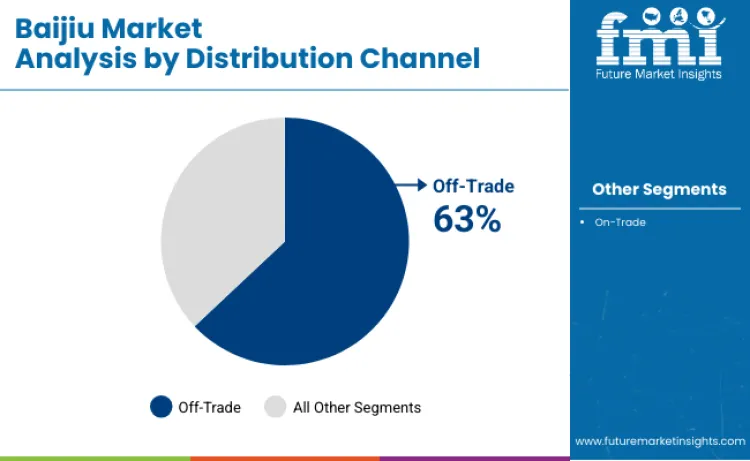
Off-Trade channels command 63% of market share in 2026, reflecting consumer preference for convenient purchasing and home consumption patterns. Dominance is linked to retail accessibility and competitive pricing compared to on-premise establishments. Manufacturers rely on specialized retail partnerships to ensure proper product presentation and consumer education at point of sale. These channels are essential for reaching diverse geographic markets and demographic segments, driving priority status in distribution strategies. Emphasis on take-home consumption ensures products designed for family gatherings and personal collections remain primary focus. High volume requirements necessitate efficient distribution networks, bolstering sustained revenue streams for retail partners and brand owners.
Why Are Cultural Traditions Driving Premium Demand?
Cultural significance embedded in Chinese social customs continues reshaping consumption patterns by elevating baijiu from commodity beverage to ceremonial necessity. Business entertainment protocols require premium expressions to convey respect and establish relationships, creating consistent demand regardless of economic fluctuations. Wedding ceremonies and festival celebrations mandate quality baijiu presentations, ensuring traditional consumption occasions drive premium positioning. Modern consumers increasingly appreciate heritage storytelling and craftsmanship narratives, connecting product quality with cultural identity and regional pride, as per FMI’s estimates.
How Will International Expansion Transform Growth Prospects?
Global market penetration strategies focus on Chinese diaspora communities and curious international consumers seeking authentic cultural experiences. Export initiatives targeting luxury markets position baijiu as exotic spirit category alongside whisky and cognac, creating new consumption occasions beyond traditional settings. Cultural exchange programs and international food festivals introduce baijiu to broader audiences, building awareness and appreciation among non-Chinese consumers. Strategic partnerships with international distributors ensure proper market entry while maintaining brand authenticity and educational messaging.
What Role Does Brand Heritage Play in Consumer Selection?
Established distilleries leverage centuries-old production histories to differentiate products in increasingly competitive premium segments. Consumer research demonstrates preference for brands with documented traditional methods and regional authenticity over newer market entrants. Master distiller expertise and family ownership structures create emotional connections with consumers valuing craftsmanship and continuity. Limited production stories and terroir-specific ingredients justify premium positioning while building collector interest and brand loyalty among enthusiasts.
How Will the Baijiu Industry Evolve in Major Nations?
Global landscape for baijiu consumption is characterized by concentrated domestic demand with emerging international interest, influenced by cultural connections and growing appreciation for traditional Chinese spirits. Established markets prioritize heritage authenticity and premium positioning, whereas developing export markets focus on education and cultural introduction strategies. Asia-Pacific regions with significant Chinese populations emerge as natural expansion targets due to cultural familiarity and consumption traditions. Conversely, Western markets require extensive education and positioning alongside established spirits categories. Government initiatives supporting cultural export and brand internationalization ensure sustained growth opportunities across diverse geographic markets.
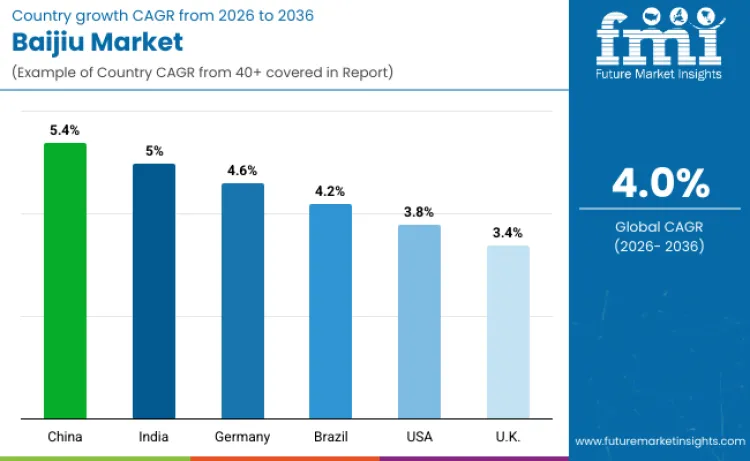
| Country | CAGR (2026 to 2036) |
|---|---|
| China | 5.4% |
| India | 5.0% |
| Germany | 4.6% |
| Brazil | 4.2% |
| USA | 3.8% |
| UK | 3.4% |
Source: Future Market Insights analysis, supported by a proprietary forecasting model and primary research
Why Is Baijiu Strengthening Its Premium Position in China?
Sales of traditional spirits in China are set to grow at 5.4% CAGR through 2036. Expansion is underpinned by rising disposable incomes and growing appreciation for premium domestic brands over imported alternatives. Growth is fueled by cultural pride movements emphasizing traditional Chinese heritage and craftsmanship excellence. Premiumization trends drive per-capita spending increases among affluent urban consumers, and FMI is of the opinion that heritage authenticity remains a decisive factor in brand selection. Presence of established heritage brands with centuries-old production methods ensures authentic positioning and consumer trust. Emphasis on regional specialties and master distiller expertise continues to be primary driver, maintaining China's position as dominant consumption market for authentic baijiu expressions.
What Factors Are Accelerating Baijiu Adoption in India?
Demand for Chinese spirits in India is projected to rise at 5.0% CAGR during assessment period. Initiatives emphasizing cultural exchange and business relationships with China foster favorable environment for traditional spirit appreciation. Increasing Chinese business presence creates demand for authentic baijiu in corporate entertainment settings. Rising affluent population seeking exotic spirits experiences prompts specialty importers to introduce premium expressions. Shift is supported by growing restaurant culture featuring authentic Chinese cuisine, accelerating uptake of traditional accompaniments across metropolitan areas and fueling sector expansion through cultural authenticity.
Why is the Baijiu Industry in Germany Showing Potential?
Baijiu industry in Germany is poised to expand at 4.6% CAGR. Growth is largely attributed to strong interest in artisanal spirits and traditional production methods among discerning consumers. Government focus on cultural diversity and international cuisine acceptance encourages retailers to offer specialty spirit categories. Increasing partnerships between German distributors and Chinese producers ensure availability of authentic premium expressions. Economic stability combined with growing Asian population attracts significant investment in specialty beverage imports. Strong regulatory framework ensuring product quality and safety further drives consumer confidence in traditional Chinese spirits.
What Is Driving Baijiu Market Expansion in Brazil?
Sales of traditional Chinese spirits in Brazil are set to grow at 4.2% CAGR. Expansion is underpinned by large Chinese immigrant community maintaining cultural consumption traditions. Growth is fueled by increasing business relationships with Chinese companies requiring authentic entertainment protocols. Rising interest in exotic spirits among affluent consumers drives revenue generation in premium segments. Presence of established Asian grocery networks ensures steady distribution channels for authentic products. Emphasis on cultural authenticity and traditional production methods continues to be primary driver, maintaining Brazil's position as emerging market for Chinese spirits appreciation.
How Is the USA Creating New Consumption Pathways for Baijiu?
Demand for authentic Chinese spirits in USA is projected to rise at 3.8% CAGR during assessment period. Initiatives emphasizing cultural diversity and authentic dining experiences foster favorable environment for traditional spirit introduction. Increasing Chinese restaurant sophistication creates demand for proper beverage accompaniments to complement cuisine authenticity. Rising cocktail culture interest prompts bartenders to experiment with traditional Chinese spirits in modern applications. Shift is supported by growing appreciation for artisanal production methods, accelerating uptake of heritage brands across urban markets and fueling sector expansion through cultural curiosity and premium positioning.
Why Does the UK Offer a Receptive Environment for Baijiu Growth?
Revenue from Chinese traditional spirits in UK is set to grow at 3.4% CAGR. Expansion is underpinned by multicultural dining scene and growing appreciation for authentic cultural experiences. Growth is fueled by increasing Chinese business presence requiring appropriate entertainment and gifting protocols. Rising interest in craft spirits and traditional production methods drives revenue generation among spirit enthusiasts. Presence of established Asian communities ensures steady demand for cultural celebrations and traditional ceremonies. Emphasis on heritage authenticity and artisanal craftsmanship continues to be primary driver, maintaining UK position as sophisticated market for premium traditional spirits.
What is the Competitive Outlook for the Baijiu Market?
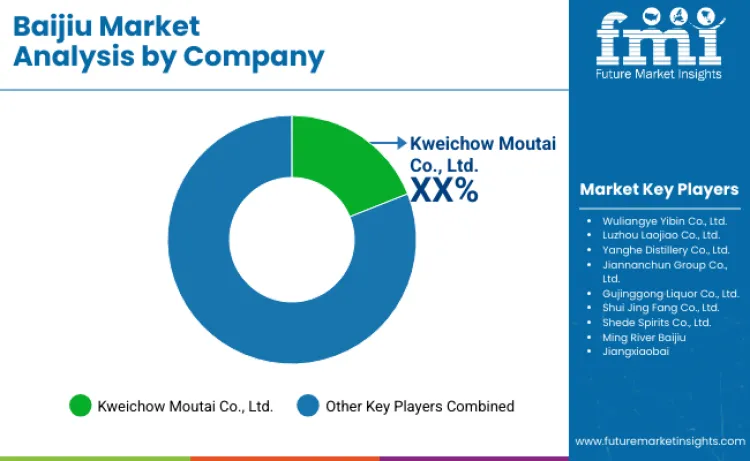
Market participants are increasingly focusing on heritage preservation to differentiate their traditional expressions while modernizing consumer engagement strategies. Leading players like Kweichow Moutai and Wuliangye are directing investment toward international market development and premium brand positioning initiatives. Significant trend involves developing experiential marketing campaigns showcasing traditional production methods and cultural significance. Companies actively engage in strategic partnerships with luxury hospitality venues to elevate brand perception and expand consumption occasions.
Innovation emerges as balance between tradition preservation and modern consumer preferences, with providers exploring premium packaging and limited-edition releases without compromising authentic production methods. Consolidation activities remain limited as established heritage brands maintain distinct regional identities and production specialties. Kweichow Moutai maintains market leadership through consistent quality excellence and cultural authenticity, leveraging centuries-old production expertise and strong brand recognition among domestic consumers.
Key Players in Baijiu Market
- Kweichow Moutai Co., Ltd.
- Wuliangye Yibin Co., Ltd.
- Luzhou Laojiao Co., Ltd.
- Yanghe Distillery Co., Ltd.
- Jiannanchun Group Co., Ltd.
- Gujinggong Liquor Co., Ltd.
- Shui Jing Fang Co., Ltd.
- Shede Spirits Co., Ltd.
- Ming River Baijiu
- Jiangxiaobai
Scope of Report
| Items | Values |
|---|---|
| Quantitative Units | USD Billion |
| Price Point Segments | Mid-Premium; Economy; Super-Premium; Ultra-Premium |
| Distribution Channel Categories | Off-Trade; On-Trade |
| Regions Covered | North America, Europe, East Asia, South Asia, Latin America, Middle East & Africa |
| Key Countries | China, India, Germany, Brazil, USA, UK |
| Key Companies Profiled | Kweichow Moutai Co., Ltd.; Wuliangye Yibin Co., Ltd.; Luzhou Laojiao Co., Ltd.; Yanghe Distillery Co., Ltd.; Jiannanchun Group Co., Ltd.; Gujinggong Liquor Co., Ltd.; Shui Jing Fang Co., Ltd.; Shede Spirits Co., Ltd.; Ming River Baijiu; Jiangxiaobai |
| Additional Attributes | Dollar sales measured for baijiu across domestic and export consumption channels, specified by price point positioning (economy to ultra-premium), gifting and ceremonial demand patterns, heritage-based production authenticity, modern packaging and branding strategies, retail and hospitality availability (off-trade vs. on-trade), and regional trade compliance factors influencing international distribution. |
Baijiu Market by Segments
Price Point
- Mid-Premium
- Economy
- Super-Premium
- Ultra-Premium
Distribution Channel
- Off-Trade
- On-Trade
Bibliography
- China National Food Industry Association. (2024). Traditional Chinese spirits manufacturing practices and cultural heritage preservation.
- International Spirits and Wines Association of Asia. (2024). Market structure and premiumization trends in Asian traditional spirits.
- Asia Pacific Food Industry Association. (2024). Cultural beverages, regional spirits, and cross‑border market development in Asia‑Pacific.
Frequently Asked Questions
How large is the demand for Baijiu in the global market in 2026?
Baijiu industry is estimated to be valued at USD 164.1 billion in 2026.
What will be the market size of Baijiu in the global market by 2036?
The market size for Baijiu is projected to reach USD 242.9 billion by 2036.
What is the expected demand growth for Baijiu between 2026 and 2036?
Demand for Baijiu is expected to grow at a CAGR of 4.0% between 2026 and 2036.
Which Price Point segment is poised to lead global sales by 2026?
Mid-Premium expressions are expected to be the dominant price point segment, capturing approximately 42% of the global market share in 2026.
How significant is the role of Off-Trade channels in driving Baijiu adoption in 2026?
Off-Trade distribution represents a critical channel segment, projected to hold a substantial 63% share of the total market in 2026.
Preview the report firsthand - request a free sample
Get SampleGet the brochure for pricing and purchase details.
Get PDFTable of Content
- Executive Summary
- Global Market Outlook
- Demand-side Trends
- Supply-side Trends
- Technology Roadmap Analysis
- Analysis and Recommendations
- Market Overview
- Market Coverage / Taxonomy
- Market Definition / Scope / Limitations
- Market Background
- Market Dynamics
- Drivers
- Restraints
- Opportunity
- Trends
- Scenario Forecast
- Demand in Optimistic Scenario
- Demand in Likely Scenario
- Demand in Conservative Scenario
- Opportunity Map Analysis
- Product Life Cycle Analysis
- Supply Chain Analysis
- Investment Feasibility Matrix
- Value Chain Analysis
- PESTLE and Porter’s Analysis
- Regulatory Landscape
- Regional Parent Market Outlook
- Production and Consumption Statistics
- Import and Export Statistics
- Market Dynamics
- Global Market Analysis 2020 to 2025 and Forecast, 2026 to 2036
- Historical Market Size Value (USD Million) Analysis, 2020 to 2025
- Current and Future Market Size Value (USD Million) Projections, 2026 to 2036
- Y-o-Y Growth Trend Analysis
- Absolute $ Opportunity Analysis
- Global Market Pricing Analysis 2020 to 2025 and Forecast 2026 to 2036
- Global Market Analysis 2020 to 2025 and Forecast 2026 to 2036, By Price Point
- Introduction / Key Findings
- Historical Market Size Value (USD Million) Analysis By Price Point, 2020 to 2025
- Current and Future Market Size Value (USD Million) Analysis and Forecast By Price Point, 2026 to 2036
- Mid-Premium
- Economy
- Super-Premium
- Ultra-Premium
- Y-o-Y Growth Trend Analysis By Price Point, 2020 to 2025
- Absolute $ Opportunity Analysis By Price Point, 2026 to 2036
- Global Market Analysis 2020 to 2025 and Forecast 2026 to 2036, By Distribution Channel
- Introduction / Key Findings
- Historical Market Size Value (USD Million) Analysis By Distribution Channel, 2020 to 2025
- Current and Future Market Size Value (USD Million) Analysis and Forecast By Distribution Channel, 2026 to 2036
- Off-Trade
- On-Trade
- Y-o-Y Growth Trend Analysis By Distribution Channel, 2020 to 2025
- Absolute $ Opportunity Analysis By Distribution Channel, 2026 to 2036
- Market Structure Analysis
- Competition Dashboard
- Competition Benchmarking
- Market Share Analysis of Top Players
- By Regional
- By Price Point
- By Distribution Channel
- Competition Analysis
- Competition Deep Dive
- Kweichow Moutai Co., Ltd.
- Overview
- Product Portfolio
- Profitability by Market Segments (Product/Age /Sales Channel/Region)
- Sales Footprint
- Strategy Overview
- Marketing Strategy
- Product Strategy
- Channel Strategy
- Wuliangye Yibin Co., Ltd.
- Luzhou Laojiao Co., Ltd.
- Yanghe Distillery Co., Ltd.
- Jiannanchun Group Co., Ltd.
- Kweichow Moutai Co., Ltd.
- Competition Deep Dive
- Assumptions & Acronyms Used
- Research Methodology


