

- Industry Size (2025)
- USD 71.9 Bn
- Forecast (2035)
- USD 184.9 Bn
- CAGR (2025 to 2035)
- 9.9%
BFSI Security Market Outlook from 2025 to 2035
The BFSI security market is expanding rapidly, shaped by the increasing digitalization of financial services and the corresponding rise in cyber threats targeting sensitive financial data. Financial institutions have prioritized cybersecurity as a strategic imperative due to the proliferation of mobile banking, digital wallets, and cloud-based infrastructures.
Industry publications and cybersecurity frameworks have emphasized the growing need for robust security architecture to combat threats such as phishing, ransomware, and data breaches. Regulatory mandates across regions, including GDPR, PCI DSS, and other compliance standards, have further compelled BFSI entities to invest in advanced security solutions.
Key financial service providers have also accelerated the adoption of AI-driven threat detection and real-time monitoring tools to improve incident response. As remote work and digital banking ecosystems evolve, the demand for end-to-end security frameworks, including both hardware and software defenses, is intensifying. The market’s forward growth will be led by information security systems, comprehensive system integration services, and concentrated adoption within the banking sector due to its extensive digital footprint and vulnerability to cyberattacks.
Quick Stats for BFSI Security Market
- BFSI Security Market Industry Value (2025): USD 71.9 billion
- BFSI Security Market Forecast Value (2035): USD 184.9 billion
- BFSI Security Market Forecast CAGR: 9.9%
- Leading Segment in BFSI Security Market in 2025: Information Security (57.4%)
- Key Growth Region in BFSI Security Market: North America, Asia-Pacific, Europe
- Top Key Players in BFSI Security Market: IBM Corporation, Symantec Corporation, Sophos Group Plc., Honeywell International Inc., EMC Corporation, Computer Sciences Corporation, Trend Micro Incorporated, Booz Allen Hamilton Inc., Cisco Systems Inc.
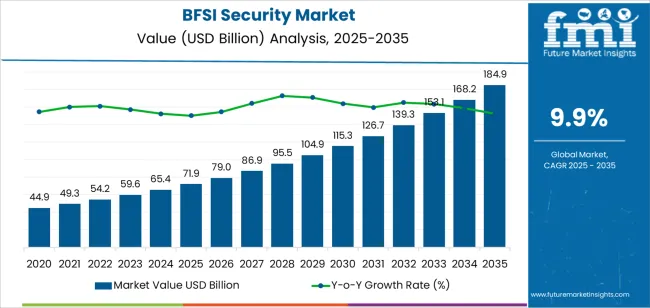
| Metric | Value |
|---|---|
| BFSI Security Market Estimated Value in (2025 E) | USD 71.9 billion |
| BFSI Security Market Forecast Value in (2035 F) | USD 184.9 billion |
| Forecast CAGR (2025 to 2035) | 9.9% |
Segmental Analysis
The market is segmented by Type, Services, and Vertical and region. By Type, the market is divided into Information Security and Physical Security. In terms of Services, the market is classified into System Integration, Maintenance, and Support. Based on Vertical, the market is segmented into Banking, Insurance, and Other Financial Institutions. Regionally, the market is classified into North America, Latin America, Western Europe, Eastern Europe, Balkan & Baltic Countries, Russia & Belarus, Central Asia, East Asia, South Asia & Pacific, and the Middle East & Africa.
Insights into the Type Segment: Information Security
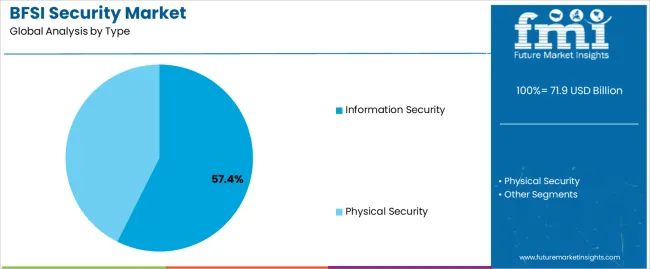
The Information Security segment is projected to contribute 57.4% of the BFSI security market revenue in 2025, establishing itself as the dominant security type. Growth of this segment has been driven by the increasing exposure of financial data to cyber threats across digital platforms.
Information security solutions, including encryption, endpoint protection, firewalls, and data loss prevention, have been widely deployed to ensure the confidentiality, integrity, and availability of digital assets. Financial organizations have prioritized safeguarding sensitive customer data and ensuring compliance with evolving data protection regulations.
Additionally, the rising sophistication of cyberattacks has necessitated investments in advanced threat intelligence systems and behavioral analytics. Cloud security and multi-factor authentication have gained significant traction, particularly with the expansion of digital banking and mobile financial services. As financial operations continue to migrate toward interconnected digital networks, the Information Security segment is expected to maintain its leadership by delivering core defenses essential to secure financial ecosystems.
Insights into the Services Segment: System Integration
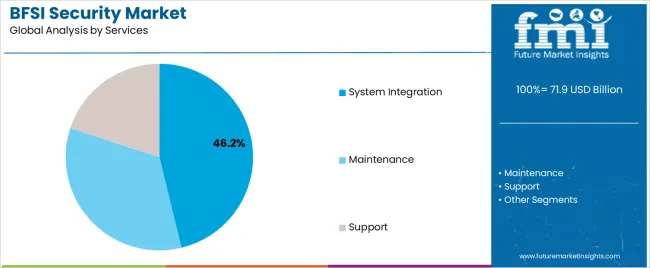
The System Integration segment is anticipated to account for 46.2% of the BFSI security market revenue in 2025, marking it as the leading service category. This growth has been supported by the increasing complexity of financial IT environments, requiring seamless coordination between various security tools and platforms.
Financial institutions have engaged system integrators to unify disparate security frameworks, enabling centralized control, real-time data sharing, and enhanced operational efficiency. Reports from IT infrastructure providers have highlighted the growing role of integration services in aligning cloud security, network monitoring, access controls, and regulatory compliance modules.
As hybrid IT environments become the norm across banks and insurance firms, system integration ensures minimal operational disruption while implementing advanced security protocols. The demand for scalable and customized security deployments has further reinforced the importance of integration services. With cybersecurity strategies becoming more architecture-dependent, the System Integration segment is projected to remain at the forefront of service adoption in the BFSI security space.
Insights into the Vertical Segment: Banking
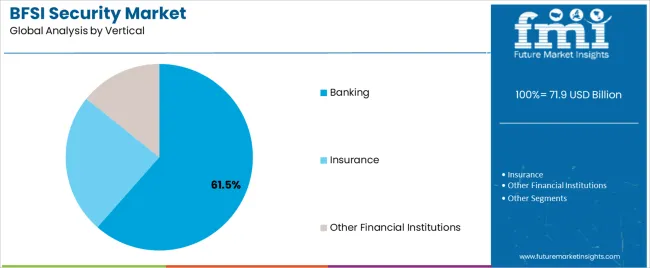
The Banking segment is forecasted to contribute 61.5% of the BFSI security market revenue in 2025, maintaining its position as the leading vertical. Growth of this segment has been propelled by the banking industry’s increased reliance on digital infrastructure, mobile platforms, and third-party fintech partnerships.
Cybersecurity threats targeting banking operations—ranging from transaction fraud to customer data breaches—have prompted institutions to enhance security protocols at every touchpoint. Central banks and regulatory bodies have issued stricter compliance frameworks, mandating comprehensive security solutions across core banking and customer-facing systems.
Digital banking initiatives and the emergence of open banking APIs have introduced additional security layers, driving the need for constant monitoring and risk assessment. Banking organizations have also invested heavily in security awareness programs, biometric authentication, and blockchain-based transaction systems to bolster resilience. As digital financial services continue to scale, the Banking segment is expected to lead security investments to ensure uninterrupted operations, consumer trust, and compliance.
Critical Restraints Affecting the BFSI Security Market
Despite the promising growth prospects for the BFSI security market, several critical restraints could hinder its expansion. One major challenge is the high cost of implementing advanced security solutions. Financial institutions, particularly smaller banks and credit unions, often struggle to allocate sufficient budgets for comprehensive security measures.
The significant investment required for sophisticated technologies such as AI, ML, and blockchain can be prohibitive, limiting the adoption of these advanced solutions.
Another restraint is the shortage of skilled cybersecurity professionals. The BFSI sector requires highly specialized expertise to manage and mitigate security threats effectively. However, there is a global scarcity of qualified cybersecurity professionals, making it difficult for financial institutions to build and maintain robust security teams. This talent gap exacerbates the vulnerability of financial systems to cyber-attacks and data breaches.
Regulatory complexity also poses a significant challenge. Financial institutions operate in a highly regulated environment, and the constantly evolving regulatory landscape requires continuous updates to security practices and technologies. Navigating these complex regulations can be resource-intensive and time-consuming, particularly for institutions operating across multiple jurisdictions, potentially slowing down the implementation of necessary security measures.
Finally, the rapid pace of technological change itself can be a restraint. Financial institutions must continuously adapt to new technologies and emerging threats, which can be daunting and resource-draining. Keeping up with the latest advancements while ensuring seamless integration with existing systems is a significant challenge.
This constant need for adaptation can lead to implementation delays and increased operational costs, affecting the overall efficiency and effectiveness of BFSI security strategies.
Key Market Trends Shaping the BFSI Security Market
The BFSI security market is being significantly shaped by the rapid adoption of cloud-based solutions. As financial institutions increasingly move their operations to the cloud to enhance efficiency and scalability, the demand for robust cloud security measures has surged.
Cloud security solutions are now integral in protecting sensitive financial data from breaches and ensuring compliance with regulatory standards. This trend is driving innovation and investment in advanced cloud security technologies that provide real-time threat detection and response capabilities, thus reinforcing the overall security infrastructure of financial institutions.
Another key trend is the growing integration of Artificial Intelligence (AI) and Machine Learning (ML) in BFSI security frameworks. AI and ML are revolutionizing the way financial institutions detect and respond to cyber threats. These technologies enable more sophisticated and proactive security measures by analyzing vast amounts of data to identify patterns and anomalies indicative of potential security breaches.
The predictive capabilities of AI and ML are particularly valuable in preempting cyber-attacks and reducing the response time, thereby minimizing the impact of security incidents. This trend underscores the shift towards more intelligent, automated security solutions in the BFSI sector.
Furthermore, there is a heightened emphasis on zero-trust security models within the BFSI industry. The zero-trust approach, which operates on the principle of "never trust, always verify," is gaining traction as financial institutions recognize the inadequacy of traditional perimeter-based security models in today's threat landscape.
By continuously validating every user and device attempting to access the network, zero-trust models significantly enhance security. This trend reflects the increasing prioritization of robust, multi-layered security strategies that protect against sophisticated cyber threats and ensure regulatory compliance.
Strategic Opportunities for Investors in the BFSI Security Market
Investors have significant strategic opportunities in the BFSI security market by targeting innovative startups specializing in AI and ML-driven security solutions. These technologies offer enhanced threat detection and response capabilities, making them highly valuable for financial institutions. Investing in companies that provide advanced cloud security solutions is also promising, given the sector's rapid shift towards cloud-based operations.
Another strategic opportunity lies in backing firms that develop zero-trust security models. As financial institutions prioritize robust, multi-layered security frameworks to combat sophisticated cyber threats, companies offering comprehensive zero-trust solutions are well-positioned for growth, making them attractive investment targets.
Country-wise Insights
BFSI Security Market to Benefit from the United States’ Investments in Advanced Security Technologies
The United States is at the forefront of the BFSI security market expansion, driven by its robust financial sector and high incidence of cyber threats. The country is home to numerous financial institutions and fintech companies that are heavily investing in advanced security technologies to protect against sophisticated cyber-attacks.
The regulatory environment in the USA, including frameworks like the Gramm-Leach-Bliley Act (GLBA) and cybersecurity directives from the Federal Financial Institutions Examination Council (FFIEC), mandates stringent security measures. This regulatory pressure, combined with the rapid adoption of digital banking and fintech solutions, propels significant investment in BFSI security solutions, making the USA a leading market.
United Kingdom’s Industry to Showcase Healthy Growth in Foreseeable Time
The United Kingdom is another major player in the BFSI security market, driven by its status as a global financial hub. London, in particular, hosts numerous multinational banks and financial institutions that require top-tier security solutions to protect vast amounts of sensitive data.
The implementation of the General Data Protection Regulation (GDPR) and the UK's own stringent financial regulations necessitate robust security frameworks. Additionally, the UK's proactive stance on cybersecurity, with initiatives like the National Cyber Security Centre (NCSC), fosters a strong market for BFSI security technologies. The increasing reliance on digital and mobile banking services further accelerates the demand for advanced security solutions.
Indian BFSI Security Industry Profits from Bolstering Digital Banking Sector
India is rapidly emerging as a significant market for BFSI security, fueled by its burgeoning digital banking sector and increasing cyber threat landscape. The country’s financial institutions are undergoing a digital transformation, adopting new technologies to cater to a vast and tech-savvy population.
Regulatory bodies like the Reserve Bank of India (RBI) have introduced stringent cybersecurity guidelines, compelling banks and financial services firms to invest in comprehensive security measures. The rise of fintech companies and the government's push towards a cashless economy through initiatives like Digital India are driving substantial growth in the BFSI security market, positioning India as a key player in this sector.
Category-wise Insights
Information Security Prevails in BFSI, Prioritizing Digital Protection over Physical Measures
Information security is the top type in the BFSI security market. As financial institutions increasingly rely on digital platforms for transactions and data management, safeguarding sensitive information against cyber threats is paramount. Therefore, investments in information security solutions like encryption, authentication, and threat detection systems take precedence over physical security measures.
System Integration Dominance in BFSI Security
System integration is paramount in the BFSI security market due to the complexity of security infrastructures. Financial institutions require seamless integration of various security solutions to ensure comprehensive protection against cyber threats, compliance with regulations, and efficient operation of their security frameworks.
Competition Outlook
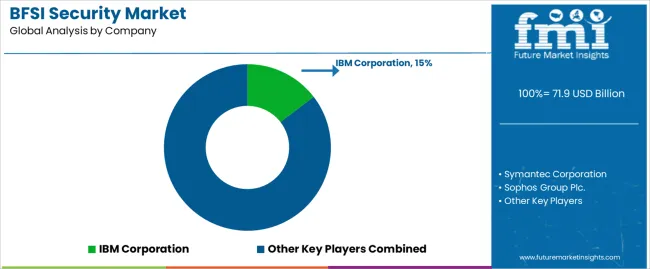
Manufacturers in the BFSI security market are innovating by integrating AI and ML into their products, enhancing threat detection and response. They are also developing advanced cloud security solutions and zero-trust frameworks to meet the evolving needs of financial institutions, ensuring robust protection against sophisticated cyber threats.
Industry Updates
- December 19, 2025: Cleafy introduces an advanced cybersecurity platform, enhancing digital defense capabilities for businesses amid rising cyber threats.
- September 6, 2025: Temenos introduces a secure generative AI solution, setting new standards for personalized banking experiences. This innovation promises enhanced customer engagement and tailored services for banks worldwide.
Leading BFSI Security Brands
- Cisco Systems Inc.
- Honeywell International Inc.
- Computer Science Corporation (CSC)
- IBM Corporation
- Symantec Corporation
Key Segments of Industry Report
By Type:
Based on type, the industry is categorized into information and physical security.
By Services:
System integration, maintenance, and support are three services categorized in the BFSI security industry.
By Vertical:
Banking, insurance and other financial institutions are b segmented verticals of the sector.
By Regions:
A regional analysis has been conducted across key countries of North America, Latin America, Europe, Asia Pacific, and the Middle East and Africa.
Frequently Asked Questions
How big is the bfsi security market in 2025?
The global bfsi security market is estimated to be valued at USD 71.9 billion in 2025.
What will be the size of bfsi security market in 2035?
The market size for the bfsi security market is projected to reach USD 184.9 billion by 2035.
How much will be the bfsi security market growth between 2025 and 2035?
The bfsi security market is expected to grow at a 9.9% CAGR between 2025 and 2035.
What are the key product types in the bfsi security market?
The key product types in bfsi security market are information security and physical security.
Which services segment to contribute significant share in the bfsi security market in 2025?
In terms of services, system integration segment to command 46.2% share in the bfsi security market in 2025.
Preview the report firsthand - request a free sample
Get SampleGet the brochure for pricing and purchase details.
Get PDFTable of Content
- Executive Summary
- Global Market Outlook
- Demand-side Trends
- Supply-side Trends
- Technology Roadmap Analysis
- Analysis and Recommendations
- Market Overview
- Market Coverage / Taxonomy
- Market Definition / Scope / Limitations
- Market Background
- Market Dynamics
- Drivers
- Restraints
- Opportunity
- Trends
- Scenario Forecast
- Demand in Optimistic Scenario
- Demand in Likely Scenario
- Demand in Conservative Scenario
- Opportunity Map Analysis
- Product Life Cycle Analysis
- Supply Chain Analysis
- Investment Feasibility Matrix
- Value Chain Analysis
- PESTLE and Porter’s Analysis
- Regulatory Landscape
- Regional Parent Market Outlook
- Production and Consumption Statistics
- Import and Export Statistics
- Market Dynamics
- Global Market Analysis 2020 to 2024 and Forecast, 2025 to 2035
- Historical Market Size Value (USD Million) Analysis, 2020 to 2024
- Current and Future Market Size Value (USD Million) Projections, 2025 to 2035
- Y-o-Y Growth Trend Analysis
- Absolute $ Opportunity Analysis
- Global Market Pricing Analysis 2020 to 2024 and Forecast 2025 to 2035
- Global Market Analysis 2020 to 2024 and Forecast 2025 to 2035, By Type
- Introduction / Key Findings
- Historical Market Size Value (USD Million) Analysis By Type , 2020 to 2024
- Current and Future Market Size Value (USD Million) Analysis and Forecast By Type , 2025 to 2035
- Information Security
- Physical Security
- Y-o-Y Growth Trend Analysis By Type , 2020 to 2024
- Absolute $ Opportunity Analysis By Type , 2025 to 2035
- Global Market Analysis 2020 to 2024 and Forecast 2025 to 2035, By Services
- Introduction / Key Findings
- Historical Market Size Value (USD Million) Analysis By Services, 2020 to 2024
- Current and Future Market Size Value (USD Million) Analysis and Forecast By Services, 2025 to 2035
- System Integration
- Maintenance
- Support
- Y-o-Y Growth Trend Analysis By Services, 2020 to 2024
- Absolute $ Opportunity Analysis By Services, 2025 to 2035
- Global Market Analysis 2020 to 2024 and Forecast 2025 to 2035, By Vertical
- Introduction / Key Findings
- Historical Market Size Value (USD Million) Analysis By Vertical, 2020 to 2024
- Current and Future Market Size Value (USD Million) Analysis and Forecast By Vertical, 2025 to 2035
- Banking
- Insurance
- Other Financial Institutions
- Y-o-Y Growth Trend Analysis By Vertical, 2020 to 2024
- Absolute $ Opportunity Analysis By Vertical, 2025 to 2035
- Global Market Analysis 2020 to 2024 and Forecast 2025 to 2035, By Region
- Introduction
- Historical Market Size Value (USD Million) Analysis By Region, 2020 to 2024
- Current Market Size Value (USD Million) Analysis and Forecast By Region, 2025 to 2035
- North America
- Latin America
- Western Europe
- Eastern Europe
- East Asia
- South Asia and Pacific
- Middle East & Africa
- Market Attractiveness Analysis By Region
- North America Market Analysis 2020 to 2024 and Forecast 2025 to 2035, By Country
- Historical Market Size Value (USD Million) Trend Analysis By Market Taxonomy, 2020 to 2024
- Market Size Value (USD Million) Forecast By Market Taxonomy, 2025 to 2035
- By Country
- USA
- Canada
- Mexico
- By Type
- By Services
- By Vertical
- By Country
- Market Attractiveness Analysis
- By Country
- By Type
- By Services
- By Vertical
- Key Takeaways
- Latin America Market Analysis 2020 to 2024 and Forecast 2025 to 2035, By Country
- Historical Market Size Value (USD Million) Trend Analysis By Market Taxonomy, 2020 to 2024
- Market Size Value (USD Million) Forecast By Market Taxonomy, 2025 to 2035
- By Country
- Brazil
- Chile
- Rest of Latin America
- By Type
- By Services
- By Vertical
- By Country
- Market Attractiveness Analysis
- By Country
- By Type
- By Services
- By Vertical
- Key Takeaways
- Western Europe Market Analysis 2020 to 2024 and Forecast 2025 to 2035, By Country
- Historical Market Size Value (USD Million) Trend Analysis By Market Taxonomy, 2020 to 2024
- Market Size Value (USD Million) Forecast By Market Taxonomy, 2025 to 2035
- By Country
- Germany
- UK
- Italy
- Spain
- France
- Nordic
- BENELUX
- Rest of Western Europe
- By Type
- By Services
- By Vertical
- By Country
- Market Attractiveness Analysis
- By Country
- By Type
- By Services
- By Vertical
- Key Takeaways
- Eastern Europe Market Analysis 2020 to 2024 and Forecast 2025 to 2035, By Country
- Historical Market Size Value (USD Million) Trend Analysis By Market Taxonomy, 2020 to 2024
- Market Size Value (USD Million) Forecast By Market Taxonomy, 2025 to 2035
- By Country
- Russia
- Poland
- Hungary
- Balkan & Baltic
- Rest of Eastern Europe
- By Type
- By Services
- By Vertical
- By Country
- Market Attractiveness Analysis
- By Country
- By Type
- By Services
- By Vertical
- Key Takeaways
- East Asia Market Analysis 2020 to 2024 and Forecast 2025 to 2035, By Country
- Historical Market Size Value (USD Million) Trend Analysis By Market Taxonomy, 2020 to 2024
- Market Size Value (USD Million) Forecast By Market Taxonomy, 2025 to 2035
- By Country
- China
- Japan
- South Korea
- By Type
- By Services
- By Vertical
- By Country
- Market Attractiveness Analysis
- By Country
- By Type
- By Services
- By Vertical
- Key Takeaways
- South Asia and Pacific Market Analysis 2020 to 2024 and Forecast 2025 to 2035, By Country
- Historical Market Size Value (USD Million) Trend Analysis By Market Taxonomy, 2020 to 2024
- Market Size Value (USD Million) Forecast By Market Taxonomy, 2025 to 2035
- By Country
- India
- ASEAN
- Australia & New Zealand
- Rest of South Asia and Pacific
- By Type
- By Services
- By Vertical
- By Country
- Market Attractiveness Analysis
- By Country
- By Type
- By Services
- By Vertical
- Key Takeaways
- Middle East & Africa Market Analysis 2020 to 2024 and Forecast 2025 to 2035, By Country
- Historical Market Size Value (USD Million) Trend Analysis By Market Taxonomy, 2020 to 2024
- Market Size Value (USD Million) Forecast By Market Taxonomy, 2025 to 2035
- By Country
- Kingdom of Saudi Arabia
- Other GCC Countries
- Turkiye
- South Africa
- Other African Union
- Rest of Middle East & Africa
- By Type
- By Services
- By Vertical
- By Country
- Market Attractiveness Analysis
- By Country
- By Type
- By Services
- By Vertical
- Key Takeaways
- Key Countries Market Analysis
- USA
- Pricing Analysis
- Market Share Analysis, 2024
- By Type
- By Services
- By Vertical
- Canada
- Pricing Analysis
- Market Share Analysis, 2024
- By Type
- By Services
- By Vertical
- Mexico
- Pricing Analysis
- Market Share Analysis, 2024
- By Type
- By Services
- By Vertical
- Brazil
- Pricing Analysis
- Market Share Analysis, 2024
- By Type
- By Services
- By Vertical
- Chile
- Pricing Analysis
- Market Share Analysis, 2024
- By Type
- By Services
- By Vertical
- Germany
- Pricing Analysis
- Market Share Analysis, 2024
- By Type
- By Services
- By Vertical
- UK
- Pricing Analysis
- Market Share Analysis, 2024
- By Type
- By Services
- By Vertical
- Italy
- Pricing Analysis
- Market Share Analysis, 2024
- By Type
- By Services
- By Vertical
- Spain
- Pricing Analysis
- Market Share Analysis, 2024
- By Type
- By Services
- By Vertical
- France
- Pricing Analysis
- Market Share Analysis, 2024
- By Type
- By Services
- By Vertical
- India
- Pricing Analysis
- Market Share Analysis, 2024
- By Type
- By Services
- By Vertical
- ASEAN
- Pricing Analysis
- Market Share Analysis, 2024
- By Type
- By Services
- By Vertical
- Australia & New Zealand
- Pricing Analysis
- Market Share Analysis, 2024
- By Type
- By Services
- By Vertical
- China
- Pricing Analysis
- Market Share Analysis, 2024
- By Type
- By Services
- By Vertical
- Japan
- Pricing Analysis
- Market Share Analysis, 2024
- By Type
- By Services
- By Vertical
- South Korea
- Pricing Analysis
- Market Share Analysis, 2024
- By Type
- By Services
- By Vertical
- Russia
- Pricing Analysis
- Market Share Analysis, 2024
- By Type
- By Services
- By Vertical
- Poland
- Pricing Analysis
- Market Share Analysis, 2024
- By Type
- By Services
- By Vertical
- Hungary
- Pricing Analysis
- Market Share Analysis, 2024
- By Type
- By Services
- By Vertical
- Kingdom of Saudi Arabia
- Pricing Analysis
- Market Share Analysis, 2024
- By Type
- By Services
- By Vertical
- Turkiye
- Pricing Analysis
- Market Share Analysis, 2024
- By Type
- By Services
- By Vertical
- South Africa
- Pricing Analysis
- Market Share Analysis, 2024
- By Type
- By Services
- By Vertical
- USA
- Market Structure Analysis
- Competition Dashboard
- Competition Benchmarking
- Market Share Analysis of Top Players
- By Regional
- By Type
- By Services
- By Vertical
- Competition Analysis
- Competition Deep Dive
- IBM Corporation
- Overview
- Product Portfolio
- Profitability by Market Segments (Product/Age /Sales Channel/Region)
- Sales Footprint
- Strategy Overview
- Marketing Strategy
- Product Strategy
- Channel Strategy
- Symantec Corporation
- Sophos Group Plc.
- Honeywell International Inc.
- EMC Corporation
- Computer Sciences Corporation
- Trend Micro Incorporated
- Booz Allen Hamilton Inc.
- Cisco Systems Inc.
- IBM Corporation
- Competition Deep Dive
- Assumptions & Acronyms Used
- Research Methodology


