

- Market Size (2026)
- USD 520.6 Mn
- Forecast (2036)
- USD 1188.0 Mn
- CAGR (2026 to 2036)
- 8.6%
How big is the Diver Tracking System Market in 2026?
USD 520.6 million in 2026 and USD 1,188.0 million by 2036 at an 8.6% CAGR.
Diver tracking system demand has entered professional underwater supervision as offshore, naval, rescue, and port teams require surface-side location control during submerged work. GWEC reported record wind additions of 165 GW in 2025, raising total installed wind power to 1,299 GW. Offshore inspection teams gain a wider work base as wind infrastructure adds substations and vessel-supported maintenance points.
Acoustic tracking keeps early buyer trust through underwater signal performance. Sonardyne states that Mini-Ranger 2 can track and communicate up to 995 metres straight out of the box. Professional teams use such range proof before approving diver tracking system demand for harbor and nearshore missions.
Global offshore wind capacity reached 92.3 GW in 2025, and more than 300 GW of offshore wind capacity entered the next-decade pipeline. Buyers compare diver tracking through update rate and post-dive records. Commercial decisions rest on stable positioning under vessel noise and clean mission exports after dive completion.
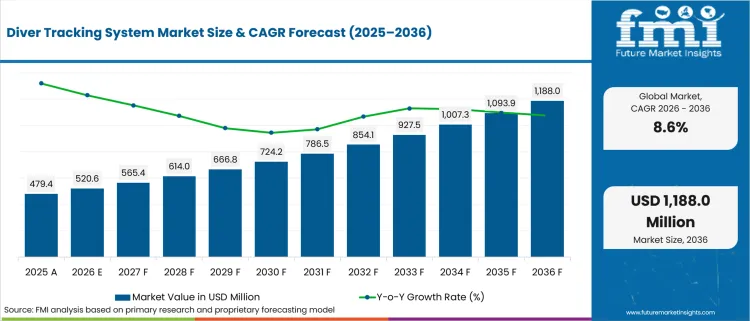
| Metric | Value |
|---|---|
| 2025 Market Size | USD 479.4 million |
| 2026 Market Size | USD 520.6 million |
| 2036 Market Size | USD 1,188.0 million |
| Forecast CAGR (2026-2036) | 8.6% |
| Leading Technology | Acoustic Tracking |
| Acoustic Tracking Share (2026) | 48.0% |
| Leading Application | Commercial Diving |
| Commercial Diving Share (2026) | 36.0% |
| Leading Component | Transponders |
| Transponders Share (2026) | 38.0% |
| Fastest-growing Country | India |
| India CAGR by 2036 | 9.5% |
Summary of the Diver Tracking System Market
| Market Signal | Commercial Impact |
|---|---|
| Demand and Growth Drivers | Demand for diver tracking systems is increasing as offshore energy projects, commercial diving operations, and maritime security missions require accurate underwater positioning and real-time personnel monitoring.
|
| Product and Segment View | Acoustic tracking, commercial diving applications, and transponder-based systems continue to represent the leading commercial opportunities across the market.
|
| Geography and Growth Outlook | Asia continues to lead market expansion through offshore wind development, coastal infrastructure projects, and growing subsea inspection activities.
|
| Competitive Landscape | Competition increasingly focuses on acoustic positioning performance, underwater communication technologies, and field-service capabilities.
|
| Analyst Perspective | Diver tracking systems are evolving from specialized underwater equipment into essential operational safety platforms that improve personnel visibility, mission coordination, and subsea asset protection.
- Nikhil Kaitwade, Principal Consultant at Future Market Insights |
How is the diver tracking system market segmented?
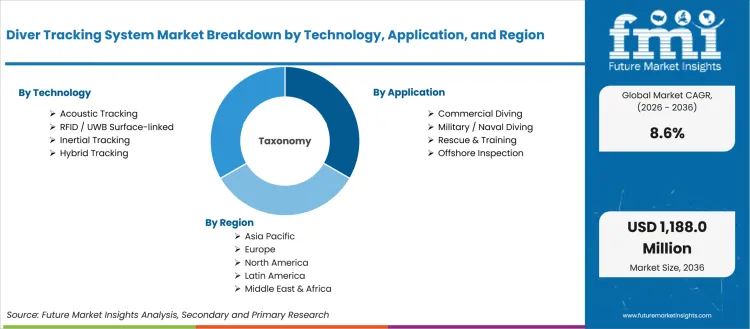
Diver tracking system industry is segmented by technology, application, component, range, sales channel and region.
Diver tracking system market is segmented by technology, application, component, range, sales channel and region. By technology, coverage includes acoustic tracking, RFID / UWB surface-linked, inertial tracking and hybrid tracking. By application, coverage includes commercial diving, military / naval diving, offshore inspection and rescue & training. By component, coverage includes transponders, surface receivers, software / displays and services. By range, coverage includes short range, medium range and long range. By sales channel, coverage includes direct OEM, marine safety distributors and service integrators, with regional coverage across North America, Latin America, Europe, East Asia, South Asia and Pacific and the Middle East and Africa.
Why does Acoustic Tracking lead within the technology segment?
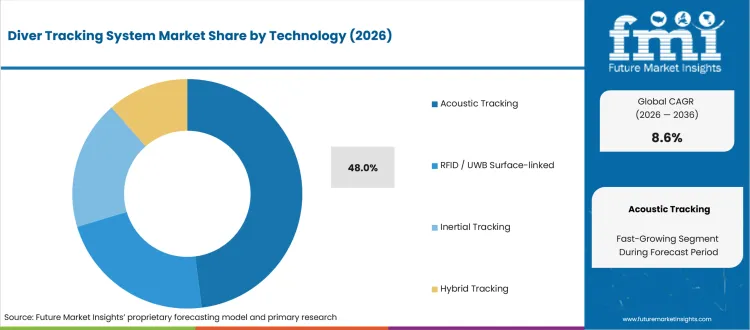
Acoustic Tracking leads through underwater signal practicality and professional positioning reference points. Sonardyne’s Mini-Ranger 2 supports diver and vessel tracking across shallow to mid-depth waters. Marine teams use such multi-asset capability before selecting underwater positioning systems for offshore or rescue work.
- Acoustic Tracking is expected to account for 48.0% share in 2026, backed by sound-based positioning that works below the surface. Professional buyers value acoustic systems since position confidence is needed near ship hulls and offshore foundations.
- Signal reliability supports acoustic adoption among commercial diving and defense users. Blueprint Subsea reports SeaTrac bidirectional data exchange with a 1,000-metre operating range, allowing position and basic mission data to move between surface and in-water units.
What supports demand for Commercial Diving applications?
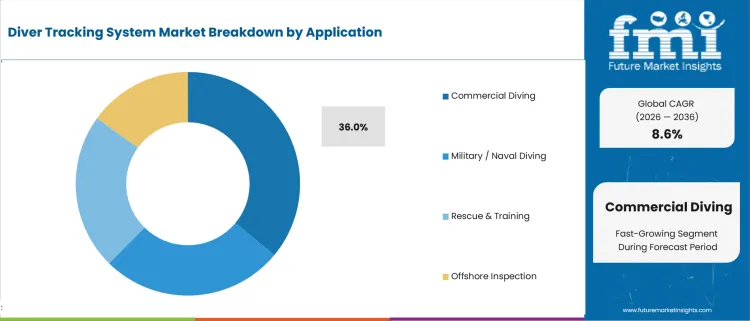
Commercial diving demand is supported by contractor responsibility for diver safety, task confirmation, and client reporting. USA offshore wind pipeline data reached 80,523 MW as of May 31, 2024, giving contractors a measurable inspection runway across future marine energy work.
- Commercial Diving is anticipated to hold 36.0% share in 2026, led by professional work near hulls, quays, subsea cables, and offshore assets. Contractors need position data that supports supervisor judgment during underwater work changes.
- Application buyers care about audit-ready records after each dive, especially as USA proposed Gulf of Maine leasing areas added 15,702 MW to the offshore pipeline. Software exports and timestamped tracks help contractors answer client questions during long-cycle project work.
How do buyers evaluate Transponders within component demand?
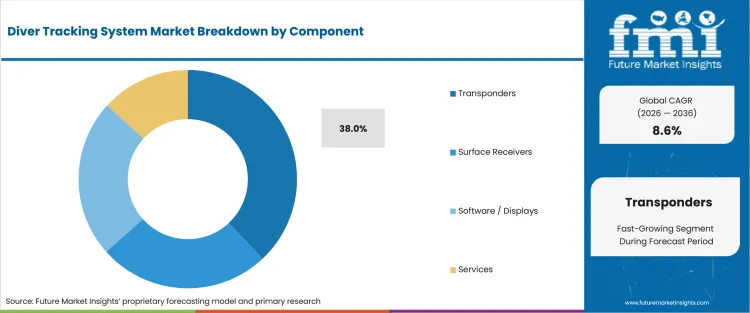
Transponders create the tracked identity of each diver or underwater target. Blueprint Subsea states that one topside X150 transponder can communicate with unlimited D010 beacons within a 1,000-metre range. Component buyers compare beacon count and receiver compatibility before selecting a full system package.
- Transponders are projected to represent 38.0% share in 2026, shaped by the need to attach a trackable signal to every diver. Multi-diver tasks depend on identity and position updates reaching supervisors without confusing diver order or search lanes.
- Component selection also reflects maintenance discipline, since SeaTrac systems support real-time and diver location in one compact acoustic positioning platform. Buyers review mount security and depth rating before repeated offshore or rescue use.
What market factors influence Medium Range systems?
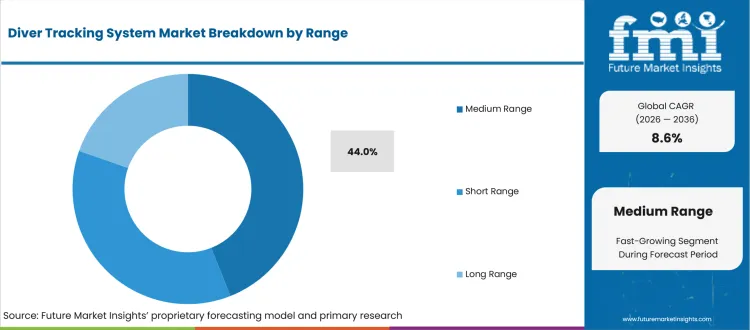
Medium Range systems suit many professional underwater jobs since ports, salvage areas, bridges, and nearshore infrastructure usually need site-level coverage. Medium Range is expected to hold 44.0% share in 2026, as buyers need practical field reach without full deepwater vessel integration cost.
- Medium Range is expected to account for 44.0% share in 2026, supported by harbor and offshore-support jobs needing practical coverage. Marine teams often choose medium range to match worksite size and supervisor visibility needs.
- Long range packages remain useful for vessel-linked offshore jobs, and medium range systems often fit rescue and nearshore maintenance. Germany reported 66 offshore wind foundations installed by the end of 2024, reinforcing tracking needs around nearshore construction zones.
How is Direct OEM positioned within the sales-channel segment?
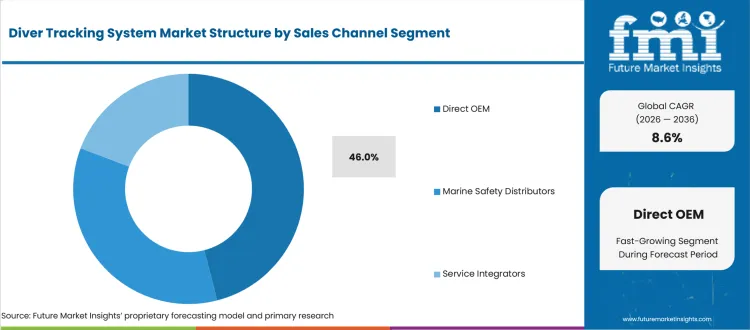
Direct OEM demand reflects the need for accountable setup and application support. Direct OEM is projected to hold 46.0% share in 2026, as offshore and public safety buyers prefer suppliers that can support acceptance tests and spares planning.
- Direct OEM is set to secure 46.0% share in 2026, driven by buyer need for factory-backed system design and support. Larger users often want one supplier accountable for receivers and field training.
- Distributor-led sales remain useful for smaller rescue teams, and direct OEM engagement is favored for larger offshore and defense users. German offshore wind data showed 81 turbines installed but not yet feeding power by year-end 2024, reflecting project staging that requires supplier coordination before live work begins.
What are the drivers, restraints, and opportunities in the Diver Tracking System Market?
Near-term purchases are shaped by offshore inspection control and acoustic reliability.
- Driver: Offshore asset inspection drives system demand as subsea structures need better diver supervision. GWEC reported more than 300 GW of offshore wind capacity in the next-decade pipeline, expanding the future base for underwater inspection and maintenance.
- Restraint: Acoustic interference restrains adoption in noisy or cluttered worksites. SeaTrac systems can track up to 99 in-water assets, so crowded jobs require receiver planning and disciplined signal management before mission use.
- Opportunity: Integrated diver navigation creates an opportunity for suppliers offering tracking, messaging, and map-based control. EvoLogics released its diver navigation system in April 2024 with waypoint setup during mission planning and execution.
Offshore inspection demand rises as asset owners require clearer underwater work records. France set offshore wind targets of 18 GW by 2035 and 45 GW by 2050, creating a future base for inspection, repair, and marine safety planning. Suppliers that provide clean displays and exportable records can convert safety spending into repeatable worksite discipline.
Acoustic performance remains a practical barrier in harbors and near steel infrastructure. Japan added 703.3 MW of new wind capacity across 170 units in 2024, showing how energy infrastructure can add marine inspection requirements over time. Equipment suppliers can reduce field risk through site trials and operator training.
Service models create a path beyond hardware sales. Kongsberg Discovery and Fugro signed a March 2026 framework agreement covering advanced hydroacoustic and positioning technologies across Fugro’s global fleet. Such agreements show how offshore buyers value long-term supplier support around positioning systems.
Which country CAGRs are profiled in the Diver Tracking System Market?
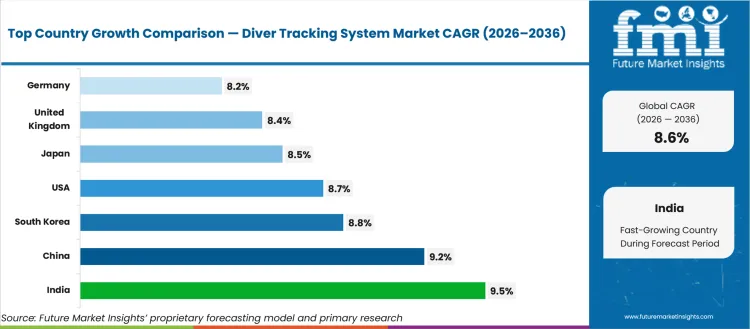
| Country | CAGR |
|---|---|
| India | 9.5% |
| China | 9.2% |
| South Korea | 8.8% |
| United States | 8.7% |
| Japan | 8.5% |
| United Kingdom | 8.4% |
| Germany | 8.2% |
| France | 8.0% |
Source: Future Market Insights analysis, 2026.
How do country-level CAGRs compare in the diver tracking system market?
Country demand for diver tracking systems is expected to be led by offshore energy activity and rescue modernization. India, China, and South Korea connect demand with offshore wind planning and coastal industrial activity. United States, Japan, United Kingdom, Germany, and France connect adoption with professional diving and structured marine infrastructure work. Senior buyers compare each country through worksite density and proof requirements before choosing supplier packages.
- India is estimated at 9.5% CAGR through 2036, supported by offshore wind planning across Gujarat and Tamil Nadu. Official assessment identifies nearly 35 GW of offshore wind potential off Tamil Nadu, giving suppliers a future inspection base beside ports and marine energy work.
- China is projected at 9.2% CAGR by 2036, helped by coastal wind scale and subsea construction activity. Chinese offshore wind reporting for 2024 listed new offshore installations of about 5.9 GW, creating more underwater inspection points for marine contractors.
- South Korea is estimated to record 8.8% CAGR through 2036, reinforced by offshore wind planning and marine engineering depth. Korean offshore wind planning requires wind measurement and construction across a 7 to 9 year timeline.
- United States is expected to expand at 8.7% CAGR through 2036, backed by offshore energy planning and public safety diving demand. USA offshore wind reporting listed 174 MW in operation as of May 31, 2024, with more projects moving through construction and approval.
- Japan is set to post 8.5% CAGR by 2036, aided by early offshore wind progress and high reliability expectations. Cumulative wind capacity reached 5,840.4 MW with 2,720 units at the end of 2024, giving marine service firms a measurable clean-energy asset base.
- United Kingdom is projected to rise at 8.4% CAGR through 2036, shaped by offshore operations and local supplier depth. Crown Estate reporting lists 15.9 GW of grid-connected offshore wind capacity, supporting long-term marine inspection demand.
- Germany is forecast to grow at 8.2% CAGR by 2036, underpinned by offshore wind operations and local acoustic technology expertise. German offshore wind data showed 1,639 turbines with 9.2 GW installed capacity at the end of 2024.
- France is expected to advance at 8.0% CAGR through 2036, supported by offshore wind planning across maritime zones. France’s offshore wind pathway includes 3.75 GW of floating capacity by 2035, supporting future demand for diver safety and positioning systems.
Who are the notable companies in the Diver Tracking System Market?
Sonardyne, Kongsberg Discovery, Teledyne Marine, EvoLogics, Blueprint Subsea, Desert Star Systems, Water Linked, and Ocean Technology Systems are the notable companies shaping diver tracking systems and related underwater positioning pathways.
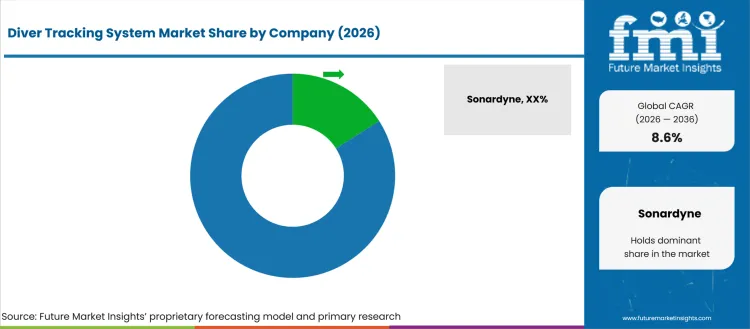
Competition in the diver tracking system market is grouped by how buyers want underwater supervision to work. Sonardyne, Kongsberg Discovery, and Teledyne Marine are stronger in vessel-linked acoustic positioning and offshore work. EvoLogics and Desert Star Systems support diver mission control and team awareness. Blueprint Subsea, Water Linked, and Ocean Technology Systems serve portable-system demand across rescue and compact commercial jobs. Buyer evaluation of professional underwater supervision often starts with range proof and service response.
- Sonardyne and Kongsberg Discovery have an advantage in acoustic positioning depth. Offshore buyers connect equipment decisions with survey-grade positioning and diver-capable USBL experience.
- Teledyne Marine is positioned through subsea instrumentation and marine technology portfolios serving professional marine buyers. Supplier comparisons often include positioning capability and documentation.
- EvoLogics and Desert Star Systems bring diver mission-control depth through communication and navigation support. EvoLogics supports map waypoint setup before and during dive missions.
- Blueprint Subsea, Water Linked, and Ocean Technology Systems strengthen competition through compact systems and practical field usability. Smaller buyers compare setup speed and support continuity.
Competitive Benchmarking: Diver Tracking System Market
| Company | Acoustic Positioning Depth | Diver Workflow Integration | Field Support Coverage | Geographic Reach |
|---|---|---|---|---|
| Sonardyne | High | Strong | Strong | Global |
| Kongsberg Discovery | High | Medium | Strong | Global |
| Teledyne Marine | High | Medium | Strong | Global |
| EvoLogics | High | High | Medium | Europe and global projects |
| Blueprint Subsea | Medium | High | Medium | United Kingdom and export markets |
| Desert Star Systems | Medium | High | Medium | United States and export markets |
| Water Linked | Medium | Medium | Medium | Europe and global distributors |
| Ocean Technology Systems | Low | Medium | Medium | North America and export markets |
Source: Future Market Insights competitive analysis, 2026.
Key Developments in the Diver Tracking System Market
- In April 2024, EvoLogics released its acoustic Diver Navigation System with map-based navigation, 2-way messaging, and real-time diver position tracking. Professional diving teams gain a shared mission view through diver-to-surface communication and waypoint setup.
- In April 2024, Blueprint Subsea introduced the SeaTrac D010 Diver Positioning System for commercial and combat divers. A single X150 topside transponder can communicate with unlimited D010 beacons within a 1,000-metre range, supporting multi-diver tracking from one surface reference point.
- In March 2026, Kongsberg Discovery and Fugro signed a framework agreement covering advanced hydroacoustic and positioning technologies across Fugro’s global fleet. The agreement reinforces acoustic positioning demand across offshore survey and uncrewed surface vessel operations.
Key Players in the Diver Tracking System Market
Acoustic Positioning Leaders
- Sonardyne
- Kongsberg Discovery
- Teledyne Marine
Diver Navigation Specialists
- EvoLogics
- Desert Star Systems
Compact Tracking Suppliers
- Blueprint Subsea
- Water Linked
- Ocean Technology Systems
Diver Tracking System Market - Report Scope
| Coverage field | Report scope |
|---|---|
| Market breakdown | Diver Tracking System Market Breakdown By Technology, Application, Component, Range, Sales Channel, and Region |
| Quantitative Units | USD 520.6 million in 2026 to USD 1,188.0 million by 2036, at a CAGR of 8.6% |
| Market Definition | Hardware and software systems used to locate, monitor, and guide professional divers during underwater work |
| Regions Covered | North America, Latin America, Europe, East Asia, South Asia and Pacific, Middle East and Africa |
| Countries Covered | United States, United Kingdom, Germany, France, Japan, China, South Korea, India and 30+ countries |
| Key Companies Profiled | Sonardyne, Kongsberg Discovery, Teledyne Marine, EvoLogics, Blueprint Subsea, Desert Star Systems, Water Linked, Ocean Technology Systems |
| Forecast Period | 2026 to 2036 |
| Approach | Hybrid bottom-up and top-down methodology using system demand, equipment pricing, application mix, country-level offshore activity, and supplier portfolio checks |
Source: Future Market Insights analysis, 2026.
Diver Tracking System Market - Research Methodology
| Method | Approach |
|---|---|
| Primary Research | FMI analysts reviewed inputs from commercial diving contractors, offshore inspection firms, naval users, rescue teams, port safety buyers, and marine service integrators. Discussions focused on range needs, diver count, setup time, supervisor workflow, and after-sales support. |
| Desk Research | Desk research covered marine safety rules, offshore energy activity, official wind data, company product information, and acoustic positioning equipment coverage. Product boundaries were checked against diver tracking, underwater communication, and professional mission-control use. |
| Market Sizing and Forecasting | The model combined system volumes, average selling prices, component replacement rates, country-level offshore activity, and application mix. Forecast assumptions separated compact diver kits from vessel-based acoustic positioning packages. |
| Data Validation | Forecasts were checked against offshore wind buildout, public safety use cases, defense and rescue applications, supplier portfolios, and distributor coverage. Segment estimates were reviewed against buyer specifications and system architecture. |
Diver Tracking System Market by Segments
Diver Tracking System Market segmented by Technology:
- Acoustic Tracking
- RFID / UWB Surface-linked
- Inertial Tracking
- Hybrid Tracking
Diver Tracking System Market segmented by Application:
- Commercial Diving
- Military / Naval Diving
- Offshore Inspection
- Rescue & Training
Diver Tracking System Market segmented by Component:
- Transponders
- Surface Receivers
- Software / Displays
- Services
Diver Tracking System Market segmented by Range:
- Short Range
- Medium Range
- Long Range
Diver Tracking System Market segmented by Sales Channel:
- Direct OEM
- Marine Safety Distributors
- Service Integrators
Diver Tracking System Market by Region:
- North America
- United States
- Canada
- Mexico
- Latin America
- Brazil
- Chile
- Rest of Latin America
- Western Europe
- Germany
- UK
- Italy
- Spain
- France
- Nordic
- BENELUX
- Rest of Western Europe
- Eastern Europe
- Russia
- Poland
- Hungary
- Balkan & Baltic
- Rest of Eastern Europe
- East Asia
- China
- Japan
- South Korea
- South Asia and Pacific
- India
- ASEAN
- Australia & New Zealand
- Rest of South Asia and Pacific
- Middle East & Africa
- Kingdom of Saudi Arabia
- Other GCC Countries
- Turkiye
- South Africa
- Other African Union
- Rest of Middle East & Africa
Research Sources and Bibliography
- Blueprint Subsea. (2024, April 5). SeaTrac D010. Blueprint Subsea.
- Blueprint Subsea. (2024, December 3). What impacts SeaTrac system accuracy? Blueprint Subsea.
- EvoLogics. (2024, April 4). EvoLogics debuts the new Diver Navigation System. EvoLogics.
- European External Action Service. (2024). Navigating Korea’s Offshore Wind Regulations. Delegation of the European Union to the Republic of Korea.
- German Offshore Wind Energy Foundation. (2025, February 4). Status of Offshore Wind Energy Development in Germany: Year 2024. German Offshore Wind Energy Foundation.
- Global Wind Energy Council. (2026, April 20). Global wind installations rise record 40% as industry charts way out of energy crisis. Global Wind Energy Council.
- Global Wind Energy Council. (2026, June 9). Fast-track offshore wind to help prevent future energy crises. Global Wind Energy Council.
- International Renewable Energy Agency. (2024, July). Floating Offshore Wind Outlook. International Renewable Energy Agency.
- Japan Wind Power Association. (2025, February 18). Cumulative installed capacity of wind power in Japan. Japan Wind Power Association.
- Kongsberg Discovery. (2026, March 18). Kongsberg Discovery and Fugro consolidate partnership with Main Supplier agreement. Kongsberg Discovery.
- Ministry of New and Renewable Energy, Government of India. (2024, December 20). Offshore Wind. Ministry of New and Renewable Energy.
- Sonardyne. (2026, April 16). Ranger: 20 years of engineering simplicity and precision into USBL. Sonardyne.
- The Crown Estate. (2024). Offshore Wind Report 2024. The Crown Estate.
- USA Department of Energy. (2024, August 21). Offshore Wind Market Report: 2024 Edition. USA Department of Energy.
This bibliography is provided for reader reference and is not exhaustive. The full report contains the complete reference list and detailed citations.
This Report Answers
- What is the expected global value of the diver tracking system market in 2026 and 2036?
- What CAGR is forecast for diver tracking systems during the 2026 to 2036 period?
- Which technology segment is used to assess Acoustic Tracking demand in 2026?
- Why do offshore contractors and public safety teams buy controlled diver tracking systems?
- How do acoustic and hybrid systems shape underwater supervision choices?
- Which countries are compared in the diver tracking system forecast?
- Which companies compete across acoustic positioning and diver navigation pathways?
- What technologies and applications are included within the diver tracking system definition?
- How does FMI size and forecast diver tracking system demand across segments and countries?
- What implementation and supplier-selection factors should executives assess?
Frequently Asked Questions
What is driving growth in the Diver Tracking System Market?
Offshore inspection work and low-visibility underwater missions support demand, reinforced by more than 50 GW of offshore wind projects under construction worldwide.
Why should executives track the Diver Tracking System Market?
Executives should track this market since diver supervision decisions affect safety procedures and supplier selection across professional underwater operations.
What business problem does the Diver Tracking System Market address?
Diver tracking systems help supervisors locate divers underwater and manage mission progress during inspection and emergency response work.
What should sourcing leaders evaluate before selecting suppliers?
Sourcing leaders should compare range performance and service coverage.
What can limit return on investment for buyers?
Return on investment can be delayed if acoustic interference or training gaps reduce field confidence. Buyers can reduce risk through site trials and operator training.
How can suppliers build executive confidence?
Suppliers build confidence through field-tested tracking performance and accountable after-sales support.
Preview the report firsthand - request a free sample
Get SampleGet the brochure for pricing and purchase details.
Get PDFTable of Content
- Key Takeaways
- Market Size and CAGR
- Top Growth Driver
- Fastest Growing Segment
- Leading Region
- Key Companies
- Emerging Opportunities
- Executive Summary
- Global Market Outlook
- Demand-side Trends
- Supply-side Trends
- Technology Roadmap Analysis
- Analysis and Recommendations
- Analyst Perspective (What is happening? Why now? What should investors know?)
- Key Questions Answered
- How large is the market?
- What is the CAGR?
- What are key trends?
- Which region dominates?
- Who are the leaders?
- Market Overview
- Market Coverage / Taxonomy
- Market Definition / Scope / Limitations
- Research Methodology
- Chapter Orientation
- Analytical Lens and Working Hypotheses
- Market Structure, Signals, and Trend Drivers
- Benchmarking and Cross-market Comparability
- Market Sizing, Forecasting, and Opportunity Mapping
- Research Design and Evidence Framework
- Desk Research Programme (Secondary Evidence)
- Expert Input and Fieldwork (Primary Evidence)
- Tooling, Models, and Reference Databases
- Data Engineering and Model Build
- Quality Assurance and Audit Trail
- Market Background
- Market Dynamics (Drivers, Restraints, Opportunity, Trends)
- Scenario Forecast (Optimistic, Likely, Conservative)
- Impact Analysis
- AI Impact
- Sustainability Impact
- Regulatory Impact
- Technology Impact
- Consumer / Buyer Analysis
- Purchase Drivers
- Adoption Barriers
- Buyer Journey
- Opportunity Map Analysis
- Product Life Cycle Analysis
- Supply Chain Analysis
- Investment Feasibility Matrix
- Value Chain Analysis
- PESTLE and Porter's Analysis
- Regulatory Landscape
- Regional Parent Market Outlook
- Production and Consumption Statistics
- Import and Export Statistics
- Global Market Analysis and Forecast, 2021 to 2036
- Historical Market Size Value (USD Million) & Volume (Unit) Analysis, 2021 to 2025
- Current and Future Market Size Value (USD Million) & Volume (Unit) Projections, 2026 to 2036
- Y-o-Y Growth Trend Analysis
- Absolute $ Opportunity Analysis
- Global Market Pricing Analysis, 2021 to 2036
- Global Market Analysis and Forecast, By Technology, 2021 to 2036
- Introduction / Key Findings
- Historical Market Size Value (USD Million) & Volume (Unit) Analysis By Technology, 2021 to 2025
- Current and Future Market Size Value (USD Million) & Volume (Unit) Analysis and Forecast By Technology, 2026 to 2036
- Acoustic Tracking
- RFID / UWB Surface-linked
- Inertial Tracking
- Hybrid Tracking
- Acoustic Tracking
- Y-o-Y Growth Trend Analysis By Technology, 2021 to 2025
- Absolute $ Opportunity Analysis By Technology, 2026 to 2036
- Global Market Analysis and Forecast, By Application, 2021 to 2036
- Introduction / Key Findings
- Historical Market Size Value (USD Million) & Volume (Unit) Analysis By Application, 2021 to 2025
- Current and Future Market Size Value (USD Million) & Volume (Unit) Analysis and Forecast By Application, 2026 to 2036
- Commercial Diving
- Military / Naval Diving
- Rescue & Training
- Offshore Inspection
- Commercial Diving
- Y-o-Y Growth Trend Analysis By Application, 2021 to 2025
- Absolute $ Opportunity Analysis By Application, 2026 to 2036
- Global Market Analysis and Forecast, By Component, 2021 to 2036
- Introduction / Key Findings
- Historical Market Size Value (USD Million) & Volume (Unit) Analysis By Component, 2021 to 2025
- Current and Future Market Size Value (USD Million) & Volume (Unit) Analysis and Forecast By Component, 2026 to 2036
- Transponders
- Surface Receivers
- Software / Displays
- Services
- Transponders
- Y-o-Y Growth Trend Analysis By Component, 2021 to 2025
- Absolute $ Opportunity Analysis By Component, 2026 to 2036
- Global Market Analysis and Forecast, By Range, 2021 to 2036
- Introduction / Key Findings
- Historical Market Size Value (USD Million) & Volume (Unit) Analysis By Range, 2021 to 2025
- Current and Future Market Size Value (USD Million) & Volume (Unit) Analysis and Forecast By Range, 2026 to 2036
- Medium Range
- Short Range
- Long Range
- Medium Range
- Y-o-Y Growth Trend Analysis By Range, 2021 to 2025
- Absolute $ Opportunity Analysis By Range, 2026 to 2036
- Global Market Analysis and Forecast, By Sales Channel, 2021 to 2036
- Introduction / Key Findings
- Historical Market Size Value (USD Million) & Volume (Unit) Analysis By Sales Channel, 2021 to 2025
- Current and Future Market Size Value (USD Million) & Volume (Unit) Analysis and Forecast By Sales Channel, 2026 to 2036
- Direct OEM
- Marine Safety Distributors
- Service Integrators
- Direct OEM
- Y-o-Y Growth Trend Analysis By Sales Channel, 2021 to 2025
- Absolute $ Opportunity Analysis By Sales Channel, 2026 to 2036
- Global Market Analysis and Forecast, By Region, 2021 to 2036
- Introduction
- Historical Market Size Value (USD Million) & Volume (Unit) Analysis By Region, 2021 to 2025
- Current Market Size Value (USD Million) & Volume (Unit) Analysis and Forecast By Region, 2026 to 2036
- North America
- Latin America
- Western Europe
- Eastern Europe
- East Asia
- South Asia and Pacific
- Middle East & Africa
- Market Attractiveness Analysis By Region
- North America Market Analysis and Forecast, By Country, 2021 to 2036
- Historical Market Size Value (USD Million) & Volume (Unit) Trend Analysis By Market Taxonomy, 2021 to 2025
- Market Size Value (USD Million) & Volume (Unit) Forecast By Market Taxonomy, 2026 to 2036
- By Country
- USA
- Canada
- Mexico
- By Technology
- By Application
- By Component
- By Range
- By Sales Channel
- By Country
- Market Attractiveness Analysis
- By Country
- By Technology
- By Application
- By Component
- By Range
- By Sales Channel
- Key Takeaways
- Latin America Market Analysis and Forecast, By Country
- Historical Market Size Value (USD Million) & Volume (Unit) Trend Analysis By Market Taxonomy, 2021 to 2025
- Market Size Value (USD Million) & Volume (Unit) Forecast By Market Taxonomy, 2026 to 2036
- By Country
- Brazil
- Chile
- Rest of Latin America
- By Technology
- By Application
- By Component
- By Range
- By Sales Channel
- By Country
- Market Attractiveness Analysis
- By Country
- By Technology
- By Application
- By Component
- By Range
- By Sales Channel
- Key Takeaways
- Western Europe Market Analysis and Forecast, By Country
- Historical Market Size Value (USD Million) & Volume (Unit) Trend Analysis By Market Taxonomy, 2021 to 2025
- Market Size Value (USD Million) & Volume (Unit) Forecast By Market Taxonomy, 2026 to 2036
- By Country
- Germany
- UK
- Italy
- Spain
- France
- Nordic
- BENELUX
- Rest of Western Europe
- By Technology
- By Application
- By Component
- By Range
- By Sales Channel
- By Country
- Market Attractiveness Analysis
- By Country
- By Technology
- By Application
- By Component
- By Range
- By Sales Channel
- Key Takeaways
- Eastern Europe Market Analysis and Forecast, By Country
- Historical Market Size Value (USD Million) & Volume (Unit) Trend Analysis By Market Taxonomy, 2021 to 2025
- Market Size Value (USD Million) & Volume (Unit) Forecast By Market Taxonomy, 2026 to 2036
- By Country
- Russia
- Poland
- Hungary
- Balkan & Baltic
- Rest of Eastern Europe
- By Technology
- By Application
- By Component
- By Range
- By Sales Channel
- By Country
- Market Attractiveness Analysis
- By Country
- By Technology
- By Application
- By Component
- By Range
- By Sales Channel
- Key Takeaways
- East Asia Market Analysis and Forecast, By Country
- Historical Market Size Value (USD Million) & Volume (Unit) Trend Analysis By Market Taxonomy, 2021 to 2025
- Market Size Value (USD Million) & Volume (Unit) Forecast By Market Taxonomy, 2026 to 2036
- By Country
- China
- Japan
- South Korea
- By Technology
- By Application
- By Component
- By Range
- By Sales Channel
- By Country
- Market Attractiveness Analysis
- By Country
- By Technology
- By Application
- By Component
- By Range
- By Sales Channel
- Key Takeaways
- South Asia and Pacific Market Analysis and Forecast, By Country
- Historical Market Size Value (USD Million) & Volume (Unit) Trend Analysis By Market Taxonomy, 2021 to 2025
- Market Size Value (USD Million) & Volume (Unit) Forecast By Market Taxonomy, 2026 to 2036
- By Country
- India
- ASEAN
- Australia & New Zealand
- Rest of South Asia and Pacific
- By Technology
- By Application
- By Component
- By Range
- By Sales Channel
- By Country
- Market Attractiveness Analysis
- By Country
- By Technology
- By Application
- By Component
- By Range
- By Sales Channel
- Key Takeaways
- Middle East & Africa Market Analysis and Forecast, By Country
- Historical Market Size Value (USD Million) & Volume (Unit) Trend Analysis By Market Taxonomy, 2021 to 2025
- Market Size Value (USD Million) & Volume (Unit) Forecast By Market Taxonomy, 2026 to 2036
- By Country
- Kingdom of Saudi Arabia
- Other GCC Countries
- Türkiye
- South Africa
- Other African Union
- Rest of Middle East & Africa
- By Technology
- By Application
- By Component
- By Range
- By Sales Channel
- By Country
- Market Attractiveness Analysis
- By Country
- By Technology
- By Application
- By Component
- By Range
- By Sales Channel
- Key Takeaways
- Key Countries Market Analysis
- USA
- Pricing Analysis
- Market Share Analysis, 2025
- By Technology
- By Application
- By Component
- By Range
- By Sales Channel
- Canada
- Pricing Analysis
- Market Share Analysis, 2025
- By Technology
- By Application
- By Component
- By Range
- By Sales Channel
- Mexico
- Pricing Analysis
- Market Share Analysis, 2025
- By Technology
- By Application
- By Component
- By Range
- By Sales Channel
- Brazil
- Pricing Analysis
- Market Share Analysis, 2025
- By Technology
- By Application
- By Component
- By Range
- By Sales Channel
- Chile
- Pricing Analysis
- Market Share Analysis, 2025
- By Technology
- By Application
- By Component
- By Range
- By Sales Channel
- Germany
- Pricing Analysis
- Market Share Analysis, 2025
- By Technology
- By Application
- By Component
- By Range
- By Sales Channel
- UK
- Pricing Analysis
- Market Share Analysis, 2025
- By Technology
- By Application
- By Component
- By Range
- By Sales Channel
- Italy
- Pricing Analysis
- Market Share Analysis, 2025
- By Technology
- By Application
- By Component
- By Range
- By Sales Channel
- Spain
- Pricing Analysis
- Market Share Analysis, 2025
- By Technology
- By Application
- By Component
- By Range
- By Sales Channel
- France
- Pricing Analysis
- Market Share Analysis, 2025
- By Technology
- By Application
- By Component
- By Range
- By Sales Channel
- India
- Pricing Analysis
- Market Share Analysis, 2025
- By Technology
- By Application
- By Component
- By Range
- By Sales Channel
- ASEAN
- Pricing Analysis
- Market Share Analysis, 2025
- By Technology
- By Application
- By Component
- By Range
- By Sales Channel
- Australia & New Zealand
- Pricing Analysis
- Market Share Analysis, 2025
- By Technology
- By Application
- By Component
- By Range
- By Sales Channel
- China
- Pricing Analysis
- Market Share Analysis, 2025
- By Technology
- By Application
- By Component
- By Range
- By Sales Channel
- Japan
- Pricing Analysis
- Market Share Analysis, 2025
- By Technology
- By Application
- By Component
- By Range
- By Sales Channel
- South Korea
- Pricing Analysis
- Market Share Analysis, 2025
- By Technology
- By Application
- By Component
- By Range
- By Sales Channel
- Russia
- Pricing Analysis
- Market Share Analysis, 2025
- By Technology
- By Application
- By Component
- By Range
- By Sales Channel
- Poland
- Pricing Analysis
- Market Share Analysis, 2025
- By Technology
- By Application
- By Component
- By Range
- By Sales Channel
- Hungary
- Pricing Analysis
- Market Share Analysis, 2025
- By Technology
- By Application
- By Component
- By Range
- By Sales Channel
- Kingdom of Saudi Arabia
- Pricing Analysis
- Market Share Analysis, 2025
- By Technology
- By Application
- By Component
- By Range
- By Sales Channel
- Türkiye
- Pricing Analysis
- Market Share Analysis, 2025
- By Technology
- By Application
- By Component
- By Range
- By Sales Channel
- South Africa
- Pricing Analysis
- Market Share Analysis, 2025
- By Technology
- By Application
- By Component
- By Range
- By Sales Channel
- USA
- Market Structure Analysis
- Competition Dashboard
- Competition Benchmarking
- Market Share Analysis of Top Players
- By Regional
- By Technology
- By Application
- By Component
- By Range
- By Sales Channel
- Emerging Startups
- Innovation Benchmarking
- Competition Analysis
- Competition Deep Dive
- Sonardyne
- Overview
- Product Portfolio
- Profitability by Market Segments (Product/Region/Sales Channel)
- Sales Footprint
- Strategy Overview
- Marketing Strategy
- Product Strategy
- Channel Strategy
- Kongsberg Discovery
- Teledyne Marine
- Desert Star Systems
- EvoLogics
- Sonardyne
- Case Studies
- Success Stories
- Recent Developments
- Competition Deep Dive
- Assumptions & Acronyms Used


