

- Industry Size (2026)
- USD Mn 467.58
- Forecast (2036)
- USD Mn 705.57
- CAGR (2026 to 2036)
- 4.2%
Food Immunomodulators Market Size, Market Forecast and Outlook By FMI
The food immunomodulators market was valued at USD 448.74 million in 2025, projected to reach USD 467.58 million in 2026, and is forecast to expand to USD 705.57 million by 2036 at a 4.2% CAGR. Consumer demand for food-based immune health support and clinical validation of bioactive compounds with immunomodulatory properties are positioning functional food ingredients as a complement to pharmaceutical immune interventions. Beta-glucans, probiotics, prebiotics, polyphenols, and specific vitamins with documented immune function effects form the core ingredient base for food immunomodulator products.
As per FMI, immunostimulants hold 35.0% share because consumer demand concentrates on immune-boosting products rather than immunosuppressive formulations, which remain primarily within the pharmaceutical domain. The post-pandemic consumer awareness of immune health has created sustained demand for food-based immune support products distributed through grocery, pharmacy, and online channels. The moderate 4.2% CAGR reflects the category's maturation beyond pandemic-driven demand spikes into steady baseline growth driven by ageing population demographics and preventive health consumer behaviour.
Summary of Food Immunomodulators Market
- Food Immunomodulators Market Definition
- Food immunomodulators are bioactive compounds and functional food ingredients with documented effects on immune system function, including immunostimulants that activate immune response, immunosuppressive agents that modulate overactive immune function, and functional food matrices formulated to deliver immune-supporting nutrients. Key ingredient categories include beta-glucans, probiotics, prebiotics, polyphenols, and immunomodulatory vitamins.
- Demand Drivers in the Market
- Post-pandemic immune health awareness: Consumer awareness of immune health maintenance elevated by the COVID-19 pandemic has created sustained baseline demand for food-based immune support products. FMI analysts note that immune health has transitioned from a seasonal concern to a year-round consumer priority, creating consistent demand rather than cyclical cold-and-flu-season purchasing patterns.
- Clinical validation of food-based immune ingredients: Based on FMI's report, clinical trials documenting the immunomodulatory effects of beta-glucans from yeast and mushroom sources, specific probiotic strains, and polyphenol-rich botanical extracts provide the evidence base for health claim authorization and healthcare professional recommendation.
- Ageing population preventive health demand: As per FMI, immunosenescence in ageing populations creates a growing demographic base for food-based immune support products. Consumers aged 55 and above represent the highest per-capita spending segment for immune health supplements and functional foods, and this demographic is expanding in every major market.
- Key Segments Analyzed in the FMI Report
- Immunostimulant consumer demand concentration: Immunostimulants holds 35.0% share in 2026. Consumer demand concentrates on products that activate and support immune response, with beta-glucan, probiotic, and vitamin C/D/zinc combinations forming the core immunostimulant product profiles in both supplement and functional food formats.
- Functional food delivery format growth: Functional Food products are gaining share as consumers prefer to integrate immune support into daily food and beverage consumption rather than taking separate supplement capsules, driving demand for fortified yogurts, beverages, and snack products with immune health positioning.
- Probiotic immune mechanism validation: Probiotic-based immunomodulators benefit from growing clinical evidence that specific Lactobacillus and Bifidobacterium strains modulate gut-associated lymphoid tissue (GALT) activity, providing a mechanistic basis for immune health claims that regulators and healthcare professionals accept.
- Analyst Opinion at FMI
- Nandini Roy Choudhury, Principal Consultant for Food & Beverage immunomodulators market operates at the intersection of consumer wellness demand and clinical evidence accumulation. The category's moderate growth rate reflects the maturation beyond pandemic-driven demand spikes into a steady-state market where ingredient efficacy validation and health claim authorization determine competitive positioning. Brands that invest in strain-specific or compound-specific clinical evidence and secure regulatory health claim authorization build defensible market positions against undifferentiated competitors making general immune support claims.
- Strategic Implications / Executive Takeaways
- Functional food manufacturers should invest in clinical trials for specific immunomodulatory ingredients to secure regulatory health claim authorization that differentiates their products from competitors with generic immune support positioning.
- Ingredient suppliers should develop application-specific immunomodulator formats (heat-stable probiotics, water-soluble beta-glucans) that enable food and beverage manufacturers to incorporate immune-active compounds without compromising product taste or texture.
- Retail buyers should position food immunomodulator products in dedicated immune health sections rather than dispersing them across general supplement and functional food categories to capture the targeted purchasing behaviour of immune-health-motivated consumers.
- Methodology
- Primary Research: FMI conducted technical interviews with procurement specialists and operations directors across 40 countries to validate adoption timelines.
- Desk Research: Analysts aggregated public regulatory documentation, industry standards, and corporate disclosure filings.
- Market-Sizing and Forecasting: Forecasting models apply hybrid methodology starting with global production metrics and projecting adoption conversion rates.
- Data Validation and Update Cycle: Segment forecasts undergo cross-validation against quarterly and annual industry production volumes.
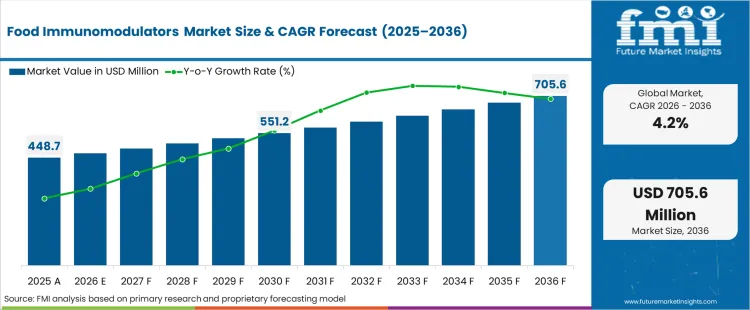
Food Immunomodulators Market Key Takeaways
| Metric | Details |
|---|---|
| Industry Size (2026) | USD Million 467.58 |
| Industry Value (2036) | USD Million 705.57 |
| CAGR (2026-2036) | 4.2% |
Source: Future Market Insights, 2026
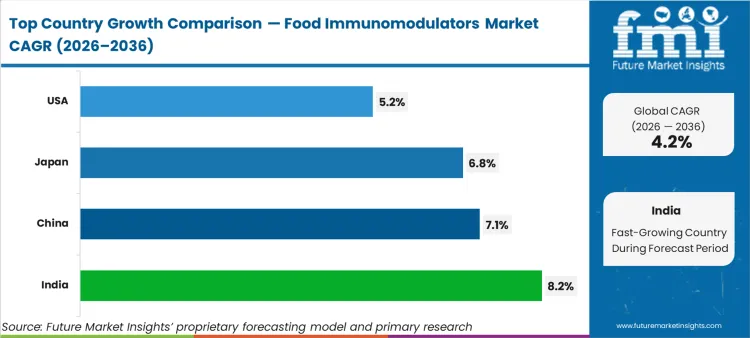
India leads with an 8.2% CAGR, driven by the Ayurvedic tradition of food-based immunity support and the growing organized functional food retail sector. China follows at 7.1% as traditional Chinese medicine concepts of immune-supporting foods integrate with modern functional food product development. Japan registers a 6.8% pace anchored by the established FOSHU (Foods for Specified Health Uses) regulatory framework that validates immune health claims on food products. USA tracks at 5.2% driven by the dietary supplement and functional food sectors targeting immune health consumers.
Food Immunomodulators Market Definition
Food immunomodulators are bioactive compounds and functional food ingredients with documented effects on immune system function, including immunostimulants that activate immune response, immunosuppressive agents that modulate overactive immune function, and functional food matrices formulated to deliver immune-supporting nutrients. Key ingredient categories include beta-glucans, probiotics, prebiotics, polyphenols, and immunomodulatory vitamins.
Food Immunomodulators Market Inclusions
Market scope includes food-grade immunostimulant ingredients, immunosuppressant food compounds, and functional food products with validated immune health claims. The report covers global and regional market sizes from 2026 to 2036, segmented by product type and geography.
Food Immunomodulators Market Exclusions
Pharmaceutical immunomodulatory drugs requiring prescription are excluded. Vaccine products and immunotherapy treatments fall outside scope. General nutrition supplements without specific immunomodulatory claims are excluded from the valuation.
Food Immunomodulators Market Research Methodology
- Primary Research: Analysts engaged with procurement specialists, production managers, and supply chain directors to map purchasing cycles and supplier qualification requirements.
- Desk Research: Data collection aggregated regulatory filings, industry standards, trade association publications, and public company disclosures.
- Market-Sizing and Forecasting: Baseline values derive from hybrid top-down and bottom-up methodology, applying region-specific adoption curves through 2036.
- Data Validation and Update Cycle: Projections tested against publicly reported production volumes, trade data, and industry benchmarks with annual recalibration.
Top Food Immunomodulators Market Dynamics and Industry Trends
Immunity Training by Yeast Beta Glucan as food immunomodulators
Numerous scientific studies have revealed the many positive effects of polysaccharides on human and animal health. Polysaccharides are large molecules made up of smaller sugar units. One example that has garnered particular interest worldwide is beta-glucan, which occurs naturally in various forms in organisms such as yeast, mushrooms, bacteria, algae, plants, and cereals.
The biological activity of beta-glucans typically depends on their structure and origin. Yeast beta-glucan has been studied extensively and has shown significant progress in the field of immunomodulating compounds. Unlike in the past, when only pathogenic organisms were used to train the human innate immune system, compounds from plant-based sources such as yeast beta-glucan have proven to be equally effective and faster-acting.
Companies like ADM have started introducing new prebiotic technology, which is considered a ground-breaking advancement that will allow the modulation and help the gut microorganisms flourish well in the gut.
Approaches such as employing multiple scientific separation and purification technologies utilizing beta-glucans from various natural-based sources to meet the specific taste and nutritional preferences of different customer segments are gaining popularity through DuPont Nutrition and BioSciences.
Functional immune-boosting foods as immunomodulatory compounds
The immune system plays a crucial role in defending the human body against disease-causing pathogens. Functional foods, which are naturally based, such as various species of ginseng, mushrooms, and algae, are in high demand among consumers, and play a major role in boosting innate and adaptive immunity.
The COVID-19 pandemic has caused significant disruptions worldwide, especially in food production, with a focus on immunity and health benefits. With no cure for the disease, people are turning to foods that can boost immunity. Scientific studies have shown that many chronic diseases in humans, such as cardiovascular diseases, diabetes, and cancer, as well as infectious diseases in animals, are linked to diets that do not meet nutritional needs.
As a result, consumers are increasingly aware of the connection between diet and immunity, leading to a growing demand for foods with immune-boosting properties. There has been a major shift of consumers towards functional food products with clean labels, making immune-boosting claims, and containing vitamins and minerals.
For instance, companies like Amway Corporation and Yakult Honsha Co., Ltd. have gained popularity as they advertise improved health claims. Consequently, there has been a significant increase in consumer interest and demand for a variety of healthier products that meet their preferences and nutritional requirements.
Rise in demand for Clean Label Plant-based foods as Natural Immunomodulators
The current global health situation has been significantly impacted by autoimmune diseases. To address this, the scientific community has been actively researching solutions to mitigate their effects. As a result, there has been a focus on studying the properties of plant-based immunomodulatory compounds due to their positive effects and widespread appeal across different age groups.
The increased interest in personalized natural dietary recommendations with immune-modulating properties has led to the development of tailored food products with specific immune system benefits. Health-conscious consumers, particularly millennials, are seeking age-appropriate natural diet-based foods that align with their preferences, such as high-quality ingredients, low fat and sugar content, no cholesterol, and allergen-free products.
The fast-paced modern lifestyle has also contributed to the demand for convenient, clean-label products. Companies like DSM are meeting this demand by offering customized solutions to consumers and providing detailed information about probiotics and vitamins tailored to individual needs.
They also conduct webinars to raise awareness about the production, testing, and certification processes for their products. Consequently, there is a growing demand for customization in the food and beverage industry to cater to these evolving consumer preferences.
Comparison of Historical vs Forecast Outlook for Food Immunomodulators Sales (2021 to 2026 vs 2026 to 2036)
Global sales increased at a CAGR of 4.4% from 2021 to 2026. For the next ten years (2026 to 2036), projections are that expenditure on such products will rise at 4.6% CAGR.
Between 2021 to 2026 increasing concern over sustainability measures in food production and less knowledge resources about the new microbial properties have raised the awareness and demand for immunomodulatory property-based foods. Danone SA and ADM have given the lead in doing so by producing properly investigated microbiome solutions that are clinically proven and promote better immune health.
Danone’s variety of product ranges has succeeded in enhancing the immune response and gut health without compromising the flavors, textures, and sources. This has led to improved health among all age groups of consumers and increased the demand for these products. During this period, the increasing number of health-conscious customers looking for allergen-free products with immune-modulating properties propelled the growth of this industry.
From the year 2026 to 2036, the sector is registered to fasten, owing to the achievements in precision nutrition and new-age technologies. The approaches of precision nutrition will further optimize food nutrition technology across a variety of specifications for both humans and animals, thereby improving immune function and immune response rates against various diseases.
Further, the introduction of better microbiome solutions tailored to technological advancements coupled with better stability and versatility of these products will promote less waste and better health and well-being.
Market Concentration in the Food Immunomodulators Sector
Tier 1 Companies are referred to as the major players of the industry as they are fully established worldwide with majority shares of the business ecosystem. Industry leaders always lead the level of creativity, research, and development and most of the time are the trendsetters. They include Danone SA, Nestle SA, ADM, and Yakult Honsha Co. Ltd. Danone, with its innovative ingredient formulations and global industry distribution, is the leading provider of sustainable nutrition and health solutions due to the effective distribution of its products.
Tier 2 Companies are the regional players with adequate market coverage and are known for offering niche products. They are typically more localized and address specific issues of more general ones.
Lonza Group SA is an example of this, performing well in the European territory due to its cutting-edge innovative capsule technology to deliver probiotics to the human body. In the same way, Sabinsa Corporation develops prebiotics, probiotics, postbiotics, and synbiotics from a range of natural sources that are helpful for consumers according to their age requirements, focusing on specific target mechanisms.
Tier 3 Companies are smaller players who are usually limited to the local or regional areas. They tend to service localized areas and do not possess the same level of R&D as bigger companies but are nonetheless helpful in satisfying local needs. These companies are smaller in size but still strong in their target industries due to their deep-seated innovations and customer service.
Analysis of Top Countries Using Immunomodulating Food Ingredients
The following table shows the estimated growth rates of the top three territories. China and India are set to exhibit high consumption, recording CAGRs of 7.1% and 8.2%, respectively, through 2034.
.webp "Top Country Growth Comparison Food Immunomodulators Market Cagr (2026 2036)")
| Countries | CAGR 2026 to 2036 |
|---|---|
| USA | 5.2% |
| India | 8.2% |
| Japan | 6.8% |
| China | 7.1% |
Integration of Better Microbiome Culture Systems and Supportive Government Boosting Sales in Japan
Japanese customers are known for seeking better quality products and are particularly interested in high-nutrient foods to improve their immune health. This could be due to the plummeting population in Japan thus leading to lower fertility rates.
As a result, companies like Yakult Honsha Co. Ltd. are focused on developing better diverse microbial cultures to produce a variety of probiotic beverages to meet this demand. Technology plays a crucial role in managing and producing these immune-modulating ingredients, ensuring improved quality in food and beverages. The Japanese government is worried about the workforce population, as they are working long hours and not prioritizing their health.
Consequently, the government has been actively promoting healthy eating programs and investing in the scientific sector to procure better microbial strains and species for better results and to improve overall well-being. This initiative has led to growth in the food industry, with a focus on food immunomodulators that have enabled companies to introduce enhanced solutions to the market.
Demand Outlook in China
Chinese consumers are increasingly looking for convenient superfoods that are nutritious and diverse. This demand has led to the rise of processed, packaged, and heat-stable foods, which require high-quality ingredients to provide better nutrition and support immune function.
Another important factor is the expansion and diversification of natural-based product ranges. As profits from traditional production methods decline, producers are incorporating more profitable new technologies. However, this diversification requires specialized techniques to improve the flavor, texture, colors, and packaging of various products for different markets. Additionally, China's high environmental standards have led to the adoption of sustainable microbiome cultures. Companies are embracing innovative eco-friendly technologies to minimize negative environmental impact and comply with regulations.
DuPont Nutrition and Biosciences is at the forefront of developing solutions based on traditional and new eco-friendly applications to reduce food and beverage waste and meet the population's needs. All these factors indicate the growing success of sales of Chinese food immunomodulators.
Enhanced Focus on the Production of Nutrient-Rich Food and Beverages for Better Immune Health in India
The growing trend of health-conscious consumers has increased the demand for high-quality natural and synthetic sources, leading to the production of foods with high nutritional value to improve immune health responses. Companies like Symbiotec are providing innovative solutions at lower prices across many countries worldwide.
They are developing a diverse range of products to enhance reproductive productivity in animals and address health concerns in humans. This expansion of immunomodulatory-based food production is a significant factor in India's food and beverage industry. Investors have noted favorable stress-related production conditions with heat and acid stability for commercial manufacturing of these immunomodulators. The increased demand for immune-boosting foods in India is mainly due to the rising emphasis on autoimmune diseases.
Food Immunomodulators Industry Analysis by Top Investment Segments
Manufacturers Focus on Product Type Segment for Higher Sales
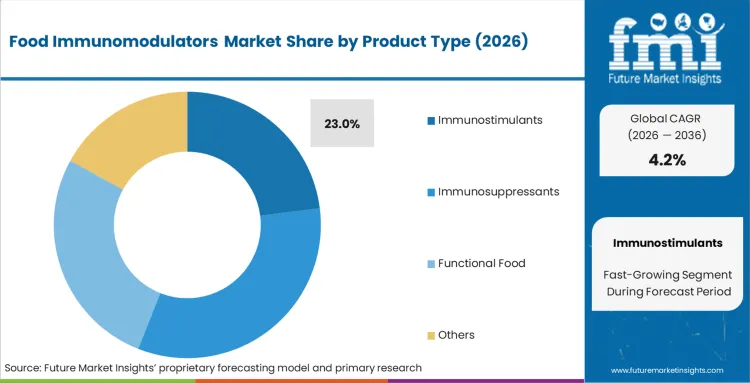
| Segment | Product Type |
|---|---|
| Value Share (2026) | Functional foods- 23% |
Companies such as Nestle SA are introducing new product lines consisting of organic fruits and herbs with improved probiotic formulas and proper clinical certifications. The demand for modern production techniques has been met through better management of growth, health, and food conversion rates, leading to higher returns on investment.
Another important factor is the increasing availability of safe, legal, and sustainably produced microbial strains for further production processes. Danone SA, through its subsidiary Bledina, is addressing this demand by involving customers in farm visits where the ingredients are grown and supporting these wellness solutions with scientific explanations. Furthermore, advancements in superfoods are expected to enhance the nutritional, immunity, and digestibility levels offered to different consumer groups.
For instance, Kerry Group is improving its products through research and offering ingredients and end-use products that not only boost immunity but also support the development and function of the brain, eyes, skin, and gut.
They have also introduced a product that enhances protein absorption, contributing to the overall well-being of consumers. These new product initiatives are crucial in meeting the increased demand for immune-modulating foods as a key means of preventing many diseases, thereby driving growth in the food immunomodulators sector.
Rising Incidences of Diseases Leading to Innovative Solutions
The prevalence of autoimmune diseases is steadily increasing in many major countries around the world. This trend is impacting economies and development, raising concerns about the safety of food and beverages. To address these health issues and prevent a significant economic downturn, many countries are implementing precautionary measures.
In this context, food with immunomodulatory properties plays a crucial role. A healthy gut microbiota can improve nutrient absorption, reduce disease rates, and promote growth, which is beneficial for companies specializing in food immunomodulation. To meet the demand for safer products, many companies are choosing to launch only clinically proven and certified food items with clear labeling.
Plant-based immunostimulants, immunosuppressants, and functional foods must be supported by scientific evidence and reasoning. Companies that focus on enhancing the microbiota of the gastrointestinal tract to improve gut bacteria functioning are well-positioned in this growing business ecosystem. The expansion of this industry is largely driven by the increasing incidence of autoimmune diseases and the recognition of the importance of preventive health management measures.
Competitive Outlook in the Food Immunomodulators Market
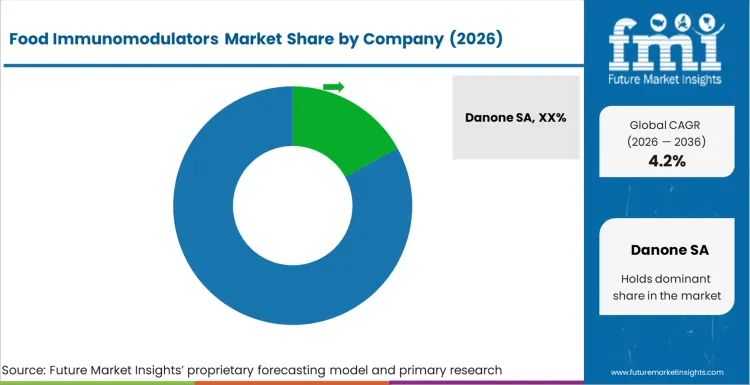
The food immunomodulators market is highly competitive, with major players such as Danone SA, Nestle SA, Yakult Honsha Co. Ltd., and ADM making significant investments in research and development. These companies are focused on creating innovative and sustainable food concepts to address the market demand. They are also committed to efficiently manufacturing foods that improve immune health and other health concerns sustainably.
To expand their sales, manufacturers are implementing various strategies, including vertical and strategic acquisitions. For example, Chr Hansen Holding A/S increased its market share by acquiring smaller healthcare companies and labs and integrating them into its distribution network to ensure the quality and availability of raw materials. Similarly, Amway Corporation strategically targeted both local consumers and local ingredients producers to regionalize their distribution and gain a larger market share. For instance:
- In 2026, Lallemand Inc. introduced a range of protective technologies to ensure proper and optimal survival and efficacy of their probiotic products. For instance, their products are usually bacteria and yeast-based, probiotic supplements, which are highly stable and targeted specifically for immunity and women’s vaginal health.
- Another company, BioGaia, started providing choices and specifications to the customers for different species and strains that were used to formulate the products as each strain offered unique benefits.
Leading Food Immunomodulator Brands by Market Share
- Danone SA
- Nestle SA
- Yakult Honsha Co., Ltd.
- ADM
- Kerry Group
- Cargill Inc.
- DuPont Nutrition and BioSciences
- DSM
- Chr Hansen Holding A/S
- Ingredion Inc.
- Sabinsa Corporation
- BASF
- Lonza
- BioGaia
- Lallemand Inc.
- Tate and Lyle
- Glanbia Nutritionals
- Symbiotec
- Amway Corporation
- Bio-Thera Solutions Ltd.
- Stratum Nutrition
- Others
Scope of the Report
| Metric | Value |
|---|---|
| Quantitative Units | USD Million 467.58 to USD Million 705.57, at a CAGR of 4.2% |
| Market Definition | Food immunomodulators are bioactive compounds and functional food ingredients with documented effects on immune system function, including immunostimulants that activate immune response, immunosuppressive agents that modulate overactive immune function, and functional food matrices formulated to deliver immune-supporting nutrients. Key ingredient categories include beta-glucans, probiotics, prebiotics, polyphenols, and immunomodulatory vitamins. |
| Product Type Segmentation | Immunostimulants, Immunosuppressants, Functional Food, Others |
| Regions Covered | North America, Latin America, Europe, East Asia, South Asia, Oceania, Middle East & Africa |
| Countries Covered | India, China, Japan, USA, and 40 plus countries |
| Key Companies Profiled | Danone SA, Nestle SA, Yakult Honsha Co. Ltd., ADM, Kerry Group, Cargill Inc., DuPont Nutrition and BioSciences, DSM, Chr Hansen Holding A/S, Ingredion Inc., Sabinsa Corporation, BASF, Lonza, BioGaia, Lallemand Inc. |
| Forecast Period | 2026 to 2036 |
| Approach | Hybrid top-down and bottom-up modelling anchored by primary interviews and public data benchmarking |
Top Investment Segments Studied in the Food Immunomodulators Market
By Product Type:
As per product type, the industry has been categorized into Immunostimulants (Prebiotics and Probiotics, Postbiotics, Vitamins, Minerals, Proteins, and Peptides), Immunosuppressants, Functional foods (Fortified dairy products, Fortified cereals, Energy bars), and Others (Amino acids, Phytochemicals) and according to forms include Powders, Tablets, Capsules, and Liquids.
By Ingredients Type:
As per ingredient type, the industry has been categorized into Plant-based sources (Fruits, Vegetables, Nuts, Herbs, and Spices), Animal-based sources (Fish oils, Bone broth, Egg yolks, Honey), Fermented products (Dairy-based and Non-dairy based), Mushroom based sources, and Algae based sources.
By End User Demographics:
This segment is further categorized into Animals (Pets, Ruminants, Poultry, Aquatic, Equines, Bovines, and Pigs) and Human Beings [Age Groups (Children, Adults, Elderly), and Gender (Men and Women)].
By Sales Channel:
As per the sales channel, the industry has been categorized into Store-based retail (Hypermarkets, Supermarkets, Convenience stores, Medical stores, Specialty stores) and Online retail (Company websites, and Third party websites).
By Application:
This segment is further categorized into Nutraceuticals (Anti-inflammatory support, Eye health support, Cardiovascular health support, Mental Health support, Respiratory health support, Gut health support, Disease prevention).
By Region:
Industry analysis has been carried out in key countries of North America, Latin America, Europe, East Asia, South Asia, Oceania, and the Middle East & Africa.
Bibliography
- European Food Safety Authority. (2024). Scientific Opinions on Health Claims Related to Immune Function: Annual Review. EFSA Journal.
- World Health Organization. (2024). Guidelines on Food-Based Dietary Approaches to Immune Health. WHO.
- Japan Consumer Affairs Agency. (2024). Foods for Specified Health Uses (FOSHU) Approval Database: Immune Function Claims. CAA.
- National Institutes of Health. (2024). Office of Dietary Supplements: Immune Function and Nutrition Fact Sheet. NIH.
- International Scientific Association for Probiotics and Prebiotics. (2024). Clinical Guide to Probiotic Immune Health Effects. ISAPP.
This bibliography is provided for reader reference. The full FMI report contains the complete reference list with primary research documentation
Frequently Asked Questions
How large is the demand for Food Immunomodulators in the global market in 2026?
Demand for Food Immunomodulators in the global market is estimated to be valued at USD Million 467.58 in 2026.
What will be the market size of Food Immunomodulators in the global market by 2036?
Market size for Food Immunomodulators is projected to reach USD Million 705.57 by 2036.
What is the expected demand growth for Food Immunomodulators in the global market between 2026 and 2036?
Demand for Food Immunomodulators is expected to grow at a CAGR of 4.2% between 2026 and 2036.
Which Product Type is poised to lead global sales by 2026?
Immunostimulants accounts for 35.0% share in 2026.
What is the growth outlook for India?
India is projected to grow at a CAGR of 8.2% during 2026 to 2036.
What is the growth rate for China in this market?
China is projected to expand at a CAGR of 7.1% during 2026 to 2036.
What is Food Immunomodulators and what is it mainly used for?
Food immunomodulators are bioactive compounds and functional food ingredients with documented effects on immune system function, including immunostimulants that activate immune response, immunosuppressive agents that modulate overactive immune function, and functional food matrices formulated to deliver immune-supporting nutrients. Key ingredient categories include beta-glucans, probiotics, prebiotics, polyphenols, and immunomodulatory vitamins.
What is included in the scope of this Food Immunomodulators report?
Market scope includes food-grade immunostimulant ingredients, immunosuppressant food compounds, and functional food products with validated immune health claims. The report covers global and regional market sizes from 2026 to 2036, segmented by product type and geography.
What is excluded from the scope of this report?
Pharmaceutical immunomodulatory drugs requiring prescription are excluded. Vaccine products and immunotherapy treatments fall outside scope.
What does market forecast mean on this page?
The market forecast represents a model-based projection built on defined industry and supply chain assumptions for strategic planning purposes.
How does FMI build and validate the Food Immunomodulators forecast?
Forecasting models apply a hybrid top-down and bottom-up methodology and cross-validate projections against publicly available industry data and primary research inputs.
What does zero reliance on speculative third-party market research mean here?
Primary interviews, verified public regulatory documentation, and official industry standards registries are used instead of unverified syndicated estimates.
Preview the report firsthand - request a free sample
Get SampleGet the brochure for pricing and purchase details.
Get PDFTable of Content
- Executive Summary
- Global Market Outlook
- Demand-side Trends
- Supply-side Trends
- Technology Roadmap Analysis
- Analysis and Recommendations
- Market Overview
- Market Coverage / Taxonomy
- Market Definition / Scope / Limitations
- Research Methodology
- Chapter Orientation
- Analytical Lens and Working Hypotheses
- Market Structure, Signals, and Trend Drivers
- Benchmarking and Cross-market Comparability
- Market Sizing, Forecasting, and Opportunity Mapping
- Research Design and Evidence Framework
- Desk Research Programme (Secondary Evidence)
- Company Annual and Sustainability Reports
- Peer-reviewed Journals and Academic Literature
- Corporate Websites, Product Literature, and Technical Notes
- Earnings Decks and Investor Briefings
- Statutory Filings and Regulatory Disclosures
- Technical White Papers and Standards Notes
- Trade Journals, Industry Magazines, and Analyst Briefs
- Conference Proceedings, Webinars, and Seminar Materials
- Government Statistics Portals and Public Data Releases
- Press Releases and Reputable Media Coverage
- Specialist Newsletters and Curated Briefings
- Sector Databases and Reference Repositories
- FMI Internal Proprietary Databases and Historical Market Datasets
- Subscription Datasets and Paid Sources
- Social Channels, Communities, and Digital Listening Inputs
- Additional Desk Sources
- Expert Input and Fieldwork (Primary Evidence)
- Primary Modes
- Qualitative Interviews and Expert Elicitation
- Quantitative Surveys and Structured Data Capture
- Blended Approach
- Why Primary Evidence is Used
- Field Techniques
- Interviews
- Surveys
- Focus Groups
- Observational and In-context Research
- Social and Community Interactions
- Stakeholder Universe Engaged
- C-suite Leaders
- Board Members
- Presidents and Vice Presidents
- R&D and Innovation Heads
- Technical Specialists
- Domain Subject-matter Experts
- Scientists
- Physicians and Other Healthcare Professionals
- Governance, Ethics, and Data Stewardship
- Research Ethics
- Data Integrity and Handling
- Primary Modes
- Tooling, Models, and Reference Databases
- Desk Research Programme (Secondary Evidence)
- Data Engineering and Model Build
- Data Acquisition and Ingestion
- Cleaning, Normalisation, and Verification
- Synthesis, Triangulation, and Analysis
- Quality Assurance and Audit Trail
- Market Background
- Market Dynamics
- Drivers
- Restraints
- Opportunity
- Trends
- Scenario Forecast
- Demand in Optimistic Scenario
- Demand in Likely Scenario
- Demand in Conservative Scenario
- Opportunity Map Analysis
- Product Life Cycle Analysis
- Supply Chain Analysis
- Investment Feasibility Matrix
- Value Chain Analysis
- PESTLE and Porter’s Analysis
- Regulatory Landscape
- Regional Parent Market Outlook
- Production and Consumption Statistics
- Import and Export Statistics
- Market Dynamics
- Global Market Analysis 2021 to 2025 and Forecast, 2026 to 2036
- Historical Market Size Value (USD Million) Analysis, 2021 to 2025
- Current and Future Market Size Value (USD Million) Projections, 2026 to 2036
- Y-o-Y Growth Trend Analysis
- Absolute $ Opportunity Analysis
- Global Market Pricing Analysis 2021 to 2025 and Forecast 2026 to 2036
- Global Market Analysis 2021 to 2025 and Forecast 2026 to 2036, By Product Type
- Introduction / Key Findings
- Historical Market Size Value (USD Million) Analysis By Product Type , 2021 to 2025
- Current and Future Market Size Value (USD Million) Analysis and Forecast By Product Type , 2026 to 2036
- Immunostimulants
- Immunosuppressants
- Functional Food
- Others
- Immunostimulants
- Y-o-Y Growth Trend Analysis By Product Type , 2021 to 2025
- Absolute $ Opportunity Analysis By Product Type , 2026 to 2036
- Global Market Analysis 2021 to 2025 and Forecast 2026 to 2036, By Region
- Introduction
- Historical Market Size Value (USD Million) Analysis By Region, 2021 to 2025
- Current Market Size Value (USD Million) Analysis and Forecast By Region, 2026 to 2036
- North America
- Latin America
- Western Europe
- Eastern Europe
- East Asia
- South Asia and Pacific
- Middle East & Africa
- Market Attractiveness Analysis By Region
- North America Market Analysis 2021 to 2025 and Forecast 2026 to 2036, By Country
- Historical Market Size Value (USD Million) Trend Analysis By Market Taxonomy, 2021 to 2025
- Market Size Value (USD Million) Forecast By Market Taxonomy, 2026 to 2036
- By Country
- USA
- Canada
- Mexico
- By Product Type
- By Country
- Market Attractiveness Analysis
- By Country
- By Product Type
- Key Takeaways
- Latin America Market Analysis 2021 to 2025 and Forecast 2026 to 2036, By Country
- Historical Market Size Value (USD Million) Trend Analysis By Market Taxonomy, 2021 to 2025
- Market Size Value (USD Million) Forecast By Market Taxonomy, 2026 to 2036
- By Country
- Brazil
- Chile
- Rest of Latin America
- By Product Type
- By Country
- Market Attractiveness Analysis
- By Country
- By Product Type
- Key Takeaways
- Western Europe Market Analysis 2021 to 2025 and Forecast 2026 to 2036, By Country
- Historical Market Size Value (USD Million) Trend Analysis By Market Taxonomy, 2021 to 2025
- Market Size Value (USD Million) Forecast By Market Taxonomy, 2026 to 2036
- By Country
- Germany
- UK
- Italy
- Spain
- France
- Nordic
- BENELUX
- Rest of Western Europe
- By Product Type
- By Country
- Market Attractiveness Analysis
- By Country
- By Product Type
- Key Takeaways
- Eastern Europe Market Analysis 2021 to 2025 and Forecast 2026 to 2036, By Country
- Historical Market Size Value (USD Million) Trend Analysis By Market Taxonomy, 2021 to 2025
- Market Size Value (USD Million) Forecast By Market Taxonomy, 2026 to 2036
- By Country
- Russia
- Poland
- Hungary
- Balkan & Baltic
- Rest of Eastern Europe
- By Product Type
- By Country
- Market Attractiveness Analysis
- By Country
- By Product Type
- Key Takeaways
- East Asia Market Analysis 2021 to 2025 and Forecast 2026 to 2036, By Country
- Historical Market Size Value (USD Million) Trend Analysis By Market Taxonomy, 2021 to 2025
- Market Size Value (USD Million) Forecast By Market Taxonomy, 2026 to 2036
- By Country
- China
- Japan
- South Korea
- By Product Type
- By Country
- Market Attractiveness Analysis
- By Country
- By Product Type
- Key Takeaways
- South Asia and Pacific Market Analysis 2021 to 2025 and Forecast 2026 to 2036, By Country
- Historical Market Size Value (USD Million) Trend Analysis By Market Taxonomy, 2021 to 2025
- Market Size Value (USD Million) Forecast By Market Taxonomy, 2026 to 2036
- By Country
- India
- ASEAN
- Australia & New Zealand
- Rest of South Asia and Pacific
- By Product Type
- By Country
- Market Attractiveness Analysis
- By Country
- By Product Type
- Key Takeaways
- Middle East & Africa Market Analysis 2021 to 2025 and Forecast 2026 to 2036, By Country
- Historical Market Size Value (USD Million) Trend Analysis By Market Taxonomy, 2021 to 2025
- Market Size Value (USD Million) Forecast By Market Taxonomy, 2026 to 2036
- By Country
- Kingdom of Saudi Arabia
- Other GCC Countries
- Turkiye
- South Africa
- Other African Union
- Rest of Middle East & Africa
- By Product Type
- By Country
- Market Attractiveness Analysis
- By Country
- By Product Type
- Key Takeaways
- Key Countries Market Analysis
- USA
- Pricing Analysis
- Market Share Analysis, 2025
- By Product Type
- Canada
- Pricing Analysis
- Market Share Analysis, 2025
- By Product Type
- Mexico
- Pricing Analysis
- Market Share Analysis, 2025
- By Product Type
- Brazil
- Pricing Analysis
- Market Share Analysis, 2025
- By Product Type
- Chile
- Pricing Analysis
- Market Share Analysis, 2025
- By Product Type
- Germany
- Pricing Analysis
- Market Share Analysis, 2025
- By Product Type
- UK
- Pricing Analysis
- Market Share Analysis, 2025
- By Product Type
- Italy
- Pricing Analysis
- Market Share Analysis, 2025
- By Product Type
- Spain
- Pricing Analysis
- Market Share Analysis, 2025
- By Product Type
- France
- Pricing Analysis
- Market Share Analysis, 2025
- By Product Type
- India
- Pricing Analysis
- Market Share Analysis, 2025
- By Product Type
- ASEAN
- Pricing Analysis
- Market Share Analysis, 2025
- By Product Type
- Australia & New Zealand
- Pricing Analysis
- Market Share Analysis, 2025
- By Product Type
- China
- Pricing Analysis
- Market Share Analysis, 2025
- By Product Type
- Japan
- Pricing Analysis
- Market Share Analysis, 2025
- By Product Type
- South Korea
- Pricing Analysis
- Market Share Analysis, 2025
- By Product Type
- Russia
- Pricing Analysis
- Market Share Analysis, 2025
- By Product Type
- Poland
- Pricing Analysis
- Market Share Analysis, 2025
- By Product Type
- Hungary
- Pricing Analysis
- Market Share Analysis, 2025
- By Product Type
- Kingdom of Saudi Arabia
- Pricing Analysis
- Market Share Analysis, 2025
- By Product Type
- Turkiye
- Pricing Analysis
- Market Share Analysis, 2025
- By Product Type
- South Africa
- Pricing Analysis
- Market Share Analysis, 2025
- By Product Type
- USA
- Market Structure Analysis
- Competition Dashboard
- Competition Benchmarking
- Market Share Analysis of Top Players
- By Regional
- By Product Type
- Competition Analysis
- Competition Deep Dive
- Danone SA
- Overview
- Product Portfolio
- Profitability by Market Segments (Product/Age /Sales Channel/Region)
- Sales Footprint
- Strategy Overview
- Marketing Strategy
- Product Strategy
- Channel Strategy
- Nestle SA
- Yakult Honsha Co., Ltd.
- ADM
- Kerry Group
- Cargill Inc.
- DuPont Nutrition and BioSciences
- DSM
- Chr Hansen Holding A/S
- Ingredion Inc.
- Sabinsa Corporation
- BASF
- Lonza
- BioGaia
- Lallemand Inc.
- Tate and Lyle
- Glanbia Nutritionals
- Symbiotec
- Amway Corporation
- Bio-Thera Solutions Ltd.
- Danone SA
- Competition Deep Dive
- Assumptions & Acronyms Used


