

- Industry Size (2026)
- USD 24.1 Bn
- Forecast (2036)
- USD 166.0 Bn
- CAGR (2026 to 2036)
- 21.3%
Influencer Affiliate Storefronts Market Size, Market Forecast and Outlook By FMI
The Influencer Affiliate Storefronts market reached USD 19.4 billion in 2025. It is estimated to reach USD 24.1 billion in 2026 at a robust 21.3% CAGR during the forecast window. Strengthening demand dynamics elevate the market to USD 166.0 billion by 2036, marking the full maturation of decentralized creator commerce as a core retail channel.
Creator network managers shifting capital allocation away from untrackable impression metrics establish performance-based digital retail as the universal standard for modern consumer outreach. This foundational realignment forces direct-to-consumer digital retail strategists to integrate native checkout APIs directly into high-traffic content streams. Building scalable infrastructure within the creator economy transitions independent media producers into verifiable sales nodes. Organizations failing to establish automated commission tracking architecture face total exclusion from the most lucrative product discovery channels before the next fiscal budget cycle opens.
Summary of Influencer Affiliate Storefronts Market
- Influencer Affiliate Storefronts Market Definition:
- The influencer affiliate storefronts market encompasses the software modules, digital aggregators, and transaction tracking infrastructure that allow content creators to curate shoppable product catalogs and earn direct commissions from verifiable retail sales.
- Demand Drivers in the Market:
- Mobile-first consumer demographics actively shift product discovery from text-based search engines to creator-curated storefront pages.
- Direct-to-consumer retail strategists rapidly reallocate marketing budgets from untrackable display advertisements to performance-based affiliate models.
- Platform monetization leads aggressively subsidize creator onboarding to secure exclusive inventory and command higher take rates from network transactions.
- Key Segments Analyzed in the FMI Report:
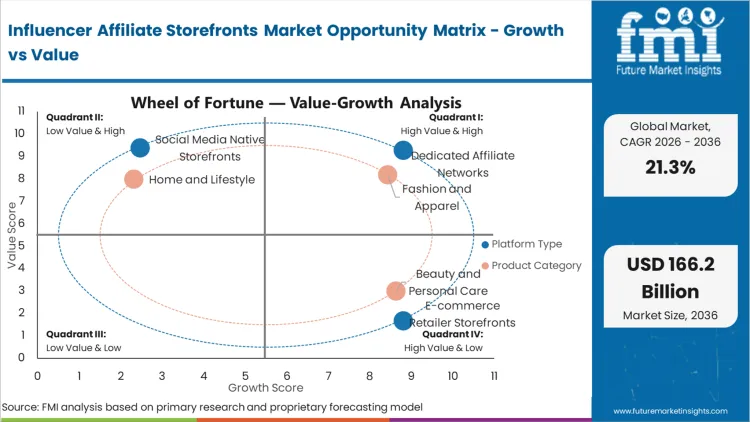
- Dedicated Affiliate Networks: 38.0% share in 2026, reflecting the absolute requirement for sophisticated multi-brand curation tools that native social platforms inherently lack.
- Fashion and Apparel: 42.0% share in 2026, as visually driven impulse purchases require minimal consideration time during rapid content consumption cycles.
- Micro-influencers: 45.0% share in 2026, driven by highly engaged niche communities that yield industry-leading conversion rates.
- Analyst Opinion at FMI:
- Anurag Sharma, Principal Consultant for Technology, opines: “The assumption that audience size dictates affiliate revenue completely misreads current conversion physics. Algorithmic distribution now rewards hyper-specific product curation over broad celebrity endorsement, transforming nano and micro-creators into the most efficient capital allocators in digital retail. Performance marketing directors who continue optimizing campaigns for raw impression volume rather than integrated checkout latency will find their customer acquisition costs unsustainable. Brands must abandon flat-fee structures and fully integrate dynamic commission APIs before the 2027 algorithmic updates permanently de-prioritize non-native external links.”
- Strategic Implications / Executive Takeaways:
- Shift capital structures from traditional static digital advertising toward dynamic, performance-based creator affiliate networks.
- Build agile supply chains capable of responding to sudden algorithmic demand spikes for low-ticket consumer items.
- Prioritize localized compliance teams to manage rapidly changing regulations regarding foreign-owned application transaction data.
- Methodology:
- Validated through first-hand platform operator disclosures and public transaction volume reports.
- Based on verifiable regional payment gateway processing benchmarks and digital wallet adoption rates.
- Primary interviews with platform monetization directors and digital supply chain managers form the analytical baseline.
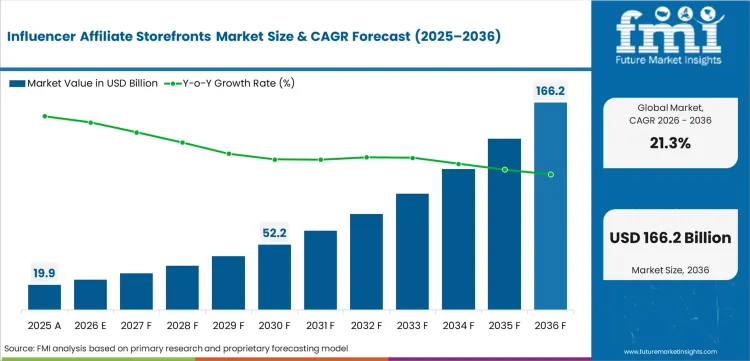
The massive revenue projection captured in the forecast reflects a structural dismantling of traditional digital advertising funnels rather than temporary social media trends. Direct conversion infrastructure now exists at the exact point of digital inspiration, eliminating the multi-click friction that historically suppressed mobile purchasing. This mathematical reality guarantees that capital will continuously flow toward networks offering the lowest checkout latency and highest creator trust metrics. The regional trajectories analyzed below demonstrate how local regulatory environments and payment gateway penetration dictate the exact speed of this global retail transformation.
Asia Pacific digital retail networks leveraging massive mobile-first populations bypass traditional banking infrastructure entirely, embedding unified payment interfaces directly into creator content feeds. Mature North American environments generate replacement demand away from display advertising, though volume growth faces constraints from strict data privacy compliance frameworks. European regulatory authorities mandate transparent disclosure infrastructure, forcing platforms to deploy automated compliance tagging. Latin American penetration accelerates as major e-commerce networks subsidize shipping logistics to capture impulse purchasing behavior across developing mobile demographics.
Influencer Affiliate Storefronts Market Key Takeaways
| Metric | Details |
|---|---|
| Industry Size (2026) | USD 24.1 billion |
| Industry Value (2036) | USD 166.0 billion |
| CAGR (2026-2036) | 21.3% |
Influencer Affiliate Storefronts Market Definition
The influencer affiliate storefronts market encompasses the specialized software platforms, digital aggregators, and transaction tracking APIs that allow independent content creators to curate, host, and monetize direct product recommendations. The core technology includes multi-brand catalog integration, dynamic commission attribution linking, and audience analytics dashboards natively embedded within personal profile pages. This infrastructure transforms passive content consumption into trackable retail transactions without requiring the user to navigate external search engines.
Influencer Affiliate Storefronts Market Inclusions
The market scope includes affiliate storefront software revenues, commission tracking modules, and digital aggregator subscription fees paid by creators or brands. Platform-specific transaction fees derived directly from affiliate-driven sales, link-in-bio commercial tier subscriptions, and enterprise software packages used by performance marketing directors to manage multi-creator campaigns fall fully within the defined boundaries.
Influencer Affiliate Storefronts Market Exclusions
The physical gross merchandise value of the actual retail products sold is explicitly excluded to prevent double-counting standard e-commerce metrics. Flat-fee brand sponsorship payments, ad-sense programmatic video revenue, conventional influencer marketing agency retainer fees, and subscription-based content platforms lacking integrated retail product tracking are omitted from the valuation.
Influencer Affiliate Storefronts Market Research Methodology
- Primary Research: Analysts engaged with platform monetization directors, digital supply chain managers, and regional retail compliance officers to map the specific decision gates triggering affiliate software adoption.
- Desk Research: The data collection phase aggregated compliance roadmaps from national trade ministries, public tech earnings transcripts, and international digital payment gateway volume reports.
- Market-Sizing and Forecasting: The baseline value derives from a bottom-up aggregation of regional active creator accounts, applying digital wallet adoption curves to project future transaction velocity.
- Data Validation and Update Cycle: Projections are rigorously tested against publicly reported application download metrics and regional e-commerce trade datasets from leading retail conglomerates.
Segmental Analysis
Influencer Affiliate Storefronts Market by Platform Type
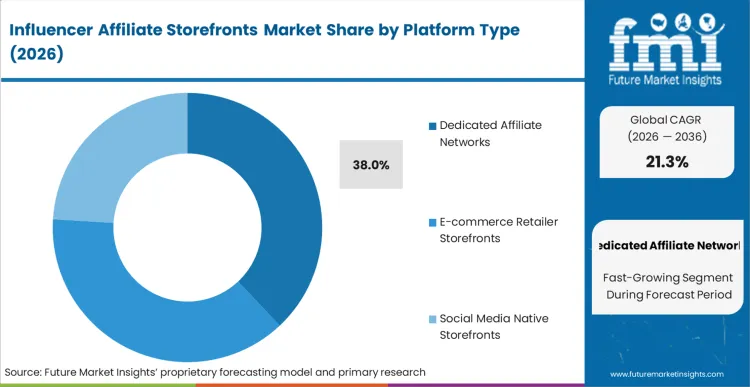
Every creator network manager bidding on direct-to-consumer budgets now faces strict requirements for cross-platform analytics and multi-brand catalog access. According to FMI's estimates, Dedicated Affiliate Networks represent a leading 38.0% share in 2026. Professional content makers reject native social tools that restrict their ability to own audience data or negotiate custom commission tiers. Expanding capabilities within social commerce forces platform operators to provide sophisticated back-end management software that operates independently of volatile social media algorithms. The deployment of advanced affiliate marketing software gives high-volume creators complete control over their revenue streams. Network operators unable to supply verifiable, third-party attribution metrics risk total exclusion from enterprise-level retail campaigns before the next major holiday procurement cycle begins.
- Audience portability: Independent database architecture allows high-volume creators to retain customer transaction history even if primary social distribution channels change algorithmic rules.
- Brand aggregation: Centralized catalog access enables independent media producers to seamlessly combine competing consumer brands into single, shoppable digital outfits or product lists.
- Commission agility: Dynamic pricing algorithms automatically adjust payout percentages based on real-time inventory levels, maximizing promotional efficiency for retail supply chain directors.
Influencer Affiliate Storefronts Market by Fashion Category
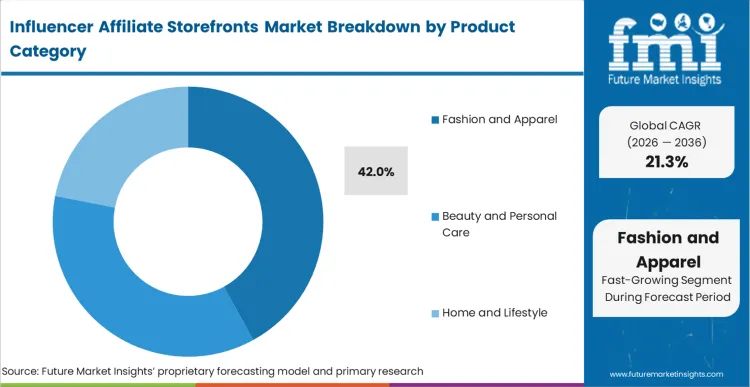
Digital clothing purchases required extensive text-based search and high-friction sizing comparisons. The integration of native video storefronts resolves this fundamental disconnect. FMI analysts opine that Fashion and Apparel capture 42.0% of market share in 2026 by aligning perfectly with the rapid interaction cycles inherent to short-form content scrolling. Visually driven product demonstrations compress the consumer consideration phase from days to seconds. Retailers embedding these functions capitalize on live commerce infrastructure to instantly clear excess inventory through decentralized creator networks. Apparel brands failing to provide automated inventory synchronization APIs lose priority status among top-tier creators during peak seasonal transition windows.
- Visual validation: Dynamic video demonstrations provide immediate visual proof of fabric drape and fit, removing the primary friction point preventing mobile clothing conversions.
- Inventory synchronization: Automated data links connect warehouse stock levels directly to creator storefront tags, ensuring out-of-stock items disappear before generating frustrated clicks.
- Trend acceleration: Algorithmic content delivery rapidly scales micro-trends, allowing fast-fashion production directors to initiate localized manufacturing runs based on real-time affiliate traction.
Trust Metrics Propel Micro-Influencer Conversion Supremacy
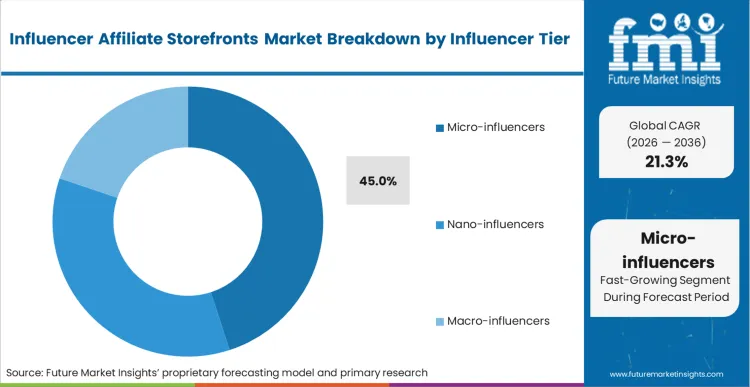
Micro-influencers emerge as the dominant tier segment, expected to represent 45.0% of total market share in 2026, driven by highly engaged niche communities built on deep parasocial trust. Broad celebrity endorsements generate massive impression volume but historically fail to deliver the granular, trackable conversion metrics required by modern performance marketing directors. As FMI's projection confirms, audience intimacy translates directly into industry-leading click-through rates. The expansion of digital content creator infrastructure equips these focused community leaders with enterprise-grade monetization tools previously reserved for global media brands. Marketing directors who continue prioritizing macro-influencer view counts over micro-creator conversion physics will exhaust their digital budgets without hitting mandatory quarterly revenue targets.
- Conversion efficiency: Niche audience focus generates exceptionally high purchase intent, lowering overall customer acquisition costs for direct-to-consumer retail brands.
- Content authenticity: Unfiltered product reviews build verified trust capital, establishing a reliable purchasing environment that highly produced celebrity advertisements cannot replicate.
- Network decentralization: Deploying hundreds of micro-creators simultaneously insulates brand campaign managers from the reputational risk associated with single high-profile celebrity partnerships.
Influencer Affiliate Storefronts Market Drivers, Restraints, and Opportunities
Platform monetization leads deploy advanced machine learning models to analyze watch time and interaction rates, serving highly specific physical products to users at the exact moment of highest purchase probability. FMI's analysis indicates that this capability renders traditional search-based retail acquisition structurally obsolete. The integration of zero-click checkout gateways directly beneath social video advertising content removes the navigation friction that historically killed mobile conversion rates. Retail brands that fail to integrate their product catalogs with these algorithmic distribution engines face a permanent customer acquisition cost disadvantage that destroys operating margins.
Stringent regional data sovereignty regulations explicitly prohibit the transfer of consumer financial data across international borders, fracturing the global unified commerce model. Performance marketing directors operating multinational affiliate programs must maintain distinct, localized server architectures to process commissions legally. This compliance burden introduces massive engineering overhead for platform operators attempting to standardize creator payouts. Direct-to-consumer brands rely on sophisticated localization software to shield themselves from regulatory liability, but the added latency in cross-border settlement restricts the velocity at which new creators can be onboarded in highly regulated jurisdictions.
Opportunities in the Influencer Affiliate Storefronts Market
- Automated Video Parsing Infrastructure: Machine learning tools that automatically cut extended creator broadcasts into discrete, shoppable short clips maximize the lifespan of affiliate content. Engineering leads deploying these tools drastically increase the total addressable commission volume for individual creators without requiring additional production hours.
- Rural Market Logistics Subsidies: Platform operators partnering with regional delivery networks to heavily subsidize shipping costs for low-ticket consumer items unlock massive untapped rural demographics. This logistics integration converts previously unprofitable geographies into high-volume impulse purchasing zones.
- Unified Payment Interface Integration: Native connection to localized digital wallets allows consumers in developing nations to execute micro-transactions without requiring traditional credit infrastructure. Payment gateway directors enabling these frictionless micro-payments capture transaction volume that conventional e-commerce architecture systematically ignores.
Regional Analysis
Based on the regional analysis, the Influencer Affiliate Storefronts market is segmented into North America, Latin America, Europe, East Asia, South Asia, Oceania and Middle East & Africa across 40+ countries. The full report also offers market attractiveness analysis based on regional trends.
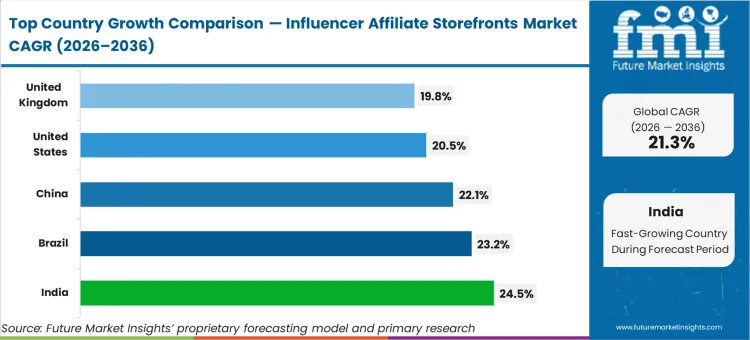
.webp "Top Country Growth Comparison Influencer Affiliate Storefronts Market Cagr (2026 2036)")
| Country | CAGR (2026 to 2036) |
|---|---|
| India | 24.5% |
| Brazil | 23.2% |
| China | 22.1% |
| United States | 20.5% |
| United Kingdom | 19.8% |
Source: Future Market Insights (FMI) analysis, based on proprietary forecasting model and primary research
Asia Pacific Influencer Affiliate Storefronts Market Analysis
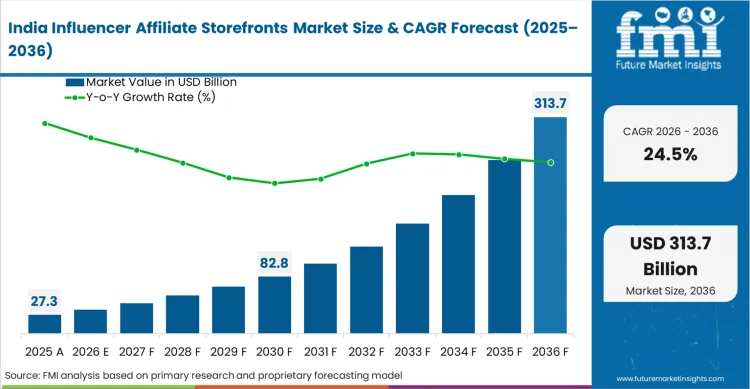
Asia Pacific serves as the global production epicenter and primary testing ground for advanced mobile-first commerce architectures. Platform operators dominate this regional landscape by leveraging massive consumer bases and integrating deeply with local digital wallet providers to bypass legacy banking infrastructure completely. As FMI's research confirms, this clean-slate technical environment enables the deployment of frictionless checkout sequences that Western markets struggle to replicate due to fragmented payment processing systems. The structural fusion of social networking and instantaneous e-commerce platform capabilities creates a self-sustaining transaction loop. National governments across the region actively shape this expansion through targeted digital economy mandates, forcing platform architects to continuously adapt their localized data retention protocols.
- India: India's digital retail architecture operates on the unparalleled scale of the Unified Payments Interface, creating an environment where micro-transactions face virtually zero technical friction. This frictionless digital wallet integration anchors India's 24.5% compound expansion of affiliate storefront demand to 2036. The national push toward tier-two and tier-three city digitization requires localized creator networks to curate culturally specific product catalogs rather than relying on metropolitan mega-influencers. India's strict influencer disclosure guidelines force creators to abandon untraceable promo codes in favor of authenticated storefront software that automatically logs compliance data. Platform monetization directors failing to deploy native Hindi or regional language localization tools face immediate disqualification from the subcontinent's fastest-growing consumer acquisition channels.
- China: China's domestic retail ecosystem functions through highly integrated super-applications where social networking, content consumption, and digital payments are permanently fused. The immense scale of this closed-loop digital architecture drives a 22.1% CAGR for native affiliate infrastructure in China through 2036. National tax authorities actively monitor top-tier influencers, mandating precise digital revenue reporting that forces platforms to build automated tax deduction modules directly into their storefront software. This regulatory environment structurally eliminates independent, untracked affiliate linking. Compliance operations officers who cannot demonstrate absolute transaction data transparency to state regulators forfeit their operating licenses before the next major domestic shopping festival commences.
FMI's report includes extensive coverage of the Asia Pacific affiliate storefront landscape. It incorporates detailed analysis of Japan, South Korea, Indonesia, and the broader ASEAN region. A defining dynamic shaping these nations is the rapid localization of mobile payment gateways, forcing international platform operators to deploy highly customized checkout architectures to satisfy stringent domestic data sovereignty requirements.
North America Influencer Affiliate Storefronts Market Analysis
North America represents a high-value, heavily consolidated ecosystem where mature digital platforms battle for exclusive creator contracts. Direct-to-consumer retail strategists leading marketing overhauls face intense pressure to shift budgets away from declining programmatic display networks toward measurable creator affiliate channels. Based on FMI's assessment, this capital rotation requires robust tracking infrastructure capable of proving precise return on ad spend to corporate finance departments. Incorporating advanced multichannel networks architecture allows brands to deploy thousands of micro-creators simultaneously without increasing internal headcount. Federal regulatory frameworks governing advertising transparency dictate the exact technical specifications required for these compliance-heavy storefront deployments.
- United States: The United States digital advertising sector operates under intensifying Federal Trade Commission scrutiny regarding transparent consumer disclosures for compensated product recommendations. This regulatory enforcement pressure advances the United States market at a 20.5% compound rate across the forecast decade as independent creators consolidate their operations onto compliant link-in-bio aggregators. Performance marketing directors demand automated disclosure tagging built directly into the storefront software to shield their brands from federal liability. Software platform architects lacking documented compliance with these FTC framework requirements face immediate exclusion from Tier-1 corporate retail marketing budgets before the upcoming holiday procurement cycle.
FMI's report includes comprehensive evaluation of the North American affiliate commerce sector. It features specific analysis of the Canadian digital retail market. A prevailing structural condition in this region involves the integration of cross-border shipping logistics, requiring storefront software to instantly calculate complex international tariffs and present localized pricing to maintain conversion rates across the continent.
Europe Influencer Affiliate Storefronts Market Analysis
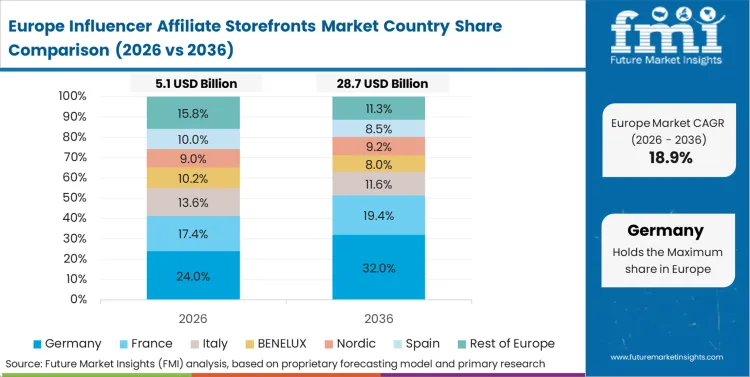
European digital policy actively penalizes the unauthorized monetization of consumer behavioral data, fundamentally disrupting traditional targeted advertising models. Performance marketing directors navigating this strict privacy landscape must utilize creator affiliate networks that operate purely on contextual, opt-in purchase intent rather than background data harvesting. FMI's proprietary forecasting model projects that this privacy-first environment forces the rapid adoption of sophisticated conversational commerce tools integrated directly into verified creator profiles. Upgrading to these transparent storefront architectures provides brands with the necessary legal insulation to operate across diverse national borders. Regional consumer protection directives heavily influence the technical boundaries of these digital retail transformations.
- United Kingdom: The United Kingdom's Advertising Standards Authority publicly monitors and penalizes social media personalities who obscure commercial intent, severely depressing conversion rates for untagged affiliate links. This strict enforcement environment sustains a 19.8% compound rate for dedicated affiliate storefront platforms in the UK as creators migrate to software that guarantees compliance. The shift toward formalized, single-page shopping destinations protects the creator's audience trust while satisfying regulatory visibility requirements. Direct-to-consumer brand managers who fail to mandate the use of ASA-compliant storefront software by their creator partners risk public regulatory censures that permanently damage brand equity.
FMI's report includes thorough investigation of the European affiliate networking framework. The analysis encompasses Germany, France, Italy, Spain, and the Nordics. A primary trend shaping these nations is the mandatory compliance with the Digital Markets Act, forcing large platform gatekeepers to allow independent affiliate tracking software to interface seamlessly with their native social applications.
Latin America Influencer Affiliate Storefronts Market Analysis
Latin America emerges as a high-velocity digital retail frontier propelled by exceptionally high daily screen time metrics and a young demographic deeply comfortable with social selling formats. Regional e-commerce operators actively redesign their consumer interfaces to prioritize creator-curated content over traditional catalog browsing. Platform architects must overcome significant logistical fragmentation by integrating localized delivery APIs directly into the storefront checkout process. Establishing reliable physical fulfillment networks is the binding constraint determining the success of digital impulse purchases.
- Brazil: Brazil's massive mobile penetration converges with significant geographical logistics hurdles, requiring storefront platforms to integrate real-time shipping calculation APIs to prevent checkout abandonment. The rollout of regional fulfillment partnerships reflects local e-commerce platforms propelling Brazil's affiliate sector at 23.2% annually. Retail operators deploy localized native storefront features tailored specifically to the Brazilian consumer's preference for installment-based digital payments. Platform expansion directors unable to integrate the PIX instant payment system into their creator storefront checkouts lose critical transaction volume to domestic competitors during peak promotional events.
FMI's report includes an in-depth assessment of the Latin American social commerce landscape. It incorporates detailed analysis of Mexico, Argentina, and Chile. A critical operational reality across these markets is the necessity of overcoming localized banking friction, forcing platform developers to prioritize digital wallet integrations over traditional credit card processing to unlock massive unbanked consumer demographics.
Competitive Aligners for Market Players
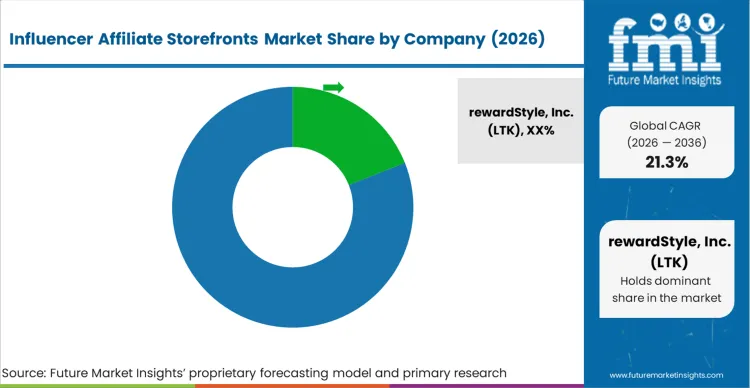
Federal trade regulators aggressively tightening enforcement around hidden commercial endorsements establish transparent disclosure infrastructure as the new minimum operational baseline. Software developers previously offering basic link redirection must now provide cryptographic proof of compliance tagging to satisfy corporate legal departments. The deployment of advanced blogger outreach software ensures that every micro-transaction carries an immutable disclosure record. Platform monetization leads who cannot natively integrate these compliance APIs into their core checkout architecture risk total exclusion from enterprise-level brand campaigns before the next formal compliance audit period.
Traditional affiliate tracking relied on complex browser cookies that are fundamentally incompatible with modern, privacy-restricted mobile operating systems. The transition to server-to-server tracking APIs completely circumvents this mobile limitation, capturing precise attribution data without violating user device policies. This silicon-level architecture upgrade provides performance marketing directors with reliable conversion metrics in an increasingly opaque digital environment. Technology vendors delaying the rollout of these server-side attribution tools face immediate disqualification from major corporate procurement frameworks that require absolute data privacy compliance.
The requirement for seamless catalog synchronization forces competing retail brands and independent creator networks to adopt universal inventory APIs. Connecting disparate digital supply chains directly into a single, unified creator storefront accelerates the extraction of real-time purchasing data for predictive manufacturing models. The convergence of these once-isolated data streams allows retail supply chain directors to initiate localized production runs based entirely on viral affiliate spikes. Software integrators failing to establish robust, low-latency API connections with global logistics providers surrender their market position to platforms capable of guaranteeing accurate real-time inventory visibility.
Key Players in Influencer Affiliate Storefronts Market
- rewardStyle, Inc. (LTK)
- Amazon.com, Inc.
- Rakuten Group, Inc. (Collective Voice)
- Linktree Pty Ltd
- Beacons AI, Inc.
- Stan for Creators, Inc.
- MagicLinks, Inc.
- Later Group (Mavely)
- Impact Tech, Inc.
- ByteDance Ltd.
Scope of the Report
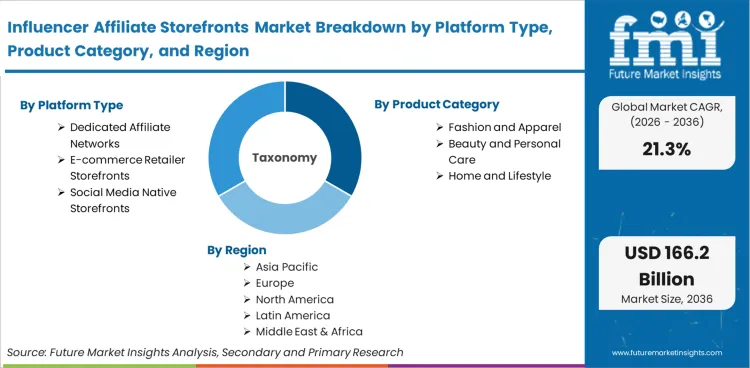
| Metric | Value |
|---|---|
| Quantitative Units | USD 24.1 billion to USD 166.0 billion, at a CAGR of 21.3% |
| Market Definition | The software platforms, digital aggregators, and transaction tracking infrastructure that allow content creators to curate and monetize product recommendations via commission attribution links. |
| Platform Type Segmentation | Dedicated Affiliate Networks, E-commerce Retailer Storefronts, Social Media Native Storefronts, Link-in-Bio Aggregators |
| Product Category Segmentation | Fashion and Apparel, Beauty and Personal Care, Home and Lifestyle, Health and Wellness, Consumer Electronics |
| Influencer Tier Segmentation | Nano-influencers, Micro-influencers, Macro-influencers, Mega-influencers and Celebrities |
| Regions Covered | North America, Latin America, Europe, East Asia, South Asia, Oceania, Middle East and Africa |
| Countries Covered | United States, Canada, Brazil, United Kingdom, Germany, France, Italy, Spain, China, Japan, India, Indonesia, South Korea, and 40 plus countries |
| Key Companies Profiled | rewardStyle, Inc. (LTK), Amazon.com, Inc., Rakuten Group, Inc., Linktree Pty Ltd, Beacons AI, Inc., Stan for Creators, Inc., MagicLinks, Inc., Later Group, Impact Tech, Inc., ByteDance Ltd. |
| Forecast Period | 2026 to 2036 |
| Approach | Bottom-up market modeling validated through primary interviews with platform directors, supported by payment gateway data and digital wallet adoption statistics. |
Influencer Affiliate Storefronts Market Analysis by Segments
Platform Type:
- Dedicated Affiliate Networks
- E-commerce Retailer Storefronts
- Social Media Native Storefronts
- Link-in-Bio Aggregators
Product Category:
- Fashion and Apparel
- Beauty and Personal Care
- Home and Lifestyle
- Health and Wellness
- Consumer Electronics
Influencer Tier:
- Nano-influencers (1K to 10K followers)
- Micro-influencers (10K to 100K followers)
- Macro-influencers (100K to 1M followers)
- Mega-influencers and Celebrities (Above 1M followers)
Region:
- North America
- United States
- Canada
- Latin America
- Brazil
- Argentina
- Chile
- Rest of Latin America
- Europe
- United Kingdom
- Germany
- France
- Italy
- Spain
- Benelux
- Nordics
- Central & Eastern Europe
- Rest of Europe
- East Asia
- China
- Japan
- South Korea
- South Asia
- India
- Rest of South Asia
- Oceania
- Australia
- New Zealand
- Middle East and Africa
- Kingdom of Saudi Arabia
- United Arab Emirates
- South Africa
- Turkey
- Rest of Middle East and Africa
Bibliography
- United States Federal Trade Commission. (2024, June 14). FTC Updates Disclosures 101 for Social Media Influencers (Guidance document).
- Advertising Standards Authority. (2024, September 12). Influencer Ad Disclosure Guidelines: Making Commercial Intent Clear (Regulatory filing).
- Performance Marketing Association. (2024, June 10). Annual USA Affiliate Marketing Spending Report (Sector survey).
- Interactive Advertising Bureau. (2024, November 02). Creator Economy and Affiliate Attribution Standards (Standards publication).
This bibliography is provided for reader reference. The full FMI report contains the complete reference list with primary research documentation.
This Report Addresses
- Market intelligence mapping the specific digital retail channel investments required to transition from traditional display advertising to creator-curated affiliate networks.
- Market sizing estimation and revenue forecasts from 2026 to 2036, detailing exact capital expenditure dedicated to dedicated affiliate networks and link-in-bio aggregators.
- Growth opportunity analysis identifying the specific checkout latency constraints that drive adoption of automated video parsing infrastructure.
- Segmental revenue evaluation covering critical product categories like fashion and consumer electronics to highlight category-specific impulse purchasing behaviors.
- Competition strategy assessment analyzing how leading tech conglomerates consolidate software capabilities to capture integrated social commerce volume.
- Regulatory compliance tracking evaluating how strict digital data sovereignty laws and transparent disclosure mandates force structural changes in cross-border platform architecture.
- Regional deployment intelligence comparing the massive frictionless payment expansion in Asia Pacific against the complex compliance-heavy modernization requirements prevalent in North America and Europe.
- Custom data delivery formats encompassing interactive dashboards, raw Excel datasets, and comprehensive PDF narrative reports.
Frequently Asked Questions
How large is the demand for influencer affiliate storefronts in the global market in 2026?
Demand for influencer affiliate storefronts in the global market is estimated to be valued at USD 24.1 billion in 2026.
What will be the market size of influencer affiliate storefronts in the global market by 2036?
Market size for influencer affiliate storefronts is projected to reach USD 166.0 billion by 2036.
What is the expected demand growth for influencer affiliate storefronts in the global market between 2026 and 2036?
Demand for influencer affiliate storefronts is expected to grow at a CAGR of 21.3% between 2026 and 2036.
Which Platform Type is poised to lead global sales by 2026?
Dedicated Affiliate Networks commands 38.0% in 2026 as professional content makers demand cross-platform analytics and sophisticated multi-brand curation tools outside of volatile social algorithms.
How significant is the role of Fashion and Apparel in driving influencer affiliate storefronts adoption in 2026?
Fashion and Apparel represents 42.0% of segment share as visually driven product demonstrations perfectly match the rapid interaction cycles inherent to digital creator scrolling.
What is driving demand in India?
India's rapid expansion is driven by massive mobile-first populations utilizing unified payment interfaces, eliminating the technical friction associated with micro-transactions.
What compliance standards or regulations are referenced for the United States?
Federal Trade Commission guidelines regarding transparent consumer disclosures for compensated product recommendations dictate strict compliance tagging requirements.
What is the United States growth outlook in this report?
The United States is projected to grow at a CAGR of 20.5% during 2026 to 2036.
Why is Europe described as a priority region in this report?
Europe operates as the global regulatory laboratory for digital retail, where strict consumer protection and digital markets legislation actively force platforms to deploy transparent compliance infrastructure.
What type of demand dominates in Europe?
Demand heavily focuses on replacing untrackable display advertisements with fully verified creator storefronts that embed automated regulatory disclosure tags.
What is the United Kingdom's growth outlook in this report?
The United Kingdom is projected to expand at a CAGR of 19.8% during 2026 to 2036.
Does the report cover China in its regional analysis?
Yes, China is included within East Asia under the regional scope of analysis.
What are the sources referred to for analyzing China?
National tax authority mandates and corporate structural announcements from leading domestic super-application providers form the analytical basis.
What is the main demand theme linked to China in its region coverage?
Stringent government oversight regarding creator taxation forces digital platforms to build automated revenue reporting modules directly into their affiliate software.
Does the report cover Brazil in its regional analysis?
Yes, Brazil is included within Latin America under the regional coverage framework.
What is the main Brazil related demand theme in its region coverage?
The rollout of regional logistics partnerships by massive e-commerce networks heavily subsidizes shipping costs, unlocking profitable impulse purchasing across difficult geographies.
Which product formats or configurations are strategically important for Asia Pacific supply chains?
Native digital wallet integrations embedded directly within the creator content feeds are critical for bypassing traditional banking infrastructure.
What is influencer affiliate storefronts and what is it mainly used for?
It refers to the software platforms and digital aggregators that allow content creators to curate shoppable product lists and earn direct commissions. It is primarily used to drive measurable retail sales outside of traditional advertising channels.
What does influencer affiliate storefronts mean in this report?
The scope encompasses the global software revenues, commission tracking modules, and digital aggregator subscription fees enabling direct creator-led sales.
What is included in the scope of this influencer affiliate storefronts report?
The market covers transaction tracking infrastructure, platform-specific commission fees, and multi-brand catalog integration APIs used by creators and performance marketing directors.
What is excluded from the scope of this report?
Physical gross merchandise value, flat-fee brand sponsorships, ad-sense programmatic video revenue, and subscription-based content platforms without retail integration are explicitly excluded.
What does market forecast mean on this page?
The market forecast represents a model-based projection built on defined technological and digital retail adoption assumptions for strategic planning purposes.
How does FMI build and validate the influencer affiliate storefronts forecast?
The model applies a bottom-up methodology starting with regional active creator accounts and cross-validates projections against application download metrics and digital payment gateway volumes.
What does zero reliance on speculative third-party market research mean here?
Primary interviews, verified regulatory compliance roadmaps, and official tech earnings transcripts are used exclusively instead of unverified syndicated estimates.
Preview the report firsthand - request a free sample
Get SampleGet the brochure for pricing and purchase details.
Get PDFTable of Content
- Executive Summary
- Global Market Outlook
- Demand-side Trends
- Supply-side Trends
- Technology Roadmap Analysis
- Analysis and Recommendations
- Market Overview
- Market Coverage / Taxonomy
- Market Definition / Scope / Limitations
- Research Methodology
- Chapter Orientation
- Analytical Lens and Working Hypotheses
- Market Structure, Signals, and Trend Drivers
- Benchmarking and Cross-market Comparability
- Market Sizing, Forecasting, and Opportunity Mapping
- Research Design and Evidence Framework
- Desk Research Programme (Secondary Evidence)
- Company Annual and Sustainability Reports
- Peer-reviewed Journals and Academic Literature
- Corporate Websites, Product Literature, and Technical Notes
- Earnings Decks and Investor Briefings
- Statutory Filings and Regulatory Disclosures
- Technical White Papers and Standards Notes
- Trade Journals, Industry Magazines, and Analyst Briefs
- Conference Proceedings, Webinars, and Seminar Materials
- Government Statistics Portals and Public Data Releases
- Press Releases and Reputable Media Coverage
- Specialist Newsletters and Curated Briefings
- Sector Databases and Reference Repositories
- FMI Internal Proprietary Databases and Historical Market Datasets
- Subscription Datasets and Paid Sources
- Social Channels, Communities, and Digital Listening Inputs
- Additional Desk Sources
- Expert Input and Fieldwork (Primary Evidence)
- Primary Modes
- Qualitative Interviews and Expert Elicitation
- Quantitative Surveys and Structured Data Capture
- Blended Approach
- Why Primary Evidence is Used
- Field Techniques
- Interviews
- Surveys
- Focus Groups
- Observational and In-context Research
- Social and Community Interactions
- Stakeholder Universe Engaged
- C-suite Leaders
- Board Members
- Presidents and Vice Presidents
- R&D and Innovation Heads
- Technical Specialists
- Domain Subject-matter Experts
- Scientists
- Physicians and Other Healthcare Professionals
- Governance, Ethics, and Data Stewardship
- Research Ethics
- Data Integrity and Handling
- Primary Modes
- Tooling, Models, and Reference Databases
- Desk Research Programme (Secondary Evidence)
- Data Engineering and Model Build
- Data Acquisition and Ingestion
- Cleaning, Normalisation, and Verification
- Synthesis, Triangulation, and Analysis
- Quality Assurance and Audit Trail
- Market Background
- Market Dynamics
- Drivers
- Restraints
- Opportunity
- Trends
- Scenario Forecast
- Demand in Optimistic Scenario
- Demand in Likely Scenario
- Demand in Conservative Scenario
- Opportunity Map Analysis
- Product Life Cycle Analysis
- Supply Chain Analysis
- Investment Feasibility Matrix
- Value Chain Analysis
- PESTLE and Porter’s Analysis
- Regulatory Landscape
- Regional Parent Market Outlook
- Production and Consumption Statistics
- Import and Export Statistics
- Market Dynamics
- Global Market Analysis 2021 to 2025 and Forecast, 2026 to 2036
- Historical Market Size Value (USD Million) Analysis, 2021 to 2025
- Current and Future Market Size Value (USD Million) Projections, 2026 to 2036
- Y-o-Y Growth Trend Analysis
- Absolute $ Opportunity Analysis
- Global Market Pricing Analysis 2021 to 2025 and Forecast 2026 to 2036
- Global Market Analysis 2021 to 2025 and Forecast 2026 to 2036, By Platform Type
- Introduction / Key Findings
- Historical Market Size Value (USD Million) Analysis By Platform Type , 2021 to 2025
- Current and Future Market Size Value (USD Million) Analysis and Forecast By Platform Type , 2026 to 2036
- Dedicated Affiliate Networks
- E-commerce Retailer Storefronts
- Social Media Native Storefronts
- Dedicated Affiliate Networks
- Y-o-Y Growth Trend Analysis By Platform Type , 2021 to 2025
- Absolute $ Opportunity Analysis By Platform Type , 2026 to 2036
- Global Market Analysis 2021 to 2025 and Forecast 2026 to 2036, By Product Category
- Introduction / Key Findings
- Historical Market Size Value (USD Million) Analysis By Product Category, 2021 to 2025
- Current and Future Market Size Value (USD Million) Analysis and Forecast By Product Category, 2026 to 2036
- Fashion and Apparel
- Beauty and Personal Care
- Home and Lifestyle
- Fashion and Apparel
- Y-o-Y Growth Trend Analysis By Product Category, 2021 to 2025
- Absolute $ Opportunity Analysis By Product Category, 2026 to 2036
- Global Market Analysis 2021 to 2025 and Forecast 2026 to 2036, By Influencer Tier
- Introduction / Key Findings
- Historical Market Size Value (USD Million) Analysis By Influencer Tier, 2021 to 2025
- Current and Future Market Size Value (USD Million) Analysis and Forecast By Influencer Tier, 2026 to 2036
- Micro-influencers
- Nano-influencers
- Macro-influencers
- Micro-influencers
- Y-o-Y Growth Trend Analysis By Influencer Tier, 2021 to 2025
- Absolute $ Opportunity Analysis By Influencer Tier, 2026 to 2036
- Global Market Analysis 2021 to 2025 and Forecast 2026 to 2036, By Region
- Introduction
- Historical Market Size Value (USD Million) Analysis By Region, 2021 to 2025
- Current Market Size Value (USD Million) Analysis and Forecast By Region, 2026 to 2036
- North America
- Latin America
- Western Europe
- Eastern Europe
- East Asia
- South Asia and Pacific
- Middle East & Africa
- Market Attractiveness Analysis By Region
- North America Market Analysis 2021 to 2025 and Forecast 2026 to 2036, By Country
- Historical Market Size Value (USD Million) Trend Analysis By Market Taxonomy, 2021 to 2025
- Market Size Value (USD Million) Forecast By Market Taxonomy, 2026 to 2036
- By Country
- USA
- Canada
- Mexico
- By Platform Type
- By Product Category
- By Influencer Tier
- By Country
- Market Attractiveness Analysis
- By Country
- By Platform Type
- By Product Category
- By Influencer Tier
- Key Takeaways
- Latin America Market Analysis 2021 to 2025 and Forecast 2026 to 2036, By Country
- Historical Market Size Value (USD Million) Trend Analysis By Market Taxonomy, 2021 to 2025
- Market Size Value (USD Million) Forecast By Market Taxonomy, 2026 to 2036
- By Country
- Brazil
- Chile
- Rest of Latin America
- By Platform Type
- By Product Category
- By Influencer Tier
- By Country
- Market Attractiveness Analysis
- By Country
- By Platform Type
- By Product Category
- By Influencer Tier
- Key Takeaways
- Western Europe Market Analysis 2021 to 2025 and Forecast 2026 to 2036, By Country
- Historical Market Size Value (USD Million) Trend Analysis By Market Taxonomy, 2021 to 2025
- Market Size Value (USD Million) Forecast By Market Taxonomy, 2026 to 2036
- By Country
- Germany
- UK
- Italy
- Spain
- France
- Nordic
- BENELUX
- Rest of Western Europe
- By Platform Type
- By Product Category
- By Influencer Tier
- By Country
- Market Attractiveness Analysis
- By Country
- By Platform Type
- By Product Category
- By Influencer Tier
- Key Takeaways
- Eastern Europe Market Analysis 2021 to 2025 and Forecast 2026 to 2036, By Country
- Historical Market Size Value (USD Million) Trend Analysis By Market Taxonomy, 2021 to 2025
- Market Size Value (USD Million) Forecast By Market Taxonomy, 2026 to 2036
- By Country
- Russia
- Poland
- Hungary
- Balkan & Baltic
- Rest of Eastern Europe
- By Platform Type
- By Product Category
- By Influencer Tier
- By Country
- Market Attractiveness Analysis
- By Country
- By Platform Type
- By Product Category
- By Influencer Tier
- Key Takeaways
- East Asia Market Analysis 2021 to 2025 and Forecast 2026 to 2036, By Country
- Historical Market Size Value (USD Million) Trend Analysis By Market Taxonomy, 2021 to 2025
- Market Size Value (USD Million) Forecast By Market Taxonomy, 2026 to 2036
- By Country
- China
- Japan
- South Korea
- By Platform Type
- By Product Category
- By Influencer Tier
- By Country
- Market Attractiveness Analysis
- By Country
- By Platform Type
- By Product Category
- By Influencer Tier
- Key Takeaways
- South Asia and Pacific Market Analysis 2021 to 2025 and Forecast 2026 to 2036, By Country
- Historical Market Size Value (USD Million) Trend Analysis By Market Taxonomy, 2021 to 2025
- Market Size Value (USD Million) Forecast By Market Taxonomy, 2026 to 2036
- By Country
- India
- ASEAN
- Australia & New Zealand
- Rest of South Asia and Pacific
- By Platform Type
- By Product Category
- By Influencer Tier
- By Country
- Market Attractiveness Analysis
- By Country
- By Platform Type
- By Product Category
- By Influencer Tier
- Key Takeaways
- Middle East & Africa Market Analysis 2021 to 2025 and Forecast 2026 to 2036, By Country
- Historical Market Size Value (USD Million) Trend Analysis By Market Taxonomy, 2021 to 2025
- Market Size Value (USD Million) Forecast By Market Taxonomy, 2026 to 2036
- By Country
- Kingdom of Saudi Arabia
- Other GCC Countries
- Turkiye
- South Africa
- Other African Union
- Rest of Middle East & Africa
- By Platform Type
- By Product Category
- By Influencer Tier
- By Country
- Market Attractiveness Analysis
- By Country
- By Platform Type
- By Product Category
- By Influencer Tier
- Key Takeaways
- Key Countries Market Analysis
- USA
- Pricing Analysis
- Market Share Analysis, 2025
- By Platform Type
- By Product Category
- By Influencer Tier
- Canada
- Pricing Analysis
- Market Share Analysis, 2025
- By Platform Type
- By Product Category
- By Influencer Tier
- Mexico
- Pricing Analysis
- Market Share Analysis, 2025
- By Platform Type
- By Product Category
- By Influencer Tier
- Brazil
- Pricing Analysis
- Market Share Analysis, 2025
- By Platform Type
- By Product Category
- By Influencer Tier
- Chile
- Pricing Analysis
- Market Share Analysis, 2025
- By Platform Type
- By Product Category
- By Influencer Tier
- Germany
- Pricing Analysis
- Market Share Analysis, 2025
- By Platform Type
- By Product Category
- By Influencer Tier
- UK
- Pricing Analysis
- Market Share Analysis, 2025
- By Platform Type
- By Product Category
- By Influencer Tier
- Italy
- Pricing Analysis
- Market Share Analysis, 2025
- By Platform Type
- By Product Category
- By Influencer Tier
- Spain
- Pricing Analysis
- Market Share Analysis, 2025
- By Platform Type
- By Product Category
- By Influencer Tier
- France
- Pricing Analysis
- Market Share Analysis, 2025
- By Platform Type
- By Product Category
- By Influencer Tier
- India
- Pricing Analysis
- Market Share Analysis, 2025
- By Platform Type
- By Product Category
- By Influencer Tier
- ASEAN
- Pricing Analysis
- Market Share Analysis, 2025
- By Platform Type
- By Product Category
- By Influencer Tier
- Australia & New Zealand
- Pricing Analysis
- Market Share Analysis, 2025
- By Platform Type
- By Product Category
- By Influencer Tier
- China
- Pricing Analysis
- Market Share Analysis, 2025
- By Platform Type
- By Product Category
- By Influencer Tier
- Japan
- Pricing Analysis
- Market Share Analysis, 2025
- By Platform Type
- By Product Category
- By Influencer Tier
- South Korea
- Pricing Analysis
- Market Share Analysis, 2025
- By Platform Type
- By Product Category
- By Influencer Tier
- Russia
- Pricing Analysis
- Market Share Analysis, 2025
- By Platform Type
- By Product Category
- By Influencer Tier
- Poland
- Pricing Analysis
- Market Share Analysis, 2025
- By Platform Type
- By Product Category
- By Influencer Tier
- Hungary
- Pricing Analysis
- Market Share Analysis, 2025
- By Platform Type
- By Product Category
- By Influencer Tier
- Kingdom of Saudi Arabia
- Pricing Analysis
- Market Share Analysis, 2025
- By Platform Type
- By Product Category
- By Influencer Tier
- Turkiye
- Pricing Analysis
- Market Share Analysis, 2025
- By Platform Type
- By Product Category
- By Influencer Tier
- South Africa
- Pricing Analysis
- Market Share Analysis, 2025
- By Platform Type
- By Product Category
- By Influencer Tier
- USA
- Market Structure Analysis
- Competition Dashboard
- Competition Benchmarking
- Market Share Analysis of Top Players
- By Regional
- By Platform Type
- By Product Category
- By Influencer Tier
- Competition Analysis
- Competition Deep Dive
- rewardStyle, Inc. (LTK)
- Overview
- Product Portfolio
- Profitability by Market Segments (Product/Age /Sales Channel/Region)
- Sales Footprint
- Strategy Overview
- Marketing Strategy
- Product Strategy
- Channel Strategy
- Amazon.com, Inc.
- Rakuten Group, Inc. (Collective Voice)
- Linktree Pty Ltd
- Beacons AI, Inc.
- Stan for Creators, Inc.
- MagicLinks, Inc.
- rewardStyle, Inc. (LTK)
- Competition Deep Dive
- Assumptions & Acronyms Used


