

- Market Size (2026)
- USD 31.8 Bn
- Forecast (2036)
- USD 68 Bn
- CAGR (2026 to 2036)
- 7.9%
How big is Longevity Wellness Pharmaceutical Market size in 2026?
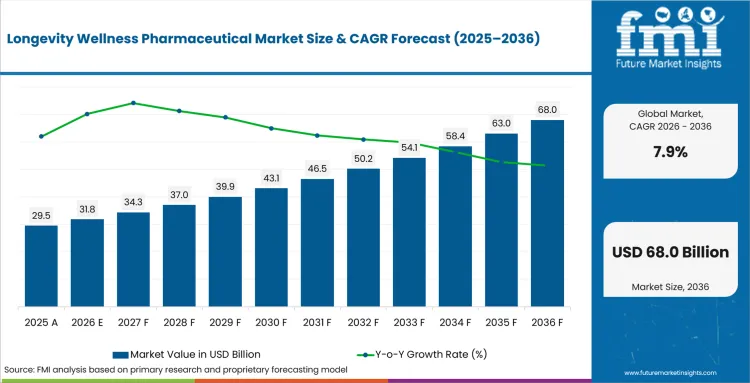
USD 31.8 billion in 2026 and USD 68 billion by 2036 at a 7.9% CAGR.
Sales of longevity wellness pharmaceutical are estimated to rise at 7.9% CAGR through 2036, increasing valuation from USD 31.8 billion in 2026 to USD 68 billion by 2036. Establishing named clinical indications and verifiable biological endpoints gives regulated pharmaceutical development its core commercial value. The United States Food and Drug Administration recorded more than 6.5 million Americans living with Alzheimer’s disease in a March 2024 release. Updated regulatory guidelines established clear diagnostic criteria and guided surrogate endpoint selection for early-stage drug pipelines. Such structured expectations direct disease-specific longevity research toward verifiable biomarkers associated with proven clinical benefits.
Pharmaceutical sponsors across the United States and Germany prioritize ongoing dialogue with regulators alongside strong indication-specific evidence. Drug developers throughout Japan and Australia focus primarily on securing local clinical access and establishing dependable specialist support. World Health Organization released data during October 2025 projecting one in six people worldwide are likely to reach 60 years of age or older by 2030. Such a demographic shift places enormous pressure on global health systems to evaluate new therapies targeting defined age-related illnesses.
Key Takeaways for the Longevity Wellness Pharmaceutical Market
- Demand for longevity wellness pharmaceutical is influenced by cellular senescence research and investment in biomarker-guided medicine.
- Pharmaceutical therapies are forecast to garner 38.0% share of therapy type in 2026, driven by regulated drug-development pathways and established clinical review processes.
- Hospital pharmacies are estimated to lead distribution channel with 37.0% share in 2026, reflecting controlled dispensing and specialist medication oversight.
- Extended outcome timelines and unapproved generalized anti-aging claims restrict dependable clinical and commercial conversion.
- Competition focusses on Life Biosciences, NewLimit, Retro Biosciences, Rubedo Life Sciences, Cambrian Bio, Calico Life Sciences, BioAge Labs, and Aeovian Pharmaceuticals, with developers differentiating based on aging-biology targets and clinical-development progress.
Analyst Perspective
“Longevity pharmaceutical value begins with a measurable endpoint and a regulated development plan. Sponsors gain confidence depending on functional outcomes and safety evidence across extended exposure. Commercial scale follows clinical proof instead of generalized interest in aging.”
- Anurag Sharma, Principal Analyst for Healthcare at Future Market Insights
How is Longevity Wellness Pharmaceutical Market segmented?
The longevity wellness pharmaceutical is segmented by product type, application, end user, distribution channel, therapy type, and region.
The longevity wellness pharmaceutical is segmented by product type, application, end user, distribution channel, therapy type, and region. Product type covers senolytic drugs, NAD+ boosters, mTOR inhibitors, cellular reprogramming therapies, and peptide therapeutics. Application covers healthy aging, cardiovascular health, neurodegenerative disorders, metabolic disorders, and immune health. End user spans hospitals, specialty clinics, pharmaceutical companies, research institutes, and home healthcare providers. Distribution channel includes hospital pharmacies, retail pharmacies, online pharmacies, specialty pharmacies, and direct sales. Therapy type includes pharmaceutical therapies, regenerative medicine, gene therapy, nutraceutical-based therapy, and combination therapy. Region coverage extends across North America, Europe, East Asia, South Asia and Pacific, Latin America, and Middle East and Africa.
How do senolytic drugs shape product type demand?
Senolytic drugs target pathologic senescent cells associated with tissue dysfunction and chronic inflammation. Clinical selection centers on target engagement and safety. Nature medicine reported a Phase 2 trial covering 60 postmenopausal women in July 2024. P1NP increased 16.0% at 2 and 4 weeks among participants receiving dasatinib and quercetin. Early biological response supports clinical evaluation. Endpoint inconsistency keeps patient selection and outcome design central.
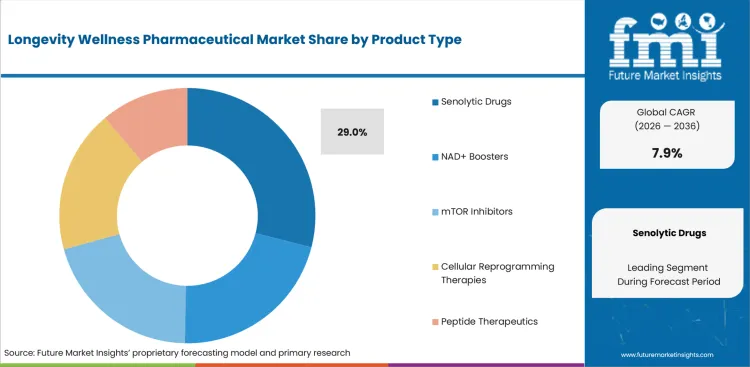
- Senolytic drugs are estimated to represent 29.0% of product type in 2026, supported by direct positioning against pathologic senescent cells. Sustained orders require verified patient selection and functional outcomes across treated populations.
- Cellular reprogramming therapies and nicotinamide adenine dinucleotide programs create alternative routes across metabolic support and cellular repair. Challenger gains require clearer safety margins or stronger clinical endpoints than senolytic programs provide.
Why does healthy aging lead application demand?
Healthy aging connects pharmaceutical development with functional preservation across defined age-related conditions. Clinical value requires disease-specific endpoints instead of generalized wellness claims. NewLimit reported 16 payloads treating disease in validated animal models during January 2026, demonstrating movement from cellular reprogramming screens into preclinical medicine design. Human translation remains contingent on safety and measurable patient benefit.
- By application, healthy aging is anticipated to account for 33.0% share in 2026 as it reflects demand for interventions addressing functional decline depending on clinically supervised programs. Commercial durability rests on reproducible biomarker and functional evidence across selected indications.
- Neurodegenerative disorders and immune health provide disease-specific development paths with clearer endpoints. Healthy aging supplement activity remains adjacent unless regulated treatment and clinical supervision qualify under report boundaries.
What supports hospitals across end user demand?
Hospitals connect medication administration and adverse-event management. Complex longevity therapies require coordinated clinical oversight across pharmacy and physician teams. American Society of Health-System Pharmacists reported direct-care pharmacist assignments across more than 75% of United States hospitals in June 2025, strengthening medication review across high-intensity services. Hospital participation influences controlled introduction of therapies carrying complex monitoring requirements.
- Based on end user, hospitals are projected to hold 34.0% share in 2026, led by specialist infrastructure and multidisciplinary treatment governance. Adoption remains conditional on formulary approval and manageable safety monitoring.
- Pharmaceutical companies and home healthcare providers support targeted access across development and delivery stages. Stem cell therapy programs require site capability and standardized handling during clinical use.
Why do hospital pharmacies lead distribution channel demand?
Hospital pharmacies manage controlled medicines and clinical documentation. Pharmacy oversight is central for investigational or complex treatments involving strict administration protocols. American Society of Health-System Pharmacists reported decentralized drug distribution across 86.0% of hospitals in May 2024, showing extensive medication access near patient-care areas. Distributed systems improve controlled availability across inpatient services under pharmacy governance.
- In 2026, hospital pharmacies are set to capture 37.0% share, supported by formulary control and direct coordination with specialist teams. Position retention relies on documented safety procedures and treatment-specific handling capacity.
- Retail pharmacies and direct sales address recurring treatment access, with specialist channels supporting biologic or gene-based regimens. Nutraceuticals remain outside scope without clinical supervision and regulated treatment claims.
What supports pharmaceutical therapies within therapy type?
Pharmaceutical therapies enter established clinical development and pharmacovigilance processes. Defined indications allow sponsors to align endpoints with benefit-risk assessment and payer evaluation. United States Food and Drug Administration recorded 46 novel drug approvals in 2025, demonstrating continued capacity for indication-specific medicine review across diverse conditions. Longevity programs gain credibility through comparable regulatory discipline instead of anti-aging positioning.
- In 2026, pharmaceutical therapies are likely to secure 38.0% share due to familiar small-molecule and biologic development routes. Buyers favor programs with defined disease claims and measurable clinical outcomes.
- Nutraceutical-based therapy and combination therapy expand intervention choices across selected conditions, with rare disease gene therapy illustrating a specialized clinical route. Cell and gene therapy manufacturing capacity influences consistency across complex products requiring durable safety and efficacy evidence.
What are drivers, restraints, and opportunities in Longevity Wellness Pharmaceutical Market
Cellular senescence research supports focused therapies with measurable clinical outcomes. Uncertain biomarkers and unapproved anti-aging indications delay clinical validation and commercial conversion.
- Driver: Research into cellular senescence and aging biology expands target selection for disease-specific programs. Translational value rises through biomarkers paired with functional endpoints.
- Restraint: Uncertain biomarkers and extended outcome timelines delay clinical confidence. Regulatory review remains indication-specific, leaving generalized anti-aging claims outside accepted approval routes.
- Opportunity: Disease-specific programs around validated targets offer a controlled commercial path. Partnerships linking discovery and specialist delivery improve translation across selected indications.
Cellular senescence research is improving target definition across tissues and disease states. National Institutes of Health reported analysis across 14 types of human senescent cells in July 2026, identifying distinct molecular patterns across cell types. Greater target resolution supports patient selection and biomarker design for senolytic development. Commercial value emerges through trials proving functional benefit across named diseases.
Long outcome periods delay proof across age-related therapeutic programs. United States Food and Drug Administration reported conventional osteoporosis trials using fracture endpoints may take two to five years in December 2025. Extended trial periods raise capital exposure and postpone commercial validation. Surrogate endpoints require formal qualification prior to development use.
Selective pathway programs create opportunities across intrinsic capacity and age-related disease. Advanced Research Projects Agency for Health listed an award of up to USD 30.8 million in February 2026 for Cambrian BioPharma’s selective mTORC1 program. Public funding supports translational work across dosing, safety, and clinical measures. Commercial prospects remain contingent on successful regulated development.
How are country CAGRs aligned in Longevity Wellness Pharmaceutical Market?
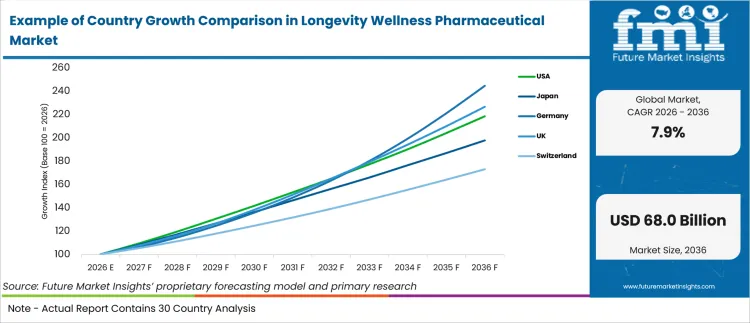
| Country | CAGR |
|---|---|
| Australia | 9.9% |
| Germany | 9.3% |
| UK | 8.5% |
| USA | 8.1% |
| Canada | 7.5% |
| Japan | 7.0% |
| Switzerland | 5.6% |
Source: Future Market Insights analysis, 2026.
How do country-level CAGRs compare in Longevity Wellness Pharmaceutical Market?
Country comparison shows a gradual step-down across profiled markets. Australia leads disclosed rates, followed by Germany. United Kingdom and United States form a closely grouped middle band. Canada and Japan occupy subsequent positions, and Switzerland completes comparison. A 4.3-point gap separates Australia from Switzerland. National rates reflect distinct clinical regulatory pathways and specialist delivery structures.
- Australia establishes South Asia and Pacific as lead forecast geography across countries shown.
- Germany follows Australia depending on a research-intensive clinical and regulatory environment.
- United Kingdom and United States form a middle tier supported by established trial networks and medicine review systems.
- Canada and Japan follow based on organized healthcare pathways and aging-population demand.
- Switzerland completes disclosed comparison led by specialist research and selective clinical access.
Markets carrying similar CAGRs present different entry conditions depending on trial recruitment and local treatment delivery. Full report coverage extends across North America, Europe, East Asia, South Asia and Pacific, Latin America, and Middle East and Africa.
Country-wise Analysis
- Longevity wellness pharmaceutical demand in Australia is forecast to expand at 9.9% CAGR from 2026 to 2036, driven by specialist research networks and national interest in healthy-life extension. Clinical entry favors disease-defined programs supported by local investigators and practical patient follow-up. Australian Institute of Health and Welfare reported 18.0% of residents were aged 65 years or older during 2024 to 25 in July 2026, increasing focus on chronic conditions associated with aging.
- German Federal Statistical Office reported people aged 60 to under 80 represented 23.2% of Germany’s population in 2024, based on a June 2025 release, reinforcing clinical focus on disease burden across later life. Formal evidence review favors controlled endpoints and long safety records. Industry in Germany is projected to rise at 9.3% CAGR by 2036, reflecting strong clinical research capacity and disciplined medicine assessment. Local success rests on regulatory consistency and specialist acceptance.
- Centralized clinical guidance creates a demanding path for longevity therapies in UK. Office for National Statistics reported adults aged 65 years or older represented 49.6% of residents in one-person households during 2025 in its April 2026 release, highlighting care-coordination needs across older populations. Home support and hospital continuity improve treatment adherence for complex regimens. Longevity wellness pharmaceutical sales in the United Kingdom are anticipated to increase at 8.5% CAGR during the study period, led by research institutions and structured health-technology review.
- Biotechnology clusters and regulator access support rapid movement from mechanism research into indication-led programs across United States. Sector in the United States is predicted at 8.1% CAGR between 2026 and 2036, influenced by deep trial capacity and specialist capital. United States Census Bureau reported 61.2 million residents were aged 65 years or older in 2024 during June 2025, expanding diagnosed populations across age-related conditions. Commercial uptake remains subject to safety evidence, endpoint acceptance, and payer review.
- Sector in Canada is estimated to record 7.5% CAGR from 2026 to 2036, guided by university research and coordinated specialist care. Provincial pathways reward clear evidence packets and dependable treatment monitoring. Statistics Canada reported 19.5% of residents were aged 65 years or older on its annual reference date during September 2025, increasing attention to chronic age-related conditions. Cross-province launch planning benefits from distribution agreements and specialist education.
- Statistics Bureau of Japan reported 29.3% of residents were aged 65 years or older on October 2024, in April 2025, creating sustained clinical need across neurodegenerative, metabolic, and immune health. Exacting quality expectations favor therapies with stable manufacturing and long safety follow-up. The market in Japan is projected to expand at 7.0% CAGR during 2026 to 2036, backed by aging-biology research and structured clinical review. Local partnerships support trial access and pharmacovigilance.
- Specialist research institutions support early assessment of cellular and gene-based programs in Switzerland. Longevity wellness pharmaceutical industry is likely to increase at 5.6% CAGR between 2026 and 2036, aided by selective clinical adoption and high evidence standards. Swiss Federal Statistical Office reported residents aged 65 years or older exceeded residents under 20, marking a first recorded crossover in 2025 during April 2026. Demographic crossover sustains specialist attention to age-related disease programs. Smaller patient pools favor selected indications and cross-border trials.
Who are notable companies in Longevity Wellness Pharmaceutical Market?
Life Biosciences, Inc., NewLimit, Retro Biosciences, Rubedo Life Sciences, Cambrian Bio, Calico Life Sciences LLC, BioAge Labs, Inc., and Aeovian Pharmaceuticals are notable companies shaping longevity wellness pharmaceutical sector.
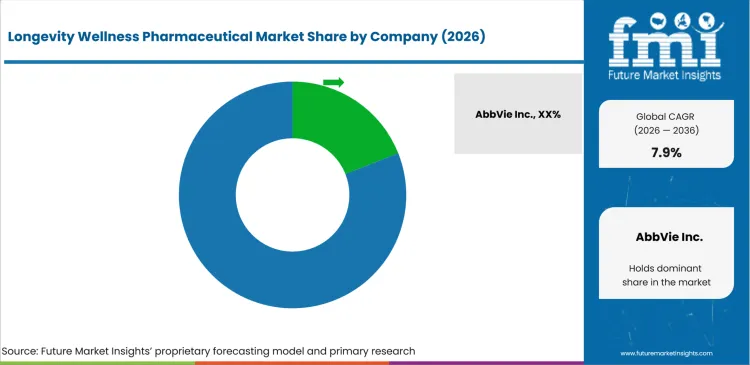
Competition in the industry centers on disease-specific aging mechanisms and clinical translation. Epigenetic reprogramming developers focus on restoring cellular function across ocular and immune programs. Senolytic and metabolic-pathway companies pursue selective targets intended to limit systemic safety burdens. Established clinical-stage groups combine regulated drug development with biomarker-led patient selection. Buyer assessment covers manufacturing readiness and specialist support.
- Life Biosciences and NewLimit compete based on epigenetic reprogramming approaches aimed at restoring cellular function, with retinal gene therapy providing an adjacent delivery field. Clinical readiness and controlled payload delivery separate near-term development positions.
- Retro Biosciences and Rubedo Life Sciences advance autophagy or senescent-cell programs across defined disease settings. Program quality rests on selective mechanism activity and measurable patient outcomes.
- Cambrian Bio and Calico Life Sciences LLC develop pathway-specific therapies addressing intrinsic capacity or age-related disease. Regulatory engagement and sustained safety evidence influence development confidence.
- BioAge Labs, Inc. and Aeovian Pharmaceuticals pursue inflammatory or mTORC1 pathways across cardiometabolic and rare-disease programs. Oral dosing and target selectivity support differentiated clinical positioning.
Competitive Benchmarking: Longevity Wellness Pharmaceutical Market
| Company | Technology Depth | Clinical Development | Therapeutic Focus | Service Reach |
|---|---|---|---|---|
| Life Biosciences, Inc. | High | High | Focused | United States |
| NewLimit | High | Medium | Focused | United States |
| Retro Biosciences | High | High | High | United States |
| Rubedo Life Sciences | High | High | Focused | United States and Europe |
| Cambrian Bio | High | Medium | High | United States |
| Calico Life Sciences LLC | High | High | High | Global clinical programs |
| BioAge Labs, Inc. | High | High | Focused | United States |
| Aeovian Pharmaceuticals | Medium | High | Focused | United States |
Source: Future Market Insights competitive analysis, 2026.
Key Developments in Longevity Wellness Pharmaceutical Market
- In November 2025, Calico Life Sciences received Orphan Drug Designation for ABBV-CLS-628 from the United States Food and Drug Administration. Regulatory designation strengthened development support for the ongoing Phase 2 program addressing autosomal dominant polycystic kidney disease.
- In January 2026, Life Biosciences received regulatory clearance for the ER-100 investigational application covering optic neuropathies. Clearance advanced partial epigenetic reprogramming into a Phase 1 clinical program involving patients with glaucoma and ischemic optic neuropathy.
- In May 2026, Retro Biosciences announced the initial close of a new financing round supporting its aging-therapy pipeline. Funding strengthened clinical development after RTR242 progressed from indication selection to first-in-human dosing within 15 months.
Longevity Wellness Pharmaceutical Market Report Scope
| Coverage field | Report scope |
|---|---|
| Market breakdown | Longevity wellness pharmaceutical breakdown includes Product Type, Application, End User, Distribution Channel, Therapy Type, and Region. |
| Quantitative Units | Revenue in USD billion and CAGR in %. |
| Market Definition | Investigational and commercial pharmaceutical or clinically supervised wellness interventions addressing healthy aging, age-related mechanisms, and extension of healthspan. General Cellular Health Supplement activity without regulated therapeutic development is excluded. |
| Regions Covered | North America, Europe, East Asia, South Asia and Pacific, Latin America, and Middle East and Africa. |
| Countries Covered | Australia, Germany, UK, USA, Canada, Japan, Switzerland, and additional countries covered in full regional analysis. |
| Key Companies Profiled | Life Biosciences, Inc., NewLimit, Retro Biosciences, Rubedo Life Sciences, Cambrian Bio, Calico Life Sciences LLC, BioAge Labs, Inc., and Aeovian Pharmaceuticals. |
| Forecast Period | 2026 to 2036 |
| Approach | Hybrid bottom-up and top-down methodology uses segment shares and country CAGRs. Company activity, clinical development, and buyer adoption support final reconciliation. |
Source: Future Market Insights analysis, 2026.
Longevity Wellness Pharmaceutical Market - Research Methodology
| Method | Approach |
|---|---|
| Primary Research | FMI analysts gathered input from manufacturers, service providers, technology developers, distributors, end users, procurement teams, and subject-matter experts. Interviews examined purchasing decisions, product or service evaluation, adoption barriers, approval requirements, pricing considerations, and expectations for technical or commercial support. Respondents were also asked what evidence is required before a trial, pilot, or initial order develops into regular purchasing. |
| Desk Research | Desk research covered government statistics, regulatory publications, trade data, industry associations, technical literature, standards, company filings, product information, and official corporate announcements. Sources were reviewed for relevance, publication date, geographic coverage, and consistency with the defined market scope. Claims relating to performance, applications, approvals, capacity, investment, and commercial activity were retained only when supported by credible public evidence. |
| Market Sizing and Forecasting | The market model combined the baseline value with historical performance, segment structure, pricing and volume indicators, adoption levels, company participation, and country-level demand conditions. Forecast assumptions considered economic activity, investment trends, regulatory developments, technology adoption, purchasing cycles, supply availability, and barriers to wider market use. Segment and regional estimates were reconciled before the final market total was calculated. |
| Data Validation | Estimates were checked against multiple independent indicators, including public data, company activity, trade patterns, industry developments, and findings from primary interviews. Validation also tested whether products, services, applications, and company revenues fell within the defined market boundaries. Adjacent categories, unsupported claims, overlapping revenues, and activities without direct market relevance were excluded to reduce double counting and maintain consistency across segments and countries. |
Source: Future Market Insights analysis, 2026.
Longevity Wellness Pharmaceutical Market by Segments
Longevity Wellness Pharmaceutical Market segmented by Product Type:
- Senolytic Drugs
- NAD+ Boosters
- mTOR Inhibitors
- Cellular Reprogramming Therapies
- Peptide Therapeutics
Longevity Wellness Pharmaceutical Market segmented by Application:
- Healthy Aging
- Cardiovascular Health
- Neurodegenerative Disorders
- Metabolic Disorders
- Immune Health
Longevity Wellness Pharmaceutical Market segmented by End User:
- Hospitals
- Specialty Clinics
- Pharmaceutical Companies
- Research Institutes
- Home Healthcare Providers
Longevity Wellness Pharmaceutical Market segmented by Distribution Channel:
- Hospital Pharmacies
- Retail Pharmacies
- Online Pharmacies
- Specialty Pharmacies
- Direct Sales
Longevity Wellness Pharmaceutical Market segmented by Therapy Type:
- Pharmaceutical Therapies
- Regenerative Medicine
- Gene Therapy
- Nutraceutical-Based Therapy
- Combination Therapy
Longevity Wellness Pharmaceutical Market segmented by Region:
- North America
- United States
- Canada
- Latin America
- Brazil
- Mexico
- Argentina
- Chile
- Western Europe
- Germany
- France
- United Kingdom
- Italy
- Spain
- Benelux
- Nordics
- Eastern Europe
- Poland
- Czech Republic
- Romania
- Hungary
- East Asia
- China
- Japan
- South Korea
- South Asia and Pacific
- India
- ASEAN
- Australia and New Zealand
- Middle East and Africa
- GCC Countries
- South Africa
- Türkiye
- Israel
Research Sources and Bibliography
- Advanced Research Projects Agency for Health. (2026, February 24). PrevenTOR: Novel mTORC1 selective inhibitors to improve intrinsic capacity in older Americans.
- American Society of Health-System Pharmacists. (2024, May 28). National Survey: Hospitals Deploy Technology and Tap Pharmacy Technicians to Improve Safety.
- American Society of Health-System Pharmacists. (2025, June 25). Pharmacists Expand Clinical Footprint Across USA Hospitals.
- Australian Institute of Health and Welfare. (2026, July 9). Australia’s health 2026.
- Calico Life Sciences LLC. (2025, November 5). Calico Life Sciences Announces USA FDA Orphan Drug Designation for Investigational Treatment of Autosomal Dominant Polycystic Kidney Disease.
- Farr, J. N., Atkinson, E. J., Achenbach, S. J., Volkman, T. L., Tweed, A. J., Vos, S. J., Ruan, M., Sfeir, J., Drake, M. T., Saul, D., Doolittle, M. L., Bancos, I., Yu, K., Tchkonia, T., LeBrasseur, N. K., Kirkland, J. L., Monroe, D. G., & Khosla, S. (2024, July 2). Effects of intermittent senolytic therapy on bone metabolism in postmenopausal women: a phase 2 randomized controlled trial. Nature Medicine, 30(9), 2605-2612.
- German Federal Statistical Office. (2025, June 20). Population by age groups.
- Kimmel, J. C. (2026, January 6). 2025 Year in Review.
- Life Biosciences, Inc. (2026, January 28). Life Biosciences Announces FDA Clearance of IND Application for ER-100 in Optic Neuropathies.
- National Institutes of Health. (2026, July 1). Senescent cells mapped in human body over the lifespan.
- Office for National Statistics. (2026, April 17). Families and households in the UK: 2025.
- Retro Biosciences. (2026, May 22). Retro Biosciences: Next Phase.
- Statistics Bureau of Japan. (2025, April). Current Population Estimates as of October 1, 2024.
- Statistics Canada. (2025, September 24). Canada’s population estimates: Age and gender, July 1, 2025.
- Swiss Federal Statistical Office. (2026, April 2). Switzerland’s demographic ageing progressed in 2025.
- USA Census Bureau. (2025, June 26). Older Adults Outnumber Children in 11 States and Nearly Half of USA Counties.
- USA Food and Drug Administration. (2024, March 11). FDA issues guidance regarding drug development for early Alzheimer’s disease.
- USA Food and Drug Administration. (2025). Novel Drug Approvals for 2025.
- USA Food and Drug Administration. (2025, December 19). FDA Qualifies Total Hip Bone Mineral Density (BMD) as Surrogate Endpoint for Osteoporosis Drug Development.
- World Health Organization. (2025, October 1). Ageing and health.
This bibliography is provided for reader reference and is not exhaustive. The full report contains the complete reference list and detailed citations.
This Report Answers
- How do segments influence demand across product type, application, end user, distribution channel, and therapy type?
- What criteria guide pharmaceutical developers evaluating longevity programs prior to clinical investment?
- Why do country CAGRs differ across profiled countries for longevity wellness pharmaceutical?
- What companies compete through senolytic and disease-focused capabilities?
- How are forecasts validated through bottom-up and top-down analysis using independent indicators?
- What evidence supports hospital and pharmacy review prior to therapy adoption?
- Why do biomarker quality and functional outcomes influence program selection?
- How do uncertain endpoints limit return across clinical development and commercialization?
- What company capabilities improve confidence across extended treatment programs?
- How does valuation change across forecast years under stated assumptions?
Frequently Asked Questions
How big is the Longevity Wellness Pharmaceutical Market in 2026?
The longevity wellness pharmaceutical market is valued at USD 31.8 billion in 2026 and is forecast to reach USD 68 billion by 2036. Growth is supported by named clinical indications and verifiable biological endpoints that direct disease-specific research toward regulated development pathways.
What is the CAGR of the Longevity Wellness Pharmaceutical Market from 2026 to 2036?
The longevity wellness pharmaceutical market grows at a CAGR of 7.9% between 2026 and 2036, supported by biomarker-guided medicine and cellular senescence research that direct sponsors toward disease-specific programs with measurable clinical endpoints across regulated development pathways.
Which therapy type leads the Longevity Wellness Pharmaceutical Market?
Pharmaceutical therapies account for 38.0% of the longevity wellness pharmaceutical market by therapy type in 2026, driven by familiar small-molecule and biologic development routes that let sponsors align defined indications with benefit-risk assessment and payer evaluation processes.
How much will the Longevity Wellness Pharmaceutical Market add between 2026 and 2036?
The longevity wellness pharmaceutical market is set to add USD 36.2 billion between 2026 and 2036, growing from USD 31.8 billion to USD 68 billion as biomarker-guided programs and disease-specific pipelines expand across regulated pharmaceutical development pathways worldwide.
Who are the leading companies in the Longevity Wellness Pharmaceutical Market?
Eight companies lead the longevity wellness pharmaceutical market, including Life Biosciences, NewLimit, Retro Biosciences, Rubedo Life Sciences, Cambrian Bio, Calico Life Sciences, BioAge Labs, and Aeovian Pharmaceuticals, competing through senolytic, epigenetic reprogramming, and mTOR pathway programs across clinical-stage development.
Preview the report firsthand - request a free sample
Get SampleGet the brochure for pricing and purchase details.
Get PDFTable of Content
- Key Takeaways
- Market Size and CAGR
- Top Growth Driver
- Fastest Growing Segment
- Leading Region
- Key Companies
- Emerging Opportunities
- Executive Summary
- Global Market Outlook
- Demand-side Trends
- Supply-side Trends
- Technology Roadmap Analysis
- Analysis and Recommendations
- Analyst Perspective (What is happening? Why now? What should investors know?)
- Key Questions Answered
- How large is the market?
- What is the CAGR?
- What are key trends?
- Which region dominates?
- Who are the leaders?
- Market Overview
- Market Coverage / Taxonomy
- Market Definition / Scope / Limitations
- Research Methodology
- Chapter Orientation
- Analytical Lens and Working Hypotheses
- Market Structure, Signals, and Trend Drivers
- Benchmarking and Cross-market Comparability
- Market Sizing, Forecasting, and Opportunity Mapping
- Research Design and Evidence Framework
- Desk Research Programme (Secondary Evidence)
- Expert Input and Fieldwork (Primary Evidence)
- Tooling, Models, and Reference Databases
- Data Engineering and Model Build
- Quality Assurance and Audit Trail
- Market Background
- Market Dynamics (Drivers, Restraints, Opportunity, Trends)
- Scenario Forecast (Optimistic, Likely, Conservative)
- Impact Analysis
- AI Impact
- Sustainability Impact
- Regulatory Impact
- Technology Impact
- Consumer / Buyer Analysis
- Purchase Drivers
- Adoption Barriers
- Buyer Journey
- Opportunity Map Analysis
- Product Life Cycle Analysis
- Supply Chain Analysis
- Investment Feasibility Matrix
- Value Chain Analysis
- PESTLE and Porter's Analysis
- Regulatory Landscape
- Regional Parent Market Outlook
- Production and Consumption Statistics
- Import and Export Statistics
- Global Market Analysis and Forecast, 2021 to 2036
- Historical Market Size Value (USD Billion) Analysis, 2021 to 2025
- Current and Future Market Size Value (USD Billion) Projections, 2026 to 2036
- Y-o-Y Growth Trend Analysis
- Absolute $ Opportunity Analysis
- Global Market Pricing Analysis, 2021 to 2036
- Global Market Analysis and Forecast, By Product Type, 2021 to 2036
- Introduction / Key Findings
- Historical Market Size Value (USD Billion) Analysis By Product Type, 2021 to 2025
- Current and Future Market Size Value (USD Billion) Analysis and Forecast By Product Type, 2026 to 2036
- Senolytic Drugs
- Dasatinib-Based Therapies
- Fisetin-Based Therapies
- NAD+ Boosters
- Nicotinamide Riboside
- Nicotinamide Mononucleotide
- mTOR Inhibitors
- Rapamycin-Based Drugs
- Everolimus-Based Drugs
- Cellular Reprogramming Therapies
- Epigenetic Reprogramming
- Gene-Based Rejuvenation
- Peptide Therapeutics
- Bioactive Peptides
- Regenerative Peptides
- Senolytic Drugs
- Y-o-Y Growth Trend Analysis By Product Type, 2021 to 2025
- Absolute $ Opportunity Analysis By Product Type, 2026 to 2036
- Global Market Analysis and Forecast, By Application, 2021 to 2036
- Introduction / Key Findings
- Historical Market Size Value (USD Billion) Analysis By Application, 2021 to 2025
- Current and Future Market Size Value (USD Billion) Analysis and Forecast By Application, 2026 to 2036
- Healthy Aging
- Age-Related Functional Decline
- Preventive Longevity Care
- Cardiovascular Health
- Vascular Aging
- Cardiac Protection
- Neurodegenerative Disorders
- Alzheimer's Disease
- Parkinson's Disease
- Metabolic Disorders
- Diabetes Management
- Obesity Management
- Immune Health
- Immunosenescence
- Inflammation Management
- Healthy Aging
- Y-o-Y Growth Trend Analysis By Application, 2021 to 2025
- Absolute $ Opportunity Analysis By Application, 2026 to 2036
- Global Market Analysis and Forecast, By End User, 2021 to 2036
- Introduction / Key Findings
- Historical Market Size Value (USD Billion) Analysis By End User, 2021 to 2025
- Current and Future Market Size Value (USD Billion) Analysis and Forecast By End User, 2026 to 2036
- Hospitals
- Public Hospitals
- Private Hospitals
- Specialty Clinics
- Anti-Aging Clinics
- Longevity Centers
- Pharmaceutical Companies
- Branded Pharma Companies
- Biopharmaceutical Companies
- Research Institutes
- Academic Research Centers
- Clinical Research Organizations
- Home Healthcare Providers
- Home Infusion Providers
- Remote Care Providers
- Hospitals
- Y-o-Y Growth Trend Analysis By End User, 2021 to 2025
- Absolute $ Opportunity Analysis By End User, 2026 to 2036
- Global Market Analysis and Forecast, By Distribution Channel, 2021 to 2036
- Introduction / Key Findings
- Historical Market Size Value (USD Billion) Analysis By Distribution Channel, 2021 to 2025
- Current and Future Market Size Value (USD Billion) Analysis and Forecast By Distribution Channel, 2026 to 2036
- Hospital Pharmacies
- Inpatient Pharmacies
- Outpatient Pharmacies
- Retail Pharmacies
- Chain Pharmacies
- Independent Pharmacies
- Online Pharmacies
- E-Commerce Pharmacies
- Digital Prescription Platforms
- Specialty Pharmacies
- Biologic Drug Pharmacies
- High-Cost Therapy Providers
- Direct Sales
- Manufacturer Supply Programs
- Institutional Contracts
- Hospital Pharmacies
- Y-o-Y Growth Trend Analysis By Distribution Channel, 2021 to 2025
- Absolute $ Opportunity Analysis By Distribution Channel, 2026 to 2036
- Global Market Analysis and Forecast, By Therapy Type, 2021 to 2036
- Introduction / Key Findings
- Historical Market Size Value (USD Billion) Analysis By Therapy Type, 2021 to 2025
- Current and Future Market Size Value (USD Billion) Analysis and Forecast By Therapy Type, 2026 to 2036
- Pharmaceutical Therapies
- Small Molecule Drugs
- Biologic Drugs
- Regenerative Medicine
- Stem Cell Therapy
- Tissue Regeneration
- Gene Therapy
- Gene Editing
- Gene Replacement
- Nutraceutical-Based Therapy
- Functional Supplements
- Medical Nutrition
- Combination Therapy
- Drug & Nutraceutical Combination
- Multi-Target Therapy
- Pharmaceutical Therapies
- Y-o-Y Growth Trend Analysis By Therapy Type, 2021 to 2025
- Absolute $ Opportunity Analysis By Therapy Type, 2026 to 2036
- Global Market Analysis and Forecast, By Region, 2021 to 2036
- Introduction
- Historical Market Size Value (USD Billion) Analysis By Region, 2021 to 2025
- Current Market Size Value (USD Billion) Analysis and Forecast By Region, 2026 to 2036
- North America
- Latin America
- Western Europe
- Eastern Europe
- East Asia
- South Asia and Pacific
- Middle East & Africa
- Market Attractiveness Analysis By Region
- North America Market Analysis and Forecast, By Country, 2021 to 2036
- Historical Market Size Value (USD Billion) Trend Analysis By Market Taxonomy, 2021 to 2025
- Market Size Value (USD Billion) Forecast By Market Taxonomy, 2026 to 2036
- By Country
- USA
- Canada
- By Product Type
- By Application
- By End User
- By Distribution Channel
- By Therapy Type
- By Country
- Market Attractiveness Analysis
- By Country
- By Product Type
- By Application
- By End User
- By Distribution Channel
- By Therapy Type
- Key Takeaways
- Latin America Market Analysis and Forecast, By Country
- Historical Market Size Value (USD Billion) Trend Analysis By Market Taxonomy, 2021 to 2025
- Market Size Value (USD Billion) Forecast By Market Taxonomy, 2026 to 2036
- By Country
- Brazil
- Mexico
- Chile
- Rest of Latin America
- By Product Type
- By Application
- By End User
- By Distribution Channel
- By Therapy Type
- By Country
- Market Attractiveness Analysis
- By Country
- By Product Type
- By Application
- By End User
- By Distribution Channel
- By Therapy Type
- Key Takeaways
- Western Europe Market Analysis and Forecast, By Country
- Historical Market Size Value (USD Billion) Trend Analysis By Market Taxonomy, 2021 to 2025
- Market Size Value (USD Billion) Forecast By Market Taxonomy, 2026 to 2036
- By Country
- Germany
- UK
- Italy
- Spain
- France
- Nordic
- BENELUX
- Rest of Western Europe
- By Product Type
- By Application
- By End User
- By Distribution Channel
- By Therapy Type
- By Country
- Market Attractiveness Analysis
- By Country
- By Product Type
- By Application
- By End User
- By Distribution Channel
- By Therapy Type
- Key Takeaways
- Eastern Europe Market Analysis and Forecast, By Country
- Historical Market Size Value (USD Billion) Trend Analysis By Market Taxonomy, 2021 to 2025
- Market Size Value (USD Billion) Forecast By Market Taxonomy, 2026 to 2036
- By Country
- Russia
- Poland
- Hungary
- Balkan & Baltic
- Rest of Eastern Europe
- By Product Type
- By Application
- By End User
- By Distribution Channel
- By Therapy Type
- By Country
- Market Attractiveness Analysis
- By Country
- By Product Type
- By Application
- By End User
- By Distribution Channel
- By Therapy Type
- Key Takeaways
- East Asia Market Analysis and Forecast, By Country
- Historical Market Size Value (USD Billion) Trend Analysis By Market Taxonomy, 2021 to 2025
- Market Size Value (USD Billion) Forecast By Market Taxonomy, 2026 to 2036
- By Country
- China
- Japan
- South Korea
- By Product Type
- By Application
- By End User
- By Distribution Channel
- By Therapy Type
- By Country
- Market Attractiveness Analysis
- By Country
- By Product Type
- By Application
- By End User
- By Distribution Channel
- By Therapy Type
- Key Takeaways
- South Asia and Pacific Market Analysis and Forecast, By Country
- Historical Market Size Value (USD Billion) Trend Analysis By Market Taxonomy, 2021 to 2025
- Market Size Value (USD Billion) Forecast By Market Taxonomy, 2026 to 2036
- By Country
- India
- ASEAN
- Australia & New Zealand
- Rest of South Asia and Pacific
- By Product Type
- By Application
- By End User
- By Distribution Channel
- By Therapy Type
- By Country
- Market Attractiveness Analysis
- By Country
- By Product Type
- By Application
- By End User
- By Distribution Channel
- By Therapy Type
- Key Takeaways
- Middle East & Africa Market Analysis and Forecast, By Country
- Historical Market Size Value (USD Billion) Trend Analysis By Market Taxonomy, 2021 to 2025
- Market Size Value (USD Billion) Forecast By Market Taxonomy, 2026 to 2036
- By Country
- Kingdom of Saudi Arabia
- Other GCC Countries
- Türkiye
- South Africa
- Other African Union
- Rest of Middle East & Africa
- By Product Type
- By Application
- By End User
- By Distribution Channel
- By Therapy Type
- By Country
- Market Attractiveness Analysis
- By Country
- By Product Type
- By Application
- By End User
- By Distribution Channel
- By Therapy Type
- Key Takeaways
- Key Countries Market Analysis
- USA
- Pricing Analysis
- Market Share Analysis, 2025
- By Product Type
- By Application
- By End User
- By Distribution Channel
- By Therapy Type
- Canada
- Pricing Analysis
- Market Share Analysis, 2025
- By Product Type
- By Application
- By End User
- By Distribution Channel
- By Therapy Type
- Mexico
- Pricing Analysis
- Market Share Analysis, 2025
- By Product Type
- By Application
- By End User
- By Distribution Channel
- By Therapy Type
- Brazil
- Pricing Analysis
- Market Share Analysis, 2025
- By Product Type
- By Application
- By End User
- By Distribution Channel
- By Therapy Type
- Chile
- Pricing Analysis
- Market Share Analysis, 2025
- By Product Type
- By Application
- By End User
- By Distribution Channel
- By Therapy Type
- Germany
- Pricing Analysis
- Market Share Analysis, 2025
- By Product Type
- By Application
- By End User
- By Distribution Channel
- By Therapy Type
- UK
- Pricing Analysis
- Market Share Analysis, 2025
- By Product Type
- By Application
- By End User
- By Distribution Channel
- By Therapy Type
- Italy
- Pricing Analysis
- Market Share Analysis, 2025
- By Product Type
- By Application
- By End User
- By Distribution Channel
- By Therapy Type
- Spain
- Pricing Analysis
- Market Share Analysis, 2025
- By Product Type
- By Application
- By End User
- By Distribution Channel
- By Therapy Type
- France
- Pricing Analysis
- Market Share Analysis, 2025
- By Product Type
- By Application
- By End User
- By Distribution Channel
- By Therapy Type
- India
- Pricing Analysis
- Market Share Analysis, 2025
- By Product Type
- By Application
- By End User
- By Distribution Channel
- By Therapy Type
- ASEAN
- Pricing Analysis
- Market Share Analysis, 2025
- By Product Type
- By Application
- By End User
- By Distribution Channel
- By Therapy Type
- Australia & New Zealand
- Pricing Analysis
- Market Share Analysis, 2025
- By Product Type
- By Application
- By End User
- By Distribution Channel
- By Therapy Type
- China
- Pricing Analysis
- Market Share Analysis, 2025
- By Product Type
- By Application
- By End User
- By Distribution Channel
- By Therapy Type
- Japan
- Pricing Analysis
- Market Share Analysis, 2025
- By Product Type
- By Application
- By End User
- By Distribution Channel
- By Therapy Type
- South Korea
- Pricing Analysis
- Market Share Analysis, 2025
- By Product Type
- By Application
- By End User
- By Distribution Channel
- By Therapy Type
- Russia
- Pricing Analysis
- Market Share Analysis, 2025
- By Product Type
- By Application
- By End User
- By Distribution Channel
- By Therapy Type
- Poland
- Pricing Analysis
- Market Share Analysis, 2025
- By Product Type
- By Application
- By End User
- By Distribution Channel
- By Therapy Type
- Hungary
- Pricing Analysis
- Market Share Analysis, 2025
- By Product Type
- By Application
- By End User
- By Distribution Channel
- By Therapy Type
- Kingdom of Saudi Arabia
- Pricing Analysis
- Market Share Analysis, 2025
- By Product Type
- By Application
- By End User
- By Distribution Channel
- By Therapy Type
- Türkiye
- Pricing Analysis
- Market Share Analysis, 2025
- By Product Type
- By Application
- By End User
- By Distribution Channel
- By Therapy Type
- South Africa
- Pricing Analysis
- Market Share Analysis, 2025
- By Product Type
- By Application
- By End User
- By Distribution Channel
- By Therapy Type
- USA
- Market Structure Analysis
- Competition Dashboard
- Competition Benchmarking
- Market Share Analysis of Top Players
- By Regional
- By Product Type
- By Application
- By End User
- By Distribution Channel
- By Therapy Type
- Emerging Startups
- Innovation Benchmarking
- Competition Analysis
- Competition Deep Dive
- AbbVie Inc.
- Overview
- Product Portfolio
- Profitability by Market Segments
- Sales Footprint
- Strategy Overview
- Marketing Strategy
- Product Strategy
- Channel Strategy
- Pfizer Inc.
- Novartis AG
- Sanofi
- AstraZeneca PLC
- Eli Lilly and Company
- Merck & Co.
- Roche Holding AG
- BioAge Labs
- Life Biosciences
- AbbVie Inc.
- Case Studies
- Success Stories
- Recent Developments
- Competition Deep Dive
- Assumptions & Acronyms Used


