

- Market Size (2026)
- USD 1.5 Bn
- Forecast (2036)
- USD 2.9 Bn
- CAGR (2026 to 2036)
- 6.8%
How big is Medical Foods for Orphan Diseases Market in 2026?
USD 1.5 billion in 2026 and USD 2.9 billion by 2036 at a 6.8% CAGR.
Demand in the medical foods for orphan diseases market is projected to expand at 6.8% CAGR between 2026 and 2036, increasing valuation from USD 1.5 billion in 2026 to USD 2.9 billion by 2036. Recurring revenue depends on daily formula use across lifelong dietary management rather than a single treatment episode. The commercial boundary depends on whether ordinary food modification can meet a diagnosed patient’s distinctive nutritional requirement. In May 2026, the USA Food and Drug Administration clarified that medical food formulations are used under physician supervision for conditions such as PKU. The same guidance states that medical foods do not undergo premarket approval and remain subject to manufacturing and labeling requirements. Formula companies must protect repeat access through appropriate formulations and reliable supply across changing life stages.
Screening programs identify eligible patients, but reimbursement and service design determine whether a diagnosis becomes sustained formula use. France provides a clear example through a national pathway that connects maternity screening with regional follow-up. In September 2025, the health ministry reported that every newborn received free screening for sixteen serious conditions. The program gives clinical nutrition systems an organized referral route for PKU and other disorders requiring dietary management. Formula companies then manage continuity across childhood, adult transfer, travel, pregnancy and changes in insurance administration. Commercial planning must separate patient identification from continuing access through stable prescribing and dependable home delivery. Strong screening can establish need, but uninterrupted use depends on local payment rules and dietitian capacity.
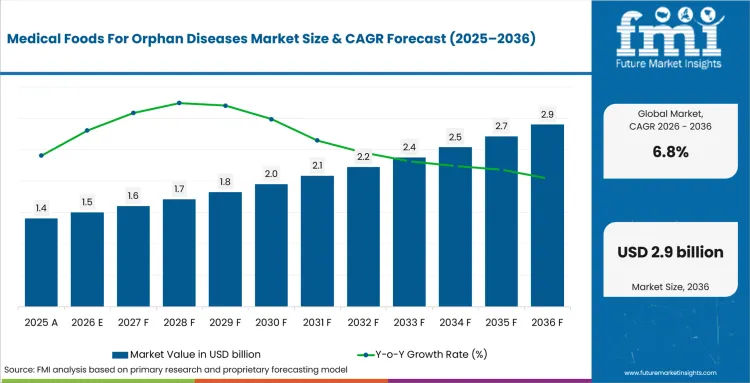
Key Takeaways of Medical Foods For Orphan Diseases Market
- Confirmed diagnosis establishes recurring demand for controlled amino acid intake that ordinary foods cannot provide safely throughout lifelong metabolic management.
- By product type, powder is expected to hold 42.0% share in 2026 owing to dose flexibility across changing body weight and prescribed protein equivalents.
- Phenylketonuria is projected to represent 31.0% of application demand in 2026 due to established screening and lifelong dietary treatment.
- Oral administration is estimated to account for 68.0% by route in 2026 driven by repeated home use across school and travel.
- Taste fatigue, preparation burden and uneven reimbursement can interrupt daily formula use even among patients with a confirmed nutritional requirement.
- Danone, Vitaflo, Abbott, Ajinomoto Cambrooke, Mead Johnson, metaX, Eton and Nutrisens compete through portfolio breadth, format convenience and access support.
Analyst Perspective
“Medical foods for orphan diseases succeed through sustained use across daily routines rather than a single clinical decision. Newborn screening can establish need quickly, but commercial value depends on products that patients can tolerate for many years. Companies must align acceptable taste with dose flexibility, dietitian support, reimbursement access and dependable delivery across each life-stage transition. A formula that performs clinically but fails during school or adult transfer cannot produce dependable long-term demand.”
- Nandini Roy Choudhury, Principal Analyst, Future Market Insights
How is the Medical Foods for Orphan Diseases Market segmented?
The Medical Foods for Orphan Diseases Market is segmented by product type, application, route of administration, end user, distribution channel and region.
The market is segmented by product type, application, route of administration, end user, distribution channel and region. Product type separates powders, liquids, tablets, granules, ready-to-use formulations and other formats according to preparation and dosing requirements. Application groups formulas by the orphan disorder and by the nutrient restriction that directs composition and monitoring. Route of administration separates oral use from enteral delivery for patients whose feeding limitations affect regular intake. End user identifies the clinical setting or home-care group that manages prescription, monitoring and continued use. Distribution channel separates institutional purchasing, retail access, online ordering, specialty distribution and direct manufacturer programs. Regional analysis compares screening pathways, reimbursement rules, specialist capacity and delivery conditions across major geographic markets.
What keeps powder ahead within product type?
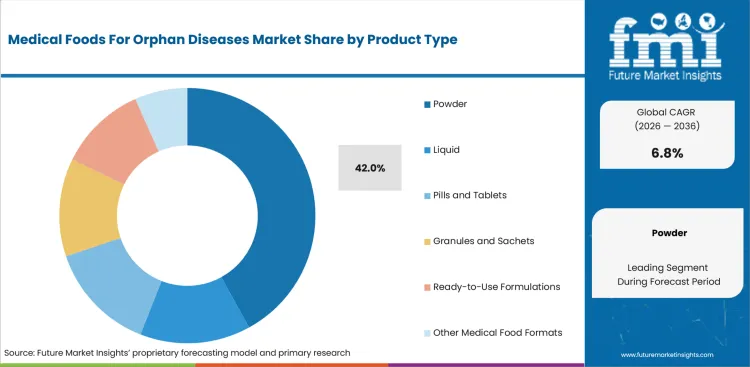
Powder allows metabolic teams to adjust protein equivalents as body weight and phenylalanine tolerance change. The format supports measured dosing without requiring a separate fixed-volume product for every prescription update. In October 2025, Czech regulator SÚKL reviewed Mevalia PKU GMPower as an amino acid and glycomacropeptide mixture for supervised dietary management. The reimbursement review gives powder-based medical nutrition a formal access route, accurate preparation and regional inventory remain practical limits for repeated home use.
- By product type, powder is forecast to represent 42.0% share in 2026, adjustable concentration supports changing body weight and metabolic tolerance. Measured portions let metabolic clinicians revise protein equivalents without replacing the formula plan for each dose adjustment. The format supports several daily doses from one container and reduces inventory complexity across childhood and adult care.
- Powder offers dosing flexibility but places daily mixing responsibility on families using it across changing routines. Home-care use requires accurate measuring and dependable storage across school, travel, illness and pregnancy throughout treatment. Ready-to-use formats suit school or work settings with limited privacy and little time for mixing. Powder remains practical for frequent dose changes across childhood, pregnancy and adult care under specialist supervision.
Which treatment pathway supports phenylketonuria within the application category?
Phenylketonuria has a defined treatment pathway from newborn screening to confirmatory testing and supervised dietary control. Biochemical monitoring sustains formula demand as ordinary protein intake can raise phenylalanine to harmful levels. In March 2026, HRSA described treatment through a low-protein diet plus special foods or formulas. The pathway connects phenylketonuria therapeutics with recurring protein substitutes across childhood, pregnancy and adult metabolic care.
- By application, phenylketonuria is estimated to hold 31.0% share in 2026, established screening and lifelong dietary management sustain its position. Screening identifies affected infants and specialist teams define continuing protein-substitute requirements to prevent lasting neurological harm. Recurring biochemical monitoring sustains repeat formula adjustment across childhood and adult care as phenylalanine tolerance changes.
- Metabolic clinics select PKU formulas that deliver consistent protein equivalents across several daily doses and changing age requirements. Taste tolerance and format choice influence continued use, short-term acceptance rarely becomes dependable adherence across lifelong treatment. Dietitian support becomes especially important during adolescence, pregnancy and transfer into adult services that may revise diet targets and ordering arrangements.
What supports oral administration within the route of administration category?
Oral administration lets patients use powders, liquids, granules and bars at home without enteral equipment. The route must fit repeated dosing across school, employment, travel and private social routines throughout daily treatment. In November 2025, SÚKL reviewed PKU Sphere 20 Liquid within a Czech reimbursement process for PKU. The review gives liquid oral clinical supplements a formal access route, taste, portability and coverage determine continued use beyond the initial order.
- Oral administration is projected to hold 68.0% share in 2026, supported by repeated home use among patients without feeding limitations. Oral products avoid clinical equipment and support prescribed dosing across home, school, employment and travel routines. The position remains tied to tolerability, preparation demands and reimbursement rather than route convenience alone.
- Enteral delivery serves patients whose feeding limitations or acute nutritional risk prevent reliable oral intake. Stable patients usually retain oral formats to complete prescribed doses without tubes, pumps, or clinical setup. Portable liquids and granules reduce disruption during travel or work with limited preparation space and fixed schedules. Powders provide greater dose flexibility as prescriptions change with metabolic requirements across childhood and adult care.
Why do hospitals and specialty clinics lead the end user category?
Hospitals and specialty clinics confirm abnormal screens and establish the first supervised formula for continuing home care. Their role continues through biochemical monitoring and dose adjustment across childhood and adult care transitions. In January 2026, the UK Health Security Agency reported 97.7% newborn blood spot coverage for the final quarter of 2024-2025. The diagnostic pathway begins with newborn screening equipment and coordinated laboratory services across regional health systems. Specialist capacity then determines how quickly confirmed cases enter supervised dietary treatment and receive continuing formula support.
- The end user category is forecast to be led by hospitals and specialty clinics at 29.0% share in 2026, due to diagnostic gatekeeping and first-formula selection. Specialist teams establish nutrient restrictions and monitoring plans that guide recurring dispensing across each stage of care. Their category position rests on clinical oversight and treatment adjustment rather than routine product volume alone.
- Home-care patients generate recurring volume through stable formula plans and reliable ordering routes established by metabolic teams. Specialty clinics retain influence through blood testing, pregnancy management and transfer into adult services. Coordinated follow-up reduces missed refills during relocation or care transitions that can interrupt nutrition despite unchanged clinical need.
How do institutional sales shape demand within the distribution channel category?
Institutional sales concentrate prescription review and payment administration within hospitals, specialty clinics and authorized dispensing systems. Public reimbursement programs often require a listed product and documented medical need to initiate recurring supply. Direct channels can support stable home-care users but cannot replace formal authorization in tightly managed systems. The specialized nutrition channel therefore depends on who controls approval, dispensing and continuity between clinical visits.
- Institutional sales are set to lead the distribution channel with 38.0% share in 2026, due to centralized prescription and reimbursement control. Hospitals and specialty clinics often manage initial formula approval alongside payment documentation and clinical accountability. Formal access requirements therefore sustain institutional ordering during treatment initiation and major prescription changes across specialist care pathways.
- Direct and online channels protect refill continuity for patients whose prescriptions and payment approvals remain stable. Institutional systems retain authority over eligibility and reimbursement during treatment initiation and major prescription changes. In June 2025, Germany’s G-BA adopted an evaluation concept for balanced diets used in enteral nutrition. The decision reinforces formal evidence and economic review within public coverage even as home delivery handles routine dispensing beyond clinic visits.
What are the drivers, restraints and opportunities in the Medical Foods for Orphan Diseases Market?
Newborn screening supports diagnosed demand, adherence barriers interrupt repeat use and easier formats with dependable delivery improve long-term access.
- Driver: Newborn screening identifies rare metabolic disorders early and starts supervised nutritional management during the first weeks of life.
- Restraint: Taste burden, preparation demands and uneven coverage can interrupt repeated formula use despite a continuing clinical requirement.
- Opportunity: Compact formats and reliable home delivery can protect adherence across school, employment, travel, pregnancy and adult care transitions.
Newborn screening supports demand by directing affected infants into confirmatory testing and metabolic care ahead of potential neurological damage. A confirmed diagnosis establishes a supervised dietary requirement that ordinary food cannot meet safely over time. In February 2026, France confirmed that its national program covered sixteen serious conditions including PKU. The referral route identifies amino acid disorders and directs families toward prompt nutritional management with specialist follow-up. Formula revenue then depends on reimbursement and continued access rather than the screening event itself.
Daily adherence limits market conversion, protein substitutes must remain acceptable across several doses for many years. Preparation time and social pressure can disrupt use even among patients who understand the clinical risk. A review published in April 2025 identified palatability, cost, access, time pressure and social interference as persistent PKU diet barriers. Combined barriers reduce refill continuity and weaken reliable demand despite an unchanged lifelong nutritional requirement. Forecast models therefore need realistic continuation assumptions beside diagnosis estimates and national screening coverage data.
Format improvement can reduce preparation burden and help prescribed protein substitutes fit school, work, travel and family routines. Glycomacropeptide products provide another protein-substitute format for eligible patients who can tolerate residual phenylalanine under clinical monitoring. In August 2025, SÚKL reviewed PKU GMPro Ultra for supervised dietary management of PKU and hyperphenylalaninaemia. The formal review gives casein glycomacropeptide formats a defined route into public reimbursement for eligible patients. Commercial performance depends on acceptable taste, clinician education, stable supply and continuing monitoring beyond formulation novelty.
Which country CAGRs are profiled in the Medical Foods for Orphan Diseases Market?
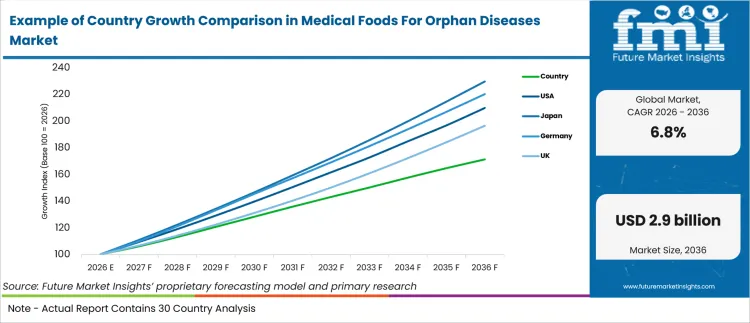
| Country | CAGR |
|---|---|
| Japan | 8.7% |
| Germany | 8.2% |
| USA | 7.7% |
| UK | 7.0% |
| Canada | 6.6% |
| Australia | 6.3% |
| France | 5.9% |
How do country-level CAGRs compare in the Medical Foods for Orphan Diseases Market?
The seven forecasts form a gradual progression and indicate comparable growth expectations despite different national access routes. A 2.8-point difference separates Japan from France, every neighboring rate remains within 0.8 percentage point. The narrow spacing suggests that screening access and lifelong clinical need support demand across all seven markets. Commercial outcomes diverge through reimbursement design, specialist distance and distribution continuity rather than growth rates alone. Japan and Germany rely on formal referral structures, the USA and Canada require more fragmented coverage planning. Australia adds long delivery distances, France uses regional treatment centers within a national screening program. Companies serving low-protein diets must evaluate access routes and service capacity beside the displayed CAGR.
- Japan combines municipal screening with concentrated metabolic expertise, which supports timely referral but increases service distance outside major urban centers.
- Germany links expanded newborn screening with statutory coverage rules that require medical-necessity evidence and dependable pharmacy access for recurring formula reimbursement.
- The USA combines mature metabolic clinics with fragmented insurance administration that can produce different coverage outcomes for patients using identical formulas.
- The UK combines nationally measured screening performance with regional metabolic services that can change authorization and delivery arrangements during patient relocation.
- Canada requires province-specific access plans, federal product rules do not create uniform reimbursement or specialist availability across the country.
- Australia combines broad screening coverage with concentrated metropolitan expertise that makes remote dietitian support and national inventory planning commercially necessary.
- France directs screened infants into regional centers through a national pathway that links diagnosis with continuing specialist care and formula dispensing.
Similar CAGRs do not produce comparable commercial conditions, health systems use different prescription and home-delivery payment routes. Market planning must evaluate each local access route instead of treating the forecast table as a complete entry strategy. The full report provides country-level CAGR analysis across North America, Latin America, Europe, East Asia, South Asia, Oceania, the Middle East and Africa.
Country-wise Analysis
- Japan uses municipal newborn screening, specialist centers then confirm phenylketonuria and establish supervised dietary treatment for affected infants. Japan’s Medical Foods for Orphan Diseases Market is estimated to post 8.7% CAGR over the forecast period, supported by an established referral pathway. In December 2025, the Ministry of Health recorded PKU within the national mass-screening framework and described early treatment as the standard response. The national pathway gives formula companies direct access to metabolic services, but concentrated expertise increases travel and review burdens outside major cities. Distributors need regional safety stock and predictable import schedules to protect daily use during travel, illness and local delivery disruption.
- Germany links newborn screening with statutory coverage rules that control specialist referral and reimbursement for medically necessary nutrition. Formula companies enter through recognized screening and prescription pathways, but public payment requires clear evidence of medical necessity. Germany’s medical foods for orphan diseases outlook is anticipated to advance at 8.2% CAGR over the assessment period, shaped by formal clinical pathways. In May 2025, the G-BA announced screening expansion for homocystinuria and two organic acid disorders from May 2026. The expansion broadens specialized dietary assessment beyond established PKU services and increases the need for German-language clinical support. Pharmacy distribution across several inventory points remains a material friction for formulas serving very small patient groups.
- United States screening programs identify PKU early, but insurance design controls medical food access following specialist confirmation. The USA medical foods for orphan diseases sector is projected to record 7.7% CAGR during the assessment period, supported by mature metabolic care networks. Focused commercial teams can support specialist education and reimbursement navigation across fragmented state and employer benefit structures. In May 2026, Eton Pharmaceuticals confirmed PKU GOLIKE among ten commercial rare-disease products in its current portfolio. Coverage differences remain the main friction across patients using identical formulas under different health plans and employment arrangements. Companies need dependable home delivery during pediatric transfer and other changes that alter insurance administration or specialist responsibility.
- England measures newborn blood spot coverage nationally and routes abnormal results into regional metabolic services for confirmation and treatment. National standards give formula companies a defined entry route through diagnosis and specialist prescribing within regional services. By 2036, the UK Medical Foods for Orphan Diseases Market is projected to grow at 7.0% CAGR through structured screening and continuing follow-up. In April 2025, UKHSA listed PKU among nine conditions in the newborn blood spot program and linked early detection with referral and treatment. Patient relocation remains a material friction as authorization and home-delivery arrangements can change across regional service boundaries. Companies need coordination that follows patients through regional moves and transfer from pediatric to adult metabolic care.
- Canada regulates medical foods federally, provinces control reimbursement and dispensing through separate public systems across the country. Medical foods for orphan diseases demand in Canada is forecast to rise at 6.6% CAGR over the forecast period, influenced by regulatory modernization. Health Canada closed a consultation in January 2025 that proposed a dedicated medical food category and updated compositional rules. The federal proposal gives manufacturers a clearer product-classification route, but provincial coverage and specialist referral remain inconsistent. Companies need province-specific access plans and reliable distributor inventory across long delivery distances and small patient populations. Remote dietitian support can protect continuity for families living far from metabolic centers or specialized dispensing locations.
- Australia provides newborn bloodspot screening through every state and territory, local programs then arrange confirmatory care for affected infants. Geographic dispersion makes national inventory planning and remote clinical support essential beyond the largest metropolitan treatment centers. Medical foods for orphan diseases sales in Australia are forecast to expand at 6.3% CAGR by 2036, supported by broad diagnostic coverage. The health department reported in June 2025 that about 99% of babies receive screening across more than 300,000 annual births. The program gives specialized formulas a direct referral enabler, but concentrated expertise and thin inventory constrain rural access. Companies need dependable national distribution and remote dietitian support for patients living far from metabolic clinics.
- France offers free newborn screening and routes positive results through regional centers for confirmatory testing and supervised treatment. Adoption of medical foods for orphan diseases in France is estimated to expand at 5.9% CAGR through 2036, supported by a national referral pathway. Regional centers provide defined responsibility for specialist contact and coordinate care between screening laboratories and metabolic services. In May 2025, the health ministry confirmed nationwide deployment through regional screening centers and national coordination. Formula access depends on local metabolic capacity and dispensing arrangements, which can vary across regional service areas. Companies need French-language dietitian materials and dependable home delivery during transfer from pediatric to adult services.
Who are the notable companies in the Medical Foods for Orphan Diseases Market?
Danone S.A., Vitaflo (International) Limited, Abbott Laboratories, Ajinomoto Cambrooke, Inc., Mead Johnson & Company, LLC, metaX Institut für Diätetik GmbH, Eton Pharmaceuticals, Inc. and Nutrisens SAS are the notable companies shaping this market.
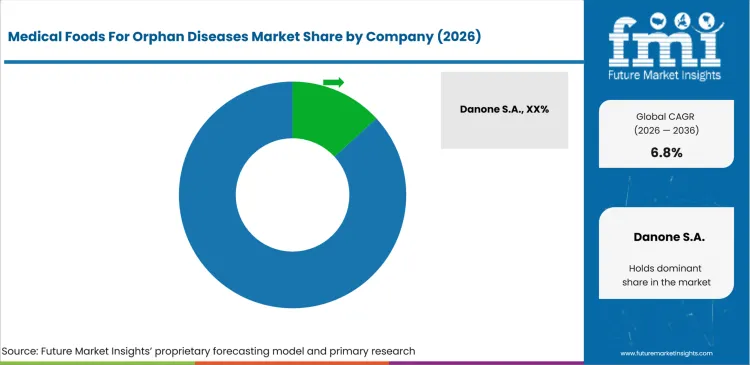
Competition across medical nutrition for orphan diseases is split between broad inherited-metabolic platforms and focused PKU rights holders. No single company covers every disorder, dosage format, life stage and commercial territory within this specialized category. Danone and Vitaflo combine condition breadth with life-stage formats that simplify selection across metabolic services. Abbott, Ajinomoto Cambrooke, Mead Johnson and metaX compete through established formula families with different geographic depth and support models. Eton and Nutrisens hold focused PKU positions through separate commercial rights for one formula family. New entrants can compete through improved taste or easier dosing, but specialist education, reimbursement support, dependable manufacturing and distribution remain necessary. Portfolio breadth earns commercial value by protecting formula continuity across childhood and adult care transitions.
- Danone and Vitaflo offer broad inherited-metabolic portfolios across powder, liquid and ready-to-use formats for several life stages. Their advantage comes from combining formula choice with professional education and dependable regional supply across several diagnosed disorders. Metabolic centers can use one commercial relationship across several conditions, but continuity and local availability remain the practical selection tests.
- Abbott, Ajinomoto Cambrooke, Mead Johnson and metaX compete through condition-specific formulas and practical diet-support resources. Their positions depend on current format coverage and reliable supply, access assistance matters more than corporate scale outside metabolic nutrition. Clinics compare whether each portfolio supports the exact disorder and age group under treatment in current clinical practice.
- Eton and Nutrisens hold narrower PKU GOLIKE positions through separate United States and international territories. Their entry route relies on prolonged-release granules and concentrated access support instead of broad metabolic portfolios. Focused rights can strengthen attention to one formula family, but each company remains more exposed to a single reimbursement route.
Competitive Benchmarking: Medical Foods for Orphan Diseases Market
| Company | Metabolic Formula Breadth | Age and Format Coverage | Clinical and Access Support | Geographic Reach |
|---|---|---|---|---|
| Danone S.A. | High | High | High | Global |
| Vitaflo (International) Limited | High | High | High | Global |
| Abbott Laboratories | High | Medium | High | Multi-country |
| Ajinomoto Cambrooke, Inc. | High | High | High | North America and selected markets |
| Mead Johnson & Company, LLC | High | Medium | Medium | North America |
| metaX Institut für Diätetik GmbH | High | High | Medium | Europe and selected markets |
| Eton Pharmaceuticals, Inc. | Low | Medium | High | USA |
| Nutrisens SAS | Low | Medium | Medium | Europe and partner markets |
Key Developments in the Medical Foods for Orphan Diseases Market
- In January 2025, Nutrisens acquired GOLIKE intellectual property and commercialization rights outside the United States from Relief Therapeutics. The completed transaction transferred European marketing activities and existing distribution agreements across other regions under the Nutrisens commercial organization. Relief retained United States rights under its exclusive Eton license and continued global supply responsibilities for the underlying formula. The completed structure separated regional commercialization without changing the established manufacturing and supply foundation for the product.
- In August 2025, Ajinomoto Cambrooke’s Glytactin Build entered a Czech SÚKL reimbursement assessment for phenylketonuria and hyperphenylalaninaemia. The regulator reviewed a defined amino-acid and glycomacropeptide mixture for supervised dietary management through specialist services. The assessment gave the formula a route toward reimbursed institutional access within Czech metabolic care. Final coverage terms and local specialist prescribing remained necessary for routine commercial use to expand.
- In August 2025, Danone’s PKU GMPro Delight received a positive Czech SÚKL reimbursement assessment for dietary management of phenylketonuria. The regulator found sufficient clinical support for use from four years of age and proposed public reimbursement under specified conditions. The decision widened formal access for a compact glycomacropeptide format across eligible patients within public coverage. Individual phenylalanine tolerance and clinician selection continued to shape regular use within supervised dietary treatment.
- In October 2025, Comidamed completed the first phase of redevelopment at its Rosbach production site in Germany. The upgraded facility modernized manufacturing areas and increased capacity for protein substitutes used across PKU and other inherited metabolic disorders. The project strengthens supply continuity for Vitaflo’s Comidamed and Mevalia ranges within European specialist services. Commercial benefit depends on dependable output and orderly product transitions as legacy formats enter updated packaging and manufacturing arrangements.
Medical Foods for Orphan Diseases Market - Report Scope
| Coverage field | Report scope |
|---|---|
| Market breakdown | Product type, application, route of administration, end user, distribution channel and region. |
| Quantitative Units | Revenue in USD Billion and CAGR in %. |
| Market Definition | Specially formulated foods used under medical supervision to meet distinctive nutritional requirements of rare metabolic and other orphan diseases. |
| Regions Covered | North America, Latin America, Europe, East Asia, South Asia, Oceania and Middle East and Africa. |
| Countries Covered | Japan, Germany, USA, UK, Canada, Australia and France. |
| Key Companies Profiled | Danone S.A., Vitaflo (International) Limited, Abbott Laboratories, Ajinomoto Cambrooke, Inc., Mead Johnson & Company, LLC, metaX Institut für Diätetik GmbH, Eton Pharmaceuticals, Inc. and Nutrisens SAS |
| Forecast Period | 2026 to 2036. |
| Approach | Hybrid bottom-up and top-down market sizing supported by primary interviews and official desk research. |
Medical Foods for Orphan Diseases Market - Research Methodology
| Method | Approach |
|---|---|
| Primary Research | FMI analysts gathered input from manufacturers, service providers, technology developers, distributors, end users, procurement teams and subject-matter experts. Interviews examined purchasing decisions, product or service evaluation, adoption barriers, approval requirements, pricing considerations and expectations for technical or commercial support. Respondents were also asked what evidence is required before a trial, pilot, or initial order develops into regular purchasing. |
| Desk Research | Desk research covered government statistics, regulatory publications, trade data, industry associations, technical literature, standards, company filings, product information and official corporate announcements. Sources were reviewed for relevance, publication date, geographic coverage and consistency with the defined market scope. Claims relating to performance, applications, approvals, capacity, investment and commercial activity were retained only when supported by credible public evidence. |
| Market Sizing and Forecasting | The market model combined the baseline value with historical performance, segment structure, pricing and volume indicators, adoption levels, company participation and country-level demand conditions. Forecast assumptions considered economic activity, investment trends, regulatory developments, technology adoption, purchasing cycles, supply availability and barriers to wider market use. Segment and regional estimates were reconciled before the final market total was calculated. |
| Data Validation | Estimates were checked against multiple independent indicators, including public data, company activity, trade patterns, industry developments and findings from primary interviews. Validation also tested whether products, services, applications and company revenues fell within the defined market boundaries. Adjacent categories, unsupported claims, overlapping revenues and activities without direct market relevance were excluded to reduce double counting and maintain consistency across segments and countries. |
Medical Foods for Orphan Diseases Market by Segments
Medical Foods for Orphan Diseases Market segmented by Product Type:
- Powder
- Amino Acid-Based Powders
- Protein-Free Nutritional Powders
- Liquid
- Liquid Amino Acid Formulas
- Liquid Specialized Nutritional Formulas
- Pills and Tablets
- Amino Acid Tablets
- Metabolic Support Tablets
- Granules and Sachets
- Granulated Amino Acid Formulas
- Single-Serve Nutritional Sachets
- Ready-to-Use Formulations
- Ready-to-Drink Formulas
- Ready-to-Use Liquid Nutrition
- Other Medical Food Formats
- Specialized Bars
- Semi-Solid Formulations
Medical Foods for Orphan Diseases Market, by Application
- Inherited Metabolic Disorders
- Phenylketonuria (PKU)
- Phenylalanine-Free Formulas
- Low-Phenylalanine Nutritional Products
- Tyrosinemia
- Low-Tyrosine Formulas
- Low-Phenylalanine and Tyrosine Formulas
- Maple Syrup Urine Disease (MSUD)
- Branched-Chain Amino Acid-Free Formulas
- Branched-Chain Amino Acid-Modified Formulas
- Homocystinuria
- Methionine-Restricted Formulas
- Cysteine-Enhanced Formulas
- Other Orphan Diseases
- Urea Cycle Disorders
- Organic Acidemias
- Phenylketonuria (PKU)
- Gastrointestinal & Allergic Disorders
- Eosinophilic Esophagitis
- Elemental Amino Acid Formulas
- Allergen-Free Nutritional Formulas
- Food Protein-Induced Enterocolitis Syndrome (FPIES)
- Hypoallergenic Formulas
- Extensively Hydrolyzed Formulas
- Eosinophilic Esophagitis
Medical Foods for Orphan Diseases Market, by Route of Administration
- Oral
- Oral Powders and Granules
- Oral Liquids and Ready-to-Use Formulas
- Enteral
- Nasogastric Tube Administration
- Gastrostomy Tube Administration
- Medical Foods for Orphan Diseases Market, by End User
- Hospitals and Specialty Clinics
- Pediatric Hospitals
- Rare Disease Specialty Clinics
- Home Care Patients
- Home-Based Nutritional Management
- Caregiver-Administered Nutrition
- Specialty Nutrition Centers
- Metabolic Disease Centers
- Clinical Nutrition Centers
- Pediatric Care Facilities
- Neonatal Care Units
- Pediatric Treatment Centers
- Long-Term Care Facilities
- Residential Care Facilities
- Specialized Nursing Facilities
- Research and Academic Institutions
- Clinical Research Centers
- University Medical Centers
Medical Foods for Orphan Diseases Market, by Distribution Channel
- Institutional Sales
- Hospital Procurement
- Specialty Clinic Procurement
- Retail Sales
- Specialty Nutrition Stores
- Pharmacy-Based Retail
- Online Sales
- Direct-to-Consumer Websites
- Online Pharmacy Platforms
- Specialty Distributors
- Rare Disease Specialty Distributors
- Medical Nutrition Distributors
- Direct Manufacturer Sales
- Direct Patient Programs
- Manufacturer Assistance Programs
Medical Foods for Orphan Diseases Market by Region:
- North America
- USA
- Canada
- Latin America
- Brazil
- Mexico
- Argentina
- Europe
- Germany
- UK
- France
- Italy
- Spain
- Rest of Europe
- East Asia
- China
- Japan
- South Korea
- South Asia
- India
- Thailand
- Indonesia
- Malaysia
- Rest of South Asia
- Oceania
- Australia
- New Zealand
- Middle East and Africa
- GCC
- South Africa
- Israel
- Rest of Middle East and Africa
Research Sources and Bibliography
- USA Food and Drug Administration. (2026, May). Is It Really “FDA Approved”?
- Ministère du Travail, de la Santé, des Solidarités et des Familles. (2025, September 1). Dépistage néonatal : 3 nouvelles maladies désormais détectées dès la naissance.
- State Institute for Drug Control. (2025, December 19). Souhrny k HZ 2025.
- Health Resources and Services Administration. (2026, March). Classic Phenylketonuria.
- UK Health Security Agency. (2026, January 23). Antenatal and newborn screening KPI data: Q4 summary factsheets (1 January to 31 March 2025).
- Gemeinsamer Bundesausschuss. (2025, June 18). Arzneimittel-Richtlinie: Konzept zur Evaluation der Entwicklung der Leistungen zur Versorgung der Versicherten mit bilanzierten Diäten.
- Ministère du Travail, de la Santé, des Solidarités et des Familles. (2026, February 11). Programme national de dépistage néonatal.
- Reach, G. (2025, April 13). Phenylketonuria as an adherence disease.
- Ministry of Health, Labour and Welfare. (2025, December 3).
- Gemeinsamer Bundesausschuss. (2025, May 15). Früherkennung: G-BA erweitert Neugeborenen-Screening auf Vitamin-B12-Mangel und weitere Stoffwechselerkrankungen.
- Eton Pharmaceuticals, Inc. (2026, May 14). Eton Pharmaceuticals Reports First Quarter 2026 Financial Results.
- UK Health Security Agency. (2025, April 1). Newborn blood spot screening supporting information.
- Health Canada. (2025, January 22). Proposed compositional requirements for infant foods and foods currently regulated as foods for special dietary use.
- Australian Government Department of Health, Disability and Ageing. (2025, June 19). About newborn bloodspot screening.
- Ministère du Travail, de la Santé, des Solidarités et des Familles. (2025, May 9). Extension du dépistage néonatal : trois nouvelles maladies sont désormais dépistées chez tous les nouveau-nés à partir du 1er septembre 2025.
- Relief Therapeutics Holding SA. (2025, January 22). Relief Therapeutics Completes Strategic Transition with Sale of GOLIKE Rights ex-US.
- State Institute for Drug Control. (2025, August 29). Souhrn k hodnotící zprávě: PKU GMPRO DELIGHT.
- Danone. (2024, June 27). Nutricia presenta PKU GMPro Ultra, una fórmula desarrollada por y para pacientes con PKU que favorece su adherencia al tratamiento.
- Nestlé Health Science. (2024, June 28). Vitaflo Expands Medical Nutrition Production Site.
- Abbott Laboratories. (2025, June 4). Your questions answered about infant formula.
- Ajinomoto Cambrooke, Inc. (2025, June 24). Cambrooke Celebrates 25 Years of Innovation and a Bold Mission.
- Mead Johnson & Company, LLC. (n.d.). Metabolic Nutrition Products for Infants. Retrieved July 29, 2026.
- metaX Institut für Diätetik GmbH. (2025, December). Range of Products.
- Comidamed. (2025, October 30). German Production Site Redevelopment.
This bibliography is provided for reader reference and is not exhaustive. The full report contains the complete reference list and detailed citations
This Report Answers
- How large is the Medical Foods for Orphan Diseases Market in 2026 and 2036?
- Which diagnosis and access conditions convert clinical need into recurring medical food purchases?
- Why does powder account for the largest product type share in 2026?
- How does phenylketonuria shape application demand across lifelong dietary management?
- Why does oral administration retain the largest route of administration share?
- How do screening coverage and reimbursement rules change country-level commercial conditions?
- Which companies provide broad metabolic portfolios or focused PKU formats?
- What limits adherence across taste, reimbursement, delivery and age-transition requirements?
- Which formats create opportunities to reduce preparation burden and protect recurring use?
Frequently Asked Questions
How big is the Medical Foods for Orphan Diseases Market in 2026?
The medical foods for orphan diseases market is valued at USD 1.5 billion in 2026 and is forecast to reach USD 2.9 billion by 2036. Growth is supported by newborn screening programs that establish diagnosed patients requiring lifelong dietary management across confirmed metabolic disorders and reimbursement-supported nutrition access.
What is the CAGR of the Medical Foods for Orphan Diseases Market from 2026 to 2036?
The medical foods for orphan diseases market grows at a CAGR of 6.8% between 2026 and 2036, supported by newborn screening pathways that convert confirmed diagnoses into recurring formula use once reimbursement, dietitian support, and dependable home delivery sustain adherence across childhood, pregnancy, and adult metabolic care.
Which product type leads the Medical Foods for Orphan Diseases Market?
Powder leads the medical foods for orphan diseases market with a 42.0% product type share in 2026, supported by dose flexibility that lets metabolic clinicians adjust protein equivalents as body weight and phenylalanine tolerance change across childhood, pregnancy, and adult metabolic care.
How much will the Medical Foods for Orphan Diseases Market add between 2026 and 2036?
The medical foods for orphan diseases market is set to add USD 1.4 billion between 2026 and 2036, growing from USD 1.5 billion to USD 2.9 billion as newborn screening programs convert confirmed diagnoses into reimbursement-supported, recurring formula demand across an expanding base of specialty metabolic clinics and home-care patients.
Who are the leading companies in the Medical Foods for Orphan Diseases Market?
Eight companies lead the medical foods for orphan diseases market in 2026, including Danone, Vitaflo, Abbott Laboratories, Ajinomoto Cambrooke, Mead Johnson, metaX, Eton Pharmaceuticals, and Nutrisens, competing through condition-specific formula portfolios, life-stage format coverage, clinical education, and dependable regional or global supply and access support.
Preview the report firsthand - request a free sample
Get SampleGet the brochure for pricing and purchase details.
Get PDFTable of Content
- Key Takeaways
- Market Size and CAGR
- Top Growth Driver
- Fastest Growing Segment
- Leading Region
- Key Companies
- Emerging Opportunities
- Executive Summary
- Global Market Outlook
- Demand-side Trends
- Supply-side Trends
- Technology Roadmap Analysis
- Analysis and Recommendations
- Analyst Perspective (What is happening? Why now? What should investors know?)
- Key Questions Answered
- How large is the market?
- What is the CAGR?
- What are key trends?
- Which region dominates?
- Who are the leaders?
- Market Overview
- Market Coverage / Taxonomy
- Market Definition / Scope / Limitations
- Research Methodology
- Chapter Orientation
- Analytical Lens and Working Hypotheses
- Market Structure, Signals, and Trend Drivers
- Benchmarking and Cross-market Comparability
- Market Sizing, Forecasting, and Opportunity Mapping
- Research Design and Evidence Framework
- Desk Research Programme (Secondary Evidence)
- Expert Input and Fieldwork (Primary Evidence)
- Tooling, Models, and Reference Databases
- Data Engineering and Model Build
- Quality Assurance and Audit Trail
- Market Background
- Market Dynamics (Drivers, Restraints, Opportunity, Trends)
- Scenario Forecast (Optimistic, Likely, Conservative)
- Impact Analysis
- AI Impact
- Sustainability Impact
- Regulatory Impact
- Technology Impact
- Consumer / Buyer Analysis
- Purchase Drivers
- Adoption Barriers
- Buyer Journey
- Opportunity Map Analysis
- Product Life Cycle Analysis
- Supply Chain Analysis
- Investment Feasibility Matrix
- Value Chain Analysis
- PESTLE and Porter's Analysis
- Regulatory Landscape
- Regional Parent Market Outlook
- Production and Consumption Statistics
- Import and Export Statistics
- Global Market Analysis and Forecast, 2021 to 2036
- Historical Market Size Value (USD billion) Analysis, 2021 to 2025
- Current and Future Market Size Value (USD billion) Projections, 2026 to 2036
- Y-o-Y Growth Trend Analysis
- Absolute $ Opportunity Analysis
- Global Market Pricing Analysis, 2021 to 2036
- Global Market Analysis and Forecast, By Product Type, 2021 to 2036
- Introduction / Key Findings
- Historical Market Size Value (USD billion) Analysis By Product Type, 2021 to 2025
- Current and Future Market Size Value (USD billion) Analysis and Forecast By Product Type, 2026 to 2036
- Powder
- Amino Acid-Based Powders
- Protein-Free Nutritional Powders
- Liquid
- Liquid Amino Acid Formulas
- Liquid Specialized Nutritional Formulas
- Pills and Tablets
- Amino Acid Tablets
- Metabolic Support Tablets
- Granules and Sachets
- Granulated Amino Acid Formulas
- Single-Serve Nutritional Sachets
- Ready-to-Use Formulations
- Ready-to-Drink Formulas
- Ready-to-Use Liquid Nutrition
- Other Medical Food Formats
- Specialized Bars
- Semi-Solid Formulations
- Powder
- Y-o-Y Growth Trend Analysis By Product Type, 2021 to 2025
- Absolute $ Opportunity Analysis By Product Type, 2026 to 2036
- Global Market Analysis and Forecast, By Application, 2021 to 2036
- Introduction / Key Findings
- Historical Market Size Value (USD billion) Analysis By Application, 2021 to 2025
- Current and Future Market Size Value (USD billion) Analysis and Forecast By Application, 2026 to 2036
- Phenylketonuria (PKU)
- Phenylalanine-Free Formulas
- Low-Phenylalanine Nutritional Products
- Tyrosinemia
- Low-Tyrosine Formulas
- Low-Phenylalanine and Tyrosine Formulas
- Maple Syrup Urine Disease (MSUD)
- Branched-Chain Amino Acid-Free Formulas
- Branched-Chain Amino Acid-Modified Formulas
- Homocystinuria
- Methionine-Restricted Formulas
- Cysteine-Enhanced Formulas
- Eosinophilic Esophagitis
- Elemental Amino Acid Formulas
- Allergen-Free Nutritional Formulas
- Food Protein-Induced Enterocolitis Syndrome (FPIES)
- Hypoallergenic Formulas
- Extensively Hydrolyzed Formulas
- Other Orphan Diseases
- Urea Cycle Disorders
- Organic Acidemias
- Phenylketonuria (PKU)
- Y-o-Y Growth Trend Analysis By Application, 2021 to 2025
- Absolute $ Opportunity Analysis By Application, 2026 to 2036
- Global Market Analysis and Forecast, By Route of Administration, 2021 to 2036
- Introduction / Key Findings
- Historical Market Size Value (USD billion) Analysis By Route of Administration, 2021 to 2025
- Current and Future Market Size Value (USD billion) Analysis and Forecast By Route of Administration, 2026 to 2036
- Oral
- Oral Powders and Granules
- Oral Liquids and Ready-to-Use Formulas
- Enteral
- Nasogastric Tube Administration
- Gastrostomy Tube Administration
- Oral
- Y-o-Y Growth Trend Analysis By Route of Administration, 2021 to 2025
- Absolute $ Opportunity Analysis By Route of Administration, 2026 to 2036
- Global Market Analysis and Forecast, By End User, 2021 to 2036
- Introduction / Key Findings
- Historical Market Size Value (USD billion) Analysis By End User, 2021 to 2025
- Current and Future Market Size Value (USD billion) Analysis and Forecast By End User, 2026 to 2036
- Hospitals and Specialty Clinics
- Pediatric Hospitals
- Rare Disease Specialty Clinics
- Home Care Patients
- Home-Based Nutritional Management
- Caregiver-Administered Nutrition
- Specialty Nutrition Centers
- Metabolic Disease Centers
- Clinical Nutrition Centers
- Pediatric Care Facilities
- Neonatal Care Units
- Pediatric Treatment Centers
- Long-Term Care Facilities
- Residential Care Facilities
- Specialized Nursing Facilities
- Research and Academic Institutions
- Clinical Research Centers
- University Medical Centers
- Hospitals and Specialty Clinics
- Y-o-Y Growth Trend Analysis By End User, 2021 to 2025
- Absolute $ Opportunity Analysis By End User, 2026 to 2036
- Global Market Analysis and Forecast, By Distribution Channel, 2021 to 2036
- Introduction / Key Findings
- Historical Market Size Value (USD billion) Analysis By Distribution Channel, 2021 to 2025
- Current and Future Market Size Value (USD billion) Analysis and Forecast By Distribution Channel, 2026 to 2036
- Institutional Sales
- Hospital Procurement
- Specialty Clinic Procurement
- Retail Sales
- Specialty Nutrition Stores
- Pharmacy-Based Retail
- Online Sales
- Direct-to-Consumer Websites
- Online Pharmacy Platforms
- Specialty Distributors
- Rare Disease Specialty Distributors
- Medical Nutrition Distributors
- Direct Manufacturer Sales
- Direct Patient Programs
- Manufacturer Assistance Programs
- Institutional Sales
- Y-o-Y Growth Trend Analysis By Distribution Channel, 2021 to 2025
- Absolute $ Opportunity Analysis By Distribution Channel, 2026 to 2036
- Global Market Analysis and Forecast, By Region, 2021 to 2036
- Introduction
- Historical Market Size Value (USD billion) Analysis By Region, 2021 to 2025
- Current Market Size Value (USD billion) Analysis and Forecast By Region, 2026 to 2036
- North America
- Latin America
- Western Europe
- Eastern Europe
- East Asia
- South Asia and Pacific
- Middle East & Africa
- Market Attractiveness Analysis By Region
- North America Market Analysis and Forecast, By Country, 2021 to 2036
- Historical Market Size Value (USD billion) Trend Analysis By Market Taxonomy, 2021 to 2025
- Market Size Value (USD billion) Forecast By Market Taxonomy, 2026 to 2036
- By Country
- USA
- Canada
- By Product Type
- By Application
- By Route of Administration
- By End User
- By Distribution Channel
- By Country
- Market Attractiveness Analysis
- By Country
- By Product Type
- By Application
- By Route of Administration
- By End User
- By Distribution Channel
- Key Takeaways
- Latin America Market Analysis and Forecast, By Country
- Historical Market Size Value (USD billion) Trend Analysis By Market Taxonomy, 2021 to 2025
- Market Size Value (USD billion) Forecast By Market Taxonomy, 2026 to 2036
- By Country
- Brazil
- Mexico
- Chile
- Rest of Latin America
- By Product Type
- By Application
- By Route of Administration
- By End User
- By Distribution Channel
- By Country
- Market Attractiveness Analysis
- By Country
- By Product Type
- By Application
- By Route of Administration
- By End User
- By Distribution Channel
- Key Takeaways
- Western Europe Market Analysis and Forecast, By Country
- Historical Market Size Value (USD billion) Trend Analysis By Market Taxonomy, 2021 to 2025
- Market Size Value (USD billion) Forecast By Market Taxonomy, 2026 to 2036
- By Country
- Germany
- UK
- Italy
- Spain
- France
- Nordic
- BENELUX
- Rest of Western Europe
- By Product Type
- By Application
- By Route of Administration
- By End User
- By Distribution Channel
- By Country
- Market Attractiveness Analysis
- By Country
- By Product Type
- By Application
- By Route of Administration
- By End User
- By Distribution Channel
- Key Takeaways
- Eastern Europe Market Analysis and Forecast, By Country
- Historical Market Size Value (USD billion) Trend Analysis By Market Taxonomy, 2021 to 2025
- Market Size Value (USD billion) Forecast By Market Taxonomy, 2026 to 2036
- By Country
- Russia
- Poland
- Hungary
- Balkan & Baltic
- Rest of Eastern Europe
- By Product Type
- By Application
- By Route of Administration
- By End User
- By Distribution Channel
- By Country
- Market Attractiveness Analysis
- By Country
- By Product Type
- By Application
- By Route of Administration
- By End User
- By Distribution Channel
- Key Takeaways
- East Asia Market Analysis and Forecast, By Country
- Historical Market Size Value (USD billion) Trend Analysis By Market Taxonomy, 2021 to 2025
- Market Size Value (USD billion) Forecast By Market Taxonomy, 2026 to 2036
- By Country
- China
- Japan
- South Korea
- By Product Type
- By Application
- By Route of Administration
- By End User
- By Distribution Channel
- By Country
- Market Attractiveness Analysis
- By Country
- By Product Type
- By Application
- By Route of Administration
- By End User
- By Distribution Channel
- Key Takeaways
- South Asia and Pacific Market Analysis and Forecast, By Country
- Historical Market Size Value (USD billion) Trend Analysis By Market Taxonomy, 2021 to 2025
- Market Size Value (USD billion) Forecast By Market Taxonomy, 2026 to 2036
- By Country
- India
- ASEAN
- Australia & New Zealand
- Rest of South Asia and Pacific
- By Product Type
- By Application
- By Route of Administration
- By End User
- By Distribution Channel
- By Country
- Market Attractiveness Analysis
- By Country
- By Product Type
- By Application
- By Route of Administration
- By End User
- By Distribution Channel
- Key Takeaways
- Middle East & Africa Market Analysis and Forecast, By Country
- Historical Market Size Value (USD billion) Trend Analysis By Market Taxonomy, 2021 to 2025
- Market Size Value (USD billion) Forecast By Market Taxonomy, 2026 to 2036
- By Country
- Kingdom of Saudi Arabia
- Other GCC Countries
- Türkiye
- South Africa
- Other African Union
- Rest of Middle East & Africa
- By Product Type
- By Application
- By Route of Administration
- By End User
- By Distribution Channel
- By Country
- Market Attractiveness Analysis
- By Country
- By Product Type
- By Application
- By Route of Administration
- By End User
- By Distribution Channel
- Key Takeaways
- Key Countries Market Analysis
- USA
- Pricing Analysis
- Market Share Analysis, 2025
- By Product Type
- By Application
- By Route of Administration
- By End User
- By Distribution Channel
- Canada
- Pricing Analysis
- Market Share Analysis, 2025
- By Product Type
- By Application
- By Route of Administration
- By End User
- By Distribution Channel
- Mexico
- Pricing Analysis
- Market Share Analysis, 2025
- By Product Type
- By Application
- By Route of Administration
- By End User
- By Distribution Channel
- Brazil
- Pricing Analysis
- Market Share Analysis, 2025
- By Product Type
- By Application
- By Route of Administration
- By End User
- By Distribution Channel
- Chile
- Pricing Analysis
- Market Share Analysis, 2025
- By Product Type
- By Application
- By Route of Administration
- By End User
- By Distribution Channel
- Germany
- Pricing Analysis
- Market Share Analysis, 2025
- By Product Type
- By Application
- By Route of Administration
- By End User
- By Distribution Channel
- UK
- Pricing Analysis
- Market Share Analysis, 2025
- By Product Type
- By Application
- By Route of Administration
- By End User
- By Distribution Channel
- Italy
- Pricing Analysis
- Market Share Analysis, 2025
- By Product Type
- By Application
- By Route of Administration
- By End User
- By Distribution Channel
- Spain
- Pricing Analysis
- Market Share Analysis, 2025
- By Product Type
- By Application
- By Route of Administration
- By End User
- By Distribution Channel
- France
- Pricing Analysis
- Market Share Analysis, 2025
- By Product Type
- By Application
- By Route of Administration
- By End User
- By Distribution Channel
- India
- Pricing Analysis
- Market Share Analysis, 2025
- By Product Type
- By Application
- By Route of Administration
- By End User
- By Distribution Channel
- ASEAN
- Pricing Analysis
- Market Share Analysis, 2025
- By Product Type
- By Application
- By Route of Administration
- By End User
- By Distribution Channel
- Australia & New Zealand
- Pricing Analysis
- Market Share Analysis, 2025
- By Product Type
- By Application
- By Route of Administration
- By End User
- By Distribution Channel
- China
- Pricing Analysis
- Market Share Analysis, 2025
- By Product Type
- By Application
- By Route of Administration
- By End User
- By Distribution Channel
- Japan
- Pricing Analysis
- Market Share Analysis, 2025
- By Product Type
- By Application
- By Route of Administration
- By End User
- By Distribution Channel
- South Korea
- Pricing Analysis
- Market Share Analysis, 2025
- By Product Type
- By Application
- By Route of Administration
- By End User
- By Distribution Channel
- Russia
- Pricing Analysis
- Market Share Analysis, 2025
- By Product Type
- By Application
- By Route of Administration
- By End User
- By Distribution Channel
- Poland
- Pricing Analysis
- Market Share Analysis, 2025
- By Product Type
- By Application
- By Route of Administration
- By End User
- By Distribution Channel
- Hungary
- Pricing Analysis
- Market Share Analysis, 2025
- By Product Type
- By Application
- By Route of Administration
- By End User
- By Distribution Channel
- Kingdom of Saudi Arabia
- Pricing Analysis
- Market Share Analysis, 2025
- By Product Type
- By Application
- By Route of Administration
- By End User
- By Distribution Channel
- Türkiye
- Pricing Analysis
- Market Share Analysis, 2025
- By Product Type
- By Application
- By Route of Administration
- By End User
- By Distribution Channel
- South Africa
- Pricing Analysis
- Market Share Analysis, 2025
- By Product Type
- By Application
- By Route of Administration
- By End User
- By Distribution Channel
- USA
- Market Structure Analysis
- Competition Dashboard
- Competition Benchmarking
- Market Share Analysis of Top Players
- By Regional
- By Product Type
- By Application
- By Route of Administration
- By End User
- By Distribution Channel
- Emerging Startups
- Innovation Benchmarking
- Competition Analysis
- Competition Deep Dive
- Danone S.A.
- Overview
- Product Portfolio
- Profitability by Market Segments
- Sales Footprint
- Strategy Overview
- Marketing Strategy
- Product Strategy
- Channel Strategy
- Nestlé S.A.
- Abbott Laboratories
- Fresenius Kabi AG
- Ajinomoto Co., Inc.
- BioMarin Pharmaceutical Inc.
- Cambrooke Therapeutics, Inc.
- Mead Johnson & Company, LLC
- Nutricia
- Targeted Medical Pharma, Inc.
- Danone S.A.
- Case Studies
- Success Stories
- Recent Developments
- Competition Deep Dive
- Assumptions & Acronyms Used


