

- Industry Size (2026)
- USD 1.98 Bn
- Forecast (2036)
- USD 11.7 Bn
- CAGR (2026 to 2036)
- 19.4%
MQTT Sparkplug Market Size, Market Forecast and Outlook By FMI
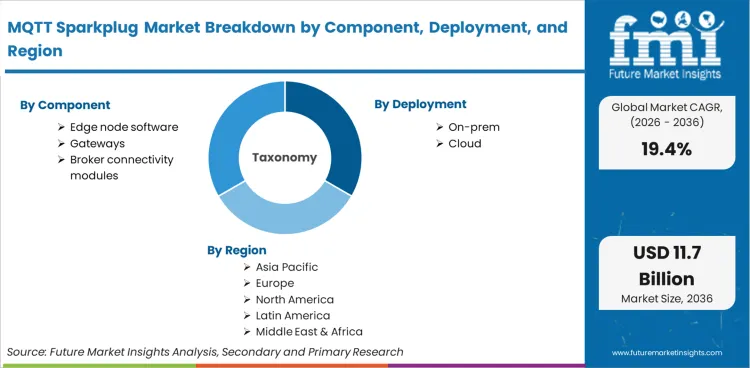
In 2025, the MQTT sparkplug market surpassed a value of USD 1.66 billion, is projected at USD 1.98 billion in 2026 and USD 11.7 billion by 2036, implying a 19.4% CAGR, with momentum tied to strict interoperability mandates forcing operators to standardize telemetry architectures. Legacy polling protocols cannot support the bidirectional data density required by modern predictive maintenance analytics. Plant managers deploying automated guided vehicles and real-time vision inspection systems are hitting hard bandwidth limits under OPC UA and Modbus frameworks. This structural bottleneck elevates the MQTT Sparkplug B specification from a niche integration tool to a mandatory baseline for unified namespace architecture, compelling buyers to reject hardware components lacking native topic-naming compliance.
MQTT Sparkplug adoption is increasingly tied to production-grade OT architectures where secure, state-aware, standardized telemetry enables Unified Namespace-style integrations without expanding plant-floor attack surface. Reflecting this market priority (especially as Sparkplug is deployed for OT-to-IT data movement and Industrial AI use cases), Paul Thomas (President, Skkynet Cloud Systems) said: "We’ve raised the bar for industrial data security. At a time when mission-critical systems are under unprecedented attack, this latest version of DataHub software integrates seamlessly with firewall, DMZ, and data diode technologies to allow remote access to industrial data for AI while presenting zero attack surface to unwanted intruders. [1]"
Summary of MQTT Sparkplug Market
- MQTT Sparkplug Market Definition
- A standardized telemetry protocol specification utilizing a publish-subscribe architecture to establish unified payload formats and topic namespaces for industrial data transmission.
- Demand Drivers in the Market
- Unified namespace architecture adoption forces factory operators to replace point-to-point connections with decoupled data brokers.
- Bandwidth constraints across dense sensor networks compel plant managers to transition away from heavy polling protocols.
- Edge intelligence deployment requires bidirectional state-management capabilities that legacy SCADA systems cannot natively support.
- Key Segments Analyzed in the FMI Report
- Edge-node Software: 46% share in 2026, driven by embedded telemetry standardization within individual industrial assets.
- Manufacturing: 44% share in 2026, as production lines shift toward decoupled communication to manage high-frequency machine data.
- Asia Pacific: High-growth zone prioritizing scalable data ingestion for modernized supply chain networks.
- Analyst Opinion at FMI
- Nikhil Kaitwade, Principal Consultant for Industrial Automation Principal Consultant for Technology, opines, "Bandwidth rationing at the industrial edge is no longer feasible. Operators must standardize payload structures to bypass legacy SCADA polling latency. Suppliers failing to offer native Sparkplug B compliance at the device level will face automatic disqualification from unified namespace integration tenders."
- Strategic Implications / Executive Takeaways
- Mandate native Sparkplug B compliance across all new hardware procurement cycles to eliminate integration bottlenecks.
- Transition legacy Modbus networks to broker-centric architectures to enable real-time machine learning analytics.
- Deploy redundant edge brokers to guarantee data continuity during high-latency cloud transmission periods.
- Methodology
- Primary Research: Direct interviews with automation architects, edge software developers, and plant digitalization managers across manufacturing hubs.
- Desk Research: Custom procurement datasets, official protocol adoption registries, and validated corporate hardware launch announcements.
- Market-Sizing and Forecasting: Analysts developed a bottom-up adoption model starting from regional smart factory investments, applying historic connectivity conversion ratios.
- Data Validation and Update Cycle: Findings underwent cross-verification against official industrial consortium benchmarks before final integration.
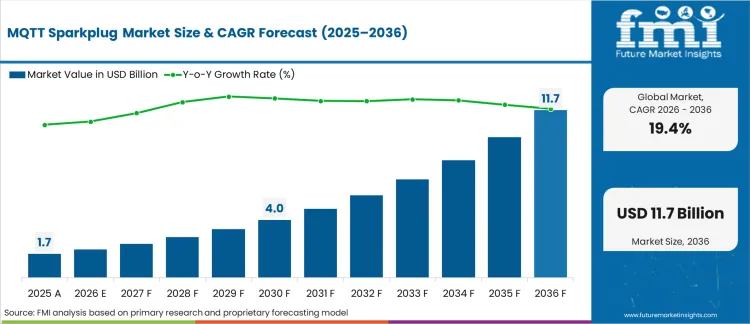
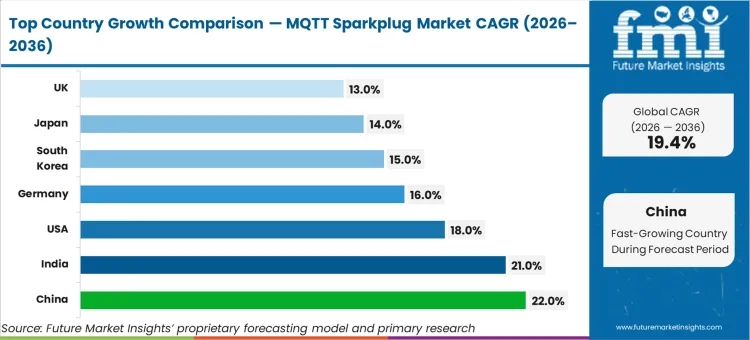
A CAGR of 22.0% is expected for the sector in China through 2036, reflecting massive state investments in industrial Internet upgrades. India follows closely at a 21.0% CAGR, supported by Digital India roadmap funding focused on cost-efficient factory modernization. The United States advances at an 18.0% CAGR as cybersecurity standards force strict edge network fortification. In Europe, Germany targets a 16.0% CAGR driven by mature IT/OT convergence frameworks within the automotive supply chain. South Korea projects a 15.0% CAGR based on high-density private 5G deployments for robotics. Japan aims for a 14.0% CAGR to maintain precision manufacturing dominance. The United Kingdom moves at a 13.0% CAGR, prioritizing supply chain resilience through connected logistics.
MQTT Sparkplug Market Definition
The MQTT Sparkplug market involves the commercialization of software and hardware components that implement the Sparkplug B specification over the MQTT protocol. This framework establishes standard topic namespaces, state management, and payload definitions for industrial interoperability. It enables decoupling of devices from centralized SCADA systems, allowing seamless data ingestion into cloud or enterprise platforms. Industrial operators utilize this standard to connect programmable logic controllers directly to analytical brokers.
MQTT Sparkplug Market Inclusions
The category includes commercial edge node software, dedicated broker connectivity modules, and hardware gateways pre-configured for Sparkplug B transmission. It covers on-premise deployments managing local factory data alongside cloud-hosted brokers handling multi-site fleet telemetry. Implementations spanning manufacturing floors, utility grid monitoring, and logistics tracking are fully within scope. Software adapters that convert legacy OPC UA data into compliant payloads are also included.
MQTT Sparkplug Market Exclusions
The scope excludes basic MQTT brokers that lack the specific Sparkplug B state management and payload structuring layers. It does not include standard consumer IoT devices or smart home appliances utilizing lightweight messaging without industrial namespace compliance. Pure cellular hardware routing data without protocol translation is excluded. Consulting services and system integration labor costs are not quantified within the product revenue metrics.
MQTT Sparkplug Market Research Methodology
- Primary Research: Detailed interviews with SCADA integrators, automation engineers, and industrial connectivity product managers across primary global markets.
- Desk Research: Extraction of verifiable data from recognized industrial consortiums, official government funding portals, and major corporate product release technical specifications.
- Market-Sizing and Forecasting: Analysts deployed a bottom-up conversion model starting from the global installed base of programmable logic controllers, projecting the protocol upgrade rate.
- Data Validation and Update Cycle: Findings underwent cross-verification against Eclipse Foundation adoption benchmarks and peer-reviewed automation journals before final forecast integration.
Segmental Analysis
MQTT Sparkplug Market Analysis by Component
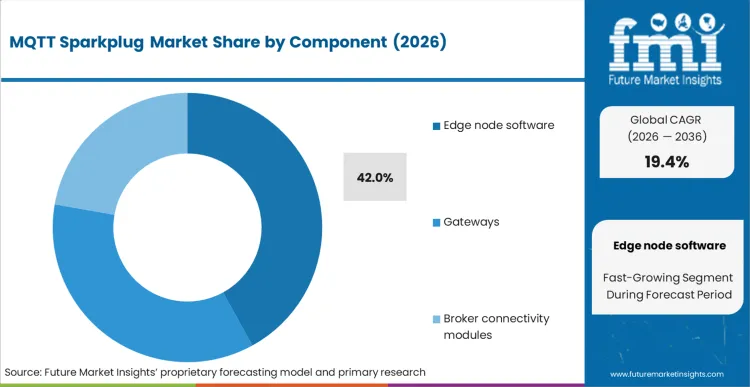
Tier-1 automation vendors are actively embedding telemetry standardizations directly into machine controls, bypassing the need for intermediary translation layers. FMI analysts opine that factory architects deploying enterprise iot strategies prioritize these embedded nodes to eliminate the latency inherent in secondary protocol conversion. Centralized processing models face severe operational limitations when managing high-frequency vibration and temperature data from hundreds of motors simultaneously. Operators implementing unified namespace architectures mandate node-level compliance to ensure immediate state awareness across the entire production floor.
- Product Innovation: Developers eliminate secondary polling delays by embedding native publish-subscribe capabilities directly onto microcontrollers.
- Technical Validation: Facilities test payload compression limits, qualifying only software versions that handle high-frequency data without packet loss.
- Procurement Shifts: Automation engineers refuse to specify hardware that requires custom scripting for SCADA ingestion.
MQTT Sparkplug Market Analysis by Deployment
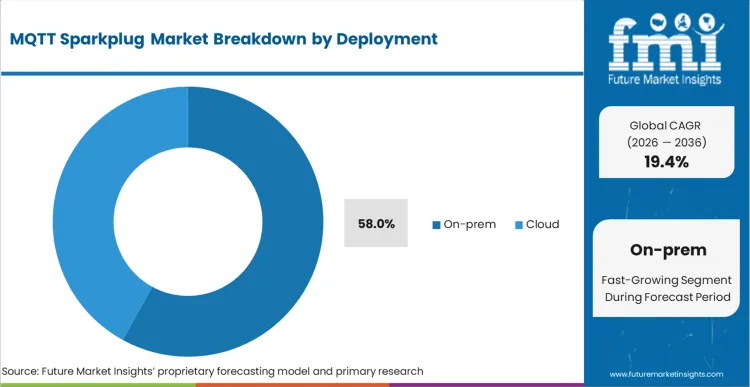
On-prem configurations account for 58% of deployment volume in 2026 as industrial facilities maintain strict air-gapped security protocols. Plant managers deploying AI in IOT applications require absolute data sovereignty when executing real-time robotic adjustments. Facilities processing highly sensitive intellectual property cannot risk external cloud transmission latency during critical assembly operations. Localized broker networks ensure continuous manufacturing execution even if external internet connectivity drops. The push toward decentralized intelligence dictates that essential state-management functions remain physically co-located with the machinery they monitor.
- Dietary Compliance: Strict data privacy mandates force manufacturers to keep sensitive operational telemetry within local server environments.
- Logistics Advantage: On-premise brokers process machine events instantaneously, preventing the micro-second delays that disrupt high-speed sorting.
- System Security: Plant administrators isolate critical automation networks from vulnerable external internet interfaces.
MQTT Sparkplug Market Analysis by End Use
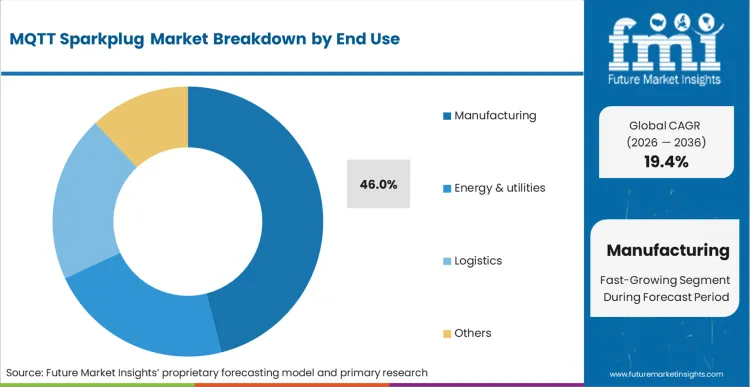
Heavy asset operators are abandoning legacy polling systems, elevating Manufacturing to a 46% share of total volumes in 2026. Production managers integrating iot in manufacturing frameworks face critical bandwidth limitations when adding predictive maintenance sensors to existing networks. ZEDEDA partnered with SLB to deploy edge AI and IoT solutions specifically for high-density energy sector environments [2]. This shift proves that high-throughput sectors cannot scale using point-to-point SCADA connections. The transition toward decoupled communication allows infinite scalability, enabling additional analytics applications to subscribe to machine data without increasing network load.
- Technical Validation: Quality assurance systems rely on instantaneous telemetry to halt production lines the moment defect tolerances are breached.
- Process Compatibility: Manufacturing facilities align broker architectures with existing enterprise resource planning software to automate inventory call-offs.
- Adoption Acceleration: Complex assembly operations require coordinated data sharing across multiple independent equipment vendors.
MQTT Sparkplug Market Analysis by Node Type
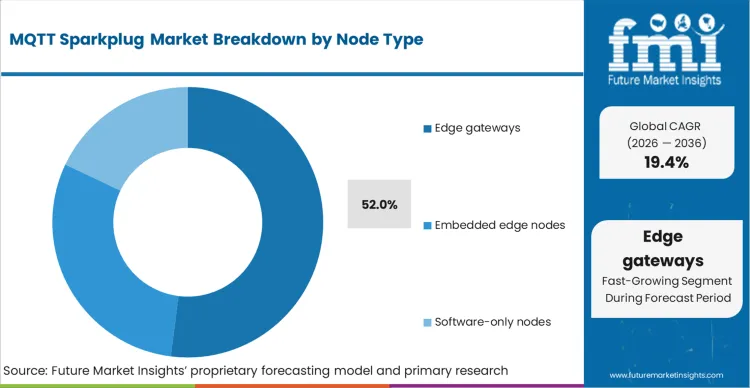
Automation integrators specifying mixed-fleet environments continue to rely heavily on Edge gateways, capturing a 52% segment share in 2026. Facilities operating legacy machinery without native Ethernet capabilities require intermediate devices to bridge physical signals to modern IT networks. Operators executing industrial iot upgrades utilize these gateways to translate Modbus serial outputs into structured MQTT payloads. This physical separation allows plants to achieve unified namespace compliance without replacing fully functional capital equipment.
- Product Innovation: Hardware designers integrate advanced store-and-forward memory buffers to prevent data loss during temporary network outages.
- Technical Validation: Factory technicians verify protocol translation accuracy before approving gateway models for fleet-wide rollout.
- Requalification Cycles: Facilities standardize on specific gateway architectures to minimize maintenance training overhead.
MQTT Sparkplug Market Drivers, Restraints, and Opportunities
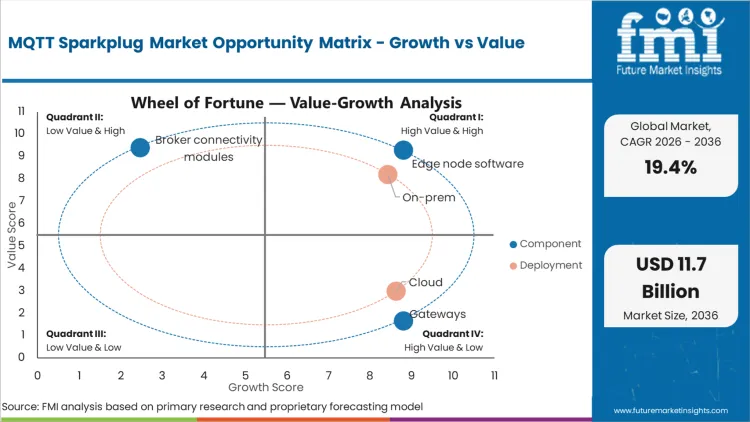
Data bandwidth saturation across modernized factory floors forces automation architects to replace constant-polling protocols with report-by-exception communication. This federal capital injection accelerates the obsolescence of point-to-point SCADA architectures. Facilities integrating thousands of condition-monitoring sensors cannot physically route every data point through a central server without triggering network collapse. The adoption of decoupled broker networks becomes a mathematical necessity, compelling buyers to disqualify hardware vendors that cannot provide native publish-subscribe capabilities.
Cybersecurity vulnerabilities introduced by decentralized node deployments restrict the speed of IT/OT convergence across critical infrastructure sectors. Facility managers face immense pressure to secure thousands of new endpoints against external intrusion while maintaining operational data flow. The requirement to manage complex certificate-based authentication protocols across distributed brokers adds significant engineering overhead. Buyers mitigate this exposure by limiting early deployments to non-critical telemetry applications until vendor-supplied security patch management systems prove reliable under active threat conditions.
- Enterprise Data Lake Integration: Cloud providers releasing dedicated industrial ingestion tools capture high-volume analytics contracts from multinational manufacturers.
- Legacy Equipment Bridging: Suppliers developing specialized edge converters secure immediate revenue from facilities unable to replace functional capital machinery.
- Edge AI Deployment: Vendors combining protocol translation with local inference processing capture premium margins from operators running low-latency robotics.
Regional Analysis
Based on the regional analysis, the MQTT Sparkplug market is segmented into North America, Latin America, Europe, East Asia, South Asia, Oceania and Middle East & Africa across 40+ countries. The full report also offers market attractiveness analysis based on regional trends.
.webp "Top Country Growth Comparison Mqtt Sparkplug Market Cagr (2026 2036)")
| Country | CAGR (2026 to 2036) |
|---|---|
| China | 22.0% |
| India | 21.0% |
| USA | 18.0% |
| Germany | 16.0% |
| South Korea | 15.0% |
| Japan | 14.0% |
| UK | 13.0% |
Source: Future Market Insights (FMI) analysis, based on proprietary forecasting model and primary research
Asia Pacific MQTT Sparkplug Market Analysis
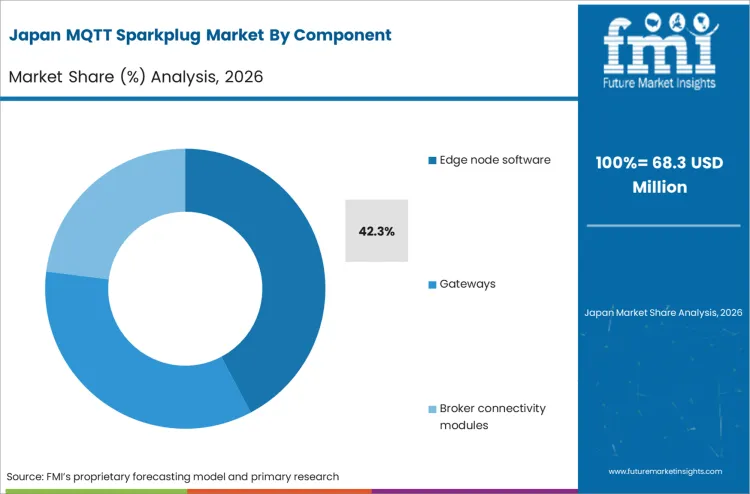
Asia Pacific's industrial automation trajectory is defined by aggressive government-mandated digital transformations designed to elevate manufacturing efficiency to global standards. Factory owners managing vast electronics and automotive supply chains face an acute need to unify data across fragmented equipment fleets. FMI analysts opine that this top-down directive forces domestic machine builders to abandon proprietary protocols in favor of interoperable standards. The implementation of dense sensor networks to track fast-moving consumer goods production leaves facility managers with no option but to deploy decoupled broker architectures to manage the payload volume.
- Japan: Aging workforce demographics force precision manufacturing operators to aggressively automate quality inspection processes. Procurement teams must secure natively compliant vision inspection nodes before 2028 or risk missing production quotas due to manual inspection bottlenecks. This urgent transition to automated, decentralized telemetry underpins a projected 14.0% CAGR between 2026 and 2036.
- China: Propelling regional demand toward a staggering 22.0% CAGR through 2036, state-driven directives mandate the immediate integration of fragmented supply chain data into centralized provincial analytics platforms. Factory managers failing to adopt standardized telemetry face disqualification from lucrative state-subsidized advanced manufacturing tenders.
- India: Massive infrastructure investments require localized manufacturing hubs to rapidly scale predictive maintenance capabilities across newly commissioned facilities. Mid-market plant owners, driving a robust 21.0% CAGR over the forecast period, must transition from reactive to predictive maintenance architectures before margin compression eliminates their competitive bidding status.
- South Korea: High-density electronics manufacturing requires microsecond latency to synchronize robotics across massive cleanroom environments. Global edge spending is accelerating rapidly to support real-time responsiveness in robotics lines and dense IoT networks [4]. Fueling a 15.0% CAGR as throughput demands escalate, operations directors are overhauling broker infrastructure to prevent severe yield degradation during high-speed wafer handling processes.
FMI's report includes comprehensive tracking of the Asia Pacific connectivity landscape, covering adoption rates in Taiwan, Vietnam, and Malaysia. The localization of semiconductor packaging in these zones accelerates the requirement for unified namespace integration to track microscopic defect rates across multi-vendor cleanroom environments.
North America MQTT Sparkplug Market Analysis
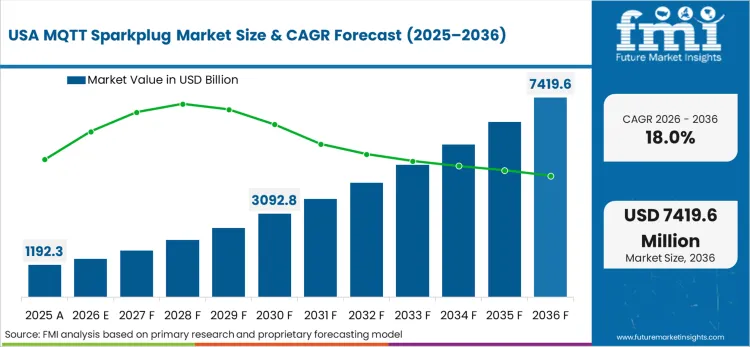
North America's connectivity landscape is undergoing a massive recalibration as federal infrastructure funding specifically targets the modernization of domestic manufacturing resilience. Plant managers are actively replacing outdated SCADA networks that cannot support the data throughput required by modern supply chain tracking algorithms. The USA Department of Energy explicitly allocated USD 13 million to ensure smart manufacturing technologies remain accessible to domestic firms [5]. This capital injection changes the ROI calculation for operators previously deferring network upgrades. The urgency to establish secure, bidirectional communication channels directly to enterprise resource planning software dictates procurement strategies, pushing buyers toward solutions that offer out-of-the-box protocol compliance.
- United States: Generating an impressive 18.0% CAGR as corporations aggressively modernize legacy infrastructure, strict federal mandates regarding domestic supply chain resilience force operators to deploy advanced predictive maintenance sensor grids. The Governor of Maryland recently announced state grant awards specifically designed to support smart manufacturing efforts [6]. Plant engineers must qualify and deploy compliant edge gateways before the 2027 fiscal year to access state-level automation subsidization funds.
FMI's report includes deep-dive assessments of the North American market, detailing integration trends across Canada and Mexico. The cross-border integration of automotive supply chains forces Tier-2 parts suppliers in these regions to adopt standardized telemetry to maintain real-time inventory visibility with Detroit-based OEM assembly plants.
Europe MQTT Sparkplug Market Analysis
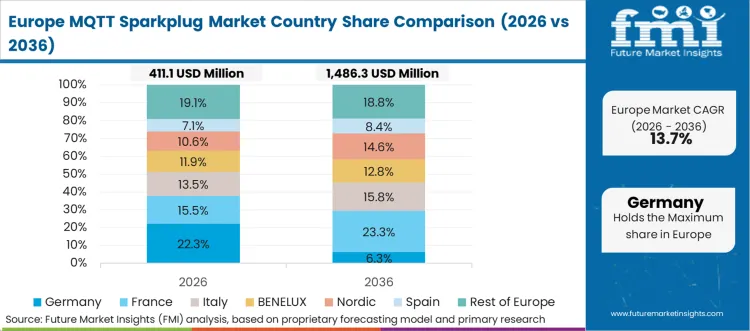
Europe functions as the primary technical proving ground for advanced IT/OT convergence, driven heavily by strict Industrie 4.0 interoperability guidelines. Plant administrators managing highly automated automotive and aerospace facilities require complex data modeling that legacy polling simply cannot accommodate. This structural shift reflects a broader opportunity: replacing isolated production silos with unified digital twins. Factory architects now view native topic-naming compliance not as a premium feature, but as a mandatory prerequisite for any equipment entering a European production facility.
- Germany: The dense concentration of premium automotive manufacturing requires seamless data exchange between thousands of independent robotic assembly cells. This systemic overhaul drives a 16.0% CAGR as original equipment manufacturers standardize their internal network architectures to ensure predictive maintenance experiences early implementation in OT systems. Operations executives must establish unified namespace standards across all vendor contracts before transitioning to fully autonomous production lines.
- UK: Post-Brexit supply chain optimization mandates require logistics operators to establish real-time visibility across all warehouse automation assets. Parsec launched TrakSYS 13 featuring dedicated MQTT connectors to enable Unified Namespace connectivity [8]. Supply chain directors lacking these decoupled communication architectures face severe penalties from retail partners demanding granular tracking data, a compliance pressure that sustains a 13.0% CAGR over the forecast period.
FMI's report includes detailed tracking of European protocol adoption, expanding coverage to France, Italy, and the Nordics. The rapid deployment of renewable energy microgrids across these nations necessitates decentralized state-management capabilities to balance dynamic load fluctuations efficiently.
Competitive Aligners for Market Players
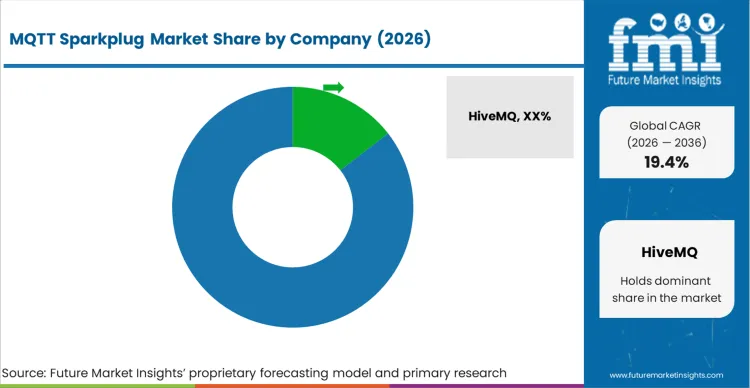
Market structure relies heavily on the ability to provide seamless integration between legacy industrial hardware and modern enterprise cloud analytics. Cirrus Link Solutions successfully launched the IIoT Bridge for Snowflake, enabling frictionless data ingestion directly into data warehouses [9]. Facilities positioned with these advanced bridging capabilities maintain a structural advantage over competitors reliant on manual data extraction. Vendors that cannot offer automated schema generation face rapid exclusion from enterprise-level digital transformation contracts.
Technological capability differentiates premium suppliers from bulk hardware manufacturers in the critical edge intelligence sector. Dr. Ralf M. Wagner, senior vice president at Siemens Digital Industries Software, stated: 'We believe being named a Leader in the Magic Quadrant reflects the trust our customers place in Siemens to accelerate their digital transformation.' [10] The industry shift toward operational maturity is evident as massive automation conglomerates validate the necessity of standardized IIoT platforms. Smaller integrators must align with these validated ecosystems to secure multi-site installation bids.
Competitive posture shifts as cloud providers aggressively partner with specialized edge software developers to streamline data ingestion. The structural push toward bulk data handling aligns with the necessity to bypass traditional SCADA bottlenecks entirely. Integrators holding deep expertise in configuring unified namespace architectures command higher margins by delivering projects that scale without exponential network engineering costs.
Recent Developments
The report includes full coverage of key trends from competitive benchmarking. Some of the recent developments covered in the reports:
- In November 2025, Hilscher launched the new multiprotocol comX 90 module to enable cyber-secure industrial communication with IIoT platforms via MQTT. [11]
- In January 2026, EMQ Technologies (EMQX) released EMQX Enterprise v6.1.0 with MQTT Streams and Parquet support for enterprise AI and IIoT architectures. [12]
- In 2025, HiveMQ enhanced its Sparkplug support with a new Sparkplug Module in DataHub specifically developed for converting raw Sparkplug data into standard JSON formats. [13]
Key Players in MQTT Sparkplug Market
- HiveMQ
- EMQX (EMQ Technologies)
- Cirrus Link Solutions
- Inductive Automation
- PTC
- Siemens
- Rockwell Automation
- ClearBlade
- Hilscher
- Moxa
- ZEDEDA
- Parsec
Scope of the Report
| Metric | Value |
|---|---|
| Quantitative Units | USD 1.98 billion to USD 11.7 billion, at a CAGR of 19.4% |
| Market Definition | A standardized telemetry protocol specification utilizing a publish-subscribe architecture to establish unified payload formats and topic namespaces for industrial data transmission. |
| Component Segmentation | Edge node software, Gateways, Broker connectivity modules |
| Deployment Segmentation | On-prem, Cloud |
| End Use Segmentation | Manufacturing, Energy & utilities, Logistics, Others |
| Node Type Segmentation | Edge gateways, Embedded edge nodes, Software-only nodes |
| Regions Covered | North America, Latin America, Europe, East Asia, South Asia, Oceania, Middle East and Africa |
| Countries Covered | United States, Canada, Mexico, Brazil, Argentina, Germany, France, United Kingdom, Italy, Spain, China, India, Japan, South Korea, Indonesia, Australia and 40 plus countries |
| Key Companies Profiled | HiveMQ, EMQX, Cirrus Link Solutions, Inductive Automation, PTC, Siemens, Rockwell Automation, ClearBlade |
| Forecast Period | 2026 to 2036 |
| Approach | Hybrid bottom-up market modeling validated through primary interviews with SCADA integrators and automation engineers, supported by technical benchmark tracking. |
Source: Future Market Insights (FMI) analysis, based on proprietary forecasting model and primary research
Segmental Analysis
Component:
- Edge node software
- Gateways
- Broker connectivity modules
Deployment:
- On-prem
- Cloud
End Use:
- Manufacturing
- Energy & utilities
- Logistics
- Others
Node Type:
- Edge gateways
- Embedded edge nodes
- Software-only nodes
Region:
- Asia Pacific
- India
- China
- Japan
- South Korea
- Indonesia
- Australia & New Zealand
- ASEAN
- Rest of Asia Pacific
- Europe
- Germany
- Italy
- France
- United Kingdom
- Spain
- Benelux
- Nordics
- Central & Eastern Europe
- Rest of Europe
- North America
- United States
- Canada
- Mexico
- Latin America
- Brazil
- Argentina
- Chile
- Rest of Latin America
- Middle East & Africa
- Kingdom of Saudi Arabia
- United Arab Emirates
- South Africa
- Turkey
- Rest of Middle East & Africa
Bibliography
- [1] Skkynet Cloud Systems, Inc. (2024, July 9).Skkynet raises the bar for industrial data security[Press release].
- [2] ZEDEDA. (2025, July 15). Empowering the energy sector: ZEDEDA and SLB drive next-gen edge AI and IoT solutions (Press release).
- [4] LF Edge. (2025, December 1). LF Edge 2025 year in review and what’s ahead in 2026.
- [5] USA Department of Energy. (2025, January 15). USA Department of Energy announces nearly $13 million to incentivize smart manufacturing at small- and medium-sized facilities.
- [6] State of Maryland. (2025, September 9). Governor Moore announces state grant awards to support smart manufacturing efforts.
- [8] Parsec. (2025, February 21). TrakSYS 13 teaser.
- [9] Cirrus Link Solutions. (2025). IIoT Bridge for Snowflake.
- [10] Siemens. (2025, October 6). Siemens recognized as a Leader in Gartner Magic Quadrant for Global Industrial IoT Platforms.
- [11] Hilscher. (2025, November 17). Hilscher launches new multiprotocol comX 90 module for cyber-secure industrial communication.
- [12] EMQ Technologies. (2026, January 6). EMQX Enterprise v6.1.0 introduces MQTT Streams and native Parquet output.
- [13] HiveMQ. (2025). HiveMQ Data Hub - Sparkplug Module.
This bibliography is provided for reader reference and is not exhaustive. The full report contains the complete reference list and detailed citations.
This Report Addresses
- Market size estimation and revenue forecasts from 2026 to 2036, supported by validated corporate hardware announcements across major industrial automation hubs.
- Growth opportunity mapping across embedded node software and gateway hardware with emphasis on unified namespace transitions.
- Segment and regional revenue forecasts covering critical applications like high-density manufacturing, energy grid monitoring, and intelligent logistics.
- Competition strategy assessment including cloud platform integration models, edge analytics capability, and multi-protocol conversion benchmarking.
- Product requirement tracking covering key metrics such as payload compression, bidirectional state management, and strict air-gapped security protocols.
- Regulatory impact analysis evaluating strict cybersecurity mandates, critical infrastructure protection frameworks, and regional smart manufacturing subsidization policies.
- Market report delivery in PDF, Excel, PPT, and interactive dashboard formats for executive and operational use.
Frequently Asked Questions
How large is the demand for MQTT Sparkplug in the global market in 2026?
Demand for MQTT Sparkplug in the global market is estimated to be valued at USD 1.98 billion in 2026.
What will be the market size of MQTT Sparkplug in the global market by 2036?
Market size for MQTT Sparkplug is projected to reach USD 4.8 billion by 2036.
What is the expected demand growth for MQTT Sparkplug in the global market between 2026 and 2036?
Demand for MQTT Sparkplug is expected to grow at a CAGR of 19.4% between 2026 and 2036.
Which Component is poised to lead global sales by 2026?
Edge node software commands 46% in 2026 as factory architects eliminate translation latency by embedding telemetry standards directly onto machine microcontrollers.
How significant is the role of Manufacturing in driving MQTT Sparkplug adoption in 2026?
Manufacturing represents 44% of segment share as heavy asset operators abandon legacy polling to scale predictive maintenance networks.
What is driving demand in China?
Massive state investments in industrial Internet upgrades and top-down mandates for interoperable data architectures drive domestic adoption.
What compliance standards or regulations are referenced for China?
National industrial directives focused on elevating digital capabilities and supply chain tracking data standardization.
What is the China growth outlook in this report?
China is projected to grow at a CAGR of 22.0% during 2026 to 2036.
Why is North America described as a priority region in this report?
Aggressive federal infrastructure funding targeting smart manufacturing and domestic supply chain resilience accelerates network modernization.
What type of demand dominates in North America?
Security-driven architecture overhauls and the rapid integration of advanced predictive analytics tools shape procurement behavior.
What is India's growth outlook in this report?
India is projected to expand at a CAGR of 21.0% during 2026 to 2036.
Does the report cover the United States in its regional analysis?
Yes, the United States is included within North America under the regional scope of analysis.
What are the sources referred to for analyzing the United States?
Official funding announcements from the Department of Energy and validated corporate edge network deployments form the analytical basis.
What is the main demand theme linked to the United States in its region coverage?
Strict federal mandates and cyber-secure supply chain tracking force operators to deploy compliant edge gateways.
Does the report cover Germany in its regional analysis?
Yes, Germany is included within Europe under the regional coverage framework.
What is the main Germany related demand theme in its region coverage?
Mature IT/OT convergence frameworks within the automotive supply chain demand seamless data exchange between highly automated robotic cells.
Which product formats or configurations are strategically important for Europe supply chains?
Natively compliant topic-naming controllers capable of sustaining unified digital twins across multi-vendor environments hold immense strategic value.
What is MQTT Sparkplug and what is it mainly used for?
It is a standardized telemetry protocol specification utilizing a publish-subscribe architecture to unify industrial data transmission.
What does MQTT Sparkplug mean in this report?
The market refers to the commercialization of edge software, connectivity modules, and gateways that implement this specific topic-naming framework.
What is included in the scope of this MQTT Sparkplug report?
Scope includes commercial edge node software, dedicated broker connectivity modules, and hardware gateways pre-configured for transmission.
What is excluded from the scope of this report?
Basic MQTT brokers lacking industrial state management, consumer IoT devices, and consulting integration labor are strictly excluded.
What does market forecast mean on this page?
The market forecast represents a model-based projection built on defined industrial capacity and technological adoption assumptions for strategic planning purposes.
How does FMI build and validate the MQTT Sparkplug forecast?
Forecasts combine top-down smart factory investment data with bottom-up connectivity conversion ratios, validated by primary automation engineer interviews.
What does zero reliance on speculative third-party market research mean here?
Primary interviews, verified corporate hardware announcements, and official government technology datasets are used exclusively instead of unverified syndicated estimates.
Preview the report firsthand - request a free sample
Get SampleGet the brochure for pricing and purchase details.
Get PDFTable of Content
- Executive Summary
- Global Market Outlook
- Demand-side Trends
- Supply-side Trends
- Technology Roadmap Analysis
- Analysis and Recommendations
- Market Overview
- Market Coverage / Taxonomy
- Market Definition / Scope / Limitations
- Research Methodology
- Chapter Orientation
- Analytical Lens and Working Hypotheses
- Market Structure, Signals, and Trend Drivers
- Benchmarking and Cross-market Comparability
- Market Sizing, Forecasting, and Opportunity Mapping
- Research Design and Evidence Framework
- Desk Research Programme (Secondary Evidence)
- Company Annual and Sustainability Reports
- Peer-reviewed Journals and Academic Literature
- Corporate Websites, Product Literature, and Technical Notes
- Earnings Decks and Investor Briefings
- Statutory Filings and Regulatory Disclosures
- Technical White Papers and Standards Notes
- Trade Journals, Industry Magazines, and Analyst Briefs
- Conference Proceedings, Webinars, and Seminar Materials
- Government Statistics Portals and Public Data Releases
- Press Releases and Reputable Media Coverage
- Specialist Newsletters and Curated Briefings
- Sector Databases and Reference Repositories
- FMI Internal Proprietary Databases and Historical Market Datasets
- Subscription Datasets and Paid Sources
- Social Channels, Communities, and Digital Listening Inputs
- Additional Desk Sources
- Expert Input and Fieldwork (Primary Evidence)
- Primary Modes
- Qualitative Interviews and Expert Elicitation
- Quantitative Surveys and Structured Data Capture
- Blended Approach
- Why Primary Evidence is Used
- Field Techniques
- Interviews
- Surveys
- Focus Groups
- Observational and In-context Research
- Social and Community Interactions
- Stakeholder Universe Engaged
- C-suite Leaders
- Board Members
- Presidents and Vice Presidents
- R&D and Innovation Heads
- Technical Specialists
- Domain Subject-matter Experts
- Scientists
- Physicians and Other Healthcare Professionals
- Governance, Ethics, and Data Stewardship
- Research Ethics
- Data Integrity and Handling
- Primary Modes
- Tooling, Models, and Reference Databases
- Desk Research Programme (Secondary Evidence)
- Data Engineering and Model Build
- Data Acquisition and Ingestion
- Cleaning, Normalisation, and Verification
- Synthesis, Triangulation, and Analysis
- Quality Assurance and Audit Trail
- Market Background
- Market Dynamics
- Drivers
- Restraints
- Opportunity
- Trends
- Scenario Forecast
- Demand in Optimistic Scenario
- Demand in Likely Scenario
- Demand in Conservative Scenario
- Opportunity Map Analysis
- Product Life Cycle Analysis
- Supply Chain Analysis
- Investment Feasibility Matrix
- Value Chain Analysis
- PESTLE and Porter’s Analysis
- Regulatory Landscape
- Regional Parent Market Outlook
- Production and Consumption Statistics
- Import and Export Statistics
- Market Dynamics
- Global Market Analysis 2021 to 2025 and Forecast, 2026 to 2036
- Historical Market Size Value (USD Million) Analysis, 2021 to 2025
- Current and Future Market Size Value (USD Million) Projections, 2026 to 2036
- Y-o-Y Growth Trend Analysis
- Absolute $ Opportunity Analysis
- Global Market Pricing Analysis 2021 to 2025 and Forecast 2026 to 2036
- Global Market Analysis 2021 to 2025 and Forecast 2026 to 2036, By Component
- Introduction / Key Findings
- Historical Market Size Value (USD Million) Analysis By Component , 2021 to 2025
- Current and Future Market Size Value (USD Million) Analysis and Forecast By Component , 2026 to 2036
- Edge node software
- Gateways
- Broker connectivity modules
- Edge node software
- Y-o-Y Growth Trend Analysis By Component , 2021 to 2025
- Absolute $ Opportunity Analysis By Component , 2026 to 2036
- Global Market Analysis 2021 to 2025 and Forecast 2026 to 2036, By Deployment
- Introduction / Key Findings
- Historical Market Size Value (USD Million) Analysis By Deployment, 2021 to 2025
- Current and Future Market Size Value (USD Million) Analysis and Forecast By Deployment, 2026 to 2036
- On-prem
- Cloud
- On-prem
- Y-o-Y Growth Trend Analysis By Deployment, 2021 to 2025
- Absolute $ Opportunity Analysis By Deployment, 2026 to 2036
- Global Market Analysis 2021 to 2025 and Forecast 2026 to 2036, By End Use
- Introduction / Key Findings
- Historical Market Size Value (USD Million) Analysis By End Use, 2021 to 2025
- Current and Future Market Size Value (USD Million) Analysis and Forecast By End Use, 2026 to 2036
- Manufacturing
- Energy & utilities
- Logistics
- Others
- Manufacturing
- Y-o-Y Growth Trend Analysis By End Use, 2021 to 2025
- Absolute $ Opportunity Analysis By End Use, 2026 to 2036
- Global Market Analysis 2021 to 2025 and Forecast 2026 to 2036, By Node Type
- Introduction / Key Findings
- Historical Market Size Value (USD Million) Analysis By Node Type, 2021 to 2025
- Current and Future Market Size Value (USD Million) Analysis and Forecast By Node Type, 2026 to 2036
- Edge gateways
- Embedded edge nodes
- Software-only nodes
- Edge gateways
- Y-o-Y Growth Trend Analysis By Node Type, 2021 to 2025
- Absolute $ Opportunity Analysis By Node Type, 2026 to 2036
- Global Market Analysis 2021 to 2025 and Forecast 2026 to 2036, By Region
- Introduction
- Historical Market Size Value (USD Million) Analysis By Region, 2021 to 2025
- Current Market Size Value (USD Million) Analysis and Forecast By Region, 2026 to 2036
- North America
- Latin America
- Western Europe
- Eastern Europe
- East Asia
- South Asia and Pacific
- Middle East & Africa
- Market Attractiveness Analysis By Region
- North America Market Analysis 2021 to 2025 and Forecast 2026 to 2036, By Country
- Historical Market Size Value (USD Million) Trend Analysis By Market Taxonomy, 2021 to 2025
- Market Size Value (USD Million) Forecast By Market Taxonomy, 2026 to 2036
- By Country
- USA
- Canada
- Mexico
- By Component
- By Deployment
- By End Use
- By Node Type
- By Country
- Market Attractiveness Analysis
- By Country
- By Component
- By Deployment
- By End Use
- By Node Type
- Key Takeaways
- Latin America Market Analysis 2021 to 2025 and Forecast 2026 to 2036, By Country
- Historical Market Size Value (USD Million) Trend Analysis By Market Taxonomy, 2021 to 2025
- Market Size Value (USD Million) Forecast By Market Taxonomy, 2026 to 2036
- By Country
- Brazil
- Chile
- Rest of Latin America
- By Component
- By Deployment
- By End Use
- By Node Type
- By Country
- Market Attractiveness Analysis
- By Country
- By Component
- By Deployment
- By End Use
- By Node Type
- Key Takeaways
- Western Europe Market Analysis 2021 to 2025 and Forecast 2026 to 2036, By Country
- Historical Market Size Value (USD Million) Trend Analysis By Market Taxonomy, 2021 to 2025
- Market Size Value (USD Million) Forecast By Market Taxonomy, 2026 to 2036
- By Country
- Germany
- UK
- Italy
- Spain
- France
- Nordic
- BENELUX
- Rest of Western Europe
- By Component
- By Deployment
- By End Use
- By Node Type
- By Country
- Market Attractiveness Analysis
- By Country
- By Component
- By Deployment
- By End Use
- By Node Type
- Key Takeaways
- Eastern Europe Market Analysis 2021 to 2025 and Forecast 2026 to 2036, By Country
- Historical Market Size Value (USD Million) Trend Analysis By Market Taxonomy, 2021 to 2025
- Market Size Value (USD Million) Forecast By Market Taxonomy, 2026 to 2036
- By Country
- Russia
- Poland
- Hungary
- Balkan & Baltic
- Rest of Eastern Europe
- By Component
- By Deployment
- By End Use
- By Node Type
- By Country
- Market Attractiveness Analysis
- By Country
- By Component
- By Deployment
- By End Use
- By Node Type
- Key Takeaways
- East Asia Market Analysis 2021 to 2025 and Forecast 2026 to 2036, By Country
- Historical Market Size Value (USD Million) Trend Analysis By Market Taxonomy, 2021 to 2025
- Market Size Value (USD Million) Forecast By Market Taxonomy, 2026 to 2036
- By Country
- China
- Japan
- South Korea
- By Component
- By Deployment
- By End Use
- By Node Type
- By Country
- Market Attractiveness Analysis
- By Country
- By Component
- By Deployment
- By End Use
- By Node Type
- Key Takeaways
- South Asia and Pacific Market Analysis 2021 to 2025 and Forecast 2026 to 2036, By Country
- Historical Market Size Value (USD Million) Trend Analysis By Market Taxonomy, 2021 to 2025
- Market Size Value (USD Million) Forecast By Market Taxonomy, 2026 to 2036
- By Country
- India
- ASEAN
- Australia & New Zealand
- Rest of South Asia and Pacific
- By Component
- By Deployment
- By End Use
- By Node Type
- By Country
- Market Attractiveness Analysis
- By Country
- By Component
- By Deployment
- By End Use
- By Node Type
- Key Takeaways
- Middle East & Africa Market Analysis 2021 to 2025 and Forecast 2026 to 2036, By Country
- Historical Market Size Value (USD Million) Trend Analysis By Market Taxonomy, 2021 to 2025
- Market Size Value (USD Million) Forecast By Market Taxonomy, 2026 to 2036
- By Country
- Kingdom of Saudi Arabia
- Other GCC Countries
- Turkiye
- South Africa
- Other African Union
- Rest of Middle East & Africa
- By Component
- By Deployment
- By End Use
- By Node Type
- By Country
- Market Attractiveness Analysis
- By Country
- By Component
- By Deployment
- By End Use
- By Node Type
- Key Takeaways
- Key Countries Market Analysis
- USA
- Pricing Analysis
- Market Share Analysis, 2025
- By Component
- By Deployment
- By End Use
- By Node Type
- Canada
- Pricing Analysis
- Market Share Analysis, 2025
- By Component
- By Deployment
- By End Use
- By Node Type
- Mexico
- Pricing Analysis
- Market Share Analysis, 2025
- By Component
- By Deployment
- By End Use
- By Node Type
- Brazil
- Pricing Analysis
- Market Share Analysis, 2025
- By Component
- By Deployment
- By End Use
- By Node Type
- Chile
- Pricing Analysis
- Market Share Analysis, 2025
- By Component
- By Deployment
- By End Use
- By Node Type
- Germany
- Pricing Analysis
- Market Share Analysis, 2025
- By Component
- By Deployment
- By End Use
- By Node Type
- UK
- Pricing Analysis
- Market Share Analysis, 2025
- By Component
- By Deployment
- By End Use
- By Node Type
- Italy
- Pricing Analysis
- Market Share Analysis, 2025
- By Component
- By Deployment
- By End Use
- By Node Type
- Spain
- Pricing Analysis
- Market Share Analysis, 2025
- By Component
- By Deployment
- By End Use
- By Node Type
- France
- Pricing Analysis
- Market Share Analysis, 2025
- By Component
- By Deployment
- By End Use
- By Node Type
- India
- Pricing Analysis
- Market Share Analysis, 2025
- By Component
- By Deployment
- By End Use
- By Node Type
- ASEAN
- Pricing Analysis
- Market Share Analysis, 2025
- By Component
- By Deployment
- By End Use
- By Node Type
- Australia & New Zealand
- Pricing Analysis
- Market Share Analysis, 2025
- By Component
- By Deployment
- By End Use
- By Node Type
- China
- Pricing Analysis
- Market Share Analysis, 2025
- By Component
- By Deployment
- By End Use
- By Node Type
- Japan
- Pricing Analysis
- Market Share Analysis, 2025
- By Component
- By Deployment
- By End Use
- By Node Type
- South Korea
- Pricing Analysis
- Market Share Analysis, 2025
- By Component
- By Deployment
- By End Use
- By Node Type
- Russia
- Pricing Analysis
- Market Share Analysis, 2025
- By Component
- By Deployment
- By End Use
- By Node Type
- Poland
- Pricing Analysis
- Market Share Analysis, 2025
- By Component
- By Deployment
- By End Use
- By Node Type
- Hungary
- Pricing Analysis
- Market Share Analysis, 2025
- By Component
- By Deployment
- By End Use
- By Node Type
- Kingdom of Saudi Arabia
- Pricing Analysis
- Market Share Analysis, 2025
- By Component
- By Deployment
- By End Use
- By Node Type
- Turkiye
- Pricing Analysis
- Market Share Analysis, 2025
- By Component
- By Deployment
- By End Use
- By Node Type
- South Africa
- Pricing Analysis
- Market Share Analysis, 2025
- By Component
- By Deployment
- By End Use
- By Node Type
- USA
- Market Structure Analysis
- Competition Dashboard
- Competition Benchmarking
- Market Share Analysis of Top Players
- By Regional
- By Component
- By Deployment
- By End Use
- By Node Type
- Competition Analysis
- Competition Deep Dive
- HiveMQ
- Overview
- Product Portfolio
- Profitability by Market Segments (Product/Age /Sales Channel/Region)
- Sales Footprint
- Strategy Overview
- Marketing Strategy
- Product Strategy
- Channel Strategy
- EMQX (EMQ Technologies)
- Cirrus Link Solutions
- Inductive Automation
- PTC
- Siemens
- Rockwell Automation
- ClearBlade
- Hilscher
- Moxa
- ZEDEDA
- Parsec
- HiveMQ
- Competition Deep Dive
- Assumptions & Acronyms Used


