

- Industry Size (2026):
- USD 1.2 Bn
- Forecast (2036):
- USD 2.5 Bn
- CAGR (2026 to 2036)
- 7.4%
Recirculating Irrigation Pumps Market Forecast and Outlook 2026 to 2036
The recirculating irrigation pumps market is projected to reach USD 2.5 billion by 2036, growing at a CAGR of 7.4% from its 2026 size of USD 1.2 billion. Procurement priorities will be shaped by a growing emphasis on water conservation and energy efficiency, prompting buyers to focus on pumps that offer long-term reliability and operational savings. Risk aversion among buyers will lead to a preference for well-established vendors with proven performance records.
Vendor lock-in is likely to occur, as long-term contracts and system compatibility with existing irrigation infrastructure can reduce the desire to switch suppliers. Switching costs, particularly related to installation, integration, and training, will influence purchasing decisions, as buyers may weigh the financial implications of transitioning to new systems. Vendors offering cost-effective solutions with clear return on investment will be positioned to secure repeat business, while those providing comprehensive service support will benefit from sustained customer loyalty.
Quick Stats for the Recirculating Irrigation Pumps Market
- Recirculating Irrigation Pumps Market Value (2026): USD 1.2 billion
- Recirculating Irrigation Pumps Market Forecast Value (2036): USD 2.5 billion
- Recirculating Irrigation Pumps Market Forecast CAGR 2026 to 2036: 7.4%
- Recirculating Irrigation Pumps Market Leading Segment: Centrifugal Pumps (48%)
- Key Growth Regions in Recirculating Irrigation Pumps Market: India
- Top Players in Recirculating Irrigation Pumps Market: Grundfos, Xylem, Pentair, Wilo, KSB, Ebara, Franklin Electric, Danfoss, Hayward, Tsurumi
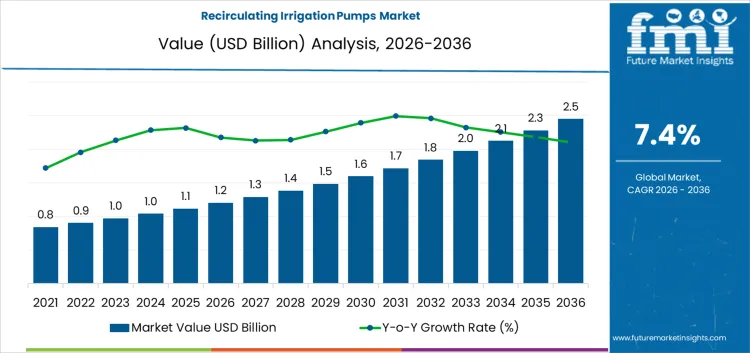
What is the Absolute Dollar Opportunity for the Recirculating Irrigation Pumps Market through 2036?
The absolute dollar opportunity for the recirculating irrigation pumps market is substantial, reflecting consistent growth in demand for efficient and sustainable irrigation systems. Starting from USD 1.2 billion in 2026, the market will grow steadily by approximately USD 0.1 billion each year in the early years, reaching USD 1.4 billion by 2028. As the need for water-efficient technologies continues to rise, the market will accelerate from 2029 to 2032, reaching USD 1.9 billion by 2032.
The growth rate will continue to rise steadily in the later years, with the market reaching USD 2.5 billion by 2036, indicating an absolute dollar opportunity of USD 1.2 billion over the forecast period. This opportunity highlights the increasing focus on sustainable water management practices in agriculture and the growing demand for advanced irrigation solutions that help optimize water usage and improve crop yields.
Recirculating Irrigation Pumps Market Key Takeaways
| Metric | Value |
|---|---|
| Industry Sales Value (2026) | USD 1.2 billion |
| Industry Forecast Value (2036) | USD 2.5 billion |
| Industry Forecast CAGR 2026 to 2036 | 7.4% |
What Is Driving the Recirculating Irrigation Pumps Market?
Historically, the recirculating irrigation pumps market developed from growers’ need to improve water management efficiency in agricultural and controlled environment systems. Traditional irrigation relied on gravity feed, basic centrifugal pumps, or once through supply systems that moved water through crops without reclaiming unused volumes. These approaches often resulted in high water use, nutrient loss, and uneven distribution across fields or greenhouse benches. As irrigation technologies advanced and water scarcity concerns mounted in key agricultural regions, producers began adopting systems that could capture, filter, and reuse irrigation runoff or effluent. Recirculating pumps became central to these systems because they could reliably move reclaimed water back into the irrigation loop, supporting uniform application and reducing overall water consumption. Early use was especially pronounced in greenhouse operations and high value horticulture where water recycling delivered both cost savings and improved control over root zone conditions. These initial implementations demonstrated that integrating recirculating pumps with filtration and dosing systems could reduce water withdrawal, minimize nutrient leaching, and support consistent crop performance, defining expectations for pump reliability and compatibility with diverse irrigation architectures.
Future demand for recirculating irrigation pumps is expected to be shaped by accelerating investment in sustainable water use practices, expansion of precision agriculture, and increasing adoption of controlled environment agriculture models such as hydroponics and vertical farming. Growth factors will include integration of sensors, automated valves, and controllers that optimize recirculation rates based on real time soil moisture, crop stage, and environmental data. Farmers and growers are expected to prioritize pump designs that offer energy efficiency, corrosion resistance for nutrient solution handling, and compatibility with closed loop fertigation systems. Regulatory pressures and sustainability initiatives aimed at reducing freshwater extraction and wastewater discharge will further drive adoption of recirculating solutions that support reuse and reduced environmental impact. Challenges include balancing the capital cost of advanced pumps and filtration components with operational savings, managing maintenance to prevent clogging or performance loss, and ensuring seamless integration with existing irrigation infrastructure. Long term market expansion will depend on how effectively manufacturers deliver robust, scalable pump solutions that align water efficiency goals with reliable performance across diverse crop types and growing environments.
What are the Key Segments in the Recirculating Irrigation Pumps Market?
The Recirculating Irrigation Pumps market is segmented by pump type and application. Pump types include centrifugal pumps, submersible pumps, inline circulators, and others, with centrifugal pumps leading the market at 48%. Application segments include hydroponic recirculation, aquaponics, nutrient film systems, and others, with hydroponic recirculation representing the largest share at 46%. The market is driven by the increasing demand for efficient irrigation systems in agriculture, particularly in controlled-environment agriculture (CEA) such as hydroponics, aquaponics, and nutrient film systems. These systems require reliable pumps to circulate water and nutrients, promoting plant growth and minimizing water and nutrient wastage. The growing adoption of sustainable and resource-efficient farming practices, coupled with the rise in indoor farming, is fueling the growth of the recirculating irrigation pumps market.
What is Driving Growth in the Centrifugal Pumps Segment?
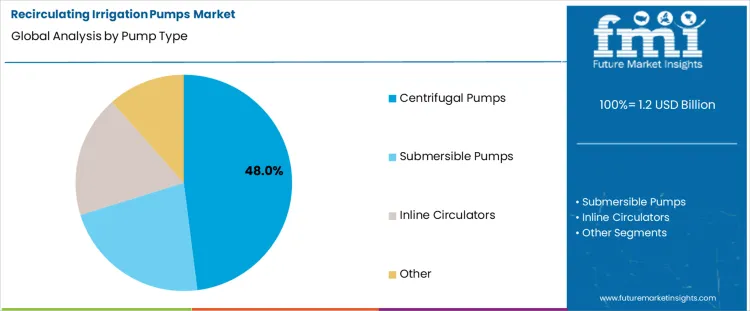
Centrifugal pumps are the leading pump type in the Recirculating Irrigation Pumps market, accounting for 48% of the market share. This growth is driven by the ability of centrifugal pumps to efficiently move water through irrigation systems, making them ideal for recirculating irrigation applications. Centrifugal pumps are widely used due to their simple design, reliability, and high flow rates, which are essential for circulating water in hydroponic and aquaponic systems.
These pumps can handle large volumes of water and nutrients, providing a continuous flow essential for optimal plant growth in recirculating irrigation setups. Their durability, ease of maintenance, and cost-effectiveness further contribute to their widespread use in various agricultural applications. As controlled-environment agriculture continues to grow, particularly for high-value crops, the demand for centrifugal pumps in recirculating irrigation systems is expected to rise, particularly in regions like North America, Europe, and Asia Pacific, where sustainable farming practices are becoming more prevalent.
What is Driving the Demand for Hydroponic Recirculation in the Application Segment?
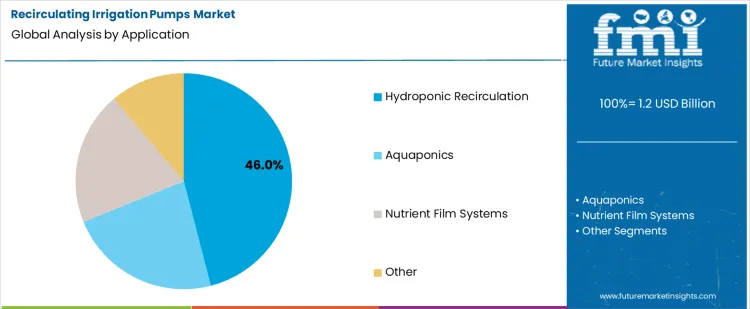
Hydroponic recirculation is the largest application segment in the Recirculating Irrigation Pumps market, holding 46% of the market share. This is driven by the increasing popularity of hydroponic farming, which allows for soil-free cultivation of crops by using water and nutrient solutions. Recirculating irrigation pumps are essential in hydroponic systems to circulate the nutrient solution through plant roots, ensuring consistent nutrient uptake and promoting efficient water use.
The growing demand for fresh, locally grown produce, particularly in urban areas and regions with limited arable land, is driving the adoption of hydroponic systems. These systems offer faster plant growth and higher yields compared to traditional soil-based agriculture, and they are particularly popular for high-value crops such as leafy greens and herbs. As urban farming and vertical farming practices continue to expand, especially in developed regions like North America and Europe, the demand for efficient recirculating irrigation systems for hydroponics will continue to grow, further driving the market for pumps in this segment.
What are the Key Dynamics in the Recirculating Irrigation Pumps Market?
The recirculating irrigation pumps market is growing due to the increasing demand for efficient, water-saving irrigation systems in agriculture, landscaping, and industrial applications. Recirculating irrigation pumps are used in systems that recycle water, ensuring that it circulates through the system to be reused, which helps reduce water waste and increases the sustainability of farming practices. The market is driven by the growing need for water conservation, particularly in regions facing water scarcity, and the increasing adoption of sustainable agricultural practices. Advances in pump technology, such as energy-efficient pumps and automated control systems, are also fueling the demand for recirculating irrigation pumps, offering more cost-effective and environmentally friendly irrigation solutions.
What are the Key Drivers of Growth in the Recirculating Irrigation Pumps Market?
The growth of the recirculating irrigation pumps market is primarily driven by the increasing global focus on water conservation and sustainability in agriculture. As water scarcity becomes a growing concern in many regions, the need for efficient irrigation systems that reduce water waste is becoming more pressing. Recirculating irrigation pumps allow for water to be reused multiple times, making them ideal for farms, greenhouses, and landscaping projects in water-stressed areas.
Additionally, the growing adoption of precision farming practices, which focus on maximizing resource use and minimizing environmental impact, is driving the demand for recirculating irrigation systems. The increasing use of advanced irrigation technologies, such as automated controllers and sensors, also supports the growth of the market by enhancing the efficiency and flexibility of recirculating systems. Furthermore, government regulations and incentives aimed at promoting sustainable farming practices and efficient water management are contributing to the market's expansion.
What are the Key Restraints in the Recirculating Irrigation Pumps Market?
Despite its growth, the recirculating irrigation pumps market faces several challenges. One major restraint is the high initial investment required for setting up recirculating irrigation systems, including pumps, filtration systems, and associated infrastructure. For smaller-scale farmers or those in developing regions, the cost of installing these systems can be a significant barrier. Additionally, the maintenance and operation of recirculating irrigation pumps can be more complex than traditional irrigation systems, requiring regular servicing and monitoring to ensure the system remains efficient and effective.
Another challenge is the potential for water quality issues, as the recycled water must be properly filtered and treated to avoid clogging or damaging irrigation components. This adds to both the operational cost and complexity of the system. Furthermore, while recirculating irrigation systems are water-efficient, they may not be suitable for all types of crops or environments, limiting their applicability in certain regions or agricultural practices.
What are the Key Trends in the Recirculating Irrigation Pumps Market?
Several trends are shaping the recirculating irrigation pumps market. One major trend is the increasing adoption of smart irrigation systems, which integrate sensors, IoT devices, and automated control systems to optimize water usage. These systems can monitor soil moisture, weather conditions, and plant needs in real time, adjusting irrigation schedules and pump operation accordingly, making recirculating systems even more efficient. Another trend is the focus on energy-efficient pumps that reduce electricity consumption while providing reliable performance.
The growing demand for sustainable and eco-friendly farming solutions is also driving innovation in recirculating irrigation pumps, with manufacturers developing pumps that are designed to minimize environmental impact. The rise in greenhouse farming and urban agriculture is pushing the demand for compact, scalable recirculating irrigation solutions that can be easily integrated into smaller spaces. Lastly, the integration of recirculating irrigation pumps with renewable energy sources, such as solar power, is becoming a trend, providing cost-effective and sustainable solutions for farming in off-grid or remote locations.
What is the Country-Wise Analysis of the Recirculating Irrigation Pumps Market?
The recirculating irrigation pumps market is growing as agriculture increasingly relies on efficient water management systems. Recirculating irrigation pumps are designed to recirculate water, making irrigation more efficient by reducing water wastage. These systems are especially important in areas facing water scarcity and in regions where efficient resource use is crucial for sustainable farming. The market is driven by the need for water conservation, growing agricultural demands, and the adoption of more advanced irrigation technologies. Countries like India, China, Indonesia, Mexico, and the USA are witnessing growth in this market, with factors such as the expansion of agricultural activities, government support for water-efficient farming, and increasing awareness of sustainable practices contributing to the demand for recirculating irrigation pumps.
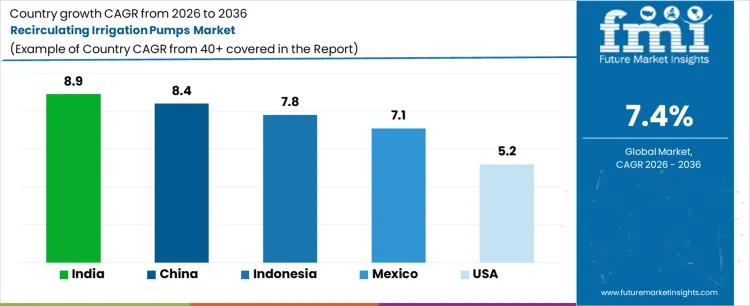
| Country | CAGR (%) |
|---|---|
| India | 8.9 |
| China | 8.4 |
| Indonesia | 7.8 |
| Mexico | 7.1 |
| USA | 5.2 |
What is Driving the Growth of the Recirculating Irrigation Pumps Market in India?
India’s recirculating irrigation pumps market is growing at a CAGR of 8.9%, the highest among the countries analyzed. The market growth is primarily driven by the need for efficient water management in agriculture, especially in water-scarce regions. With India facing increasing water stress, efficient irrigation systems are crucial for improving crop yield while minimizing water usage. Recirculating irrigation pumps allow for the reuse of water, reducing waste and ensuring that crops receive consistent irrigation. Additionally, the government’s support for sustainable farming practices and investments in irrigation infrastructure are further driving the adoption of these systems. As India’s agricultural sector continues to modernize and embrace water-efficient technologies, the demand for recirculating irrigation pumps is expected to increase.
How is the Recirculating Irrigation Pumps Market Performing in China?
China’s recirculating irrigation pumps market is growing at a CAGR of 8.4%. As one of the world’s largest agricultural producers, China is focusing on improving irrigation efficiency to address water scarcity and ensure food security. The growing demand for efficient water usage in agriculture is driving the adoption of recirculating irrigation systems. These systems are particularly important in China’s arid and semi-arid regions, where water conservation is crucial. The Chinese government’s emphasis on modernizing agriculture, promoting sustainable farming practices, and improving water management technologies is contributing to the market’s growth. As China continues to invest in water-efficient agricultural solutions, the demand for recirculating irrigation pumps is expected to rise steadily.
What Factors are Shaping the Recirculating Irrigation Pumps Market in Indonesia?
Indonesia’s recirculating irrigation pumps market is growing at a CAGR of 7.8%. The market is driven by the country’s increasing focus on improving agricultural efficiency and sustainability. With Indonesia’s large agricultural sector, particularly in rice cultivation, efficient irrigation systems are essential for optimizing water usage. Recirculating irrigation pumps help reduce water waste and ensure that crops receive the necessary water without overuse. The government’s focus on agricultural modernization and sustainable farming practices is contributing to the adoption of more advanced irrigation technologies. As Indonesia’s agricultural sector grows and modernizes, the demand for recirculating irrigation pumps is expected to continue rising.
How is the Recirculating Irrigation Pumps Market Evolving in Mexico?
Mexico’s recirculating irrigation pumps market is growing at a CAGR of 7.1%. The market is driven by the need for more efficient water management in Mexico’s agricultural sector, which is critical due to the country’s varying water availability across regions. Recirculating irrigation pumps help optimize water use, particularly in areas with limited access to water sources. The adoption of these systems is supported by the government’s initiatives to promote sustainable farming and improve irrigation efficiency. As Mexico continues to modernize its agriculture and focus on water conservation, the demand for recirculating irrigation pumps is expected to grow steadily.
What is Contributing to the Growth of the Recirculating Irrigation Pumps Market in the USA?
The recirculating irrigation pumps market in the USA is growing at a CAGR of 5.2%. While the growth rate is slower compared to other countries, the USA remains a significant market for irrigation systems due to its large agricultural sector. The increasing adoption of water-efficient farming technologies, particularly in regions where water scarcity is a concern, is driving the demand for recirculating irrigation pumps. These pumps help optimize water usage, particularly in areas such as California, which faces periodic droughts. With a growing emphasis on sustainability and environmental conservation, the demand for recirculating irrigation systems in the USA is expected to continue growing, although at a slower pace compared to emerging markets.
What is the Competitive Landscape for the Recirculating Irrigation Pumps Market?
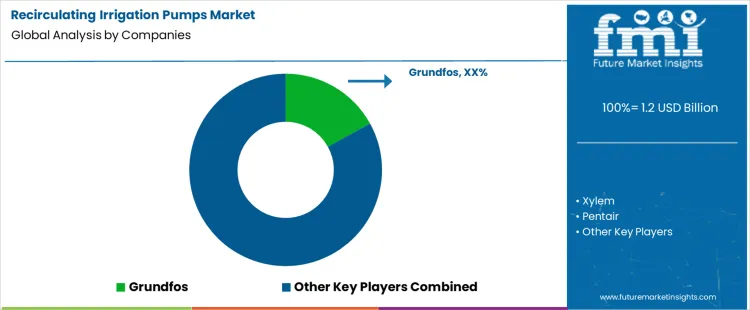
The recirculating irrigation pumps market is expanding steadily as agriculture, landscaping, and commercial irrigation systems increasingly prioritize efficient water management and energy savings. Grundfos leads the competitive landscape with high-performance recirculating pumps designed to deliver durability, energy efficiency, and seamless integration with smart irrigation and automation systems. Xylem is another major player, offering reliable and energy-efficient pumps that help optimize water use and improve irrigation performance across agricultural and municipal applications.
Pentair competes with a broad portfolio of circulation pumps engineered for consistent performance and long service life in diverse irrigation environments. Wilo and KSB are recognized for robust, energy-saving pump solutions that support both residential and commercial irrigation needs, emphasizing operational efficiency and cost control. Ebara contributes with high-quality pumps tailored for modern irrigation systems, focusing on reliability and water conservation.
Franklin Electric supplies precision-engineered pumps widely used in irrigation, valued for efficiency and dependable operation. Danfoss strengthens the market with sustainable pumping solutions that balance performance with reduced energy consumption. Hayward focuses on easy-to-install, low-maintenance pumps for residential and commercial irrigation, while Tsurumi competes through durable, long-lasting pumps suited to demanding operating conditions.
Key Players of the Recirculating Irrigation Pumps Market
- Grundfos
- Xylem
- Pentair
- Wilo
- KSB
- Ebara
- Franklin Electric
- Danfoss
- Hayward
- Tsurumi
Scope of the Report
| Items | Values |
|---|---|
| Quantitative Units (2026) | USD Billion |
| Pump Type | Centrifugal Pumps, Submersible Pumps, Inline Circulators, Other |
| Application | Hydroponic Recirculation, Aquaponics, Nutrient Film Systems, Other |
| Power Range | Up to 1 HP, 1–5 HP, Above 5 HP, Other |
| Sales Channel | Distributors, OEM System Bundles, Direct Sales, Other |
| Companies | Grundfos, Xylem, Pentair, Wilo, KSB, Ebara, Franklin Electric, Danfoss, Hayward, Tsurumi |
| Regions Covered | North America, Latin America, Western Europe, Eastern Europe, South Asia and Pacific, East Asia, Middle East & Africa |
| Countries Covered | United States, Canada, Mexico, Brazil, Argentina, Germany, France, United Kingdom, Italy, Spain, Netherlands, China, India, Japan, South Korea, ANZ, GCC Countries, South Africa |
| Additional Attributes | Dollar sales by pump type, application, power range, and sales channel. Includes market trends towards energy efficiency, automation, regulatory compliance, and the role of recirculating irrigation pumps in enhancing water management and sustainability in agriculture. |
Recirculating Irrigation Pumps Market Segmentation
Pump Type:
- Centrifugal Pumps
- Submersible Pumps
- Inline Circulators
- Other
Application:
- Hydroponic Recirculation
- Aquaponics
- Nutrient Film Systems
- Other
Power Range:
- Up to 1 HP
- 1–5 HP
- Above 5 HP
- Other
Sales Channel:
- Distributors
- OEM System Bundles
- Direct Sales
- Other
Region:
- Asia Pacific
- China
- Japan
- India
- Australia & New Zealand
- ASEAN
- Rest of Asia Pacific
- Europe
- Germany
- United Kingdom
- France
- Italy
- Spain
- Nordic
- BENELUX
- Rest of Europe
- North America
- United States
- Canada
- Mexico
- Latin America
- Brazil
- Argentina
- Rest of Latin America
- Middle East & Africa
- Kingdom of Saudi Arabia
- Other GCC Countries
- South Africa
- Rest of Middle East & Africa
Bibliography
- International Energy Agency. (2024). Energy efficiency 2024. International Energy Agency.
- International Organization for Standardization. (2025). ISO 8573-5:2025 Compressed air—Contaminant measurement—Part 5: Oil vapour content. International Organization for Standardization.
- Oak Ridge National Laboratory. (2024). 2024 compressed air systems virtual in-plant trainings (CAS VINPLTs). Oak Ridge National Laboratory.
Frequently Asked Questions
How big is the recirculating irrigation pumps market in 2026?
The global recirculating irrigation pumps market is estimated to be valued at USD 1.2 billion in 2026.
What will be the size of recirculating irrigation pumps market in 2036?
The market size for the recirculating irrigation pumps market is projected to reach USD 2.5 billion by 2036.
How much will be the recirculating irrigation pumps market growth between 2026 and 2036?
The recirculating irrigation pumps market is expected to grow at a 7.4% CAGR between 2026 and 2036.
What are the key product types in the recirculating irrigation pumps market?
The key product types in recirculating irrigation pumps market are centrifugal pumps, submersible pumps, inline circulators and other.
Which application segment to contribute significant share in the recirculating irrigation pumps market in 2026?
In terms of application, hydroponic recirculation segment to command 46.0% share in the recirculating irrigation pumps market in 2026.
Preview the report firsthand - request a free sample
Get SampleGet the brochure for pricing and purchase details.
Get PDFTable of Content
- Executive Summary
- Global Market Outlook
- Demand-side Trends
- Supply-side Trends
- Technology Roadmap Analysis
- Analysis and Recommendations
- Market Overview
- Market Coverage / Taxonomy
- Market Definition / Scope / Limitations
- Market Background
- Market Dynamics
- Drivers
- Restraints
- Opportunity
- Trends
- Scenario Forecast
- Demand in Optimistic Scenario
- Demand in Likely Scenario
- Demand in Conservative Scenario
- Opportunity Map Analysis
- Product Life Cycle Analysis
- Supply Chain Analysis
- Investment Feasibility Matrix
- Value Chain Analysis
- PESTLE and Porter’s Analysis
- Regulatory Landscape
- Regional Parent Market Outlook
- Production and Consumption Statistics
- Import and Export Statistics
- Market Dynamics
- Global Market Analysis 2021 to 2025 and Forecast, 2026 to 2036
- Historical Market Size Value (USD Million) Analysis, 2021 to 2025
- Current and Future Market Size Value (USD Million) Projections, 2026 to 2036
- Y-o-Y Growth Trend Analysis
- Absolute $ Opportunity Analysis
- Global Market Pricing Analysis 2021 to 2025 and Forecast 2026 to 2036
- Global Market Analysis 2021 to 2025 and Forecast 2026 to 2036, By Pump Type
- Introduction / Key Findings
- Historical Market Size Value (USD Million) Analysis By Pump Type, 2021 to 2025
- Current and Future Market Size Value (USD Million) Analysis and Forecast By Pump Type, 2026 to 2036
- Centrifugal Pumps
- Submersible Pumps
- Inline Circulators
- Other
- Centrifugal Pumps
- Y-o-Y Growth Trend Analysis By Pump Type, 2021 to 2025
- Absolute $ Opportunity Analysis By Pump Type, 2026 to 2036
- Global Market Analysis 2021 to 2025 and Forecast 2026 to 2036, By Application
- Introduction / Key Findings
- Historical Market Size Value (USD Million) Analysis By Application, 2021 to 2025
- Current and Future Market Size Value (USD Million) Analysis and Forecast By Application, 2026 to 2036
- Hydroponic Recirculation
- Aquaponics
- Nutrient Film Systems
- Other
- Hydroponic Recirculation
- Y-o-Y Growth Trend Analysis By Application, 2021 to 2025
- Absolute $ Opportunity Analysis By Application, 2026 to 2036
- Global Market Analysis 2021 to 2025 and Forecast 2026 to 2036, By Power Range
- Introduction / Key Findings
- Historical Market Size Value (USD Million) Analysis By Power Range, 2021 to 2025
- Current and Future Market Size Value (USD Million) Analysis and Forecast By Power Range, 2026 to 2036
- 1–5 HP
- Up to 1 HP
- Above 5 HP
- Other
- 1–5 HP
- Y-o-Y Growth Trend Analysis By Power Range, 2021 to 2025
- Absolute $ Opportunity Analysis By Power Range, 2026 to 2036
- Global Market Analysis 2021 to 2025 and Forecast 2026 to 2036, By Sales Channel
- Introduction / Key Findings
- Historical Market Size Value (USD Million) Analysis By Sales Channel, 2021 to 2025
- Current and Future Market Size Value (USD Million) Analysis and Forecast By Sales Channel, 2026 to 2036
- Distributors
- OEM System Bundles
- Direct Sales
- Other
- Distributors
- Y-o-Y Growth Trend Analysis By Sales Channel, 2021 to 2025
- Absolute $ Opportunity Analysis By Sales Channel, 2026 to 2036
- Global Market Analysis 2021 to 2025 and Forecast 2026 to 2036, By Region
- Introduction
- Historical Market Size Value (USD Million) Analysis By Region, 2021 to 2025
- Current Market Size Value (USD Million) Analysis and Forecast By Region, 2026 to 2036
- North America
- Latin America
- Western Europe
- Eastern Europe
- East Asia
- South Asia and Pacific
- Middle East & Africa
- Market Attractiveness Analysis By Region
- North America Market Analysis 2021 to 2025 and Forecast 2026 to 2036, By Country
- Historical Market Size Value (USD Million) Trend Analysis By Market Taxonomy, 2021 to 2025
- Market Size Value (USD Million) Forecast By Market Taxonomy, 2026 to 2036
- By Country
- USA
- Canada
- Mexico
- By Pump Type
- By Application
- By Power Range
- By Sales Channel
- By Country
- Market Attractiveness Analysis
- By Country
- By Pump Type
- By Application
- By Power Range
- By Sales Channel
- Key Takeaways
- Latin America Market Analysis 2021 to 2025 and Forecast 2026 to 2036, By Country
- Historical Market Size Value (USD Million) Trend Analysis By Market Taxonomy, 2021 to 2025
- Market Size Value (USD Million) Forecast By Market Taxonomy, 2026 to 2036
- By Country
- Brazil
- Chile
- Rest of Latin America
- By Pump Type
- By Application
- By Power Range
- By Sales Channel
- By Country
- Market Attractiveness Analysis
- By Country
- By Pump Type
- By Application
- By Power Range
- By Sales Channel
- Key Takeaways
- Western Europe Market Analysis 2021 to 2025 and Forecast 2026 to 2036, By Country
- Historical Market Size Value (USD Million) Trend Analysis By Market Taxonomy, 2021 to 2025
- Market Size Value (USD Million) Forecast By Market Taxonomy, 2026 to 2036
- By Country
- Germany
- UK
- Italy
- Spain
- France
- Nordic
- BENELUX
- Rest of Western Europe
- By Pump Type
- By Application
- By Power Range
- By Sales Channel
- By Country
- Market Attractiveness Analysis
- By Country
- By Pump Type
- By Application
- By Power Range
- By Sales Channel
- Key Takeaways
- Eastern Europe Market Analysis 2021 to 2025 and Forecast 2026 to 2036, By Country
- Historical Market Size Value (USD Million) Trend Analysis By Market Taxonomy, 2021 to 2025
- Market Size Value (USD Million) Forecast By Market Taxonomy, 2026 to 2036
- By Country
- Russia
- Poland
- Hungary
- Balkan & Baltic
- Rest of Eastern Europe
- By Pump Type
- By Application
- By Power Range
- By Sales Channel
- By Country
- Market Attractiveness Analysis
- By Country
- By Pump Type
- By Application
- By Power Range
- By Sales Channel
- Key Takeaways
- East Asia Market Analysis 2021 to 2025 and Forecast 2026 to 2036, By Country
- Historical Market Size Value (USD Million) Trend Analysis By Market Taxonomy, 2021 to 2025
- Market Size Value (USD Million) Forecast By Market Taxonomy, 2026 to 2036
- By Country
- China
- Japan
- South Korea
- By Pump Type
- By Application
- By Power Range
- By Sales Channel
- By Country
- Market Attractiveness Analysis
- By Country
- By Pump Type
- By Application
- By Power Range
- By Sales Channel
- Key Takeaways
- South Asia and Pacific Market Analysis 2021 to 2025 and Forecast 2026 to 2036, By Country
- Historical Market Size Value (USD Million) Trend Analysis By Market Taxonomy, 2021 to 2025
- Market Size Value (USD Million) Forecast By Market Taxonomy, 2026 to 2036
- By Country
- India
- ASEAN
- Australia & New Zealand
- Rest of South Asia and Pacific
- By Pump Type
- By Application
- By Power Range
- By Sales Channel
- By Country
- Market Attractiveness Analysis
- By Country
- By Pump Type
- By Application
- By Power Range
- By Sales Channel
- Key Takeaways
- Middle East & Africa Market Analysis 2021 to 2025 and Forecast 2026 to 2036, By Country
- Historical Market Size Value (USD Million) Trend Analysis By Market Taxonomy, 2021 to 2025
- Market Size Value (USD Million) Forecast By Market Taxonomy, 2026 to 2036
- By Country
- Kingdom of Saudi Arabia
- Other GCC Countries
- Turkiye
- South Africa
- Other African Union
- Rest of Middle East & Africa
- By Pump Type
- By Application
- By Power Range
- By Sales Channel
- By Country
- Market Attractiveness Analysis
- By Country
- By Pump Type
- By Application
- By Power Range
- By Sales Channel
- Key Takeaways
- Key Countries Market Analysis
- USA
- Pricing Analysis
- Market Share Analysis, 2025
- By Pump Type
- By Application
- By Power Range
- By Sales Channel
- Canada
- Pricing Analysis
- Market Share Analysis, 2025
- By Pump Type
- By Application
- By Power Range
- By Sales Channel
- Mexico
- Pricing Analysis
- Market Share Analysis, 2025
- By Pump Type
- By Application
- By Power Range
- By Sales Channel
- Brazil
- Pricing Analysis
- Market Share Analysis, 2025
- By Pump Type
- By Application
- By Power Range
- By Sales Channel
- Chile
- Pricing Analysis
- Market Share Analysis, 2025
- By Pump Type
- By Application
- By Power Range
- By Sales Channel
- Germany
- Pricing Analysis
- Market Share Analysis, 2025
- By Pump Type
- By Application
- By Power Range
- By Sales Channel
- UK
- Pricing Analysis
- Market Share Analysis, 2025
- By Pump Type
- By Application
- By Power Range
- By Sales Channel
- Italy
- Pricing Analysis
- Market Share Analysis, 2025
- By Pump Type
- By Application
- By Power Range
- By Sales Channel
- Spain
- Pricing Analysis
- Market Share Analysis, 2025
- By Pump Type
- By Application
- By Power Range
- By Sales Channel
- France
- Pricing Analysis
- Market Share Analysis, 2025
- By Pump Type
- By Application
- By Power Range
- By Sales Channel
- India
- Pricing Analysis
- Market Share Analysis, 2025
- By Pump Type
- By Application
- By Power Range
- By Sales Channel
- ASEAN
- Pricing Analysis
- Market Share Analysis, 2025
- By Pump Type
- By Application
- By Power Range
- By Sales Channel
- Australia & New Zealand
- Pricing Analysis
- Market Share Analysis, 2025
- By Pump Type
- By Application
- By Power Range
- By Sales Channel
- China
- Pricing Analysis
- Market Share Analysis, 2025
- By Pump Type
- By Application
- By Power Range
- By Sales Channel
- Japan
- Pricing Analysis
- Market Share Analysis, 2025
- By Pump Type
- By Application
- By Power Range
- By Sales Channel
- South Korea
- Pricing Analysis
- Market Share Analysis, 2025
- By Pump Type
- By Application
- By Power Range
- By Sales Channel
- Russia
- Pricing Analysis
- Market Share Analysis, 2025
- By Pump Type
- By Application
- By Power Range
- By Sales Channel
- Poland
- Pricing Analysis
- Market Share Analysis, 2025
- By Pump Type
- By Application
- By Power Range
- By Sales Channel
- Hungary
- Pricing Analysis
- Market Share Analysis, 2025
- By Pump Type
- By Application
- By Power Range
- By Sales Channel
- Kingdom of Saudi Arabia
- Pricing Analysis
- Market Share Analysis, 2025
- By Pump Type
- By Application
- By Power Range
- By Sales Channel
- Turkiye
- Pricing Analysis
- Market Share Analysis, 2025
- By Pump Type
- By Application
- By Power Range
- By Sales Channel
- South Africa
- Pricing Analysis
- Market Share Analysis, 2025
- By Pump Type
- By Application
- By Power Range
- By Sales Channel
- USA
- Market Structure Analysis
- Competition Dashboard
- Competition Benchmarking
- Market Share Analysis of Top Players
- By Regional
- By Pump Type
- By Application
- By Power Range
- By Sales Channel
- Competition Analysis
- Competition Deep Dive
- Grundfos
- Overview
- Product Portfolio
- Profitability by Market Segments (Product/Age /Sales Channel/Region)
- Sales Footprint
- Strategy Overview
- Marketing Strategy
- Product Strategy
- Channel Strategy
- Xylem
- Pentair
- Wilo
- KSB
- Ebara
- Franklin Electric
- Danfoss
- Hayward
- Tsurumi
- Grundfos
- Competition Deep Dive
- Assumptions & Acronyms Used
- Research Methodology


