

- Industry Size (2026)
- USD 860.0 Mn
- Forecast (2036)
- USD 3120.0 Mn
- CAGR (2026 to 2036)
- 13.80%
Recycling & Traceability Platforms Market Forecast and Outlook 2026 to 2036
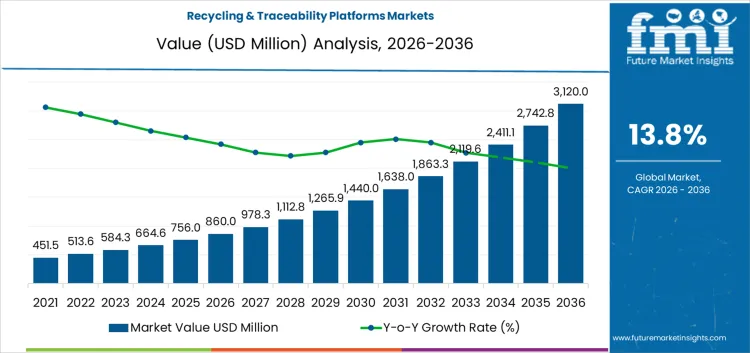
The recycling & traceability platforms market is likely to be valued at USD 860.0 million in 2026 and reach USD 3,120.0 million by 2036 at 13.8% CAGR. Value creation in this market is concentrated less in software licensing and more in control over trusted data flows that link collection, aggregation, and downstream verification. Cost structures are weighted toward field integration, data validation, platform scaling, and ongoing stakeholder onboarding, particularly where informal or semi-formal recycling networks are involved.
Platforms that absorb the complexity of data normalization, audit alignment, and regulatory reporting are able to command stronger pricing power through recurring access fees and verification-linked charges. Margin concentration favors operators embedded at aggregation points, where material volumes, data credibility, and compliance intersect. Switching costs rise once collectors, recyclers, and brand users are integrated into a single reporting framework with historical records and regulatory acceptance.
Quick Stats for Recycling & Traceability Platforms Market
- Recycling & Traceability Platforms Market Value (2026): USD 860.0 Million
- Recycling & Traceability Platforms Market Forecast Value (2036): USD 3,120.0 Million
- Recycling & Traceability Platforms Market Forecast CAGR 2026 to 2036: 13.80%
- Leading End Use in Recycling & Traceability Platforms Market: Informal-to-Formal Recycling
- Key Growth Regions in Recycling & Traceability Platforms Market: Asia Pacific, Latin America, Middle East & Africa
- Top Key Players in Recycling & Traceability Platforms Market: Recykal Sustainability Private Limited, National Environment Protection & Regulatory Authority (NEPRA), BV Rio de Janeiro Ambiental e Desenvolvimento Sustentável S.A. (BVRio), GreenPlat Platform Private Limited, Plastics for Change India Foundation, Waste4Change Private Limited, Mr. Green Africa Recycling Limited
Recycling & Traceability Platforms Market Key Takeaways
| Metric | Value |
|---|---|
| Industry Value (2026) | USD 860.0 Million |
| Forecast Value (2036) | USD 3,120.0 Million |
| Forecast CAGR 2026 to 2036 | 13.80% |
How is the Global Recycling & Traceability Platforms Market Advancing?
The global recycling and traceability platforms markets are advancing rapidly, driven by increasing demand for digital transparency across recycling and secondary material supply chains. These platforms enable tracking, validation, and reporting of material flows from collection and processing through conversion and end-use manufacturing, supporting data-driven decision-making and compliance across recycling ecosystems.
A key driver supporting market growth is the rising requirement for verified recycling claims and material traceability from brand owners, converters, and regulatory bodies. Manual documentation and fragmented data systems are increasingly insufficient to support audit requirements and material balance verification. Recycling and traceability platforms provide centralized data infrastructure that connects recyclers, waste managers, processors, and end users, improving data integrity and reducing reporting complexity.
Expansion of multi-stakeholder recycling networks is further contributing to market demand. As recycling systems become more distributed and cross-border, digital platforms help standardize data formats, reconcile volumes, and support chain-of-custody validation across multiple participants. These capabilities are essential for managing complex material flows and improving accountability.
Technological advancements are strengthening market adoption. Cloud-based architectures, secure data exchange protocols, and automated reporting tools are enhancing scalability and reliability. Integration with weighing systems, sorting equipment, and certification interfaces is further improving data accuracy. As recycling systems scale and traceability expectations tighten, recycling and traceability platforms are expected to become core infrastructure supporting material recovery and secondary material markets over the forecast period.
What Is the Segment-Wise Overview of the Recycling & Traceability Platforms Market?
The recycling & traceability platforms market is driven by the need to formalize waste flows and improve visibility across fragmented recycling ecosystems. Informal-to-formal recycling leads the end-use segment with a 45% share, as platforms increasingly focus on integrating informal collectors into compliant, traceable value chains. This transition is critical in emerging economies where informal recycling dominates material recovery. By platform model, aggregator and recycler platforms account for 50% of demand, reflecting their role in consolidating material flows, standardizing data capture, and enabling downstream traceability. These segments highlight a market centered on system formalization, material accountability, and scalable digital platforms that connect collection, aggregation, and recycling stakeholders.
Why Does Informal-to-Formal Recycling Lead the Recycling & Traceability Platforms Market?
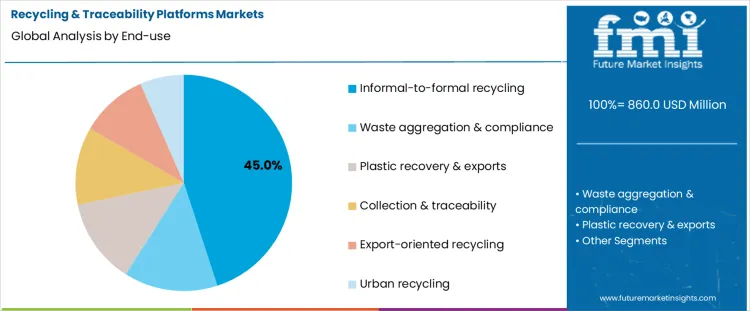
Informal-to-formal recycling represents 45% of end-use demand because a significant share of global recyclable material originates from informal collection networks. These networks often lack standardized reporting, compliance mechanisms, and traceability, creating gaps in verified recycling claims. Traceability platforms enable formal onboarding of informal actors by digitizing collection records, material handoffs, and payment flows. This improves transparency, compliance, and material recovery efficiency. Governments, brands, and recyclers increasingly support such platforms to improve recycling rates while ensuring social and regulatory alignment. As circular economy targets expand in regions with informal waste systems, platforms focused on formalization continue to dominate market adoption.
How Do Aggregator and Recycler Platforms Drive the Recycling & Traceability Platforms Market?
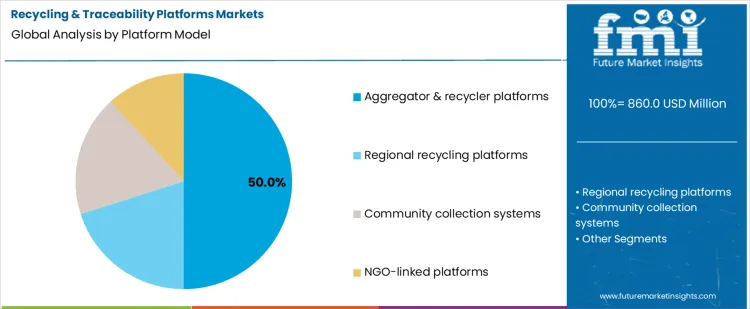
Aggregator and recycler platforms account for 50% of platform model demand, making them the dominant architecture in the recycling & traceability platforms market. These platforms sit at the center of recycling ecosystems, connecting collectors, aggregators, processors, and end buyers through a unified data layer. They enable material aggregation, quality tracking, volume reconciliation, and chain-of-custody documentation at scale. By standardizing data across multiple inputs and outputs, aggregator platforms support audit readiness and verified recycling claims. Their scalability and interoperability make them suitable for regional and cross-border recycling flows. As traceability requirements increase and recycling networks become more complex, aggregator-led platforms remain the backbone of digital recycling infrastructure.
What Are the Key Dynamics for the Recycling & Traceability Platforms Market?
Recycling & traceability platforms capture data from waste collection, sorting, recycling, and downstream manufacturing to ensure transparency and accountability. Key market dynamics include rising regulatory pressure on recycled content reporting, growing demand for auditable material provenance, and increased scrutiny of recycling claims by brand owners and authorities. Platforms integrate data from multiple stakeholders, enabling real-time visibility into material movement and processing outcomes. As recycling systems become more complex and geographically dispersed, digital traceability platforms are becoming essential infrastructure for validating recycling performance, preventing fraud, and supporting compliant circular material flows.
Why Is the Recycling & Traceability Platforms Market Growing?
The recycling & traceability platforms market is growing as governments and industries enforce stricter requirements for recycled content disclosure and waste accountability. Manufacturers and brand owners are under pressure to substantiate recycling claims with verifiable data rather than self-declared metrics. Growth in extended producer responsibility schemes and recycled-content mandates is accelerating platform adoption. Expansion of mechanical and chemical recycling capacity increases transaction volumes, making manual tracking impractical. Recycling operators and converters are adopting digital platforms to streamline reporting, reduce audit complexity, and improve operational coordination. As global recycling trade expands, standardized digital traceability solutions are increasingly required to ensure consistent documentation and compliance across borders, supporting continued market growth.
How Are the Key Drivers Shaping the Recycling & Traceability Platforms Market?
Key drivers shaping the recycling & traceability platforms market include tightening environmental regulations, corporate commitments to circular material use, and rising investor focus on supply-chain transparency. Digitalization of waste management operations enables automated data capture, improving accuracy and reducing reporting delays. Integration of secure databases, blockchain-based records, and interoperable data standards enhances trust in traceability outputs. Brand owners are influencing adoption by requiring platform-based documentation from suppliers and recyclers. Collaboration between technology providers, recyclers, certification bodies, and regulators is accelerating development of industry-aligned platforms. These drivers are transforming traceability platforms from optional reporting tools into mandatory systems that underpin credible recycling verification and compliance management.
What Is the Growth Outlook for the Recycling & Traceability Platforms Market by Country?
| Country | CAGR (%) |
|---|---|
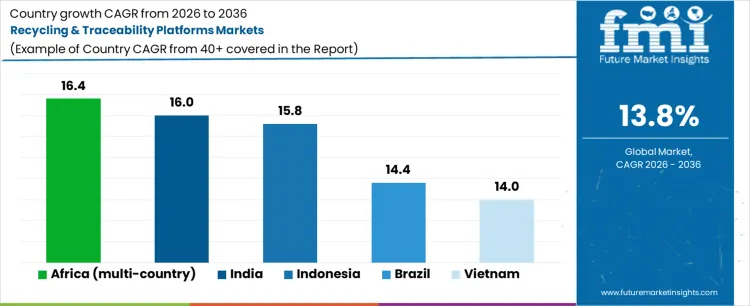
| Africa | 16.4% |
| India | 16.0% |
| Indonesia | 15.8% |
| Brazil | 14.4% |
| Vietnam | 14.0% |
The recycling & traceability platforms market is expanding rapidly as digital verification becomes central to recycling supply chains. Africa leads with a 16.4% CAGR, driven by multi-country recycling programs and supply-chain formalization. India follows at 16.0%, supported by EPR enforcement and digital compliance adoption. Indonesia grows at 15.8%, reflecting fragmented collection networks and rising PCR exports. Brazil records 14.4% growth, driven by brand-led traceability requirements. Vietnam expands at 14.0%, supported by export-oriented recycling operations. As recycled material verification gains importance globally, demand for recycling & traceability platforms is expected to strengthen across regions.
Why Is the Recycling & Traceability Platforms Market Expanding Rapidly Across Africa?
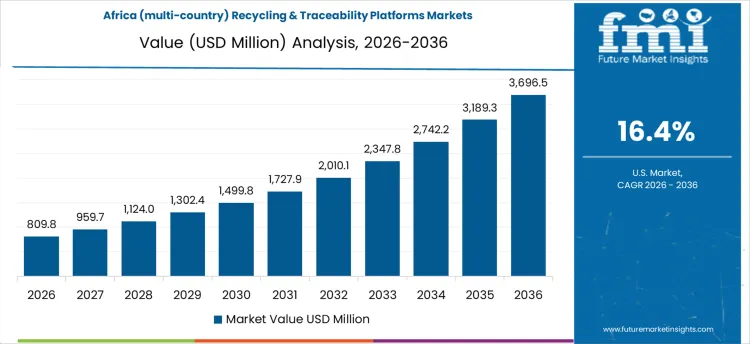
Demand for recycling & traceability platforms in Africa is expanding at a CAGR of 16.4%. Growth is driven by increasing formalization of waste management systems across multiple African economies and rising involvement of global brands in local recycling ecosystems. Multi-country recycling programs require digital platforms to track material flows, verify recycled content, and coordinate fragmented collection networks. Traceability platforms support transparency across informal and semi-formal recycling chains, which is critical for export-linked PCR supply. Development agencies, producer responsibility organizations, and multinational brand owners are actively deploying digital tools to improve data visibility and compliance reporting. Mobile-based platforms are particularly effective in integrating decentralized collectors. As recycling infrastructure scales unevenly across regions, demand for adaptable, multi-country traceability platforms is expected to grow strongly across Africa.
Why Is the Recycling & Traceability Platforms Market Gaining Momentum in India?
Demand for recycling & traceability platforms in India is expanding at a CAGR of 16.0%. Enforcement of extended producer responsibility and rising scrutiny of recycled content claims are accelerating platform adoption. Recycling & traceability platforms help brand owners, recyclers, and converters track material origin, processing stages, and compliance documentation. High fragmentation across collection and recycling networks increases the value of centralized digital visibility. Platform adoption is strong among packaging producers, FMCG brands, and compliance service providers. Integration with EPR reporting systems and certification bodies supports audit readiness. Growth of organized recycling parks and digital compliance infrastructure is further strengthening demand. As PCR volumes increase across packaging formats, recycling & traceability platforms are becoming essential to supply-chain governance in India.
What Is Driving Recycling & Traceability Platforms Market Growth in Indonesia?
Demand for recycling & traceability platforms in Indonesia is expanding at a CAGR of 15.8%. Growth is supported by increasing efforts to formalize plastic waste collection and improve accountability across recycling supply chains. Indonesia’s dispersed geography creates complexity in tracking material flows from collection points to processing facilities. Digital platforms help recyclers and brand owners monitor feedstock movement, quality, and compliance status. Export-oriented PCR producers rely on traceability platforms to meet international verification requirements. Government-backed waste reduction initiatives and private-sector sustainability programs are reinforcing platform deployment. Integration with community-based collection programs improves data coverage. As Indonesia strengthens recycling governance and PCR adoption, demand for traceability platforms is expected to rise steadily.
Why Is the Recycling & Traceability Platforms Market Expanding Steadily in Brazil?
Demand for recycling & traceability platforms in Brazil is expanding at a CAGR of 14.4%. Growing PCR adoption in packaging and consumer goods is increasing the need for verified material tracking. Recycling & traceability platforms help manage variability in collection volumes and ensure transparency across recycling operations. Multinational brands operating in Brazil are transferring global traceability requirements into local supply chains. Platforms support supplier validation, batch-level tracking, and compliance documentation. Expansion of organized recycling operations is improving data reliability and platform integration. Adoption is strongest among larger recyclers and packaging converters. As regulatory expectations and brand accountability increase, demand for recycling & traceability platforms in Brazil is expected to grow consistently.
What Is Supporting Recycling & Traceability Platforms Market Growth in Vietnam?
Demand for recycling & traceability platforms in Vietnam is expanding at a CAGR of 14.0%. Export-driven manufacturing and packaging sectors are prioritizing verified recycled content documentation. Recycling & traceability platforms enable end-to-end visibility across collection, sorting, processing, and conversion stages. Vietnam’s growing role as a PCR processing and export hub increases the importance of digital traceability. Platform adoption is supported by involvement of multinational recyclers and compliance-focused brand owners. Integration with certification systems and supply-chain reporting tools strengthens platform value. As recycling operations scale and export scrutiny increases, demand for recycling & traceability platforms in Vietnam is expected to remain strong.
How Are Companies Competing in the Recycling & Traceability Platforms Market?
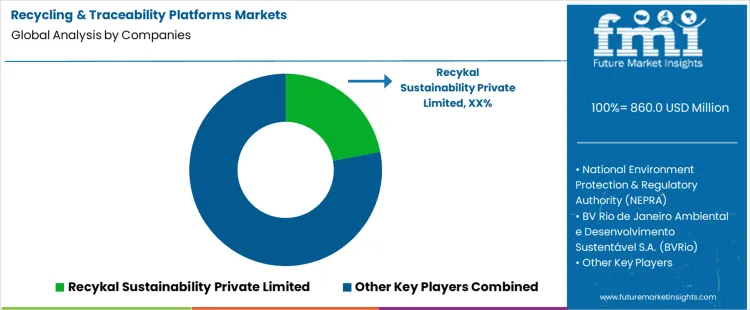
Competition in the recycling and traceability platforms market is driven by data credibility, stakeholder onboarding capability, regulatory alignment, and the ability to track material flows across fragmented waste and recycling ecosystems. These platforms are used to document collection, sorting, processing, and end-use of recyclable materials, enabling proof of recovery, recycled content claims, and compliance reporting. Companies compete on data capture accuracy, traceability depth, audit readiness, and integration with brand, recycler, and regulator workflows. Differentiation increasingly centers on combining digital traceability with on-ground execution, informal sector integration, and verifiable impact reporting rather than standalone software functionality.
Recykal, GreenPlat, BVRio, and NEPRA-led systems compete through large-scale platform deployment, regulatory linkage, and multi-stakeholder coordination. Recykal differentiates with end-to-end digital tracking of waste flows, linking municipalities, recyclers, and brand owners within a single platform. GreenPlat focuses on producer responsibility tracking and compliance workflows, enabling brands to manage obligations and reporting through structured data systems. BVRio competes through market-based mechanisms and traceability tools that support material recovery credits and verified recycling outcomes. NEPRA-linked systems emphasize regulatory oversight, standardized reporting, and enforcement alignment, positioning traceability as a compliance backbone.
Plastics for Change, Waste4Change, and Mr. Green Africa compete by combining traceability with inclusive sourcing and operational execution. These organizations differentiate through strong integration of informal waste collectors, transparent payment systems, and social impact verification alongside material traceability. Their platforms often emphasize ground-level data validation, ethical sourcing, and traceable recovery at the collection stage. Across the market, competitive advantage is defined by trust in data, ability to scale across regions, alignment with regulatory and brand requirements, and the effectiveness of linking digital traceability with real-world recycling operations.
Key Players in Recycling & Traceability Platforms Market
- Recykal Sustainability Private Limited
- National Environment Protection & Regulatory Authority (NEPRA)
- BV Rio de Janeiro Ambiental e Desenvolvimento Sustentável S.A. (BVRio)
- GreenPlat Platform Private Limited
- Plastics for Change India Foundation (Plastics for Change)
- Waste4Change Private Limited
- Mr. Green Africa Recycling Limited
Scope of Report
| Attributes | Description |
|---|---|
| Quantitative Unit (2026) | USD Million |
| End-use | Informal-to-Formal Recycling, Waste Aggregation & Compliance, Plastic Recovery & Exports, Collection & Traceability, Export-Oriented Recycling, Urban Recycling |
| Platform Model | Aggregator & Recycler Platforms, Regional Recycling Platforms, Community Collection Systems, NGO-Linked Platforms |
| Regions Covered | Asia Pacific, Europe, North America, Latin America, Middle East & Africa |
| Countries Covered | China, Japan, South Korea, India, Australia & New Zealand, ASEAN, Rest of Asia Pacific, Germany, United Kingdom, France, Italy, Spain, Nordic, BENELUX, Rest of Europe, United States, Canada, Mexico, Brazil, Chile, Rest of Latin America, Kingdom of Saudi Arabia, Other GCC Countries, Turkey, South Africa, Other African Union, Rest of Middle East & Africa |
| Key Companies Profiled | Recykal Sustainability Private Limited, National Environment Protection & Regulatory Authority (NEPRA), BV Rio de Janeiro Ambiental e Desenvolvimento Sustentável S.A. (BVRio), GreenPlat Platform Private Limited, Plastics for Change India Foundation (Plastics for Change), Waste4Change Private Limited, Mr. Green Africa Recycling Limited |
| Additional Attributes | Dollar sales by end-use and platform model; regional market size and forecast analysis; growth outlook across major regions; adoption trends for digital recycling and traceability platforms; assessment of data transparency, compliance enablement, informal-sector integration, and demand patterns across urban, export-oriented, and regional recycling systems |
Recycling & Traceability Platforms Market by Key Segments
End-use:
- Informal-to-formal recycling
- Waste aggregation & compliance
- Plastic recovery & exports
- Collection & traceability
- Export-oriented recycling
- Urban recycling
Platform Model
- Aggregator & recycler platforms
- Regional recycling platforms
- Community collection systems
- NGO-linked platforms
Region:
- Asia Pacific
- China
- Japan
- South Korea
- India
- Australia & New Zealand
- ASEAN
- Rest of Asia Pacific
- Europe
- Germany
- United Kingdom
- France
- Italy
- Spain
- Nordic
- BENELUX
- Rest of Europe
- North America
- United States
- Canada
- Mexico
- Latin America
- Brazil
- Chile
- Rest of Latin America
- Middle East & Africa
- Kingdom of Saudi Arabia
- Other GCC Countries
- Turkey
- South Africa
- Other African Union
- Rest of Middle East & Africa
Bibliography
- U.S. Environmental Protection Agency. (2024). National strategy to prevent plastic pollution (EPA 530-R-24-006). U.S. Environmental Protection Agency.
- Organization for Economic Co-operation and Development. (2024). Plastics recycled content requirements (ENV/WKP(2024)6). OECD Publishing.
- United Nations Conference on Trade and Development. (2024). Beyond plastics: A review of trade-related policy measures on non-plastic substitutes (UNCTAD/TCS/DITC/INF/2024/4). UNCTAD.
Frequently Asked Questions
How big is the recycling & traceability platforms market in 2026?
The global recycling & traceability platforms market is estimated to be valued at USD 860.0 million in 2026.
What will be the size of recycling & traceability platforms market in 2036?
The market size for the recycling & traceability platforms market is projected to reach USD 3,120.0 million by 2036.
How much will be the recycling & traceability platforms market growth between 2026 and 2036?
The recycling & traceability platforms market is expected to grow at a 13.8% CAGR between 2026 and 2036.
What are the key product types in the recycling & traceability platforms market?
The key product types in recycling & traceability platforms market are informal-to-formal recycling, waste aggregation & compliance, plastic recovery & exports, collection & traceability, export-oriented recycling and urban recycling.
Which platform model segment to contribute significant share in the recycling & traceability platforms market in 2026?
In terms of platform model, aggregator & recycler platforms segment to command 50.0% share in the recycling & traceability platforms market in 2026.
Preview the report firsthand - request a free sample
Get SampleGet the brochure for pricing and purchase details.
Get PDFTable of Content
- Executive Summary
- Global Market Outlook
- Demand-side Trends
- Supply-side Trends
- Technology Roadmap Analysis
- Analysis and Recommendations
- Market Overview
- Market Coverage / Taxonomy
- Market Definition / Scope / Limitations
- Market Background
- Market Dynamics
- Drivers
- Restraints
- Opportunity
- Trends
- Scenario Forecast
- Demand in Optimistic Scenario
- Demand in Likely Scenario
- Demand in Conservative Scenario
- Opportunity Map Analysis
- Product Life Cycle Analysis
- Supply Chain Analysis
- Investment Feasibility Matrix
- Value Chain Analysis
- PESTLE and Porter’s Analysis
- Regulatory Landscape
- Regional Parent Market Outlook
- Production and Consumption Statistics
- Import and Export Statistics
- Market Dynamics
- Global Market Analysis 2021 to 2025 and Forecast, 2026 to 2036
- Historical Market Size Value (USD Million) Analysis, 2021 to 2025
- Current and Future Market Size Value (USD Million) Projections, 2026 to 2036
- Y-o-Y Growth Trend Analysis
- Absolute $ Opportunity Analysis
- Global Market Pricing Analysis 2021 to 2025 and Forecast 2026 to 2036
- Global Market Analysis 2021 to 2025 and Forecast 2026 to 2036, By End-use
- Introduction / Key Findings
- Historical Market Size Value (USD Million) Analysis By End-use, 2021 to 2025
- Current and Future Market Size Value (USD Million) Analysis and Forecast By End-use, 2026 to 2036
- Informal-to-formal recycling
- Waste aggregation & compliance
- Plastic recovery & exports
- Collection & traceability
- Export-oriented recycling
- Urban recycling
- Informal-to-formal recycling
- Y-o-Y Growth Trend Analysis By End-use, 2021 to 2025
- Absolute $ Opportunity Analysis By End-use, 2026 to 2036
- Global Market Analysis 2021 to 2025 and Forecast 2026 to 2036, By Platform Model
- Introduction / Key Findings
- Historical Market Size Value (USD Million) Analysis By Platform Model, 2021 to 2025
- Current and Future Market Size Value (USD Million) Analysis and Forecast By Platform Model, 2026 to 2036
- Aggregator & recycler platforms
- Regional recycling platforms
- Community collection systems
- NGO-linked platforms
- Aggregator & recycler platforms
- Y-o-Y Growth Trend Analysis By Platform Model, 2021 to 2025
- Absolute $ Opportunity Analysis By Platform Model, 2026 to 2036
- Global Market Analysis 2021 to 2025 and Forecast 2026 to 2036, By Region
- Introduction
- Historical Market Size Value (USD Million) Analysis By Region, 2021 to 2025
- Current Market Size Value (USD Million) Analysis and Forecast By Region, 2026 to 2036
- North America
- Latin America
- Western Europe
- Eastern Europe
- East Asia
- South Asia and Pacific
- Middle East & Africa
- Market Attractiveness Analysis By Region
- North America Market Analysis 2021 to 2025 and Forecast 2026 to 2036, By Country
- Historical Market Size Value (USD Million) Trend Analysis By Market Taxonomy, 2021 to 2025
- Market Size Value (USD Million) Forecast By Market Taxonomy, 2026 to 2036
- By Country
- USA
- Canada
- Mexico
- By End-use
- By Platform Model
- By Country
- Market Attractiveness Analysis
- By Country
- By End-use
- By Platform Model
- Key Takeaways
- Latin America Market Analysis 2021 to 2025 and Forecast 2026 to 2036, By Country
- Historical Market Size Value (USD Million) Trend Analysis By Market Taxonomy, 2021 to 2025
- Market Size Value (USD Million) Forecast By Market Taxonomy, 2026 to 2036
- By Country
- Brazil
- Chile
- Rest of Latin America
- By End-use
- By Platform Model
- By Country
- Market Attractiveness Analysis
- By Country
- By End-use
- By Platform Model
- Key Takeaways
- Western Europe Market Analysis 2021 to 2025 and Forecast 2026 to 2036, By Country
- Historical Market Size Value (USD Million) Trend Analysis By Market Taxonomy, 2021 to 2025
- Market Size Value (USD Million) Forecast By Market Taxonomy, 2026 to 2036
- By Country
- Germany
- UK
- Italy
- Spain
- France
- Nordic
- BENELUX
- Rest of Western Europe
- By End-use
- By Platform Model
- By Country
- Market Attractiveness Analysis
- By Country
- By End-use
- By Platform Model
- Key Takeaways
- Eastern Europe Market Analysis 2021 to 2025 and Forecast 2026 to 2036, By Country
- Historical Market Size Value (USD Million) Trend Analysis By Market Taxonomy, 2021 to 2025
- Market Size Value (USD Million) Forecast By Market Taxonomy, 2026 to 2036
- By Country
- Russia
- Poland
- Hungary
- Balkan & Baltic
- Rest of Eastern Europe
- By End-use
- By Platform Model
- By Country
- Market Attractiveness Analysis
- By Country
- By End-use
- By Platform Model
- Key Takeaways
- East Asia Market Analysis 2021 to 2025 and Forecast 2026 to 2036, By Country
- Historical Market Size Value (USD Million) Trend Analysis By Market Taxonomy, 2021 to 2025
- Market Size Value (USD Million) Forecast By Market Taxonomy, 2026 to 2036
- By Country
- China
- Japan
- South Korea
- By End-use
- By Platform Model
- By Country
- Market Attractiveness Analysis
- By Country
- By End-use
- By Platform Model
- Key Takeaways
- South Asia and Pacific Market Analysis 2021 to 2025 and Forecast 2026 to 2036, By Country
- Historical Market Size Value (USD Million) Trend Analysis By Market Taxonomy, 2021 to 2025
- Market Size Value (USD Million) Forecast By Market Taxonomy, 2026 to 2036
- By Country
- India
- ASEAN
- Australia & New Zealand
- Rest of South Asia and Pacific
- By End-use
- By Platform Model
- By Country
- Market Attractiveness Analysis
- By Country
- By End-use
- By Platform Model
- Key Takeaways
- Middle East & Africa Market Analysis 2021 to 2025 and Forecast 2026 to 2036, By Country
- Historical Market Size Value (USD Million) Trend Analysis By Market Taxonomy, 2021 to 2025
- Market Size Value (USD Million) Forecast By Market Taxonomy, 2026 to 2036
- By Country
- Kingdom of Saudi Arabia
- Other GCC Countries
- Turkiye
- South Africa
- Other African Union
- Rest of Middle East & Africa
- By End-use
- By Platform Model
- By Country
- Market Attractiveness Analysis
- By Country
- By End-use
- By Platform Model
- Key Takeaways
- Key Countries Market Analysis
- USA
- Pricing Analysis
- Market Share Analysis, 2025
- By End-use
- By Platform Model
- Canada
- Pricing Analysis
- Market Share Analysis, 2025
- By End-use
- By Platform Model
- Mexico
- Pricing Analysis
- Market Share Analysis, 2025
- By End-use
- By Platform Model
- Brazil
- Pricing Analysis
- Market Share Analysis, 2025
- By End-use
- By Platform Model
- Chile
- Pricing Analysis
- Market Share Analysis, 2025
- By End-use
- By Platform Model
- Germany
- Pricing Analysis
- Market Share Analysis, 2025
- By End-use
- By Platform Model
- UK
- Pricing Analysis
- Market Share Analysis, 2025
- By End-use
- By Platform Model
- Italy
- Pricing Analysis
- Market Share Analysis, 2025
- By End-use
- By Platform Model
- Spain
- Pricing Analysis
- Market Share Analysis, 2025
- By End-use
- By Platform Model
- France
- Pricing Analysis
- Market Share Analysis, 2025
- By End-use
- By Platform Model
- India
- Pricing Analysis
- Market Share Analysis, 2025
- By End-use
- By Platform Model
- ASEAN
- Pricing Analysis
- Market Share Analysis, 2025
- By End-use
- By Platform Model
- Australia & New Zealand
- Pricing Analysis
- Market Share Analysis, 2025
- By End-use
- By Platform Model
- China
- Pricing Analysis
- Market Share Analysis, 2025
- By End-use
- By Platform Model
- Japan
- Pricing Analysis
- Market Share Analysis, 2025
- By End-use
- By Platform Model
- South Korea
- Pricing Analysis
- Market Share Analysis, 2025
- By End-use
- By Platform Model
- Russia
- Pricing Analysis
- Market Share Analysis, 2025
- By End-use
- By Platform Model
- Poland
- Pricing Analysis
- Market Share Analysis, 2025
- By End-use
- By Platform Model
- Hungary
- Pricing Analysis
- Market Share Analysis, 2025
- By End-use
- By Platform Model
- Kingdom of Saudi Arabia
- Pricing Analysis
- Market Share Analysis, 2025
- By End-use
- By Platform Model
- Turkiye
- Pricing Analysis
- Market Share Analysis, 2025
- By End-use
- By Platform Model
- South Africa
- Pricing Analysis
- Market Share Analysis, 2025
- By End-use
- By Platform Model
- USA
- Market Structure Analysis
- Competition Dashboard
- Competition Benchmarking
- Market Share Analysis of Top Players
- By Regional
- By End-use
- By Platform Model
- Competition Analysis
- Competition Deep Dive
- Recykal Sustainability Private Limited
- Overview
- Product Portfolio
- Profitability by Market Segments (Product/Age /Sales Channel/Region)
- Sales Footprint
- Strategy Overview
- Marketing Strategy
- Product Strategy
- Channel Strategy
- National Environment Protection & Regulatory Authority (NEPRA)
- BV Rio de Janeiro Ambiental e Desenvolvimento Sustentável S.A. (BVRio)
- GreenPlat Platform Private Limited
- Plastics for Change India Foundation (Plastics for Change)
- Waste4Change Private Limited
- Mr. Green Africa Recycling Limitedc
- Recykal Sustainability Private Limited
- Competition Deep Dive
- Assumptions & Acronyms Used
- Research Methodology


