

- Industry Size (2026)
- USD 18.8 Bn
- Forecast (2036)
- USD 60.4 Bn
- CAGR (2026 to 2036)
- 12.4%
Smart Fitness Market Forecast and Outlook 2026 to 2036
The smart fitness market is projected to be valued at USD 18.8 billion in 2026. The industry is predicted to record a value of USD 60.4 billion by 2036 while advancing at a CAGR of 12.4% over the forecast period.
Expansion is anchored by the integration of digital technology with physical fitness, creating connected ecosystems for health management. Rising global health consciousness and the convenience of at-home workout solutions are primary catalysts. The sector is evolving from simple activity tracking to comprehensive wellness platforms that offer personalized coaching and community engagement.
Quick Stats for Smart Fitness Market
- Smart Fitness Market Value (2026): USD 18.8 billion
- Smart Fitness Market Forecast Value (2036): USD 60.4 billion
- Smart Fitness Market Forecast CAGR: 12.4%
- Leading Product in Smart Fitness Market: Smart Fitness Equipment (41.1%)
- Leading App Type in Smart Fitness Market: Nutrition-Tracking Apps (49.8%)
- Leading End User in Smart Fitness Market: Corporates (37.6%)
- Key Growth Countries in Smart Fitness Market: India, China, Australia, USA, Germany, Japan
- Key Players in Smart Fitness Market: Fitbit (Google), Apple Inc., Samsung Electronics, Garmin International, Xiaomi
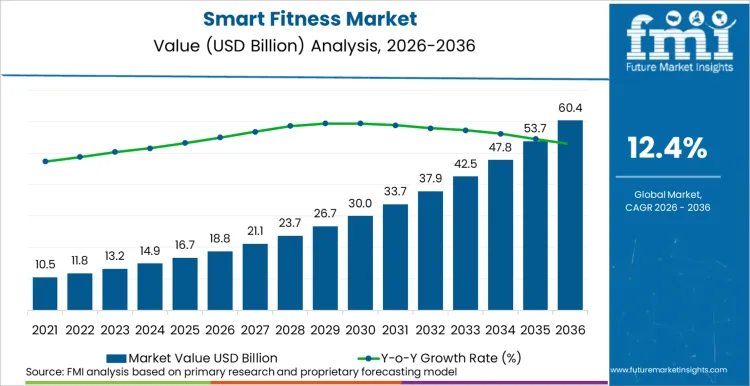
Demand dynamics are heavily influenced by the convergence of wearable technology and data analytics. North American and European markets demonstrate high adoption of premium connected fitness equipment and corporate wellness programs.
Asia Pacific, led by China and India, is witnessing accelerated growth driven by a large tech-savvy population and increasing disposable income. The proliferation of high-speed internet and smartphones enables seamless access to fitness apps and on-demand virtual classes, making integrated health monitoring more accessible.
Technological trends are focused on enhancing user immersion and personalization through artificial intelligence and augmented reality. Innovations in sensor accuracy within smart fitness wearables provide more detailed biometric feedback. Equipment manufacturers are embedding larger touchscreens and creating exclusive content libraries to foster subscriber loyalty. This shift is transforming fitness from a product-centric to a service-centric model, with recurring revenue streams from digital memberships.
Smart Fitness Market Key Takeaways
| Metric | Value |
|---|---|
| Market Value (2026) | USD 18.8 billion |
| Market Forecast Value (2036) | USD 60.4 billion |
| Forecast CAGR 2026 to 2036 | 12.4% |
Source: Future Market Insights (FMI) analysis, based on proprietary forecasting model and primary research
Why Is the Smart Fitness Market Experiencing Accelerated Growth?
Demand for smart fitness solutions is surging as consumers prioritize proactive health management and workout flexibility. The lasting impact of global health concerns has cemented the value of home-based fitness infrastructure. Unlike traditional gym memberships, smart systems offer tailored workout regimens that adapt to performance and goals, increasing engagement and retention.
Insurance providers and employers are promoting these technologies through corporate wellness initiatives to reduce healthcare costs. The ability to access live and on-demand expert instruction from home provides a compelling value proposition, driving the shift towards connected fitness ecosystems.
How is the Smart Fitness Market Segmented?
The market is segmented by product type, fitness application, and end-user demographics to address varied consumer preferences and usage scenarios. This segmentation highlights the shift from generic fitness tools to specialized, data-driven solutions for different environments.
Which Product Category Dominates the Smart Fitness Market?
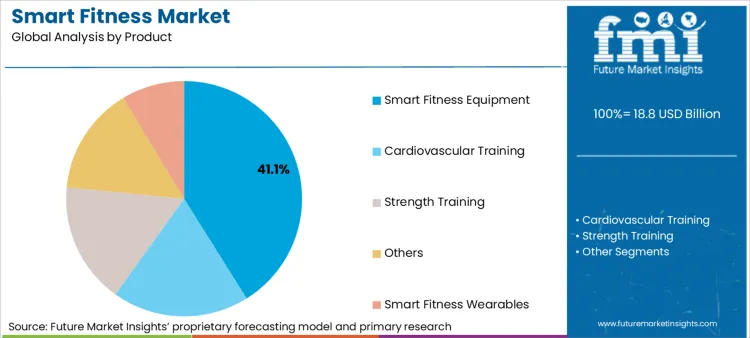
Smart fitness equipment holds 41.1%, representing the largest share. This segment includes connected treadmills, exercise bikes, and strength training systems that stream interactive content. Its dominance is driven by consumer investment in creating effective long-term home gyms, with demand fueled by the integration of immersive coaching software directly into the hardware.
Which Type of Fitness Application Is Most Popular?
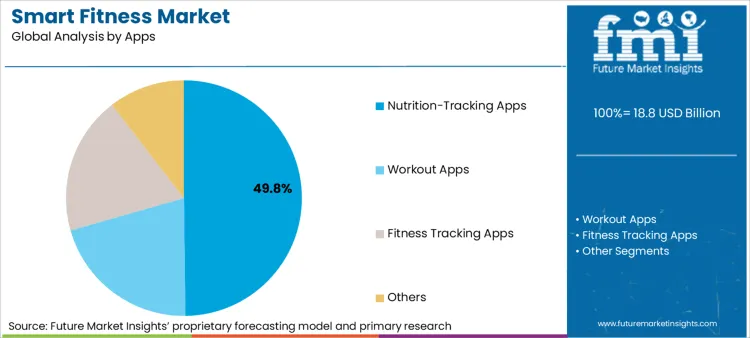
Nutrition-tracking apps hold 49.8%, representing the largest share. This indicates a strong consumer focus on holistic health management beyond exercise alone. These apps help users monitor caloric intake, macronutrients, and hydration, syncing data with wearables to provide a comprehensive view of health metrics, which is critical for achieving fitness goals.
Which End-User Segment Adopts Smart Fitness Most Actively?
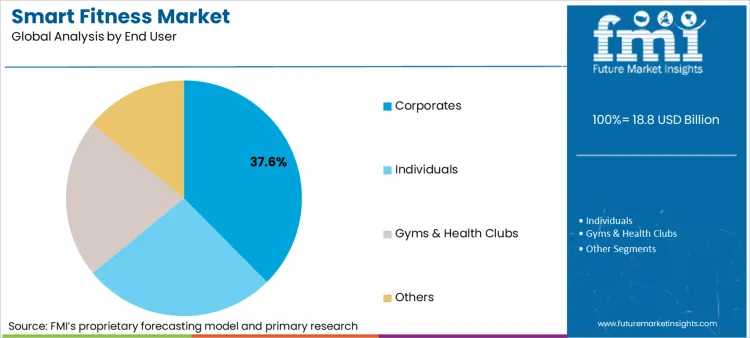
Corporates hold 37.6%, representing the largest share. Businesses are increasingly integrating smart fitness solutions into employee wellness programs to enhance productivity, reduce absenteeism, and improve overall job satisfaction. This includes subsidizing wearable devices, providing access to fitness apps, and installing on-site smart fitness equipment, viewing it as a strategic investment in human capital.
Market Dynamics
How is Hybrid Fitness Shaping Consumer Expectations?
A major trend is the demand for hybrid fitness models that seamlessly blend physical equipment with digital content. Consumers expect their smart fitness wearables to sync with home equipment and apps, creating a unified data profile. This trend pushes manufacturers to develop open ecosystems and partnerships rather than closed platforms.
Do High Costs and Subscription Fatigue Restrain Market Growth?
The most significant restraint is the high upfront cost of connected fitness equipment and the recurring burden of subscription fees for premium content. This can limit adoption to higher-income segments and lead to consumer churn as individuals reassess ongoing expenses, potentially slowing market penetration in cost-sensitive regions.
How does Corporate Wellness Investment Create Opportunities?
The expansion of corporate wellness programs presents a substantial opportunity. B2B partnerships where smart fitness companies provide bundled solutions for enterprises represent a high-volume, stable revenue channel. Suppliers who offer scalable platforms with administrative dashboards for tracking employee participation are well-positioned to capture this growing segment.
How is the Smart Fitness Market Expected to Evolve across Major Nations?
Adoption rates vary based on fitness culture, digital infrastructure, and corporate policies. Nations with strong technological adoption and rising health awareness are leading growth.
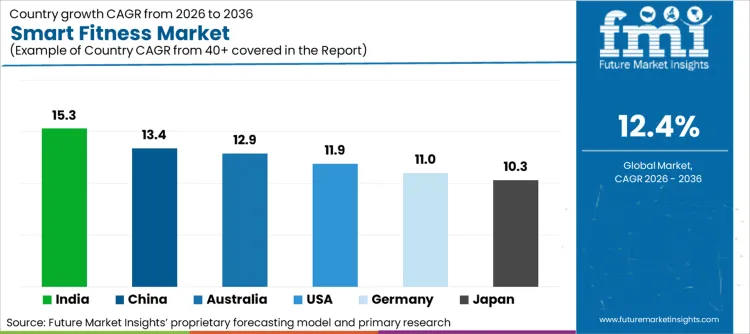
| Country | CAGR (2026-2036 ) |
|---|---|
| India | 15.3% |
| China | 13.4% |
| Australia | 12.9% |
| USA | 11.9% |
| Germany | 11.0% |
| Japan | 10.3% |
Source: Future Market Insights’ proprietary forecasting model and primary research
What Factors are Driving Growth of the Smart Fitness Ecosystem in India?
Demand in India is poised to garner a CAGR of 15.3%. A young, health-conscious population, rapid smartphone penetration, and the popularity of affordable smart fitness wearables from local and Chinese manufacturers fuel growth. Increasing urban workplace stress is also driving interest in personalized fitness management solutions.
How Is China's Tech Ecosystem Influencing the Market?
Sales in China are set to achieve a CAGR of 13.4%. A robust domestic manufacturing base for electronics, leading to competitively priced smart fitness gear, drives the market. Integrated super-apps that combine social features, e-commerce, and health tracking further accelerate adoption by making fitness a part of the digital lifestyle.
Why is the USA a Focus for Premium Smart Fitness Solutions?
The market in the USA is projected to record a CAGR of 11.9%. As a mature market, growth is driven by premiumization, with consumers upgrading to newer equipment models and subscribing to specialized digital content. High corporate investment in employee wellness programs also sustains demand for comprehensive fitness solutions.
What Role Does Regulation Play in Germany's Market?
Demand for smart fitness prorgams in Germany is estimated to expand at a CAGR of 11.0%. The market is supported by high consumer purchasing power and a strong culture of preventive healthcare. Data privacy regulations influence the development and adoption of fitness apps and wearables, with trust in data security being a key purchase factor.
How Is Japan's Aging Population Influencing Market Trends?
Sales in Japan are likely to increase at a CAGR of 10.3%. The primary growth propeller is the demand for health-monitoring solutions from an aging demographic. Smart fitness wearables and equipment with a focus on vital signs monitoring, gentle mobility exercises, and long-term health maintenance are seeing increased adoption.
What Defines the Competitive Landscape for Smart Fitness?
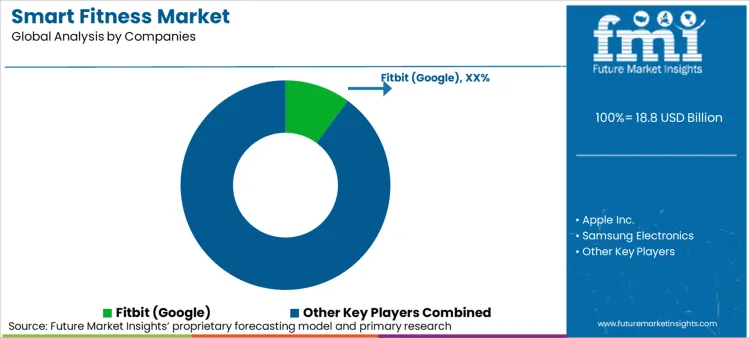
The competitive landscape is defined by the clash between dedicated fitness brands and broad technology giants. Companies compete on ecosystem lock-in, content quality, hardware design, and data insights. There is a notable trend of consolidation, as large tech firms acquire specialist fitness brands to gain market share and expertise.
Competition is intensifying in the mid-tier price segment, putting pressure on premium brands. Success increasingly depends on creating a sticky user experience through personalized content and strong community features rather than hardware alone.
Key Players
- Fitbit (Google)
- Apple Inc.
- Samsung Electronics
- Garmin International
- Xiaomi
Scope of Report
| Items | Values |
|---|---|
| Quantitative Units | USD Billion |
| Product Segments | Smart Fitness Equipment; Cardiovascular Training; Strength Training; Smart Fitness Wearables; Others |
| App Segments | Nutrition-Tracking Apps; Workout Apps; Fitness Tracking Apps; Others |
| End-User Segments | Corporates; Individuals; Gyms & Health Clubs; Others |
| Regions Covered | North America, Europe, Asia Pacific, Latin America, Middle East & Africa |
| Key Countries | USA, China, India, Germany, Japan, Australia |
| Key Companies Profiled | Fitbit (Google), Apple Inc., Samsung Electronics, Garmin International, Xiaomi |
Source: FMI analysis based on primary research and proprietary forecasting model
Smart Fitness Market by Segment
By Product:
- Smart Fitness Equipment
- Cardiovascular Training
- Strength Training
- Smart Fitness Wearables
- Others
By Apps:
- Nutrition-Tracking Apps
- Workout Apps
- Fitness Tracking Apps
- Others
By End User:
- Corporates
- Individuals
- Gyms & Health Clubs
- Others
By Region:
- North America
- Latin America
- Western Europe
- Eastern Europe
- East Asia
- South Asia & Pacific
- Middle East & Africa
Bibliography
- World Health Organization. (2023). Global action plan on physical activity 2018-2030: more active people for a healthier world. WHO.
- IEEE. (2024). Wearable Sensors and Systems for Health Monitoring. IEEE Reviews in Biomedical Engineering.
- National Academy of Sports Medicine. (2023). The Future of Fitness Technology. NASM.
- Journal of Medical Internet Research. (2024). Effectiveness of Mobile Health Interventions on Physical Activity and Sedentary Behavior. JMIR.
- American College of Sports Medicine. (2024). Worldwide Survey of Fitness Trends for 2024. ACSM's Health & Fitness Journal.
Frequently Asked Questions
How big is the smart fitness market likely to be in 2026?
The smart fitness market is projected to be valued at USD 18.8 billion in 2026.
What will be the size of the smart fitness market in 2036?
The market size for smart fitness is projected to reach USD 60.4 billion by 2036.
How fast will the smart fitness market grow?
Demand for smart fitness solutions is projected to grow at a 12.4% CAGR between 2026 and 2036.
Which product segment leads the smart fitness market?
Smart fitness equipment is expected to account for a 41.1% share of the market in 2026.
Which end-user segment is a key adopter of smart fitness?
The corporates segment is expected to represent a 37.6% share in the smart fitness market in 2026.
Preview the report firsthand - request a free sample
Get SampleGet the brochure for pricing and purchase details.
Get PDFTable of Content
- Global Market Outlook
- Demand-side Trends
- Supply-side Trends
- Technology Roadmap Analysis
- Analysis and Recommendations
- Market Overview
- Market Coverage / Taxonomy
- Market Definition / Scope / Limitations
- Research Methodology
- Chapter Orientation
- Analytical Lens and Working Hypotheses
- Market Structure, Signals, and Trend Drivers
- Benchmarking and Cross-market Comparability
- Market Sizing, Forecasting, and Opportunity Mapping
- Research Design and Evidence Framework
- Desk Research Programme (Secondary Evidence)
- Company Annual and Sustainability Reports
- Peer-reviewed Journals and Academic Literature
- Corporate Websites, Product Literature, and Technical Notes
- Earnings Decks and Investor Briefings
- Statutory Filings and Regulatory Disclosures
- Technical White Papers and Standards Notes
- Trade Journals, Industry Magazines, and Analyst Briefs
- Conference Proceedings, Webinars, and Seminar Materials
- Government Statistics Portals and Public Data Releases
- Press Releases and Reputable Media Coverage
- Specialist Newsletters and Curated Briefings
- Sector Databases and Reference Repositories
- Roots Internal Knowledge Base and Historical Datasets
- Subscription Datasets and Paid Sources
- Social Channels, Communities, and Digital Listening Inputs
- Additional Desk Sources
- Expert Input and Fieldwork (Primary Evidence)
- Primary Modes
- Qualitative Interviews and Expert Elicitation
- Surveys
- Focus Groups
- Observational and In-context Research
- Social and Community Interactions
- C-suite Leaders
- Board Members
- Presidents and Vice Presidents
- R&D and Innovation Heads
- Technical Specialists
- Domain Subject-matter Experts
- Scientists
- Physicians and Other Healthcare Professionals
- Primary Modes
- Governance, Ethics, and Data Stewardship
- Research Ethics
- Data Integrity and Handling
- Desk Research Programme (Secondary Evidence)
- Tooling, Models, and Reference Databases
- Data Engineering and Model Build
- Data Acquisition and Ingestion
- Cleaning, Normalisation, and Verification
- Synthesis, Triangulation, and Analysis
- Quality Assurance and Audit Trail
- Market Background
- Market Dynamics
- Drivers
- Restraints
- Opportunity
- Trends
- Scenario Forecast
- Demand in Optimistic Scenario
- Demand in Likely Scenario
- Demand in Conservative Scenario
- Opportunity Map Analysis
- Product Life Cycle Analysis
- Supply Chain Analysis
- Investment Feasibility Matrix
- Value Chain Analysis
- PESTLE and Porter’s Analysis
- Regulatory Landscape
- Regional Parent Market Outlook
- Production and Consumption Statistics
- Import and Export Statistics
- Market Dynamics
- Global Market Analysis 2021 to 2025 and Forecast, 2026 to 2036
- Historical Market Size Value (USD Million) Analysis, 2021 to 2025
- Current and Future Market Size Value (USD Million) Projections, 2026 to 2036
- Y-o-Y Growth Trend Analysis
- Absolute $ Opportunity Analysis
- Global Market Pricing Analysis 2021 to 2025 and Forecast 2026 to 2036
- Global Market Analysis 2021 to 2025 and Forecast 2026 to 2036, By Product
- Introduction / Key Findings
- Historical Market Size Value (USD Million) Analysis By Product , 2021 to 2025
- Current and Future Market Size Value (USD Million) Analysis and Forecast By Product , 2026 to 2036
- Smart Fitness Equipment
- Cardiovascular Training
- Strength Training
- Others
- Smart Fitness Wearables
- Smart Fitness Equipment
- Y-o-Y Growth Trend Analysis By Product , 2021 to 2025
- Absolute $ Opportunity Analysis By Product , 2026 to 2036
- Global Market Analysis 2021 to 2025 and Forecast 2026 to 2036, By Apps
- Introduction / Key Findings
- Historical Market Size Value (USD Million) Analysis By Apps, 2021 to 2025
- Current and Future Market Size Value (USD Million) Analysis and Forecast By Apps, 2026 to 2036
- Nutrition-Tracking Apps
- Workout Apps
- Fitness Tracking Apps
- Others
- Nutrition-Tracking Apps
- Y-o-Y Growth Trend Analysis By Apps, 2021 to 2025
- Absolute $ Opportunity Analysis By Apps, 2026 to 2036
- Global Market Analysis 2021 to 2025 and Forecast 2026 to 2036, By End User
- Introduction / Key Findings
- Historical Market Size Value (USD Million) Analysis By End User, 2021 to 2025
- Current and Future Market Size Value (USD Million) Analysis and Forecast By End User, 2026 to 2036
- Corporates
- Individuals
- Gyms & Health Clubs
- Others
- Corporates
- Y-o-Y Growth Trend Analysis By End User, 2021 to 2025
- Absolute $ Opportunity Analysis By End User, 2026 to 2036
- Global Market Analysis 2021 to 2025 and Forecast 2026 to 2036, By Others
- Introduction / Key Findings
- Historical Market Size Value (USD Million) Analysis By Others, 2021 to 2025
- Current and Future Market Size Value (USD Million) Analysis and Forecast By Others, 2026 to 2036
- Y-o-Y Growth Trend Analysis By Others, 2021 to 2025
- Absolute $ Opportunity Analysis By Others, 2026 to 2036
- Global Market Analysis 2021 to 2025 and Forecast 2026 to 2036, By Region
- Introduction
- Historical Market Size Value (USD Million) Analysis By Region, 2021 to 2025
- Current Market Size Value (USD Million) Analysis and Forecast By Region, 2026 to 2036
- North America
- Latin America
- Western Europe
- Eastern Europe
- East Asia
- South Asia and Pacific
- Middle East & Africa
- Market Attractiveness Analysis By Region
- North America Market Analysis 2021 to 2025 and Forecast 2026 to 2036, By Country
- Historical Market Size Value (USD Million) Trend Analysis By Market Taxonomy, 2021 to 2025
- Market Size Value (USD Million) Forecast By Market Taxonomy, 2026 to 2036
- By Country
- USA
- Canada
- Mexico
- By Product
- By Apps
- By End User
- By Others
- By Country
- Market Attractiveness Analysis
- By Country
- By Product
- By Apps
- By End User
- By Others
- Key Takeaways
- Latin America Market Analysis 2021 to 2025 and Forecast 2026 to 2036, By Country
- Historical Market Size Value (USD Million) Trend Analysis By Market Taxonomy, 2021 to 2025
- Market Size Value (USD Million) Forecast By Market Taxonomy, 2026 to 2036
- By Country
- Brazil
- Chile
- Rest of Latin America
- By Product
- By Apps
- By End User
- By Others
- By Country
- Market Attractiveness Analysis
- By Country
- By Product
- By Apps
- By End User
- By Others
- Key Takeaways
- Western Europe Market Analysis 2021 to 2025 and Forecast 2026 to 2036, By Country
- Historical Market Size Value (USD Million) Trend Analysis By Market Taxonomy, 2021 to 2025
- Market Size Value (USD Million) Forecast By Market Taxonomy, 2026 to 2036
- By Country
- Germany
- UK
- Italy
- Spain
- France
- Nordic
- BENELUX
- Rest of Western Europe
- By Product
- By Apps
- By End User
- By Others
- By Country
- Market Attractiveness Analysis
- By Country
- By Product
- By Apps
- By End User
- By Others
- Key Takeaways
- Eastern Europe Market Analysis 2021 to 2025 and Forecast 2026 to 2036, By Country
- Historical Market Size Value (USD Million) Trend Analysis By Market Taxonomy, 2021 to 2025
- Market Size Value (USD Million) Forecast By Market Taxonomy, 2026 to 2036
- By Country
- Russia
- Poland
- Hungary
- Balkan & Baltic
- Rest of Eastern Europe
- By Product
- By Apps
- By End User
- By Others
- By Country
- Market Attractiveness Analysis
- By Country
- By Product
- By Apps
- By End User
- By Others
- Key Takeaways
- East Asia Market Analysis 2021 to 2025 and Forecast 2026 to 2036, By Country
- Historical Market Size Value (USD Million) Trend Analysis By Market Taxonomy, 2021 to 2025
- Market Size Value (USD Million) Forecast By Market Taxonomy, 2026 to 2036
- By Country
- China
- Japan
- South Korea
- By Product
- By Apps
- By End User
- By Others
- By Country
- Market Attractiveness Analysis
- By Country
- By Product
- By Apps
- By End User
- By Others
- Key Takeaways
- South Asia and Pacific Market Analysis 2021 to 2025 and Forecast 2026 to 2036, By Country
- Historical Market Size Value (USD Million) Trend Analysis By Market Taxonomy, 2021 to 2025
- Market Size Value (USD Million) Forecast By Market Taxonomy, 2026 to 2036
- By Country
- India
- ASEAN
- Australia & New Zealand
- Rest of South Asia and Pacific
- By Product
- By Apps
- By End User
- By Others
- By Country
- Market Attractiveness Analysis
- By Country
- By Product
- By Apps
- By End User
- By Others
- Key Takeaways
- Middle East & Africa Market Analysis 2021 to 2025 and Forecast 2026 to 2036, By Country
- Historical Market Size Value (USD Million) Trend Analysis By Market Taxonomy, 2021 to 2025
- Market Size Value (USD Million) Forecast By Market Taxonomy, 2026 to 2036
- By Country
- Kingdom of Saudi Arabia
- Other GCC Countries
- Turkiye
- South Africa
- Other African Union
- Rest of Middle East & Africa
- By Product
- By Apps
- By End User
- By Others
- By Country
- Market Attractiveness Analysis
- By Country
- By Product
- By Apps
- By End User
- By Others
- Key Takeaways
- Key Countries Market Analysis
- USA
- Pricing Analysis
- Market Share Analysis, 2025
- By Product
- By Apps
- By End User
- By Others
- Canada
- Pricing Analysis
- Market Share Analysis, 2025
- By Product
- By Apps
- By End User
- By Others
- Mexico
- Pricing Analysis
- Market Share Analysis, 2025
- By Product
- By Apps
- By End User
- By Others
- Brazil
- Pricing Analysis
- Market Share Analysis, 2025
- By Product
- By Apps
- By End User
- By Others
- Chile
- Pricing Analysis
- Market Share Analysis, 2025
- By Product
- By Apps
- By End User
- By Others
- Germany
- Pricing Analysis
- Market Share Analysis, 2025
- By Product
- By Apps
- By End User
- By Others
- UK
- Pricing Analysis
- Market Share Analysis, 2025
- By Product
- By Apps
- By End User
- By Others
- Italy
- Pricing Analysis
- Market Share Analysis, 2025
- By Product
- By Apps
- By End User
- By Others
- Spain
- Pricing Analysis
- Market Share Analysis, 2025
- By Product
- By Apps
- By End User
- By Others
- France
- Pricing Analysis
- Market Share Analysis, 2025
- By Product
- By Apps
- By End User
- By Others
- India
- Pricing Analysis
- Market Share Analysis, 2025
- By Product
- By Apps
- By End User
- By Others
- ASEAN
- Pricing Analysis
- Market Share Analysis, 2025
- By Product
- By Apps
- By End User
- By Others
- Australia & New Zealand
- Pricing Analysis
- Market Share Analysis, 2025
- By Product
- By Apps
- By End User
- By Others
- China
- Pricing Analysis
- Market Share Analysis, 2025
- By Product
- By Apps
- By End User
- By Others
- Japan
- Pricing Analysis
- Market Share Analysis, 2025
- By Product
- By Apps
- By End User
- By Others
- South Korea
- Pricing Analysis
- Market Share Analysis, 2025
- By Product
- By Apps
- By End User
- By Others
- Russia
- Pricing Analysis
- Market Share Analysis, 2025
- By Product
- By Apps
- By End User
- By Others
- Poland
- Pricing Analysis
- Market Share Analysis, 2025
- By Product
- By Apps
- By End User
- By Others
- Hungary
- Pricing Analysis
- Market Share Analysis, 2025
- By Product
- By Apps
- By End User
- By Others
- Kingdom of Saudi Arabia
- Pricing Analysis
- Market Share Analysis, 2025
- By Product
- By Apps
- By End User
- By Others
- Turkiye
- Pricing Analysis
- Market Share Analysis, 2025
- By Product
- By Apps
- By End User
- By Others
- South Africa
- Pricing Analysis
- Market Share Analysis, 2025
- By Product
- By Apps
- By End User
- By Others
- USA
- Market Structure Analysis
- Competition Dashboard
- Competition Benchmarking
- Market Share Analysis of Top Players
- By Regional
- By Product
- By Apps
- By End User
- By Others
- Competition Analysis
- Competition Deep Dive
- Fitbit (Google)
- Overview
- Product Portfolio
- Profitability by Market Segments (Product/Age /Sales Channel/Region)
- Sales Footprint
- Strategy Overview
- Marketing Strategy
- Product Strategy
- Channel Strategy
- Apple Inc.
- Samsung Electronics
- Garmin International
- Xiaomi
- Fitbit (Google)
- Competition Deep Dive
- Assumptions & Acronyms Used


