

- Industry Size (2026)
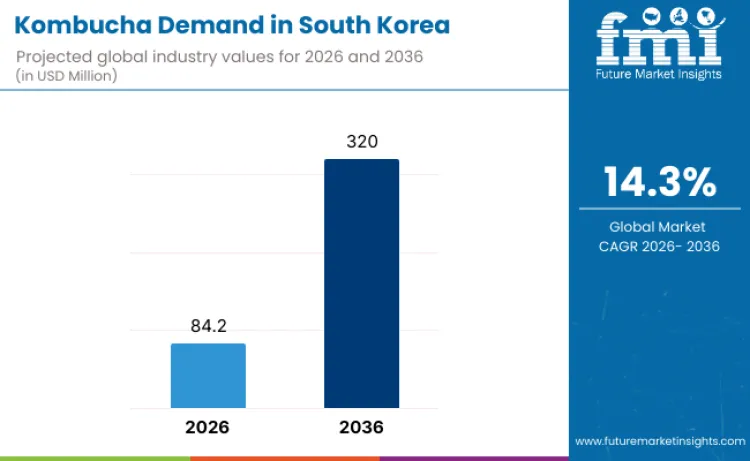
- USD 84.2 Mn
- Forecast (2036)
- USD 320.0 Mn
- CAGR (2026 to 2036)
- 14.3%
Kombucha Demand in South Korea Forecast and Outlook 2026 to 2036
Kombucha demand in South Korea is forecast to reach USD 84.2 million in 2026, supported by rising preference for fermented, low-sugar, and benefit-linked beverage choices among health-conscious consumers. Growth is expected to progress at a 14.3% CAGR through 2036, lifting total category value to USD 320.0 million by the end of the assessment period.
South Korean consumers are increasingly shifting from occasional functional beverage trials to repeat purchasing behavior anchored in routine hydration and daily wellness. Kombucha is benefiting from this transition because it fits into the same purchase mindset as sparkling and fermented refreshment, while offering variety through flavor innovation and format convenience. The category is also strengthening its relevance among younger consumers who prefer lighter beverage cues, lower sugar positioning, and café-led product discovery rather than traditional high-calorie refreshment formats.
Consumption growth is also supported by product expansion across conventional and hard kombucha. Conventional variants continue to lead because they align with daily intake routines and can scale through high-frequency channels, particularly cafés and foodservice locations. Hard kombucha is building momentum in adult social consumption settings where consumers seek novelty and lighter alcohol experiences while staying close to fermented flavor cues.
On-trade remains the dominant sales route because kombucha has become deeply integrated into café culture, brand collaborations, and menu-led trial behavior. Many consumers first adopt kombucha through café visits or dining experiences and later shift to off-trade replenishment for at-home consumption. This two-step adoption pathway is supporting brand retention, especially for companies that manage both on-trade visibility and off-trade availability across convenience stores and online retail.
Quick Stats for Kombucha Demand in South Korea
- Kombucha Demand Value 2026: USD 84.2 Million
- Kombucha Forecast Value 2036: USD 320.0 Million
- Kombucha Forecast CAGR 2026 to 2036: 14.3%
- Kombucha Leading Product Type: Conventional 70.0%
- Kombucha Fast-Growing Product Type: Hard 30.0%
- Kombucha Leading Sales Channel: On-trade 69.5%
- Kombucha Secondary Sales Channel: Off-trade 30.5%
- Kombucha Key Growth Regions: Jeju, South Jeolla, South Gyeongsang, North Jeolla
- Kombucha Key Players: TEAZEN Inc., Freshico Co., Ltd. IM ALIVE, EVERYDAZE KOREA Co., Ltd., Maeil Dairies Co., Ltd., Osulloc Farm Co., Ltd., Celtadium Co., Ltd., KAYFOOD, DALAMHARI, Good Habit, GTs Living Foods
Food and Beverage Trends Likely to Influence Kombucha Demand in South Korea
Wellness-driven beverage substitution is expected to remain a primary growth catalyst, as consumers increasingly replace sugar-heavy refreshment formats with options positioned around digestive comfort, lighter taste profiles, and everyday drinkability. This shift supports kombucha adoption because it fits into routine hydration occasions while maintaining a premium feel through fermentation cues and flavor variety.
Café-led product discovery is also strengthening across South Korea, keeping on-trade performance dominant in the near term. Kombucha growth benefits from menu placement, sampling moments, and repeat exposure through branded beverage partnerships. This channel behavior reinforces on-trade expansion, even while off-trade continues to rise through convenience store purchases and online replenishment.
Regulatory and labeling discipline is likely to influence how brands manage fermentation consistency and alcohol thresholds, particularly for hard kombucha and for conventional formats that require stable production controls. MFDS standards covering fermented beverages reinforce the importance of compliance, quality controls, and clarity in product specifications.
Kombucha Demand in South Korea Key Takeaways
| Metric | Value |
|---|---|
| Category Size 2026 | USD 84.2 Million |
| Category Value 2036 | USD 320.0 Million |
| CAGR 2026 to 2036 | 14.3% |
Source: Future Market Insights analysis, based on proprietary forecasting model and primary research.
What drivers are Accelerating Kombucha Demand in South Korea?
Consumption of Kombucha is accelerating in South Korea because fermented and sparkling refreshment formats are increasingly associated with everyday wellness routines rather than niche experimentation. Consumers are prioritizing beverages that feel lighter, align with reduced sugar preferences, and offer a premium taste identity through fermentation-led flavor profiles. These consumption patterns are also shaping broader global kombucha expansion dynamics through repeat purchase behavior and fast-flavor iteration cycles.
On-trade dominance is being strengthened by the role of cafés and lifestyle venues as primary trial engines. Kombucha performs well in these settings because it is positioned as a modern refreshment option that sits between soda replacement and functional drink routines. This channel-led adoption is increasingly connected with the wider growth of functional beverages where on-the-go formats and daily utility are central purchase triggers.
Innovation in hard kombucha is also contributing to value growth by expanding consumption occasions into adult social settings, particularly where buyers seek novelty while staying aligned with fermented taste cues. This helps build incremental demand without depending solely on everyday hydration routines, while keeping brand discovery active across both café-led and retail-led exposure points.
How is the Kombucha Landscape in South Korea Segmented?
South Korea demand is segmented by product type and sales channel. This segmentation is commercially important because kombucha adoption is strongly driven by consumption occasion, trial environment, and the ability of brands to convert first-time users into repeat purchasers through accessible replenishment.
Why does Conventional Kombucha Maintain Leadership by Product Type?
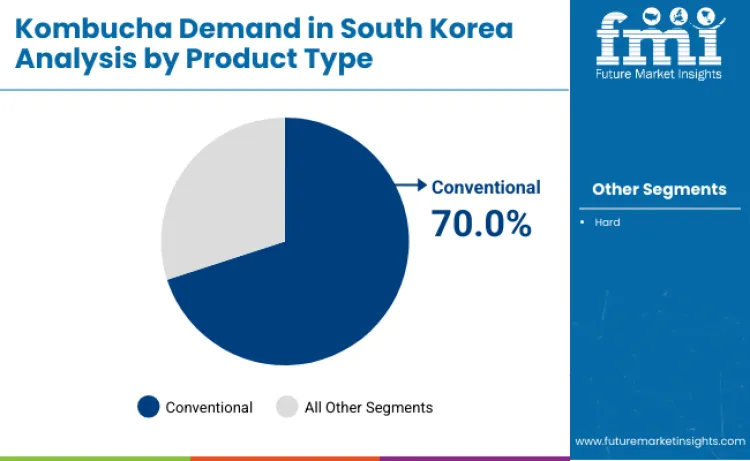
Conventional Kombucha holds a 70.0% share because it fits daily beverage routines and scales through high-frequency consumption occasions. Consumers view it as a clean refreshment option that can be consumed regularly without major lifestyle trade-offs. This supports higher repeat purchase rates, especially in café-led and convenience-led routines.
Which Channel will account for the Bulk of all Kombucha Sales in South Korea?
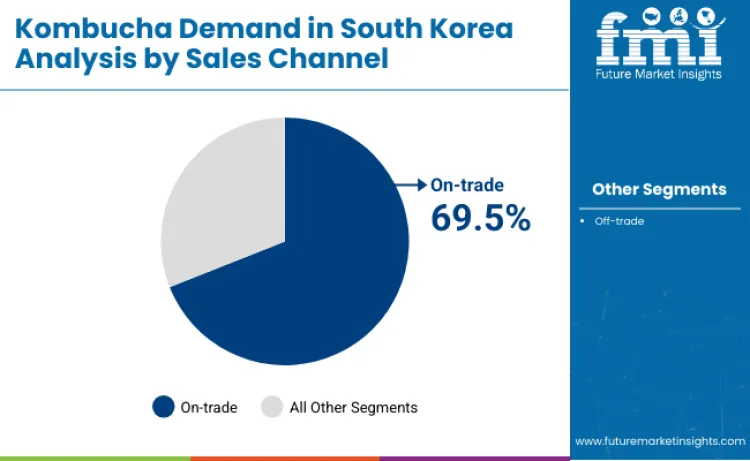
On-trade accounts for 69.5% of sales because kombucha is highly discovery-driven in South Korea. Café placements, dining trial occasions, and lifestyle-led beverage menus influence initial adoption and create repeat behavior through habit formation. This channel also supports premium positioning, enabling brands to maintain stronger margins and expand through limited-time flavors and menu collaborations.
Off-trade sales are expected to rise steadily as trial-led consumers transition into home consumption and routine replenishment. Convenience stores and online retail will remain the key drivers, supported by multipack formats, ready-to-drink availability, and subscription-led repurchase behavior. This dual-channel journey is increasingly shaped by the broader expansion of fermented beverage consumption where consumers move from experiential discovery to routine stocking behavior.
What are the Key DROTs Shaping Kombucha Demand in South Korea Through 2036?
What Is Driving Kombucha Demand Growth in South Korea?
Café culture continues to accelerate kombucha adoption because it creates consistent trial exposure through menus and lifestyle venues. Consumers increasingly treat kombucha as a modern substitute for sugary carbonated drinks, and this supports steady repeat purchasing as buyers incorporate fermented options into daily hydration habits. Flavor rotation is another growth driver, as brands sustain engagement through seasonal launches and limited drops that keep the category relevant without requiring heavy consumer education.
What Restraints Could Limit Growth Potential Through 2036?
Product consistency remains a key restraint because fermentation-linked taste variability can reduce repeat purchase confidence when batch outcomes vary. Pricing pressure is another limitation, particularly for imported or premium-positioned SKUs that compete with lower-cost functional drinks and flavored sparkling options. Channel dependence on cafés may also limit near-term reach in regions where on-trade consumption is less concentrated, making off-trade availability and multipack pricing important for broader penetration.
What Opportunities Are Likely to Unlock New Consumption Occasions?
Hard kombucha innovation creates opportunities to expand beyond daytime hydration into adult social consumption occasions, particularly where consumers seek lighter alcohol cues with fermented flavor identity.
Off-trade scaling will also unlock volume growth through convenience stores, online retail, and subscription bundles that reduce repurchase friction. Jeju-led tourism exposure supports premium trial conversion, which can strengthen national brand awareness and drive downstream replenishment in mainland retail channels.
What Trends will Define Product Strategy and Channel Expansion?
On-trade dominance will remain structural through the forecast period because cafés and lifestyle venues keep shaping discovery and brand legitimacy. At the same time, off-trade growth will accelerate through ready-to-drink multipacks and flavor assortments that encourage repeat buying.
Reduced sugar messaging is expected to become more prominent, especially as consumers filter refreshment choices based on daily suitability. Brands are also expected to invest in tighter quality control to stabilize fermentation outcomes and protect repeat purchase behavior, particularly as competition intensifies across both domestic and international portfolios.
How will Regional Consumption Patterns Evolve across South Korea?
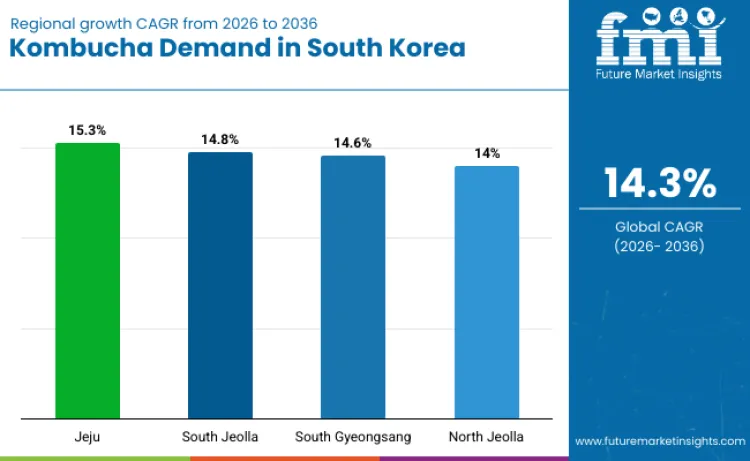
South Korea shows differentiated growth intensity across key regions based on tourism influence, café culture density, local beverage innovation cycles, and wellness-driven consumer adoption. Jeju leads growth due to its premium beverage identity and high trial rates driven by travel and café visits.
South Jeolla and South Gyeongsang continue expanding through strong lifestyle consumption routines, while North Jeolla grows through steady adoption anchored in everyday refreshment substitution and rising availability across modern trade formats.
| Region | CAGR 2026 to 2036 |
|---|---|
| Jeju | 15.3% |
| South Jeolla | 14.8% |
| South Gyeongsang | 14.6% |
| North Jeolla | 14.0% |
Source: Future Market Insights’ proprietary forecasting model and primary research
Why does Jeju Lead Kombucha Demand Growth?
Jeju is expected to record the fastest expansion at a 15.3% CAGR because it combines premium café density with tourism-led product trial behavior. Kombucha performs strongly in Jeju as a modern refreshment choice that aligns with wellness travel routines and lighter consumption preferences. Brands benefit from high repeat exposure in café menus and local retail, supporting stronger conversion into multipack purchases and home replenishment after initial trial.
How is South Jeolla Strengthening Adoption Across Everyday Consumption Occasions?
South Jeolla is projected to expand at a 14.8% CAGR, supported by increasing preference for fermented refreshment formats and steady growth in café-led beverage routines. Conventional kombucha remains dominant due to its daily drinkability, while flavored offerings increase basket frequency by encouraging taste rotation rather than single-SKU loyalty. On-trade demand remains central, with gradual expansion in off-trade driven by convenience-led repeat buying.
What makes South Gyeongsang a High-Momentum Sales Region?
South Gyeongsang is forecast to grow at a 14.6% CAGR due to rising consumer preference for functional refreshment substitutes and consistent on-trade exposure through cafés and dining venues. The region benefits from strong adoption of conventional Kombucha for routine hydration, while hard Kombucha expands selectively in social consumption settings that favor novelty and lighter alcohol experiences.
How will North Jeolla Sustain Expansion Through 2036?
North Jeolla is expected to advance at a 14.0% CAGR, driven by steady transition from traditional sweetened beverages toward lighter fermented options. Growth is supported by increasing access through off-trade channels, particularly where consumers adopt Kombucha after initial trial and then shift into repeat replenishment through convenience stores and online retail. Brands that maintain consistent availability and clear flavor positioning will achieve stronger retention in this region.
What Is the Competitive Outlook for Kombucha Demand in South Korea?
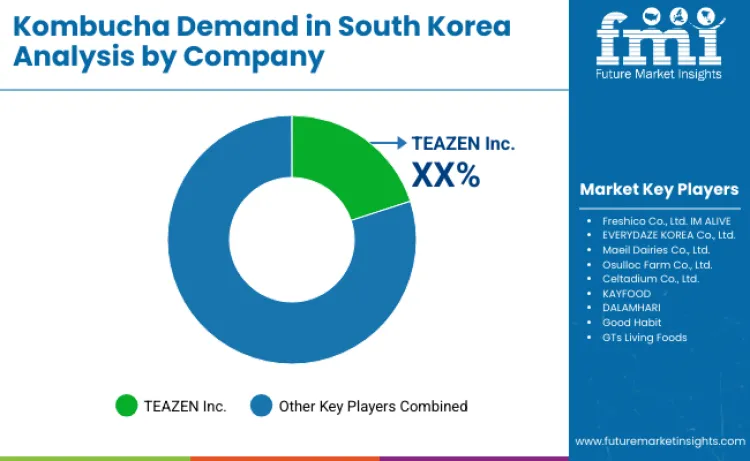
Competition is increasingly shaped by brand credibility, flavor innovation velocity, and the ability to scale across on-trade discovery while capturing off-trade replenishment. Companies that win typically achieve three outcomes. First, they secure visibility in cafés and lifestyle venues to drive trial. Second, they translate that trial into repeat consumption through ready-to-stock formats. Third, they maintain fermentation consistency and stable taste delivery, which protects retention and minimizes quality variability.
Portfolio strategy is shifting toward more structured flavor lineups that encourage rotation and repeat purchase behavior. Limited-time flavors support trial and social engagement, while core SKUs sustain everyday demand. Brands are also strengthening channel pairing strategies where on-trade builds discovery and off-trade secures volume stability. This competitive structure aligns closely with how kombucha is scaling globally through repeat-led consumption cycles and premium refreshment positioning.
Key Players in Kombucha Demand in South Korea
- TEAZEN Inc.
- Freshico Co., Ltd. IM ALIVE
- EVERYDAZE KOREA Co., Ltd.
- Maeil Dairies Co., Ltd.
- Osulloc Farm Co., Ltd.
- Celtadium Co., Ltd.
- KAYFOOD
- DALAMHARI
- Good Habit
- GTs Living Foods
Scope of Report
| Items | Values |
|---|---|
| Quantitative Units | USD Million |
| Product Type | Conventional, Hard |
| Sales Channel | On-trade, Off-trade |
| Regions | Jeju, South Gyeongsang, South Jeolla, North Jeolla |
| Key Companies | TEAZEN Inc., Freshico Co., Ltd. IM ALIVE, EVERYDAZE KOREA Co., Ltd., Maeil Dairies Co., Ltd., Osulloc Farm Co., Ltd., Celtadium Co., Ltd., KAYFOOD, DALAMHARI, Good Habit, GTs Living Foods |
Source: Future Market Insights analysis, based on proprietary forecasting model and primary research.
Kombucha Demand in South Korea by Segments
Product
- Conventional
- Hard
Sales Channel
- On-trade
- Off-trade
Region
- Jeju
- South Jeolla
- South Gyeongsang
- North Jeolla
Bibliography
- Ministry of Food and Drug Safety. (2012). Article 5. Standards and specifications for each food product. MFDS.
- Korea Health Functional Food Association. (2025). Korea health functional food brochure. KHFF.
- Ministry of Food and Drug Safety. (n.d.). International risk information guidance for fermented beverages and labelling requirements. MFDS.
- Korean Legislation Research Institute. (2025). Liquor Tax Act. KLRI.
- Food and Agriculture Organization of the United Nations. (2016). Foods labelling standards No. 2016-45 Republic of Korea. FAOLEX.
- World Health Organization. (2023). Healthy diet. World Health Organization.
Frequently Asked Questions
How big is Kombucha Demand in South Korea expected to be in 2026?
Kombucha demand in South Korea is estimated to be valued at USD 84.2 million in 2026.
What will be the total category value in South Korea by 2036?
Total category value is projected to reach USD 320.0 million by 2036.
What is the Expected Growth Rate for Kombucha demand in South Korea between 2026 and 2036?
Kombucha demand in South Korea is expected to grow at a CAGR of 14.3% between 2026 and 2036.
Which product type dominates sales in South Korea?
Conventional Kombucha dominates sales, holding a 70.0% share due to stronger alignment with daily consumption routines.
Which sales channel leads Kombucha sales in South Korea?
On-trade leads sales with a 69.5% share because café-led discovery remains the primary adoption engine.
Preview the report firsthand - request a free sample
Get SampleGet the brochure for pricing and purchase details.
Get PDFTable of Content
- Executive Summary
- Industry Introduction, including Taxonomy and Market Definition
- Trends and Success Factors, including Macro-economic Factors, Market Dynamics, and Recent Industry Developments
- South Korea Demand Analysis 2021 to 2025 and Forecast 2026 to 2036, including Historical Analysis and Future Projections
- Pricing Analysis
- South Korea Analysis 2021 to 2025 and Forecast 2026 to 2036
- Product Type
- Sales Channel
- By Product Type
- Conventional
- Hard
- By Sales Channel
- On-trade
- Off-trade
- By Region
- Jeju
- South Jeolla
- South Gyeongsang
- North Jeolla
- Jeju Sales Analysis 2021 to 2025 and Forecast 2026 to 2036, by Key Segments
- South Jeolla Sales Analysis 2021 to 2025 and Forecast 2026 to 2036, by Key Segments
- South Gyeongsang Sales Analysis 2021 to 2025 and Forecast 2026 to 2036, by Key Segments
- North Jeolla Sales Analysis 2021 to 2025 and Forecast 2026 to 2036, by Key Segments
- Sales Forecast to 2036 by Product Type, Sales Channel, and Region
- Competitive Assessment, Company Share Analysis by Key Players, and Competition Dashboard
- Company Profile
- TEAZEN Inc.
- Freshico Co., Ltd. IM ALIVE
- EVERYDAZE KOREA Co., Ltd.
- Maeil Dairies Co., Ltd.
- Osulloc Farm Co., Ltd.
- Celtadium Co., Ltd.
- KAYFOOD
- DALAMHARI
- Good Habit
- GTs Living Foods
- Other Players


