

- Industry Size (2026)
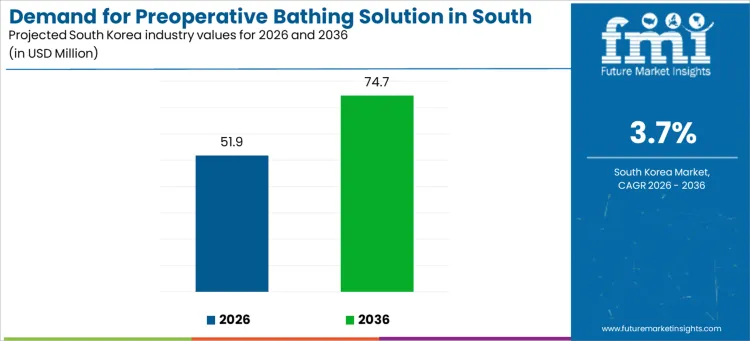
- USD 51.9 Mn
- Forecast (2036)
- USD 74.7 Mn
- CAGR (2026 to 2036)
- 3.7%
Demand for Preoperative Bathing Solution in South Korea Forecast and Outlook 2026 to 2036
Expenditure on preoperative bathing solutions in South Korea is estimated to reach USD 51.9 million in 2026. Revenue is poised to ascend to USD 74.7 million by 2036, expanding at a compound annual growth rate of 3.7%. South Korea possesses a highly advanced healthcare infrastructure that places immense emphasis on reducing surgical site infections (SSIs). Hospitals are rigorously implementing standardized preoperative skin preparation protocols to mitigate infection risks associated with invasive procedures. An aging population contributes to a higher volume of orthopedic and cardiovascular surgeries, directly influencing the consumption of antiseptic cleansing agents. Medical professionals prioritize patient safety through strict adherence to hygiene guidelines, ensuring consistent demand for high-efficacy bathing products across the nation.
Government health agencies are actively updating guidelines to align with international best practices for surgical care. Policymakers are incentivizing hospitals to adopt comprehensive infection prevention strategies, often linking accreditation scores to SSI rates. Reimbursement structures are gradually evolving to cover essential preoperative consumables, reducing the financial burden on patients. Public awareness campaigns regarding hospital safety are also encouraging patients to comply with bathing instructions prior to admission. This collaborative environment between regulatory bodies and healthcare providers creates a stable framework for industry expansion. Educational programs for nursing staff further reinforce the importance of proper skin decolonization, driving institutional procurement of specialized antiseptic solutions.
Quick Stats for Demand for Preoperative Bathing Solution in South Korea
- Demand for Preoperative Bathing Solution in South Korea Value (2026): USD 51.9 million
- Demand for Preoperative Bathing Solution in South Korea Forecast Value (2036): USD 74.7 million
- Demand for Preoperative Bathing Solution in South Korea Forecast CAGR: 3.7%
- Leading Product Type Segment for Preoperative Bathing Solution Industry in South Korea: Bath Solutions/Liquid Soaps (56.0%)
- Leading End User Segment for Preoperative Bathing Solution Industry in South Korea: Surgical Wards (66.2%)
- Key Growth Regions for Preoperative Bathing Solution Industry in South Korea: Jeju, South Gyeongsang, South Jeolla, North Jeolla
- Preoperative Bathing Solution Industry in South Korea Key Players: 3M, Unilever PLC, Medline Industries, Inc., BD (Becton, Dickinson and Company), Stryker
Innovation in formulation technology is enhancing the efficacy and user experience of these essential medical supplies. Manufacturers are developing skin antiseptic products that are gentle on sensitive skin while maintaining potent bactericidal properties. Integration of moisturizing agents into chlorhexidine gluconate (CHG) solutions addresses patient compliance issues related to skin dryness. There is also a shift towards waterless bathing solution options, which offer convenience for immobile patients or in situations where water access is restricted. These advancements ensure that preoperative hygiene protocols are not only effective but also comfortable for patients, thereby improving overall adherence rates.
Demand for Preoperative Bathing Solution in South Korea Key Takeaways
| Metric | Value |
|---|---|
| Industry Size (2026) | USD 51.9 million |
| Industry Value (2036) | USD 74.7 million |
| CAGR (2026 to 2036) | 3.7% |
What Specific Industrial Factors Are Fueling Preoperative Bathing Solution Adoption?
Rising incidence of hospital-acquired infections (HAIs) acts as a primary catalyst for strict hygiene enforcement. Administrators recognize that investing in preventative patient hygiene aids is significantly more cost-effective than treating postoperative complications. Increasing complexity of surgical procedures, involving advanced general surgery devices, mandates pristine skin conditions to prevent pathogen entry. Growing utilization of surgical stapling devices and other invasive tools further underscores the need for effective microbial load reduction. These factors collectively push healthcare facilities to mandate preoperative bathing as a non-negotiable step in the admission process, securing a consistent revenue stream for suppliers.
How is the Sector Structured Across Key Segments?
Structure of this domain is categorized by product formulation and the specific hospital department utilizing the supplies. Product segmentation distinguishes between traditional liquid soaps, convenient wipes, and specialized accessories like shampoo caps. End-user classification reveals the flow of products through different hospital wards, with surgical units being the most intensive users. Understanding this segmentation helps manufacturers tailor their packaging and educational materials. For instance, products destined for ICUs may prioritize ease of application for bedridden patients, while those for surgical wards focus on maximum antiseptic potency.
Why Does the Bath Solutions Category Maintain Dominance?
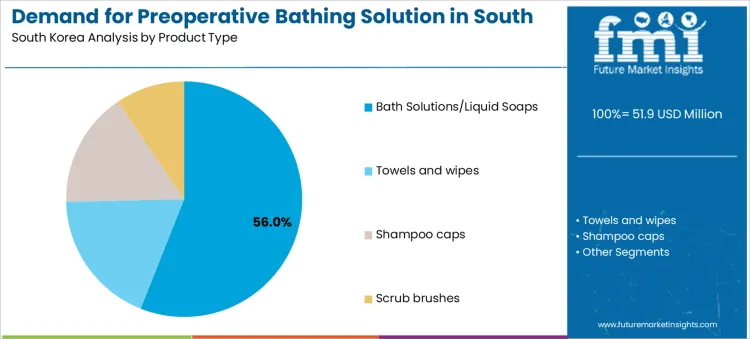
Bath Solutions and Liquid Soaps command a 56.0% share of the industry. Medical professionals favor these formats due to their versatility and proven track record in reducing bacterial counts. Patients are generally familiar with liquid soap application, making instructions easier to follow during pre-admission showers at home. Cost-effectiveness of bulk liquid dispensers compared to single-use wipes also influences procurement decisions in large public hospitals. Formulations often include chlorhexidine gluconate dressing components that provide residual antimicrobial activity, offering prolonged protection during long surgeries. This combination of efficacy, cost, and familiarity cements liquid soaps as the foundational product in this category.
How are Surgical Wards Contributing to Sector Growth?
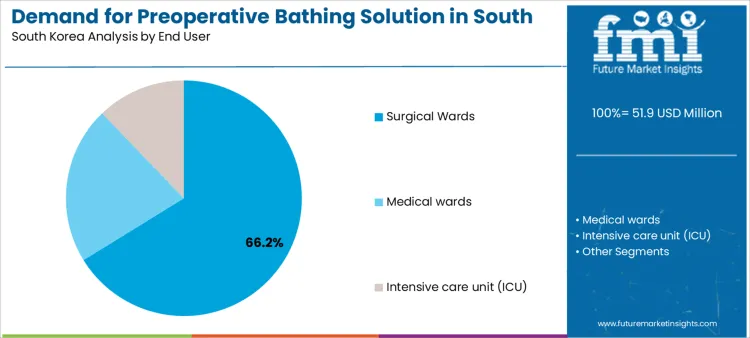
Surgical Wards account for 66.2% of the usage share. Every patient scheduled for an operation represents a mandatory user of these products. High throughput of elective and emergency surgeries in South Korean hospitals ensures a continuous depletion of stock. Nurses in these wards are trained to verify patient compliance with bathing protocols, often administering the final wash themselves if necessary. Focus on sterile fields for procedures involving abdominal cosure systems means that skin preparation cannot be compromised. Consequently, surgical departments remain the largest budget holders for infection control consumables, driving the majority of sales volume.
Will the Expansion of Convenience Products Redefine Future Sales?
Usage of pre-impregnated towels and wipes is steadily increasing, challenging the dominance of liquid soaps. These products offer a standardized dose of antiseptic, reducing variability in application. Busy nursing staff appreciate the time savings offered by surgical scrub data suggests a shift towards these ready-to-use formats. While currently more expensive, the reduction in preparation time and cross-contamination risk makes them attractive. Manufacturers are promoting these as premium alternatives for high-risk patients. Continued improvement in wipe material technology to ensure better skin coverage without irritation could see this segment capture a larger share of the budget.
How Do Regulatory Frameworks Impact Design?
Stringent regulations regarding biocide safety heavily influence product development. Korean Ministry of Food and Drug Safety (MFDS) requires rigorous testing for any product making antiseptic claims. This ensures that only high-quality hospital surgical disinfectant agents reach the patient. Companies must invest in clinical trials to prove that their formulations effectively reduce SSI rates without causing adverse dermatological reactions. Compliance with these standards acts as a barrier to entry for low-quality generic competitors. It also drives innovation towards safer, hypoallergenic preservatives and active ingredients, ensuring that the industry moves towards higher safety profiles.
Is the Trend Towards Minimally Invasive Surgery Affecting Demand?
Rise of laparoscopic and robotic surgeries utilizing endoscopic closure systems changes the nature of skin preparation but not the necessity. Smaller incisions still carry infection risks, particularly with multi-port entries. While the surface area for wound wash application might be localized, systemic decolonization remains a best practice. Use of hemostats for wound closure in these procedures requires a sterile environment to function correctly. Therefore, the shift towards minimally invasive techniques sustains demand for preoperative bathing, emphasizing the need for whole-body cleansing to prevent translocation of bacteria to instrument insertion sites.
How is the Landscape Evolving Across South Korea's Regions?
Regional demand patterns reflect the distribution of healthcare resources and the specific medical focus of each province. While Seoul remains the hub for complex surgeries, provincial regions are upgrading their infection control standards. Local governments are funding improvements in public hospitals, bringing advanced hygiene protocols to rural areas.
| Region | CAGR (2026 to 2036) |
|---|---|
| Jeju | 4.4% |
| South Gyeongsang | 3.9% |
| South Jeolla | 3.5% |
| North Jeolla | 3.0% |
Why is the Medical Tourism Sector in Jeju Driving Rapid Growth?
Adoption of preoperative solutions in Jeju is projected to expand at a CAGR of 4.4%. Jeju's status as a medical tourism destination attracts international patients seeking cosmetic and orthopedic procedures. Clinics catering to this clientele prioritize premium infection control measures to maintain their global reputation. High-end therapeutic device utilization in these facilities necessitates rigorous skin preparation. Demand is further bolstered by the island's focus on wellness and health, where patients expect top-tier service standards. This unique mix of tourism and private healthcare drives higher per-patient spending on consumables.
How is Industrial Safety in South Gyeongsang Influencing Sales?
Sales of antiseptic products in South Gyeongsang are likely to reach a CAGR of 3.9%. Heavy industries in this region result in a steady stream of trauma and orthopedic surgeries related to occupational injuries. Hospitals treating these cases require robust infection prevention due to the high risk of contamination in industrial accidents. Regional medical centers are adopting stricter protocols to ensure quick recovery and return-to-work for the labor force. This industrial backdrop ensures a consistent need for effective preoperative bathing solutions to manage surgical risks associated with trauma care.
What Specific Factors Drive Demand in South Jeolla?
Expansion in South Jeolla is anticipated to rise at a CAGR of 3.5%. Aging demographics in this province lead to a high volume of joint replacement and cataract surgeries. These elective procedures are critical for the quality of life of the elderly population. Geriatric patients are more susceptible to infections, prompting hospitals to enforce rigorous preoperative hygiene. Public health initiatives targeting senior care are subsidizing necessary medical supplies. Consequently, local hospitals are stocking up on gentle, skin-friendly antiseptic solutions tailored for older skin, sustaining regional growth.
Why is North Jeolla Modernizing its Hygiene Protocols?
Deployment of infection control supplies in North Jeolla is expected to increase at a CAGR of 3.0%. University hospitals in the region are spearheading the modernization of surgical protocols. There is a concerted effort to bring infection rates in line with national averages through the adoption of standardized bathing kits. Education programs for patients in rural communities are improving compliance with pre-surgery instructions. While growth is moderate, it represents a fundamental shift towards evidence-based practice in the region's healthcare institutions.
What Strategic Initiatives Define Market Leadership?
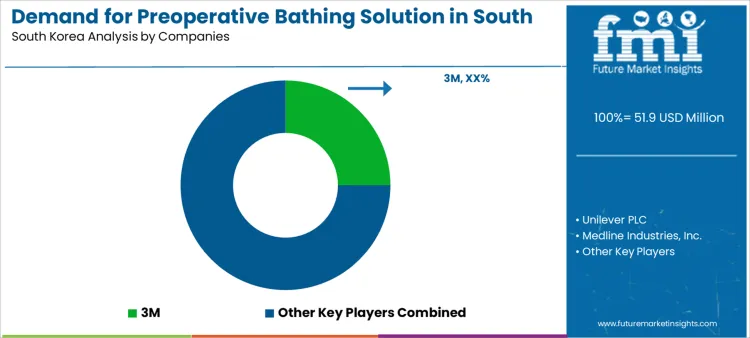
3M holds a dominant position with a 25.0% share, leveraging its globally recognized Avagard and Cavilon brands. Its strategy focuses on clinical education, providing hospitals with comprehensive training modules on SSI prevention. 3M invests heavily in R&D to create products that combine rapid kill rates with long-lasting protection. Competitors like Unilever and Medline are challenging this by offering cost-effective bulk solutions and integrated hygiene kits. They often bundle bathing products with other surgical disposables to secure hospital-wide contracts. Local distributors play a crucial role in navigating hospital procurement tenders, often partnering with global brands to ensure timely delivery and service.
How Are Global Players Adapting to Local Needs?
International companies are tailoring their formulations to suit Korean skin types and preferences. There is a focus on reducing the harshness of CHG solutions while maintaining efficacy. Marketing materials are localized to emphasize patient safety and comfort, resonating with Korean cultural values regarding hygiene. Strategic partnerships with major Korean hospital groups allow these firms to conduct pilot studies and gather real-world evidence. This data-driven approach helps in convincing hospital administrators of the long-term cost savings associated with using premium preoperative bathing products.
Key Companies
- 3M
- Unilever PLC
- Medline Industries, Inc.
- BD (Becton, Dickinson and Company)
- Stryker
Scope of Report
| Items | Values |
|---|---|
| Quantitative Units | USD Million |
| Product Type | Bath Solutions/Liquid Soaps, Towels and wipes, Shampoo caps, Scrub brushes |
| End User | Surgical Wards, Medical wards, Intensive care unit (ICU) |
| Regions Covered | Jeju, South Gyeongsang, South Jeolla, North Jeolla |
| Key Companies Profiled | 3M, Unilever, Medline, BD, Stryker |
Demand for Preoperative Bathing Solution in South Korea by Segments
By Product Type
- Bath Solutions/Liquid Soaps
- Towels and wipes
- Shampoo caps
- Scrub brushes
By End User
- Surgical Wards
- Medical wards
- Intensive care unit (ICU)
Bibliography
- Korean Society for Healthcare-associated Infection Control and Prevention. (2024, February). Guidelines for prevention of surgical site infection (SSI). Korean Society for Healthcare-associated Infection Control and Prevention.
- Ministry of Food and Drug Safety. (2025, December 22). Food and drug statistical yearbook 2025 (No. 27). Ministry of Food and Drug Safety, Republic of Korea.
- Health Insurance Review and Assessment Service. (2024, December 31). Medical expense statistical indicators. Health Insurance Review and Assessment Service, Republic of Korea.
- Statistics Korea. (2025, September 24). Causes of death statistics results for 2024. Statistics Korea, Republic of Korea.
- Health Insurance Review and Assessment Service. (2025, August 28). 2024 reimbursed medical materials claims status dataset. Health Insurance Review and Assessment Service, Republic of Korea.
Frequently Asked Questions
How big is the demand for Preoperative Bathing Solution in South Korea in 2026?
The demand for Preoperative Bathing Solution in South Korea is estimated to be valued at USD 51.9 million in 2026.
What will be the size of Preoperative Bathing Solution in South Korea in 2036?
The industry size for the Preoperative Bathing Solution in South Korea is projected to reach USD 74.7 million by 2036.
How much will be the demand for Preoperative Bathing Solution in South Korea growth between 2026 and 2036?
The demand for Preoperative Bathing Solution in South Korea is expected to grow at a 3.7% CAGR between 2026 and 2036.
What are the key product types in the Preoperative Bathing Solution in South Korea?
The key product types in Preoperative Bathing Solution in South Korea are Bath Solutions/Liquid Soaps and Towels and wipes.
Which end user segment is expected to contribute significant share in the Preoperative Bathing Solution in South Korea in 2026?
By end user, surgical wards segment is expected to command 66.2% share in the Preoperative Bathing Solution in South Korea in 2026.
Preview the report firsthand - request a free sample
Get SampleGet the brochure for pricing and purchase details.
Get PDFTable of Content
- Executive Summary
- South Korea Market Outlook
- Demand-side Trends
- Supply-side Trends
- Technology Roadmap Analysis
- Analysis and Recommendations
- Market Overview
- Market Coverage / Taxonomy
- Market Definition / Scope / Limitations
- Market Background
- Market Dynamics
- Drivers
- Restraints
- Opportunity
- Trends
- Scenario Forecast
- Demand in Optimistic Scenario
- Demand in Likely Scenario
- Demand in Conservative Scenario
- Opportunity Map Analysis
- Product Life Cycle Analysis
- Supply Chain Analysis
- Investment Feasibility Matrix
- Value Chain Analysis
- PESTLE and Porter’s Analysis
- Regulatory Landscape
- Regional Parent Market Outlook
- Production and Consumption Statistics
- Import and Export Statistics
- Market Dynamics
- South Korea Market Analysis 2021 to 2025 and Forecast, 2026 to 2036
- Historical Market Size Value (USD Million) Analysis, 2021 to 2025
- Current and Future Market Size Value (USD Million) Projections, 2026 to 2036
- Y-o-Y Growth Trend Analysis
- Absolute $ Opportunity Analysis
- South Korea Market Pricing Analysis 2021 to 2025 and Forecast 2026 to 2036
- South Korea Market Analysis 2021 to 2025 and Forecast 2026 to 2036, By Product Type
- Introduction / Key Findings
- Historical Market Size Value (USD Million) Analysis By Product Type , 2021 to 2025
- Current and Future Market Size Value (USD Million) Analysis and Forecast By Product Type , 2026 to 2036
- Bath Solutions/Liquid Soaps
- Towels and wipes
- Shampoo caps
- Scrub brushes
- Bath Solutions/Liquid Soaps
- Y-o-Y Growth Trend Analysis By Product Type , 2021 to 2025
- Absolute $ Opportunity Analysis By Product Type , 2026 to 2036
- South Korea Market Analysis 2021 to 2025 and Forecast 2026 to 2036, By End User
- Introduction / Key Findings
- Historical Market Size Value (USD Million) Analysis By End User, 2021 to 2025
- Current and Future Market Size Value (USD Million) Analysis and Forecast By End User, 2026 to 2036
- Surgical Wards
- Medical wards
- Intensive care unit (ICU)
- Surgical Wards
- Y-o-Y Growth Trend Analysis By End User, 2021 to 2025
- Absolute $ Opportunity Analysis By End User, 2026 to 2036
- Market Structure Analysis
- Competition Dashboard
- Competition Benchmarking
- Market Share Analysis of Top Players
- By Regional
- By Product Type
- By End User
- Competition Analysis
- Competition Deep Dive
- 3M
- Overview
- Product Portfolio
- Profitability by Market Segments (Product/Age /Sales Channel/Region)
- Sales Footprint
- Strategy Overview
- Marketing Strategy
- Product Strategy
- Channel Strategy
- Unilever PLC
- Medline Industries, Inc.
- BD (Becton, Dickinson and Company)
- Stryker
- 3M
- Competition Deep Dive
- Assumptions & Acronyms Used
- Research Methodology


