

- Industry Size (2026)
- USD 8.23 Bn
- Forecast (2036)
- USD 14.06 Bn
- CAGR (2026 to 2036)
- 5.5%
Tea and Coffee Bags Market Size, Market Forecast and Outlook By FMI
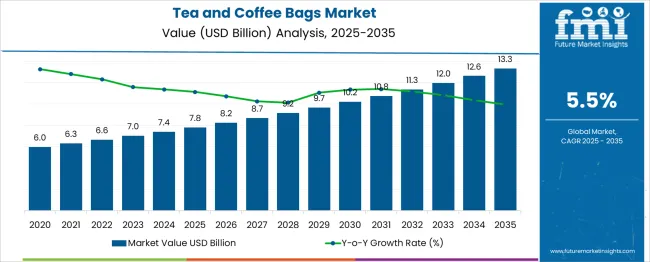
The tea and coffee bags market was valued at USD 3.12 billion in 2025, projected to reach USD 8.23 billion in 2026, and is forecast to expand to USD 14.06 billion by 2036 at a 5.5% CAGR. The absolute dollar expansion over the forecast period reflects volume growth in single-serve convenience formats and material cost inflation driven by the sustainability transition. Tea bags dominate the category with over 71% share, but coffee bags represent the faster-growing segment as single-serve coffee pouches gain traction as an alternative to capsule systems with lower packaging waste per serving. Paper-based bag materials hold majority share, though premium mesh and pyramid bag formats using nylon or compostable PLA fibres command higher per-unit pricing.
As per FMI, the tea and coffee bags market operates at the intersection of beverage convenience, packaging sustainability, and retail shelf management. Supermarkets and hypermarkets remain the dominant distribution channel, but online retail is growing rapidly as subscription-based tea and coffee delivery services drive repeat purchase volumes. Specialty stores serve as the entry point for premium and single-origin products that later migrate to mass retail once trial volumes establish demand.
All major regional markets reflect differentiated growth trajectories. China at 7.4%, India at 6.9%, Germany at 6.3%, France at 5.8%, UK at 5.2%, USA at 4.7%, Brazil at 4.1%. China sets the pace driven by expanding end-use consumption, while mature markets such as USA and Brazil register steadier growth sustained by established supply chains and replacement demand cycles.
Summary of Tea and Coffee Bags Market
- Tea and Coffee Bags Market Definition
- Tea and coffee bags are single-use or limited-use porous packaging formats designed to contain measured portions of tea leaves, herbal blends, or ground coffee for immersion brewing in hot water. The category includes flat paper tea bags, pyramid mesh tea bags, round tea bags, drip coffee bags, and immersion coffee pouches, manufactured from paper, nylon, silk, PLA, or blended filter materials.
- Demand Drivers in the Market
- Compostable bag material transition: Extended producer responsibility regulations in the EU, UK, and Canada are driving rapid adoption of industrially compostable bag materials based on PLA (polylactic acid) and cellulose-based heat-seal fibres.
- Single-serve coffee bag format emergence: Drip coffee bags and immersion coffee pouches are capturing market share from aluminium capsule systems as environmentally conscious consumers seek lower-waste single-serve brewing options.
- Pyramid and mesh premium format growth: Premium tea brands are migrating from flat paper bags to pyramid and mesh formats that allow whole-leaf and large-cut tea to expand fully during brewing.
- Key Segments Analyzed in the FMI Report
- Tea Bags: 71.4% share in 2026 by Product Type.
- Paper: 52.7% share in 2026 by Material.
- China: 7.4% compound growth, the fastest among tracked countries.
- Analyst Opinion at FMI
- The tea and coffee bags market is entering a forced material transition that will separate winners from losers over the next five years. Manufacturers who have already qualified compostable heat-seal substrates and retooled sealing lines will capture share from competitors still running petroleum-based nylon systems that face regulatory phase-out in the EU by 2030. The coffee bag segment is the underappreciated growth vector, with drip and immersion formats offering a lower-waste alternative to capsule systems that appeals to environmentally motivated consumers without sacrificing single-serve convenience. The key risk for bag converters is qualification timeline: switching from nylon to PLA sealing requires 6 to 12 months of machine recalibration and shelf-life validation testing.
- Strategic Implications / Executive Takeaways
- Procurement directors must secure multi-year supply agreements with qualified producers to mitigate allocation risk during input cost volatility and seasonal supply fluctuations.
- Capital project planners should evaluate capacity expansion investments against forward contract visibility, prioritizing product grades with the widest margin spread over commodity alternatives.
- Regional market entry strategies must account for regulatory compliance costs and labelling requirements that vary by jurisdiction, creating differentiated barriers to market access across the EU, United States, China, and India.
Tea and Coffee Bags Market Key Takeaways
| Metric | Details |
|---|---|
| Industry Size (2026) | USD 8.23 billion |
| Industry Value (2036) | USD 14.06 billion |
| CAGR (2026 to 2036) | 5.5% |
Source: Future Market Insights, 2026
Tea and Coffee Bags Market Definition
Tea and coffee bags are single-use or limited-use porous packaging formats designed to contain measured portions of tea leaves, herbal blends, or ground coffee for immersion brewing in hot water. The category includes flat paper tea bags, pyramid mesh tea bags, round tea bags, drip coffee bags, and immersion coffee pouches, manufactured from paper, nylon, silk, PLA, or blended filter materials.
Tea and Coffee Bags Market Inclusions
The report covers global and regional market sizes for tea and coffee bags from 2026 to 2036. Segment analysis includes product type (tea bags, coffee bags), material (paper, nylon, silk, others), and distribution channel (supermarkets and hypermarkets, online retail, specialty stores, convenience stores). Regional coverage spans North America, Latin America, Europe, East Asia, South Asia, Oceania, and Middle East and Africa.
Tea and Coffee Bags Market Exclusions
The scope excludes loose-leaf tea and whole-bean coffee sold without bag packaging. Coffee capsules and pods designed for machine-based brewing systems are excluded. Industrial-scale tea bag packing machinery and converting equipment fall outside the analytical boundary.
Tea and Coffee Bags Market Research Methodology
- Primary Research: Analysts conducted structured interviews with procurement directors, formulation engineers, and distribution channel managers to map decision triggers for product specification changes and supplier qualification processes.
- Desk Research: Data collection aggregated regulatory filings, trade association publications, company annual reports, and public procurement records to establish the documentary evidence base for market sizing inputs.
- Market-Sizing and Forecasting: Baseline market values derive from a bottom-up aggregation of production volumes, trade flow data, and end-use consumption estimates, with regional adjustment factors applied to account for pricing differentials across geographies.
- Data Validation and Update Cycle: Projections are cross-validated against publicly reported financial disclosures from leading producers and quarterly trade data releases from national statistical agencies.
Why is the Tea and Coffee Bags Market Growing?
The tea and coffee bags market is witnessing consistent growth as consumer demand shifts toward convenience-oriented and sustainable beverage solutions. Rising health consciousness, premiumization of tea and coffee offerings, and the increasing preference for single-serve formats are contributing to robust adoption globally.
Companies are focusing on innovative flavors, biodegradable materials, and visually appealing packaging to attract modern consumers who value both quality and environmental responsibility. The market is also being supported by expanding retail penetration and the emergence of specialty tea and coffee shops that promote bagged formats as an accessible luxury.
Future expansion is anticipated to be driven by material innovations, regulatory pressure for sustainable packaging, and growing consumption in emerging economies, which are paving the way for diversified offerings and greater brand differentiation.
Segmental Analysis
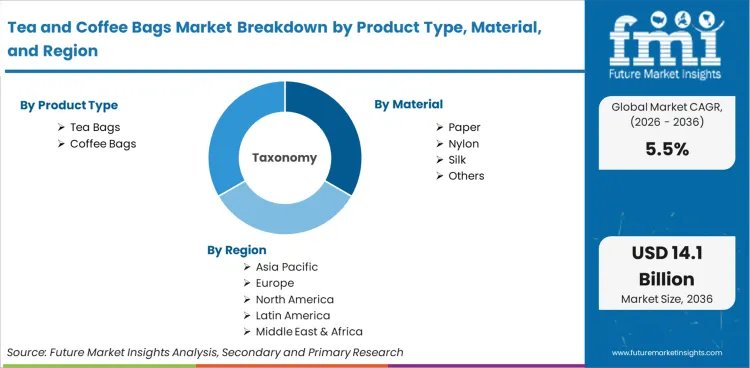
The tea and coffee bags market is segmented by product type, material, distribution channel, and geographic regions. The tea and coffee bags market is divided by product type into Tea Bags and Coffee Bags. In terms of the material of the tea and coffee bags market, it is classified into Paper, Nylon, Silk, and Others (biodegradable, PLA, etc.). The distribution channel of the tea and coffee bags market is segmented into Supermarkets/Hypermarkets, Online Retail, Specialty Stores, and Convenience Stores. Regionally, the tea and coffee bags industry is classified into North America, Latin America, Western Europe, Eastern Europe, Balkan & Baltic Countries, Russia & Belarus, Central Asia, East Asia, South Asia & Pacific, and the Middle East & Africa.
Insights into the Tea Bags Product Type Segment
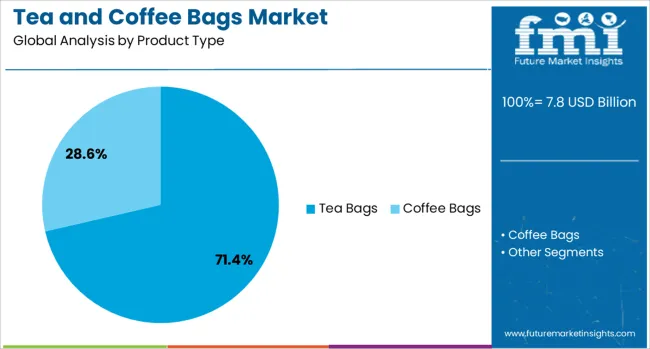
When segmented by product type, tea bags are expected to hold 71.40% of the total market revenue in 2026, solidifying their dominance in the category. This leadership is being reinforced by their longstanding association with convenience, portion control, and ease of preparation, which continue to appeal to a broad consumer base.
Manufacturers have enhanced the appeal of tea bags through premium infusions, pyramid-shaped designs for better infusion, and the use of natural, compostable materials. Their ability to cater to both traditional and modern consumer preferences, while supporting efficient production and packaging processes, has maintained their superior market share.
Widespread acceptance across both household and commercial channels has further anchored tea bags as the preferred choice in the product category.
Insights into the Paper Material Segment
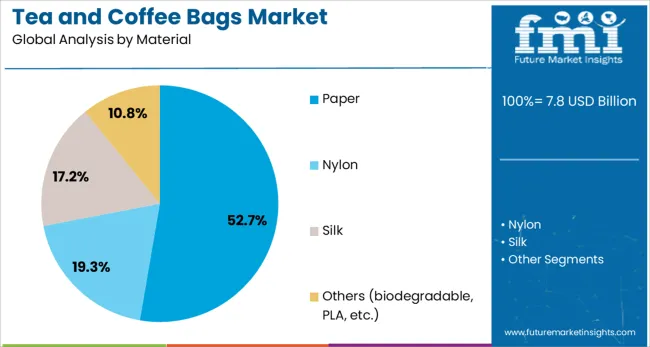
In terms of material, paper is projected to account for 52.7% of the tea and coffee bags market revenue in 2026, affirming its position as the leading material segment. This dominance is being driven by the perception of paper as a natural, breathable, and biodegradable material that aligns with growing sustainability concerns.
Advances in food-grade paper technologies have improved strength and filtration performance, making paper a practical and eco-friendly choice. The material’s cost-effectiveness, along with regulatory compliance advantages over synthetic alternatives, has bolstered its widespread use.
Additionally, the ability of paper to convey a premium, organic image while maintaining functionality has further solidified its adoption across premium and mass-market offerings alike.
Insights into the Supermarkets/Hypermarkets Distribution Channel Segment
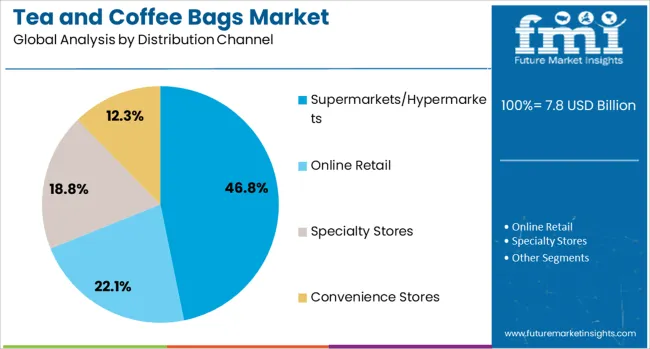
When segmented by distribution channel, supermarkets and hypermarkets are forecast to capture 46.8% of the market revenue in 2026, reinforcing their leadership in this domain. This prominence is supported by their ability to offer a wide range of products, competitive pricing, and immediate product availability to a diverse consumer base.
The visibility of tea and coffee bags on shelves, coupled with promotional activities and private-label offerings, has amplified consumer access and engagement in these retail environments. The convenience of one-stop shopping, combined with the trust consumers place in established retail chains, has sustained their dominance in distributing these products.
Their extensive geographic reach and capacity to support product launches and marketing initiatives at scale have further entrenched their position as the primary channel for tea and coffee bag sales.
What are the Drivers, Restraints, and Key Trends of the Tea and Coffee Bags Market?
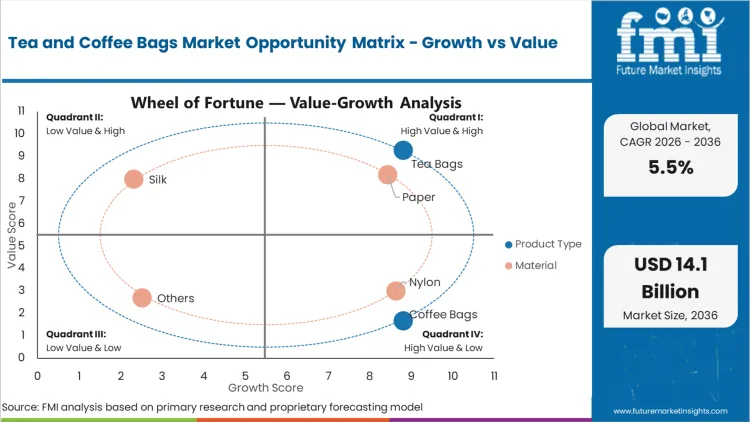
Tea and coffee bags are single-serve sachets filled with processed tea leaves or ground coffee, enclosed in filter paper, cloth, or bio-based material. These products provide convenient brewing, controlled infusion, and portion consistency. They are widely used in households, offices, hospitality venues, and retail single‑cup formats. Demand is driven by the need for ease of use, hygiene, and consistent taste. Manufacturers offering biodegradable, strong filter media and easy-tear sachets are well placed to meet home and commercial requirements. Products enabling mess-free brewing and steady extraction efficiency are affecting purchase decisions among consumers, foodservice operators, and specialty beverage brands.
Convenience and Quality Consistency Fuel Growth
Growth in tea and coffee bag usage has been supported by rising consumer preference for convenient beverage preparation and reliable flavor results. Single-serve applications in offices, hotels, and quick-service restaurants have expanded demand. Demand for consistent brewing results without loose-leaf handling has reinforced adoption of pre-measured sachets. Quality expectation has increased for even extraction, drip-free operation, and drip resistance in high-volume settings. Packaging design offering easy opening, shelf stability, and aroma preservation has strengthened product appeal. Channels such as premium instant beverage offerings and small-format retail packs have stimulated usage in household and out-of-home segments. Preference for hygienic single-use sachets has become a key buying requirement in foodservice and hospitality environments.
Raw Material Costs and Regulatory Requirements Restrict Expansion
Expansion has been constrained by variability in filter media cost, such as biodegradable papers, polymer blends, and woven substrates, which affect final pricing. High-grade filter and bag materials often result in elevated retail price compared to loose alternatives. Regulatory scrutiny over food contact safety and permitted material composition complicates product approval processes, particularly for new filter substrates. Packaging waste concerns in regulated markets have raised design and material compliance burdens. Instances of inconsistent brewing performance due to bag permeability or seal issues have reduced confidence among quality-sensitive buyers. Fluctuations in supply of compostable or bio-based film materials have disrupted manufacturing continuity and increased lead times for new product launches.
Private‑Label Supply Channels Open New Possibilities
Opportunities are emerging in expanded use of compostable filter bags and recycled or plant-fiber based packaging formats, which appeal to eco‑aware buyers. Development of customizable sachets sized for specific brewing volumes or flavor strength offers innovative product variants. Private-label partnerships with hotel chains, specialty coffee firms, and tea retailers provide recurring sourcing opportunities. Bulk sachet formats for institutional use in offices, hospitality, and airline service are creating stable demand pools. Subscription offerings for home delivery of curated tea or coffee bag selections are encouraging recurring sales. Co‑branding initiatives between beverage producers and packaging suppliers are enabling tailored sachet designs and functional enhancements such as aroma locks or packaging perforations for controlled opening.
Multi Layer Filter Media and Aromam Preserving Design Shape Market Direction
Adoption of multi-layer filter media combining fine mesh, reinforcing fibers, and aroma-preserving layers has driven product evolution. Sachets with internal filters that deliver drip-control and even infusion are increasingly accepted in premium segments. Introduction of heat‑seal or ultrasonic-welded seals ensures better containment and reduced contamination risk. Formats offering peel-open sachets, tearing guides, and portion pods are growing in retail and hospitality contexts. Interest in aroma-lock barriers and resealable pouch systems is rising in packaged beverage kits. Single-serve filter bags infused with botanical extracts or flavoured blends have appeared. Consumer demand for traceable origins, single-serve convenience, and performance consistency is guiding supplier development of next‑generation tea and coffee bag products.
Analysis of Tea and Coffee Bags Market By Key Countries
.webp "Top Country Growth Comparison Tea And Coffee Bags Market Cagr (2026 2036)")
| Country | CAGR |
|---|---|
| China | 7.4% |
| India | 6.9% |
| Germany | 6.3% |
| France | 5.8% |
| UK | 5.2% |
| USA | 4.7% |
| Brazil | 4.1% |
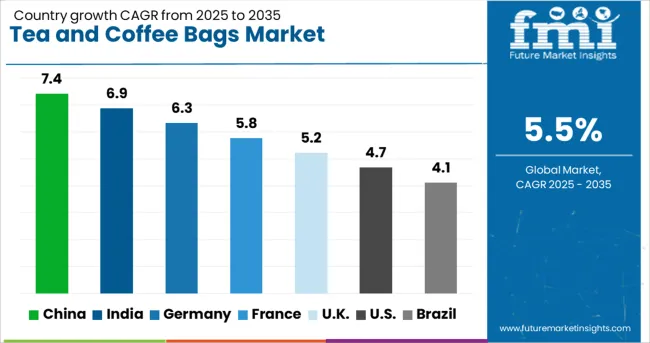
The tea and coffee bags market is projected to expand at a CAGR of 5.5% from 2026 to 2036, supported by increasing demand for convenient brewing solutions, premium single-serve packaging, and growing consumption of specialty beverages. China, part of BRICS, leads with 7.4% CAGR, driven by a surge in tea exports and adoption of innovative packaging for premium teas. India, also within BRICS, follows at 6.9% CAGR, benefiting from rising domestic consumption and product diversification across herbal and specialty tea categories. Among OECD economies, Germany posts 6.3%, with strong emphasis on organic tea bags and coffee pods for retail and horeca channels. France records 5.8%, driven by premiumization trends and growing consumer preference for eco-friendly tea and coffee packaging. The United Kingdom, another OECD member, grows at 5.2%, shaped by high adoption of convenience-oriented tea bags and specialty coffee bags for on-the-go consumers. The report includes an analysis of over 40 countries, with five profiled below for reference.
Sales Analysis of Tea and Coffee Bags Market in China
China is projected to grow at 7.4% CAGR, led by premium tea bag adoption and strong domestic consumption. Increasing consumer preference for quick-brew options has pushed manufacturers to invest in pyramid bags and flavor-infused teas. The rise of specialty coffee culture is encouraging demand for single-serve coffee bags among younger consumers. Local producers are emphasizing biodegradable filter materials and aroma-lock packaging to enhance freshness and global competitiveness. The expansion of e-commerce platforms like JD.com and Alibaba ensures strong market penetration in both urban and semi-urban regions. Additionally, rising exports of green and specialty teas packaged in innovative bag formats is creating fresh opportunities in Southeast Asia and Europe.
- Pyramid tea bags and premium blends dominate category growth.
- E-commerce drives wider consumer access to tea and coffee bags.
- Export demand for high-value tea formats strengthens market share.
In-depth Analysis of Tea and Coffee Bags Market in India
India is expected to grow at 6.9% CAGR, fueled by strong tea consumption and increasing urban coffee adoption. Herbal, wellness, and flavor-infused tea bags are rapidly gaining popularity, supported by health-conscious buying patterns. Coffee bags are emerging as a convenient substitute for traditional brewing methods in metropolitan regions. Manufacturers are introducing ready-to-brew packs with controlled infusion to meet modern consumer preferences. Organized retail expansion and digital platforms such as Flipkart and Amazon enable efficient last-mile delivery, increasing rural and semi-urban penetration. Export potential for Indian tea packaged in value-added bag formats is also strengthening as global markets demand authenticity and convenience.
- Herbal and flavored tea bags dominate premium tea demand.
- Ready-to-brew coffee bags attract young urban consumers.
- Retail and online platforms improve product accessibility nationwide.
Opportunity Analysis of Tea and Coffee Bags Market in Germany
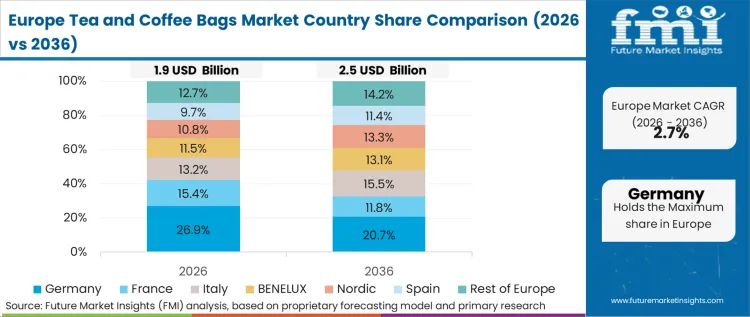
Germany is forecasted to grow at 6.3% CAGR, supported by premium tea bag innovation and specialty coffee bag adoption. The market benefits from growing preference for organic, natural, and high-quality beverage options. Horeca channels extensively use premium tea bags and portion-controlled coffee packs to ensure convenience and consistency. Manufacturers focus on advanced packaging technologies like aroma-sealed filters and moisture-proof pouches to retain product quality. Retail distribution remains strong through supermarkets and organic food chains, while e-commerce accelerates sales of high-value variants. Health-driven consumer trends are boosting demand for herbal teas and functional coffee blends offered in bagged formats.
- Organic and herbal tea bags gain traction in specialty retail.
- Single-serve coffee packs strengthen the horeca channel penetration.
- Advanced filter materials enhance aroma and infusion quality.
Demand Analysis for Tea and Coffee Bags Market in France
France is expected to grow at 5.8% CAGR, driven by gourmet tea preferences and rising coffee bag adoption. Premium tea bags with exotic flavors dominate the retail and hospitality segments, catering to high-end consumers. Coffee bags are gaining attention as an alternative to capsules for sustainable and quick brewing solutions. French manufacturers are prioritizing pyramid-style bags with heat-sealed edges for enhanced flavor release. Supermarkets, specialty tea boutiques, and online platforms dominate distribution, offering both mid-range and luxury options. Increasing urban coffee culture and preference for portion-controlled tea formats provide additional growth opportunities across domestic markets.
- Pyramid-style tea bags lead premium product categories.
- Specialty coffee bags expand retail and horeca distribution channels.
- Online retail improves visibility for premium tea and coffee formats.
Future Outlook for Tea and Coffee Bags Market in the United Kingdom
The United Kingdom is projected to expand at a 5.2% CAGR, supported by convenience-led demand in the tea and coffee bag categories. Traditional tea bags remain dominant, with strong growth in herbal, fruit-infused, and functional blends. Coffee bags continue to attract interest as a home-brewing solution for consumers seeking café-style beverages without machines. Manufacturers focus on resealable pouches and moisture-proof packaging to maintain freshness. Retail supermarkets lead the distribution landscape, while subscription models and e-commerce platforms are gaining popularity for recurring purchases. The premium segment is also expanding as consumers show a willingness to pay for superior taste and quality.
- Herbal and infused tea bags strengthen household adoption rates.
- Convenience-focused coffee bags enhance home brewing experiences.
- Subscription and online models accelerate repeat purchase behavior.
Competitive Landscape of Tea and Coffee Bags Market
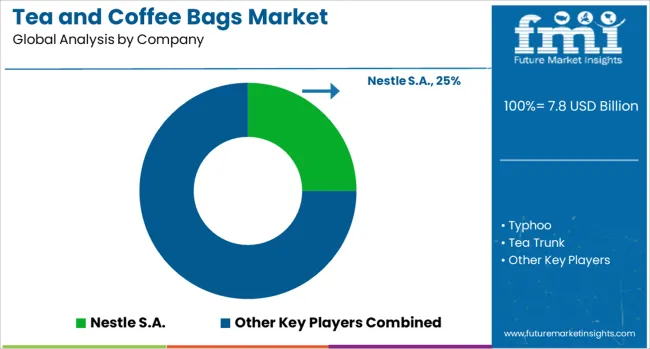
The tea and coffee bags market is highly competitive, featuring global FMCG giants and premium specialty brands such as Nestlé S.A., Unilever (including brands like Tazo and Twinings), Tata Global Beverages (Tata Group), Associated British Foods Plc., and Celestial Seasonings (Hain Celestial Group). These companies dominate through extensive distribution networks, strong brand recognition, and diverse product portfolios spanning traditional teas, herbal blends, and coffee bag formats.
Nestlé and Tata Global Beverages focus on expanding convenience-based coffee and tea solutions, driven by growing demand for on-the-go consumption and single-serve packaging. Unilever leverages its premium and mainstream tea brands such as Lipton, Twinings, and Tazo, combining heritage branding with contemporary flavors to maintain market leadership. Specialty players like Tea Trunk, Tea Box, Kumsi Tea, Betjeman & Barton, Barry’s Tea, and Kazi Tea concentrate on artisanal blends, organic ingredients, and region-specific flavors targeting premium consumers through e-commerce channels.
Competitive differentiation is centered on taste innovation, natural and additive-free formulations, eco-friendly filter materials, and convenience-driven formats such as pyramid bags and compostable packaging. Entry barriers remain moderate, with high competition among niche players and brand-driven customer loyalty influencing purchase decisions. Strategic priorities for major players include portfolio premiumization, digital marketing campaigns, and expansion into health-focused teas like green tea, detox blends, and functional beverages. Future growth will rely on integrating sustainable sourcing practices, biodegradable bag technologies, and cold-brew tea and coffee bag innovations, supported by rising demand for ready-to-brew options across global urban markets.
Scope of the Report
| Metric | Value |
|---|---|
| Quantitative Units | USD 8.23 billion to USD 14.06 billion, at a CAGR of 5.5% |
| Market Definition | Tea and coffee bags are single-use or limited-use porous packaging formats designed to contain measured portions of tea leaves, herbal blends, or ground coffee for immersion brewing in hot water. The category includes flat paper tea bags, pyramid mesh tea bags, round tea bags, drip coffee bags, and immersion coffee pouches, manufactured from paper, nylon, silk, PLA, or blended filter materials. |
| Segmentation | Product Type (Tea Bags, Coffee Bags), Material (Paper, Nylon, Silk, Others), Distribution Channel (Supermarkets/Hypermarkets, Online Retail, Specialty Stores, Convenience Stores) |
| Regions Covered | North America, Latin America, Europe, East Asia, South Asia, Oceania, Middle East and Africa |
| Countries Covered | India, China, USA, Canada, UK, Germany, Japan, France, Brazil, and 40 plus countries |
| Key Companies Profiled | Nestle S.A., Typhoo, Tea Trunk, Barry’s Tea, Celestial Seasonings (Hain Celestial Group), Tea Box, Unilever (Unilever plc), Twining’s, Tata Global Beverages (Tata Group, Tata Chemicals), Tazo Tea Company (Unilever) |
| Forecast Period | 2026 to 2036 |
| Approach | Forecasting models apply a hybrid bottom-up methodology starting with production volume and trade flow metrics, cross-validated against end-use consumption estimates and company financial disclosures. |
Tea and Coffee Bags Market by Segments
Product Type:
- Tea Bags
- Coffee Bags
Material:
- Paper
- Nylon
- Silk
- Others (biodegradable, PLA, etc.)
Distribution Channel:
- Supermarkets/Hypermarkets
- Online Retail
- Specialty Stores
- Convenience Stores
Region:
- North America
- USA
- Canada
- Mexico
- Latin America
- Brazil
- Chile
- Rest of Latin America
- Western Europe
- Germany
- UK
- Italy
- Spain
- France
- Nordic
- BENELUX
- Rest of Western Europe
- Eastern Europe
- Russia
- Poland
- Hungary
- Balkan & Baltic
- Rest of Eastern Europe
- East Asia
- China
- Japan
- South Korea
- South Asia and Pacific
- India
- ASEAN
- Australia & New Zealand
- Rest of South Asia and Pacific
- Middle East & Africa
- Kingdom of Saudi Arabia
- Other GCC Countries
- Turkiye
- South Africa
- Other African Union
- Rest of Middle East & Africa
Bibliography
- 1. European Commission. (2024). Packaging and Packaging Waste Regulation (PPWR): Final Text. European Commission DG Environment.
- 2. International Tea Committee. (2024). Annual Bulletin of Statistics 2024. International Tea Committee.
- 3. International Coffee Organization (ICO). (2025). Coffee Market Report, January 2025. ICO.
- 4. United Kingdom Department for Environment, Food and Rural Affairs (Defra). (2024). Extended Producer Responsibility for Packaging: Statutory Guidance. Defra.
- 5. Unilever plc. (2024). Annual Report 2024: Nutrition Division, Tea Portfolio. Unilever.
This bibliography is provided for reader reference. The full FMI report contains the complete reference list with primary research documentation.
Frequently Asked Questions
How large is the demand for Tea and Coffee Bags in the global market in 2026?
Demand for Tea and Coffee Bags in the global market is estimated to be valued at USD 8.23 billion in 2026.
What will be the market size of Tea and Coffee Bags in the global market by 2036?
Market size for Tea and Coffee Bags is projected to reach USD 14.06 billion by 2036.
What is the expected demand growth for Tea and Coffee Bags between 2026 and 2036?
Demand for Tea and Coffee Bags is expected to grow at a CAGR of 5.5% between 2026 and 2036.
Which Product Type is poised to lead global sales by 2026?
Tea Bags accounts for 71.4% share in 2026, driven by established end-use demand patterns and processing specifications.
How is Paper positioned in the Tea and Coffee Bags market in 2026?
Paper holds 52.7% of segment share in 2026, reflecting concentrated buyer preference across primary distribution and processing channels.
What is driving demand in China?
China is projected to grow at a CAGR of 7.4% during 2026 to 2036, driven by expanding end-use consumption and production capacity investments.
What is the USA growth outlook in this report?
The USA market is projected to expand at a CAGR of 4.7% during 2026 to 2036.
What does the market forecast represent on this page?
The market forecast represents a model-based projection built on defined production, consumption, and trade flow assumptions for strategic planning purposes. FMI applies a hybrid bottom-up methodology cross-validated against company disclosures and public statistical sources.
Preview the report firsthand - request a free sample
Get SampleGet the brochure for pricing and purchase details.
Get PDFTable of Content
- Executive Summary
- Global Market Outlook
- Demand-side Trends
- Supply-side Trends
- Technology Roadmap Analysis
- Analysis and Recommendations
- Market Overview
- Market Coverage / Taxonomy
- Market Definition / Scope / Limitations
- Research Methodology
- Chapter Orientation
- Analytical Lens and Working Hypotheses
- Market Structure, Signals, and Trend Drivers
- Benchmarking and Cross-market Comparability
- Market Sizing, Forecasting, and Opportunity Mapping
- Research Design and Evidence Framework
- Desk Research Programme (Secondary Evidence)
- Company Annual and Sustainability Reports
- Peer-reviewed Journals and Academic Literature
- Corporate Websites, Product Literature, and Technical Notes
- Earnings Decks and Investor Briefings
- Statutory Filings and Regulatory Disclosures
- Technical White Papers and Standards Notes
- Trade Journals, Industry Magazines, and Analyst Briefs
- Conference Proceedings, Webinars, and Seminar Materials
- Government Statistics Portals and Public Data Releases
- Press Releases and Reputable Media Coverage
- Specialist Newsletters and Curated Briefings
- Sector Databases and Reference Repositories
- FMI Internal Proprietary Databases and Historical Market Datasets
- Subscription Datasets and Paid Sources
- Social Channels, Communities, and Digital Listening Inputs
- Additional Desk Sources
- Expert Input and Fieldwork (Primary Evidence)
- Primary Modes
- Qualitative Interviews and Expert Elicitation
- Quantitative Surveys and Structured Data Capture
- Blended Approach
- Why Primary Evidence is Used
- Field Techniques
- Interviews
- Surveys
- Focus Groups
- Observational and In-context Research
- Social and Community Interactions
- Stakeholder Universe Engaged
- C-suite Leaders
- Board Members
- Presidents and Vice Presidents
- R&D and Innovation Heads
- Technical Specialists
- Domain Subject-matter Experts
- Scientists
- Physicians and Other Healthcare Professionals
- Governance, Ethics, and Data Stewardship
- Research Ethics
- Data Integrity and Handling
- Primary Modes
- Tooling, Models, and Reference Databases
- Desk Research Programme (Secondary Evidence)
- Data Engineering and Model Build
- Data Acquisition and Ingestion
- Cleaning, Normalisation, and Verification
- Synthesis, Triangulation, and Analysis
- Quality Assurance and Audit Trail
- Market Background
- Market Dynamics
- Drivers
- Restraints
- Opportunity
- Trends
- Scenario Forecast
- Demand in Optimistic Scenario
- Demand in Likely Scenario
- Demand in Conservative Scenario
- Opportunity Map Analysis
- Product Life Cycle Analysis
- Supply Chain Analysis
- Investment Feasibility Matrix
- Value Chain Analysis
- PESTLE and Porter’s Analysis
- Regulatory Landscape
- Regional Parent Market Outlook
- Production and Consumption Statistics
- Import and Export Statistics
- Market Dynamics
- Global Market Analysis 2021 to 2025 and Forecast, 2026 to 2036
- Historical Market Size Value (USD Million) Analysis, 2021 to 2025
- Current and Future Market Size Value (USD Million) Projections, 2026 to 2036
- Y-o-Y Growth Trend Analysis
- Absolute $ Opportunity Analysis
- Global Market Pricing Analysis 2021 to 2025 and Forecast 2026 to 2036
- Global Market Analysis 2021 to 2025 and Forecast 2026 to 2036, By Product Type
- Introduction / Key Findings
- Historical Market Size Value (USD Million) Analysis By Product Type , 2021 to 2025
- Current and Future Market Size Value (USD Million) Analysis and Forecast By Product Type , 2026 to 2036
- Tea Bags
- Coffee Bags
- Tea Bags
- Y-o-Y Growth Trend Analysis By Product Type , 2021 to 2025
- Absolute $ Opportunity Analysis By Product Type , 2026 to 2036
- Global Market Analysis 2021 to 2025 and Forecast 2026 to 2036, By Material
- Introduction / Key Findings
- Historical Market Size Value (USD Million) Analysis By Material, 2021 to 2025
- Current and Future Market Size Value (USD Million) Analysis and Forecast By Material, 2026 to 2036
- Paper
- Nylon
- Silk
- Others
- Paper
- Y-o-Y Growth Trend Analysis By Material, 2021 to 2025
- Absolute $ Opportunity Analysis By Material, 2026 to 2036
- Global Market Analysis 2021 to 2025 and Forecast 2026 to 2036, By Distribution Channel
- Introduction / Key Findings
- Historical Market Size Value (USD Million) Analysis By Distribution Channel, 2021 to 2025
- Current and Future Market Size Value (USD Million) Analysis and Forecast By Distribution Channel, 2026 to 2036
- Supermarkets/Hypermarkets
- Online Retail
- Specialty Stores
- Convenience Stores
- Supermarkets/Hypermarkets
- Y-o-Y Growth Trend Analysis By Distribution Channel, 2021 to 2025
- Absolute $ Opportunity Analysis By Distribution Channel, 2026 to 2036
- Global Market Analysis 2021 to 2025 and Forecast 2026 to 2036, By Region
- Introduction
- Historical Market Size Value (USD Million) Analysis By Region, 2021 to 2025
- Current Market Size Value (USD Million) Analysis and Forecast By Region, 2026 to 2036
- North America
- Latin America
- Western Europe
- Eastern Europe
- East Asia
- South Asia and Pacific
- Middle East & Africa
- Market Attractiveness Analysis By Region
- North America Market Analysis 2021 to 2025 and Forecast 2026 to 2036, By Country
- Historical Market Size Value (USD Million) Trend Analysis By Market Taxonomy, 2021 to 2025
- Market Size Value (USD Million) Forecast By Market Taxonomy, 2026 to 2036
- By Country
- USA
- Canada
- Mexico
- By Product Type
- By Material
- By Distribution Channel
- By Country
- Market Attractiveness Analysis
- By Country
- By Product Type
- By Material
- By Distribution Channel
- Key Takeaways
- Latin America Market Analysis 2021 to 2025 and Forecast 2026 to 2036, By Country
- Historical Market Size Value (USD Million) Trend Analysis By Market Taxonomy, 2021 to 2025
- Market Size Value (USD Million) Forecast By Market Taxonomy, 2026 to 2036
- By Country
- Brazil
- Chile
- Rest of Latin America
- By Product Type
- By Material
- By Distribution Channel
- By Country
- Market Attractiveness Analysis
- By Country
- By Product Type
- By Material
- By Distribution Channel
- Key Takeaways
- Western Europe Market Analysis 2021 to 2025 and Forecast 2026 to 2036, By Country
- Historical Market Size Value (USD Million) Trend Analysis By Market Taxonomy, 2021 to 2025
- Market Size Value (USD Million) Forecast By Market Taxonomy, 2026 to 2036
- By Country
- Germany
- UK
- Italy
- Spain
- France
- Nordic
- BENELUX
- Rest of Western Europe
- By Product Type
- By Material
- By Distribution Channel
- By Country
- Market Attractiveness Analysis
- By Country
- By Product Type
- By Material
- By Distribution Channel
- Key Takeaways
- Eastern Europe Market Analysis 2021 to 2025 and Forecast 2026 to 2036, By Country
- Historical Market Size Value (USD Million) Trend Analysis By Market Taxonomy, 2021 to 2025
- Market Size Value (USD Million) Forecast By Market Taxonomy, 2026 to 2036
- By Country
- Russia
- Poland
- Hungary
- Balkan & Baltic
- Rest of Eastern Europe
- By Product Type
- By Material
- By Distribution Channel
- By Country
- Market Attractiveness Analysis
- By Country
- By Product Type
- By Material
- By Distribution Channel
- Key Takeaways
- East Asia Market Analysis 2021 to 2025 and Forecast 2026 to 2036, By Country
- Historical Market Size Value (USD Million) Trend Analysis By Market Taxonomy, 2021 to 2025
- Market Size Value (USD Million) Forecast By Market Taxonomy, 2026 to 2036
- By Country
- China
- Japan
- South Korea
- By Product Type
- By Material
- By Distribution Channel
- By Country
- Market Attractiveness Analysis
- By Country
- By Product Type
- By Material
- By Distribution Channel
- Key Takeaways
- South Asia and Pacific Market Analysis 2021 to 2025 and Forecast 2026 to 2036, By Country
- Historical Market Size Value (USD Million) Trend Analysis By Market Taxonomy, 2021 to 2025
- Market Size Value (USD Million) Forecast By Market Taxonomy, 2026 to 2036
- By Country
- India
- ASEAN
- Australia & New Zealand
- Rest of South Asia and Pacific
- By Product Type
- By Material
- By Distribution Channel
- By Country
- Market Attractiveness Analysis
- By Country
- By Product Type
- By Material
- By Distribution Channel
- Key Takeaways
- Middle East & Africa Market Analysis 2021 to 2025 and Forecast 2026 to 2036, By Country
- Historical Market Size Value (USD Million) Trend Analysis By Market Taxonomy, 2021 to 2025
- Market Size Value (USD Million) Forecast By Market Taxonomy, 2026 to 2036
- By Country
- Kingdom of Saudi Arabia
- Other GCC Countries
- Turkiye
- South Africa
- Other African Union
- Rest of Middle East & Africa
- By Product Type
- By Material
- By Distribution Channel
- By Country
- Market Attractiveness Analysis
- By Country
- By Product Type
- By Material
- By Distribution Channel
- Key Takeaways
- Key Countries Market Analysis
- USA
- Pricing Analysis
- Market Share Analysis, 2025
- By Product Type
- By Material
- By Distribution Channel
- Canada
- Pricing Analysis
- Market Share Analysis, 2025
- By Product Type
- By Material
- By Distribution Channel
- Mexico
- Pricing Analysis
- Market Share Analysis, 2025
- By Product Type
- By Material
- By Distribution Channel
- Brazil
- Pricing Analysis
- Market Share Analysis, 2025
- By Product Type
- By Material
- By Distribution Channel
- Chile
- Pricing Analysis
- Market Share Analysis, 2025
- By Product Type
- By Material
- By Distribution Channel
- Germany
- Pricing Analysis
- Market Share Analysis, 2025
- By Product Type
- By Material
- By Distribution Channel
- UK
- Pricing Analysis
- Market Share Analysis, 2025
- By Product Type
- By Material
- By Distribution Channel
- Italy
- Pricing Analysis
- Market Share Analysis, 2025
- By Product Type
- By Material
- By Distribution Channel
- Spain
- Pricing Analysis
- Market Share Analysis, 2025
- By Product Type
- By Material
- By Distribution Channel
- France
- Pricing Analysis
- Market Share Analysis, 2025
- By Product Type
- By Material
- By Distribution Channel
- India
- Pricing Analysis
- Market Share Analysis, 2025
- By Product Type
- By Material
- By Distribution Channel
- ASEAN
- Pricing Analysis
- Market Share Analysis, 2025
- By Product Type
- By Material
- By Distribution Channel
- Australia & New Zealand
- Pricing Analysis
- Market Share Analysis, 2025
- By Product Type
- By Material
- By Distribution Channel
- China
- Pricing Analysis
- Market Share Analysis, 2025
- By Product Type
- By Material
- By Distribution Channel
- Japan
- Pricing Analysis
- Market Share Analysis, 2025
- By Product Type
- By Material
- By Distribution Channel
- South Korea
- Pricing Analysis
- Market Share Analysis, 2025
- By Product Type
- By Material
- By Distribution Channel
- Russia
- Pricing Analysis
- Market Share Analysis, 2025
- By Product Type
- By Material
- By Distribution Channel
- Poland
- Pricing Analysis
- Market Share Analysis, 2025
- By Product Type
- By Material
- By Distribution Channel
- Hungary
- Pricing Analysis
- Market Share Analysis, 2025
- By Product Type
- By Material
- By Distribution Channel
- Kingdom of Saudi Arabia
- Pricing Analysis
- Market Share Analysis, 2025
- By Product Type
- By Material
- By Distribution Channel
- Turkiye
- Pricing Analysis
- Market Share Analysis, 2025
- By Product Type
- By Material
- By Distribution Channel
- South Africa
- Pricing Analysis
- Market Share Analysis, 2025
- By Product Type
- By Material
- By Distribution Channel
- USA
- Market Structure Analysis
- Competition Dashboard
- Competition Benchmarking
- Market Share Analysis of Top Players
- By Regional
- By Product Type
- By Material
- By Distribution Channel
- Competition Analysis
- Competition Deep Dive
- Nestle S.A.
- Overview
- Product Portfolio
- Profitability by Market Segments (Product/Age /Sales Channel/Region)
- Sales Footprint
- Strategy Overview
- Marketing Strategy
- Product Strategy
- Channel Strategy
- Typhoo
- Tea Trunk
- Barry’s Tea
- Celestial Seasonings (Hain Celestial Group)
- Tea Box
- Unilever (Unilever plc)
- Twining’s
- Tata Global Beverages (Tata Group, Tata Chemicals)
- Tazo Tea Company (Unilever)
- Betjeman & Barton
- Associated British Foods Plc.
- Kumsi Tea
- Nestle S.A.
- Competition Deep Dive
- Assumptions & Acronyms Used


