

- Industry Size (2026)
- USD 254 Mn
- Forecast (2036)
- USD 477.9 Mn
- CAGR (2026 to 2036)
- 6.5%
Demand for Automotive Roof Rails in United Kingdom Forecast and Outlook 2026 to 2036
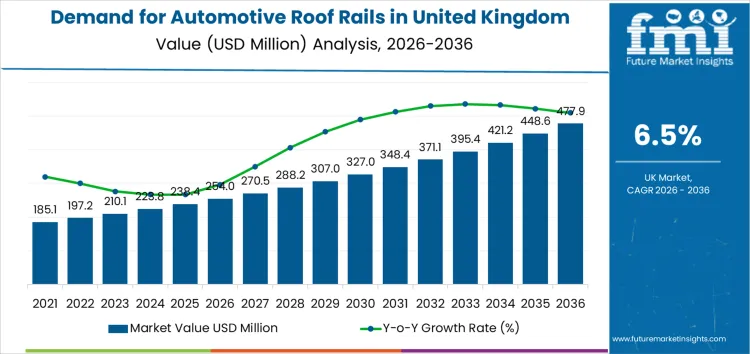
The automotive roof rails market in the United Kingdom is projected to grow from USD 254 million in 2026 to USD 477.9 million by 2036, at a CAGR of 6.5%. This market’s growth is heavily influenced by its concentration in the automotive sector, particularly in vehicle types like SUVs and crossovers, where roof rails are a key feature. End-use dependency on specific vehicle categories means growth will closely track trends in automotive production, with demand fluctuating based on consumer preferences for versatile, spacious vehicles.
Volume stability remains a concern, as production cycles and economic shifts can lead to periods of unpredictability in demand. Manufacturers must navigate these factors while balancing the need for cost efficiency and high product quality. Companies that can secure long-term contracts with automakers and respond flexibly to production changes will be better positioned to ensure steady growth, mitigating risks associated with end-use concentration and market volatility.
Quick Stats for the Demand for Automotive Roof Rails in United Kingdom
- Automotive Roof Rails in United Kingdom Value (2026): USD 254 million
- Automotive Roof Rails in United Kingdom Forecast Value (2036): USD 477.9 million
- Automotive Roof Rails in United Kingdom Forecast CAGR (2026 to 2036): 6.5%
- Automotive Roof Rails in United Kingdom Leading Segment: Passenger Vehicle (70% share)
- Key Growth Regions of Automotive Roof Rails in United Kingdom: England
- Top Players of Automotive Roof Rails in United Kingdom: VDL Hapro B.V., Thule Group, BOSAL, Magna International, Rhino-Rack
What is the Growth Forecast for Automotive Roof Rails in United Kingdom through 2036?
The demand for automotive roof rails in the United Kingdom is projected to rise from USD 254 million in 2026 to USD 477.9 million by 2036, reflecting a compound annual growth rate (CAGR) of 6.5%. Between 2026 and 2031, the industry will experience steady growth, with values increasing from USD 254 million to USD 327 million. From 2031 to 2036, growth will continue, reaching USD 477.9 million by the end of the forecast period.
The contribution of volume vs. price growth indicates that the majority of the industry expansion will come from volume growth, as the demand for SUVs, crossovers, and outdoor-focused vehicles continues to rise. While the increase in price will play a role, particularly in the higher-end segments where premium materials and integrated designs are more prevalent, the volume growth driven by vehicle sales and accessory adoption will account for the bulk of the industry's expansion. The continued shift in consumer preferences towards vehicles that offer both functionality and style will fuel the demand for automotive roof rails, contributing to stable volume-driven growth across the forecast period.
Key Takeaways for Demand for Automotive Roof Rails in United Kingdom
| Metric | Value |
|---|---|
| Industry Sales Value (2026) | USD 254 million |
| Industry Forecast Value (2036) | USD 477.9 million |
| Industry Forecast CAGR (2026 to 2036) | 6.5% |
Why is Demand for Automotive Roof Rails in United Kingdom Growing?
Demand for automotive roof rails in the United Kingdom has strengthened as vehicle manufacturers and aftermarket suppliers responded to changing consumer preferences and functional requirements. Historically, roof rails were fitted mainly on utility vehicles and off road models where they supported carrying loads such as luggage and equipment. Over recent years, UK demand expanded into passenger cars and crossover segments as buyers sought greater versatility for outdoor activities and travel convenience. Roof rails enable attachment of carriers, bike racks, and cargo boxes, which appealed to consumers engaged in recreational pursuits and long distance travel. OEMs (original equipment manufacturers) incorporated roof rails into more trim levels to address these demands, broadening availability beyond traditional SUV lineups. Retailers and accessory suppliers also saw increased interest in aftermarket roof rail kits that enhance vehicle utility without major modifications, reinforcing uptake at the point of sale.
Looking ahead, demand for automotive roof rails in the United Kingdom is expected to continue rising in line with vehicle segment growth and lifestyle trends. The expanding popularity of SUVs and crossovers in the UK fleet supports ongoing uptake, as these vehicles are frequently specified with roof rails for added functionality. Fleet operators, including rental companies and service providers, may choose roof rail equipped models to increase flexibility in vehicle utilization. Manufacturers and tier 1 suppliers assessing product offerings will consider strength, weight, and aerodynamic performance of roof rail designs, valuing materials that balance durability with fuel efficiency. Aftermarket supply chains will benefit from demand for compatible mounting systems and accessories that complement a range of vehicle models. Procurement teams and product planners in automotive OEMs and supplier networks will prioritize roof rail solutions that integrate seamlessly with vehicle architecture and consumer expectations, sustaining long term demand across the UK automotive landscape.
What Are the Key Segments in the Demand for Automotive Roof Rails in the United Kingdom?
Demand for automotive roof rails in the United Kingdom is driven by vehicle type and sales channel. Passenger vehicles lead the vehicle type segment with 70%, while the OEM segment dominates the sales channel segment at 65%. Commercial vehicles and the aftermarket segment also contribute to the industry. These segments reflect the demand for roof rails driven by growing consumer interest in vehicle customization, increased outdoor activity, and the need for enhanced cargo-carrying solutions.
What Is the Vehicle Type Segment of Demand for Automotive Roof Rails in the United Kingdom?
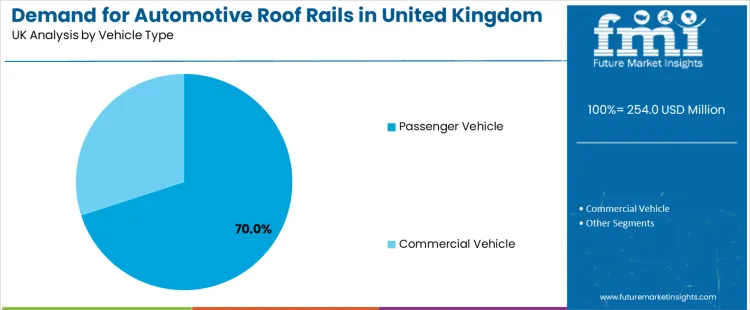
The vehicle type segment for automotive roof rails in the United Kingdom is led by passenger vehicles, which account for 70% of the industry share. Roof rails are particularly popular in passenger vehicles due to their utility in carrying extra luggage, bicycles, or roof boxes, making them ideal for families and individuals who enjoy outdoor activities or need additional storage space. The rising trend of adventure and recreational travel has further fueled the demand for roof rails, as they provide a practical solution for transporting sports equipment, luggage, and other bulky items. Passenger vehicles such as SUVs, crossovers, and station wagons are particularly equipped with roof rails, as these vehicle types are often associated with larger family-oriented or recreational needs.
The demand for roof rails in passenger vehicles is also supported by the growing popularity of vehicle customization, where consumers seek ways to personalize their cars with practical and functional accessories. Commercial vehicles, while representing a smaller segment of the industry, also require roof rails, especially in vans and trucks used for logistics or transport. These vehicles rely on roof rails for added storage capacity and flexibility in carrying large or bulky items. Although passenger vehicles dominate the industry, the use of roof rails in commercial vehicles contributes to the overall demand, driven by their functional benefits in transporting goods and equipment.
What Is the Sales Channel Segment of Demand for Automotive Roof Rails in the United Kingdom?
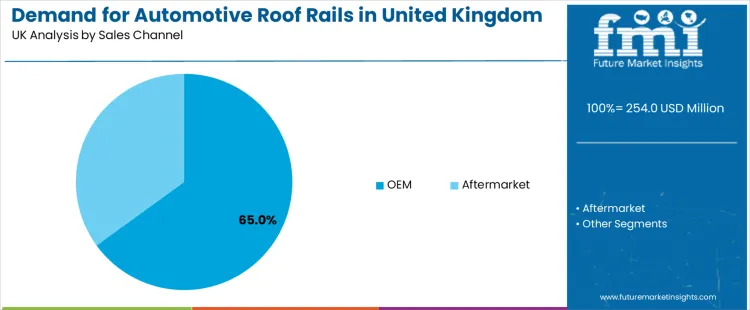
The sales channel segment for automotive roof rails in the United Kingdom is predominantly led by OEM (Original Equipment Manufacturer), which captures 65% of the industry share. OEM roof rails are fitted during the manufacturing process and are specifically designed to meet the vehicle manufacturer’s specifications. OEM products are preferred for their high quality, compatibility, and durability, ensuring that they integrate seamlessly with the vehicle. As consumers increasingly prioritize vehicle functionality and aesthetics, OEM roof rails are seen as a reliable and long-lasting option. The demand for OEM roof rails is particularly high among new vehicle buyers, as these accessories are often included as standard features or as part of optional packages.
The aftermarket segment, while smaller, also plays a crucial role in the demand for roof rails. Aftermarket roof rails are sold through retail outlets, online platforms, and specialized automotive accessory stores, allowing consumers to retrofit their vehicles with roof rails if not originally included or to replace existing ones. Aftermarket options offer more flexibility in terms of style, design, and price point, catering to vehicle owners looking to customize their cars with cost-effective alternatives. While OEM roof rails dominate the industry, the aftermarket continues to contribute to the demand for roof rails, driven by the desire for personalization, replacement parts, and enhanced vehicle functionality. As vehicle customization becomes more popular, both sales channels are expected to see continued demand, with OEM products maintaining their dominance in the new vehicle market.
What are the Key Dynamics in the Demand for Automotive Roof Rails in the United Kingdom?
Demand for automotive roof rails in the United Kingdom is shaped by consumer preferences for utility, versatility, and lifestyle oriented vehicles. Roof rails provide structural support for roof racks, cargo carriers, bike carriers, and luggage systems, enhancing vehicle functionality for outdoor activities and travel. Demand correlates with new vehicle registrations, particularly in SUV, crossover, and estate segments where load carrying capability is valued. Fleet operators in rental, recreational, and commercial transport sectors also influence procurement. Market uptake reflects broader trends in aftermarket accessories and OEM specification of luggage and cargo management systems.
What are the Key Drivers for Automotive Roof Rails Demand in the United Kingdom?
Several factors drive demand for automotive roof rails in the United Kingdom. Growth in SUV and crossover sales supports higher penetration of roof rails, as these body types are often equipped with factory installed or dealer fitted rails. Consumer demand for enhanced cargo flexibility, especially for outdoor sports equipment and family travel, increases accessory adoption. OEMs differentiate models with integrated roof solutions to meet lifestyle expectations. Fleet and lease programs specify roof rails to expand utility for business users. Rising popularity of active lifestyles, cycling, kayaking, and camping correlates with demand for compatible load carrying systems that roof rails enable.
What are the Restraints on Automotive Roof Rails Demand in the United Kingdom?
Despite positive demand drivers, several restraints affect the automotive roof rail market in the United Kingdom. Cost sensitivity among value oriented buyers may limit specification of roof rails at point of sale or during aftermarket installation. Aerodynamic drag and potential impact on fuel efficiency or electric vehicle range can deter some buyers who prioritise energy economy. Vehicle design trends that emphasise sleek profiles may reduce standard roof rail fitment on certain models, limiting availability. Aftermarket supply chain constraints, including lead times for accessories and professional installation capacity, can also temper near term uptake. Regulatory weight and load rating considerations further influence decision making.
What are the Key Trends in Automotive Roof Rails Demand in the United Kingdom?
Key trends shaping demand for automotive roof rails in the United Kingdom include increasing integration of aerodynamic and low profile rail designs that minimise drag and improve vehicle aesthetics. OEMs are offering modular rail systems that support a range of cargo solutions, from bike and ski racks to rooftop tents, enhancing cross sell opportunities. There is growing demand for lightweight materials such as aluminium and high strength polymers that contribute to fuel efficiency and electric vehicle range preservation. Aftermarket innovation in quick attach and tool free mounting systems simplifies consumer installation and expands accessory sales. Fleet and lifestyle oriented marketing positions roof rails as practical enhancements for active users and commercial load carrying applications.
What is the Country-Wise Demand for Automotive Roof Rails in the United Kingdom?
The country-wise demand for automotive roof rails in the United Kingdom reflects regional variations, with England leading the industry. The demand in England is primarily driven by its large automotive sector, where roof rails are used in SUVs, crossovers, and other vehicles to enhance cargo capacity and improve vehicle functionality. Scotland, Wales, and Northern Ireland follow with steady demand, driven by the growing adoption of SUVs and the increasing consumer focus on practicality and versatility in vehicle design. As automotive manufacturers continue to innovate and produce more versatile vehicles, the demand for roof rails is expected to rise across all regions. England remains the dominant market, but growth is expected in all areas due to expanding vehicle production and consumer preferences for functional vehicle accessories.
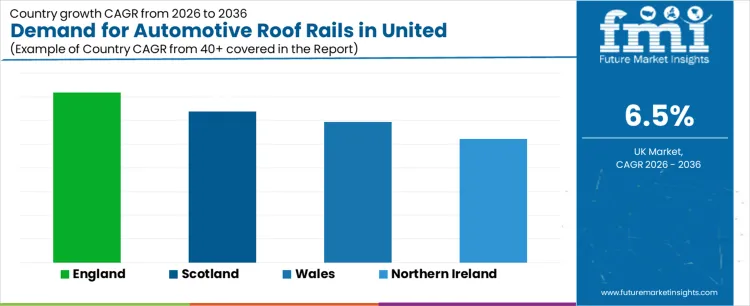
| Country | CAGR (2026 to 2036) |
|---|---|
| England | 7.2% |
| Scotland | 6.4% |
| Wales | 5.9% |
| Northern Ireland | 5.2% |
What is Driving the Demand for Automotive Roof Rails in England?
The demand for automotive roof rails in England is projected to grow at a CAGR of 7.2% from 2026 to 2036. England’s large and mature automotive market, particularly in the SUV and crossover segments, is a major driver of this demand. Roof rails provide enhanced cargo capacity and versatility for vehicles, making them a popular choice among consumers seeking practicality in their vehicle design. The increasing popularity of SUVs, particularly in the family and adventure vehicle categories, is driving the demand for roof rails, as they are commonly used for carrying luggage, bicycles, and other large items. Additionally, as automakers continue to prioritize vehicle functionality and design, the need for high-quality roof rails is expected to rise. England’s automotive manufacturing sector and consumer preference for versatile, functional vehicles will ensure continued growth in the demand for automotive roof rails.
How is the Demand for Automotive Roof Rails Performing in Scotland?
In Scotland, the demand for automotive roof rails is expected to grow at a CAGR of 6.4% from 2026 to 2036. The rise in popularity of SUVs and crossovers in Scotland, coupled with a growing focus on vehicle practicality and versatility, is driving the demand for roof rails. As more consumers opt for SUVs for both urban and outdoor use, the need for roof rails as a means of increasing cargo capacity has risen. The outdoor and adventure culture in Scotland further supports this trend, as roof rails are often used to carry sports equipment like bikes and kayaks. The demand for roof rails is also fueled by an increasing consumer interest in multifunctional vehicles that can meet both everyday and recreational needs. As automotive manufacturers adapt to these preferences, the demand for automotive roof rails in Scotland is expected to remain strong.
What Are the Growth Drivers for Automotive Roof Rails in Wales?
The demand for automotive roof rails in Wales is projected to grow at a CAGR of 5.9% through 2036. The increasing adoption of SUVs and family vehicles in Wales is a significant factor driving this demand. Consumers are increasingly seeking vehicles that offer enhanced functionality and flexibility, and roof rails provide a convenient solution for transporting large or bulky items. Additionally, Wales’ emphasis on outdoor activities and recreational sports, such as hiking and cycling, contributes to the demand for roof rails, as they are essential for carrying sporting equipment. The growing popularity of multifunctional vehicles that combine practicality with style is expected to sustain the demand for roof rails. As Welsh consumers continue to prioritize versatility and convenience in vehicle design, the automotive roof rail market is set to see continued growth.
What is the Outlook for Automotive Roof Rails Demand in Northern Ireland?
Northern Ireland’s demand for automotive roof rails is expected to grow at a CAGR of 5.2% from 2026 to 2036. While Northern Ireland represents a smaller market for automotive roof rails compared to other parts of the United Kingdom, steady growth is anticipated, driven by increasing vehicle customization and demand for practical accessories. The rise in popularity of SUVs, which often feature roof rails as standard or optional equipment, is fueling this demand. In Northern Ireland, where outdoor and recreational activities like cycling and hiking are popular, roof rails are seen as essential for transporting equipment. As consumers in Northern Ireland continue to seek versatile and functional vehicles, the demand for automotive roof rails is expected to grow steadily, especially as automakers enhance vehicle designs to accommodate the needs of active lifestyles.
What is the Competitive Landscape for Demand for Automotive Roof Rails in the United Kingdom?
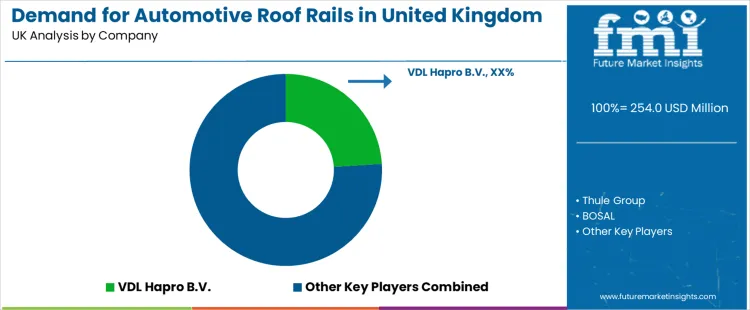
Demand for automotive roof rails in the United Kingdom is influenced by trends in passenger vehicle customization, fleet outfitting for utility use, and consumer demand for additional load carrying capacity. Procurement teams in automotive assembly plants and aftermarket distributors specify roof rail systems based on documented load ratings, corrosion resistance data, and compatibility with vehicle roof profiles. VDL Hapro B.V. is positioned as a leading supplier, with product brochures that list engineered material specifications, documented dynamic load performance values, and fitted weight capacities.
These materials are referenced by OEM engineers and technical buyers during supplier evaluations. Thule Group competes with roof rail systems supported by detailed documentation on aerodynamic properties, attachment interfaces, and documented fatigue testing results. Buyers examine these documents to align product attributes with use cases such as luggage carriers, bike mounts, and cargo boxes.
Bosal supplies roof rail modules with technical literature that outlines stamped component dimensions, mounting hardware specifications, and documented compliance with vehicle safety standards. Automotive engineers and procurement professionals in the United Kingdom review these specifications to ensure integration with production line quality plans. Magna International offers documented roof rail solutions that include design options for integrated sensor accommodation and corrosion protection grades. Rhino Rack’s brochures describe modular roof rail systems with recorded durability test results and accessory compatibility notes.
Specification data from each supplier is used to compare mechanical performance, installation requirements, and service life expectations under typical UK driving environments. Lead times and distribution capabilities are documented and incorporated into supply planning. Demand from aftermarket channels is also shaped by documented warranty conditions and documented fitment guides that support dealer networks and independent installers. Buyers consider documented technical attributes and documented supply terms when aligning roof rail selections with fleet and consumer requirements in the United Kingdom automotive segment.
Key Players of the Demand for Automotive Roof Rails in United Kingdom
- VDL Hapro B.V.
- Thule Group
- BOSAL
- Magna International
- Rhino-Rack
Scope of the Report
| Items | Values |
|---|---|
| Quantitative Units (2026) | USD Million |
| Type | Roof Mount, Gutter, Raised Rails, Others |
| Material | Aluminum Alloy, Composite Plastic, Others |
| Vehicle Type | Passenger Vehicle, Commercial Vehicle |
| Sales Channel | OEM, Aftermarket |
| Companies | VDL Hapro B.V., Thule Group, BOSAL, Magna International, Rhino-Rack |
| Regions Covered | United Kingdom |
| Countries Covered | England, Scotland, Wales, Northern Ireland |
| Additional Attributes | Dollar by sales by type, material, vehicle type, sales channel, and region. Includes market trends towards durability, cost-effectiveness, and the role of automotive roof rails in enhancing vehicle functionality and aesthetics. |
Key Segments of Demand for Automotive Roof Rails in United Kingdom
Type
- Roof Mount
- Gutter
- Raised Rails
- Others
Material
- Aluminum Alloy
- Composite Plastic
- Others
Vehicle Type
- Passenger Vehicle
- Commercial Vehicle
Sales Channel
- OEM
- Aftermarket
Countries
- England
- Scotland
- Wales
- Northern Ireland
Bibliography
- Department for Transport. (2024). Vehicle type approval and construction requirements for passenger cars in Great Britain. UK Government.
- European Commission. (2024). UNECE vehicle regulations applicable to external fittings and roof load systems. European Union.
- International Organization for Standardization. (2024). ISO 11154: Road vehicles-Roof load carriers-Requirements and test methods. ISO.
- Organisation for Economic Co-operation and Development. (2024). Automotive components demand, vehicle parc evolution, and accessory uptake in advanced economies. OECD Publishing.
Frequently Asked Questions
How big is the demand for automotive roof rails in United Kingdom in 2026?
The demand for automotive roof rails in United Kingdom is estimated to be valued at USD 254.0 million in 2026.
What will be the size of automotive roof rails in United Kingdom in 2036?
The market size for the automotive roof rails in United Kingdom is projected to reach USD 477.9 million by 2036.
How much will be the demand for automotive roof rails in United Kingdom growth between 2026 and 2036?
The demand for automotive roof rails in United Kingdom is expected to grow at a 6.5% CAGR between 2026 and 2036.
What are the key product types in the automotive roof rails in United Kingdom?
The key product types in automotive roof rails in United Kingdom are roof mount, gutter, raised rails and others.
Which vehicle type segment is expected to contribute significant share in the automotive roof rails in United Kingdom in 2026?
In terms of vehicle type, passenger vehicle segment is expected to command 70.0% share in the automotive roof rails in the United Kingdom in 2026.
Preview the report firsthand - request a free sample
Get SampleGet the brochure for pricing and purchase details.
Get PDFTable of Content
- Executive Summary
- UK Market Outlook
- Demand-side Trends
- Supply-side Trends
- Technology Roadmap Analysis
- Analysis and Recommendations
- Market Overview
- Market Coverage / Taxonomy
- Market Definition / Scope / Limitations
- Market Background
- Market Dynamics
- Drivers
- Restraints
- Opportunity
- Trends
- Scenario Forecast
- Demand in Optimistic Scenario
- Demand in Likely Scenario
- Demand in Conservative Scenario
- Opportunity Map Analysis
- Product Life Cycle Analysis
- Supply Chain Analysis
- Investment Feasibility Matrix
- Value Chain Analysis
- PESTLE and Porter’s Analysis
- Regulatory Landscape
- Regional Parent Market Outlook
- Production and Consumption Statistics
- Import and Export Statistics
- Market Dynamics
- UK Market Analysis 2021 to 2025 and Forecast, 2026 to 2036
- Historical Market Size Value (USD Million) Analysis, 2021 to 2025
- Current and Future Market Size Value (USD Million) Projections, 2026 to 2036
- Y-o-Y Growth Trend Analysis
- Absolute $ Opportunity Analysis
- UK Market Pricing Analysis 2021 to 2025 and Forecast 2026 to 2036
- UK Market Analysis 2021 to 2025 and Forecast 2026 to 2036, By Type
- Introduction / Key Findings
- Historical Market Size Value (USD Million) Analysis By Type , 2021 to 2025
- Current and Future Market Size Value (USD Million) Analysis and Forecast By Type , 2026 to 2036
- Roof Mount
- Gutter
- Raised Rails
- Others
- Roof Mount
- Y-o-Y Growth Trend Analysis By Type , 2021 to 2025
- Absolute $ Opportunity Analysis By Type , 2026 to 2036
- UK Market Analysis 2021 to 2025 and Forecast 2026 to 2036, By Material
- Introduction / Key Findings
- Historical Market Size Value (USD Million) Analysis By Material, 2021 to 2025
- Current and Future Market Size Value (USD Million) Analysis and Forecast By Material, 2026 to 2036
- Aluminium Alloy
- Composite Plastic
- Others
- Aluminium Alloy
- Y-o-Y Growth Trend Analysis By Material, 2021 to 2025
- Absolute $ Opportunity Analysis By Material, 2026 to 2036
- UK Market Analysis 2021 to 2025 and Forecast 2026 to 2036, By Vehicle Type
- Introduction / Key Findings
- Historical Market Size Value (USD Million) Analysis By Vehicle Type, 2021 to 2025
- Current and Future Market Size Value (USD Million) Analysis and Forecast By Vehicle Type, 2026 to 2036
- Passenger Vehicle
- Commercial Vehicle
- Passenger Vehicle
- Y-o-Y Growth Trend Analysis By Vehicle Type, 2021 to 2025
- Absolute $ Opportunity Analysis By Vehicle Type, 2026 to 2036
- UK Market Analysis 2021 to 2025 and Forecast 2026 to 2036, By Sales Channel
- Introduction / Key Findings
- Historical Market Size Value (USD Million) Analysis By Sales Channel, 2021 to 2025
- Current and Future Market Size Value (USD Million) Analysis and Forecast By Sales Channel, 2026 to 2036
- OEM
- Aftermarket
- OEM
- Y-o-Y Growth Trend Analysis By Sales Channel, 2021 to 2025
- Absolute $ Opportunity Analysis By Sales Channel, 2026 to 2036
- Market Structure Analysis
- Competition Dashboard
- Competition Benchmarking
- Market Share Analysis of Top Players
- By Regional
- By Type
- By Material
- By Vehicle Type
- By Sales Channel
- Competition Analysis
- Competition Deep Dive
- VDL Hapro B.V.
- Overview
- Product Portfolio
- Profitability by Market Segments (Product/Age /Sales Channel/Region)
- Sales Footprint
- Strategy Overview
- Marketing Strategy
- Product Strategy
- Channel Strategy
- Thule Group
- BOSAL
- Magna International
- Rhino-Rack
- VDL Hapro B.V.
- Competition Deep Dive
- Assumptions & Acronyms Used
- Research Methodology


