

- Industry Size (2026)
- USD 2.3 Bn
- Forecast (2036)
- USD 3.1 Bn
- CAGR (2026 to 2036)
- 3.1%
Demand for Coronary Artery Bypass Graft in United Kingdom Forecast and Outlook 2026 to 2036
The coronary artery bypass graft market in the United Kingdom is projected to grow from USD 2.3 billion in 2026 to USD 3.1 billion by 2036, at a CAGR of 3.1%. While the market shows steady growth, it is subject to significant execution risk. Hospitals and healthcare systems are increasingly faced with pressure to optimize surgical outcomes while controlling costs, which may affect adoption rates for new techniques or technologies. Friction in adoption may arise from the complexity of procedures and the need for specialized training, limiting faster uptake in some institutions. Additionally, the market is highly sensitive to economic fluctuations; any downturn in healthcare funding or changes in insurance reimbursement policies could dampen growth. On the other hand, a stable healthcare system and increased awareness of heart disease could provide steady demand. For suppliers, managing these risks requires balancing innovation with cost efficiency and ensuring that both technological and operational hurdles are addressed effectively.
Quick Stats for the Demand for Coronary Artery Bypass Graft in United Kingdom
- Coronary Artery Bypass Graft in United Kingdom Value (2026): USD 2.3 billion
- Coronary Artery Bypass Graft in United Kingdom Forecast Value (2036): USD 3.1 billion
- Coronary Artery Bypass Graft in United Kingdom Forecast CAGR (2026 to 2036): 3.1%
- Coronary Artery Bypass Graft in United Kingdom Leading Segment: On-pump CABG (80% share)
- Key Growth Regions of Coronary Artery Bypass Graft in United Kingdom: England
- Top Players of Coronary Artery Bypass Graft in United Kingdom: Medtronic plc, Terumo Corp., Guidant Group, Getinge AB
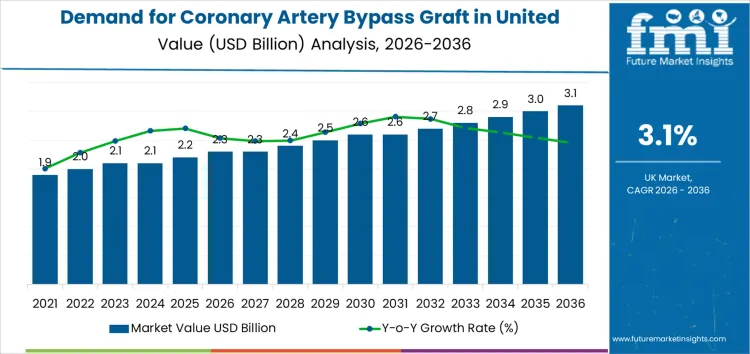
What is the Growth Forecast for Coronary Artery Bypass Graft in United Kingdom through 2036?
Demand for coronary artery bypass graft (CABG) procedures in the United Kingdom is expected to increase steadily through the forecast period. Growth is supported by an aging population and the continued burden of cardiovascular disease, which keeps surgical revascularization relevant for complex and high-risk cases. Hospitals are also improving cardiac care pathways, which supports consistent procedure volumes over time.
Growth rate volatility is likely to remain moderate, as the segment can be influenced by shifts toward alternative treatments such as percutaneous coronary interventions, changes in clinical guidelines, and NHS funding priorities. Even with these fluctuations, CABG is expected to maintain stable long-term demand due to its established clinical role in severe coronary artery disease management.
Key Takeaways for Demand for Coronary Artery Bypass Graft in United Kingdom
| Metric | Value |
|---|---|
| Industry Sales Value (2026) | USD 2.3 billion |
| Industry Forecast Value (2036) | USD 3.1 billion |
| Industry Forecast CAGR (2026 to 2036) | 3.1% |
Why is Demand for Coronary Artery Bypass Graft in United Kingdom Growing?
Demand for coronary artery bypass graft procedures in the United Kingdom has shifted over time as clinical needs and treatment pathways evolved. Data spanning multiple years show that total procedural volumes for coronary artery bypass graft surgery recorded within NHS systems decreased in proportion relative to other cardiac interventions, yet absolute numbers remain significant with around 20,000 CABG procedures performed annually in England alone. This sustained procedure rate reflects an ongoing clinical role for surgical revascularisation in patients with advanced multi vessel coronary artery disease and complex lesions where percutaneous approaches may not achieve durable outcomes. Surgical teams and healthcare providers have maintained CABG as a critical option for patients with left main coronary stenosis, diabetes with coronary disease, or extensive atherosclerotic burden, where evidence and guidelines continue to recommend surgical intervention. Over extended periods, outcome metrics such as in hospital mortality have improved, which supports clinician confidence in referring appropriate patients for surgical revascularisation.
Looking ahead, demand for coronary artery bypass graft in the United Kingdom is expected to evolve rather than simply rise, influenced by demographic, clinical, and service delivery factors. An ageing population with a high burden of coronary risk factors will sustain baseline need for revascularisation services that include CABG alongside evolving percutaneous interventions. UK healthcare providers and cardiac surgery programmes will need to balance resource planning between minimally invasive coronary treatments and surgical options, particularly for high risk cohorts where long term outcomes favour bypass grafting. Hospitals and suppliers serving this market will value technologies and consumables that support both conventional and hybrid surgical approaches, including off pump techniques and advanced graft preservation tools. Buyers will prioritise systems that enhance procedural efficiency, perioperative safety, and integration with digital surgical planning platforms, given healthcare pressures and expectations for quality outcomes. Continued emphasis on evidence based patient selection, procedure optimisation, and service capacity planning will shape how demand for CABG procedures is addressed by clinical teams and supply partners in the UK.
What Are the Key Segments in the Demand for Coronary Artery Bypass Graft in the United Kingdom?
Demand for coronary artery bypass graft (CABG) in the United Kingdom is primarily driven by technology and end-user sectors. On-pump CABG leads the technology segment with 80%, while hospitals dominate the end-user segment with 60%. Other technologies, such as off-pump CABG, and end-users like cardiology clinics and research institutes, also contribute to the market. These trends reflect the ongoing need for effective cardiac surgery solutions and the growing emphasis on improving patient outcomes in both clinical and research environments.
What Is the Technology Segment of Demand for Coronary Artery Bypass Graft in the United Kingdom?
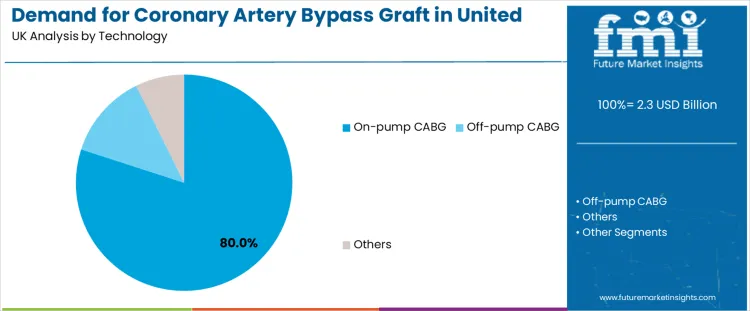
The technology segment for coronary artery bypass graft (CABG) in the United Kingdom is led by on-pump CABG, which accounts for 80% of the market share. On-pump CABG is the traditional approach to bypass surgery, where the patient’s heart is temporarily stopped, and a heart-lung machine is used to pump blood and oxygen throughout the body while the surgeon works on the coronary arteries. This method is widely favored due to its established success rate and predictable outcomes, particularly in complex surgeries involving multiple blocked arteries.
On-pump CABG is commonly used in cases where precise control over the heart’s function is necessary, and it remains the preferred choice for most coronary artery bypass surgeries. Off-pump CABG, although a smaller segment, offers the advantage of performing the surgery while the heart continues to beat, avoiding the use of a heart-lung machine. This approach is particularly beneficial in certain patient populations, such as those with significant co-morbidities or those at higher risk for complications associated with the use of a heart-lung machine.
The off-pump procedure can lead to faster recovery times and lower complication rates in certain cases. While it is not as widely used as on-pump CABG, the adoption of off-pump CABG continues to grow as surgical techniques evolve and technology improves. Other technologies in the CABG field, although representing a smaller portion of the market, include minimally invasive approaches and robotic-assisted surgery, which aim to reduce recovery time and improve surgical precision.
What Is the End-User Segment of Demand for Coronary Artery Bypass Graft in the United Kingdom?
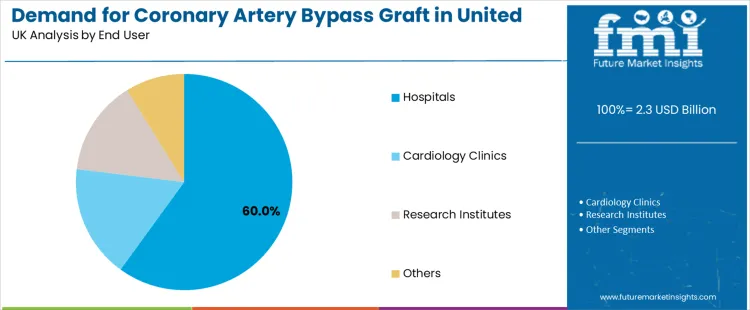
The end-user segment for coronary artery bypass graft (CABG) in the United Kingdom is dominated by hospitals, which account for 60% of the market share. Hospitals are the primary setting for CABG surgeries due to their ability to provide the necessary infrastructure, including intensive care units (ICUs), skilled surgical teams, and advanced medical equipment. CABG surgeries are typically performed in hospitals with specialized cardiac surgery departments, where patients can receive comprehensive care before, during, and after surgery.
The demand for CABG in hospitals is driven by the high prevalence of coronary artery disease (CAD) and the need for life-saving surgical interventions for patients with severe blockages in their coronary arteries. Hospitals provide the resources and specialized care required for complex surgeries, including on-pump and off-pump procedures, making them the largest segment for CABG surgeries. Cardiology clinics follow as another significant end-user, although their role in CABG surgeries is more focused on pre-operative assessment, diagnosis, and post-operative care. These clinics play an important role in managing patients with heart disease and helping them determine whether CABG surgery is necessary.
Research institutes also contribute to the CABG market, particularly through clinical trials and studies aimed at improving surgical techniques, patient outcomes, and recovery times. While research institutes represent a smaller share of the market, they are essential for advancing the field of cardiac surgery and exploring new technologies. Other end-users include outpatient surgery centers and specialized cardiac care centers, which are becoming increasingly involved in offering minimally invasive or robotic-assisted CABG procedures. As the demand for coronary artery bypass surgeries continues to grow, hospitals remain the key driver of the market, but the involvement of other sectors, such as cardiology clinics and research institutions, is expected to increase as the field evolves.
What are the Key Dynamics in the Demand for Coronary Artery Bypass Graft (CABG) Procedures in the United Kingdom?
Demand for coronary artery bypass graft (CABG) procedures in the United Kingdom is shaped by the prevalence of coronary artery disease (CAD), capacity within cardiac surgical units, referral patterns from cardiology services, and national clinical guidelines. CABG remains a central treatment for multi vessel disease and complex coronary blockages, complementing percutaneous coronary interventions (PCI) where clinically appropriate. Procurement of surgical equipment, graft materials, and support devices aligns with hospital cardiac surgery volumes, waiting list management policies, and investment in cardiovascular units. Demand also reflects regional variations in healthcare service provision and referral pathways within NHS trusts and private cardiac care providers.
What are the Key Drivers for CABG Demand in the United Kingdom?
Several factors drive demand for CABG procedures in the United Kingdom. High prevalence of CAD, tied to risk factors such as aging population, hypertension, diabetes, and lifestyle influences, sustains a baseline need for revascularisation therapy. National Institute for Health and Care Excellence (NICE) guidance that delineates indications for surgical intervention ensures consistent clinical decision making across acute trusts and specialist centres. Improvements in diagnostic imaging and risk stratification facilitate earlier identification of candidates for CABG, supporting procedural planning. Capacity expansion in tertiary cardiac centres, investment in hybrid operating theatres, and dedicated intensive care resources also enable higher procedural throughput.
What are the Restraints on CABG Demand in the United Kingdom?
Despite its clinical role, demand for CABG in the United Kingdom is moderated by several restraints. Ongoing expansion and preference for minimally invasive alternatives such as PCI with drug eluting stents can reduce surgical referral volumes for selected patient subsets. Hospital resource constraints, including theatre availability, cardiac ICU capacity, and specialist surgical staffing, limit throughput and contribute to waiting times. Variability in regional healthcare funding and capital planning impacts the ability of some trusts to prioritise investment in cardiac surgical infrastructure. Patient co morbidities and frailty in older populations can also influence eligibility, shifting some care pathways toward conservative or hybrid interventions.
What are the Key Trends in CABG Demand in the United Kingdom?
Key trends influencing CABG demand in the United Kingdom include integration of hybrid revascularisation strategies that combine surgical and catheter based techniques to optimise outcomes for complex coronary disease. Investment in enhanced recovery after surgery (ERAS) protocols and perioperative care pathways aims to reduce length of stay and improve resource utilisation in cardiac units. Use of advanced graft materials, including arterial conduits and composite grafting techniques, reflects clinical emphasis on long term patency and patient outcomes. Data driven performance monitoring across cardiac networks supports benchmarking and optimisation of referral and treatment pathways. Collaborative care models between cardiologists and cardiac surgeons enhance patient selection and align treatment strategy with individual risk profiles.
What is the Country-Wise Demand for Coronary Artery Bypass Graft (CABG) in the United Kingdom?
The demand for Coronary Artery Bypass Graft (CABG) surgery in the United Kingdom shows regional disparities, with England leading the market. The demand in England is driven by its larger population, higher incidence of cardiovascular diseases, and advanced healthcare infrastructure. CABG is widely performed to treat severe coronary artery disease, and as the number of people with heart-related conditions continues to rise, so does the demand for surgical interventions. Scotland, Wales, and Northern Ireland also show significant demand, driven by aging populations, increasing rates of lifestyle diseases, and the need for advanced cardiovascular care. While England remains the largest market for CABG, steady growth in demand is anticipated across all regions as healthcare systems continue to prioritize heart disease treatments and improve access to surgical options.
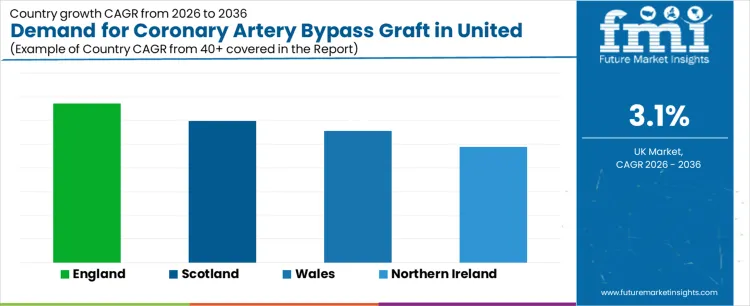
| Country | CAGR (2026 to 2036) |
|---|---|
| England | 3.4% |
| Scotland | 3.0% |
| Wales | 2.8% |
| Northern Ireland | 2.4% |
What is Driving the Demand for CABG in England?
The demand for Coronary Artery Bypass Graft (CABG) surgery in England is projected to grow at a CAGR of 3.4% from 2026 to 2036. The primary factors contributing to this demand include an aging population, a high incidence of cardiovascular diseases, and advancements in surgical techniques. England’s well-established healthcare infrastructure, including its large network of hospitals and cardiovascular specialists, plays a critical role in the rising demand for CABG. The increasing prevalence of risk factors such as diabetes, hypertension, and obesity also contributes to the growing need for coronary artery surgeries. With improved survival rates following surgery, more patients are seeking CABG as an effective treatment for severe coronary artery disease. The focus on early diagnosis, better access to healthcare services, and advancements in minimally invasive CABG procedures will likely continue to support growth in the demand for these surgeries.
How is the Demand for CABG Performing in Scotland?
In Scotland, the demand for CABG surgery is expected to grow at a CAGR of 3.0% from 2026 to 2036. Scotland’s healthcare system, which is focused on providing specialized treatments for cardiovascular diseases, is a key driver for this demand. The rise in lifestyle-related diseases, such as smoking, high-fat diets, and sedentary lifestyles, has led to an increase in coronary artery disease in Scotland, fueling the need for CABG procedures. Additionally, the aging population in Scotland, coupled with improved diagnostic capabilities and better access to healthcare services, is driving more patients to opt for CABG. Scotland’s continued efforts to reduce heart disease mortality, as well as the growing adoption of advanced surgical techniques, will contribute to the growth in demand for CABG surgery in the region over the next decade.
What Are the Growth Drivers for CABG in Wales?
The demand for CABG surgery in Wales is projected to grow at a CAGR of 2.8% through 2036. Similar to other regions, the key factors driving this growth are the aging population and the rising incidence of heart disease. Lifestyle factors such as poor diet, high stress, and lack of exercise contribute to the growing number of people suffering from coronary artery disease in Wales. As the healthcare system continues to improve access to specialized treatments and surgical interventions, CABG will remain a critical part of the cardiovascular treatment landscape. Moreover, the adoption of newer, less invasive surgical techniques and a stronger emphasis on preventive healthcare are helping to drive the demand for CABG in Wales. As the region continues to invest in heart disease prevention and treatment, the demand for coronary artery bypass surgeries is expected to grow steadily.
What is the Outlook for CABG Demand in Northern Ireland?
Northern Ireland’s demand for CABG surgery is expected to grow at a CAGR of 2.4% from 2026 to 2036. While Northern Ireland represents the smallest market for CABG in the UK, the demand is still increasing, driven by the aging population and rising cardiovascular disease rates. The demand for CABG is being influenced by factors such as an increase in diabetes, obesity, and hypertension in the population, as well as the growing need for effective coronary artery disease treatments. Northern Ireland’s healthcare infrastructure, including cardiovascular centers of excellence, is improving, providing better access to these surgical procedures. The growing emphasis on heart disease prevention, along with advances in surgical techniques, will ensure a steady increase in CABG demand in Northern Ireland, despite the smaller market size.
What is the Competitive Landscape for Demand for Coronary Artery Bypass Graft in the United Kingdom?
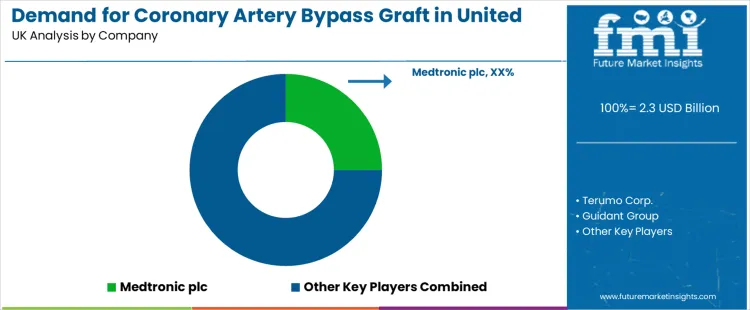
Demand for coronary artery bypass graft (CABG) solutions in the United Kingdom is shaped by procedural volumes in National Health Service facilities and private cardiac centres, clinical protocol updates, and investment in surgical infrastructure. Hospitals and surgical departments specify graft systems based on documented patency rates, handling characteristics, and compatibility with off pump and on pump techniques. Medtronic plc is positioned as a leading supplier, with product brochures that list documented clinical outcomes, documented graft material options (arterial and venous), and documented sizing matrices used by surgical teams during specification alignment. These technical documents are reviewed by purchasing and clinical governance teams to match surgical quality targets with evidence based performance data. Procurement decisions also factor in documented sterilization standards, documented shelf life, and documented training support for theatre staff.
Terumo Corp. competes with CABG systems accompanied by detailed documentation on graft flexibility, documented compliance with UK regulatory requirements, and documented clinical use cases. Buyers evaluate these materials to ensure that selected products integrate with existing surgical workflows and quality assurance processes. Guidant Group supplies graft and associated delivery systems documented for ease of deployment and documented haemocompatibility metrics, which are assessed by cardiothoracic surgery departments during tender reviews. Getinge AB offers documented perfusion and support technologies that complement graft procedures, with technical literature outlining documented pump system performance, documented safety protocols, and documented service response frameworks.
In the United Kingdom, procurement cycles incorporate documented performance data, documented product support terms, and documented distribution lead times. Hospitals compare documented clinical evidence and documented cost profiles to align supply agreements with procedural budgets and quality targets. Clinical users and procurement teams jointly review documented handling profiles and documented compatibility notes to ensure that graft solutions meet both surgical preferences and institutional quality standards. Competitive activity is anchored in measurable technical specifications and documented support commitments that assist procurement professionals in securing reliable CABG systems for cardiac programmes.
Key Players of the Demand for Coronary Artery Bypass Graft in United Kingdom
- Medtronic plc
- Terumo Corp.
- Guidant Group
- Getinge AB
Scope of the Report
| Items | Values |
|---|---|
| Quantitative Units (2026) | USD Billion |
| Technology | Off-pump CABG, On-pump CABG, Others |
| Procedure | Single CABG surgery, Double CABG surgery, Triple CABG surgery, Quadruple CABG surgery, Others |
| End User | Hospitals, Cardiology Clinics, Research Institutes, Others |
| Companies | Medtronic plc, Terumo Corp., Guidant Group, Getinge AB |
| Regions Covered | United Kingdom |
| Countries Covered | England, Scotland, Wales, Northern Ireland |
| Additional Attributes | Dollar by sales by technology, procedure, end user, and region. Includes market trends towards minimally invasive techniques, cost-effectiveness, and the role of CABG in heart disease treatment. |
Key Segments of Demand for Coronary Artery Bypass Graft in United Kingdom
Technology
- Off-pump CABG
- On-pump CABG
- Others
Procedure
- Single CABG surgery
- Double CABG surgery
- Triple CABG surgery
- Quadruple CABG surgery
- Others
End User
- Hospitals
- Cardiology Clinics
- Research Institutes
- Others
Countries
- England
- Scotland
- Wales
- Northern Ireland
Bibliography
- National Institute for Health and Care Excellence. (2024). Coronary artery disease: Diagnosis and management (including revascularisation strategies). NICE.
- NHS Inform. (2024). Coronary artery bypass graft (CABG) surgery overview and clinical indications. NHS Inform.
- NHS England. (2024). Cardiovascular disease and cardiac surgery trends in the United Kingdom. NHS England.
Frequently Asked Questions
How big is the demand for coronary artery bypass graft in United Kingdom in 2026?
The demand for coronary artery bypass graft in United Kingdom is estimated to be valued at USD 2.3 billion in 2026.
What will be the size of coronary artery bypass graft in United Kingdom in 2036?
The market size for the coronary artery bypass graft in United Kingdom is projected to reach USD 3.1 billion by 2036.
How much will be the demand for coronary artery bypass graft in United Kingdom growth between 2026 and 2036?
The demand for coronary artery bypass graft in United Kingdom is expected to grow at a 3.1% CAGR between 2026 and 2036.
What are the key product types in the coronary artery bypass graft in United Kingdom?
The key product types in coronary artery bypass graft in United Kingdom are on-pump cabg, off-pump cabg and others.
Which technology segment is expected to contribute significant share in the coronary artery bypass graft in United Kingdom in 2026?
In terms of technology, On-pump CABG surgery segment is expected to command 80.0% share in the coronary artery bypass graft in United Kingdom in 2026.
Preview the report firsthand - request a free sample
Get SampleGet the brochure for pricing and purchase details.
Get PDFTable of Content
- Executive Summary
- UK Market Outlook
- Demand-side Trends
- Supply-side Trends
- Technology Roadmap Analysis
- Analysis and Recommendations
- Market Overview
- Market Coverage / Taxonomy
- Market Definition / Scope / Limitations
- Market Background
- Market Dynamics
- Drivers
- Restraints
- Opportunity
- Trends
- Scenario Forecast
- Demand in Optimistic Scenario
- Demand in Likely Scenario
- Demand in Conservative Scenario
- Opportunity Map Analysis
- Product Life Cycle Analysis
- Supply Chain Analysis
- Investment Feasibility Matrix
- Value Chain Analysis
- PESTLE and Porter’s Analysis
- Regulatory Landscape
- Regional Parent Market Outlook
- Production and Consumption Statistics
- Import and Export Statistics
- Market Dynamics
- UK Market Analysis 2021 to 2025 and Forecast, 2026 to 2036
- Historical Market Size Value (USD Million) Analysis, 2021 to 2025
- Current and Future Market Size Value (USD Million) Projections, 2026 to 2036
- Y-o-Y Growth Trend Analysis
- Absolute $ Opportunity Analysis
- UK Market Pricing Analysis 2021 to 2025 and Forecast 2026 to 2036
- UK Market Analysis 2021 to 2025 and Forecast 2026 to 2036, By Technology
- Introduction / Key Findings
- Historical Market Size Value (USD Million) Analysis By Technology , 2021 to 2025
- Current and Future Market Size Value (USD Million) Analysis and Forecast By Technology , 2026 to 2036
- On-pump CABG
- Off-pump CABG
- Others
- On-pump CABG
- Y-o-Y Growth Trend Analysis By Technology , 2021 to 2025
- Absolute $ Opportunity Analysis By Technology , 2026 to 2036
- UK Market Analysis 2021 to 2025 and Forecast 2026 to 2036, By Procedure
- Introduction / Key Findings
- Historical Market Size Value (USD Million) Analysis By Procedure, 2021 to 2025
- Current and Future Market Size Value (USD Million) Analysis and Forecast By Procedure, 2026 to 2036
- Triple CABG surgery
- Single CABG surgery
- Double CABG surgery
- Quadruple CABG surgery
- Others
- Triple CABG surgery
- Y-o-Y Growth Trend Analysis By Procedure, 2021 to 2025
- Absolute $ Opportunity Analysis By Procedure, 2026 to 2036
- UK Market Analysis 2021 to 2025 and Forecast 2026 to 2036, By End User
- Introduction / Key Findings
- Historical Market Size Value (USD Million) Analysis By End User, 2021 to 2025
- Current and Future Market Size Value (USD Million) Analysis and Forecast By End User, 2026 to 2036
- Hospitals
- Cardiology Clinics
- Research Institutes
- Others
- Hospitals
- Y-o-Y Growth Trend Analysis By End User, 2021 to 2025
- Absolute $ Opportunity Analysis By End User, 2026 to 2036
- Market Structure Analysis
- Competition Dashboard
- Competition Benchmarking
- Market Share Analysis of Top Players
- By Regional
- By Technology
- By Procedure
- By End User
- Competition Analysis
- Competition Deep Dive
- Medtronic plc
- Overview
- Product Portfolio
- Profitability by Market Segments (Product/Age /Sales Channel/Region)
- Sales Footprint
- Strategy Overview
- Marketing Strategy
- Product Strategy
- Channel Strategy
- Terumo Corp.
- Guidant Group
- Getinge AB
- Medtronic plc
- Competition Deep Dive
- Assumptions & Acronyms Used
- Research Methodology


