

- Industry Size (2025)
- USD 6.2 Bn
- Forecast (2035)
- USD 21.8 Bn
- CAGR (2025 to 2035)
- 13.5%
Demand for Bioplastic Packaging Bag in USA Forecast and Outlook 2025 to 2035
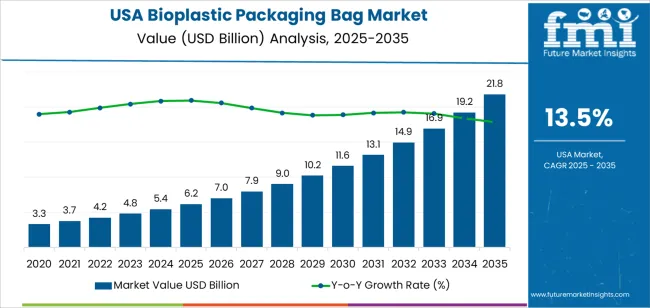
Bioplastic packaging bag demand in the USA is valued at USD 6.2 billion in 2025 and is projected to reach USD 21.8 billion by 2035 at a CAGR of 13.5%. Early market expansion is driven by regulatory pressure on conventional plastic bags at the state and municipal level, paired with rapid adoption by grocery chains, foodservice operators, and large retailers. Carryout bags, produce bags, and delivery packaging account for the largest share of early demand. Retailers adopt bioplastic formats to meet compliance targets while maintaining functional parity with polyethylene bags. Quick-service restaurants, meal delivery platforms, and institutional foodservice also contribute steady growth as compostable bag formats move into standard operating supply contracts across urban and suburban markets.
After 2030, demand growth becomes more infrastructure and scale driven than policy driven. Market value rises from about USD 11.6 billion in 2030 toward USD 21.8 billion by 2035 as domestic resin capacity, compounding, and bag conversion expand across the Midwest and Gulf Coast. E-commerce fulfillment and secondary packaging applications emerge as major growth contributors as brands replace plastic mailers with bio-based alternatives. Cost reduction through higher production volumes improves price competitiveness with conventional plastics in mass retail. Food waste collection programs add durable demand for compostable refuse bags. Procurement shifts toward long term supply contracts between retailers, municipalities, and integrated bioplastic producers to stabilize pricing and ensure consistent material performance across national distribution networks.
Quick Stats of the Demand for Bioplastic Packaging Bag in USA
- Demand for Bioplastic Packaging Bag in USA Value (2025): USD 6.2 billion
- Demand for Bioplastic Packaging Bag in USA Forecast Value (2035): USD 21.8 billion
- Demand for Bioplastic Packaging Bag in USA Forecast CAGR (2025–2035): 13.5%
- Demand for Bioplastic Packaging Bag in USA Leading Material: Polylactic Acids (36%)
- Demand for Bioplastic Packaging Bag in USA Key Growth Regions: West, South, Northeast, Midwest
- Demand for Bioplastic Packaging Bag in USA Top Players: Novamont S.p.A., BASF SE, NatureWorks LLC, Mitsubishi Chemical Holdings, Biome Bioplastics
What is the Demand Forecast for Bioplastic Packaging Bag in USA through 2035?
Bioplastic packaging bags sit at the intersection of packaging logistics, retail operations, and materials substitution policy, giving their demand curve a structurally accelerated profile rather than a replacement-led one. Demand in USA increases from USD 6.2 billion in 2025 to USD 7.9 billion by 2030, adding USD 1.7 billion in absolute value. This phase reflects rapid conversion away from conventional polyethylene carry bags in grocery, foodservice, apparel retail, and e commerce fulfillment. Growth is driven by state-level single-use plastic restrictions, retailer sustainability compliance mandates, and rising adoption of compostable and bio-based materials in private label packaging programs. Demand expansion during this phase is policy enabled and supply chain enforced rather than purely consumer preference driven.
From 2030 to 2035, the market expands sharply from USD 7.9 billion to USD 21.8 billion, adding a substantial USD 13.9 billion within five years. This back weighted acceleration reflects full-scale material substitution across mass retail, logistics distribution, agricultural produce packaging, and quick-service restaurant takeaway systems. Higher resin costs, multilayer bio-compounds, and improved mechanical strength raise value per unit alongside volume expansion. As bio-based feed stocks, industrial composting infrastructure, and municipal procurement standards align, bioplastic packaging bags shift from regulated alternatives to default packaging formats, pushing the demand curve into a structurally high-growth, regulation-anchored expansion phase through 2035.
Bioplastic Packaging Bag Industry in USA Key Takeaways
| Metric | Value |
|---|---|
| Industry Value (2025) | USD 6.2 billion |
| Forecast Value (2035) | USD 21.8 billion |
| Forecast CAGR (2025–2035) | 13.5% |
How the Demand for Bioplastic Packaging Bags Is Expanding in the USA Under Changing Environmental and Regulatory Pressures?
The demand for bioplastic packaging bags in USA has strengthened as environmental awareness, sustainability regulations and corporate responsibility commitments increasingly shape packaging decisions. Conventional single-use plastic bags have faced growing restrictions at state and local levels. As a result, many retailers, foodservice operators and e-commerce sellers have shifted toward compostable or biodegradable alternatives. Bioplastic bags made from plant-based or bio-derived polymers offer a way to meet regulatory compliance while preserving convenience and cost efficiency. Early growth came mainly from grocery, retail, and foodservice sectors moving away from conventional plastic bags. At the same time consumer preference for “eco-friendly” packaging supported adoption in niche retail and smaller scale producers.
Future growth for bioplastic packaging bags in the USA will depend on continued regulatory pressure, innovation in materials and shifting consumer demand. As more states expand bans or fees on single-use plastics, demand for bioplastic alternatives will rise across grocery, food-to-go, and online retail segments. Further, advances in bio-based polymers, compostable films, and improved barrier properties will expand bag use from simple carry bags to mail-order packaging and frozen-food pouches. Cost remains a barrier, but economies of scale, growing supply chain maturity, and corporate sustainability mandates will help lower prices. Bioplastic bag use may broaden beyond retail into industrial, agricultural, and food-service packaging where environmental footprint matters. The market’s pace will depend on regulatory clarity, consumer acceptance, and material performance across real-world use cases.
How Are Material and Type Structuring the Demand for Bioplastic Packaging Bags in USA?
The demand for bioplastic packaging bags in the USA is structured by material composition and bag type. Polylactic acids account for 36% of total demand, followed by polyhydroxyalkanoates, starch blends, and other material systems. By type, flat bags represent 29.0% of total consumption, followed by rubble sacks, gusseted bags, woven sacks, trash bags, T shirt bags, and other specialty formats. Demand behavior is shaped by compostability performance, mechanical strength requirements, regulatory compliance at state and city levels, and end use handling needs. These segments reflect how material performance and functional bag design determine adoption across retail, waste management, food service, and industrial packaging use in the USA.
Why Do Polylactic Acids Lead the Bioplastic Packaging Bag Material Demand in USA?
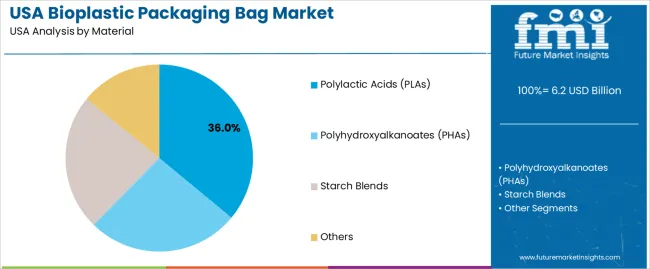
Polylactic acids account for 36% of total bioplastic packaging bag demand in the USA due to their commercial availability, compostability profile, and compatibility with existing film extrusion equipment. PLA resins provide good clarity, adequate tensile strength, and predictable seal performance for flat bags, grocery bags, and food service packaging. Production scalability supports steady output across domestic and imported supply chains. PLA bags are widely used in retail checkout operations, produce packaging, and quick service food outlets where compostable certification supports regulatory compliance and branding objectives.
PLA materials also benefit from starch derived feedstock availability and established processing infrastructure. Cost positioning remains more stable than several newer biopolymer systems, which supports higher volume procurement by retailers and municipal programs. Educational labeling and compostability certification further improve consumer acceptance. These manufacturing scalability, regulatory alignment, and cost accessibility factors collectively sustain polylactic acids as the leading material segment in the USA bioplastic packaging bag demand structure.
Why Do Flat Bags Dominate the Bioplastic Packaging Bag Type Demand in USA?
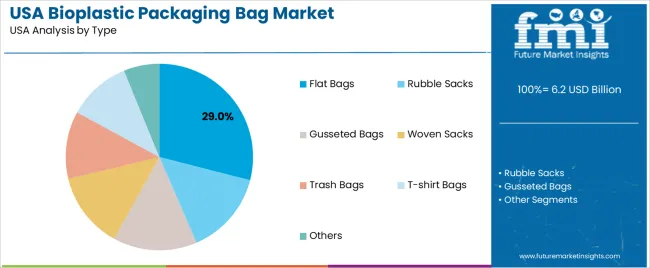
Flat bags account for 29.0% of total bioplastic packaging bag demand in the USA due to their broad use across retail, food packaging, produce handling, and takeaway service operations. Flat bags support simple filling, heat sealing, and stacking without requiring gusset structures or reinforced side walls. Their design aligns well with automated bagging equipment used in grocery stores, bakeries, and food processing lines. These operational advantages allow flat bags to move through high speed packing environments with consistent performance and minimal mechanical failure.
Flat bags also benefit from lower material usage per unit compared with structured bag types, which improves cost efficiency in large scale distribution programs. Municipal compostable bag initiatives frequently specify flat bag formats for food waste collection and retail use. Storage efficiency and reduced shipping volume further support adoption. These handling simplicity, material efficiency, and regulatory compatibility factors position flat bags as the dominant type within the USA bioplastic packaging bag demand structure.
Why Are USA Retailers Treating Bioplastic Bags as a Compliance Tool Rather Than a Branding Choice?
Bioplastic packaging bag demand in the USA is increasingly driven by regulatory avoidance rather than consumer-driven brand positioning. State and municipal bans on traditional plastic carryout bags force retailers to adopt compostable or bio-based alternatives to maintain checkout operations without penalties. Grocery chains, pharmacies, and quick-service restaurants treat bioplastic bags as a functional substitute to maintain transaction flow under local restrictions. This demand is not aspirational; it is operational. Retailers select bags that meet legal definitions of biodegradability or compostability first, then optimize for strength, sealing, and cost recovery through bag fees.
How Do Waste Management Mismatches Influence Real-World Adoption Patterns?
Bioplastic bag demand in the USA is shaped as much by disposal infrastructure limitations as by retail usage volume. Many compostable bags enter standard landfill streams due to low access to industrial composting facilities. This creates hesitation among municipalities and retailers that fear mislabeling backlash. Some regions restrict compostable claims entirely to avoid contamination of recycling systems. As a result, adoption concentrates in cities with controlled organic waste programs and closed-loop foodservice operations. This infrastructure mismatch fragments national demand into localized clusters rather than enabling uniform nationwide scale.
What Cost Structures and Resin Supply Constraints Shape Commercial Viability?
Bioplastic bags in the USA carry higher resin costs tied to corn starch, PLA, sugarcane ethanol, and fermentation-based polymers. These inputs compete with food and fuel supply chains, introducing price volatility. Domestic biopolymer capacity remains limited relative to petroplastic output, which exposes supply to import dependency and freight cost swings. Thin-gauge strength limitations also require heavier material usage for load-bearing bags, raising per-unit cost further. Retailers often pass this cost to consumers through bag charges, which directly influences usage frequency and volume elasticity.
How Are Private Label Strategies and Foodservice Operations Redesigning Demand Channels?
Bioplastic bag demand in the USA is shifting away from general retail toward private-label grocery programs and high-volume foodservice packaging. Chains now specify proprietary compostable bag formats optimized for kitchens, delivery, and waste separation. Restaurant groups use bioplastic liners and takeout bags to align with local waste rules while maintaining grease and moisture resistance. Brands increasingly avoid third-party labeling and instead manage material claims in-house. This shows demand moving from open market substitution toward controlled, contract-driven packaging ecosystems tied to food preparation and regulated disposal flows.
What is the Demand for Bioplastic Packaging Bag in USA by Region?
| Region | CAGR (%) |
|---|---|
| West | 15.5% |
| South | 13.9% |
| Northeast | 12.4% |
| Midwest | 10.8% |
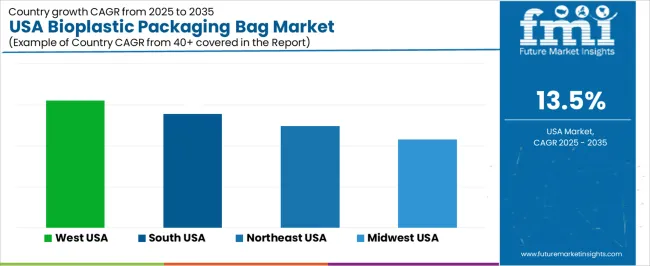
The demand for bioplastic packaging bags in the USA shows strong regional growth, with the West leading at a 15.5% CAGR. This region benefits from strict packaging regulations, high environmental awareness among consumers, and strong adoption of alternative packaging by retailers and foodservice operators. The South follows at 13.9%, driven by expanding retail networks, growth in packaged food consumption, and rising use of eco friendly packaging by regional brands. The Northeast records 12.4% growth, supported by municipal plastic reduction policies, urban retail demand, and institutional procurement of bioplastic products. The Midwest shows comparatively moderate growth at 10.8%, reflecting gradual adoption by manufacturers and retailers, along with continued cost sensitivity in large volume packaging applications.
What Is Accelerating Bioplastic Packaging Bag Demand in the West Region of USA?
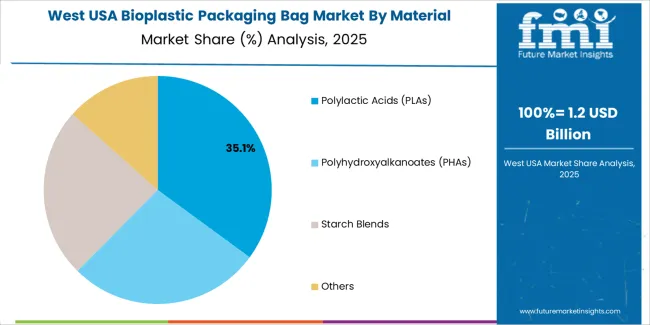
Expansion in the West reflects a CAGR of 15.5% through 2035 for bioplastic packaging bag demand, supported by strict local packaging regulations, high retail compliance, and strong adoption across food service and grocery chains. Urban municipalities promote compostable and bio based carry bags in retail outlets. Organic food brands and meal delivery services also adopt bioplastic formats for brand positioning. Coastal export packaging adds secondary demand. Demand remains regulation and retail driven, with converters focused on large volume retail supply contracts rather than small specialty orders.
- Municipal mandates support rapid adoption across retail
- Grocery and food service chains anchor bulk volume demand
- Organic brands favor bio based packaging formats
- Export packaging adds secondary application volume
How Is the South Supporting Bioplastic Packaging Bag Demand in USA?
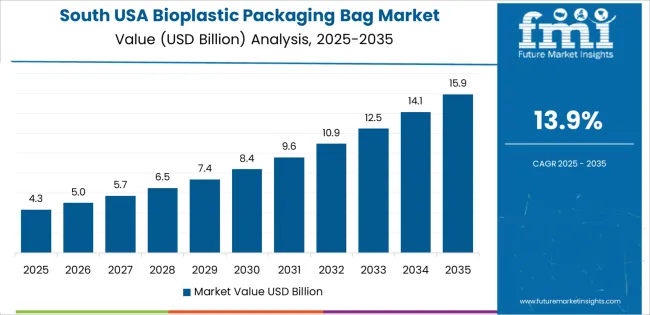
The South advances at a CAGR of 13.9% through 2035 for bioplastic packaging bag demand, driven by steady food processing growth, rising retail chain expansion, and agricultural produce packaging needs. Supermarkets and produce wholesalers adopt bioplastic bags for fresh fruits, vegetables, and bulk foods. State level policy adoption varies, but private retail standards push consistent usage. Poultry and seafood packaging also contribute steady volume. Demand remains volume driven and price sensitive, with manufacturers prioritizing cost efficient bio resin blends for high throughput production.
- Produce packaging anchors primary bioplastic bag usage
- Supermarket chain standards guide adoption patterns
- Seafood and poultry processing add secondary volume
- Cost efficient resin blends shape purchasing behavior
Why Is Bioplastic Packaging Bag Demand Rising Steadily in the Northeast Region of USA?
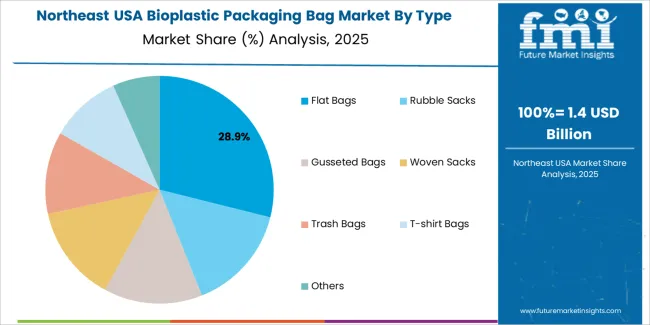
The Northeast records a CAGR of 12.4% through 2035 for bioplastic packaging bag demand, shaped by early policy enforcement, dense urban retail networks, and high consumer compliance with carry bag regulations. Food takeaway services, cafes, and urban grocery outlets show high replacement volumes. Cold climate does not limit usage, but storage durability remains a procurement focus. Institutional buyers such as universities and hospitals also contribute to volume. Demand remains compliance driven and replacement led, with steady reorder cycles across compact retail distribution zones.
- Urban retail density supports frequent replacement cycles
- Food takeaway services consume high bag volumes
- Institutional buyers add predictable bulk demand
- Regulatory enforcement sustains long term purchasing stability
What Is Influencing Bioplastic Packaging Bag Demand in the Midwest Region of USA?
The Midwest expands at a CAGR of 10.8% through 2035 for bioplastic packaging bag demand, supported by gradual adoption among grocery chains, farm produce distributors, and regional cooperatives. Policy adoption moves slower than coastal regions, but retailer driven standards encourage steady conversion. Grain, seed, and processed food packaging contribute moderate application volume. Cost sensitivity remains a limiting factor for rapid scale up. Demand remains transition driven and predictable, aligned with phased conversion from conventional plastic rather than immediate material replacement across regional retail and agriculture supply chains.
- Grocery chain standards shape gradual conversion pace
- Farm produce and grain packaging add moderate demand
- Cost sensitivity slows rapid regional scale up
- Phased plastic replacement guides purchasing timelines
What Is Driving the Demand for Bioplastic Packaging Bags in USA and Who Are the Key Players Shaping the Market?
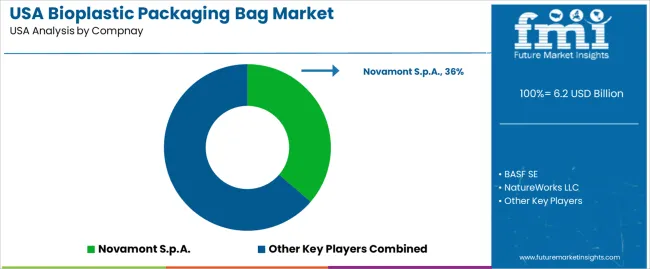
Demand for bioplastic packaging bags in the USA is rising as companies respond to growing environmental concerns and stricter regulations on single use plastics. Manufacturers in food & beverage, personal care, retail, and e commerce increasingly adopt bioplastic bags to meet consumer expectations for sustainable packaging. Rising consumer awareness about plastic waste drives demand for compostable or bio based alternatives that reduce reliance on fossil based plastics and lower carbon footprint. Advances in biopolymer technology have improved strength, barrier properties, and processability of bioplastic bags, making them viable substitutes for traditional plastic bags across a range of applications. Interest in circular economy principles and corporate sustainability commitments further fuels adoption.
Major suppliers shaping the USA bioplastic bag market include Novamont S.p.A., BASF SE, NatureWorks LLC, Mitsubishi Chemical Holdings, and Biome Bioplastics. Novamont and NatureWorks lead as innovative material providers, offering polylactic acid (PLA) and other bio based polymers tailored for bag applications. BASF and Mitsubishi Chemical supply a broader portfolio of bioplastic resins and support large-scale industrial demand. Biome Bioplastics and other niche producers contribute specialized formulations for compostable and flexible packaging needs. These firms influence the market through material innovation, supply chain capacity, and collaborations with retailers and brand owners seeking sustainable packaging solutions.
Key Players in Bioplastic Packaging Bags Industry in USA
- Novamont S.p.A.
- BASF SE
- NatureWorks LLC
- Mitsubishi Chemical Holdings
- Biome Bioplastics
Scope of the Report
| Items | Values |
|---|---|
| Quantitative Units (2025) | USD billion |
| Material | Polylactic Acids (PLAs), Polyhydroxyalkanoates (PHAs), Starch Blends, Others |
| Type | Flat Bags, Rubble Sacks, Gusseted Bags, Woven Sacks, Trash Bags, T-shirt Bags, Others |
| Application | Industrial, Institutional, Retail Sector, Consumer Users |
| Region | Northeast USA, West USA, Midwest USA, South USA |
| Countries Covered | USA |
| Key Companies Profiled | Novamont S.p.A., BASF SE, NatureWorks LLC, Mitsubishi Chemical Holdings, Biome Bioplastics |
| Additional Attributes | Dollar by sales by material, Dollar by sales by type, Dollar by sales by application, Dollar by sales by region, Regional CAGR, Policy-driven adoption, Retail and e-commerce penetration, Compostable bag program impact, Industrial supply chain influence |
Bioplastic Packaging Bags Industry in USA Segmentation
Material:
- Polylactic Acids (PLAs)
- Polyhydroxyalkanoates (PHAs)
- Starch Blends
- Others
Type:
- Flat Bags
- Rubble Sacks
- Gusseted Bags
- Woven Sacks
- Trash Bags
- T-shirt Bags
- Others
Application:
- Industrial
- Institutional
- Retail Sector
- Consumer Users
Region:
- Northeast USA
- West USA
- Midwest USA
- South USA
Frequently Asked Questions
How big is the demand for bioplastic packaging bag in USA in 2025?
The demand for bioplastic packaging bag in USA is estimated to be valued at USD 6.2 billion in 2025.
What will be the size of bioplastic packaging bag in USA in 2035?
The market size for the bioplastic packaging bag in USA is projected to reach USD 21.8 billion by 2035.
How much will be the demand for bioplastic packaging bag in USA growth between 2025 and 2035?
The demand for bioplastic packaging bag in USA is expected to grow at a 13.5% CAGR between 2025 and 2035.
What are the key product types in the bioplastic packaging bag in USA?
The key product types in bioplastic packaging bag in USA are polylactic acids (plas), polyhydroxyalkanoates (phas), starch blends and others.
Which type segment is expected to contribute significant share in the bioplastic packaging bag in USA in 2025?
In terms of type, flat bags segment is expected to command 29.0% share in the bioplastic packaging bag in USA in 2025.
Preview the report firsthand - request a free sample
Get SampleGet the brochure for pricing and purchase details.
Get PDFTable of Content
- Executive Summary
- USA Market Outlook
- Demand-side Trends
- Supply-side Trends
- Technology Roadmap Analysis
- Analysis and Recommendations
- Market Overview
- Market Coverage / Taxonomy
- Market Definition / Scope / Limitations
- Market Background
- Market Dynamics
- Drivers
- Restraints
- Opportunity
- Trends
- Scenario Forecast
- Demand in Optimistic Scenario
- Demand in Likely Scenario
- Demand in Conservative Scenario
- Opportunity Map Analysis
- Product Life Cycle Analysis
- Supply Chain Analysis
- Investment Feasibility Matrix
- Value Chain Analysis
- PESTLE and Porter’s Analysis
- Regulatory Landscape
- Regional Parent Market Outlook
- Production and Consumption Statistics
- Import and Export Statistics
- Market Dynamics
- USA Market Analysis 2020 to 2024 and Forecast, 2025 to 2035
- Historical Market Size Value (USD Million) Analysis, 2020 to 2024
- Current and Future Market Size Value (USD Million) Projections, 2025 to 2035
- Y-o-Y Growth Trend Analysis
- Absolute $ Opportunity Analysis
- USA Market Pricing Analysis 2020 to 2024 and Forecast 2025 to 2035
- USA Market Analysis 2020 to 2024 and Forecast 2025 to 2035, By Material
- Introduction / Key Findings
- Historical Market Size Value (USD Million) Analysis By Material , 2020 to 2024
- Current and Future Market Size Value (USD Million) Analysis and Forecast By Material , 2025 to 2035
- Polylactic Acids (PLAs)
- Polyhydroxyalkanoates (PHAs)
- Starch Blends
- Others
- Y-o-Y Growth Trend Analysis By Material , 2020 to 2024
- Absolute $ Opportunity Analysis By Material , 2025 to 2035
- USA Market Analysis 2020 to 2024 and Forecast 2025 to 2035, By Type
- Introduction / Key Findings
- Historical Market Size Value (USD Million) Analysis By Type, 2020 to 2024
- Current and Future Market Size Value (USD Million) Analysis and Forecast By Type, 2025 to 2035
- Flat Bags
- Rubble Sacks
- Gusseted Bags
- Woven Sacks
- Trash Bags
- T-shirt Bags
- Others
- Y-o-Y Growth Trend Analysis By Type, 2020 to 2024
- Absolute $ Opportunity Analysis By Type, 2025 to 2035
- USA Market Analysis 2020 to 2024 and Forecast 2025 to 2035, By Application
- Introduction / Key Findings
- Historical Market Size Value (USD Million) Analysis By Application, 2020 to 2024
- Current and Future Market Size Value (USD Million) Analysis and Forecast By Application, 2025 to 2035
- Industrial
- Institutional
- Retail Sector
- Consumer Users
- Y-o-Y Growth Trend Analysis By Application, 2020 to 2024
- Absolute $ Opportunity Analysis By Application, 2025 to 2035
- Market Structure Analysis
- Competition Dashboard
- Competition Benchmarking
- Market Share Analysis of Top Players
- By Regional
- By Material
- By Type
- By Application
- Competition Analysis
- Competition Deep Dive
- Novamont S.p.A.
- Overview
- Product Portfolio
- Profitability by Market Segments (Product/Age /Sales Channel/Region)
- Sales Footprint
- Strategy Overview
- Marketing Strategy
- Product Strategy
- Channel Strategy
- BASF SE
- NatureWorks LLC
- Mitsubishi Chemical Holdings
- Biome Bioplastics
- Novamont S.p.A.
- Competition Deep Dive
- Assumptions & Acronyms Used
- Research Methodology


