


- Canned tuna can support premium pricing when simple ingredients, responsible sourcing, protein value, and convenience are clearly communicated.
- Clean-label value in canned tuna is less about removing additives and more about trust: tuna species, water or olive oil medium, low sodium, traceability, and sourcing standards.
- Premium positioning is strongest in specialty tuna, white tuna, tuna in olive oil, pole-and-line sourcing, MSC-certified products, low-sodium formats, and high-protein meal solutions.
- Canned light tuna drives volume, but premium variants can defend margin when they offer clear quality or sustainability differentiation.
- Flavored tuna expands premium potential by turning canned tuna from a pantry ingredient into a ready-to-eat meal component.
- The biggest misconception is that canned tuna premiumization is only about sustainability claims. Consumers pay more when sustainability is paired with taste, convenience, protein, and trust.
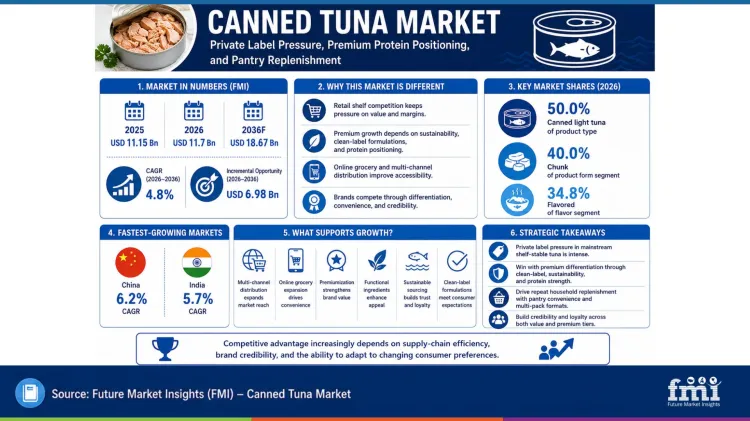
Clean-label premiumization in the Canned Tuna Market works differently from clean-label premiumization in snacks or beverages. Consumers are not usually asking for a long list of removed ingredients. They are asking whether the tuna is safe, responsibly sourced, protein-rich, convenient, and simple enough to trust.
FMI’s Canned Tuna Market preview states that premiumization and functional positioning are expected to create incremental demand channels. FMI also notes that premium positioning requires clear functional differentiation, such as clean-label formulations, sustainability certifications, and protein claims. This is the heart of the clean-label premium story for canned tuna.
Canned tuna already has an inherently simple recipe of tuna, water or oil, and salt. However, simplicity of the ingredients does not necessarily make a premium product. There is a need to consider consumer concerns regarding the sources of the ingredients, issues regarding mercury content, species of tuna, traceability, high levels of sodium, type of oil, and sustainability. For this reason, premium canned tuna is mostly based on such ideas as responsible sources of tuna, pole and line source, MSC certified, etc.
The Sustainable Seafood Market is relevant because sustainability is one of the most important premium levers in tuna. Consumers may not understand all fishing methods, but they can respond to clear claims around responsible sourcing, traceability, and environmental impact. Retail buyers also use sustainability credentials to manage reputational risk.
Canned light tuna is expected to account for 50.0% of product type share in 2026. This projection indicates that light tuna continues to be a volume-driven category. In many instances, light tuna will compete based on availability and pricing. Despite being a volume-driven category, it does not exclude premiumization of the product. Volume-driven implies that premiumization should be accurate. Not all light tuna items qualify to be sold at a premium price.
Chunk tuna will be predicted to dominate the product format segment with a 40.0% share by 2026. The chunk tuna product format will enable consumers to use the product in their daily meals without compromising its quality. Some uses of the chunk tuna product include using it in sandwiches, salads, wraps, pasta, rice, and ready meals.
The Protein Ingredients Market provides broader context because canned tuna competes as a convenient protein source. Consumers looking for high-protein, low-prep foods may compare tuna with chicken, eggs, Greek yogurt, protein bars, legumes, and ready-to-eat meals. Canned tuna’s advantage is shelf stability and natural protein density. Premium products should make that value visible.
Clean labeling will also depend upon the packaging medium used for the product. Tuna packed in water will lend itself to positioning as low-fat and high-protein. Tuna packed in olive oil will be suitable for positioning as a premium culinary offering. Tuna packed in brine may be value-oriented but may have sodium issues.
The Healthy Snacks Market is relevant because tuna pouches and flavored single-serve formats can move the product toward protein snacking and meal replacement. A tuna pouch with simple ingredients and strong protein positioning can compete beyond the canned seafood aisle.
Flavored Tuna forms 34.8% of the total flavor market share in FMI's Canned Tuna Market Forecast Preview. This is significant since flavor plays a key role in premiumization. Lemon Pepper, Spicy, Garlic Herb, Mediterranean, and other variations transform tuna into an on-the-go protein source. The role of flavor lies in the increased consumption and ease of consumption of tuna by consumers.
The Ready-to-Eat Food Market supports this logic because consumers increasingly want convenient foods that still feel nutritious. Flavored tuna can bridge the gap between ingredient and meal. Premium brands can use clean ingredients and responsible sourcing to make this convenience feel healthier and more trustworthy.
Packaging also affects premium perception. Metal cans remain important, but pouches, easy-open lids, multipacks, glass jars, and premium packaging can change how consumers perceive the product. The Seafood Packaging Market is relevant because packaging can support convenience, portion control, portability, and sustainability messaging.
The challenge is that premium claims can become confusing. Too much use of logos, certifications, species names, fishing process claims, and health benefits will confuse the consumer. It needs to be made clear what makes the product valuable – responsibly sourced, protein-rich, straightforward formula, convenience, and delicious.
The myth that should be avoided is that sustainability ensures premium pricing. Sustainability is highly valuable, however, but it should be linked to quality, reliability, and usability. Tuna products that are sustainably sourced, have bad texture, low flavor, or high prices and are not valuable would not make for repeat purchases.
Bottom line: Canned tuna can command a clean-label premium when sustainability, protein, simplicity, and convenience work together. The strongest products will not just claim responsibility; they will make responsible tuna easier, tastier, and more useful in everyday meals.
FMI Related Links
- Canned Tuna Market: Primary link for premiumization, canned light tuna share, chunk tuna share, and flavored tuna share
- Protein Ingredients Market: Use when discussing high-protein positioning
- Ready-to-Eat Food Market: Use when discussing convenient meal solutions
- Healthy Snacks Market: Use when discussing tuna pouches, protein snacks, and on-the-go eating
- Seafood Packaging Market: Use when discussing cans, pouches, easy-open packs, and premium packaging

