


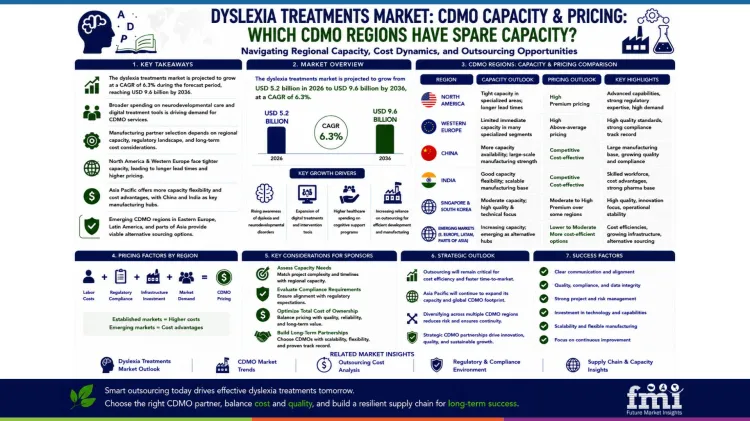
- The dyslexia treatments market is projected to grow at a CAGR of 6.3% during the forecast period. The market size is valued at USD 5.2 billion in 2026 and is projected to reach USD 9.6 billion by 2036.
- Broader spending on neurodevelopmental care and the expansion of digital treatment tools have created additional demand for external development and manufacturing support.
- CDMOs play an important role in helping pharmaceutical companies, biotechnology firms, and healthcare technology developers bring products to market while maintaining budget discipline and production efficiency.
- North America and Western Europe remain established centers for outsourced pharmaceutical manufacturing, although available capacity has become tighter in several specialized therapeutic areas.
- Asia Pacific remains attractive for outsourcing because manufacturing costs are relatively low and healthcare production infrastructure continues to expand.
- Emerging CDMO markets in Eastern Europe, Latin America and parts of Asia are presenting themselves as alternatives for companies looking for available capacity and cost efficiencies.
The dyslexia treatments market is growing steadily as awareness of learning disabilities increases and healthcare systems invest more in diagnosis, intervention and long-term cognitive support programs. The market is projected to grow from USD 5.2 billion in 2026 to USD 9.6 billion by 2036, presenting new opportunities for treatment developers, technology providers and service organizations across the healthcare value chain.
With creativity on the rise, outsourcing is emerging as a key strategy for companies looking to manage development costs and accelerate commercialization. Contract Development and Manufacturing Organizations (CDMOs) are a vital component of the support for product development, clinical manufacturing, packaging, analytical testing and commercial scale manufacturing. For many developers, choosing the right CDMO partner has become as important as the scientific breakthrough itself.
One of the biggest questions facing developers today is where spare manufacturing capacity exists and how regional pricing dynamics are evolving. The availability of capacity can significantly impact development schedules, production costs and market entry strategies, especially for emerging healthcare companies with limited internal manufacturing capacity.
North America continues to be one of the largest and most sophisticated CDMO markets in the world. The region has a deep regulatory expertise and strong manufacturing infrastructure and is close to many biotechnology and pharmaceutical innovators. But the need for specialized manufacturing services is growing and that has led to increased utilization rates in many facilities. As a result, companies often face longer lead times and premium pricing when seeking highly specialized development and production capabilities.
The situation is similar across many parts of Western Europe. Well-regarded CDMO providers with strong regulatory track records and advanced technical capabilities continue to call Germany, Switzerland, Ireland and the United Kingdom home. They are often chosen for complex products that require stringent quality control. But, demand still outstrips capacity growth in a number of specialized manufacturing segments, meaning there is only limited capacity available immediately.
It is only natural that such market conditions have led to pricing pressures. CDMOs in established healthcare markets can typically charge higher rates, due to factors such as labour costs, regulatory adherence, investment in infrastructure and high demand from international pharmaceutical companies. Developers looking for a quick start to projects could therefore see higher production costs in these areas.
The Asia Pacific region has become one of the more attractive options for companies looking for additional manufacturing capacity. China, India, Singapore, South Korea and Malaysia have all invested heavily in pharmaceutical and healthcare manufacturing infrastructure over the past decade. These investments have raised the region’s production capacity, while raising the standards for quality and rules for compliance.
China is one of the world's largest manufacturing bases and continues to attract outsourcing business due to its scale, technical expertise and cost competitiveness. Significant investments in pharmaceutical manufacturing facilities have boosted available capacity, notably for routine production activities and large-volume manufacturing needs. Utilization rates have improved in recent years, but many organizations still see China as a region with more capacity flexibility than some Western markets.
India is also emerging as an increasingly significant player in the global CDMO ecosystem. The country has a strong base of pharmaceutical manufacturing, skilled workforce and competitive costs, which makes it an attractive destination for outsourcing development and production. For long-term commercialization goals, many companies see India as a strategic choice for the balance between cost efficiency and scale of manufacturing.
Singapore and South Korea are in a somewhat different position in the marketplace. These countries have focused on establishing world class manufacturing ecosystems with stress on quality, creativity, and regulatory compliance. Developers are prepared to pay a premium over some of the surrounding markets for the operational stability and technical sophistication offered by these markets.
Emerging CDMO markets are also getting a buzz. Eastern European countries have increased investments in health care manufacturing capabilities while providing lower operating costs than many Western European markets. Also, some Latin American countries are trying to bolster their manufacturing ecosystems to back regional healthcare expansion and attract international outsourcing work.
The dyslexia treatments market players may have different manufacturing needs than traditional pharmaceutical products. The increasing importance of digital therapeutics, software-enabled interventions, diagnostic platforms and personalized treatment solutions creates the need for a wider range of development and production services. This diversification is affecting how companies are assessing CDMO partners and capacity availability.
Regulatory readiness is another major determinant of regional competitiveness. Manufacturing capacity is of little value if it does not meet international standards of quality and compliance. Thus, developers look at operational availability as well as regulatory track records when choosing outsourcing partners. Regions that combine spare capacity with strong compliance credentials are likely to attract a greater share of future outsourcing activity.
Price considerations are still a factor in decision making. Manufacturing economics in many regions have been hit by rising labor costs, energy costs, supply chain disruptions and inflationary pressures. This is causing more companies to do a full total-cost assessment rather than just looking at the headline price. Today, the decision to outsource is largely driven by logistics, quality assurance, efficiency in project management and resilience of supply chain.
We expect continued investment in medical breakthroughs will drive demand for CDMO services across a broad range of therapeutic areas, including neurodevelopmental disorders. Capacity expansion projects are underway in many regions, but demand growth may continue to put pressure on supply in highly specialized manufacturing segments. Companies that lock in strategic outsourcing relationships early may enjoy greater flexibility and cost advantages as the competition for manufacturing resources increases.
Bottom Line
As the level of creativity in the dyslexia treatments market grows, the capacity and pricing considerations for CDMO are becoming key. North America and Western Europe still provide advanced capabilities, but often with tighter capacity constraints and at higher prices. The Asia Pacific region remains attractive due to its expanding infrastructure, competitive pricing and increasing manufacturing flexibility, while new outsourcing opportunities are being created in emerging regions. As the demand for development and manufacturing services grows, companies will increasingly look to focus on regions that offer a combination of available capacity, regulatory reliability, operational efficiency and long-term cost competitiveness.

