

- Industry Size (2026)
- USD 472 Mn
- Forecast (2036)
- USD 2470.4 Mn
- CAGR (2026 to 2036)
- 18%
Demand for ADHD Digital Therapy Market Forecast and Outlook 2026 to 2036
The ADHD digital therapy market is expected to grow from USD 472 million in 2026 to USD 2,470.4 million by 2036, reflecting a compound annual growth rate (CAGR) of 18%. Digital therapy solutions for Attention Deficit Hyperactivity Disorder (ADHD) are increasingly gaining recognition as a safe and effective alternative to traditional treatment options like medication and behavioral therapy. These digital therapies typically include apps and video games designed to help individuals with ADHD improve focus, impulse control, and other cognitive skills through engaging and evidence-based interventions.
Quick Stats for ADHD Digital Therapy Market
- ADHD Digital Therapy Market Value (2026): USD 472 million
- ADHD Digital Therapy Market Forecast Value (2036): USD 2,470.4 million
- ADHD Digital Therapy Market Global Forecast CAGR (2026 to 2036): 18%
- Top Application by Share in ADHD Digital Therapy Market: Pediatric ADHD (60%)
- Key Growth Regions in ADHD Digital Therapy Market: India, China, USA, UK, Germany
- Top Players in ADHD Digital Therapy Market: Akili Interactive, Pear Therapeutics, Cognitune
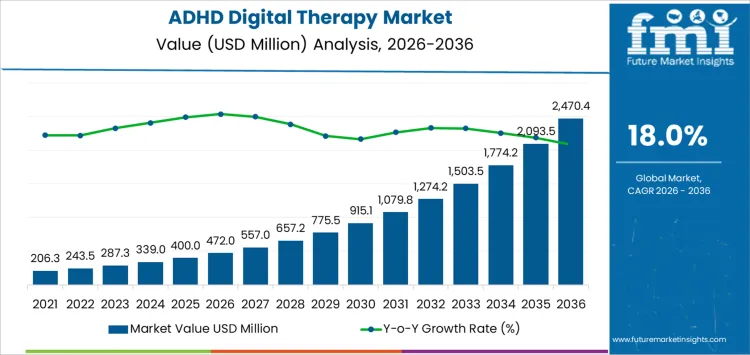
The market’s growth is driven by the increasing prevalence of ADHD diagnoses globally, a growing understanding of the benefits of digital therapeutics, and the rising demand for non-invasive, accessible, and personalized treatment options. Advances in digital health, including the use of AI and machine learning to tailor therapy, are further fueling the growth of the ADHD digital therapy market. Additionally, the shift towards telemedicine and remote care, accelerated by the COVID-19 pandemic, has contributed to the broader acceptance of digital therapy in the management of ADHD.
What is the Growth Forecast for the ADHD Digital Therapy Market through 2036?
The breakpoint analysis for the ADHD digital therapy market shows steady and accelerating growth, with clear periods of increased market activity. Starting at USD 472 million in 2026, the market grows to USD 556.96 million in 2027 and USD 657.21 million in 2028, reflecting early adoption as digital therapies for ADHD are introduced and gain market traction.
From 2028 to 2030, the market accelerates, reaching USD 775.51 million in 2029 and USD 915.1 million in 2030. This acceleration is due to wider acceptance of digital therapy platforms, driven by growing evidence of their effectiveness in treating ADHD symptoms and the increasing need for flexible, accessible treatment options. Between 2030 and 2035, the market experiences rapid expansion, reaching USD 1,079.82 million in 2031, USD 1,274.19 million in 2032, and USD 1,503.54 million in 2033.
By 2035, the market is projected to reach USD 1,774.18 million, with the final value of USD 2,470.4 million expected in 2036. The breakpoint analysis shows that the market will see significant acceleration between 2028 and 2030, driven by the growing adoption of digital therapy solutions, increased validation of these therapies in clinical settings, and the rising preference for at-home and remote treatment options. The market will continue to expand rapidly as digital therapeutics for ADHD become more integrated into mainstream healthcare, reflecting a strong upward trend in the later years of the forecast period.
ADHD Digital Therapy Market Key Takeaways
| Metric | Value |
|---|---|
| Industry Sales Value (2026) | USD 472 million |
| Industry Forecast Value (2036) | USD 2,470.4 million |
| Industry Forecast CAGR (2026-2036) | 18% |
What Is Driving the Demand for the ADHD Digital Therapy Market Globally?
The global demand for ADHD digital therapy solutions is driven by rising diagnosis rates of attention deficit/hyperactivity disorder and growing acceptance of digital health interventions. Traditional ADHD management often relies on medication, behavioural therapy, or a combination, but access to specialists can be limited in many regions. Digital therapies mobile applications, computerised cognitive training, and remote behaviour management platforms provide scalable, accessible support that complements clinical care. These solutions help users improve attention, executive function, and daily task management through structured activities, real time feedback, and personalised behaviour tracking. Increased awareness of ADHD across age groups, particularly in children and adults seeking non pharmacological options, supports uptake. Improvements in digital health infrastructure, remote care reimbursement frameworks, and clinician willingness to integrate digital tools into care pathways further encourage adoption. Caregivers and patients often prefer therapy that can be accessed at home or in school settings, reducing barriers such as travel, scheduling, and stigma associated with in person therapy.
Future demand for ADHD digital therapy is expected to grow as evidence accumulates for clinical effectiveness and as technologies improve personalisation and engagement. Integration of artificial intelligence and machine learning will enable more tailored intervention pathways based on individual usage patterns and outcomes. Growth in telehealth and digital behavioural health services will support wider deployment of ADHD digital therapy platforms, especially in regions facing shortages of specialised providers. Regulatory clarity and expanded reimbursement for digital therapeutics will be key to broader adoption by healthcare systems and insurers. Continued investment by digital health companies and partnerships with clinical organisations will expand content, validation, and integration with traditional care. As users increasingly seek flexible, data driven management strategies that fit daily life, demand for digital therapy solutions addressing ADHD symptoms and functional outcomes will continue to rise worldwide.
What Are the Key Segments in ADHD Digital Therapy Market?
The ADHD digital therapy market is segmented by type and application. Rx DTx apps lead the type segment with 55% of the market share, providing clinically validated digital therapeutic solutions for ADHD management. Pediatric ADHD dominates the application segment with 60%, reflecting the high demand for digital therapies to help children with ADHD manage their symptoms. The market is expanding as digital health solutions for ADHD gain popularity due to their convenience and effectiveness, especially for younger patients.
Which Type Drives ADHD Digital Therapy Market Demand Globally?
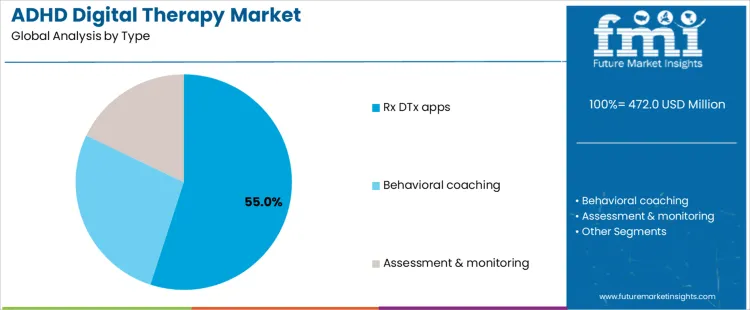
Rx DTx apps account for 55% of the market share. These prescription digital therapeutics (DTx) apps offer clinically validated, evidence-based solutions for managing ADHD. Rx DTx apps provide a range of therapeutic interventions, including cognitive-behavioral techniques, executive function training, and attention training exercises, all tailored to individual needs. These apps are prescribed by healthcare providers and have shown efficacy in managing ADHD symptoms, making them a highly attractive option for patients and healthcare professionals alike. The adoption of Rx DTx apps is growing as they provide a non-invasive, scalable, and cost-effective alternative to traditional treatments like medication or in-person therapy, making them a key driver in the ADHD digital therapy market.
Which Application Drives ADHD Digital Therapy Market Demand Globally?
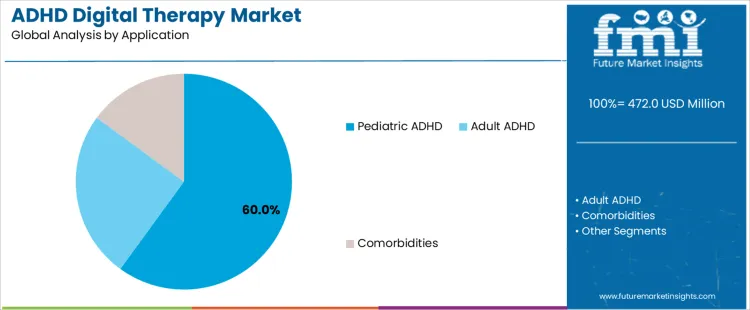
Pediatric ADHD leads the application segment with 60% of the market share. ADHD is most commonly diagnosed in childhood, and digital therapies for managing pediatric ADHD are in high demand. These therapies, such as Rx DTx apps and behavioral coaching tools, help children with ADHD improve focus, manage impulsivity, and develop better organizational skills. Parents and healthcare providers are increasingly turning to digital therapies as a supplemental treatment or alternative to medication, given their accessibility, ease of use, and positive outcomes in managing ADHD symptoms. While other applications such as adult ADHD and comorbidities contribute to market growth, pediatric ADHD remains the dominant application due to the large number of children diagnosed with the disorder and the growing need for effective, personalized management options.
What are the Key Dynamics of the Global ADHD Digital Therapy Market?
The global ADHD digital therapy market is expanding as healthcare providers, patients and caregivers adopt technology enabled solutions that support management of attention deficit hyperactivity disorder symptoms. Digital therapeutics, mobile apps and computer based cognitive training deliver structured interventions that complement clinical care and behavioural support. Rising diagnosis rates, increasing focus on non pharmacological treatment options, and greater access to smartphones and tablets contribute to market growth. Mental health awareness and demand for personalised, accessible tools support integration of digital therapy into care plans for children and adults living with ADHD.
What are the Key Drivers for the Global ADHD Digital Therapy Market?
Rising recognition of ADHD and emphasis on early, ongoing support enhance demand for digital therapy. Healthcare systems and clinicians seek tools that provide structured cognitive and behavioural training between visits and reduce burden on clinic schedules. Growth in telehealth infrastructure and remote care adoption makes digital therapy more accessible across geographies. Caregivers and patients value interventions that can be used consistently at home or school, with progress tracking and feedback features. Advances in software design, adaptive content and user engagement strategies help maintain adherence. Support from payers and clinical evidence demonstrating symptom improvement further encourage adoption in therapeutic settings.
What are the Restraints for the Global ADHD Digital Therapy Market?
Challenges include variability in clinical evidence supporting long term outcomes for different digital therapy programs, which may affect prescriber confidence. Regulatory pathways for digital therapeutics differ by region, creating complexity for developers seeking approval and reimbursement. User engagement can be inconsistent, especially without integration into broader care plans or clinician guidance. Access barriers remain for individuals with limited digital literacy or without stable internet access and compatible devices. Some healthcare professionals may hesitate to recommend digital therapy without clear clinical guidelines and training on how to integrate it with other treatment modalities.
What is the Key Trends in the Global ADHD Digital Therapy Market?
A key trend is integration of artificial intelligence and adaptive learning algorithms that personalise therapy content and pacing based on user performance and engagement patterns. Hybrid care models that combine clinician oversight with digital therapy tools are gaining interest, offering support that bridges clinic visits and daily life. Data analytics and secure progress tracking features help clinicians and caregivers monitor outcomes and adjust plans. Collaborations between digital health developers, academic researchers and clinical networks support evidence generation and best practice development. Platforms that combine cognitive training with gamification and motivational design elements help improve sustained participation among children and adult users.
What is the Country-Wise Outlook for the ADHD Digital Therapy Market?
The ADHD Digital Therapy market is experiencing rapid growth, driven by increasing awareness of attention-deficit hyperactivity disorder (ADHD) and the growing demand for innovative, non-pharmacological treatment options. Digital therapies, including mobile apps, online platforms, and neurofeedback devices, offer personalized, interactive interventions that aim to improve the management of ADHD symptoms. Countries like India, China, and the USA are leading the growth in this market, fueled by rising ADHD diagnosis rates, expanding healthcare infrastructure, and the increasing adoption of digital health solutions. In developed markets like the UK and Germany, the demand for ADHD digital therapies is supported by a growing focus on mental health and personalized treatment approaches. As the stigma surrounding mental health decreases and digital health tools become more accessible, the market for ADHD digital therapies is expected to expand significantly.
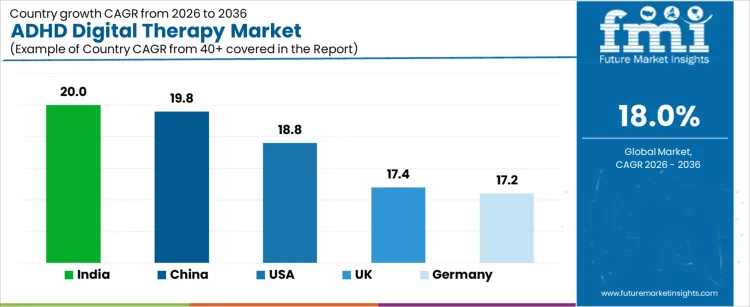
| Country | CAGR (2026 to 2036) |
|---|---|
| India | 20% |
| China | 19.8% |
| USA | 18.8% |
| UK | 17.4% |
| Germany | 17.2% |
What is Driving the Growth of the ADHD Digital Therapy Market in India?
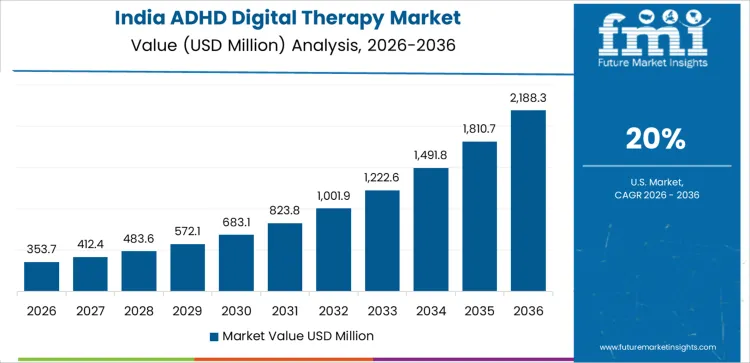
India’s ADHD Digital Therapy market is projected to grow at a CAGR of 20%. As awareness of ADHD increases and diagnoses rise, there is a growing demand for effective, accessible treatment options. ADHD digital therapies, including mobile applications and online cognitive behavioral therapy (CBT) platforms, offer a non-invasive and convenient alternative to traditional treatment methods. The increasing adoption of smartphones and internet access, combined with a growing middle class and greater focus on mental health, is fueling the demand for digital solutions. Additionally, the Indian government’s efforts to integrate digital health technologies into the healthcare system further support market growth. With more people seeking flexible, affordable, and private treatment options, India’s ADHD digital therapy market is poised for substantial growth.
What is Contributing to the Growth of the ADHD Digital Therapy Market in China?
China’s ADHD Digital Therapy market is expected to grow at a CAGR of 19.8%. The rise in ADHD diagnoses, driven by increasing awareness and better healthcare access, is a major factor contributing to the market’s growth. China’s growing interest in digital health solutions, including mobile apps and online therapy platforms, has created a favorable environment for the adoption of ADHD digital therapies. As ADHD is increasingly recognized as a serious condition that requires effective management, Chinese consumers are turning to personalized, non-pharmacological treatments that can be accessed easily from home. The country’s rapid technological advancements and increasing penetration of smartphones further contribute to the market’s expansion. As mental health awareness increases and demand for alternative treatment options grows, ADHD digital therapy solutions are likely to become more widely adopted in China.
What is Driving the ADHD Digital Therapy Market Growth in the USA?
The USA’s ADHD Digital Therapy market is projected to grow at a CAGR of 18.8%. With the increasing prevalence of ADHD diagnoses and a rising interest in non-pharmacological treatment options, there is growing demand for digital therapies in the USA. ADHD digital therapies, such as cognitive training apps and online platforms that provide therapy and symptom management, are becoming increasingly popular due to their convenience and accessibility. The USA’s well-developed healthcare system, combined with growing consumer interest in personalized, evidence-based treatments, is driving market growth. Moreover, the rising trend of digital health and telemedicine solutions, particularly in mental health care, is accelerating the adoption of digital therapies. As ADHD treatment options continue to evolve, digital solutions are expected to play an increasingly important role in managing the condition in the USA.
What is Influencing the Growth of the ADHD Digital Therapy Market in the UK?
The UK’s ADHD Digital Therapy market is projected to grow at a CAGR of 17.4%. There is a growing recognition of ADHD as a prevalent condition in both children and adults, leading to an increasing demand for innovative, effective treatment options. Digital therapies, which offer personalized interventions and symptom management tools, are becoming increasingly popular in the UK. These therapies are appealing due to their convenience, cost-effectiveness, and ability to provide flexible treatment outside of traditional clinical settings. The UK’s well-established healthcare system and a growing focus on mental health have created a supportive environment for the adoption of ADHD digital therapies. As more individuals seek alternative, non-invasive treatments for ADHD, the market for digital therapy solutions is expected to expand.
What is Contributing to the Growth of the ADHD Digital Therapy Market in Germany?
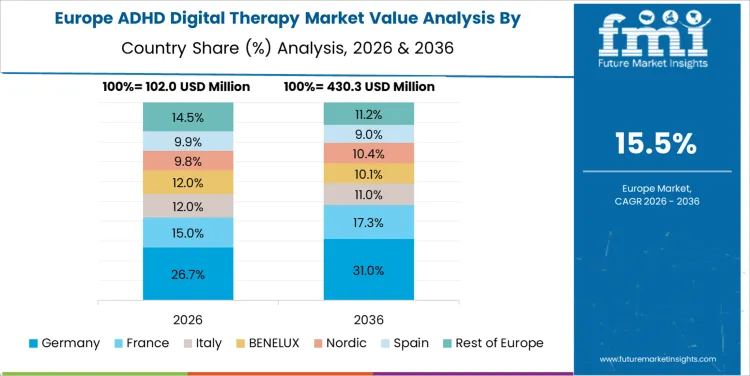
Germany’s ADHD Digital Therapy market is expected to grow at a CAGR of 17.2%. As awareness of ADHD increases, more people are seeking non-pharmacological treatment options. Digital therapy solutions, such as apps that help improve focus and behavior management, are becoming an integral part of ADHD treatment in Germany. The country’s healthcare system is increasingly adopting digital health tools as part of a broader effort to improve patient care and expand access to treatment. Additionally, Germany’s strong emphasis on mental health, coupled with the increasing demand for personalized care, is contributing to the adoption of ADHD digital therapies. As more individuals seek innovative ways to manage ADHD symptoms, the demand for digital solutions is expected to grow steadily in Germany.
What is the Competitive Landscape for the ADHD Digital Therapy Market?
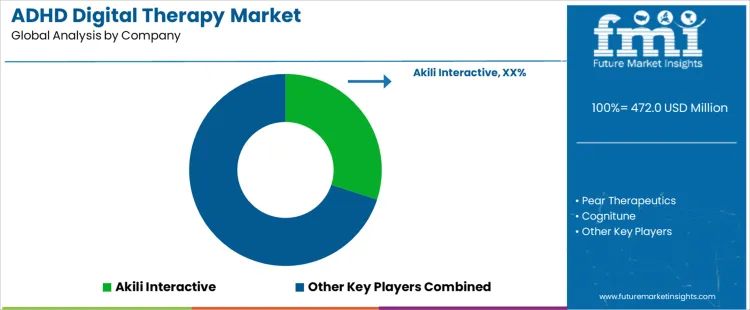
The ADHD Digital Therapy Market is seeing rapid growth, driven by the need for innovative, at-home treatment options for individuals managing ADHD. Akili Interactive leads the market with its FDA-approved video game-based therapy designed to improve cognitive function in individuals with ADHD. By leveraging technology, Akili offers a unique, engaging solution that can be used at home, positioning it as a leader in the market. Pear Therapeutics contributes to the competitive landscape with its prescription digital therapeutics for ADHD, combining evidence-based treatments with a digital platform to allow patients to manage their condition under medical supervision. This integration of technology into traditional therapeutic approaches enhances treatment adherence and engagement.
Cognitune adds further competition with its digital solutions tailored to ADHD, focusing on cognitive training and mental health improvement. Their products are designed to be user-friendly, providing accessible and effective treatments for ADHD symptoms. These companies compete by focusing on digital innovation, user engagement, and personalized therapies that provide flexibility and accessibility. Their strategies revolve around creating effective, scalable treatments that can be used in the home environment, which is becoming an increasingly important factor for individuals seeking management options outside of traditional clinical settings.
Key Players of the ADHD Digital Therapy Market
- Akili Interactive
- Pear Therapeutics
- Cognitune
Scope of the Report
| Items | Values |
|---|---|
| Quantitative Units (2026) | USD Million |
| Type | Rx DTx apps, Behavioral coaching, Assessment & monitoring |
| Application | Pediatric ADHD, Adult ADHD, Comorbidities |
| End User | Clinics & pediatricians, D2C, Schools, Employers |
| Companies | Akili Interactive, Pear Therapeutics, Cognitune |
| Regions Covered | North America, Latin America, Western Europe, Eastern Europe, South Asia and Pacific, East Asia, Middle East & Africa |
| Countries Covered | United States, Canada, Mexico, Brazil, Argentina, Germany, France, United Kingdom, Italy, Spain, Netherlands, China, India, Japan, South Korea, ANZ, GCC Countries, South Africa |
| Additional Attributes | Dollar by sales by product, application, end-user, and region. Includes market trends in Rx DTx apps, behavioral coaching, and assessment & monitoring tools. Focus on digital therapies for ADHD treatment, particularly in pediatric and adult cases, the role of behavioral coaching and monitoring in managing comorbidities, cost-effectiveness, accessibility through direct-to-consumer and clinic-based models, regulatory compliance, market share and competitive positioning of key companies, and the impact of digital therapies on improving ADHD treatment outcomes. |
ADHD Digital Therapy Market Segmentation
Type
- Rx DTx apps
- Behavioral coaching
- Assessment & monitoring
Application
- Pediatric ADHD
- Adult ADHD
- Comorbidities
End User
- Clinics & pediatricians
- D2C
- Schools
- Employers
Region
- Asia Pacific
- China
- Japan
- South Korea
- India
- Australia & New Zealand
- ASEAN
- Rest of Asia Pacific
- Europe
- Germany
- United Kingdom
- France
- Italy
- Spain
- Nordic
- BENELUX
- Rest of Europe
- North America
- United States
- Canada
- Mexico
- Latin America
- Brazil
- Chile
- Rest of Latin America
- Middle East & Africa
- Kingdom of Saudi Arabia
- Other GCC Countries
- Turkey
- South Africa
- Other African Union
- Rest of Middle East & Africa
Frequently Asked Questions
How big is the ADHD digital therapy market in 2026?
The global ADHD digital therapy market is estimated to be valued at USD 472.0 million in 2026.
What will be the size of ADHD digital therapy market in 2036?
The market size for the ADHD digital therapy market is projected to reach USD 2,470.4 million by 2036.
How much will be the ADHD digital therapy market growth between 2026 and 2036?
The ADHD digital therapy market is expected to grow at a 18.0% CAGR between 2026 and 2036.
What are the key product types in the ADHD digital therapy market?
The key product types in ADHD digital therapy market are rx dtx apps, behavioral coaching and assessment & monitoring.
Which application segment to contribute significant share in the ADHD digital therapy market in 2026?
In terms of application, pediatric ADHD segment to command 60.0% share in the ADHD digital therapy market in 2026.
Preview the report firsthand - request a free sample
Get SampleGet the brochure for pricing and purchase details.
Get PDFTable of Content
- Executive Summary
- Global Market Outlook
- Demand-side Trends
- Supply-side Trends
- Technology Roadmap Analysis
- Analysis and Recommendations
- Market Overview
- Market Coverage / Taxonomy
- Market Definition / Scope / Limitations
- Market Background
- Market Dynamics
- Drivers
- Restraints
- Opportunity
- Trends
- Scenario Forecast
- Demand in Optimistic Scenario
- Demand in Likely Scenario
- Demand in Conservative Scenario
- Opportunity Map Analysis
- Product Life Cycle Analysis
- Supply Chain Analysis
- Investment Feasibility Matrix
- Value Chain Analysis
- PESTLE and Porter’s Analysis
- Regulatory Landscape
- Regional Parent Market Outlook
- Production and Consumption Statistics
- Import and Export Statistics
- Market Dynamics
- Global Market Analysis 2021 to 2025 and Forecast, 2026 to 2036
- Historical Market Size Value (USD Million) Analysis, 2021 to 2025
- Current and Future Market Size Value (USD Million) Projections, 2026 to 2036
- Y-o-Y Growth Trend Analysis
- Absolute $ Opportunity Analysis
- Global Market Pricing Analysis 2021 to 2025 and Forecast 2026 to 2036
- Global Market Analysis 2021 to 2025 and Forecast 2026 to 2036, By Type
- Introduction / Key Findings
- Historical Market Size Value (USD Million) Analysis By Type , 2021 to 2025
- Current and Future Market Size Value (USD Million) Analysis and Forecast By Type , 2026 to 2036
- Rx DTx apps
- Behavioral coaching
- Assessment & monitoring
- Y-o-Y Growth Trend Analysis By Type , 2021 to 2025
- Absolute $ Opportunity Analysis By Type , 2026 to 2036
- Global Market Analysis 2021 to 2025 and Forecast 2026 to 2036, By Application
- Introduction / Key Findings
- Historical Market Size Value (USD Million) Analysis By Application, 2021 to 2025
- Current and Future Market Size Value (USD Million) Analysis and Forecast By Application, 2026 to 2036
- Pediatric ADHD
- Adult ADHD
- Comorbidities
- Y-o-Y Growth Trend Analysis By Application, 2021 to 2025
- Absolute $ Opportunity Analysis By Application, 2026 to 2036
- Global Market Analysis 2021 to 2025 and Forecast 2026 to 2036, By End User
- Introduction / Key Findings
- Historical Market Size Value (USD Million) Analysis By End User, 2021 to 2025
- Current and Future Market Size Value (USD Million) Analysis and Forecast By End User, 2026 to 2036
- Clinics & pediatricians
- D2C
- Schools
- Employers
- Y-o-Y Growth Trend Analysis By End User, 2021 to 2025
- Absolute $ Opportunity Analysis By End User, 2026 to 2036
- Global Market Analysis 2021 to 2025 and Forecast 2026 to 2036, By Region
- Introduction
- Historical Market Size Value (USD Million) Analysis By Region, 2021 to 2025
- Current Market Size Value (USD Million) Analysis and Forecast By Region, 2026 to 2036
- North America
- Latin America
- Western Europe
- Eastern Europe
- East Asia
- South Asia and Pacific
- Middle East & Africa
- Market Attractiveness Analysis By Region
- North America Market Analysis 2021 to 2025 and Forecast 2026 to 2036, By Country
- Historical Market Size Value (USD Million) Trend Analysis By Market Taxonomy, 2021 to 2025
- Market Size Value (USD Million) Forecast By Market Taxonomy, 2026 to 2036
- By Country
- USA
- Canada
- Mexico
- By Type
- By Application
- By End User
- By Country
- Market Attractiveness Analysis
- By Country
- By Type
- By Application
- By End User
- Key Takeaways
- Latin America Market Analysis 2021 to 2025 and Forecast 2026 to 2036, By Country
- Historical Market Size Value (USD Million) Trend Analysis By Market Taxonomy, 2021 to 2025
- Market Size Value (USD Million) Forecast By Market Taxonomy, 2026 to 2036
- By Country
- Brazil
- Chile
- Rest of Latin America
- By Type
- By Application
- By End User
- By Country
- Market Attractiveness Analysis
- By Country
- By Type
- By Application
- By End User
- Key Takeaways
- Western Europe Market Analysis 2021 to 2025 and Forecast 2026 to 2036, By Country
- Historical Market Size Value (USD Million) Trend Analysis By Market Taxonomy, 2021 to 2025
- Market Size Value (USD Million) Forecast By Market Taxonomy, 2026 to 2036
- By Country
- Germany
- UK
- Italy
- Spain
- France
- Nordic
- BENELUX
- Rest of Western Europe
- By Type
- By Application
- By End User
- By Country
- Market Attractiveness Analysis
- By Country
- By Type
- By Application
- By End User
- Key Takeaways
- Eastern Europe Market Analysis 2021 to 2025 and Forecast 2026 to 2036, By Country
- Historical Market Size Value (USD Million) Trend Analysis By Market Taxonomy, 2021 to 2025
- Market Size Value (USD Million) Forecast By Market Taxonomy, 2026 to 2036
- By Country
- Russia
- Poland
- Hungary
- Balkan & Baltic
- Rest of Eastern Europe
- By Type
- By Application
- By End User
- By Country
- Market Attractiveness Analysis
- By Country
- By Type
- By Application
- By End User
- Key Takeaways
- East Asia Market Analysis 2021 to 2025 and Forecast 2026 to 2036, By Country
- Historical Market Size Value (USD Million) Trend Analysis By Market Taxonomy, 2021 to 2025
- Market Size Value (USD Million) Forecast By Market Taxonomy, 2026 to 2036
- By Country
- China
- Japan
- South Korea
- By Type
- By Application
- By End User
- By Country
- Market Attractiveness Analysis
- By Country
- By Type
- By Application
- By End User
- Key Takeaways
- South Asia and Pacific Market Analysis 2021 to 2025 and Forecast 2026 to 2036, By Country
- Historical Market Size Value (USD Million) Trend Analysis By Market Taxonomy, 2021 to 2025
- Market Size Value (USD Million) Forecast By Market Taxonomy, 2026 to 2036
- By Country
- India
- ASEAN
- Australia & New Zealand
- Rest of South Asia and Pacific
- By Type
- By Application
- By End User
- By Country
- Market Attractiveness Analysis
- By Country
- By Type
- By Application
- By End User
- Key Takeaways
- Middle East & Africa Market Analysis 2021 to 2025 and Forecast 2026 to 2036, By Country
- Historical Market Size Value (USD Million) Trend Analysis By Market Taxonomy, 2021 to 2025
- Market Size Value (USD Million) Forecast By Market Taxonomy, 2026 to 2036
- By Country
- Kingdom of Saudi Arabia
- Other GCC Countries
- Turkiye
- South Africa
- Other African Union
- Rest of Middle East & Africa
- By Type
- By Application
- By End User
- By Country
- Market Attractiveness Analysis
- By Country
- By Type
- By Application
- By End User
- Key Takeaways
- Key Countries Market Analysis
- USA
- Pricing Analysis
- Market Share Analysis, 2025
- By Type
- By Application
- By End User
- Canada
- Pricing Analysis
- Market Share Analysis, 2025
- By Type
- By Application
- By End User
- Mexico
- Pricing Analysis
- Market Share Analysis, 2025
- By Type
- By Application
- By End User
- Brazil
- Pricing Analysis
- Market Share Analysis, 2025
- By Type
- By Application
- By End User
- Chile
- Pricing Analysis
- Market Share Analysis, 2025
- By Type
- By Application
- By End User
- Germany
- Pricing Analysis
- Market Share Analysis, 2025
- By Type
- By Application
- By End User
- UK
- Pricing Analysis
- Market Share Analysis, 2025
- By Type
- By Application
- By End User
- Italy
- Pricing Analysis
- Market Share Analysis, 2025
- By Type
- By Application
- By End User
- Spain
- Pricing Analysis
- Market Share Analysis, 2025
- By Type
- By Application
- By End User
- France
- Pricing Analysis
- Market Share Analysis, 2025
- By Type
- By Application
- By End User
- India
- Pricing Analysis
- Market Share Analysis, 2025
- By Type
- By Application
- By End User
- ASEAN
- Pricing Analysis
- Market Share Analysis, 2025
- By Type
- By Application
- By End User
- Australia & New Zealand
- Pricing Analysis
- Market Share Analysis, 2025
- By Type
- By Application
- By End User
- China
- Pricing Analysis
- Market Share Analysis, 2025
- By Type
- By Application
- By End User
- Japan
- Pricing Analysis
- Market Share Analysis, 2025
- By Type
- By Application
- By End User
- South Korea
- Pricing Analysis
- Market Share Analysis, 2025
- By Type
- By Application
- By End User
- Russia
- Pricing Analysis
- Market Share Analysis, 2025
- By Type
- By Application
- By End User
- Poland
- Pricing Analysis
- Market Share Analysis, 2025
- By Type
- By Application
- By End User
- Hungary
- Pricing Analysis
- Market Share Analysis, 2025
- By Type
- By Application
- By End User
- Kingdom of Saudi Arabia
- Pricing Analysis
- Market Share Analysis, 2025
- By Type
- By Application
- By End User
- Turkiye
- Pricing Analysis
- Market Share Analysis, 2025
- By Type
- By Application
- By End User
- South Africa
- Pricing Analysis
- Market Share Analysis, 2025
- By Type
- By Application
- By End User
- USA
- Market Structure Analysis
- Competition Dashboard
- Competition Benchmarking
- Market Share Analysis of Top Players
- By Regional
- By Type
- By Application
- By End User
- Competition Analysis
- Competition Deep Dive
- Akili Interactive
- Overview
- Product Portfolio
- Profitability by Market Segments (Product/Age /Sales Channel/Region)
- Sales Footprint
- Strategy Overview
- Marketing Strategy
- Product Strategy
- Channel Strategy
- Pear Therapeutics
- Cognitune
- Akili Interactive
- Competition Deep Dive
- Assumptions & Acronyms Used
- Research Methodology


