


- The dyslexia treatments market is projected to grow at a CAGR of 6.3% during the forecast period. The market size is valued at USD 5.2 billion in 2026 and is projected to reach USD 9.6 billion by 2036.
- Increasing investments in cognitive and neurodevelopmental health, improved screening programs and growing awareness of learning disabilities are supporting the market.
- There has been a consistent increase in investment in research and development for neurodevelopmental indications over the past decade, as healthcare systems have become more focused on early intervention and long-term educational outcomes.
- ADHD and autism spectrum disorder continue to be the most profitable neurodevelopmental R&D opportunities, with larger commercial opportunities, existing treatment pathways and high investor interest.
- From pharma development perspective dyslexia is still relatively underfunded but we are seeing an increase in activity in the domains of digital therapeutics, cognitive training platforms and AI enabled learning technologies.
- Drug developers and investors are increasingly looking at neurodevelopmental indications in terms of unmet need, size of patient population, clinical complexity, regulatory pathways and reimbursement potential.
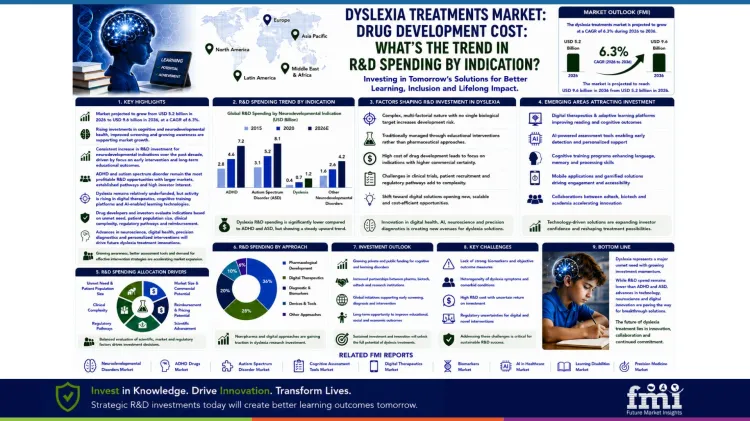
The market for dyslexia treatments is growing as healthcare providers, educational institutions and policy makers are paying more attention to diagnosis and management of learning disabilities. The market is estimated to grow from USD 5.2 billion in 2026 to USD 9.6 billion in 2036, owing to increasing awareness about dyslexia, availability of assessment tools, and rise in demand for the effective intervention strategies.
As the market evolves, one of the biggest questions facing researchers, investors, and treatment developers is how R&D spend is being allocated across neurodevelopmental indications. Investment in R&D is a leading indicator of where novel developments might happen in the future, revealing where companies see the most potential for growth and commercial success.
Neurodevelopmental disorders spending has grown tremendously in the past decade. Recent developments in neuroscience, genetics, neuroimaging, and cognitive science have expanded our understanding of how developmental disorders impact learning, communication, attention, and behavior. These scientific advances have encouraged public and private organizations to allocate more resources to therapeutic development and intervention research.
But R&D spend continues to be highly variable by indication. Dyslexia has consistently been allocated smaller research budgets than attention-deficit hyperactivity disorder (ADHD) and autism spectrum disorder. Pharmaceutical companies, venture capital firms and research organizations tend to concentrate on disorders with larger treatment markets, established clinical pathways and clearer regulatory pathways. This has led to a lot of investment in new drugs, behavioral therapies, biomarkers and diagnostic tools for these diseases.
Dyslexia has a different investment profile. This is a major problem on a global scale, affecting millions of people and with potential lifelong educational and economic consequences. Treatment strategies have traditionally been based on educational interventions rather than pharmaceutical treatments. This distinction has historically been a limiting factor for direct drug development activity in the dyslexia treatment environment.
Complexity of dyslexia also affects R&D allocation decisions. Dyslexia is a complex mix of cognitive, linguistic, neurological and environmental influences, and unlike many neurological disorders, it does not have a specific biological target that can be treated with drug therapies. This additional complication increases development risk and can make it more difficult for companies to develop clear treatment pathways that meet the expectations of regulators and investors alike.
The rising cost of drug development has made organizations more discerning in their evaluation of research programs in the health care industry. The rising costs are attributed to clinical trial costs, patient recruitment challenges, regulatory compliance mandates and long development times. This means that companies will tend to invest in indications where the likelihood of commercial success seems greatest.
But those kinds of hurdles have not deterred tech-savvy creators from setting their sights on dyslexia. We are investing in several key areas, such as digital therapeutics, adaptive learning platforms, AI-powered assessment tools and personalized educational technologies. These solutions are often less expensive as compared to traditional pharmaceutical programs and provide scalable solutions to large patient populations.
Digital health technologies are changing investor perspectives on treatment opportunities. More and more stakeholders consider software-driven interventions to be reasonable treatment options for improving reading skills, cognitive performance and educational outcomes, not just drugs. This tendency is especially important for dyslexia where personalized learning support continues to be the essence of effective intervention.
Research spending is also being shaped by larger trends in neuroscience and precision medicine. Scientists are learning more regarding the neural pathways for language processing, reading fluency and cognitive development. As we learn more, there is hope for more specific therapies that can target specific neurological processes associated with dyslexia.
Government funding programs are a vital source of support for dyslexia-related research. Policy priorities in many countries include educational attainment, workforce productivity, and childhood development, with continued public investments in screening programs, intervention research and technology development. Academic institutions are also major players in the research environment, working closely with healthcare providers and technology companies.
R&D spending patterns are influenced by regional trends. The strong biotech ecosystem, research infrastructure and availability of venture capital funding make North America one of the leading hubs for neurodevelopmental research. There is still a lot of investment on public health initiatives and educational research programs in Europe. Meanwhile, Asia Pacific is emerging as an increasing source of breakthroughs with governments increasing investment in digital education technologies and childhood development programmes.
Investors are increasingly taking a portfolio approach when evaluating neurodevelopmental indications. Instead of focusing solely on broad therapeutic areas, many organizations are diversifying their investments across a number of disorders and modalities of treatment. This change can be advantageous for dyslexia, as it may result in the creation of specific technologies and interventions designed to assist previously underserved patient groups.
The future of R&D spending will likely hinge on developer’s ability to demonstrate measurable results. There is increasing demand from investors and healthcare decision-makers for evidence of increased learning performance, academic achievement, cognitive development and long-term quality of life benefits. Over the next ten years we expect increased levels of funding for technologies and treatments that can deliver these outcomes.
Bottom Line
Investment in research and development across neurodevelopmental indications continues to increase as advances in neuroscience and digital health create new opportunities for breakthroughs. ADHD and autism are the most funded areas right now because of existing treatment paths and better commercial prospects, but dyslexia is getting more attention with new technologies, precision diagnostics and digital therapeutic solutions. With increasing scientific knowledge and stronger outcome-based evidence, the R&D investment into dyslexia treatments is expected to be more diversified, which will propel long-term growth throughout the dyslexia treatments market.

