


- Foodservice is an important growth engine for sourdough because cafés, bakeries, restaurants, hotels, and fast-casual chains use sourdough to premiumize everyday bread occasions.
- Sourdough performs well in foodservice because it supports sandwiches, toast, pizza bases, breakfast menus, bread baskets, gourmet burgers, and bakery-led snacking.
- Frozen and pre-fermented sourdough formats are widening access because operators can serve artisan-style bread without fully managing long fermentation in-house.
- The strongest foodservice opportunity sits in premium sandwiches, café toast menus, sourdough pizza, hotel breakfast, deli formats, and retail bakery operations.
- The risk is inconsistency. Foodservice buyers need reliable acidity, crust, crumb, thawing performance, reheating behavior, and portion control.
- The biggest misconception is that foodservice demand is driven only by artisan appeal. Operators adopt sourdough when it adds menu value without creating excessive labor or quality risk.
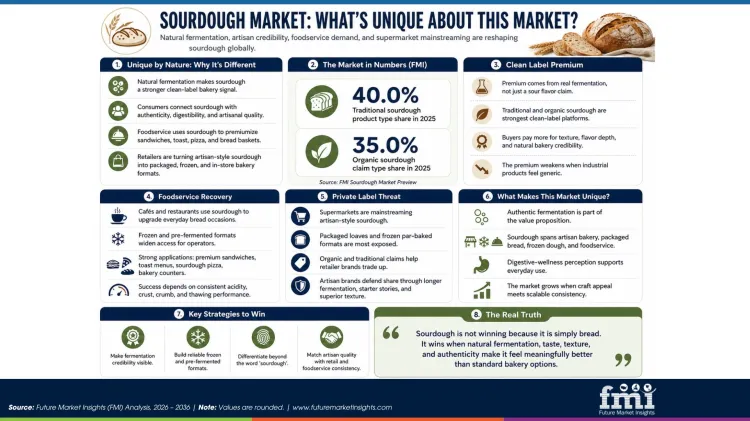
Sourdough has moved beyond the artisan bakery counter. It is now a foodservice tool. Cafés use it for premium toast. Restaurants use it for bread baskets and sandwiches. Fast-casual chains use it in buns, pizza bases, and gourmet menu builds. Hotels use it in breakfast programs. Retail bakeries use it to make in-store bakery feel more premium. This makes foodservice one of the most important demand pathways for sourdough.
FMI’s Sourdough Market supports this reading. The preview notes that traditional sourdough remains the leading product type, while frozen sourdough formats are improving access for foodservice and retail bakeries. FMI also highlights that pre-fermented and frozen dough has expanded distribution across restaurants and supermarkets. This is important because foodservice buyers want artisan quality, but they also need operational reliability.
Sourdough for foodservice makes sense from a consumer perspective. It provides a premium signal for common dishes. When someone is served a sandwich on sourdough bread, the meal feels more upscale compared to sandwiches made on white bread. Sourdough gives credibility to avocado toast. Pizza bases can be promoted as tastier and easier to digest when sourdough is used. Even a toast item on breakfast menus becomes a premium product if the bread shows a crust and an open crumb.
Nevertheless, foodservice usage is not limited to appearance. Restaurants require equipment that will perform well under stress. The cafe will not be able to cope with poor-quality loaves that cannot be toasted properly. Hotels will struggle to serve a type of bread that spoils quickly in the morning. Fast-casual restaurants will have problems when they use sourdough buns that differ in acidity, shape, and flavor from batch to batch.
This is why the use of frozen or pre-fermented ingredients is important. Operators can offer a sourdough-like product without having to handle any starter cultures, fermentation processes, trained workers, or waste. According to FMI, the use of frozen products is increasing in retail bakery operations; in addition, industrial-scale sourdough fermentation and frozen dough are being used for restaurants, hotels, retail bakeries, airline catering, and other foodservice applications.
The strongest foodservice opportunity sits in premium sandwich platforms. Sourdough fits café sandwiches, deli sandwiches, breakfast sandwiches, grilled cheese, panini, and toast-based meals. It offers texture, flavor, and visual differentiation without requiring a completely new eating occasion. Operators can upgrade the same meal with a better bread base.
Another effective approach would be through the use of pizza. With sourdough crusts used for pizzas, the brands can tie fermentation, digestion benefits, and artisanal crusts together. This can work effectively in the case of fast-casual pizza, premium frozen pizza, meal kits, and takeout from restaurants. Pizza allows for differentiation of crusts through use of toppings.
Breakfast and brunch menus also have applications. Toasted sourdough, eggs, open-faced sandwiches, and sweet and savory bakery items complement the café setting in connection with premium breads. As consumers associate sourdough with breakfast and brunch time periods, it is only natural for the menu options to be selected accordingly.
Another area in which foodservice recovery intersects with premium bakery retail is that of in-store bakeries and the retail bakery counter itself. Through the use of par baked, frozen, or pre-fermented sourdough, a bakery appearance can be provided when there is no expert bakery staff available.
FMI’s Bakery Mixes Market and Sourdough Ingredients Market are useful adjacent references because sourdough foodservice growth depends on scalable formats, starter cultures, blends, and bases. Operators need consistency more than romance. A starter culture or frozen base that gives predictable acidity and structure is more valuable than a story alone.
There is the danger of becoming overreaching in sourdough production. There are not all foodservice products for which a sourdough designation adds value. The taste being overly tart will be incompatible with certain fillings. Hard bread crusts lower eatability. Expensive sourdough loaves increase costs. Too much handling can make the product unappealing. Application determines the success of the foodservice product.
Do not think that the demand for foodservice products is due only to the attraction of the product as an artisan product. An artisan product attracts people, but a good product wins adoption.
Bottom line: Sourdough wins in foodservice when it upgrades familiar meal occasions while remaining operationally reliable. The strongest suppliers will help cafés, restaurants, hotels, and retail bakeries deliver artisan-style bread without sacrificing consistency, labor efficiency, or margin.

