


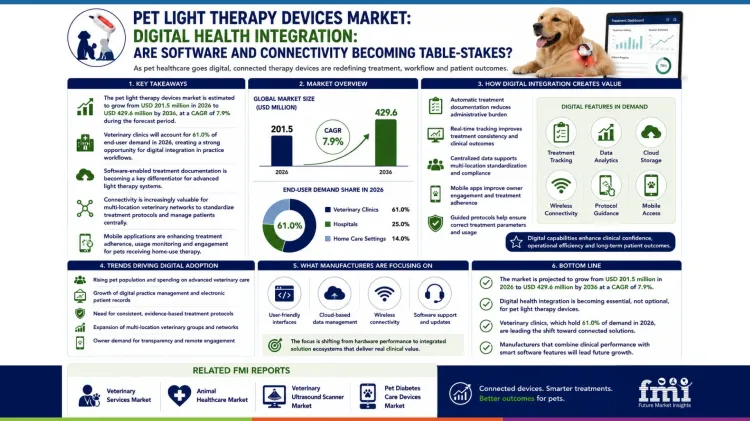
- The pet light therapy devices market is estimated to grow from USD 201.5 million in 2026 to USD 429.6 million by 2036, at a CAGR of 7.9% during the forecast period, due to increasing adoption of connected pet healthcare technologies.
- The veterinary clinics segment is expected to account for 61.0% of the end-user demand in 2026, offering an opportunity for device manufacturers to embed treatment tracking, workflow management, and therapy monitoring capabilities.
- Software-enabled treatment documentation is emerging as a key differentiator for advanced light therapy systems as pet healthcare becomes more data-driven.
- Connectivity features are increasingly valued by multi-location veterinary networks to implement standardized treatment protocols and centralized patient management.
- Demand for mobile applications that facilitate treatment adherence, usage monitoring and owner engagement is being driven by pet therapy devices for home use.
The pet light therapy devices market has historically been hardware performance centric. Traditionally, the choice of device has been based on parameters such as wavelength accuracy, power output, flexibility of treatment and clinical reliability. These qualities still matter, but a new competitive element is starting to show up across the industry.
Digital integration is gaining more and more importance.
As veterinary practices upgrade their operational infrastructure, the expectations for connected medical devices are changing. Equipment no longer has only to meet the criterion of therapeutic performance. Providers are increasingly using technology to improve workflow efficiency, treatment consistency and patient management.
This trend is opening new opportunity for software-enabled pet light therapy devices.
It is estimated that the market will grow from USD 201.5 million in 2026 to USD 429.6 million by 2036. Growth in demand continues to be driven by pain management, rehabilitation, wound healing and post-surgical applications, but digital functionality is beginning to emerge as an additional value driver.
This change is symptomatic of wider changes across veterinary health care.
Veterinary organizations are increasingly dependent on digital practice management platforms, electronic patient records, appointment scheduling software, and treatment documentation systems. As these platforms become more standard operating tools, the pressure to make clinical equipment fit into existing workflows increases.
Pet light therapy devices are slowly making their way into this ecosystem.
Clinics are increasingly aware of the importance of automatic documentation of treatments. Manual recording of therapy duration, treatment parameters and patient progress can result in administrative burdens. Integrated software solutions streamline these processes and increase consistency across treatment sessions.
The opportunity is even greater among veterinary clinics, which represent 61.0% of market demand in 2026. As patient volume rises and procedural complexity increases, providers are seeking technologies that reduce administrative burden and maintain quality of treatment.
And connectivity promotes standardization, as well.
The internationalization of multi-site veterinary groups continues. Often these organizations require a common treatment protocol across their facilities. Connected therapy devices allow for centralized monitoring, standardization of treatment settings and better adherence to clinical guidelines.
As veterinary healthcare consolidates further these capabilities will become more valuable.
Another major area of digital expansion is home-use therapy devices.
Increasingly, pet owners expect healthcare technologies to provide insight into treatment progress. Mobile device apps can help you set up therapy, and track how often you’re using them and help you stick to what the veterinarian recommends.
This ability enhances engagement and clinics can track long-term treatment outcomes.
Digital integration may also improve clinical confidence.
The efficacy of photobiomodulation is largely dependent upon the proper treatment parameters. Software-assisted treatment protocols help reduce variability by guiding the user through recommended settings and application techniques. This ability may be especially advantageous for newer users with limited experience with light therapy administration. Manufacturers are responding to these changing expectations.
The focus on product development is growing in the areas of user interfaces, cloud-based data management, wireless connectivity and software support services. Competitive differentiation is gradually shifting from hardware specs to wider solution ecosystems.
The trend is similar to what has been seen in other categories of healthcare devices.
Medical technologies that once competed primarily on physical performance now frequently compete on software functionality, interoperability, and user experience. Veterinary devices appear to be moving along a similar path.
Connectivity alone is unlikely to determine purchasing decisions.
The main thing is still the clinical performance. Veterinary providers will continue to focus on effectiveness, reliability and safety of treatment. Digital capabilities are valuable when they build on these core attributes, not replace them.
The most successful suppliers are therefore likely to combine strong therapeutic performance with practical software functionality that addresses real clinical needs.
The misconception to avoid is that every pet light therapy device will require sophisticated digital infrastructure. Smaller clinics and budget-conscious buyers may continue prioritizing affordability and simplicity. Nevertheless, the direction of the market increasingly favors connected solutions capable of supporting operational efficiency and treatment consistency.
Bottom Line
The digital health integration is becoming a key influencing factor in the pet light therapy devices market. As veterinary practices shift to more connected healthcare workflows, software capabilities and device connectivity are becoming more than just nice-to-have features, but instead important competitive differentiators that can influence purchasing decisions and long-term position in the market.

