

- Industry Size (2026)
- USD 1600.0 Mn
- Forecast (2036)
- USD 3454.0 Mn
- CAGR (2026 to 2036)
- 8.0%
Biological Co-Pack Crop Nutrition Market Forecast and Outlook 2026 to 2036
The biological co-pack crop nutrition market is positioned to expand from USD 1,600.0 million in 2026 to USD 3,454.0 million by 2036, registering an 8.0% CAGR throughout the forecast period. Growth reflects how agricultural producers are demanding integrated nutrition solutions that combine conventional fertilizer efficiency with biological activity enhancement while simplifying application procedures and reducing field operation complexity. Biological co-pack systems are engineered for synergistic nutrient release, microbial activity optimization, and crop physiological enhancement that transforms traditional fertilizer application into precision nutrition management where timing, placement, and biological activation influence nutrient uptake efficiency, soil health improvement, and sustainable yield optimization.
Large-scale agricultural operations are implementing precision application systems and biological activity monitoring technologies that enable optimized co-pack utilization while reducing input costs and environmental impact through enhanced nutrient use efficiency. Products that can demonstrate consistent biological activity, nutrient release coordination, and crop response predictability under diverse environmental conditions are being integrated earlier in seasonal crop planning processes. As sustainable agriculture regulations tighten and input cost pressures intensify, agronomists evaluate biological co-pack systems not only on yield performance but also on soil health contribution, environmental impact reduction, and integration with existing farm management systems that support operational efficiency and regulatory compliance objectives.
Quick Stats for Biological Co-Pack Crop Nutrition Market
- Biological Co-Pack Crop Nutrition Market Value (2026): USD 1,600.0 million
- Biological Co-Pack Crop Nutrition Market Forecast Value (2036): USD 3,454.0 million
- Biological Co-Pack Crop Nutrition Market Forecast CAGR: 8.0%
- Leading Product Type in Biological Co-Pack Crop Nutrition Market: Microbial Inoculants (34%)
- Key Growth Countries in Biological Co-Pack Crop Nutrition Market: China, Germany, USA, UK, South Korea, Japan
- Key Players in Biological Co-Pack Crop Nutrition Market: Yara International, Nutrien, Mosaic Company, Corteva Agriscience, Bayer Crop Science
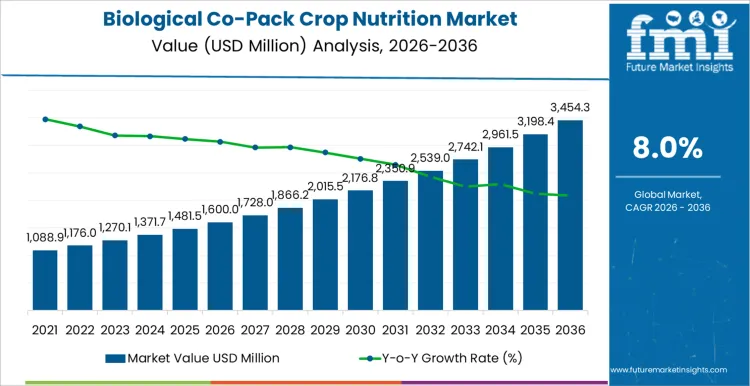
Microbial inoculant formulations lead where soil biological activity and nutrient cycling enhancement are critical for sustainable production systems and soil health improvement. Biostimulant and extract combinations dominate applications requiring plant physiological optimization and stress tolerance enhancement that support yield stability under challenging environmental conditions. Bio-based controlled release and coating technologies serve applications demanding precision nutrient timing and reduced application frequency that optimize labor efficiency and environmental stewardship. In-furrow and seed treatment delivery methods are gaining market share because they enable precise biological placement and early season crop establishment enhancement while minimizing field operations and environmental exposure risks. Row crop applications remain the largest market segment, followed by high-value horticulture systems, while perennial and plantation crops provide specialized demand for long-term biological soil management.
Biological Co-Pack Crop Nutrition Market Key Takeaways
| Metric | Value |
|---|---|
| Market Value (2026) | USD 1,600.0 million |
| Market Forecast Value (2036) | USD 3,454.0 million |
| Forecast CAGR 2026 to 2036 | 8.0% |
How Are Regenerative Agriculture Practices Reshaping Co-Pack Technology Requirements?
Regenerative agriculture adoption is driving fundamental changes in crop nutrition approaches as farming systems prioritize soil health restoration and biological activity enhancement over conventional yield maximization strategies. Modern regenerative practices require nutrition solutions that support beneficial microbial populations, enhance organic matter accumulation, and improve soil structure while maintaining productivity and economic viability. This agricultural evolution pushes co-pack manufacturers toward biological formulations that can demonstrate measurable soil health improvements including increased microbial diversity, enhanced carbon sequestration, and improved water infiltration while providing consistent nutrient availability for crop production.
The integration of cover cropping, reduced tillage, and diverse rotation systems creates unique requirements for biological co-pack products that can function effectively in complex soil biological environments while supporting multiple crop species and varying soil conditions. Regenerative farming systems emphasize ecosystem service provision including pollinator habitat, biodiversity enhancement, and watershed protection that benefits from biological co-pack systems designed to support comprehensive agricultural sustainability rather than single-crop optimization. This holistic approach creates opportunities for innovative co-pack formulations that address multiple agricultural objectives while providing economic returns through input efficiency and premium market access.
How Is the Market Structured Across Biological Technology Categories?
The biological co-pack crop nutrition market demonstrates distinct segmentation patterns based on biological mechanisms and application technologies that directly influence product efficacy and farmer adoption patterns. Microbial inoculant formulations capture 34.0% market share through their proven ability to enhance nutrient cycling, improve soil biological activity, and provide crop growth stimulation that supports yield improvement while reducing synthetic fertilizer requirements. These products benefit from extensive research validation and farmer experience while addressing growing concerns about soil health degradation and input cost management in modern agricultural systems.
Biostimulant and extract combinations achieve 30.0% market adoption through their versatility in addressing plant physiological stress and enhancing nutrient uptake efficiency under diverse environmental conditions. These formulations incorporate plant hormones, amino acids, and organic compounds that optimize metabolic processes while improving stress tolerance and nutrient utilization efficiency. The biological complexity of biostimulant systems creates opportunities for customized formulations that address specific crop requirements and environmental challenges while providing measurable performance benefits that justify premium pricing and farmer investment.
Which Crop Application Segment Generates the Highest Market Demand?
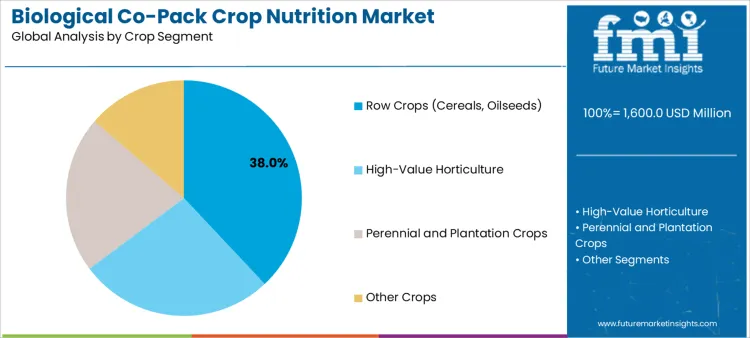
Row crop applications maintain 38.0% market preference, establishing cereal and oilseed production as the primary driver of biological co-pack adoption and technology development. These applications benefit from large acreage coverage, mechanized application systems, and established distribution networks that support efficient product deployment while providing substantial market volume opportunities. Row crop producers increasingly adopt biological co-pack systems to optimize input efficiency and maintain productivity while addressing environmental stewardship requirements and consumer preferences for sustainable production practices.
Which Delivery Method Configuration Leads Agricultural Implementation?
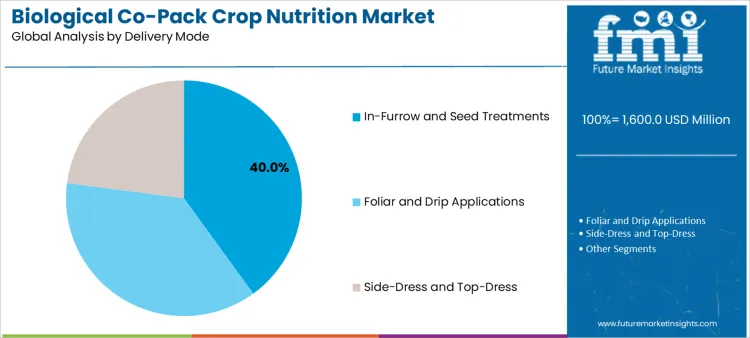
In-furrow and seed treatment applications command 40.0% of delivery preferences, reflecting their ability to provide precise biological placement and early season crop establishment enhancement while minimizing field operations and environmental exposure. These delivery methods enable targeted biological activity where crop response is most critical while reducing product requirements and application complexity compared to broadcast or foliar application approaches. In-furrow delivery systems integrate effectively with existing planting equipment while providing consistent biological placement and activation timing that optimizes crop response and economic returns.
Which Distribution Channel Drives Market Access?
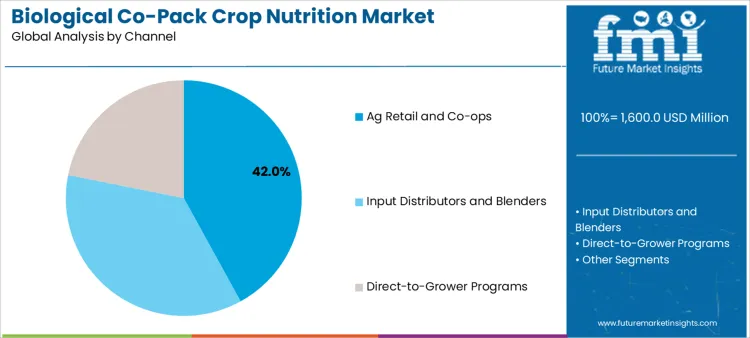
Agricultural retail and cooperative networks represent 42.0% of market channels, establishing traditional agricultural supply systems as the primary pathway for biological co-pack product distribution and farmer education. These channels provide comprehensive agronomic support, product application guidance, and local technical expertise that support successful biological co-pack implementation while maintaining farmer relationships and trust essential for technology adoption. Retail and cooperative networks enable product trial programs and performance validation that support farmer confidence and market expansion while providing feedback for product optimization and development.
How Is Climate Variability Driving Biological Enhancement Innovation?
Increasing weather variability and extreme climate events are creating unprecedented demands for crop nutrition systems that can enhance plant resilience and maintain productivity under stressful environmental conditions. Biological co-pack products provide unique capabilities to improve plant stress tolerance through enhanced root development, improved water uptake efficiency, and optimized metabolic processes that help crops maintain performance during drought, temperature extremes, and other environmental challenges. This climate adaptation requirement drives innovation in biological formulations that combine multiple stress tolerance mechanisms while maintaining compatibility with conventional fertilizer systems and application equipment.
The development of climate-smart agriculture initiatives creates additional opportunities for biological co-pack systems that can demonstrate measurable contributions to climate adaptation and mitigation objectives. Agricultural producers increasingly seek nutrition solutions that support carbon sequestration, reduce greenhouse gas emissions, and improve resource use efficiency while maintaining economic viability. These environmental objectives benefit biological co-pack products that can provide comprehensive sustainability benefits while delivering consistent agronomic performance and farmer economic returns that support widespread adoption and market expansion.
What Regulatory Challenges Constrain Biological Product Development?
The primary regulatory barrier affecting biological co-pack development centers on the complex approval processes required for biological agents and the extensive efficacy data requirements that increase development costs and time-to-market timelines. Microbial inoculants and biological active ingredients require comprehensive safety testing, environmental impact assessment, and efficacy validation that can extend product development cycles while increasing research and development investment requirements. Regulatory complexity varies significantly across different countries and regions, creating challenges for global product development and market access while potentially limiting innovation in smaller markets or emerging agricultural regions.
Quality control and product consistency requirements for biological systems create additional challenges due to the inherent variability of living organisms and biological processes. Maintaining viable microbial populations, consistent biological activity, and predictable field performance requires sophisticated manufacturing processes and storage systems that increase production costs while creating potential barriers for smaller manufacturers or specialized biological product developers. These technical challenges drive consolidation toward larger manufacturers while creating opportunities for technology partnerships and licensing agreements that support market access and product development.
How Do Sustainable Agriculture Certifications Create Growth Opportunities?
Organic and sustainable agriculture certification programs are creating substantial market opportunities for biological co-pack systems that meet stringent requirements for natural inputs while providing measurable performance benefits that support certified production systems. Certification requirements increasingly favor biological enhancement technologies that can demonstrate soil health improvement, biodiversity enhancement, and environmental protection while maintaining productivity standards required for economic viability. These certification frameworks provide premium pricing opportunities and market access advantages that justify investment in biological co-pack development and farmer adoption.
Consumer demand for sustainably produced food creates additional market drivers through retailer sustainability requirements and brand positioning strategies that emphasize environmental stewardship and responsible farming practices. Food companies increasingly establish supply chain sustainability requirements that benefit farmers using biological co-pack systems while creating market premiums and long-term supply relationships. These market trends drive adoption of biological technologies while supporting innovation in product development and application systems that optimize both environmental performance and agricultural productivity.
How Is the Biological Co-Pack Crop Nutrition Market Expected to Evolve Across Major Nations?
The global biological co-pack crop nutrition market reflects regional variations in agricultural practices, regulatory frameworks, and farmer adoption patterns that influence market development opportunities across different geographic zones. Leading agricultural regions drive innovation in biological technologies while emerging markets focus on establishing basic biological product access and application capabilities that support agricultural modernization and sustainability objectives.
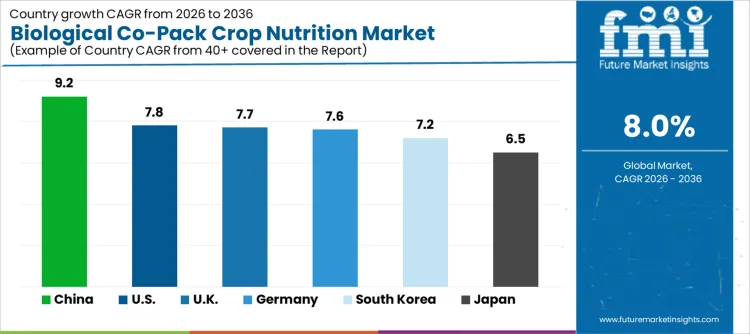
| Country | CAGR (%) |
|---|---|
| China | 9.2% |
| Germany | 7.6% |
| USA | 7.8% |
| Japan | 6.5% |
| South Korea | 7.2% |
| UK | 7.7% |
What Drives China's Market Leadership?
China's biological co-pack crop nutrition market is projected to achieve the highest growth rate at 9.2% CAGR, driven primarily by massive agricultural production requirements and comprehensive government policies promoting sustainable farming practices and food security enhancement. The country's position as the world's largest agricultural producer creates enormous opportunities for biological co-pack adoption while fostering domestic innovation in biological technologies and manufacturing capabilities. Chinese agricultural policies increasingly emphasize soil health improvement and environmental protection that benefit biological co-pack systems while supporting domestic industry development and international competitiveness.
Government initiatives promoting green agriculture and reduced chemical input usage accelerate biological co-pack adoption while creating favorable regulatory conditions for product development and market expansion. The integration of traditional agricultural wisdom with modern biological technologies creates unique opportunities for culturally appropriate biological solutions that address local farming practices and environmental conditions. China's agricultural modernization efforts enable rapid adoption of biological technologies while supporting domestic manufacturing capabilities and export market development across Asia-Pacific regions.
How Is Germany Advancing Sustainable Agriculture Excellence?
Demand for biological co-pack crop nutrition in Germany is estimated to expand at a CAGR of 7.6% reflects the country's leadership in sustainable agriculture policy implementation and advanced farming technologies that support sophisticated biological co-pack adoption. German regulatory frameworks establish comprehensive requirements for environmental protection and soil health that drive demand for biological enhancement technologies while providing clear guidelines for product development and market access. The emphasis on precision agriculture and environmental stewardship creates opportunities for premium biological co-pack products that demonstrate superior performance and environmental benefits compared to conventional nutrition approaches.
The country's strong sustainable agriculture sector combined with advanced research capabilities drives adoption of innovative biological co-pack systems that optimize agricultural efficiency while supporting environmental protection objectives. German farmers typically implement comprehensive sustainability management systems that benefit from biological technologies designed to improve soil health and reduce environmental impact while maintaining productivity and economic viability. European Union agricultural policies support biological co-pack adoption through environmental payment programs and sustainability requirements that create economic incentives for farmer adoption.
Why Is the USA Market Emphasizing Innovation and Scale?
The United States market experiences 7.8% CAGR growth supported by large-scale agricultural production systems and increasing farmer awareness of soil health importance that drives adoption of biological enhancement technologies. Corporate agriculture operations increasingly implement precision agriculture systems that benefit from biological co-pack products designed to optimize input efficiency and environmental performance while maintaining the productivity required for competitive global markets. The emphasis on sustainable intensification creates opportunities for biological technologies that can increase productivity while reducing environmental impact and input costs.
Federal and state-level initiatives promoting soil health and carbon sequestration create favorable policy conditions for biological co-pack adoption while supporting research and development funding that accelerates technology advancement and commercialization. The development of precision agriculture technologies in the USA creates opportunities for integrated biological systems that combine biological enhancement with digital monitoring and application optimization while providing comprehensive agronomic management solutions that optimize both economic and environmental performance.
How Is Japanese Quality Focus Driving Premium Applications?
Sales of biological co-pack crop nutrition in Japan are likely to increase at a CAGR of 6.5% is supported by the country's emphasis on agricultural quality and environmental protection that creates demand for the highest-grade biological co-pack products available in global markets. Japanese farmers maintain strict quality standards that require biological products to demonstrate consistent performance and environmental benefits while supporting premium crop production for domestic and export markets. This quality focus drives innovation in biological formulation and application technologies that enable superior crop performance while maintaining environmental stewardship and food safety standards.
The country's leadership in biotechnology and agricultural innovation creates opportunities for sophisticated biological co-pack systems that incorporate advanced biological mechanisms and precision application technologies. Japanese agricultural development emphasizes technological sophistication and environmental harmony that influences biological product standards throughout the region while fostering innovation in biological research and product development that benefits global agricultural sustainability objectives.
What Opportunities Exist in South Korea's Technology Ecosystem?
Demand for biological co-pack crop nutrition in South Korea is estimated to expand at a CAGR of 7.2% CAGR growth is driven by the country's advanced agricultural technology sector and comprehensive sustainability policies that create favorable conditions for biological co-pack market development. Korean farmers require biological products that support high-quality crop production while meeting stringent environmental compliance requirements and food safety standards. The integration of digital agriculture and biotechnology creates demand for biological co-pack systems with exceptional consistency and performance reliability that enable optimized agricultural management and traceability systems.
The country's leadership in biotechnology and agricultural automation creates opportunities for integrated biological systems that combine biological enhancement with digital monitoring and precision application technologies. Korean agricultural technology development emphasizes sustainability and efficiency that drives demand for biological co-pack systems designed to optimize resource utilization while maintaining the quality standards required for domestic consumption and export market competitiveness.
What Strategies Help Suppliers Maintain Competitive Position in Biological Co-Pack Crop Nutrition?
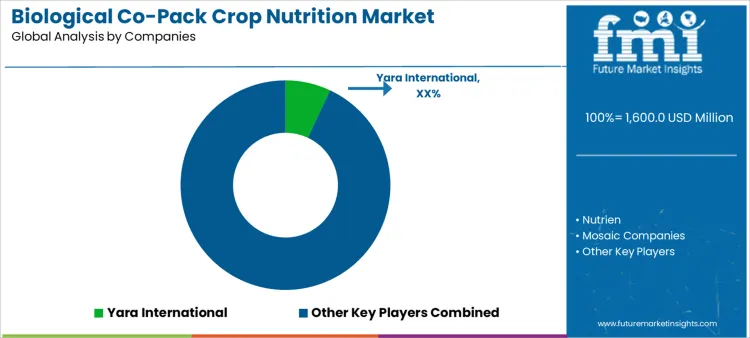
Suppliers maintain market leadership in biological co-pack crop nutrition through comprehensive product development that encompasses biological efficacy, formulation stability, and application convenience while providing extensive agronomic support and field validation that supports successful farmer adoption and sustained product performance. Market leaders establish competitive advantages through research and development capabilities that can demonstrate consistent biological activity and crop response while maintaining cost structures that support competitive pricing and market accessibility for diverse agricultural operations.
Successful suppliers invest in comprehensive field testing and validation programs that demonstrate product efficacy across diverse environmental conditions and farming systems while providing farmers with reliable performance data and application guidelines that support successful technology adoption. Investment in biological research capabilities and formulation technologies allows suppliers to optimize product stability and biological activity while developing specialized formulations for specific crop requirements and environmental conditions. These technological capabilities create differentiation opportunities while enabling premium product positioning that supports long-term customer relationships and market expansion.
Innovation in distribution partnerships and farmer education programs enables suppliers to provide integrated agronomic solutions that optimize biological co-pack performance while supporting farmer success and technology adoption. Collaboration with agricultural retailers, extension services, and farming organizations during product development and market introduction phases allows optimization of product formulations and application recommendations for specific regional conditions and farming practices while ensuring successful technology implementation and farmer satisfaction that supports market growth and product adoption.
Key Players in the Biological Co-Pack Crop Nutrition Market
- Yara International
- Nutrien
- Mosaic Company
- Corteva Agriscience
- Bayer Crop Science
- UPL
- Syngenta Group
- ICL Group
- Verdesian Life Sciences
- Novonesis
Scope of Report
| Items | Values |
|---|---|
| Quantitative Units | USD Million |
| Product Type Segments | Microbial Inoculants; Biostimulants and Extracts; Bio-Based Controlled Release and Coatings; Other Co-Pack Solutions |
| Crop Segment Categories | Row Crops (Cereals, Oilseeds); High-Value Horticulture; Perennial and Plantation Crops; Other Crops |
| Delivery Mode Types | In-Furrow and Seed Treatments; Foliar and Drip Applications; Side-Dress and Top-Dress |
| Channel Categories | Ag Retail and Co-ops; Input Distributors and Blenders; Direct-to-Grower Programs |
| Regions Covered | North America, Europe, Asia Pacific, Latin America, Middle East & Africa |
| Key Countries | USA, Germany, China, Japan, South Korea, UK |
| Key Companies Profiled | Yara International, Nutrien, Mosaic Company, Corteva Agriscience, Bayer Crop Science, and others |
| Additional Attributes | Dollar sales measured for biological co-pack crop nutrition products including microbial inoculants, biostimulants, and controlled release formulations, specified by biological activity, nutrient efficiency, crop response, and application convenience |
Biological Co-Pack Crop Nutrition Market by Segment
By Product Type
- Microbial Inoculants
- Biostimulants and Extracts
- Bio-Based Controlled Release and Coatings
- Other Co-Pack Solutions
By Crop Segment
- Row Crops (Cereals, Oilseeds)
- High-Value Horticulture
- Perennial and Plantation Crops
- Other Crops
By Delivery Mode
- In-Furrow and Seed Treatments
- Foliar and Drip Applications
- Side-Dress and Top-Dress
By Channel
- Ag Retail and Co-ops
- Input Distributors and Blenders
- Direct-to-Grower Programs
Bibliography
- Food and Agriculture Organization of the United Nations. (2023). Biofertilizers and biostimulants in sustainable crop nutrition systems. FAO.
- Organisation for Economic Co-operation and Development. (2023). Biological inputs, soil health, and nutrient use efficiency in modern agriculture. OECD Publishing.
- European Commission. (2024). Regulatory framework for biostimulants and microbial plant nutrition products under sustainable agriculture policies. Publications Office of the European Union.
- United Nations Environment Programme. (2023). Nature‑positive agriculture: Biological inputs and nutrient efficiency strategies. United Nations.
Frequently Asked Questions
How big is the biological co-pack crop nutrition market in 2026?
The global biological co-pack crop nutrition market is estimated to be valued at USD 1,600.0 million in 2026.
What will be the size of biological co-pack crop nutrition market in 2036?
The market size for the biological co-pack crop nutrition market is projected to reach USD 3,454.3 million by 2036.
How much will be the biological co-pack crop nutrition market growth between 2026 and 2036?
The biological co-pack crop nutrition market is expected to grow at a 8.0% CAGR between 2026 and 2036.
What are the key product types in the biological co-pack crop nutrition market?
The key product types in biological co-pack crop nutrition market are microbial inoculants, biostimulants and extracts, bio-based controlled release and coatings and other co-pack solutions.
Which crop segment segment to contribute significant share in the biological co-pack crop nutrition market in 2026?
In terms of crop segment, row crops (cereals, oilseeds) segment to command 38.0% share in the biological co-pack crop nutrition market in 2026.
Preview the report firsthand - request a free sample
Get SampleGet the brochure for pricing and purchase details.
Get PDFTable of Content
- Executive Summary
- Global Market Outlook
- Demand-side Trends
- Supply-side Trends
- Technology Roadmap Analysis
- Analysis and Recommendations
- Market Overview
- Market Coverage / Taxonomy
- Market Definition / Scope / Limitations
- Market Background
- Market Dynamics
- Drivers
- Restraints
- Opportunity
- Trends
- Scenario Forecast
- Demand in Optimistic Scenario
- Demand in Likely Scenario
- Demand in Conservative Scenario
- Opportunity Map Analysis
- Product Life Cycle Analysis
- Supply Chain Analysis
- Investment Feasibility Matrix
- Value Chain Analysis
- PESTLE and Porter’s Analysis
- Regulatory Landscape
- Regional Parent Market Outlook
- Production and Consumption Statistics
- Import and Export Statistics
- Market Dynamics
- Global Market Analysis 2021 to 2025 and Forecast, 2026 to 2036
- Historical Market Size Value (USD Million) Analysis, 2021 to 2025
- Current and Future Market Size Value (USD Million) Projections, 2026 to 2036
- Y-o-Y Growth Trend Analysis
- Absolute $ Opportunity Analysis
- Global Market Pricing Analysis 2021 to 2025 and Forecast 2026 to 2036
- Global Market Analysis 2021 to 2025 and Forecast 2026 to 2036, By Product Type
- Introduction / Key Findings
- Historical Market Size Value (USD Million) Analysis By Product Type , 2021 to 2025
- Current and Future Market Size Value (USD Million) Analysis and Forecast By Product Type , 2026 to 2036
- Microbial Inoculants
- Biostimulants and Extracts
- Bio-Based Controlled Release and Coatings
- Other Co-Pack Solutions
- Microbial Inoculants
- Y-o-Y Growth Trend Analysis By Product Type , 2021 to 2025
- Absolute $ Opportunity Analysis By Product Type , 2026 to 2036
- Global Market Analysis 2021 to 2025 and Forecast 2026 to 2036, By Crop Segment
- Introduction / Key Findings
- Historical Market Size Value (USD Million) Analysis By Crop Segment, 2021 to 2025
- Current and Future Market Size Value (USD Million) Analysis and Forecast By Crop Segment, 2026 to 2036
- Row Crops (Cereals, Oilseeds)
- High-Value Horticulture
- Perennial and Plantation Crops
- Other Crops
- Row Crops (Cereals, Oilseeds)
- Y-o-Y Growth Trend Analysis By Crop Segment, 2021 to 2025
- Absolute $ Opportunity Analysis By Crop Segment, 2026 to 2036
- Global Market Analysis 2021 to 2025 and Forecast 2026 to 2036, By Delivery Mode
- Introduction / Key Findings
- Historical Market Size Value (USD Million) Analysis By Delivery Mode, 2021 to 2025
- Current and Future Market Size Value (USD Million) Analysis and Forecast By Delivery Mode, 2026 to 2036
- In-Furrow and Seed Treatments
- Foliar and Drip Applications
- Side-Dress and Top-Dress
- In-Furrow and Seed Treatments
- Y-o-Y Growth Trend Analysis By Delivery Mode, 2021 to 2025
- Absolute $ Opportunity Analysis By Delivery Mode, 2026 to 2036
- Global Market Analysis 2021 to 2025 and Forecast 2026 to 2036, By Channel
- Introduction / Key Findings
- Historical Market Size Value (USD Million) Analysis By Channel, 2021 to 2025
- Current and Future Market Size Value (USD Million) Analysis and Forecast By Channel, 2026 to 2036
- Ag Retail and Co-ops
- Input Distributors and Blenders
- Direct-to-Grower Programs
- Ag Retail and Co-ops
- Y-o-Y Growth Trend Analysis By Channel, 2021 to 2025
- Absolute $ Opportunity Analysis By Channel, 2026 to 2036
- Global Market Analysis 2021 to 2025 and Forecast 2026 to 2036, By Region
- Introduction
- Historical Market Size Value (USD Million) Analysis By Region, 2021 to 2025
- Current Market Size Value (USD Million) Analysis and Forecast By Region, 2026 to 2036
- North America
- Latin America
- Western Europe
- Eastern Europe
- East Asia
- South Asia and Pacific
- Middle East & Africa
- Market Attractiveness Analysis By Region
- North America Market Analysis 2021 to 2025 and Forecast 2026 to 2036, By Country
- Historical Market Size Value (USD Million) Trend Analysis By Market Taxonomy, 2021 to 2025
- Market Size Value (USD Million) Forecast By Market Taxonomy, 2026 to 2036
- By Country
- USA
- Canada
- Mexico
- By Product Type
- By Crop Segment
- By Delivery Mode
- By Channel
- By Country
- Market Attractiveness Analysis
- By Country
- By Product Type
- By Crop Segment
- By Delivery Mode
- By Channel
- Key Takeaways
- Latin America Market Analysis 2021 to 2025 and Forecast 2026 to 2036, By Country
- Historical Market Size Value (USD Million) Trend Analysis By Market Taxonomy, 2021 to 2025
- Market Size Value (USD Million) Forecast By Market Taxonomy, 2026 to 2036
- By Country
- Brazil
- Chile
- Rest of Latin America
- By Product Type
- By Crop Segment
- By Delivery Mode
- By Channel
- By Country
- Market Attractiveness Analysis
- By Country
- By Product Type
- By Crop Segment
- By Delivery Mode
- By Channel
- Key Takeaways
- Western Europe Market Analysis 2021 to 2025 and Forecast 2026 to 2036, By Country
- Historical Market Size Value (USD Million) Trend Analysis By Market Taxonomy, 2021 to 2025
- Market Size Value (USD Million) Forecast By Market Taxonomy, 2026 to 2036
- By Country
- Germany
- UK
- Italy
- Spain
- France
- Nordic
- BENELUX
- Rest of Western Europe
- By Product Type
- By Crop Segment
- By Delivery Mode
- By Channel
- By Country
- Market Attractiveness Analysis
- By Country
- By Product Type
- By Crop Segment
- By Delivery Mode
- By Channel
- Key Takeaways
- Eastern Europe Market Analysis 2021 to 2025 and Forecast 2026 to 2036, By Country
- Historical Market Size Value (USD Million) Trend Analysis By Market Taxonomy, 2021 to 2025
- Market Size Value (USD Million) Forecast By Market Taxonomy, 2026 to 2036
- By Country
- Russia
- Poland
- Hungary
- Balkan & Baltic
- Rest of Eastern Europe
- By Product Type
- By Crop Segment
- By Delivery Mode
- By Channel
- By Country
- Market Attractiveness Analysis
- By Country
- By Product Type
- By Crop Segment
- By Delivery Mode
- By Channel
- Key Takeaways
- East Asia Market Analysis 2021 to 2025 and Forecast 2026 to 2036, By Country
- Historical Market Size Value (USD Million) Trend Analysis By Market Taxonomy, 2021 to 2025
- Market Size Value (USD Million) Forecast By Market Taxonomy, 2026 to 2036
- By Country
- China
- Japan
- South Korea
- By Product Type
- By Crop Segment
- By Delivery Mode
- By Channel
- By Country
- Market Attractiveness Analysis
- By Country
- By Product Type
- By Crop Segment
- By Delivery Mode
- By Channel
- Key Takeaways
- South Asia and Pacific Market Analysis 2021 to 2025 and Forecast 2026 to 2036, By Country
- Historical Market Size Value (USD Million) Trend Analysis By Market Taxonomy, 2021 to 2025
- Market Size Value (USD Million) Forecast By Market Taxonomy, 2026 to 2036
- By Country
- India
- ASEAN
- Australia & New Zealand
- Rest of South Asia and Pacific
- By Product Type
- By Crop Segment
- By Delivery Mode
- By Channel
- By Country
- Market Attractiveness Analysis
- By Country
- By Product Type
- By Crop Segment
- By Delivery Mode
- By Channel
- Key Takeaways
- Middle East & Africa Market Analysis 2021 to 2025 and Forecast 2026 to 2036, By Country
- Historical Market Size Value (USD Million) Trend Analysis By Market Taxonomy, 2021 to 2025
- Market Size Value (USD Million) Forecast By Market Taxonomy, 2026 to 2036
- By Country
- Kingdom of Saudi Arabia
- Other GCC Countries
- Turkiye
- South Africa
- Other African Union
- Rest of Middle East & Africa
- By Product Type
- By Crop Segment
- By Delivery Mode
- By Channel
- By Country
- Market Attractiveness Analysis
- By Country
- By Product Type
- By Crop Segment
- By Delivery Mode
- By Channel
- Key Takeaways
- Key Countries Market Analysis
- USA
- Pricing Analysis
- Market Share Analysis, 2025
- By Product Type
- By Crop Segment
- By Delivery Mode
- By Channel
- Canada
- Pricing Analysis
- Market Share Analysis, 2025
- By Product Type
- By Crop Segment
- By Delivery Mode
- By Channel
- Mexico
- Pricing Analysis
- Market Share Analysis, 2025
- By Product Type
- By Crop Segment
- By Delivery Mode
- By Channel
- Brazil
- Pricing Analysis
- Market Share Analysis, 2025
- By Product Type
- By Crop Segment
- By Delivery Mode
- By Channel
- Chile
- Pricing Analysis
- Market Share Analysis, 2025
- By Product Type
- By Crop Segment
- By Delivery Mode
- By Channel
- Germany
- Pricing Analysis
- Market Share Analysis, 2025
- By Product Type
- By Crop Segment
- By Delivery Mode
- By Channel
- UK
- Pricing Analysis
- Market Share Analysis, 2025
- By Product Type
- By Crop Segment
- By Delivery Mode
- By Channel
- Italy
- Pricing Analysis
- Market Share Analysis, 2025
- By Product Type
- By Crop Segment
- By Delivery Mode
- By Channel
- Spain
- Pricing Analysis
- Market Share Analysis, 2025
- By Product Type
- By Crop Segment
- By Delivery Mode
- By Channel
- France
- Pricing Analysis
- Market Share Analysis, 2025
- By Product Type
- By Crop Segment
- By Delivery Mode
- By Channel
- India
- Pricing Analysis
- Market Share Analysis, 2025
- By Product Type
- By Crop Segment
- By Delivery Mode
- By Channel
- ASEAN
- Pricing Analysis
- Market Share Analysis, 2025
- By Product Type
- By Crop Segment
- By Delivery Mode
- By Channel
- Australia & New Zealand
- Pricing Analysis
- Market Share Analysis, 2025
- By Product Type
- By Crop Segment
- By Delivery Mode
- By Channel
- China
- Pricing Analysis
- Market Share Analysis, 2025
- By Product Type
- By Crop Segment
- By Delivery Mode
- By Channel
- Japan
- Pricing Analysis
- Market Share Analysis, 2025
- By Product Type
- By Crop Segment
- By Delivery Mode
- By Channel
- South Korea
- Pricing Analysis
- Market Share Analysis, 2025
- By Product Type
- By Crop Segment
- By Delivery Mode
- By Channel
- Russia
- Pricing Analysis
- Market Share Analysis, 2025
- By Product Type
- By Crop Segment
- By Delivery Mode
- By Channel
- Poland
- Pricing Analysis
- Market Share Analysis, 2025
- By Product Type
- By Crop Segment
- By Delivery Mode
- By Channel
- Hungary
- Pricing Analysis
- Market Share Analysis, 2025
- By Product Type
- By Crop Segment
- By Delivery Mode
- By Channel
- Kingdom of Saudi Arabia
- Pricing Analysis
- Market Share Analysis, 2025
- By Product Type
- By Crop Segment
- By Delivery Mode
- By Channel
- Turkiye
- Pricing Analysis
- Market Share Analysis, 2025
- By Product Type
- By Crop Segment
- By Delivery Mode
- By Channel
- South Africa
- Pricing Analysis
- Market Share Analysis, 2025
- By Product Type
- By Crop Segment
- By Delivery Mode
- By Channel
- USA
- Market Structure Analysis
- Competition Dashboard
- Competition Benchmarking
- Market Share Analysis of Top Players
- By Regional
- By Product Type
- By Crop Segment
- By Delivery Mode
- By Channel
- Competition Analysis
- Competition Deep Dive
- Yara International
- Overview
- Product Portfolio
- Profitability by Market Segments (Product/Age /Sales Channel/Region)
- Sales Footprint
- Strategy Overview
- Marketing Strategy
- Product Strategy
- Channel Strategy
- Nutrien
- Mosaic Companies
- Corteva Agriscience
- Bayer Crop Science
- UPL
- Syngenta Group
- ICL Group
- Verdesian Life Sciences
- Novonesis
- Yara International
- Competition Deep Dive
- Assumptions & Acronyms Used
- Research Methodology


