

- Market Size (2026)
- USD 1285.8 Mn
- Forecast (2036)
- USD 2934.1 Mn
- CAGR (2026 to 2036)
- 8.6%
How big is Cardiovascular Drug Discovery Market size?
USD 1,285.8 million in 2026 and USD 2,934.1 million by 2036 at an 8.6% CAGR.
Sales for cardiovascular drug discovery is projected to expand at 8.6% CAGR between 2026 and 2036, increasing valuation from USD 1285.8 million in 2026 to USD 2934.1 million by 2036. Pharmaceutical scientists actively prioritize drug mechanisms driven by human genetics and measurable disease biology. This targeted research strategy is essential to address the growing global burden of cardiovascular illness. A World Health Organization update issued in September 2025 estimated 1.4 billion adults living with hypertension during 2024. Resulting with immense disease exposure directly sustaining ongoing research into specialized therapies designed for heterogeneous vascular and cardiometabolic patient populations.
Diverse international research sponsors apply distinct regional criteria on evaluating cardiovascular drug portfolios. Research sponsors in the United States and Germany emphasize regulatory evidence and translational records during portfolio reviews. Developers in the United Kingdom and South Korea favor genomic cohorts and shorter clinical-study initiation periods. Extensive genetic databases provide the essential scientific foundation to support such genomic development strategies. The UK Biobank confirmed whole-genome sequencing data for 500,000 participants in June 2025. Leading this greater cohort depth directly to improve target qualification across heart failure and vascular disease subtypes.
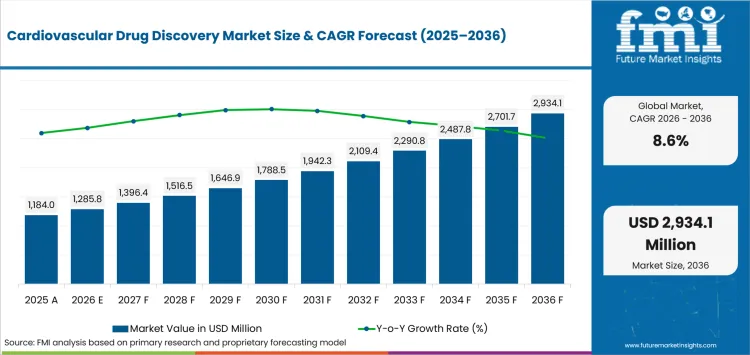
Key Takeaways of Cardiovascular Drug Discovery Market
- Demand for cardiovascular drug discovery is driven by sponsors connecting causal disease biology with measurable clinical objectives, with program decisions reflecting human genetics and translational testing.
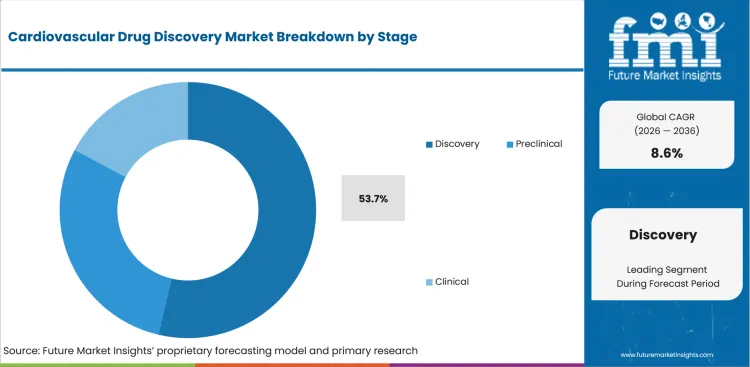
- By stage, discovery holds the leading share at 53.7% in 2026, reflecting extensive target research and lead-optimization activity across cardiovascular portfolios.
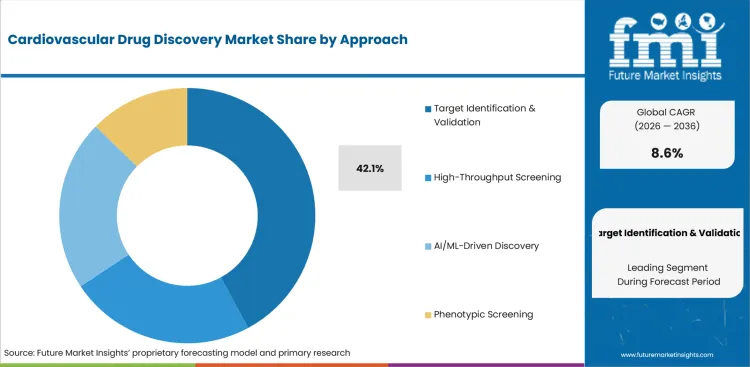
- Target identification & validation is the dominant approach segment, holding 42.1% share in 2026, owing to sponsor emphasis on mechanism confidence prior to extensive chemistry investment.
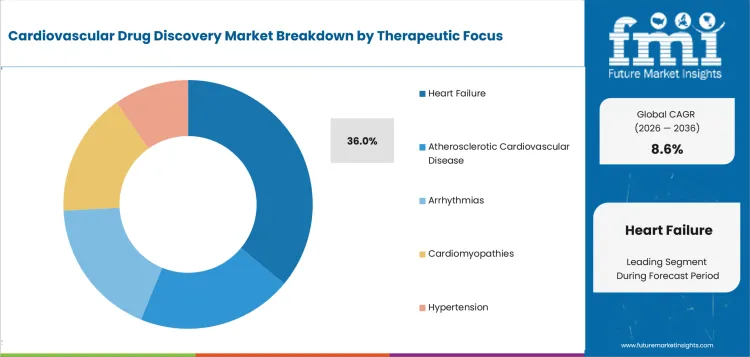
- Heart failure leads therapeutic-focus demand at 36.0% share in 2026, due to continuing gaps across preserved and reduced ejection-fraction populations.
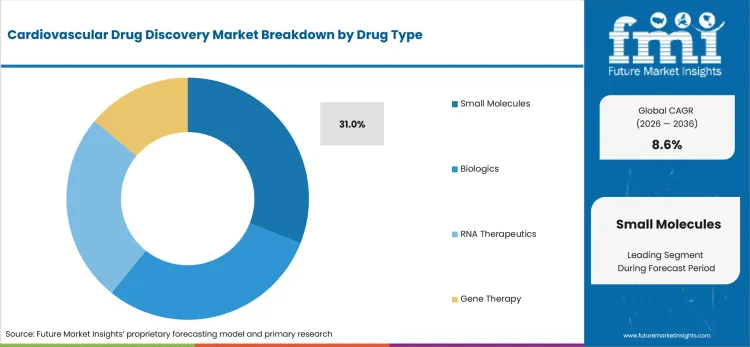
- Small molecules account for 31.0% drug-type share in 2026, backed by oral-delivery potential and established medicinal-chemistry processes.
- The UK, Germany, and South Korea record CAGRs of 10.7%, 9.2%, and 8.8% respectively through 2036, shaped by genomic resources, university cardiology networks, and biotechnology cluster capacity.
- Competition centers on Pfizer, AstraZeneca, Novartis, Bayer, Cardurion Pharmaceuticals, and Tenaya Therapeutics, with vendors differentiating through established cardiovascular research operations, disease-specific pipelines, and focused genetic-medicine mechanisms.
Analyst Perspective
"Progress in cardiovascular drug discovery is increasingly determined by the strength of translational evidence rather than target identification alone. Developers are prioritizing programs that combine human genetics, disease-relevant biomarkers, and clinically meaningful endpoints to improve candidate selection. Organizations that integrate experimental biology with early clinical and regulatory planning will be better positioned to advance successful cardiovascular therapies."
- Anurag Sharma, Principal Consultant for Healthcare at Future Market Insights
Source: Future Market Insights analysis, 2026.
How is Cardiovascular Drug Discovery Market segmented?
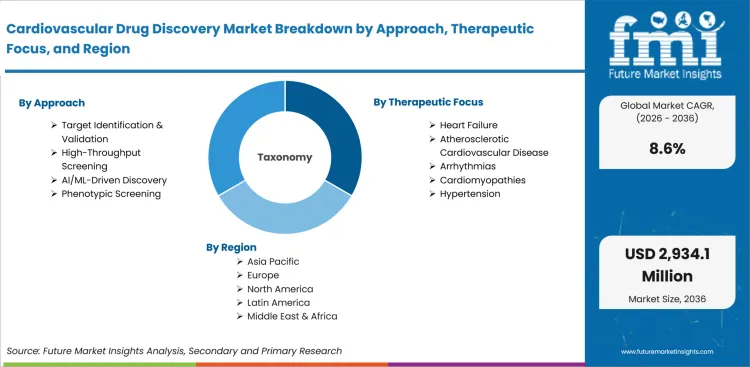
The cardiovascular drug discovery industry is segmented by approach, therapeutic focus, drug type, stage, and region.
The cardiovascular drug discovery market is segmented by approach, therapeutic focus, drug type, stage, and region. Approach coverage includes Target Identification & Validation and High-Throughput Screening followed by AI/ML-Driven Discovery and Phenotypic Screening. Therapeutic Focus coverage includes Heart Failure and Atherosclerotic Cardiovascular Disease followed by Arrhythmias and Cardiomyopathies and Hypertension. Drug Type coverage encompasses Small Molecules and Biologics supported by RNA Therapeutics and Gene Therapy. Stage coverage spans Discovery and Preclinical programs followed by Clinical development. Regional coverage includes North America and Latin America together with Western Europe and Eastern Europe. East Asia and South Asia and Pacific precede Middle East and Africa within geographic assessment.
Why does target Identification & validation shape approach selection?
Research teams sequence validation assays according to genetic strength and reproducible findings from disease-specific functional models. Chemistry investment begins with clearer selection criteria for tractable mechanisms carrying measurable cardiovascular effects across validated assays. Minikel and colleagues reported a 2.6 times greater probability of clinical success for drug mechanisms carrying human genetic evidence in April 2024. Such evidence improves early screening of cardiovascular targets and directs experimental resources toward mechanisms supported by causal disease biology.
- Based on approach, target identification & validation is estimated to represent 42.1% share in 2026 owing to sponsor emphasis on mechanism confidence prior to extensive chemistry investment. Human genetics and disease-tissue studies improve qualification of cardiovascular pathways requiring measurable biological support.
- High-throughput screening examines compound activity across defined assay systems and selected molecular targets. AI-enabled drug discovery and phenotypic screening extend candidate review through computational ranking and functional cellular responses.
Why does heart failure shape therapeutic-focus demand?
Heart Failure Society of America estimated 6.7 million Americans aged above 20 years living with heart failure in September 2024. Patient heterogeneity sustains research across myocardial function and inflammatory signaling and cardiac-remodeling mechanisms. Distinct phenotypes require separate experimental models for contractile dysfunction and electrical instability during candidate screening. Endpoint planning benefits from early separation of patient groups carrying different biological pathways and response patterns.
- In 2026, heart failure is anticipated to secure 36.0% share in 2026 due to continuing therapeutic gaps across preserved and reduced ejection-fraction populations. Personalized medicine assists phenotype-based research for patient groups presenting different disease mechanisms and clinical responses.
- Atherosclerotic cardiovascular disease and hypertension support discovery programs examining vascular inflammation and lipid regulation. Arrhythmias and cardiomyopathies require specialist research into ion channels and inherited cardiac mechanisms across defined patient cohorts.
Why do small molecules shape drug-type selection?
Researchers compare intracellular target access against exposure profiles during initial modality selection. Manufacturing feasibility receives a separate assessment during entry into resource-intensive candidate optimization and formulation studies. United States Food and Drug Administration recorded 50 novel drug approvals during 2024 in a January 2025 review. Established chemistry and regulatory pathways preserve interest in small-molecule candidates across cardiovascular target programs.
- Small molecules are predicted to secure 31.0% share of drug-type in 2026, backed by oral-delivery potential and established medicinal-chemistry processes. Drug designing tools assist potency assessment and candidate optimization across enzyme and receptor targets.
- Biologics and RNA therapeutics provide modality options for extracellular proteins and genetically defined mechanisms. Gene therapy supports inherited cardiovascular programs requiring durable biological correction and specialist development capabilities.
Why does discovery shape stage selection?
European Medicines Agency recorded 121 initial evaluation applications during 2024 in its annual report published in June 2025. Early portfolio quality influences candidate progression from discovery activity into formal regulatory review. Program teams define evidence thresholds for every transition using pharmacology and safety findings. Development resources concentrate on candidates meeting predefined requirements for exposure and biological response.
- By stage, discovery is forecast to account for 53.7% share in 2026 as it reflects extensive target research and lead-optimization activity. Drug discovery informatics assists evidence assessment across chemistry and biological datasets during candidate-ranking decisions.
- Preclinical programs assess pharmacological activity and safety across laboratory models prior to human evaluation. Clinical development combines dose assessment and therapeutic evidence across patients selected through biomarker and phenotype criteria.
What are drivers, restraints, and opportunities in Cardiovascular Drug Discovery Market?
Genetic evidence and disease-specific research platforms support cardiovascular target evaluation. Biological uncertainty and development expense may delay candidate progression across successive research stages.
- Driver: Research sponsors need stronger causal evidence for selecting cardiovascular targets with measurable therapeutic potential. Human genetics and functional disease models improve confidence during portfolio review and candidate advancement.
- Restraint: Complex cardiovascular biology creates attrition exposure across preclinical and clinical programs. Inadequate biomarkers may weaken patient selection and delay interpretation of therapeutic response.
- Opportunity: Population-scale datasets create additional pathways for identifying inherited cardiovascular mechanisms and disease subtypes. Computational analysis improves target ranking across clinical and genomic information.
Population-scale datasets strengthen mechanism selection across cardiovascular subgroups. All of Us Research Program expanded research data to more than 633,000 participants in February 2025. Clinical Next-Generation Sequencing Data Analysis supports interpretation of inherited risk across underrepresented ancestry groups. Research sponsors compare variant frequency against longitudinal phenotype records during selection of disease mechanisms for experimental validation. Cohort diversity improves confidence in targets intended for patient groups carrying different inherited risks.
Development expense constrains progression from candidate selection into clinical testing. Nature Reviews Drug Discovery reported an estimated USD 880 million cost for bringing a new medicine to approval in August 2024. Financial exposure encourages stricter evidence thresholds during cardiovascular portfolio decisions. Sponsors allocate later-stage resources to candidates carrying defensible biomarkers and measurable pharmacological responses. Early termination protects research budgets from prolonged testing of weakly differentiated mechanisms.
New genetic variants create pathways for cardiovascular target discovery and patient stratification. National Institutes of Health identified more than 275 million previously unreported genetic variants in February 2024. Bioinformatics analysis helps researchers compare inherited signals against cardiovascular phenotype records. Functional studies then test selected variants for changes in disease pathways under controlled conditions. Evidence from laboratory models supports prioritization of mechanisms carrying measurable biological effects.
How are country CAGRs aligned in Cardiovascular Drug Discovery Market?
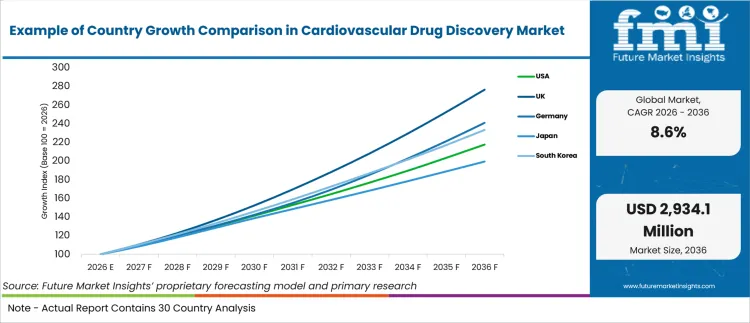
| Country | CAGR |
|---|---|
| United Kingdom | 10.7% |
| Germany | 9.2% |
| South Korea | 8.8% |
| United States | 8.1% |
| Japan | 7.1% |
Source: Future Market Insights analysis, 2026.
How do country-level CAGRs compare in Cardiovascular Drug Discovery Market?
The country comparison shows a gradual step-down in growth across the markets covered. The United Kingdom sits at the upper end of the range. Germany and South Korea form a closely grouped second tier. The United States follows with slightly lower growth. Japan remains at the lower end of the comparison. The 3.6-point spread shows these markets sharing a strong growth outlook, even with their relative positions indicating different levels of market momentum.
- The United Kingdom leads the comparison and establishes Western Europe as the notable growth cluster among the markets shown.
- Germany and South Korea follow closely, indicating for neither market falling far behind the leading country.
- The United States forms the next growth band and maintains a relatively small gap from the middle tier.
- Japan records the slowest growth among the listed markets, yet its forecast remains strong within the wider market context.
- The pattern resembles a gradual downward slope rather than a sharp separation between high-growth and low-growth markets.
Markets with broadly similar CAGRs can still present different entry conditions due to research infrastructure and clinical-development readiness. The full report provides country-level analysis across North America, Latin America, Europe, East Asia, South Asia and Pacific and the Middle East and Africa.
Country-wise Analysis
- Cardiovascular drug discovery sales in the United Kingdom are predicted to scale at 10.7% CAGR between 2026 and 2036, backed by genomic cohorts and clinical-research reform. Coordinated academic networks improve transition from target evidence into patient studies. Department for Science, Innovation and Technology set a commercial trial-setup target below 150 days by March 2026 in its July 2025 sector plan. National cohort resources help sponsors match inherited risk profiles with clinical cardiovascular records. Shared research infrastructure reduces duplicated work during biomarker development among participating academic centers.
- Research centers in Germany combine medicinal chemistry expertise with university cardiology programs serving complex cardiovascular studies. German Federal Statistical Office recorded residents aged at least 65 years at 23.2% of national population during 2024 in its November 2025 update. University hospitals provide concentrated access to investigators experienced in heart failure and vascular disorders. Pharmaceutical developers benefit from established medicinal-chemistry teams located near specialist clinical institutions. Demand in Germany is projected to rise at 9.2% CAGR during the study period, aided by specialist trial capacity and established regulatory processes.
- Biotechnology clusters and tertiary hospitals provide sponsors in South Korea with concentrated research and clinical capabilities. Cardiovascular drug discovery sector in South Korea is anticipated to progress at 8.8% CAGR between 2026 and 2036, reflecting rapid evaluation of genetic and cardiometabolic programs. Ministry of Data and Statistics recorded residents aged at least 65 years at 19.2% of national population during 2024 in March 2025. Hospital-centered research networks support efficient recruitment for biomarker-defined cardiovascular studies. Domestic biotechnology groups contribute specialized platform knowledge for genetic and small-molecule programs.
- Academic medical centers provide sponsors with specialist investigators and diverse cardiovascular patient populations. United States Food and Drug Administration recorded first-cycle approval for 37 of 50 novel medicines during 2024 in January 2025. Large research networks provide access to disease-specific cohorts for protocol development. Experienced regulatory teams support evidence planning across discovery and clinical portfolio decisions. Industry in the United States is estimated to expand at 8.1% CAGR during the assessment period, guided by established biotechnology and clinical-development networks.
- The market in Japan is expected top grow at 7.1% CAGR from 2026 to 2036, influenced by specialist pharmaceutical research and measured portfolio review. Academic institutions offer structured settings for cardiovascular pharmacology and biomarker studies. Statistics Bureau of Japan recorded 36.243 million residents aged at least 65 years during 2024 in its April 2025 publication. Older patient cohorts provide extensive clinical context for heart failure and vascular research. Domestic pharmaceutical expertise supports careful dose selection and safety planning for age-associated conditions.
Who are notable companies in Cardiovascular Drug Discovery Market?
Pfizer Inc., Novartis AG, AstraZeneca PLC, Bayer AG, Bristol Myers Squibb, Amgen Inc., Eli Lilly and Company, Cardurion Pharmaceuticals, and Tenaya Therapeutics are the key companies shaping this market.
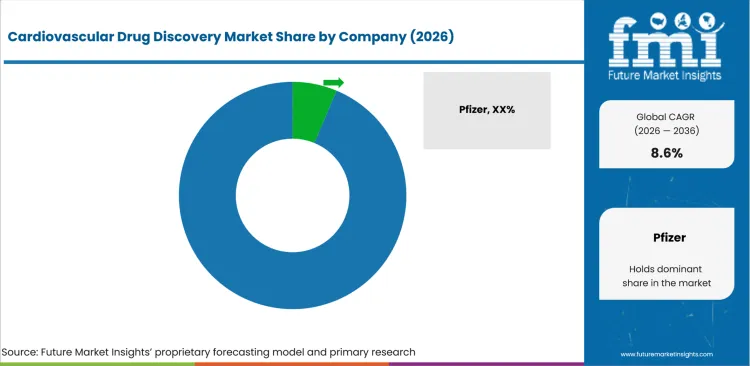
Competition in cardiovascular drug discovery is anticipated to center on target quality and disease specialization. Research teams are likely to compare companies due to translational models and clinical-development experience. Multinational companies are expected to compete through portfolio depth and established trial operations. Focused biotechnology developers are projected to receive attention driven by mechanistic concentration and specialist cardiovascular teams.
- Pfizer Inc. and AstraZeneca PLC receive consideration led by established cardiovascular and internal-medicine pipelines. Research teams compare disease coverage and translational evidence during portfolio assessment.
- Novartis AG and Bayer AG compete based on cardiovascular pipelines and specialist clinical-development capabilities. External research collaborations expand access to target-identification platforms and cardiovascular disease models.
- Bristol Myers Squibb and Eli Lilly and Company support competition depending on extensive pharmaceutical research operations. Portfolio decisions reflect mechanism differentiation and clinical evidence across defined cardiovascular indications.
- Cardurion Pharmaceuticals and Tenaya Therapeutics receive specialist review depending on focused cardiovascular science. Company assessment examines signaling pathways and genetic-medicine programs directed toward heart disease.
Competitive Benchmarking: Cardiovascular Drug Discovery Market
| Company | Portfolio Depth | Cardiovascular Match | Research Support | Service Reach |
|---|---|---|---|---|
| Pfizer Inc. | High | High | High | Global |
| Novartis AG | High | High | High | Global |
| AstraZeneca PLC | High | High | High | Global |
| Bayer AG | High | High | High | Global |
Source: Future Market Insights competitive analysis, 2026.
Key Developments in Cardiovascular Drug Discovery Market
- In February 2025, Novartis announced an agreement to acquire Anthos Therapeutics and return abelacimab to its cardiovascular pipeline. Company information placed abelacimab in Phase 3 development for preventing stroke and systemic embolism among patients with atrial fibrillation.
- Bayer and Broad Institute extended a cardiovascular research collaboration for five years in June 2025. Expanded work centers on precision-cardiology target identification and human cardiomyocyte validation for new therapeutic approaches.
- In August 2025, Cardurion Pharmaceuticals completed enrollment across two global CYCLE studies evaluating CRD-750 in chronic heart failure. Completed Phase 2 enrollment advanced PDE9 inhibitor assessment across reduced and preserved ejection-fraction populations.
Key Players in Cardiovascular Drug Discovery Market
Established pharmaceutical companies
- Pfizer Inc.
- Novartis AG
- AstraZeneca PLC
- Bristol Myers Squibb
- Bayer AG
- Amgen Inc.
- Eli Lilly and Company
Focused cardiovascular developers
- Cardurion Pharmaceuticals
- Tenaya Therapeutics
Cardiovascular Drug Discovery Market Report Scope
| Coverage Field | Report Scope |
|---|---|
| Market Breakdown | Cardiovascular Drug Discovery Market breakdown by approach, therapeutic focus, drug type, stage, and region |
| Quantitative Units | Revenue in USD Million, CAGR in %. |
| Market Definition | Cardiovascular drug discovery includes research products and services supporting target selection and candidate development across cardiovascular disorders. |
| Regions Covered | North America, Latin America, Western Europe, Eastern Europe, East Asia, South Asia and Pacific, and Middle East and Africa |
| Countries Covered | United Kingdom, Germany, South Korea, United States, and Japan |
| Key Companies Profiled | Pfizer Inc., Novartis AG, AstraZeneca PLC, Bristol Myers Squibb, Bayer AG, Amgen Inc., Eli Lilly and Company, Cardurion Pharmaceuticals, and Tenaya Therapeutics |
| Forecast Period | 2026 to 2036 |
| Approach | Hybrid bottom-up and top-down methodology using segment shares and country CAGRs with research activity and company participation and therapeutic evidence |
Source: Future Market Insights analysis, 2026.
Cardiovascular Drug Discovery Market - Research Methodology
| Method | Approach |
|---|---|
| Primary Research | FMI analysts gathered input from manufacturers, service providers, technology developers, distributors, end users, sourcing teams, and subject-matter experts. Interviews examined purchasing decisions, product or service evaluation, adoption barriers, approval requirements, pricing considerations, and expectations for technical or commercial support. Respondents were also asked what evidence is required before a trial, pilot, or initial order develops into regular purchasing. |
| Desk Research | Desk research covered government statistics, regulatory publications, trade data, industry associations, technical literature, standards, company filings, product information, and official corporate announcements. Sources were reviewed for relevance, publication date, geographic coverage, and consistency with the defined market scope. Claims relating to performance, applications, approvals, capacity, investment, and commercial activity were retained only when supported by credible public evidence. |
| Market Sizing and Forecasting | The market model combined the baseline value with historical performance, segment structure, pricing and volume indicators, adoption levels, company participation, and country-level demand conditions. Forecast assumptions considered economic activity, investment trends, regulatory developments, technology adoption, purchasing cycles, supply availability, and barriers to wider market use. Segment and regional estimates were reconciled before the final market total was calculated. |
| Data Validation | Estimates were checked against multiple independent indicators, including public data, company activity, trade patterns, industry developments, and findings from primary interviews. Validation also tested whether products, services, applications, and company revenues fell within the defined market boundaries. Adjacent categories, unsupported claims, overlapping revenues, and activities without direct market relevance were excluded to reduce double counting and maintain consistency across segments and countries. |
Source: Future Market Insights analysis, 2026.
Cardiovascular Drug Discovery Market by Segments
Cardiovascular Drug Discovery Market segmented by Approach:
- Target Identification & Validation
- High-Throughput Screening
- AI/ML-Driven Discovery
- Phenotypic Screening
Cardiovascular Drug Discovery Market segmented by Therapeutic Focus:
- Heart Failure
- Atherosclerotic Cardiovascular Disease
- Arrhythmias
- Cardiomyopathies
- Hypertension
Cardiovascular Drug Discovery Market segmented by Drug Type:
- Small Molecules
- Biologics
- RNA Therapeutics
- Gene Therapy
Cardiovascular Drug Discovery Market segmented by Stage:
- Discovery
- Preclinical
- Clinical
Cardiovascular Drug Discovery Market segmented by Region:
- North America
- United States
- Canada
- Latin America
- Brazil
- Mexico
- Argentina
- Chile
- Western Europe
- Germany
- France
- United Kingdom
- Italy
- Spain
- Benelux
- Nordics
- Eastern Europe
- Poland
- Czech Republic
- Romania
- Hungary
- East Asia
- China
- Japan
- South Korea
- South Asia and Pacific
- India
- ASEAN
- Australia and New Zealand
- Middle East and Africa
- GCC Countries
- South Africa
- Türkiye
- Israel
Research Sources and Bibliography
- All of Us Research Program. (2025, February 24). All of Us adds data from 50% more participants in largest data expansion to date.
- Bayer AG. (2025, June 11). Bayer and Broad Institute extend research collaboration to develop new cardiovascular therapies.
- Cardurion Pharmaceuticals, Inc. (2025, August 6). Cardurion Pharmaceuticals completes enrollment in Phase 2 CYCLE trials evaluating CRD-750, a novel PDE9 inhibitor, in heart failure.
- Department for Business and Trade, Department of Health and Social Care, Department for Science, Innovation and Technology, and Office for Life Sciences. (2025, July 16). Life Sciences Sector Plan.
- European Medicines Agency. (2025, June 10). 2024 annual report of the European Medicines Agency.
- German Federal Statistical Office. (2025, November 19). Basic indicators: Germany.
- Heart Failure Society of America. (2024, September 24). Cardiology experts warn of rising heart failure rates and worsening disparities in new 2024 report.
- Minikel, E. V., Painter, J. L., Dong, C. C., & Nelson, M. R. (2024, April 17). Refining the impact of genetic evidence on clinical success. Nature, 629, 624-629.
- Ministry of Data and Statistics. (2025, March 25). Social indicators in 2024.
- Mullard, A. (2024, August 5). Per-patient approach to calculating drug development costs yields lower estimate. Nature Reviews Drug Discovery, 23, 650.
- National Institutes of Health. (2024, February 19). 275 million new genetic variants identified in NIH precision medicine data.
- Novartis AG. (2025, February 11). Novartis bolsters late-stage cardiovascular pipeline with agreement to acquire Anthos Therapeutics for USD 925 million upfront.
- Statistics Bureau of Japan. (2025, April 14). Current population estimates as of October 1, 2024.
- UK Biobank. (2025, June 17). Whole genome sequencing data.
- United States Food and Drug Administration. (2025, January 8). CDER brings many safe and effective therapies to patients and consumers in 2024.
- World Health Organization. (2025, September 25). Hypertension.
This bibliography is provided for reader reference and is not exhaustive. The full report contains a complete reference list and detailed citations.
This Report Answers
-
- What segments influence demand across approach and therapeutic focus with drug type and stage?
- How do research teams evaluate targets prior to candidate advancement across cardiovascular programs?
- How do country growth rates differ across profiled research and development environments?
- What companies compete through portfolio depth and cardiovascular specialization and research support?
- How are forecasts validated through bottom-up and top-down analysis using independent indicators?
- What evidence do sponsors assess prior to cardiovascular portfolio advancement and clinical development?
- How do genetic evidence and disease models influence target selection across research programs?
- What limits returns for sponsors investing in cardiovascular drug discovery programs?
- How do biomarker plans and patient stratification influence cardiovascular clinical development?
- What company capabilities improve long-term confidence across cardiovascular research programs?
Frequently Asked Questions
How big is the Cardiovascular Drug Discovery Market in 2026?
The cardiovascular drug discovery market is valued at USD 1285.8 million in 2026 and is forecast to reach USD 2934.1 million by 2036. Growth reflects pharmaceutical scientists prioritizing drug mechanisms driven by human genetics and measurable disease biology across heterogeneous vascular and cardiometabolic patient populations.
What is the CAGR of the Cardiovascular Drug Discovery Market from 2026 to 2036?
The cardiovascular drug discovery market grows at a CAGR of 8.6% between 2026 and 2036, supported by research sponsors needing stronger causal evidence for selecting cardiovascular targets with measurable therapeutic potential.
Which stage leads the Cardiovascular Drug Discovery Market?
Discovery accounts for 53.7% of the cardiovascular drug discovery market by stage in 2026, reflecting extensive target research and lead-optimization activity that concentrates development resources on candidates meeting predefined exposure and biological response requirements.
How much will the Cardiovascular Drug Discovery Market add between 2026 and 2036?
The cardiovascular drug discovery market is set to add USD 1648.3 million between 2026 and 2036, growing from USD 1285.8 million to USD 2934.1 million as genetics-led target validation extends across a widening base of heart failure and vascular disease research programs.
Who are the leading companies in the Cardiovascular Drug Discovery Market?
Six companies lead the cardiovascular drug discovery market, including Pfizer, AstraZeneca, Novartis, Bayer, Cardurion Pharmaceuticals, and Tenaya Therapeutics, competing through established cardiovascular research operations, disease-specific pipelines, and focused genetic-medicine mechanisms.
Preview the report firsthand - request a free sample
Get SampleGet the brochure for pricing and purchase details.
Get PDFTable of Content
- Key Takeaways
- Market Size and CAGR
- Top Growth Driver
- Fastest Growing Segment
- Leading Region
- Key Companies
- Emerging Opportunities
- Executive Summary
- Global Market Outlook
- Demand-side Trends
- Supply-side Trends
- Technology Roadmap Analysis
- Analysis and Recommendations
- Analyst Perspective (What is happening? Why now? What should investors know?)
- Key Questions Answered
- How large is the market?
- What is the CAGR?
- What are key trends?
- Which region dominates?
- Who are the leaders?
- Market Overview
- Market Coverage / Taxonomy
- Market Definition / Scope / Limitations
- Research Methodology
- Chapter Orientation
- Analytical Lens and Working Hypotheses
- Market Structure, Signals, and Trend Drivers
- Benchmarking and Cross-market Comparability
- Market Sizing, Forecasting, and Opportunity Mapping
- Research Design and Evidence Framework
- Desk Research Programme (Secondary Evidence)
- Expert Input and Fieldwork (Primary Evidence)
- Tooling, Models, and Reference Databases
- Data Engineering and Model Build
- Quality Assurance and Audit Trail
- Market Background
- Market Dynamics (Drivers, Restraints, Opportunity, Trends)
- Scenario Forecast (Optimistic, Likely, Conservative)
- Impact Analysis
- AI Impact
- Sustainability Impact
- Regulatory Impact
- Technology Impact
- Consumer / Buyer Analysis
- Purchase Drivers
- Adoption Barriers
- Buyer Journey
- Opportunity Map Analysis
- Product Life Cycle Analysis
- Supply Chain Analysis
- Investment Feasibility Matrix
- Value Chain Analysis
- PESTLE and Porter's Analysis
- Regulatory Landscape
- Regional Parent Market Outlook
- Production and Consumption Statistics
- Import and Export Statistics
- Global Market Analysis and Forecast, 2021 to 2036
- Historical Market Size Value (USD Million) Analysis, 2021 to 2025
- Current and Future Market Size Value (USD Million) Projections, 2026 to 2036
- Y-o-Y Growth Trend Analysis
- Absolute $ Opportunity Analysis
- Global Market Pricing Analysis, 2021 to 2036
- Global Market Analysis and Forecast, By Approach, 2021 to 2036
- Introduction / Key Findings
- Historical Market Size Value (USD Million) Analysis By Approach, 2021 to 2025
- Current and Future Market Size Value (USD Million) Analysis and Forecast By Approach, 2026 to 2036
- Target Identification & Validation
- High-Throughput Screening
- AI/ML-Driven Discovery
- Phenotypic Screening
- Target Identification & Validation
- Y-o-Y Growth Trend Analysis By Approach, 2021 to 2025
- Absolute $ Opportunity Analysis By Approach, 2026 to 2036
- Global Market Analysis and Forecast, By Therapeutic Focus, 2021 to 2036
- Introduction / Key Findings
- Historical Market Size Value (USD Million) Analysis By Therapeutic Focus, 2021 to 2025
- Current and Future Market Size Value (USD Million) Analysis and Forecast By Therapeutic Focus, 2026 to 2036
- Heart Failure
- Atherosclerotic Cardiovascular Disease
- Arrhythmias
- Cardiomyopathies
- Hypertension
- Heart Failure
- Y-o-Y Growth Trend Analysis By Therapeutic Focus, 2021 to 2025
- Absolute $ Opportunity Analysis By Therapeutic Focus, 2026 to 2036
- Global Market Analysis and Forecast, By Drug Type, 2021 to 2036
- Introduction / Key Findings
- Historical Market Size Value (USD Million) Analysis By Drug Type, 2021 to 2025
- Current and Future Market Size Value (USD Million) Analysis and Forecast By Drug Type, 2026 to 2036
- Small Molecules
- Biologics
- RNA Therapeutics
- Gene Therapy
- Small Molecules
- Y-o-Y Growth Trend Analysis By Drug Type, 2021 to 2025
- Absolute $ Opportunity Analysis By Drug Type, 2026 to 2036
- Global Market Analysis and Forecast, By Stage, 2021 to 2036
- Introduction / Key Findings
- Historical Market Size Value (USD Million) Analysis By Stage, 2021 to 2025
- Current and Future Market Size Value (USD Million) Analysis and Forecast By Stage, 2026 to 2036
- Discovery
- Preclinical
- Clinical
- Discovery
- Y-o-Y Growth Trend Analysis By Stage, 2021 to 2025
- Absolute $ Opportunity Analysis By Stage, 2026 to 2036
- Global Market Analysis and Forecast, By Region, 2021 to 2036
- Introduction
- Historical Market Size Value (USD Million) Analysis By Region, 2021 to 2025
- Current Market Size Value (USD Million) Analysis and Forecast By Region, 2026 to 2036
- North America
- Latin America
- Western Europe
- Eastern Europe
- East Asia
- South Asia and Pacific
- Middle East & Africa
- Market Attractiveness Analysis By Region
- North America Market Analysis and Forecast, By Country, 2021 to 2036
- Historical Market Size Value (USD Million) Trend Analysis By Market Taxonomy, 2021 to 2025
- Market Size Value (USD Million) Forecast By Market Taxonomy, 2026 to 2036
- By Country
- USA
- Canada
- By Approach
- By Therapeutic Focus
- By Drug Type
- By Stage
- By Country
- Market Attractiveness Analysis
- By Country
- By Approach
- By Therapeutic Focus
- By Drug Type
- By Stage
- Key Takeaways
- Latin America Market Analysis and Forecast, By Country
- Historical Market Size Value (USD Million) Trend Analysis By Market Taxonomy, 2021 to 2025
- Market Size Value (USD Million) Forecast By Market Taxonomy, 2026 to 2036
- By Country
- Brazil
- Mexico
- Chile
- Rest of Latin America
- By Approach
- By Therapeutic Focus
- By Drug Type
- By Stage
- By Country
- Market Attractiveness Analysis
- By Country
- By Approach
- By Therapeutic Focus
- By Drug Type
- By Stage
- Key Takeaways
- Western Europe Market Analysis and Forecast, By Country
- Historical Market Size Value (USD Million) Trend Analysis By Market Taxonomy, 2021 to 2025
- Market Size Value (USD Million) Forecast By Market Taxonomy, 2026 to 2036
- By Country
- Germany
- UK
- Italy
- Spain
- France
- Nordic
- BENELUX
- Rest of Western Europe
- By Approach
- By Therapeutic Focus
- By Drug Type
- By Stage
- By Country
- Market Attractiveness Analysis
- By Country
- By Approach
- By Therapeutic Focus
- By Drug Type
- By Stage
- Key Takeaways
- Eastern Europe Market Analysis and Forecast, By Country
- Historical Market Size Value (USD Million) Trend Analysis By Market Taxonomy, 2021 to 2025
- Market Size Value (USD Million) Forecast By Market Taxonomy, 2026 to 2036
- By Country
- Russia
- Poland
- Hungary
- Balkan & Baltic
- Rest of Eastern Europe
- By Approach
- By Therapeutic Focus
- By Drug Type
- By Stage
- By Country
- Market Attractiveness Analysis
- By Country
- By Approach
- By Therapeutic Focus
- By Drug Type
- By Stage
- Key Takeaways
- East Asia Market Analysis and Forecast, By Country
- Historical Market Size Value (USD Million) Trend Analysis By Market Taxonomy, 2021 to 2025
- Market Size Value (USD Million) Forecast By Market Taxonomy, 2026 to 2036
- By Country
- China
- Japan
- South Korea
- By Approach
- By Therapeutic Focus
- By Drug Type
- By Stage
- By Country
- Market Attractiveness Analysis
- By Country
- By Approach
- By Therapeutic Focus
- By Drug Type
- By Stage
- Key Takeaways
- South Asia and Pacific Market Analysis and Forecast, By Country
- Historical Market Size Value (USD Million) Trend Analysis By Market Taxonomy, 2021 to 2025
- Market Size Value (USD Million) Forecast By Market Taxonomy, 2026 to 2036
- By Country
- India
- ASEAN
- Australia & New Zealand
- Rest of South Asia and Pacific
- By Approach
- By Therapeutic Focus
- By Drug Type
- By Stage
- By Country
- Market Attractiveness Analysis
- By Country
- By Approach
- By Therapeutic Focus
- By Drug Type
- By Stage
- Key Takeaways
- Middle East & Africa Market Analysis and Forecast, By Country
- Historical Market Size Value (USD Million) Trend Analysis By Market Taxonomy, 2021 to 2025
- Market Size Value (USD Million) Forecast By Market Taxonomy, 2026 to 2036
- By Country
- Kingdom of Saudi Arabia
- Other GCC Countries
- Türkiye
- South Africa
- Other African Union
- Rest of Middle East & Africa
- By Approach
- By Therapeutic Focus
- By Drug Type
- By Stage
- By Country
- Market Attractiveness Analysis
- By Country
- By Approach
- By Therapeutic Focus
- By Drug Type
- By Stage
- Key Takeaways
- Key Countries Market Analysis
- USA
- Pricing Analysis
- Market Share Analysis, 2025
- By Approach
- By Therapeutic Focus
- By Drug Type
- By Stage
- Canada
- Pricing Analysis
- Market Share Analysis, 2025
- By Approach
- By Therapeutic Focus
- By Drug Type
- By Stage
- Mexico
- Pricing Analysis
- Market Share Analysis, 2025
- By Approach
- By Therapeutic Focus
- By Drug Type
- By Stage
- Brazil
- Pricing Analysis
- Market Share Analysis, 2025
- By Approach
- By Therapeutic Focus
- By Drug Type
- By Stage
- Chile
- Pricing Analysis
- Market Share Analysis, 2025
- By Approach
- By Therapeutic Focus
- By Drug Type
- By Stage
- Germany
- Pricing Analysis
- Market Share Analysis, 2025
- By Approach
- By Therapeutic Focus
- By Drug Type
- By Stage
- UK
- Pricing Analysis
- Market Share Analysis, 2025
- By Approach
- By Therapeutic Focus
- By Drug Type
- By Stage
- Italy
- Pricing Analysis
- Market Share Analysis, 2025
- By Approach
- By Therapeutic Focus
- By Drug Type
- By Stage
- Spain
- Pricing Analysis
- Market Share Analysis, 2025
- By Approach
- By Therapeutic Focus
- By Drug Type
- By Stage
- France
- Pricing Analysis
- Market Share Analysis, 2025
- By Approach
- By Therapeutic Focus
- By Drug Type
- By Stage
- India
- Pricing Analysis
- Market Share Analysis, 2025
- By Approach
- By Therapeutic Focus
- By Drug Type
- By Stage
- ASEAN
- Pricing Analysis
- Market Share Analysis, 2025
- By Approach
- By Therapeutic Focus
- By Drug Type
- By Stage
- Australia & New Zealand
- Pricing Analysis
- Market Share Analysis, 2025
- By Approach
- By Therapeutic Focus
- By Drug Type
- By Stage
- China
- Pricing Analysis
- Market Share Analysis, 2025
- By Approach
- By Therapeutic Focus
- By Drug Type
- By Stage
- Japan
- Pricing Analysis
- Market Share Analysis, 2025
- By Approach
- By Therapeutic Focus
- By Drug Type
- By Stage
- South Korea
- Pricing Analysis
- Market Share Analysis, 2025
- By Approach
- By Therapeutic Focus
- By Drug Type
- By Stage
- Russia
- Pricing Analysis
- Market Share Analysis, 2025
- By Approach
- By Therapeutic Focus
- By Drug Type
- By Stage
- Poland
- Pricing Analysis
- Market Share Analysis, 2025
- By Approach
- By Therapeutic Focus
- By Drug Type
- By Stage
- Hungary
- Pricing Analysis
- Market Share Analysis, 2025
- By Approach
- By Therapeutic Focus
- By Drug Type
- By Stage
- Kingdom of Saudi Arabia
- Pricing Analysis
- Market Share Analysis, 2025
- By Approach
- By Therapeutic Focus
- By Drug Type
- By Stage
- Türkiye
- Pricing Analysis
- Market Share Analysis, 2025
- By Approach
- By Therapeutic Focus
- By Drug Type
- By Stage
- South Africa
- Pricing Analysis
- Market Share Analysis, 2025
- By Approach
- By Therapeutic Focus
- By Drug Type
- By Stage
- USA
- Market Structure Analysis
- Competition Dashboard
- Competition Benchmarking
- Market Share Analysis of Top Players
- By Regional
- By Approach
- By Therapeutic Focus
- By Drug Type
- By Stage
- Emerging Startups
- Innovation Benchmarking
- Competition Analysis
- Competition Deep Dive
- Pfizer
- Overview
- Product Portfolio
- Profitability by Market Segments
- Sales Footprint
- Strategy Overview
- Marketing Strategy
- Product Strategy
- Channel Strategy
- Novartis
- AstraZeneca
- Bristol-Myers Squibb
- Bayer
- Amgen
- Eli Lilly
- Cardurion Pharmaceuticals
- Tenaya Therapeutics
- Pfizer
- Case Studies
- Success Stories
- Recent Developments
- Competition Deep Dive
- Assumptions & Acronyms Used


