

- Market Size (2026)
- USD 1147.6 Mn
- Forecast (2036)
- USD 2432.2 Mn
- CAGR (2026 to 2036)
- 7.8%
How big is Clinical Stage Cardiovascular Therapeutics Market size?
USD 1,147.6 million in 2026 and USD 2,432.2 million by 2036 at a 7.8% CAGR.
The clinical stage cardiovascular therapeutics industry is projected to expand at 7.8% CAGR between 2026 and 2036, increasing valuation from USD 1147.6 million in 2026 to USD 2432.2 million by 2036. Pharmaceutical companies favor cardiometabolic drugs demonstrating a clear dose response and dependable safety. Widespread chronic conditions drive this continuous search for reliable treatment assets. In September 2025, the World Health Organization reported for an estimated 1.4 billion adults aged 30 to 79 years having hypertension during 2024. Such health figure sustains the clinical need for investigational prevention and treatment options. Leading the research sponsors to invest in safe candidate molecules to reduce the global burden of heart disease.
Regional research groups follow distinct strategies on advancing clinical-stage cardiovascular assets. South Korea and United Kingdom sponsors emphasize coordinated hospital activation and predictable review timing. United States and Germany programs favor specialist-site depth and disciplined evidence review. Strong regulatory activity directly supports these rigorous clinical trial evaluations. The United States Food and Drug Administration reported in July 2025 a total of 50 novel drug approvals during 2024. Such high approval volume indicates active translation capacity for clinical trials supported by credible registration data.
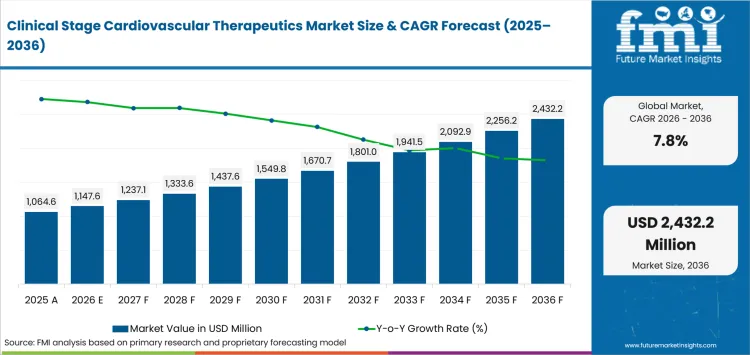
Key Takeaways of Clinical Stage Cardiovascular Therapeutics Market
- Demand for clinical stage cardiovascular therapeutics is driven by sponsors pursuing therapies addressing persistent disease burden and incomplete treatment response, with trial planning favoring defined populations and dependable site activation.
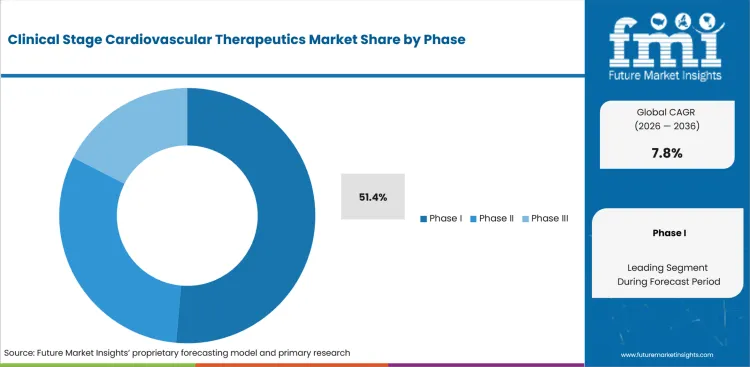
- By phase, Phase I holds the leading share at 51.4% in 2026, reflected by first-in-patient safety and dose exploration across cardiovascular pipelines.
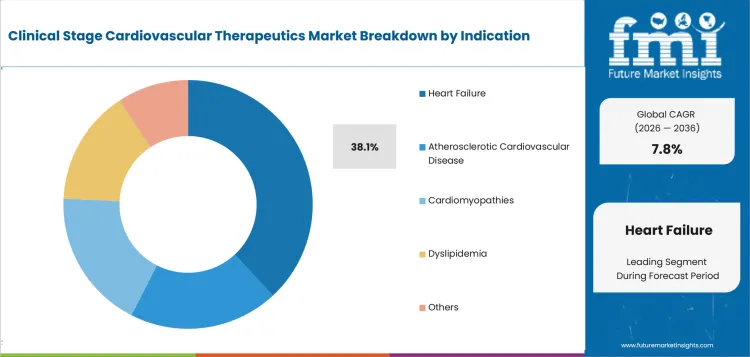
- Heart failure is the dominant indication segment, holding 38.1% share in 2026, driven by treatment gaps across chronic and advanced disease.
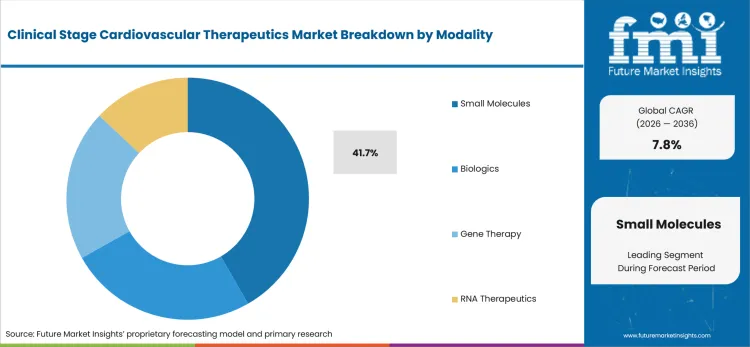
- Small molecules lead modality share at 41.7% in 2026, aided by established chemistry and flexible dose exploration across oral and injectable programs.
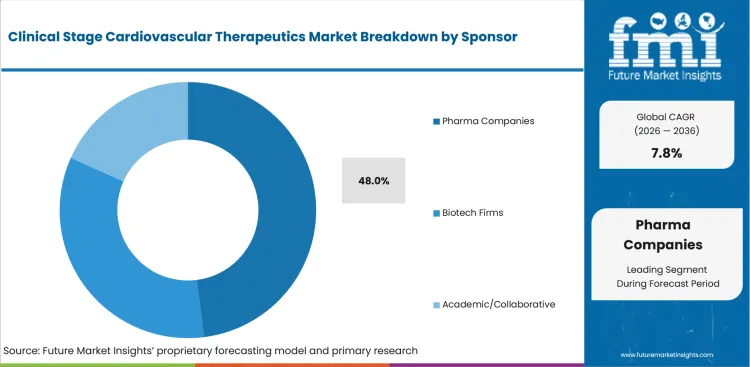
- Pharma companies account for 48.0% sponsor share in 2026, led by global study networks and sustained development financing through long cycles.
- South Korea, the UK, and the US record CAGRs of 9.6%, 8.8%, and 8.3% respectively through 2036, shaped by tertiary hospital concentration, organized research delivery, and sponsor density.
- Competition centers on Novartis, Bayer, AstraZeneca, Amgen, Alnylam Pharmaceuticals, and Arrowhead Pharmaceuticals, with vendors differentiating through late-stage thrombosis programs, heart failure and lipid-related development, and RNA-based cardiovascular treatment.
Analyst Perspective
"Clinical-stage success is increasingly determined by the ability to demonstrate meaningful biological activity while maintaining an acceptable safety profile through successive development stages. Sponsors are placing greater emphasis on clinically relevant endpoints, patient selection strategies, and manufacturing readiness before advancing investment or partnership decisions. Companies that generate robust evidence and execute disciplined clinical programs will be better positioned to strengthen commercialization opportunities."
- Anurag Sharma, Principal Consultant for Healthcare at Future Market Insights
Source: Future Market Insights analysis, 2026.
How is Clinical Stage Cardiovascular Therapeutics Market segmented?
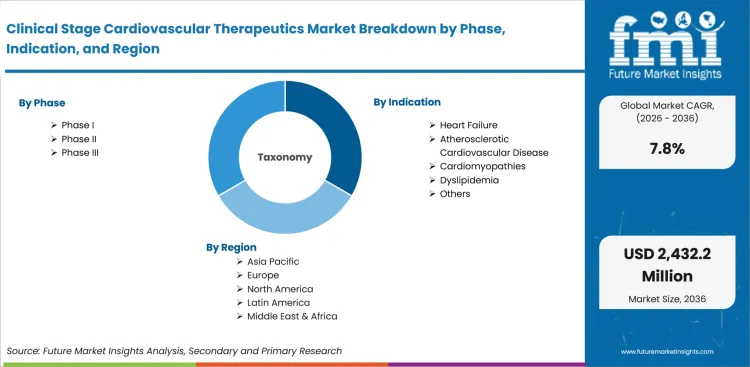
The clinical stage cardiovascular therapeutics industry is segmented by phase, indication, modality, sponsor, and region.
The clinical stage cardiovascular therapeutics market is segmented by phase, indication, modality, sponsor, and region. Phase coverage includes Phase I followed by Phase II and Phase III. Indication coverage addresses heart failure and atherosclerotic cardiovascular disease with cardiomyopathies, dyslipidemia, and other conditions. Modality coverage includes small molecules and biologics supported by gene therapy and RNA therapeutics. Sponsor coverage includes pharma companies and biotech firms with academic or collaborative groups. Regional coverage includes North America and Latin America together with Western Europe and Eastern Europe. East Asia, South Asia and Pacific, and Middle East and Africa complete geographic analysis across established and developing research systems. Combined coverage lets readers compare development maturity with disease focus, treatment approach, sponsor structure, and geographic execution.
Why does phase I shape phase selection?
National Library of Medicine Clinical Trials Registry recorded in May 2026 an actual enrollment of 58 participants for a completed Phase Ib/IIa heart failure study, illustrating focused cohorts used for initial safety and dose assessment. Early findings guide escalation choices and expose tolerance concerns prior to larger efficacy commitments. Dose-escalation findings help investigators refine monitoring plans for later patient cohorts.
- Phase I is set to represent 51.4% share of phase in 2026, influenced by extensive candidate screening and first-in-patient evaluation across cardiovascular pipelines. Early programs test formulation practicality and dosing schedules under controlled clinical supervision.
- Phase II and Phase III programs require stronger biological evidence and greater coordination across investigator sites. Progress generally follows reproducible signals and endpoints suited to confirmatory clinical research organization support.
How does heart failure shape indication demand?
Disease diversity encourages separate studies for reduced and preserved ejection fraction populations supported by cardiovascular diagnostics. Patient diversity requires separate recruitment criteria and follow-up schedules across heart-failure phenotypes. American Heart Association reported in January 2025 an estimated 6.7 million United States adults lived with heart failure, sustaining need for therapies addressing symptoms and hospitalization risk.
- By indication, heart failure is anticipated to secure 38.1% share in 2026 as it is driven by treatment gaps across chronic and advanced disease. Sponsors examine myocardial energetics and fibrosis using endpoints suited to defined patient profiles.
- Atherosclerotic cardiovascular disease and dyslipidemia create separate development paths with different study durations. Candidate selection reflects event risk and biomarker response across atherosclerosis programs.
Why do small molecules retain modality leadership?
National Library of Medicine Clinical Trials Registry reported in July 2025 an 8-participant Phase I study of oral AZD5462, demonstrating compact pharmacology studies used during cardiovascular small-molecule development. Oral candidates permit measured dose adjustment across early clinical evaluation. Pharmacokinetic results inform interaction controls and later dose selection under realistic administration conditions.
- In 2026, small molecules are forecast to garner 41.7% share since it is aided by established chemistry and flexible dose exploration. Development teams review target selectivity and interaction risk across oral or small molecule injectable programs.
- Biologics, gene therapy, and RNA therapeutics address mechanisms less accessible through conventional chemistry. Sponsors evaluate delivery durability and immune response across RNA-targeted small molecules and nucleic-acid treatments.
How do pharma companies shape sponsor activity?
Regulatory dialogue helps teams resolve endpoint questions prior to expensive multi-country studies. European Medicines Agency reported in January 2025 a total of 635 scientific advice requests during 2024, demonstrating sustained regulator engagement across medicine development. Structured interaction favors sponsors maintaining experienced clinical and manufacturing teams.
- Based on sponsor, pharma companies are projected to hold 48.0% share in 2026 owing to global site networks and sustained financing through long development cycles. Internal teams coordinate safety reporting and registration preparation across several countries.
- Biotech firms and academic collaborations contribute focused targets and specialized cardiovascular science. Smaller developers often retain scientific focus during early studies until larger partnering discussions begin.
What are drivers, restraints, and opportunities in Clinical Stage Cardiovascular Therapeutics Market?
Persistent cardiovascular disease burden promotes candidate development across unmet treatment needs. Recruitment complexity and long outcome studies may delay phase progression.
- Driver: Heart failure and hypertension sustain demand for differentiated therapeutic mechanisms across specialist care. Clinical teams seek therapies addressing residual symptoms under current guideline-directed care.
- Restraint: Cardiovascular studies require dependable enrollment and consistent follow-up across investigator networks. Safety findings or financing interruptions are likely to slow development prior to confirmatory investment.
- Opportunity: Biomarker-guided selection may improve signal detection across defined cardiovascular populations. Focused development is expected to support precise dosing and clearer partnering decisions.
Persistent mortality supports continued investment in cardiovascular therapeutics. Centers for Disease Control and Prevention reported in September 2025 an estimated 683,037 heart-disease deaths during 2024, demonstrating continuing need for treatments addressing residual risk. Clear differentiation remains necessary for programs competing against established cardiovascular therapies.
Enrollment performance remains a constraint for sponsors planning extensive outcome studies. United Kingdom clinical research delivery data published in January 2026 showed 37% of commercial contract studies opened within 60 days during June 2025, illustrating activation delays across participating sites. Development teams are likely to require realistic contracting plans and continuous pharmacovigilance support. Extended contracting periods weaken forecasting accuracy for site budgets and enrollment milestones.
Genetically informed treatment creates an opportunity for focused cardiovascular studies. National Library of Medicine Clinical Trials Registry reported in July 2026 a planned enrollment of 10,450 participants for the Phase III MOVE-Lp(a) trial of muvalaplin, showing substantial investment in defined lipid-related risk. Similar programs are anticipated to expand heart failure biomarker and precision-treatment research.
How are country CAGRs aligned in Clinical Stage Cardiovascular Therapeutics Market?
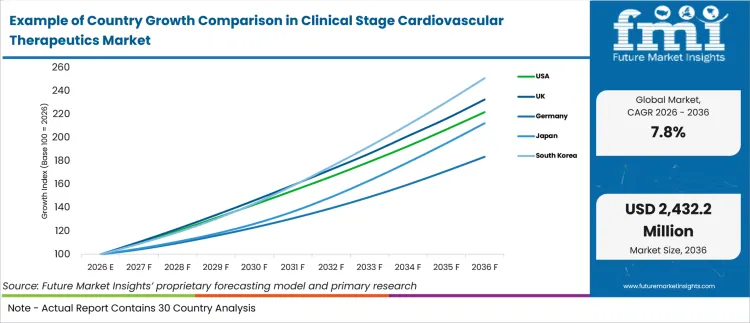
| Country or Market | CAGR |
|---|---|
| South Korea | 9.6% |
| United Kingdom | 8.8% |
| USA | 8.3% |
| Japan | 7.8% |
| Germany | 6.3% |
Source: Future Market Insights analysis, 2026.
How do country-level CAGRs compare in Clinical Stage Cardiovascular Therapeutics Market?
The country comparison shows a gradual step-down in growth across the markets covered. South Korea and the United Kingdom sit at the upper end of the range. The United States and Japan form a closely grouped second tier. Germany remains at the lower end of the comparison. The 3.3-point spread reflects all markets sharing a positive growth outlook, although their relative positions indicate different levels of clinical development activity. Individual country forecasts are likely to vary according to trial infrastructure and sponsor participation.
- South Korea and the United Kingdom lead the comparison and establish the principal growth group among the markets shown.
- The United States and Japan follow closely, indicates that neither market falls far behind the leading group.
- Germany records the slowest growth among the listed markets, yet its forecast remains positive within the wider market context.
- The pattern resembles a gradual downward slope rather than a sharp separation between higher-growth and lower-growth markets.
Markets with broadly similar CAGRs are still able to present different entry conditions due to clinical research capacity and regulatory readiness. The full report provides country-level analysis across North America, Latin America, Western Europe, Eastern Europe, East Asia, South Asia and Pacific, and the Middle East and Africa.
Country-wise Analysis
- Industry in South Korea is anticipated to rise at 9.6% CAGR from 2026 to 2036, guided by concentrated tertiary hospitals and coordinated study activation. OECD reported in July 2025 a population of 8.41 million residents aged 55 to 64 years during 2024, expanding demand for cardiovascular prevention and chronic-disease research. Centralized specialist networks may reduce site variation and simplify sponsor oversight during enrollment.
- Medicines and Healthcare products Regulatory Agency reported in February 2025 a 98% share of United Kingdom trials receiving a combined review decision within 60 days during December 2024, supporting predictable study scheduling. Organized research delivery improves sponsor confidence across hospital networks. Demand in the United Kingdom is projected to expand at 8.8% CAGR by 2036, reflecting coordinated trial review and specialist access. National coordination supports consistent contracting practices across participating clinical institutions and research teams.
- Extensive investigator networks and specialty centers support cardiovascular research across USA. Clinical stage cardiovascular therapeutics sector in the United States is estimated to record 8.3% CAGR from 2026 to 2036, aided by sponsor density and extensive study capacity. National Institutes of Health reported in May 2026 a total of 8,202,424 participants enrolled at United States sites during fiscal 2025, demonstrating substantial capacity for multi-site clinical research. Wide geographic coverage requires careful site selection to prevent uneven recruitment performance.
- Clinical stage cardiovascular therapeutics market in Japan is forecast to grow at 7.8% CAGR during the study period, influenced by academic research centers and measured safety review. Hospital programs provide structured settings for local evidence development. Statistics Bureau of Japan reported in April 2025 a population of 36.243 million residents aged 65 years or older during 2024, supporting continued study interest across age-associated cardiovascular conditions. Local evidence expectations encourage measured protocol adaptation and detailed safety documentation for sponsors.
- Paul-Ehrlich-Institut reported in April 2025 a total of 809 clinical trial applications submitted in Germany during 2024, indicating substantial regulated research activity. Scientific institutions provide disciplined settings for cardiovascular study execution. German demand is predicted to expand at 6.3% CAGR between 2026 and 2036, backed by biomedicine expertise and deliberate sponsor review. Institutional expertise supports complex protocols requiring biomarker testing and specialist adjudication throughout development.
Who are notable companies in Clinical Stage Cardiovascular Therapeutics Market?
Novartis and Bayer support late-stage cardiovascular programs spanning thrombosis and residual vascular risk. AstraZeneca and Amgen maintain heart failure and lipid-related development assets. Alnylam Pharmaceuticals and Arrowhead Pharmaceuticals advance RNA-based treatments. Cardurion Pharmaceuticals and Tenaya Therapeutics pursue focused heart failure and cardiomyopathy programs.
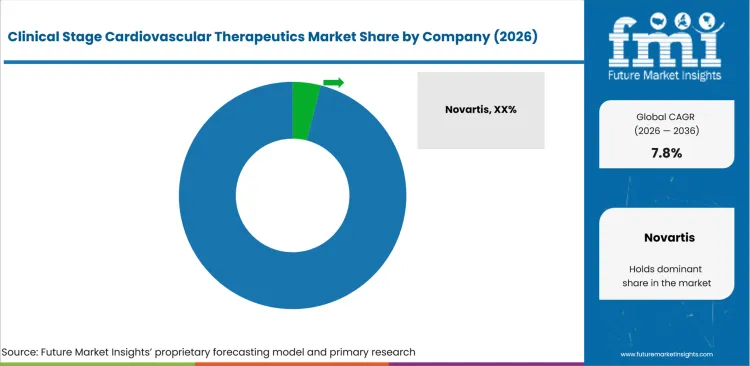
Competition in clinical stage cardiovascular therapeutics is anticipated to center on candidate quality and trial execution. Sponsor teams are likely to compare companies based on safety evidence and phase maturity prior to partnering decisions. Novartis is expected to receive attention through late-stage thrombosis development. AstraZeneca is projected to support heart failure evaluation due to small-molecule programs. Alnylam Pharmaceuticals is estimated to influence RNA interference research led by infrequent dosing. Cardurion Pharmaceuticals is anticipated to compete through focused heart failure development.
- Novartis and Bayer receive review attention through late-stage thrombosis and cardiovascular-risk programs. Clinical teams assess event reduction alongside bleeding evidence across extensive outcome studies.
- AstraZeneca and Amgen compete through heart failure and lipid-related assets. Development groups compare dose durability with endpoint design across cardiometabolic programs.
- Alnylam Pharmaceuticals and Arrowhead Pharmaceuticals contribute to RNA-based cardiovascular treatment development. Sponsor review examines delivery durability together with long-term safety monitoring.
- Cardurion Pharmaceuticals and Tenaya Therapeutics attract specialist interest through focused heart failure and cardiomyopathy programs. Trial progress shapes partnering discussions across defined patient populations.
Competitive Benchmarking: Clinical Stage Cardiovascular Therapeutics Market
| Company | Portfolio Depth | Clinical Match | Development Support | Study Reach |
|---|---|---|---|---|
| Novartis | High | High | High | Global cardiovascular programs |
| AstraZeneca | High | High | High | Global cardiovascular and renal sites |
| Amgen | High | High | High | Global lipid and cardiovascular studies |
| Bayer | High | High | High | Global thrombosis and stroke programs |
| Alnylam Pharmaceuticals | Medium | High | High | Multinational RNAi studies |
| Arrowhead Pharmaceuticals | Medium | High | Medium | Multinational lipid studies |
| Cardurion Pharmaceuticals | Medium | High | Medium | Global heart failure study sites |
| Tenaya Therapeutics | Focused | High | Medium | Selected cardiomyopathy centers |
Source: Future Market Insights competitive analysis, 2026.
Key Developments in Clinical Stage Cardiovascular Therapeutics Market
- In April 2025, Novartis completed its acquisition of Anthos Therapeutics, bringing abelacimab into its cardiovascular pipeline. The late-stage antibody was undergoing Phase III development for preventing stroke and systemic embolism, strengthening Novartis’s clinical-stage thromboembolic portfolio.
- In August 2025, Cardurion Pharmaceuticals completed enrollment in two global Phase II CYCLE trials evaluating CRD-750 across reduced and preserved ejection fraction heart failure. Completion advanced PDE9 inhibition toward clinical readouts capable of guiding later-stage development.
- In October 2025, Alnylam Pharmaceuticals dosed the first participant in its global Phase III ZENITH cardiovascular outcomes trial for zilebesiran. Planned enrollment of approximately 11,000 participants across 35 countries supports extensive assessment of RNA interference treatment for uncontrolled hypertension and cardiovascular risk.
Key Players in Clinical Stage Cardiovascular Therapeutics Market
Established pharmaceutical developers
- Novartis
- AstraZeneca
- Amgen
- Bayer
RNA-focused cardiovascular developers
- Alnylam Pharmaceuticals
- Arrowhead Pharmaceuticals
Focused heart failure and cardiomyopathy developers
- Cardurion Pharmaceuticals
- Tenaya Therapeutics
Clinical Stage Cardiovascular Therapeutics Market Report Scope
| Coverage field | Report scope |
|---|---|
| Market breakdown | Clinical Stage Cardiovascular Therapeutics Market breakdown by phase, indication, modality, sponsor, and region |
| Quantitative Units | Revenue in USD Million, CAGR in %. |
| Market Definition | Clinical stage cardiovascular therapeutics include investigational medicines undergoing Phase I, Phase II, or Phase III development for cardiovascular conditions. |
| Regions Covered | North America, Latin America, Western Europe, Eastern Europe, East Asia, South Asia and Pacific, and Middle East and Africa. |
| Countries Covered | USA, United Kingdom, Germany, Japan, South Korea, and 30+ additional countries. |
| Key Companies Profiled | Novartis, AstraZeneca, Amgen, Bayer, Alnylam Pharmaceuticals, Arrowhead Pharmaceuticals, Cardurion Pharmaceuticals, and Tenaya Therapeutics |
| Forecast Period | 2026 to 2036 |
| Approach | Hybrid bottom-up and top-down methodology using segment shares and country CAGRs with trial activity, company participation, clinical evidence, and development capacity |
Source: Future Market Insights analysis, 2026.
Clinical Stage Cardiovascular Therapeutics Market - Research Methodology
| Method | Approach |
|---|---|
| Primary Research | FMI analysts gathered input from manufacturers, service providers, technology developers, distributors, end users, sourcing teams, and subject-matter experts. Interviews examined purchasing decisions, product or service evaluation, adoption barriers, approval requirements, pricing considerations, and expectations for technical or commercial support. Respondents were also asked what evidence is required before a trial, pilot, or initial order develops into regular purchasing. |
| Desk Research | Desk research covered government statistics, regulatory publications, trade data, industry associations, technical literature, standards, company filings, product information, and official corporate announcements. Sources were reviewed for relevance, publication date, geographic coverage, and consistency with the defined market scope. Claims relating to performance, applications, approvals, capacity, investment, and commercial activity were retained only when supported by credible public evidence. |
| Market Sizing and Forecasting | The market model combined the baseline value with historical performance, segment structure, pricing and volume indicators, adoption levels, company participation, and country-level demand conditions. Forecast assumptions considered economic activity, investment trends, regulatory developments, technology adoption, purchasing cycles, supply availability, and barriers to wider market use. Segment and regional estimates were reconciled before the final market total was calculated. |
| Data Validation | Estimates were checked against multiple independent indicators, including public data, company activity, trade patterns, industry developments, and findings from primary interviews. Validation also tested whether products, services, applications, and company revenues fell within the defined market boundaries. Adjacent categories, unsupported claims, overlapping revenues, and activities without direct market relevance were excluded to reduce double counting and maintain consistency across segments and countries. |
Source: Future Market Insights analysis, 2026.
Clinical Stage Cardiovascular Therapeutics Market by Segments
Clinical Stage Cardiovascular Therapeutics Market segmented by Phase:
- Phase I
- Phase II
- Phase III
Clinical Stage Cardiovascular Therapeutics Market segmented by Indication:
- Heart Failure
- Atherosclerotic Cardiovascular Disease
- Cardiomyopathies
- Dyslipidemia
- Others
Clinical Stage Cardiovascular Therapeutics Market segmented by Modality:
- Small Molecules
- Biologics
- Gene Therapy
- RNA Therapeutics
Clinical Stage Cardiovascular Therapeutics Market segmented by Sponsor:
- Pharma Companies
- Biotech Firms
- Academic/Collaborative
Clinical Stage Cardiovascular Therapeutics Market segmented by Region:
- North America
- United States
- Canada
- Latin America
- Brazil
- Mexico
- Argentina
- Chile
- Western Europe
- Germany
- France
- United Kingdom
- Italy
- Spain
- Benelux
- Nordics
- Eastern Europe
- Poland
- Czech Republic
- Romania
- Hungary
- East Asia
- China
- Japan
- South Korea
- South Asia and Pacific
- India
- ASEAN
- Australia and New Zealand
- Middle East and Africa
- GCC Countries
- South Africa
- Türkiye
- Israel
Research Sources and Bibliography
- World Health Organization. (2025, September 25). Hypertension.
- USA Food and Drug Administration. (2025, July 14). Novel drug approvals for 2024.
- National Library of Medicine. (2026, May 7). Clinical Trials Registry: Phase Ib/IIa trial with AC01 in patients with HFrEF: NCT05642507.
- American Heart Association. (2025, January 27). Bridging critical gaps in advanced heart failure care.
- National Library of Medicine. (2025, July 4). A study designed to assess the mass balance recovery, absorption, metabolism, excretion of [14C]AZD5462 and the absolute bioavailability of AZD5462.
- European Medicines Agency. (2025, January 16). Human medicines in 2024.
- Centers for Disease Control and Prevention. (2025, September 10). Mortality in the United States: Provisional data, 2024.
- Department of Health and Social Care. (2026, January 21). UK Clinical Research Delivery key performance indicators: Data to December 2025.
- National Library of Medicine. (2026, July 7). Assessing the impact of muvalaplin on major cardiovascular events in adults with elevated lipoprotein(a): MOVE-Lp(a).
- Organization for Economic Co-operation and Development. (2025, July 9). OECD Employment Outlook 2025: Korea.
- Medicines and Healthcare products Regulatory Agency. (2025, February 14). Performance data for assessment of clinical trials and established medicines.
- National Institutes of Health. (2026, May 27). Fiscal year 2025 enrollment data from NIH-supported clinical research.
- Statistics Bureau of Japan. (2025, April 14). Current population estimates as of October 1, 2024.
- Paul-Ehrlich-Institut. (2025, April 23). Paul-Ehrlich-Institut in exchange with German Pharmaceutical Industry Association on regulation of biomedicines.
- Novartis. (2025, April 29). Novartis continues strong momentum with double-digit sales growth, robust margin expansion and multiple approvals in Q1.
- Cardurion Pharmaceuticals, Inc. (2025, August 6). Cardurion Pharmaceuticals completes enrollment in Phase 2 CYCLE trials evaluating CRD-750 in heart failure.
- Alnylam Pharmaceuticals, Inc. (2025, October 1). Alnylam announces first patient dosed in ZENITH global Phase 3 cardiovascular outcomes trial of zilebesiran.
This bibliography coverage is provided for reader reference and is not exhaustive. The full report coverage contains the complete reference list and detailed source records.
This Report Answers
- What segments influence demand across phase and indication with modality and sponsor?
- How do cardiovascular sponsors evaluate clinical-stage candidates prior to phase progression?
- How do country CAGRs differ across profiled research environments with distinct review systems?
- What companies compete through candidate depth and dependable clinical execution?
- How are forecasts validated through hybrid bottom-up and top-down analysis?
- What evidence do sponsor teams examine prior to later-stage investment?
- How do safety records and dose response influence candidate selection?
- What limits return on development investment across cardiovascular programs?
- How do biomarker records and specialist guidance influence phase decisions?
- What company capabilities improve long-term development confidence?
Frequently Asked Questions
How big is the Clinical Stage Cardiovascular Therapeutics Market in 2026?
The clinical stage cardiovascular therapeutics market is valued at USD 1147.6 million in 2026 and is forecast to reach USD 2432.2 million by 2036. Growth reflects pharmaceutical companies favoring cardiometabolic drugs demonstrating a clear dose response and dependable safety amid widespread chronic disease burden.
What is the CAGR of the Clinical Stage Cardiovascular Therapeutics Market from 2026 to 2036?
The clinical stage cardiovascular therapeutics market grows at a CAGR of 7.8% between 2026 and 2036, supported by heart failure and hypertension sustaining demand for differentiated therapeutic mechanisms across specialist care and unmet clinical needs.
Which phase leads the Clinical Stage Cardiovascular Therapeutics Market?
Phase I accounts for 51.4% of the clinical stage cardiovascular therapeutics market by phase in 2026, influenced by extensive candidate screening and first-in-patient evaluation across cardiovascular pipelines testing formulation practicality and dosing schedules.
How much will the Clinical Stage Cardiovascular Therapeutics Market add between 2026 and 2036?
The clinical stage cardiovascular therapeutics market is set to add USD 1284.6 million between 2026 and 2036, growing from USD 1147.6 million to USD 2432.2 million as differentiated cardiovascular candidates extend across a widening base of specialist clinical development programs.
Who are the leading companies in the Clinical Stage Cardiovascular Therapeutics Market?
Eight companies lead the clinical stage cardiovascular therapeutics market, including Novartis, Bayer, AstraZeneca, Amgen, Alnylam Pharmaceuticals, Arrowhead Pharmaceuticals, Cardurion Pharmaceuticals, and Tenaya Therapeutics, competing through late-stage thrombosis programs, RNA-based treatments, and focused heart failure development.
Preview the report firsthand - request a free sample
Get SampleGet the brochure for pricing and purchase details.
Get PDFTable of Content
- Key Takeaways
- Market Size and CAGR
- Top Growth Driver
- Fastest Growing Segment
- Leading Region
- Key Companies
- Emerging Opportunities
- Executive Summary
- Global Market Outlook
- Demand-side Trends
- Supply-side Trends
- Technology Roadmap Analysis
- Analysis and Recommendations
- Analyst Perspective (What is happening? Why now? What should investors know?)
- Key Questions Answered
- How large is the market?
- What is the CAGR?
- What are key trends?
- Which region dominates?
- Who are the leaders?
- Market Overview
- Market Coverage / Taxonomy
- Market Definition / Scope / Limitations
- Research Methodology
- Chapter Orientation
- Analytical Lens and Working Hypotheses
- Market Structure, Signals, and Trend Drivers
- Benchmarking and Cross-market Comparability
- Market Sizing, Forecasting, and Opportunity Mapping
- Research Design and Evidence Framework
- Desk Research Programme (Secondary Evidence)
- Expert Input and Fieldwork (Primary Evidence)
- Tooling, Models, and Reference Databases
- Data Engineering and Model Build
- Quality Assurance and Audit Trail
- Market Background
- Market Dynamics (Drivers, Restraints, Opportunity, Trends)
- Scenario Forecast (Optimistic, Likely, Conservative)
- Impact Analysis
- AI Impact
- Sustainability Impact
- Regulatory Impact
- Technology Impact
- Consumer / Buyer Analysis
- Purchase Drivers
- Adoption Barriers
- Buyer Journey
- Opportunity Map Analysis
- Product Life Cycle Analysis
- Supply Chain Analysis
- Investment Feasibility Matrix
- Value Chain Analysis
- PESTLE and Porter's Analysis
- Regulatory Landscape
- Regional Parent Market Outlook
- Production and Consumption Statistics
- Import and Export Statistics
- Global Market Analysis and Forecast, 2021 to 2036
- Historical Market Size Value (USD Million) Analysis, 2021 to 2025
- Current and Future Market Size Value (USD Million) Projections, 2026 to 2036
- Y-o-Y Growth Trend Analysis
- Absolute $ Opportunity Analysis
- Global Market Pricing Analysis, 2021 to 2036
- Global Market Analysis and Forecast, By Phase, 2021 to 2036
- Introduction / Key Findings
- Historical Market Size Value (USD Million) Analysis By Phase, 2021 to 2025
- Current and Future Market Size Value (USD Million) Analysis and Forecast By Phase, 2026 to 2036
- Phase I
- Phase II
- Phase III
- Phase I
- Y-o-Y Growth Trend Analysis By Phase, 2021 to 2025
- Absolute $ Opportunity Analysis By Phase, 2026 to 2036
- Global Market Analysis and Forecast, By Indication, 2021 to 2036
- Introduction / Key Findings
- Historical Market Size Value (USD Million) Analysis By Indication, 2021 to 2025
- Current and Future Market Size Value (USD Million) Analysis and Forecast By Indication, 2026 to 2036
- Heart Failure
- Atherosclerotic Cardiovascular Disease
- Cardiomyopathies
- Dyslipidemia
- Others
- Heart Failure
- Y-o-Y Growth Trend Analysis By Indication, 2021 to 2025
- Absolute $ Opportunity Analysis By Indication, 2026 to 2036
- Global Market Analysis and Forecast, By Modality, 2021 to 2036
- Introduction / Key Findings
- Historical Market Size Value (USD Million) Analysis By Modality, 2021 to 2025
- Current and Future Market Size Value (USD Million) Analysis and Forecast By Modality, 2026 to 2036
- Small Molecules
- Biologics
- Gene Therapy
- RNA Therapeutics
- Small Molecules
- Y-o-Y Growth Trend Analysis By Modality, 2021 to 2025
- Absolute $ Opportunity Analysis By Modality, 2026 to 2036
- Global Market Analysis and Forecast, By Sponsor, 2021 to 2036
- Introduction / Key Findings
- Historical Market Size Value (USD Million) Analysis By Sponsor, 2021 to 2025
- Current and Future Market Size Value (USD Million) Analysis and Forecast By Sponsor, 2026 to 2036
- Pharma Companies
- Biotech Firms
- Academic/Collaborative
- Pharma Companies
- Y-o-Y Growth Trend Analysis By Sponsor, 2021 to 2025
- Absolute $ Opportunity Analysis By Sponsor, 2026 to 2036
- Global Market Analysis and Forecast, By Region, 2021 to 2036
- Introduction
- Historical Market Size Value (USD Million) Analysis By Region, 2021 to 2025
- Current Market Size Value (USD Million) Analysis and Forecast By Region, 2026 to 2036
- North America
- Latin America
- Western Europe
- Eastern Europe
- East Asia
- South Asia and Pacific
- Middle East & Africa
- Market Attractiveness Analysis By Region
- North America Market Analysis and Forecast, By Country, 2021 to 2036
- Historical Market Size Value (USD Million) Trend Analysis By Market Taxonomy, 2021 to 2025
- Market Size Value (USD Million) Forecast By Market Taxonomy, 2026 to 2036
- By Country
- USA
- Canada
- By Phase
- By Indication
- By Modality
- By Sponsor
- By Country
- Market Attractiveness Analysis
- By Country
- By Phase
- By Indication
- By Modality
- By Sponsor
- Key Takeaways
- Latin America Market Analysis and Forecast, By Country
- Historical Market Size Value (USD Million) Trend Analysis By Market Taxonomy, 2021 to 2025
- Market Size Value (USD Million) Forecast By Market Taxonomy, 2026 to 2036
- By Country
- Brazil
- Mexico
- Chile
- Rest of Latin America
- By Phase
- By Indication
- By Modality
- By Sponsor
- By Country
- Market Attractiveness Analysis
- By Country
- By Phase
- By Indication
- By Modality
- By Sponsor
- Key Takeaways
- Western Europe Market Analysis and Forecast, By Country
- Historical Market Size Value (USD Million) Trend Analysis By Market Taxonomy, 2021 to 2025
- Market Size Value (USD Million) Forecast By Market Taxonomy, 2026 to 2036
- By Country
- Germany
- UK
- Italy
- Spain
- France
- Nordic
- BENELUX
- Rest of Western Europe
- By Phase
- By Indication
- By Modality
- By Sponsor
- By Country
- Market Attractiveness Analysis
- By Country
- By Phase
- By Indication
- By Modality
- By Sponsor
- Key Takeaways
- Eastern Europe Market Analysis and Forecast, By Country
- Historical Market Size Value (USD Million) Trend Analysis By Market Taxonomy, 2021 to 2025
- Market Size Value (USD Million) Forecast By Market Taxonomy, 2026 to 2036
- By Country
- Russia
- Poland
- Hungary
- Balkan & Baltic
- Rest of Eastern Europe
- By Phase
- By Indication
- By Modality
- By Sponsor
- By Country
- Market Attractiveness Analysis
- By Country
- By Phase
- By Indication
- By Modality
- By Sponsor
- Key Takeaways
- East Asia Market Analysis and Forecast, By Country
- Historical Market Size Value (USD Million) Trend Analysis By Market Taxonomy, 2021 to 2025
- Market Size Value (USD Million) Forecast By Market Taxonomy, 2026 to 2036
- By Country
- China
- Japan
- South Korea
- By Phase
- By Indication
- By Modality
- By Sponsor
- By Country
- Market Attractiveness Analysis
- By Country
- By Phase
- By Indication
- By Modality
- By Sponsor
- Key Takeaways
- South Asia and Pacific Market Analysis and Forecast, By Country
- Historical Market Size Value (USD Million) Trend Analysis By Market Taxonomy, 2021 to 2025
- Market Size Value (USD Million) Forecast By Market Taxonomy, 2026 to 2036
- By Country
- India
- ASEAN
- Australia & New Zealand
- Rest of South Asia and Pacific
- By Phase
- By Indication
- By Modality
- By Sponsor
- By Country
- Market Attractiveness Analysis
- By Country
- By Phase
- By Indication
- By Modality
- By Sponsor
- Key Takeaways
- Middle East & Africa Market Analysis and Forecast, By Country
- Historical Market Size Value (USD Million) Trend Analysis By Market Taxonomy, 2021 to 2025
- Market Size Value (USD Million) Forecast By Market Taxonomy, 2026 to 2036
- By Country
- Kingdom of Saudi Arabia
- Other GCC Countries
- Türkiye
- South Africa
- Other African Union
- Rest of Middle East & Africa
- By Phase
- By Indication
- By Modality
- By Sponsor
- By Country
- Market Attractiveness Analysis
- By Country
- By Phase
- By Indication
- By Modality
- By Sponsor
- Key Takeaways
- Key Countries Market Analysis
- USA
- Pricing Analysis
- Market Share Analysis, 2025
- By Phase
- By Indication
- By Modality
- By Sponsor
- Canada
- Pricing Analysis
- Market Share Analysis, 2025
- By Phase
- By Indication
- By Modality
- By Sponsor
- Mexico
- Pricing Analysis
- Market Share Analysis, 2025
- By Phase
- By Indication
- By Modality
- By Sponsor
- Brazil
- Pricing Analysis
- Market Share Analysis, 2025
- By Phase
- By Indication
- By Modality
- By Sponsor
- Chile
- Pricing Analysis
- Market Share Analysis, 2025
- By Phase
- By Indication
- By Modality
- By Sponsor
- Germany
- Pricing Analysis
- Market Share Analysis, 2025
- By Phase
- By Indication
- By Modality
- By Sponsor
- UK
- Pricing Analysis
- Market Share Analysis, 2025
- By Phase
- By Indication
- By Modality
- By Sponsor
- Italy
- Pricing Analysis
- Market Share Analysis, 2025
- By Phase
- By Indication
- By Modality
- By Sponsor
- Spain
- Pricing Analysis
- Market Share Analysis, 2025
- By Phase
- By Indication
- By Modality
- By Sponsor
- France
- Pricing Analysis
- Market Share Analysis, 2025
- By Phase
- By Indication
- By Modality
- By Sponsor
- India
- Pricing Analysis
- Market Share Analysis, 2025
- By Phase
- By Indication
- By Modality
- By Sponsor
- ASEAN
- Pricing Analysis
- Market Share Analysis, 2025
- By Phase
- By Indication
- By Modality
- By Sponsor
- Australia & New Zealand
- Pricing Analysis
- Market Share Analysis, 2025
- By Phase
- By Indication
- By Modality
- By Sponsor
- China
- Pricing Analysis
- Market Share Analysis, 2025
- By Phase
- By Indication
- By Modality
- By Sponsor
- Japan
- Pricing Analysis
- Market Share Analysis, 2025
- By Phase
- By Indication
- By Modality
- By Sponsor
- South Korea
- Pricing Analysis
- Market Share Analysis, 2025
- By Phase
- By Indication
- By Modality
- By Sponsor
- Russia
- Pricing Analysis
- Market Share Analysis, 2025
- By Phase
- By Indication
- By Modality
- By Sponsor
- Poland
- Pricing Analysis
- Market Share Analysis, 2025
- By Phase
- By Indication
- By Modality
- By Sponsor
- Hungary
- Pricing Analysis
- Market Share Analysis, 2025
- By Phase
- By Indication
- By Modality
- By Sponsor
- Kingdom of Saudi Arabia
- Pricing Analysis
- Market Share Analysis, 2025
- By Phase
- By Indication
- By Modality
- By Sponsor
- Türkiye
- Pricing Analysis
- Market Share Analysis, 2025
- By Phase
- By Indication
- By Modality
- By Sponsor
- South Africa
- Pricing Analysis
- Market Share Analysis, 2025
- By Phase
- By Indication
- By Modality
- By Sponsor
- USA
- Market Structure Analysis
- Competition Dashboard
- Competition Benchmarking
- Market Share Analysis of Top Players
- By Regional
- By Phase
- By Indication
- By Modality
- By Sponsor
- Emerging Startups
- Innovation Benchmarking
- Competition Analysis
- Competition Deep Dive
- Novartis
- Overview
- Product Portfolio
- Profitability by Market Segments
- Sales Footprint
- Strategy Overview
- Marketing Strategy
- Product Strategy
- Channel Strategy
- AstraZeneca
- Amgen
- Pfizer
- Tenaya Therapeutics
- Cardurion Pharmaceuticals
- Alnylam
- Arrowhead
- Novartis
- Case Studies
- Success Stories
- Recent Developments
- Competition Deep Dive
- Assumptions & Acronyms Used


