

- Industry Size (2026)
- USD 1.1 Bn
- Forecast (2036)
- USD 2.7 Bn
- CAGR (2026 to 2036)
- 9.40%
Fuel System Diagnostics & Health Monitoring Market Forecast and Outlook 2026 to 2036
The global fuel system diagnostics and health monitoring market is projected to reach USD 1.1 billion in 2026 and USD 2.7 billion by 2036, with a CAGR of 9.40%. Decision-makers must understand that this market is being driven by the growing demand for real-time fuel system monitoring, particularly as vehicles face stricter emissions regulations and increasing consumer demand for fuel efficiency. Economic exposure is tied to the automotive industry’s ongoing technological shift, with OEMs and fleets playing key roles in adopting these systems.
Quick Stats for Fuel System Diagnostics & Health Monitoring Market
- Fuel System Diagnostics & Health Monitoring Market Value (2026): USD 1.1 Billion
- Fuel System Diagnostics & Health Monitoring Market Forecast Value (2036): USD 2.7 Billion
- Fuel System Diagnostics & Health Monitoring Market Forecast CAGR 2026 to 2036: 9.40%
- Leading Deployment Model in Fuel System Diagnostics & Health Monitoring Market: On-Board Embedded Systems
- Key Growth Regions in Fuel System Diagnostics & Health Monitoring Market: Asia Pacific, North America
- Top Key Players in Fuel System Diagnostics & Health Monitoring Market: Bosch, Continental, Denso, Cummins, Garrett Motion
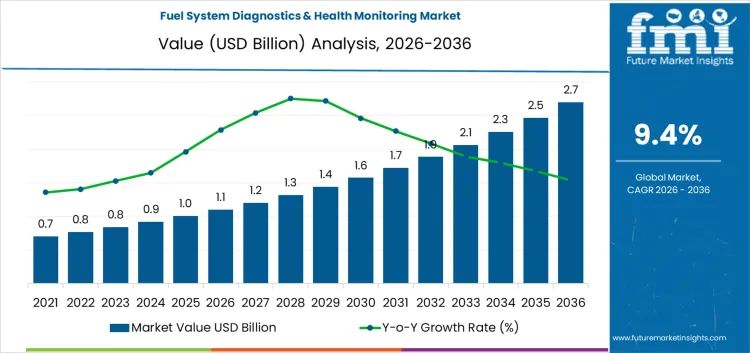
Prioritization should focus on integrating predictive diagnostics, as advancements in AI and machine learning offer significant cost-saving opportunities through predictive maintenance. The timing of investments in this space is crucial, as regulatory deadlines are accelerating adoption, and regions such as China and Brazil are expected to see rapid market growth. Positioning early in this market will provide competitive advantages in performance optimization and regulatory compliance.
Fuel System Diagnostics & Health Monitoring Market Key Takeaways
| Metric | Value |
|---|---|
| Industry Value (2026) | USD 1.1 Billion |
| Forecast Value (2036) | USD 2.7 Billion |
| Forecast CAGR 2026 to 2036 | 9.40% |
How is the Global Fuel System Diagnostics & Health Monitoring Market Advancing?
The global fuel system diagnostics and health monitoring market is experiencing steady growth, driven by the increasing demand for advanced diagnostic tools and monitoring systems that improve vehicle performance, safety, and fuel efficiency. These systems enable real-time monitoring of the fuel system’s health, detecting issues such as leaks, blockages, and wear, thereby reducing the risk of major failures and enhancing vehicle longevity. As vehicles become more complex and technology-driven, the need for sophisticated fuel system diagnostics and health monitoring solutions continues to rise.
A major driver for market growth is the increasing focus on fuel efficiency and the need for vehicles to comply with stringent emissions standards. Advanced fuel system diagnostics play a crucial role in ensuring optimal fuel system performance, which directly impacts both fuel economy and emissions. With governments worldwide implementing tighter regulations to reduce vehicle emissions, automakers are adopting health monitoring systems that ensure their vehicles meet environmental standards while maintaining optimal performance. The growing adoption of hybrid vehicles, which require more advanced fuel and energy management systems, is further fueling the demand for fuel system diagnostics and monitoring technologies
Technological advancements, including the integration of artificial intelligence (AI) and machine learning (ML) in diagnostics, are improving the accuracy and efficiency of fuel system health monitoring systems. These innovations allow for predictive maintenance, enabling early detection of potential issues before they lead to costly repairs or downtime. As the automotive industry continues to evolve, the demand for sophisticated diagnostics and health monitoring systems will grow, positioning the fuel system diagnostics and health monitoring market for continued expansion over the next decade.
What Is the Segment-Wise Analysis for the Fuel System Diagnostics & Health Monitoring Market?
The fuel system diagnostics & health monitoring market is segmented by deployment model and end user. On-board embedded systems lead the deployment model segment with a 46% share, followed by cloud analytics, hybrid systems, and other deployment models. On-board embedded systems are highly preferred for real-time diagnostics and health monitoring of fuel systems, offering efficiency and ease of integration within vehicles. In terms of end users, OEMs dominate the market with a 34% share, followed by fleets, Tier-1 suppliers, aftermarket, and other end users.
Why Do On-Board Embedded Systems Lead the Fuel System Diagnostics & Health Monitoring Market?
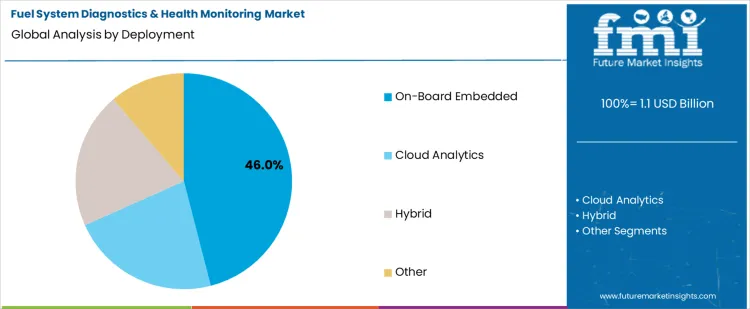
On-board embedded systems lead the fuel system diagnostics & health monitoring market with a 46% share due to their ability to provide real-time monitoring of fuel system performance directly within the vehicle. These systems are integrated with the vehicle's onboard diagnostics (OBD) to track various parameters such as fuel efficiency, pressure, and potential system failures. On-board systems are essential for proactively identifying and diagnosing issues, ensuring better maintenance, and improving the overall performance of the fuel system. As the automotive industry increasingly focuses on efficiency, emissions control, and vehicle health, on-board embedded systems continue to be the preferred solution in fuel system diagnostics and health monitoring.
How Do OEMs Contribute to the Fuel System Diagnostics & Health Monitoring Market?
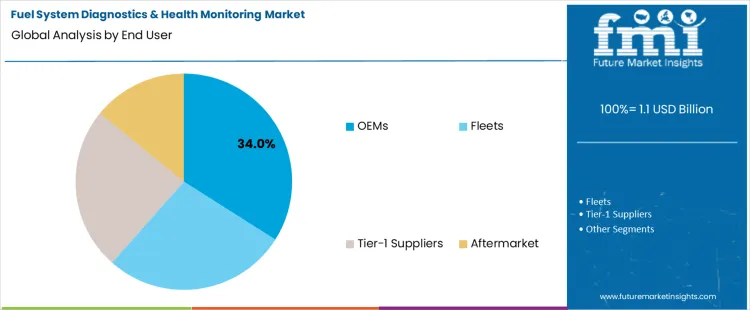
OEMs (Original Equipment Manufacturers) represent a significant segment of the fuel system diagnostics & health monitoring market, accounting for 34% of the end-user share. OEMs are critical in integrating advanced diagnostic and health monitoring systems into new vehicles during production. By equipping vehicles with on-board diagnostic systems, OEMs ensure that fuel systems are continuously monitored, helping detect potential issues before they impact vehicle performance. The growing focus on fuel efficiency, emissions reduction, and vehicle safety has made OEMs key players in driving the adoption of fuel system diagnostics. Their investment in integrated solutions is helping to improve vehicle longevity, efficiency, and compliance with environmental regulations.
What Are the Key Dynamics for the Fuel System Diagnostics & Health Monitoring Market?
The fuel system diagnostics & health monitoring market is driven by the increasing demand for vehicle performance optimization, enhanced fuel efficiency, and regulatory compliance regarding emissions. These diagnostic systems monitor the health and performance of the fuel system, identifying issues like fuel leaks, pressure imbalances, and blockages before they affect vehicle operation. Rising environmental concerns, coupled with strict emissions regulations, are pushing the automotive industry to adopt advanced diagnostic systems to ensure the efficiency and reliability of fuel systems in vehicles.
How Are the Key Drivers Shaping the Fuel System Diagnostics & Health Monitoring Market?
Key drivers for the fuel system diagnostics & health monitoring market include the growing need for real-time monitoring of fuel systems to ensure optimal vehicle performance and fuel efficiency. Increasingly stringent government regulations on emissions are pushing automakers to integrate sophisticated diagnostic systems. The demand for fuel-efficient and environmentally friendly vehicles is further driving the adoption of health monitoring technologies. The rise of connected vehicles and IoT integration enables continuous monitoring and early detection of potential issues, enhancing vehicle reliability and lowering maintenance costs.
What Are the Restraints Impacting the Fuel System Diagnostics & Health Monitoring Market?
The fuel system diagnostics & health monitoring market faces several challenges, including high implementation and maintenance costs, particularly for advanced diagnostic systems. Integrating these technologies into existing vehicles may require significant modifications, increasing both capital and operational expenses. The complexity of diagnosing fuel system issues in vehicles with varied fuel types (e.g., gasoline, diesel, electric) can make it difficult to standardize monitoring solutions. Limited awareness and adoption of these technologies in some regions or for older vehicle models may also hinder market growth.
What is the Growth Outlook for the Fuel System Diagnostics & Health Monitoring Market by Country?
| Country | CAGR (%) |
|---|---|
| China | 11.0% |
| Brazil | 10.4% |
| USA | 8.9% |
| South Korea | 8.5% |
| Germany | 8.4% |
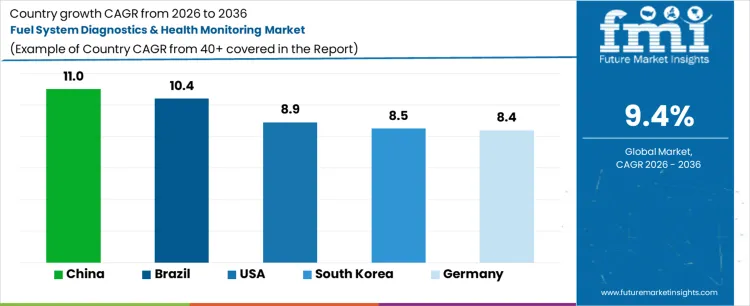
The fuel system diagnostics and health monitoring market is growing steadily across key regions. China leads at 11.0%, driven by rapid industrialization, environmental regulations, and the shift toward more fuel-efficient vehicles. Brazil follows at 10.4%, supported by increasing demand for advanced diagnostic solutions in the automotive sector. The USA grows at 8.9%, fueled by government regulations on emissions and the rise of electric and hybrid vehicles. South Korea’s market expands at 8.5%, driven by the adoption of green technologies and smart manufacturing. Germany grows at 8.4%, supported by its automotive industry’s focus on sustainability and high-performance vehicle technologies.
What is Driving the Growth of the Fuel System Diagnostics & Health Monitoring Market in China?
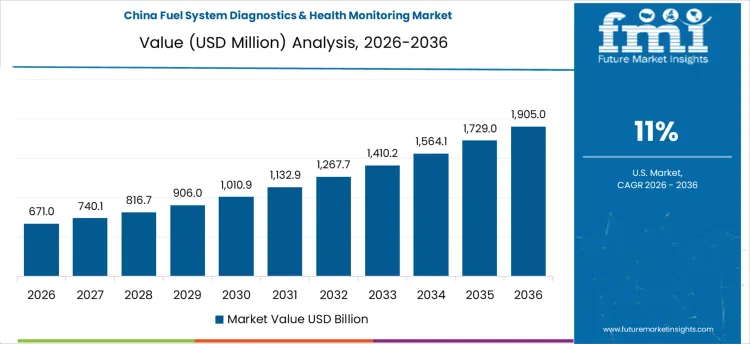
China’s fuel system diagnostics and health monitoring market is growing at 11.0%, driven by rapid industrialization, increasing vehicle production, and the government’s focus on environmental sustainability. The demand for advanced diagnostic systems to monitor fuel systems and ensure regulatory compliance with emissions standards is growing. As China’s automotive industry shifts toward more fuel-efficient and environmentally friendly vehicles, the need for fuel system diagnostics has surged. Government policies promoting clean energy vehicles, including electric and hybrid cars, are encouraging the adoption of diagnostic systems that help optimize engine performance and fuel efficiency. As the country continues to focus on reducing carbon emissions, the demand for fuel system diagnostics is expected to rise.
How is the Fuel System Diagnostics & Health Monitoring Market Expanding in Brazil?
Brazil’s fuel system diagnostics and health monitoring market is growing at 10.4%, fueled by the demand for improved fuel efficiency, vehicle performance, and environmental compliance in the automotive sector. As the country’s automotive market continues to expand, there is an increasing need for advanced diagnostics and health monitoring systems that enhance fuel system performance. Brazil’s push for cleaner, more efficient vehicles in response to both domestic and international environmental regulations is further driving the adoption of these systems. The rise in automotive production and increasing fleet size contribute to the demand for advanced diagnostics solutions that can help optimize engine performance, reduce emissions, and ensure reliability. As infrastructure improves, the market is poised for continued growth.
How is the Fuel System Diagnostics & Health Monitoring Market Expanding in the USA?
The USA’s fuel system diagnostics and health monitoring market is growing at 8.9%, driven by the rising demand for fuel-efficient, high-performance vehicles and stringent government regulations on emissions. As automakers focus on improving vehicle fuel efficiency and reducing emissions, the adoption of advanced diagnostics systems to monitor fuel systems has increased. The USA's growing interest in hybrid vehicles further contributes to the market, as these vehicles require sophisticated diagnostic tools to ensure optimal performance. The rise in after-market services and repair solutions in the automotive sector is driving the demand for fuel system health monitoring tools. As the USA prioritizes sustainability and technological advancements in the automotive industry, the market for fuel system diagnostics and monitoring will continue to grow.
What is Driving the Growth of the Fuel System Diagnostics & Health Monitoring Market in South Korea?
South Korea’s fuel system diagnostics and health monitoring market is growing at 8.5%, supported by the country’s strong automotive industry and increasing demand for fuel-efficient and environmentally friendly vehicles. As the automotive sector evolves, there is a rising need for diagnostic solutions that help monitor and optimize the performance of fuel systems, ensuring better fuel efficiency and lower emissions. South Korea’s growing focus on green technologies and the rise of electric and hybrid vehicles are further contributing to the demand for advanced fuel system diagnostics. The country’s investments in smart manufacturing and advanced diagnostic tools are helping fuel market expansion. As the demand for cleaner and more efficient vehicles rises, South Korea’s fuel system diagnostics market is expected to continue growing.
How is the Fuel System Diagnostics & Health Monitoring Market Expanding in Germany?
Germany’s fuel system diagnostics and health monitoring market is growing at 8.4%, driven by the country’s strong automotive industry and commitment to sustainability. As one of the global leaders in automotive innovation, Germany is increasingly adopting advanced fuel system diagnostics and health monitoring technologies to comply with stringent environmental regulations and improve fuel efficiency. The country’s focus on the development of electric and hybrid vehicles is also fueling the market, as these vehicles require specialized diagnostics to optimize performance and efficiency. Germany’s robust automotive production and growing demand for high-performance, fuel-efficient vehicles contribute to the increasing adoption of diagnostic solutions, ensuring steady market growth. With continued advancements in automotive technology, Germany’s fuel system diagnostics market is expected to grow consistently.
How Are Companies Competing in the Fuel System Diagnostics & Health Monitoring Market?
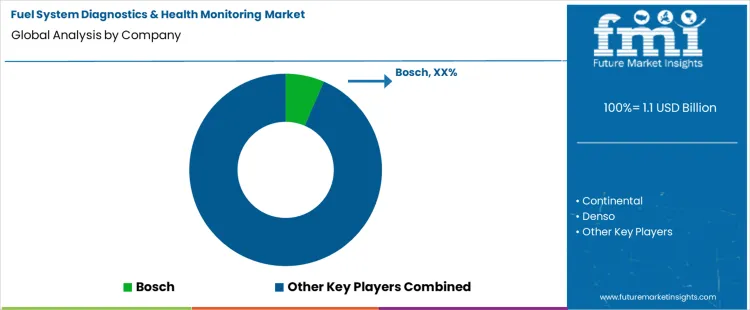
Competition in the fuel system diagnostics and health monitoring market is driven by real‑time fault detection, predictive analytics, integration with vehicle ECUs, emission compliance, and actionable diagnostics that improve uptime and performance. Bosch positions its offerings with comprehensive diagnostics suites that combine sensor fusion and advanced signal processing, and its product materials emphasize precise fault detection across fuel injectors, pumps, and pressure regulators. Continental competes by integrating fuel system health data with broader vehicle network diagnostics, highlighting continuous monitoring, intuitive fault codes, and enhanced ECU interoperability that help technicians pinpoint issues faster.
Denso and Cummins differentiate through robust monitoring modules and telematics‑ready diagnostics designed for both passenger and commercial vehicles, with brochures highlighting predictive alerts and reduced downtime. Garrett Motion and BorgWarner add value with smart sensor platforms and diagnostic interfaces that support boost, flow, and pressure measurements, marketed for improved calibration and performance insight across turbocharged and advanced fuel systems.
Systems and component integrators such as ZF, Valeo, and Hitachi Astemo compete by offering end‑to‑end health monitoring solutions tied into overall vehicle stability and powertrain control systems; their literature stresses holistic diagnostic data and enhanced system visibility. Intangles differentiates with AI‑driven analytics and telematics integration, enabling fleet‑wide health scoring and predictive maintenance. Across all vendors, product materials emphasize accuracy of fault detection, predictive capability, seamless ECU/telematics integration, and actionable insights as key differentiators that help OEMs and service providers maintain fuel system performance and reliability.
Key Players in Fuel System Diagnostics & Health Monitoring Market
- Bosch
- Continental
- Denso
- Cummins
- Garrett Motion
- BorgWarner
- ZF
- Valeo
- Hitachi Astemo
- Intangles
Scope of Report
| Attributes | Description |
|---|---|
| Quantitative Unit (2026) | USD Billion |
| Function | Predictive Diagnostics Software, Sensor & Telemetry Hardware, Calibration or Model Libraries, Services |
| Deployment | On-Board Embedded, Cloud Analytics, Hybrid, Other |
| End User | OEMs, Fleets, Tier-1 Suppliers, Aftermarket |
| Regions Covered | Asia Pacific, Europe, North America, Latin America, Middle East & Africa |
| Countries Covered | China, Japan, South Korea, India, Australia & New Zealand, ASEAN, Germany, United Kingdom, France, Italy, Spain, Nordic, BENELUX, United States, Canada, Mexico, Brazil, Chile, Turkey, South Africa, Other GCC Countries |
| Key Companies Profiled | Bosch, Continental, Denso, Cummins, Garrett Motion, BorgWarner, ZF, Valeo, Hitachi Astemo, Intangles |
| Additional Attributes | Dollar sales by function, deployment, and end user; regional CAGR and growth outlook for the fuel system diagnostics & health monitoring market. |
Fuel System Diagnostics & Health Monitoring Market by Key Segments
Function
- Predictive Diagnostics Software
- Sensor & Telemetry Hardware
- Calibration or Model Libraries
- Services
Deployment
- On-Board Embedded
- Cloud Analytics
- Hybrid
- Other
End User
- OEMs
- Fleets
- Tier-1 Suppliers
- Aftermarket
Region:
- Asia Pacific
- China
- Japan
- South Korea
- India
- Australia & New Zealand
- ASEAN
- Rest of Asia Pacific
- Europe
- Germany
- United Kingdom
- France
- Italy
- Spain
- Nordic
- BENELUX
- Rest of Europe
- North America
- United States
- Canada
- Mexico
- Latin America
- Brazil
- Chile
- Rest of Latin America
- Middle East & Africa
- Kingdom of Saudi Arabia
- Other GCC Countries
- Turkey
- South Africa
- Other African Union
- Rest of Middle East & Africa
Bibliography:
- Bosch. (2023). Fuel system diagnostics and health monitoring: Advanced sensor fusion and fault detection solutions. Bosch Automotive.
- Continental. (2023). Integrating fuel system health data with vehicle network diagnostics for real-time monitoring. Continental AG.
- Denso. (2023). Robust monitoring modules and telematics-ready diagnostics for passenger and commercial vehicles. Denso Corporation.
Frequently Asked Questions
How big is the fuel system diagnostics & health monitoring market in 2026?
The global fuel system diagnostics & health monitoring market is estimated to be valued at USD 1.1 billion in 2026.
What will be the size of fuel system diagnostics & health monitoring market in 2036?
The market size for the fuel system diagnostics & health monitoring market is projected to reach USD 2.7 billion by 2036.
How much will be the fuel system diagnostics & health monitoring market growth between 2026 and 2036?
The fuel system diagnostics & health monitoring market is expected to grow at a 9.4% CAGR between 2026 and 2036.
What are the key product types in the fuel system diagnostics & health monitoring market?
The key product types in fuel system diagnostics & health monitoring market are predictive diagnostics software, sensor & telemetry hardware, calibration or model libraries and services.
Which deployment segment to contribute significant share in the fuel system diagnostics & health monitoring market in 2026?
In terms of deployment, on-board embedded segment to command 46.0% share in the fuel system diagnostics & health monitoring market in 2026.
Preview the report firsthand - request a free sample
Get SampleGet the brochure for pricing and purchase details.
Get PDFTable of Content
- Executive Summary
- Global Market Outlook
- Demand-side Trends
- Supply-side Trends
- Technology Roadmap Analysis
- Analysis and Recommendations
- Market Overview
- Market Coverage / Taxonomy
- Market Definition / Scope / Limitations
- Market Background
- Market Dynamics
- Drivers
- Restraints
- Opportunity
- Trends
- Scenario Forecast
- Demand in Optimistic Scenario
- Demand in Likely Scenario
- Demand in Conservative Scenario
- Opportunity Map Analysis
- Product Life Cycle Analysis
- Supply Chain Analysis
- Investment Feasibility Matrix
- Value Chain Analysis
- PESTLE and Porter’s Analysis
- Regulatory Landscape
- Regional Parent Market Outlook
- Production and Consumption Statistics
- Import and Export Statistics
- Market Dynamics
- Global Market Analysis 2021 to 2025 and Forecast, 2026 to 2036
- Historical Market Size Value (USD Million) Analysis, 2021 to 2025
- Current and Future Market Size Value (USD Million) Projections, 2026 to 2036
- Y-o-Y Growth Trend Analysis
- Absolute $ Opportunity Analysis
- Global Market Pricing Analysis 2021 to 2025 and Forecast 2026 to 2036
- Global Market Analysis 2021 to 2025 and Forecast 2026 to 2036, By Function
- Introduction / Key Findings
- Historical Market Size Value (USD Million) Analysis By Function , 2021 to 2025
- Current and Future Market Size Value (USD Million) Analysis and Forecast By Function , 2026 to 2036
- Predictive Diagnostics Software
- Sensor & Telemetry Hardware
- Calibration or Model Libraries
- Services
- Predictive Diagnostics Software
- Y-o-Y Growth Trend Analysis By Function , 2021 to 2025
- Absolute $ Opportunity Analysis By Function , 2026 to 2036
- Global Market Analysis 2021 to 2025 and Forecast 2026 to 2036, By Deployment
- Introduction / Key Findings
- Historical Market Size Value (USD Million) Analysis By Deployment, 2021 to 2025
- Current and Future Market Size Value (USD Million) Analysis and Forecast By Deployment, 2026 to 2036
- On-Board Embedded
- Cloud Analytics
- Hybrid
- Other
- On-Board Embedded
- Y-o-Y Growth Trend Analysis By Deployment, 2021 to 2025
- Absolute $ Opportunity Analysis By Deployment, 2026 to 2036
- Global Market Analysis 2021 to 2025 and Forecast 2026 to 2036, By End User
- Introduction / Key Findings
- Historical Market Size Value (USD Million) Analysis By End User, 2021 to 2025
- Current and Future Market Size Value (USD Million) Analysis and Forecast By End User, 2026 to 2036
- OEMs
- Fleets
- Tier-1 Suppliers
- Aftermarket
- OEMs
- Y-o-Y Growth Trend Analysis By End User, 2021 to 2025
- Absolute $ Opportunity Analysis By End User, 2026 to 2036
- Global Market Analysis 2021 to 2025 and Forecast 2026 to 2036, By Region
- Introduction
- Historical Market Size Value (USD Million) Analysis By Region, 2021 to 2025
- Current Market Size Value (USD Million) Analysis and Forecast By Region, 2026 to 2036
- North America
- Latin America
- Western Europe
- Eastern Europe
- East Asia
- South Asia and Pacific
- Middle East & Africa
- Market Attractiveness Analysis By Region
- North America Market Analysis 2021 to 2025 and Forecast 2026 to 2036, By Country
- Historical Market Size Value (USD Million) Trend Analysis By Market Taxonomy, 2021 to 2025
- Market Size Value (USD Million) Forecast By Market Taxonomy, 2026 to 2036
- By Country
- USA
- Canada
- Mexico
- By Function
- By Deployment
- By End User
- By Country
- Market Attractiveness Analysis
- By Country
- By Function
- By Deployment
- By End User
- Key Takeaways
- Latin America Market Analysis 2021 to 2025 and Forecast 2026 to 2036, By Country
- Historical Market Size Value (USD Million) Trend Analysis By Market Taxonomy, 2021 to 2025
- Market Size Value (USD Million) Forecast By Market Taxonomy, 2026 to 2036
- By Country
- Brazil
- Chile
- Rest of Latin America
- By Function
- By Deployment
- By End User
- By Country
- Market Attractiveness Analysis
- By Country
- By Function
- By Deployment
- By End User
- Key Takeaways
- Western Europe Market Analysis 2021 to 2025 and Forecast 2026 to 2036, By Country
- Historical Market Size Value (USD Million) Trend Analysis By Market Taxonomy, 2021 to 2025
- Market Size Value (USD Million) Forecast By Market Taxonomy, 2026 to 2036
- By Country
- Germany
- UK
- Italy
- Spain
- France
- Nordic
- BENELUX
- Rest of Western Europe
- By Function
- By Deployment
- By End User
- By Country
- Market Attractiveness Analysis
- By Country
- By Function
- By Deployment
- By End User
- Key Takeaways
- Eastern Europe Market Analysis 2021 to 2025 and Forecast 2026 to 2036, By Country
- Historical Market Size Value (USD Million) Trend Analysis By Market Taxonomy, 2021 to 2025
- Market Size Value (USD Million) Forecast By Market Taxonomy, 2026 to 2036
- By Country
- Russia
- Poland
- Hungary
- Balkan & Baltic
- Rest of Eastern Europe
- By Function
- By Deployment
- By End User
- By Country
- Market Attractiveness Analysis
- By Country
- By Function
- By Deployment
- By End User
- Key Takeaways
- East Asia Market Analysis 2021 to 2025 and Forecast 2026 to 2036, By Country
- Historical Market Size Value (USD Million) Trend Analysis By Market Taxonomy, 2021 to 2025
- Market Size Value (USD Million) Forecast By Market Taxonomy, 2026 to 2036
- By Country
- China
- Japan
- South Korea
- By Function
- By Deployment
- By End User
- By Country
- Market Attractiveness Analysis
- By Country
- By Function
- By Deployment
- By End User
- Key Takeaways
- South Asia and Pacific Market Analysis 2021 to 2025 and Forecast 2026 to 2036, By Country
- Historical Market Size Value (USD Million) Trend Analysis By Market Taxonomy, 2021 to 2025
- Market Size Value (USD Million) Forecast By Market Taxonomy, 2026 to 2036
- By Country
- India
- ASEAN
- Australia & New Zealand
- Rest of South Asia and Pacific
- By Function
- By Deployment
- By End User
- By Country
- Market Attractiveness Analysis
- By Country
- By Function
- By Deployment
- By End User
- Key Takeaways
- Middle East & Africa Market Analysis 2021 to 2025 and Forecast 2026 to 2036, By Country
- Historical Market Size Value (USD Million) Trend Analysis By Market Taxonomy, 2021 to 2025
- Market Size Value (USD Million) Forecast By Market Taxonomy, 2026 to 2036
- By Country
- Kingdom of Saudi Arabia
- Other GCC Countries
- Turkiye
- South Africa
- Other African Union
- Rest of Middle East & Africa
- By Function
- By Deployment
- By End User
- By Country
- Market Attractiveness Analysis
- By Country
- By Function
- By Deployment
- By End User
- Key Takeaways
- Key Countries Market Analysis
- USA
- Pricing Analysis
- Market Share Analysis, 2025
- By Function
- By Deployment
- By End User
- Canada
- Pricing Analysis
- Market Share Analysis, 2025
- By Function
- By Deployment
- By End User
- Mexico
- Pricing Analysis
- Market Share Analysis, 2025
- By Function
- By Deployment
- By End User
- Brazil
- Pricing Analysis
- Market Share Analysis, 2025
- By Function
- By Deployment
- By End User
- Chile
- Pricing Analysis
- Market Share Analysis, 2025
- By Function
- By Deployment
- By End User
- Germany
- Pricing Analysis
- Market Share Analysis, 2025
- By Function
- By Deployment
- By End User
- UK
- Pricing Analysis
- Market Share Analysis, 2025
- By Function
- By Deployment
- By End User
- Italy
- Pricing Analysis
- Market Share Analysis, 2025
- By Function
- By Deployment
- By End User
- Spain
- Pricing Analysis
- Market Share Analysis, 2025
- By Function
- By Deployment
- By End User
- France
- Pricing Analysis
- Market Share Analysis, 2025
- By Function
- By Deployment
- By End User
- India
- Pricing Analysis
- Market Share Analysis, 2025
- By Function
- By Deployment
- By End User
- ASEAN
- Pricing Analysis
- Market Share Analysis, 2025
- By Function
- By Deployment
- By End User
- Australia & New Zealand
- Pricing Analysis
- Market Share Analysis, 2025
- By Function
- By Deployment
- By End User
- China
- Pricing Analysis
- Market Share Analysis, 2025
- By Function
- By Deployment
- By End User
- Japan
- Pricing Analysis
- Market Share Analysis, 2025
- By Function
- By Deployment
- By End User
- South Korea
- Pricing Analysis
- Market Share Analysis, 2025
- By Function
- By Deployment
- By End User
- Russia
- Pricing Analysis
- Market Share Analysis, 2025
- By Function
- By Deployment
- By End User
- Poland
- Pricing Analysis
- Market Share Analysis, 2025
- By Function
- By Deployment
- By End User
- Hungary
- Pricing Analysis
- Market Share Analysis, 2025
- By Function
- By Deployment
- By End User
- Kingdom of Saudi Arabia
- Pricing Analysis
- Market Share Analysis, 2025
- By Function
- By Deployment
- By End User
- Turkiye
- Pricing Analysis
- Market Share Analysis, 2025
- By Function
- By Deployment
- By End User
- South Africa
- Pricing Analysis
- Market Share Analysis, 2025
- By Function
- By Deployment
- By End User
- USA
- Market Structure Analysis
- Competition Dashboard
- Competition Benchmarking
- Market Share Analysis of Top Players
- By Regional
- By Function
- By Deployment
- By End User
- Competition Analysis
- Competition Deep Dive
- Bosch
- Overview
- Product Portfolio
- Profitability by Market Segments (Product/Age /Sales Channel/Region)
- Sales Footprint
- Strategy Overview
- Marketing Strategy
- Product Strategy
- Channel Strategy
- Continental
- Denso
- Cummins
- Garrett Motion
- BorgWarner
- ZF
- Valeo
- Hitachi Astemo
- Intangles
- Bosch
- Competition Deep Dive
- Assumptions & Acronyms Used
- Research Methodology


