

- Industry Size (2026)
- USD 1.3 Bn
- Forecast (2036)
- USD 2.2 Bn
- CAGR (2026 to 2036)
- 5.20%
Multifuel Rail Systems Market Forecast and Outlook 2026 to 2036
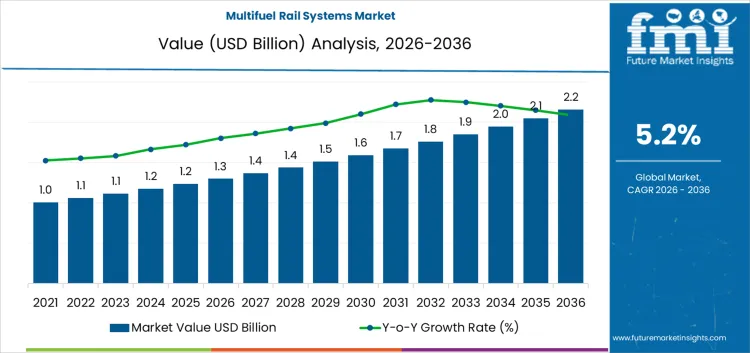
The global multifuel rail systems market is projected to reach USD 1.3 billion in 2026 and USD 2.2 billion by 2036, with a CAGR of 5.20%. Production concentration and regional manufacturing control are key performance drivers, shaping the reliability and scalability of supply chains. Manufacturing hubs in China and Europe dominate, leveraging advanced technologies to meet growing demand. The supply chain is constrained by factors like geopolitical instability, fluctuating fuel availability, and regulatory variations across regions.
These constraints can lead to delays in production and impact system delivery timelines. The dependency on specific fuel types, especially for hybrid and multifuel systems, further complicates production logistics. Regional suppliers' capabilities to scale operations are pivotal in meeting the market’s evolving needs. While technological advancements support growth, manufacturers must navigate these challenges to ensure consistent supply and production efficiency, directly influencing the market's long-term renewability.
Quick Stats for Multifuel Rail Systems Market
- Multifuel Rail Systems Market Value (2026): USD 1.3 Billion
- Multifuel Rail Systems Market Forecast Value (2036): USD 2.2 Billion
- Multifuel Rail Systems Market Forecast CAGR 2026 to 2036: 5.20%
- Leading Customer Type in Multifuel Rail Systems Market: OEM Line-Fit
- Key Growth Regions in Multifuel Rail Systems Market: Asia Pacific, Europe, North America
- Top Key Players in Multifuel Rail Systems Market: Bosch, Denso, Continental, Delphi (BorgWarner), Hitachi Astemo
Multifuel Rail Systems Market Key Takeaways
| Metric | Value |
|---|---|
| Industry Value (2026) | USD 1.3 Billion |
| Forecast Value (2036) | USD 2.2 Billion |
| Forecast CAGR 2026 to 2036 | 5.20% |
How is the Global Multifuel Rail Systems Market Advancing?
The global multifuel rail systems market is experiencing steady growth, driven by the increasing demand for flexible, energy-efficient rail transportation solutions. Multifuel rail systems, capable of operating on different types of fuel sources such as diesel, electricity, and alternative fuels, are gaining traction as they offer enhanced operational flexibility and reduced dependency on a single energy source. As the transportation sector moves toward more adaptable and eco-friendly solutions, multifuel rail systems are emerging as an ideal choice to optimize rail operations across diverse geographical areas.
A key driver of this market is the ongoing push for cleaner and more efficient transportation options in response to rising environmental concerns and regulatory pressures. Multifuel systems allow rail operators to transition between fuel types based on availability and environmental requirements, offering the flexibility to comply with emission reduction targets and reduce overall operational costs. The ability to switch between fuels such as electricity and biofuels, depending on regional energy infrastructure, makes multifuel rail systems increasingly appealing to rail operators worldwide.
Technological advancements and the development of hybrid and electrification technologies are also contributing to the growth of the multifuel rail systems market. As governments and private companies focus on reducing carbon emissions and improving fuel efficiency in transportation, the adoption of multifuel systems is expected to expand. These systems are proving to be an effective solution in regions with limited electrification infrastructure, enabling rail systems to operate efficiently without being confined to one energy source. As the demand for more versatile and energy-efficient rail solutions rises, the multifuel rail systems market is set to experience continued growth.
What Is the Segment-Wise Analysis for the Multifuel Rail Systems Market?
The multifuel rail systems market is segmented by fuel compatibility and customer type. Diesel or gasoline dual-design leads the fuel compatibility segment with a 34% share, followed by CNG or LNG compatible, e-fuels or biofuel ready, and other fuel types. Diesel or gasoline dual-design systems offer the flexibility to operate on both diesel and gasoline fuels, making them highly versatile in the rail industry. In terms of customer type, OEM line-fit leads with a 56% share, followed by Tier-1 integration, aftermarket, and other customer types.
Why Does Diesel or Gasoline Dual-Design Lead the Multifuel Rail Systems Market?
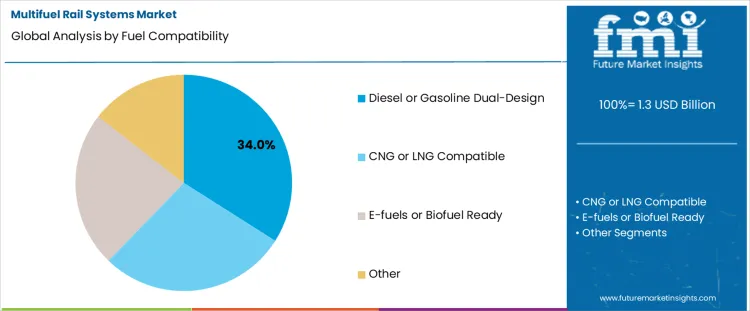
Diesel or gasoline dual-design systems hold a 34% share of the multifuel rail systems market due to their versatility and widespread use in the rail industry. These systems allow trains to operate on either diesel or gasoline, providing flexibility in fuel options and enabling rail operators to adjust fuel use based on availability and cost. This dual compatibility is particularly valuable in regions with inconsistent fuel availability or where fuel prices fluctuate. The increasing focus on cost reduction and fuel efficiency in the rail industry continues to drive the demand for dual-design systems, making them the leading choice in the multifuel rail systems market.
How Does OEM Line-Fit Contribute to the Multifuel Rail Systems Market?
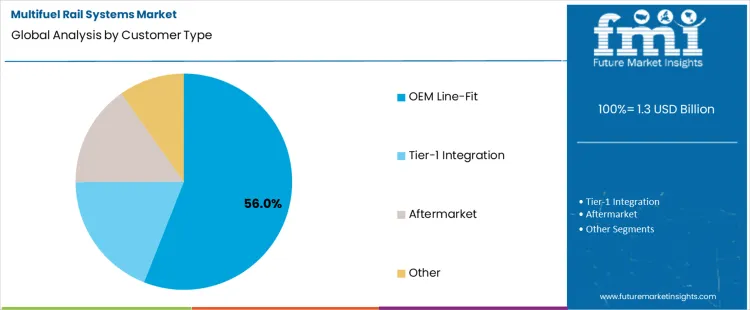
OEM line-fit accounts for 56% of the customer type segment in the multifuel rail systems market. OEMs are the primary customers for new rail systems, as they are responsible for integrating advanced technologies into newly manufactured trains. The increasing adoption of multifuel rail systems in new trains is driven by OEMs looking to meet stringent environmental regulations and reduce operating costs. By offering rail systems with built-in fuel compatibility, OEMs are enabling operators to use a wider variety of fuels, including biofuels and e-fuels, while ensuring compliance with green energy initiatives. As the demand for cleaner, eco-friendlier rail systems grows, OEM line-fit remains the dominant segment in the market.
What Are the Key Dynamics for the Multifuel Rail Systems Market?
Multifuel rail systems, which can operate on various fuels such as diesel, electricity, and alternative fuels like biofuels and hydrogen, are gaining traction due to their ability to reduce emissions and offer flexibility in fuel choices. The rising focus on reducing the carbon footprint of transportation and the push towards greener alternatives in the rail industry are driving the market. The need for flexible rail systems that can operate efficiently in areas with limited electrification infrastructure is further boosting market growth, as these systems allow for seamless operation in both electrified and non-electrified regions.
How Are the Key Drivers Shaping the Multifuel Rail Systems Market?
Governments are increasingly focusing on reducing carbon emissions and achieving climate goals, which is encouraging the adoption of multifuel rail systems that can utilize alternative fuels such as hydrogen and biofuels, alongside traditional diesel or electric power. The growing trend of hybrid and multifuel technologies in the rail industry is also driven by the need for greater operational flexibility, particularly in regions where full electrification of rail networks is not feasible. The need for cost-effective rail solutions that reduce dependence on a single fuel source, enhance fuel efficiency, and minimize operating costs is driving the development of more advanced multifuel rail systems.
What Are the Key Trends Shaping the Multifuel Rail Systems Market?
The integration of hydrogen fuel cells into rail systems is a significant emerging trend, with governments and rail operators investing in hydrogen-powered trains as a cleaner alternative to diesel. The development of lightweight materials and improved engine technologies is helping to increase the efficiency of multifuel systems and reduce fuel consumption. Another trend is the shift towards automated and smart rail systems that can optimize fuel use based on real-time data, improving energy efficiency and reducing emissions. The rise of eco-friendly urban mobility initiatives, which include the electrification of rail networks and the promotion of hybrid and multifuel systems, is further boosting the market.
What is the Growth Outlook for the Multifuel Rail Systems Market by Country?
| Country | CAGR (%) |
|---|---|
| China | 6.4% |
| Brazil | 6.0% |
| USA | 4.9% |
| South Korea | 4.6% |
| Japan | 3.8% |
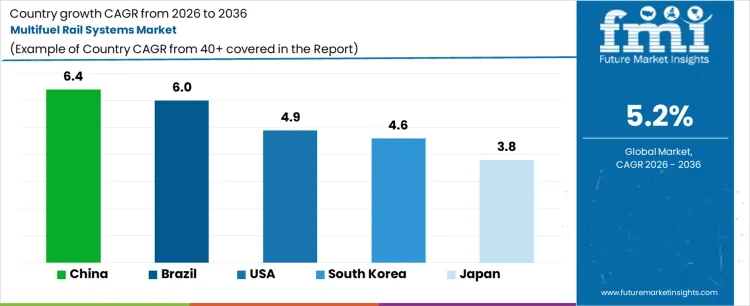
The multifuel rail systems market is growing across key regions, with China leading at 6.4%, driven by urbanization, renewability initiatives, and expanding railway infrastructure. Brazil follows at 6.0%, supported by investments in modernizing its rail network and adopting eco-friendly transport solutions. The USA’s market grows at 4.9%, driven by the demand for eco-friendly, flexible rail transport solutions and government initiatives. South Korea’s market expands at 4.6%, fueled by advancements in green rail technologies and rail network modernization. Japan, growing at 3.8%, is adopting multifuel systems to enhance efficiency and meet environmental goals in its advanced rail network.
What is Driving the Growth of the Multifuel Rail Systems Market in China?
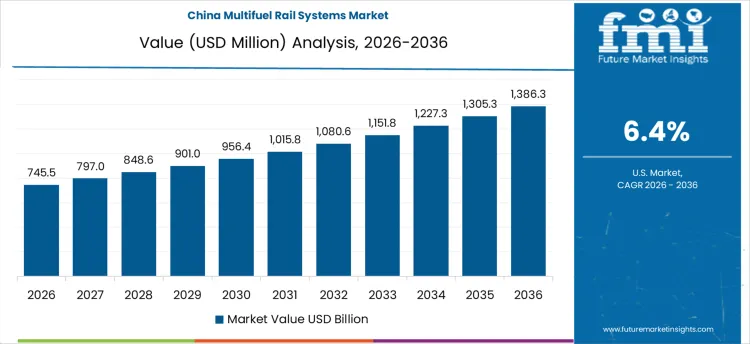
China’s multifuel rail systems market is growing at 6.4%, driven by rapid urbanization, expanding railway infrastructure, and the government's focus on renewability. The adoption of multifuel engines, which can run on different types of fuel, supports China’s transition to greener and more efficient transportation systems. The country’s push to reduce carbon emissions, combined with increasing investments in rail network expansion and modernization, is further contributing to the market's growth. As China continues to improve its transportation infrastructure and shift towards eco-friendly technologies, the demand for multifuel rail systems is expected to rise significantly.
How is the Multifuel Rail Systems Market Expanding in Brazil?
Brazil’s multifuel rail systems market is growing at 6.0%, supported by the country’s increasing focus on enhancing its railway network for both passenger and freight transportation. The demand for eco-friendly and cost-efficient transportation solutions is driving the adoption of multifuel rail systems. Brazil’s push to modernize its rail infrastructure, along with efforts to reduce reliance on fossil fuels, is fueling market expansion. As the country continues to invest in green technologies and rail network improvements, the demand for multifuel rail systems in Brazil will continue to rise, contributing to both renewability and operational efficiency in the transport sector.
How is the Multifuel Rail Systems Market Expanding in the USA?
The multifuel rail systems market in the USA is growing at 4.9%, driven by the increasing need for eco-friendlier and flexible rail transport solutions. The U.S. has a large freight rail network, and multifuel systems are becoming a key solution for reducing emissions while maintaining operational flexibility. The country’s focus on enhancing its rail infrastructure, especially with a growing emphasis on environmental renewability and fuel efficiency, is contributing to the adoption of multifuel rail systems. Government initiatives and incentives aimed at promoting cleaner transportation are further supporting the market. As the USA rail sector modernizes, multifuel rail systems will play an important role in the transition to greener alternatives.
What is Driving the Growth of the Multifuel Rail Systems Market in South Korea?
South Korea’s multifuel rail systems market is growing at 4.6%, driven by the country’s strong push for technological advancements in transportation and renewability. South Korea is investing in the development of green rail technologies, including multifuel systems, to reduce environmental impact while improving fuel efficiency. The adoption of these systems in both passenger and freight rail networks is expected to increase as South Korea prioritizes cleaner, cost-effective, and energy-efficient transportation. The modernization of South Korea’s rail network and government initiatives to reduce emissions are contributing to the growth of the multifuel rail systems market. As urban and industrial demand for rail transport continues to grow, multifuel rail systems are expected to be key in enhancing performance and renewability.
How is the Multifuel Rail Systems Market Expanding in Japan?
Japan’s multifuel rail systems market is growing at 3.8%, supported by the country's emphasis on innovation, efficiency, and environmental renewability. Japan’s rail network is one of the most advanced in the world, and there is increasing interest in adopting multifuel systems to enhance the flexibility and environmental performance of trains. The country’s commitment to reducing emissions and promoting energy-efficient transportation solutions is driving the adoption of greener technologies in its rail sector. While the growth rate is slower compared to other regions, Japan’s continued focus on technological advancement and eco-friendly transport solutions ensures steady market expansion for multifuel rail systems.
How Are Key Players Competing in the Multifuel Rail Systems Market?
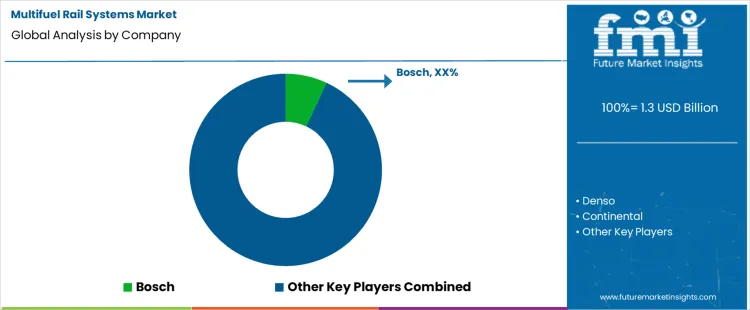
Competition in the multifuel rail systems market is driven by fuel flexibility, emission performance, system reliability, and integration with existing locomotive platforms. Bosch positions its multifuel systems with advanced engine management and high-precision injection technologies designed to handle diesel, biofuels, and alternative blends. Its product materials emphasize consistent combustion control and broad engine compatibility, helping rail operators adapt to varying fuel sources without sacrificing performance. Denso competes by offering compact, robust fuel system components and control units that deliver reliable operation across diverse fuel types, with brochures highlighting tight tolerances and durable construction suited for harsh rail environments.
Continental and Delphi (BorgWarner) differentiate through modular fuel system platforms that balance responsive throttle control and energy efficiency. Continental’s materials stress adaptive control logic and scalable architectures, while Delphi highlights well-engineered injection and fuel delivery modules. Hitachi Astemo and Stanadyne bring proven fuel system expertise to the rail segment, marketed for durability under extended duty cycles and straightforward maintenance pathways. Marelli and Weifu High-Technology add value with specialized injection and delivery systems designed for global rail applications, with documentation focusing on precision fuel metering and system robustness.
Engine manufacturers such as Cummins and systems integrators like Rheinmetall compete by bundling multifuel capability with full powertrain solutions, stressing integration ease and lifecycle support. Their product materials underscore comprehensive testing data, component interoperability, and service networks that help rail operators adopt multifuel technologies with confidence. Across all vendors, literature emphasizes fuel adaptability, mechanical reliability, control precision, and application fit as key differentiators in this evolving market.
Key Players in Multifuel Rail Systems Market
- Bosch
- Denso
- Continental
- Delphi (BorgWarner)
- Hitachi Astemo
- Stanadyne
- Marelli
- Weifu High-Technology
- Cummins
- Rheinmetall
Scope of Report
| Attributes | Description |
|---|---|
| Quantitative Unit (2026) | USD Billion |
| Fuel Compatibility | Diesel or Gasoline Dual-Design, CNG or LNG Compatible, E-fuels or Biofuel Ready, Other |
| Vehicle Segment | Light Vehicles, Heavy-Duty, Off-Highway, Other |
| Customer Type | OEM Line-Fit, Tier-1 Integration, Aftermarket, Other |
| Regions Covered | Asia Pacific, Europe, North America, Latin America, Middle East & Africa |
| Countries Covered | China, Japan, South Korea, India, Australia & New Zealand, ASEAN, Germany, United Kingdom, France, Italy, Spain, Nordic, BENELUX, United States, Canada, Mexico, Brazil, Chile, Turkey, South Africa, Other GCC Countries |
| Key Companies Profiled | Bosch, Denso, Continental, Delphi (BorgWarner), Hitachi Astemo, Stanadyne, Marelli, Weifu High-Technology, Cummins, Rheinmetall |
| Additional Attributes | Dollar sales by fuel compatibility, vehicle segment, and customer type; regional CAGR and growth outlook for the multifuel rail systems market. |
Multifuel Rail Systems Market by Key Segments
By Fuel Compatibility:
- Diesel or Gasoline Dual-Design
- CNG or LNG Compatible
- E-fuels or Biofuel Ready
- Other
By Vehicle Segment:
- Light Vehicles
- Heavy-Duty
- Off-Highway
- Other
By Customer Type:
- OEM Line-Fit
- Tier-1 Integration
- Aftermarket
- Other
By Region:
- Asia Pacific
- China
- Japan
- South Korea
- India
- Australia & New Zealand
- ASEAN
- Rest of Asia Pacific
- Europe
- Germany
- United Kingdom
- France
- Italy
- Spain
- Nordic
- BENELUX
- Rest of Europe
- North America
- United States
- Canada
- Mexico
- Latin America
- Brazil
- Chile
- Rest of Latin America
- Middle East & Africa
- Kingdom of Saudi Arabia
- Other GCC Countries
- Turkey
- South Africa
- Other African Union
- Rest of Middle East & Africa
Bibliography
- Bosch. (2023). Multifuel rail systems: Engine management and fuel system technologies for flexible fuel operation. Bosch.
- Denso. (2023). Denso fuel system components for multifuel rail systems: Reliable operation across diverse fuel types. Denso Corporation.
- Continental. (2023). Modular fuel system platforms for multifuel rail systems: Balancing efficiency and responsiveness. Continental AG.
- Delphi Technologies (BorgWarner). (2023). Innovative fuel delivery and injection systems for multifuel rail solutions. Delphi Technologies.
Frequently Asked Questions
How big is the multifuel rail systems market in 2026?
The global multifuel rail systems market is estimated to be valued at USD 1.3 billion in 2026.
What will be the size of multifuel rail systems market in 2036?
The market size for the multifuel rail systems market is projected to reach USD 2.2 billion by 2036.
How much will be the multifuel rail systems market growth between 2026 and 2036?
The multifuel rail systems market is expected to grow at a 5.2% CAGR between 2026 and 2036.
What are the key product types in the multifuel rail systems market?
The key product types in multifuel rail systems market are diesel or gasoline dual-design, cng or lng compatible, e-fuels or biofuel ready and other.
Which vehicle segment segment to contribute significant share in the multifuel rail systems market in 2026?
In terms of vehicle segment, light vehicles segment to command 36.0% share in the multifuel rail systems market in 2026.
Preview the report firsthand - request a free sample
Get SampleGet the brochure for pricing and purchase details.
Get PDFTable of Content
- Executive Summary
- Global Market Outlook
- Demand-side Trends
- Supply-side Trends
- Technology Roadmap Analysis
- Analysis and Recommendations
- Market Overview
- Market Coverage / Taxonomy
- Market Definition / Scope / Limitations
- Market Background
- Market Dynamics
- Drivers
- Restraints
- Opportunity
- Trends
- Scenario Forecast
- Demand in Optimistic Scenario
- Demand in Likely Scenario
- Demand in Conservative Scenario
- Opportunity Map Analysis
- Product Life Cycle Analysis
- Supply Chain Analysis
- Investment Feasibility Matrix
- Value Chain Analysis
- PESTLE and Porter’s Analysis
- Regulatory Landscape
- Regional Parent Market Outlook
- Production and Consumption Statistics
- Import and Export Statistics
- Market Dynamics
- Global Market Analysis 2021 to 2025 and Forecast, 2026 to 2036
- Historical Market Size Value (USD Million) Analysis, 2021 to 2025
- Current and Future Market Size Value (USD Million) Projections, 2026 to 2036
- Y-o-Y Growth Trend Analysis
- Absolute $ Opportunity Analysis
- Global Market Pricing Analysis 2021 to 2025 and Forecast 2026 to 2036
- Global Market Analysis 2021 to 2025 and Forecast 2026 to 2036, By Fuel Compatibility
- Introduction / Key Findings
- Historical Market Size Value (USD Million) Analysis By Fuel Compatibility , 2021 to 2025
- Current and Future Market Size Value (USD Million) Analysis and Forecast By Fuel Compatibility , 2026 to 2036
- Diesel or Gasoline Dual-Design
- CNG or LNG Compatible
- E-fuels or Biofuel Ready
- Other
- Diesel or Gasoline Dual-Design
- Y-o-Y Growth Trend Analysis By Fuel Compatibility , 2021 to 2025
- Absolute $ Opportunity Analysis By Fuel Compatibility , 2026 to 2036
- Global Market Analysis 2021 to 2025 and Forecast 2026 to 2036, By Vehicle Segment
- Introduction / Key Findings
- Historical Market Size Value (USD Million) Analysis By Vehicle Segment, 2021 to 2025
- Current and Future Market Size Value (USD Million) Analysis and Forecast By Vehicle Segment, 2026 to 2036
- Light Vehicles
- Heavy-Duty
- Off-Highway
- Other
- Light Vehicles
- Y-o-Y Growth Trend Analysis By Vehicle Segment, 2021 to 2025
- Absolute $ Opportunity Analysis By Vehicle Segment, 2026 to 2036
- Global Market Analysis 2021 to 2025 and Forecast 2026 to 2036, By Customer Type
- Introduction / Key Findings
- Historical Market Size Value (USD Million) Analysis By Customer Type, 2021 to 2025
- Current and Future Market Size Value (USD Million) Analysis and Forecast By Customer Type, 2026 to 2036
- OEM Line-Fit
- Tier-1 Integration
- Aftermarket
- Other
- OEM Line-Fit
- Y-o-Y Growth Trend Analysis By Customer Type, 2021 to 2025
- Absolute $ Opportunity Analysis By Customer Type, 2026 to 2036
- Global Market Analysis 2021 to 2025 and Forecast 2026 to 2036, By Region
- Introduction
- Historical Market Size Value (USD Million) Analysis By Region, 2021 to 2025
- Current Market Size Value (USD Million) Analysis and Forecast By Region, 2026 to 2036
- North America
- Latin America
- Western Europe
- Eastern Europe
- East Asia
- South Asia and Pacific
- Middle East & Africa
- Market Attractiveness Analysis By Region
- North America Market Analysis 2021 to 2025 and Forecast 2026 to 2036, By Country
- Historical Market Size Value (USD Million) Trend Analysis By Market Taxonomy, 2021 to 2025
- Market Size Value (USD Million) Forecast By Market Taxonomy, 2026 to 2036
- By Country
- USA
- Canada
- Mexico
- By Fuel Compatibility
- By Vehicle Segment
- By Customer Type
- By Country
- Market Attractiveness Analysis
- By Country
- By Fuel Compatibility
- By Vehicle Segment
- By Customer Type
- Key Takeaways
- Latin America Market Analysis 2021 to 2025 and Forecast 2026 to 2036, By Country
- Historical Market Size Value (USD Million) Trend Analysis By Market Taxonomy, 2021 to 2025
- Market Size Value (USD Million) Forecast By Market Taxonomy, 2026 to 2036
- By Country
- Brazil
- Chile
- Rest of Latin America
- By Fuel Compatibility
- By Vehicle Segment
- By Customer Type
- By Country
- Market Attractiveness Analysis
- By Country
- By Fuel Compatibility
- By Vehicle Segment
- By Customer Type
- Key Takeaways
- Western Europe Market Analysis 2021 to 2025 and Forecast 2026 to 2036, By Country
- Historical Market Size Value (USD Million) Trend Analysis By Market Taxonomy, 2021 to 2025
- Market Size Value (USD Million) Forecast By Market Taxonomy, 2026 to 2036
- By Country
- Germany
- UK
- Italy
- Spain
- France
- Nordic
- BENELUX
- Rest of Western Europe
- By Fuel Compatibility
- By Vehicle Segment
- By Customer Type
- By Country
- Market Attractiveness Analysis
- By Country
- By Fuel Compatibility
- By Vehicle Segment
- By Customer Type
- Key Takeaways
- Eastern Europe Market Analysis 2021 to 2025 and Forecast 2026 to 2036, By Country
- Historical Market Size Value (USD Million) Trend Analysis By Market Taxonomy, 2021 to 2025
- Market Size Value (USD Million) Forecast By Market Taxonomy, 2026 to 2036
- By Country
- Russia
- Poland
- Hungary
- Balkan & Baltic
- Rest of Eastern Europe
- By Fuel Compatibility
- By Vehicle Segment
- By Customer Type
- By Country
- Market Attractiveness Analysis
- By Country
- By Fuel Compatibility
- By Vehicle Segment
- By Customer Type
- Key Takeaways
- East Asia Market Analysis 2021 to 2025 and Forecast 2026 to 2036, By Country
- Historical Market Size Value (USD Million) Trend Analysis By Market Taxonomy, 2021 to 2025
- Market Size Value (USD Million) Forecast By Market Taxonomy, 2026 to 2036
- By Country
- China
- Japan
- South Korea
- By Fuel Compatibility
- By Vehicle Segment
- By Customer Type
- By Country
- Market Attractiveness Analysis
- By Country
- By Fuel Compatibility
- By Vehicle Segment
- By Customer Type
- Key Takeaways
- South Asia and Pacific Market Analysis 2021 to 2025 and Forecast 2026 to 2036, By Country
- Historical Market Size Value (USD Million) Trend Analysis By Market Taxonomy, 2021 to 2025
- Market Size Value (USD Million) Forecast By Market Taxonomy, 2026 to 2036
- By Country
- India
- ASEAN
- Australia & New Zealand
- Rest of South Asia and Pacific
- By Fuel Compatibility
- By Vehicle Segment
- By Customer Type
- By Country
- Market Attractiveness Analysis
- By Country
- By Fuel Compatibility
- By Vehicle Segment
- By Customer Type
- Key Takeaways
- Middle East & Africa Market Analysis 2021 to 2025 and Forecast 2026 to 2036, By Country
- Historical Market Size Value (USD Million) Trend Analysis By Market Taxonomy, 2021 to 2025
- Market Size Value (USD Million) Forecast By Market Taxonomy, 2026 to 2036
- By Country
- Kingdom of Saudi Arabia
- Other GCC Countries
- Turkiye
- South Africa
- Other African Union
- Rest of Middle East & Africa
- By Fuel Compatibility
- By Vehicle Segment
- By Customer Type
- By Country
- Market Attractiveness Analysis
- By Country
- By Fuel Compatibility
- By Vehicle Segment
- By Customer Type
- Key Takeaways
- Key Countries Market Analysis
- USA
- Pricing Analysis
- Market Share Analysis, 2025
- By Fuel Compatibility
- By Vehicle Segment
- By Customer Type
- Canada
- Pricing Analysis
- Market Share Analysis, 2025
- By Fuel Compatibility
- By Vehicle Segment
- By Customer Type
- Mexico
- Pricing Analysis
- Market Share Analysis, 2025
- By Fuel Compatibility
- By Vehicle Segment
- By Customer Type
- Brazil
- Pricing Analysis
- Market Share Analysis, 2025
- By Fuel Compatibility
- By Vehicle Segment
- By Customer Type
- Chile
- Pricing Analysis
- Market Share Analysis, 2025
- By Fuel Compatibility
- By Vehicle Segment
- By Customer Type
- Germany
- Pricing Analysis
- Market Share Analysis, 2025
- By Fuel Compatibility
- By Vehicle Segment
- By Customer Type
- UK
- Pricing Analysis
- Market Share Analysis, 2025
- By Fuel Compatibility
- By Vehicle Segment
- By Customer Type
- Italy
- Pricing Analysis
- Market Share Analysis, 2025
- By Fuel Compatibility
- By Vehicle Segment
- By Customer Type
- Spain
- Pricing Analysis
- Market Share Analysis, 2025
- By Fuel Compatibility
- By Vehicle Segment
- By Customer Type
- France
- Pricing Analysis
- Market Share Analysis, 2025
- By Fuel Compatibility
- By Vehicle Segment
- By Customer Type
- India
- Pricing Analysis
- Market Share Analysis, 2025
- By Fuel Compatibility
- By Vehicle Segment
- By Customer Type
- ASEAN
- Pricing Analysis
- Market Share Analysis, 2025
- By Fuel Compatibility
- By Vehicle Segment
- By Customer Type
- Australia & New Zealand
- Pricing Analysis
- Market Share Analysis, 2025
- By Fuel Compatibility
- By Vehicle Segment
- By Customer Type
- China
- Pricing Analysis
- Market Share Analysis, 2025
- By Fuel Compatibility
- By Vehicle Segment
- By Customer Type
- Japan
- Pricing Analysis
- Market Share Analysis, 2025
- By Fuel Compatibility
- By Vehicle Segment
- By Customer Type
- South Korea
- Pricing Analysis
- Market Share Analysis, 2025
- By Fuel Compatibility
- By Vehicle Segment
- By Customer Type
- Russia
- Pricing Analysis
- Market Share Analysis, 2025
- By Fuel Compatibility
- By Vehicle Segment
- By Customer Type
- Poland
- Pricing Analysis
- Market Share Analysis, 2025
- By Fuel Compatibility
- By Vehicle Segment
- By Customer Type
- Hungary
- Pricing Analysis
- Market Share Analysis, 2025
- By Fuel Compatibility
- By Vehicle Segment
- By Customer Type
- Kingdom of Saudi Arabia
- Pricing Analysis
- Market Share Analysis, 2025
- By Fuel Compatibility
- By Vehicle Segment
- By Customer Type
- Turkiye
- Pricing Analysis
- Market Share Analysis, 2025
- By Fuel Compatibility
- By Vehicle Segment
- By Customer Type
- South Africa
- Pricing Analysis
- Market Share Analysis, 2025
- By Fuel Compatibility
- By Vehicle Segment
- By Customer Type
- USA
- Market Structure Analysis
- Competition Dashboard
- Competition Benchmarking
- Market Share Analysis of Top Players
- By Regional
- By Fuel Compatibility
- By Vehicle Segment
- By Customer Type
- Competition Analysis
- Competition Deep Dive
- Bosch
- Overview
- Product Portfolio
- Profitability by Market Segments (Product/Age /Sales Channel/Region)
- Sales Footprint
- Strategy Overview
- Marketing Strategy
- Product Strategy
- Channel Strategy
- Denso
- Continental
- Delphi (BorgWarner)
- Hitachi Astemo
- Stanadyne
- Marelli
- Weifu High-Technology
- Cummins
- Rheinmetall
- Bosch
- Competition Deep Dive
- Assumptions & Acronyms Used
- Research Methodology


