

- Industry size (2020)
- USD 126.2 Bn
- Forecast (2025)
- USD 321.5 Bn
- CAGR (2020 to 2025)
- 9.8%
Industry Analysis of Outbound Tourism in Germany Size, Market Forecast and Outlook By FMI
The Germany outbound tourism market was valued at USD 126.2 billion in 2025 and is projected to be valued at USD 321.5 billion by 2035. The market is anticipated to register a 9.8% CAGR during the forecast period. Holiday or leisure is likely to lead with a 46.7% share, while online booking is forecast to account for 54.2% of booking channel revenue in 2025.
Summary of the Germany Outbound Tourism Market
- Demand and Growth Drivers
- Higher travel spending is likely to support outbound trips from Germany.
- Strong air connectivity is helping travelers access long-haul destinations with greater ease.
- Flexible travel packages are anticipated to improve trip planning for leisure travelers.
- Product and Segment View
- Holiday or leisure is expected to lead as German travelers prioritize international vacations.
- Online booking is likely to stay ahead as travelers compare fares and hotel options digitally.
- Independent travel is gaining interest as younger tourists seek flexible itineraries.
- Geography and Competitive Outlook
- Asia Pacific is likely to attract steady demand through beach tourism and cultural trips.
- North America is expected to remain a key destination for long-haul German travel.
- Operators with stronger digital booking systems are likely to gain better traveler conversion.
- Analyst Opinion
- Ronak Shah, Principal Consultant for Travel and Tourism at FMI, suggests, “The Germany outbound tourism market is moving toward flexible leisure travel and digital booking models. Tour operators that combine destination variety with simple planning tools are likely to gain advantage as German travelers seek more personalized international trips.”
- Germany Outbound Tourism Market Value Analysis
- The Germany outbound tourism market is moving from recovery travel into planned international spending.
- Leisure demand is likely to improve as households prioritize holidays after delayed trips.
- Digital booking use is set to rise as travelers prefer price clarity and flexible options.
- Spending is anticipated to gain support from long-haul routes and packaged travel services.
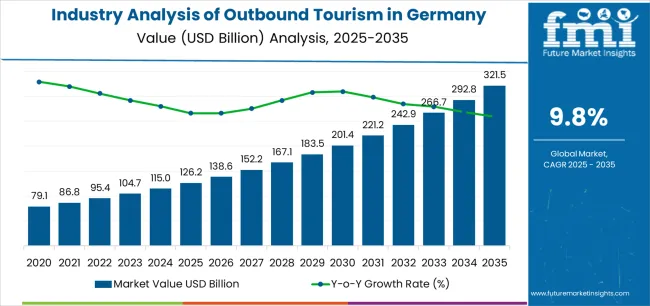
Key Takeaways, Market Size, and Forecast
- The Germany outbound tourism market was valued at USD 126.2 billion in 2025.
- By 2035, the market is projected to be valued at USD 321.5 billion.
- From 2025 to 2035, the market is anticipated to expand at a 9.8% CAGR.
- Holiday or leisure is likely to account for 46.7% of the purpose type segment in 2025.
- Online booking is forecast to hold 54.2% of the booking channel segment in 2025.
- Asia Pacific and North America are likely to remain key outbound destinations for German travelers.
| Metric | Value |
|---|---|
| Industry Analysis of Outbound Tourism in Germany Estimated Value in (2025E) | USD 126.2 billion |
| Industry Analysis of Outbound Tourism in Germany Forecast Value in (2035F) | USD 321.5 billion |
| Forecast CAGR (2025 to 2035) | 9.8% |
Segmental Analysis
The market is segmented by Purpose Type, Booking Channel, Tourist Type, Tourism Type, Tour Type, Consumer Orientation, and Age Group and region. By Purpose Type, the market is divided into Holiday or Leisure, Business, VFR, and Other Purpose. In terms of Booking Channel, the market is classified into Online Booking, Phone Booking, and In Person Booking. Based on Tourist Type, the market is segmented into International and Domestic. By Tourism Type, the market is divided into Cultural & Heritage Tourism, Medical Tourism, Ecotourism or Sustainable Tourism, Sports Tourism, Wellness Tourism, and Other Tourisms. By Tour Type, the market is segmented into Package Traveler, Independent Traveler, and Tour Group. By Consumer Orientation, the market is segmented into Women and Men. By Age Group, the market is segmented into 26 to 35 Years, 15 to 25 Years, 36 to 45 Years, 46 to 55 Years, and 66 to 75 Years. Regionally, the market is classified into North America, Latin America, Western Europe, Eastern Europe, Balkan & Baltic Countries, Russia & Belarus, Central Asia, East Asia, South Asia & Pacific, and the Middle East & Africa.
Insights into the Purpose Type Segment
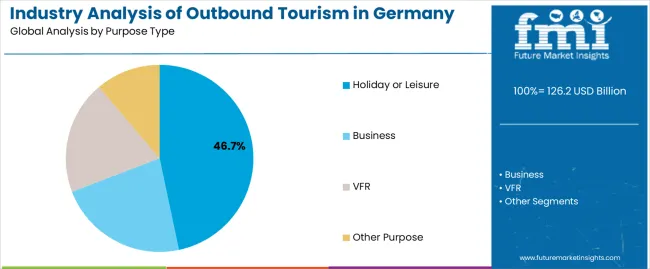
The holiday or leisure segment, representing 46.7% of the purpose type category, has emerged as the dominant segment due to strong consumer preference for recreation-driven travel. Seasonal holidays, long weekends, and cultural exploration trips have reinforced this segment’s leadership. Demand stability has been driven by favorable work-life balance policies and growing interest in international experiences.
The segment’s growth has also been supported by extensive marketing campaigns from tourism boards and airlines, promoting destination diversity. Digital media and influencer-driven content have further shaped travel aspirations among younger demographics.
The consistent availability of affordable packages and improved connectivity across global routes are expected to sustain demand Continued emphasis on experiential tourism, including wellness, adventure, and heritage travel, will further enhance the segment’s contribution to overall market expansion.
Insights into the Booking Channel Segment
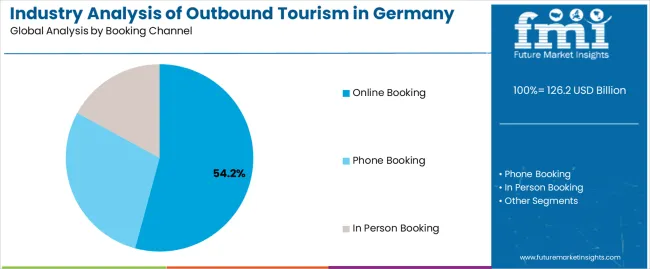
The online booking segment, holding 54.2% of the booking channel category, dominates due to the widespread adoption of digital travel platforms and mobile applications. Consumer preference for convenience, price comparison, and real-time availability has accelerated the shift toward online reservations. Enhanced website interfaces, secure payment systems, and integration with social media have improved user engagement.
The segment’s leadership has been reinforced by increased trust in digital transactions and personalized recommendation algorithms. Partnerships between airlines, hotels, and online travel agencies have expanded value-added service offerings.
Future growth will be driven by innovations in virtual travel planning, AI-assisted itinerary management, and loyalty-based booking programs The digitalization of travel planning is expected to remain a central growth pillar for Germany’s outbound tourism market.
Insights into the Tourist Type Segment
The international tourist segment, accounting for 61.8% of the tourist type category, continues to lead due to Germany’s strong outbound travel culture and preference for exploring global destinations. Economic stability, robust air connectivity, and the availability of diverse travel packages have supported consistent outbound travel volumes.
German tourists are increasingly seeking long-haul destinations across Asia, North America, and Africa, driven by curiosity for new experiences and cultural immersion. The segment’s dominance is reinforced by favorable exchange rates and efficient visa facilitation in popular destinations.
Tour operators and travel agencies are leveraging targeted promotions and loyalty programs to retain frequent travelers Over the forecast period, international tourism is expected to benefit from rising participation of younger travelers, digital booking accessibility, and growing interest in sustainable and responsible tourism practices.
Key Insights on Germany’s Outbound Tourism Sector
- There are nowadays more options to draw tourists from Europe by promoting nature-based, off-season, and sustainable vacations.
- The desire to visit a unique destination present on their bucket list is especially strong among younger travelers in Germany.
- The air connectivity between Germany and Southeast Asian countries such as Singapore, Thailand, Malaysia, and Indonesia is growing steadily.
- One of the niche emerging trends in Germany's outbound travel industry is wildlife viewing, followed by luxury tours.
- While group or package vacations are still quite popular in Germany, independent or solo travelers are becoming more common.
Sales Forecast vs Historical Demand (2020 to 2025 vs 2025 to 2035)
Total revenue generated from German tourists exploring overseas in 2020 was figured to be around USD 72,959.3 million. With a 9.5% CAGR in outbound tourism in Germany from 2020 to 2025 the net worth of the business reached USD 104,890.7 million in 2025.
The traveling abroad industry in Germany recovered slowly during the post-pandemic period. However, as per the German outbound tourism industry analysis, the country is anticipated to experience a complete recovery in long-distance travel patterns by 2025.
| Attributes | Details |
|---|---|
| Industry size of Germany in 2020 | USD 72,959.3 million |
| Expected Industry Size of Germany in 2025 | USD 104,890.7 million |
| Historical CAGR from 2020 to 2025 | 9.5% |
Key Trends Driving Growth in Germany’s Outbound Tourism Industry
Growing Options in Outbound Travel Trends from Germany
Though curious German travelers have left their mark everywhere, the United States and Canada consistently rank at the top of their lists of preferred foreign travel locations. In Southeast Asia, Thailand is the destination that German tourists choose the most.
Germany Tourist Spending Overseas is Rising Constantly
Increasing spending capacity and growing desire to travel to Asia, especially among the younger generation, is expected to drive the German outbound tourism sector. Furthermore, low accident rates and reduced economic fares offered by airlines in Asia are likely to add up to the trend during the forecast period.
Outbound Travel Agencies Offer Unique Tour Packages to Attract More Customers
Visitor participation in group excursions such as semi-independent tours, small-group outings with friends, and custom tours, is greater than 50%. Traditional package tours are popular among families, seniors, visitors from smaller cities, and tourists alike. Additionally, specialized travel choices such as closed-door tour groups are set to gain impetus in the next ten years in the German outbound vacation industry.
Immense Popularity of Cruise Trips to Push Outbound Travel in Germany
Cruise vacations are gaining immense popularity among vacationers from Germany. These comfortable floating hotels, which offer a wide variety of entertainment and shore sightseeing, are becoming increasingly popular among young travelers.
Growing Popularity of Destinations Located in Türkiye
Türkiye is a desirable vacation destination due to its pleasant climate, stunning scenery, intriguing cuisine & culture, fantastic beaches, and inexpensive flights from other European nations. In 2020, about 27% of all trips to Türkiye were from Germany alone. The high percentage of German visitors can be attributed to the substantial Turkish immigrant population in Germany.
Category-wise Insights in the German Outbound Tourism Market
German Tourists Prefer Online Booking Channels for Their Outbound Tours
The online segment is anticipated to contribute almost 43.8% of revenue in the Germany tourists’ abroad industry in 2025.
| Leading Booking Channel | Online Booking |
|---|---|
| Total Share (2025) | 43.8% |
The majority of German tourists reserve their accommodations, as well as vacation packages or personalized tours in advance. So, the availability of online travel portals has undoubtedly provided customers with easy access to a wide range of options. Moreover, travel comparisons on booking portals and hotel websites are likely to spur outbound travel from Germany.
Tourists in the 36 to 45 Years Age Group are Looking more for Outbound Travel
Travelers belonging to the age group of 36 to 45 years account for more than 32% of the German outbound tourism industry share.
| Leading Age Group Segment | 36 to 45 Years |
|---|---|
| Total Share (2025) | 32% |
Further growth in this segment can be attributed to high spending capacity, enthusiasm to travel & discover, and availability of time amongst these age groups. The millennial generation is attracted to adventurous destinations across the globe and young Germans are more attracted to wildlife tours.
Competitive Landscape of Germany’s Travel and Tourism Market
Currently, the competition in Germany's traveler’ abroad industry is intense following the emergence of many new players after 2025. Many regional tour operators are providing customization options according to the specific needs of citizens traveling abroad from Germany.
They are also providing combo offers (flight, accommodation, and transport) to attract a large customer base. These personalized trips would help to draw tourists and tour operators are providing discounts on their packages.
Recent Developments in the Outbound Tourism Sector in Germany
- In October 2025, The Tourism Authority of Thailand (TAT) announced the launch of a novel marketing campaign that promotes Thailand as a year-round destination at a time when heating bills and prices are growing in the USA and Europe. The country is aiming to bring in more Americans and Europeans who are facing an expensive and harsh winter.
- In October 2025, the Hong Kong Tourism Board mentioned that tourists will be provided with free flight tickets to the country in a bid to push visitor numbers, which have dropped by tens of millions a year since the pandemic. The new initiative will give away about 50,000 plane tickets worth £ 225 million to travelers.
Top Tour Operators: TUI Group, Thomas Cook, DER Touristik Using Online Platforms
TUI Group is a leisure, travel, and Tourism Corporation based in Germany. TUI stands for Touristik Union International (Tourism Union International). TUI AG was previously known as Preussag AG until 1997 when the firm shifted its focus from mining to tourism. It is based in Hanover, Germany.
The company’s complete tourist value chain is covered under one roof. This includes over 400 hotels and resorts with premium brands such as RIU, TUI Blue, and Robinson, as well as 16 cruise ships ranging from the MS Europa and MS Europa 2 in the luxury class and expedition ships to TUI Cruises' Mein Schiff fleet and cruise ships at Marella Cruises in the United Kingdom.
The company also encompasses Europe's major tour operator brands and online marketing platforms, five airlines with over 100 contemporary medium & long-haul aircraft, and over 1,000 travel agents.
TUI is progressively concentrating on the growth of digital platforms in addition to extending its core business with hotels, cruises, and activities in vacation locations through successful joint ventures. At the same time, the company is transitioning into a digital enterprise.
In June 2025, TUI Group, the world's biggest tourist operator, signed an agreement to build a new digital platform for multi-day excursions in collaboration with Nezasa, an award-winning travel technology firm.
The deal underlines TUI's continuous strategic investment in digital platform capabilities for increased efficiency and speed, as well as to allow future development in the tours & activities sector by providing better, more personalized client experiences.
Thomas Cook Ltd, on the other hand, is the country's largest integrated travel and travel-related financial services company, providing a wide range of services such as foreign exchange, corporate travel, meetings, incentives, conferences & exhibitions (MICE), leisure travel, and travel insurance.
Germany has a well-established tourism business that attracts many foreign inbound visitors, which may also be leveraged for attracting domestic tourists, aiding future recovery such as increasing interest in dark tourism. In September 2025, Thomas Cook was relaunched by Fosun International as Thomas Cook Holidays, an online travel firm with 50 employees.
DER Touristik Group is one of Europe's largest tourist organizations. DER Touristik has a company history that dates back over 100 years. The company has over 2,300 travel agencies in Germany, the United Kingdom, France, Eastern Europe, and Switzerland, including successful DETOUR, DEPART, and Kuoni sales brands. DER Touristik Group is with its customers from the beginning of their vacation planning to the end of their trip.
In May 2025, the DER Touristik Group announced the acquisition of a premium resort brand named Aldiana. This implies that LMEY (Zug in Switzerland) transferred its 50% stake in Aldiana Holding GmbH (Frankfurt) to DER Touristik Hotels & Resorts GmbH. (Cologne).
Key Players in the German Outbound Tourism Ecosystem
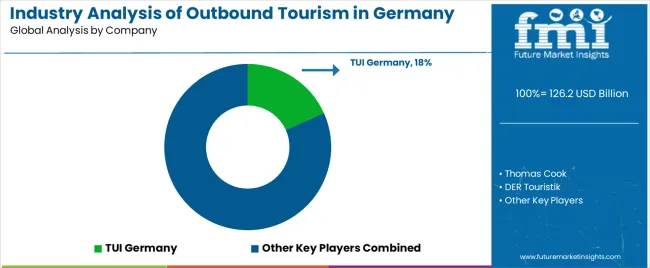
- TUI Germany
- Thomas Cook
- DER Touristik
- FTI Group
- Aida Cruises
- All Tours
- Schauinsland-Reisen
- TUI Cruises
- Hotelplan Suisse
- Phoenix Reisen
Scope of the Germany Outbound Tourism Industry Report
| Attribute | Details |
|---|---|
| Estimated Industry Size in 2025 | USD 114,960.2 million |
| Projected Industry Size in 2035 | USD 292,799.9 million |
| Anticipated CAGR from 2025 to 2035 | 9.8% CAGR |
| Historical Analysis of Demand for Outbound Tourism in Germany | 2020 to 2025 |
| Demand Forecast for Outbound Tourism in Germany | 2025 to 2035 |
| Report Coverage | Industry Size, Industry Trends, Analysis of key factors influencing Outbound Tourism in Germany, Insights on Global Players and their Industry Strategy in Germany, Ecosystem Analysis of Local and German Providers |
| Key Companies Profiled | TUI Germany; Thomas Cook; DER Touristik; FTI Group; Aida Cruises; All Tours; Schauinsland-Reisen; TUI Cruises; Hotelplan Suisse; Phoenix Reisen |
Top Segments Studied in Germany’s Outbound Tourism Industry
By Purpose Type:
- Business
- Holiday or Leisure
- VFR
- Other Purpose
By Booking Channel:
- Phone Booking
- Online Booking
- In Person Booking
By Tourist Type:
- Domestic
- International
By Tourism Type:
- Cultural & Heritage Tourism
- Medical Tourism
- Ecotourism or Sustainable Tourism
- Sports Tourism
- Wellness Tourism
- Other Tourisms
By Tour Type:
- Independent Traveler
- Package Traveler
- Tour Group
By Consumer Orientation:
- Men
- Women
By Age Group:
- 15 to 25 Years
- 26 to 35 Years
- 36 to 45 Years
- 46 to 55 Years
- 66 to 75 Years
Frequently Asked Questions
How big is the industry analysis of outbound tourism in germany in 2025?
The global industry analysis of outbound tourism in germany is estimated to be valued at USD 126.2 billion in 2025.
What will be the size of industry analysis of outbound tourism in germany in 2035?
The market size for the industry analysis of outbound tourism in germany is projected to reach USD 321.5 billion by 2035.
How much will be the industry analysis of outbound tourism in germany growth between 2025 and 2035?
The industry analysis of outbound tourism in germany is expected to grow at a 9.8% CAGR between 2025 and 2035.
What are the key product types in the industry analysis of outbound tourism in germany?
The key product types in industry analysis of outbound tourism in germany are holiday or leisure, business, vfr and other purpose.
Which booking channel segment to contribute significant share in the industry analysis of outbound tourism in germany in 2025?
In terms of booking channel, online booking segment to command 54.2% share in the industry analysis of outbound tourism in germany in 2025.
Preview the report firsthand - request a free sample
Get SampleGet the brochure for pricing and purchase details.
Get PDFTable of Content
- Executive Summary
- Global Market Outlook
- Demand-side Trends
- Supply-side Trends
- Technology Roadmap Analysis
- Analysis and Recommendations
- Market Overview
- Market Coverage / Taxonomy
- Market Definition / Scope / Limitations
- Market Background
- Market Dynamics
- Drivers
- Restraints
- Opportunity
- Trends
- Scenario Forecast
- Demand in Optimistic Scenario
- Demand in Likely Scenario
- Demand in Conservative Scenario
- Opportunity Map Analysis
- Product Life Cycle Analysis
- Supply Chain Analysis
- Investment Feasibility Matrix
- Value Chain Analysis
- PESTLE and Porter’s Analysis
- Regulatory Landscape
- Regional Parent Market Outlook
- Production and Consumption Statistics
- Import and Export Statistics
- Market Dynamics
- Global Market Analysis 2020 to 2025 and Forecast, 2025 to 2035
- Historical Market Size Value (USD Billion) Analysis, 2020 to 2025
- Current and Future Market Size Value (USD Billion) Projections, 2025 to 2035
- Y-o-Y Growth Trend Analysis
- Absolute $ Opportunity Analysis
- Global Market Pricing Analysis 2020 to 2025 and Forecast 2025 to 2035
- Global Market Analysis 2020 to 2025 and Forecast 2025 to 2035, By Purpose Type
- Introduction / Key Findings
- Historical Market Size Value (USD Billion) Analysis By Purpose Type , 2020 to 2025
- Current and Future Market Size Value (USD Billion) Analysis and Forecast By Purpose Type , 2025 to 2035
- Holiday or Leisure
- Business
- VFR
- Other Purpose
- Y-o-Y Growth Trend Analysis By Purpose Type , 2020 to 2025
- Absolute $ Opportunity Analysis By Purpose Type , 2025 to 2035
- Global Market Analysis 2020 to 2025 and Forecast 2025 to 2035, By Booking Channel
- Introduction / Key Findings
- Historical Market Size Value (USD Billion) Analysis By Booking Channel, 2020 to 2025
- Current and Future Market Size Value (USD Billion) Analysis and Forecast By Booking Channel, 2025 to 2035
- Online Booking
- Phone Booking
- In Person Booking
- Y-o-Y Growth Trend Analysis By Booking Channel, 2020 to 2025
- Absolute $ Opportunity Analysis By Booking Channel, 2025 to 2035
- Global Market Analysis 2020 to 2025 and Forecast 2025 to 2035, By Tourist Type
- Introduction / Key Findings
- Historical Market Size Value (USD Billion) Analysis By Tourist Type, 2020 to 2025
- Current and Future Market Size Value (USD Billion) Analysis and Forecast By Tourist Type, 2025 to 2035
- International
- Domestic
- Y-o-Y Growth Trend Analysis By Tourist Type, 2020 to 2025
- Absolute $ Opportunity Analysis By Tourist Type, 2025 to 2035
- Global Market Analysis 2020 to 2025 and Forecast 2025 to 2035, By Tourism Type
- Introduction / Key Findings
- Historical Market Size Value (USD Billion) Analysis By Tourism Type, 2020 to 2025
- Current and Future Market Size Value (USD Billion) Analysis and Forecast By Tourism Type, 2025 to 2035
- Cultural & Heritage Tourism
- Medical Tourism
- Ecotourism or Sustainable Tourism
- Sports Tourism
- Wellness Tourism
- Other Tourisms
- Y-o-Y Growth Trend Analysis By Tourism Type, 2020 to 2025
- Absolute $ Opportunity Analysis By Tourism Type, 2025 to 2035
- Global Market Analysis 2020 to 2025 and Forecast 2025 to 2035, By Tour Type
- Introduction / Key Findings
- Historical Market Size Value (USD Billion) Analysis By Tour Type, 2020 to 2025
- Current and Future Market Size Value (USD Billion) Analysis and Forecast By Tour Type, 2025 to 2035
- Package Traveler
- Independent Traveler
- Tour Group
- Y-o-Y Growth Trend Analysis By Tour Type, 2020 to 2025
- Absolute $ Opportunity Analysis By Tour Type, 2025 to 2035
- Global Market Analysis 2020 to 2025 and Forecast 2025 to 2035, By Consumer Orientation
- Introduction / Key Findings
- Historical Market Size Value (USD Billion) Analysis By Consumer Orientation, 2020 to 2025
- Current and Future Market Size Value (USD Billion) Analysis and Forecast By Consumer Orientation, 2025 to 2035
- Women
- Men
- Y-o-Y Growth Trend Analysis By Consumer Orientation, 2020 to 2025
- Absolute $ Opportunity Analysis By Consumer Orientation, 2025 to 2035
- Global Market Analysis 2020 to 2025 and Forecast 2025 to 2035, By Age Group
- Introduction / Key Findings
- Historical Market Size Value (USD Billion) Analysis By Age Group, 2020 to 2025
- Current and Future Market Size Value (USD Billion) Analysis and Forecast By Age Group, 2025 to 2035
- 26 to 35 Years
- 15 to 25 Years
- 36 to 45 Years
- 46 to 55 Years
- 66 to 75 Years
- Y-o-Y Growth Trend Analysis By Age Group, 2020 to 2025
- Absolute $ Opportunity Analysis By Age Group, 2025 to 2035
- Global Market Analysis 2020 to 2025 and Forecast 2025 to 2035, By Region
- Introduction
- Historical Market Size Value (USD Billion) Analysis By Region, 2020 to 2025
- Current Market Size Value (USD Billion) Analysis and Forecast By Region, 2025 to 2035
- North America
- Latin America
- Western Europe
- Eastern Europe
- East Asia
- South Asia and Pacific
- Middle East & Africa
- Market Attractiveness Analysis By Region
- North America Market Analysis 2020 to 2025 and Forecast 2025 to 2035, By Country
- Historical Market Size Value (USD Billion) Trend Analysis By Market Taxonomy, 2020 to 2025
- Market Size Value (USD Billion) Forecast By Market Taxonomy, 2025 to 2035
- By Country
- USA
- Canada
- Mexico
- By Purpose Type
- By Booking Channel
- By Tourist Type
- By Tourism Type
- By Tour Type
- By Consumer Orientation
- By Age Group
- By Country
- Market Attractiveness Analysis
- By Country
- By Purpose Type
- By Booking Channel
- By Tourist Type
- By Tourism Type
- By Tour Type
- By Consumer Orientation
- By Age Group
- Key Takeaways
- Latin America Market Analysis 2020 to 2025 and Forecast 2025 to 2035, By Country
- Historical Market Size Value (USD Billion) Trend Analysis By Market Taxonomy, 2020 to 2025
- Market Size Value (USD Billion) Forecast By Market Taxonomy, 2025 to 2035
- By Country
- Brazil
- Chile
- Rest of Latin America
- By Purpose Type
- By Booking Channel
- By Tourist Type
- By Tourism Type
- By Tour Type
- By Consumer Orientation
- By Age Group
- By Country
- Market Attractiveness Analysis
- By Country
- By Purpose Type
- By Booking Channel
- By Tourist Type
- By Tourism Type
- By Tour Type
- By Consumer Orientation
- By Age Group
- Key Takeaways
- Western Europe Market Analysis 2020 to 2025 and Forecast 2025 to 2035, By Country
- Historical Market Size Value (USD Billion) Trend Analysis By Market Taxonomy, 2020 to 2025
- Market Size Value (USD Billion) Forecast By Market Taxonomy, 2025 to 2035
- By Country
- Germany
- UK
- Italy
- Spain
- France
- Nordic
- BENELUX
- Rest of Western Europe
- By Purpose Type
- By Booking Channel
- By Tourist Type
- By Tourism Type
- By Tour Type
- By Consumer Orientation
- By Age Group
- By Country
- Market Attractiveness Analysis
- By Country
- By Purpose Type
- By Booking Channel
- By Tourist Type
- By Tourism Type
- By Tour Type
- By Consumer Orientation
- By Age Group
- Key Takeaways
- Eastern Europe Market Analysis 2020 to 2025 and Forecast 2025 to 2035, By Country
- Historical Market Size Value (USD Billion) Trend Analysis By Market Taxonomy, 2020 to 2025
- Market Size Value (USD Billion) Forecast By Market Taxonomy, 2025 to 2035
- By Country
- Russia
- Poland
- Hungary
- Balkan & Baltic
- Rest of Eastern Europe
- By Purpose Type
- By Booking Channel
- By Tourist Type
- By Tourism Type
- By Tour Type
- By Consumer Orientation
- By Age Group
- By Country
- Market Attractiveness Analysis
- By Country
- By Purpose Type
- By Booking Channel
- By Tourist Type
- By Tourism Type
- By Tour Type
- By Consumer Orientation
- By Age Group
- Key Takeaways
- East Asia Market Analysis 2020 to 2025 and Forecast 2025 to 2035, By Country
- Historical Market Size Value (USD Billion) Trend Analysis By Market Taxonomy, 2020 to 2025
- Market Size Value (USD Billion) Forecast By Market Taxonomy, 2025 to 2035
- By Country
- China
- Japan
- South Korea
- By Purpose Type
- By Booking Channel
- By Tourist Type
- By Tourism Type
- By Tour Type
- By Consumer Orientation
- By Age Group
- By Country
- Market Attractiveness Analysis
- By Country
- By Purpose Type
- By Booking Channel
- By Tourist Type
- By Tourism Type
- By Tour Type
- By Consumer Orientation
- By Age Group
- Key Takeaways
- South Asia and Pacific Market Analysis 2020 to 2025 and Forecast 2025 to 2035, By Country
- Historical Market Size Value (USD Billion) Trend Analysis By Market Taxonomy, 2020 to 2025
- Market Size Value (USD Billion) Forecast By Market Taxonomy, 2025 to 2035
- By Country
- India
- ASEAN
- Australia & New Zealand
- Rest of South Asia and Pacific
- By Purpose Type
- By Booking Channel
- By Tourist Type
- By Tourism Type
- By Tour Type
- By Consumer Orientation
- By Age Group
- By Country
- Market Attractiveness Analysis
- By Country
- By Purpose Type
- By Booking Channel
- By Tourist Type
- By Tourism Type
- By Tour Type
- By Consumer Orientation
- By Age Group
- Key Takeaways
- Middle East & Africa Market Analysis 2020 to 2025 and Forecast 2025 to 2035, By Country
- Historical Market Size Value (USD Billion) Trend Analysis By Market Taxonomy, 2020 to 2025
- Market Size Value (USD Billion) Forecast By Market Taxonomy, 2025 to 2035
- By Country
- Kingdom of Saudi Arabia
- Other GCC Countries
- Turkiye
- South Africa
- Other African Union
- Rest of Middle East & Africa
- By Purpose Type
- By Booking Channel
- By Tourist Type
- By Tourism Type
- By Tour Type
- By Consumer Orientation
- By Age Group
- By Country
- Market Attractiveness Analysis
- By Country
- By Purpose Type
- By Booking Channel
- By Tourist Type
- By Tourism Type
- By Tour Type
- By Consumer Orientation
- By Age Group
- Key Takeaways
- Key Countries Market Analysis
- USA
- Pricing Analysis
- Market Share Analysis, 2025
- By Purpose Type
- By Booking Channel
- By Tourist Type
- By Tourism Type
- By Tour Type
- By Consumer Orientation
- By Age Group
- Canada
- Pricing Analysis
- Market Share Analysis, 2025
- By Purpose Type
- By Booking Channel
- By Tourist Type
- By Tourism Type
- By Tour Type
- By Consumer Orientation
- By Age Group
- Mexico
- Pricing Analysis
- Market Share Analysis, 2025
- By Purpose Type
- By Booking Channel
- By Tourist Type
- By Tourism Type
- By Tour Type
- By Consumer Orientation
- By Age Group
- Brazil
- Pricing Analysis
- Market Share Analysis, 2025
- By Purpose Type
- By Booking Channel
- By Tourist Type
- By Tourism Type
- By Tour Type
- By Consumer Orientation
- By Age Group
- Chile
- Pricing Analysis
- Market Share Analysis, 2025
- By Purpose Type
- By Booking Channel
- By Tourist Type
- By Tourism Type
- By Tour Type
- By Consumer Orientation
- By Age Group
- Germany
- Pricing Analysis
- Market Share Analysis, 2025
- By Purpose Type
- By Booking Channel
- By Tourist Type
- By Tourism Type
- By Tour Type
- By Consumer Orientation
- By Age Group
- UK
- Pricing Analysis
- Market Share Analysis, 2025
- By Purpose Type
- By Booking Channel
- By Tourist Type
- By Tourism Type
- By Tour Type
- By Consumer Orientation
- By Age Group
- Italy
- Pricing Analysis
- Market Share Analysis, 2025
- By Purpose Type
- By Booking Channel
- By Tourist Type
- By Tourism Type
- By Tour Type
- By Consumer Orientation
- By Age Group
- Spain
- Pricing Analysis
- Market Share Analysis, 2025
- By Purpose Type
- By Booking Channel
- By Tourist Type
- By Tourism Type
- By Tour Type
- By Consumer Orientation
- By Age Group
- France
- Pricing Analysis
- Market Share Analysis, 2025
- By Purpose Type
- By Booking Channel
- By Tourist Type
- By Tourism Type
- By Tour Type
- By Consumer Orientation
- By Age Group
- India
- Pricing Analysis
- Market Share Analysis, 2025
- By Purpose Type
- By Booking Channel
- By Tourist Type
- By Tourism Type
- By Tour Type
- By Consumer Orientation
- By Age Group
- ASEAN
- Pricing Analysis
- Market Share Analysis, 2025
- By Purpose Type
- By Booking Channel
- By Tourist Type
- By Tourism Type
- By Tour Type
- By Consumer Orientation
- By Age Group
- Australia & New Zealand
- Pricing Analysis
- Market Share Analysis, 2025
- By Purpose Type
- By Booking Channel
- By Tourist Type
- By Tourism Type
- By Tour Type
- By Consumer Orientation
- By Age Group
- China
- Pricing Analysis
- Market Share Analysis, 2025
- By Purpose Type
- By Booking Channel
- By Tourist Type
- By Tourism Type
- By Tour Type
- By Consumer Orientation
- By Age Group
- Japan
- Pricing Analysis
- Market Share Analysis, 2025
- By Purpose Type
- By Booking Channel
- By Tourist Type
- By Tourism Type
- By Tour Type
- By Consumer Orientation
- By Age Group
- South Korea
- Pricing Analysis
- Market Share Analysis, 2025
- By Purpose Type
- By Booking Channel
- By Tourist Type
- By Tourism Type
- By Tour Type
- By Consumer Orientation
- By Age Group
- Russia
- Pricing Analysis
- Market Share Analysis, 2025
- By Purpose Type
- By Booking Channel
- By Tourist Type
- By Tourism Type
- By Tour Type
- By Consumer Orientation
- By Age Group
- Poland
- Pricing Analysis
- Market Share Analysis, 2025
- By Purpose Type
- By Booking Channel
- By Tourist Type
- By Tourism Type
- By Tour Type
- By Consumer Orientation
- By Age Group
- Hungary
- Pricing Analysis
- Market Share Analysis, 2025
- By Purpose Type
- By Booking Channel
- By Tourist Type
- By Tourism Type
- By Tour Type
- By Consumer Orientation
- By Age Group
- Kingdom of Saudi Arabia
- Pricing Analysis
- Market Share Analysis, 2025
- By Purpose Type
- By Booking Channel
- By Tourist Type
- By Tourism Type
- By Tour Type
- By Consumer Orientation
- By Age Group
- Turkiye
- Pricing Analysis
- Market Share Analysis, 2025
- By Purpose Type
- By Booking Channel
- By Tourist Type
- By Tourism Type
- By Tour Type
- By Consumer Orientation
- By Age Group
- South Africa
- Pricing Analysis
- Market Share Analysis, 2025
- By Purpose Type
- By Booking Channel
- By Tourist Type
- By Tourism Type
- By Tour Type
- By Consumer Orientation
- By Age Group
- USA
- Market Structure Analysis
- Competition Dashboard
- Competition Benchmarking
- Market Share Analysis of Top Players
- By Regional
- By Purpose Type
- By Booking Channel
- By Tourist Type
- By Tourism Type
- By Tour Type
- By Consumer Orientation
- By Age Group
- Competition Analysis
- Competition Deep Dive
- TUI Germany
- Overview
- Product Portfolio
- Profitability by Market Segments (Product/Age /Sales Channel/Region)
- Sales Footprint
- Strategy Overview
- Marketing Strategy
- Product Strategy
- Channel Strategy
- Thomas Cook
- DER Touristik
- FTI Group
- Aida Cruises
- All Tours
- Schauinsland-Reisen
- TUI Cruises
- Hotelplan Suisse
- Phoenix Reisen
- TUI Germany
- Competition Deep Dive
- Assumptions & Acronyms Used
- Research Methodology


