

- Market Size (2026)
- USD 50.4 Mn
- Forecast (2036)
- USD 90.4 Mn
- CAGR (2026 to 2036)
- 4.3%
Grape Seed Extract in Pet Food Application Market Size, Market Forecast and Outlook By FMI
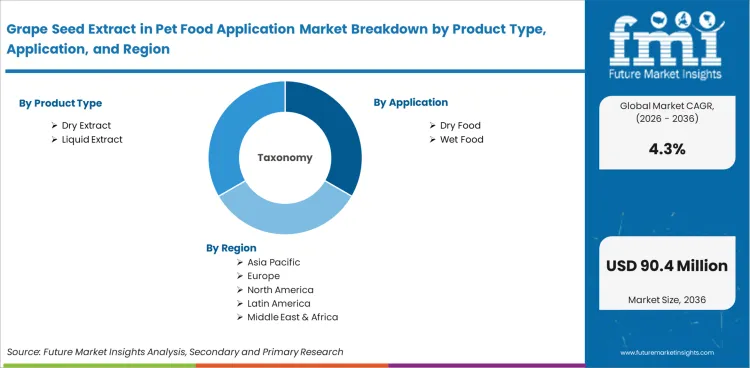
The grape seed extract in pet food applications market was valued at USD 48.3 million in 2025 and is projected to reach USD 50.4 million in 2026. It is forecast to reach USD 90.4 million by 2036 at 4.3% CAGR. Dry extract is projected to lead product type demand with 64.7% share. By application, dry food is expected to hold 57.0% share in 2026.
Pet food formulators are moving toward dose-backed grape seed extract use as canine evidence becomes more specific. In December 2024, Sandri et al. reported that dogs received grape proanthocyanidins at 1 mg/kg and 3 mg/kg body weight for 28 days. The GPAC diet reduced Enterobacteriaceae and Fusobacteriaceae and increased the serotonin to cortisol ratio, giving formulators a clearer base for gut and stress-balance positioning.
USA launch planning is also becoming more controlled. In October 2024, FDA stated in CVM GFI #293 that enforcement discretion applies to ingredients listed in chapter six of the 2024 AAFCO Official Publication. In July 2025, FDA stated in CVM GFI #294 that AFIC gives firms another route to consult FDA on animal food ingredient safety after MOU 225-07-7001 expired on October 1 2024. Ingredient sourcing is shifting toward standardization. Nor-Feed stated that grape polyphenol identification and standardization help keep effectiveness identical batch after batch
Summary of the Grape Seed Extract in Pet Food Application Market
- Demand and Growth Drivers
- Dry kibble makers are testing pet food antioxidants to slow fat oxidation during storage and shelf movement.
- Pet owners are moving toward shorter ingredient labels, which supports botanical preservation in premium recipes.
- Functional pet food demand is rising as brands use botanical antioxidants to support aging pets and daily wellness formulas.
- Dog nutrition adoption is increasing as grape seed proanthocyanidins are positioned for skin support and joint care products.
- Product and Segment View
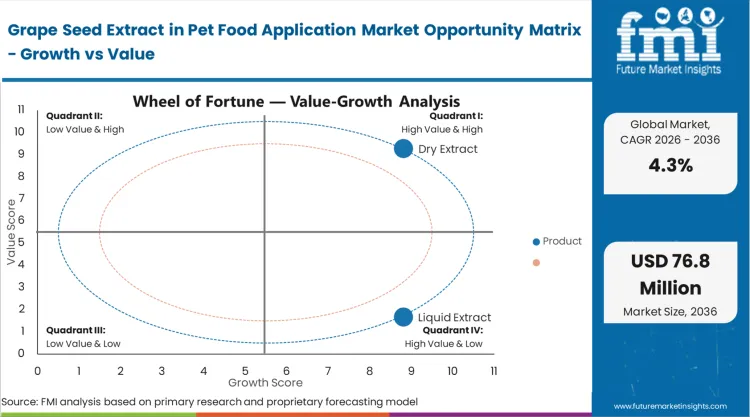
- Dry extract is projected to lead product type demand as powder handling suits extrusion and premix systems.
- Liquid extract is expected to serve wet food and coating systems that need faster dispersion.
- Treats and snacks are forecast to use smaller volumes but offer stronger label visibility.
- The sector connects with natural antioxidants as brands replace synthetic preservation routes in premium formulas.
- Geography and Competitive Outlook
- The United States is expected to record 23.8% CAGR through 2036 as premium pet food uses expand.
- India is expected to expand at 15.4% CAGR through 2036 as urban pet ownership lifts premium dry food interest.
- Indena S.p.A. and Nexira shape botanical extract supply through standardized polyphenol positioning.
- Naturex under Givaudan and Kemin Industries connect botanical know-how with pet nutrition ingredient channels.
- Analyst Opinion
- Nandini Roy Choudhury, Principal Consultant at FMI says, “The opportunity is not only a clean label claim. It lies in repeatable antioxidant performance inside dry pet food. Suppliers that prove polyphenol consistency and extrusion tolerance can move from sample interest into formula approval.”
- Grape Seed Extract in Pet Food Application Market Value Analysis
- Standardized extract grades lift value because formulators pay more for controlled polyphenol and proanthocyanidin content.
- Safety documentation raises supplier pricing power since grape-linked ingredients need clear toxicology and dosage evidence for pets.
- Powder formats support value growth as they blend more easily into dry food and treat premixes.
- Clean-label positioning improves market value as pet owners seek plant-based ingredients with a recognizable source.
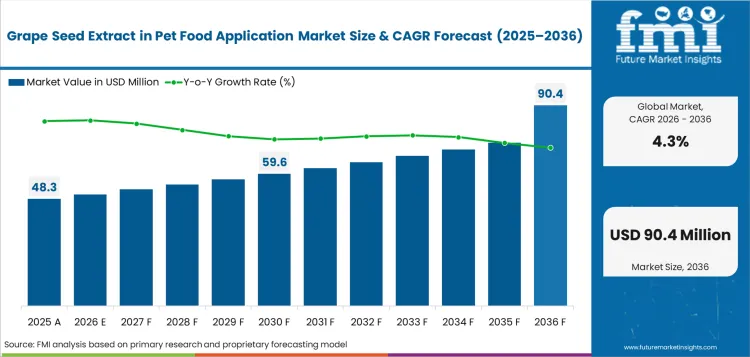
Key Takeaways, Market Size, and Forecast
| Metric | Value |
|---|---|
| Market Size (2025) | USD 48.3 Million |
| Market Size (2036) | USD 90.4 Million |
| CAGR (2026–2036) | 4.3% |
| Incremental Opportunity (2026–2036) | USD 40.0 Million |
| Leading Product Type (2026) | Dry Extract |
| Dry Extract Share (2026) | 64.7% |
| Leading Application (2026) | Dry Food |
| Dry Food Share (2026) | 57.0% |
| Fastest-Growing Country | United States |
| United States CAGR | 23.8% |
| 2nd Fastest-Growing Country | India |
| India CAGR | 15.4% |
Grape Seed Extract in Pet Food Application Market Definition
The grape seed extract in pet food application sector covers dry and liquid grape seed extracts used in dog food, cat food and other companion animal formulas. Product scope includes ingredients added for antioxidant preservation, functional positioning or polyphenol support. The boundary overlaps with pet food preservatives when grape seed extract is used to slow oxidation. The scope excludes grape seed extract sold only for human supplements, cosmetics or general food applications.
Grape Seed Extract in Pet Food Application Market Inclusions
Market scope covers dry extract and liquid extract sold into dry food, wet food, treats and snacks across major pet food producing regions. Revenue scope covers ingredient sales into finished pet food formulas from 2026 to 2036. Key stakeholders include botanical extract suppliers, pet food brands, premix houses and ingredient distributors.
Grape Seed Extract in Pet Food Application Market Exclusions
Scope excludes human dietary supplements, wine industry extract sales, cosmetic actives and animal feed uses outside companion pet food. Finished pet food retail value is excluded unless grape seed extract revenue can be separated from the formula value.
Grape Seed Extract in Pet Food Application Market Research Methodology
- Primary Research: FMI analysts reviewed pet food formulators, botanical extract suppliers and ingredient distributors active in premium dry food. Interviews focused on dose range, clean label claims and stability concerns during extrusion.
- Desk Research: Desk research used pet food industry data, grape supply signals and company product information. Sources included trade bodies, government publications, official company releases and technical ingredient pages.
- Market Sizing and Forecasting: The model combined pet food production volumes with extract inclusion rates and product form pricing. Country-level differences were adjusted through premium pet food adoption and ingredient sourcing depth.
- Data Validation: Forecast checks compared FMI values with pet food production signals and grape byproduct availability. Company portfolios were reviewed to confirm that named suppliers remain active in extract or pet nutrition channels.
Why is the Grape Seed Extract in Pet Food Application Market Growing?
- Dry food makers use botanical antioxidants when fat-heavy kibble needs cleaner preservation language on the label.
- Wine byproduct streams give extract suppliers a circular sourcing story that fits premium pet nutrition claims.
- Functional pet ingredients gain attention as brands connect polyphenol content with aging and wellness positioning.
Pet food makers are under pressure to protect fats and flavors while keeping ingredient labels understandable. The European pet food association FEDIAF reported EUR 29.2 billion in European pet food sales and 9.1 million tonnes of product volume in June 2025. This scale gives antioxidant suppliers a large recipe pool, but only proven ingredients get into long production runs. Grape seed extract gains traction where formulators can match plant origin with stable antioxidant performance.
Supply availability gives the sector a practical support point. The International Organisation of Vine and Wine reported 7.1 million hectares of global vineyard area in 2024. Grape seed extract suppliers can use this byproduct stream to support circular sourcing claims. The challenge is converting seasonal and regional grape inputs into standardized grape seed extracts that meet pet food quality checks across many batches.
Market Segmentation Analysis
- Dry extract is projected to account for 64.7% product type share in 2026 as powder handling suits premix work.
- Dry food is expected to represent 57.0% application share in 2026 as kibble needs oxidation control.
- Dog food is forecast to hold 58.0% pet type share in 2026 due to larger formula volumes.
- Ingredient distributors are estimated to account for 41.0% distribution route share in 2026.
- Premium kibble is projected to account for 46.0% formulation tier share in 2026.
The sector is divided into five primary segment groups based on product type, application, pet type, distribution route and formulation tier. Product type covers dry extract and liquid extract. Application covers dry food, wet food and treats and snacks. Pet type separates dog, cat and other companion animals. Distribution route and formulation tier explain how extract suppliers reach pet food makers and where label value is highest. Adjacent botanicals such as natural ferulic acid are reviewed as comparable plant antioxidant inputs.
Insights into the Dry Extract Product Type Segment
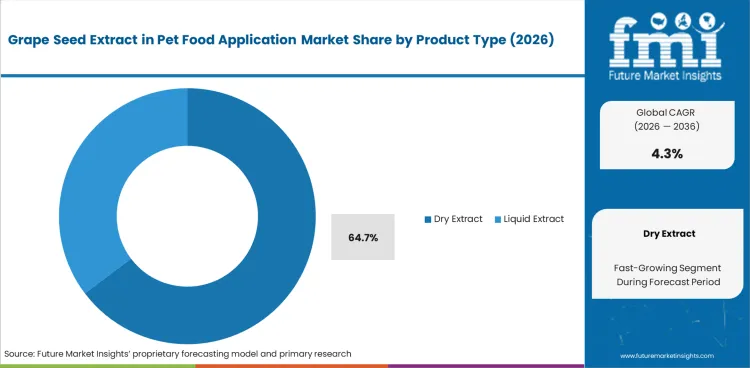
- Dry extract is projected to account for 64.7% share of product type demand in 2026. Powder form fits premix handling and makes it easier to add extract during dry food manufacturing.
- Liquid extract serves coating systems and selected wet food formats. Dry extract retains a broader position because it stores better and moves through pet food premixes more easily.
Insights into the Dry Food Application Segment
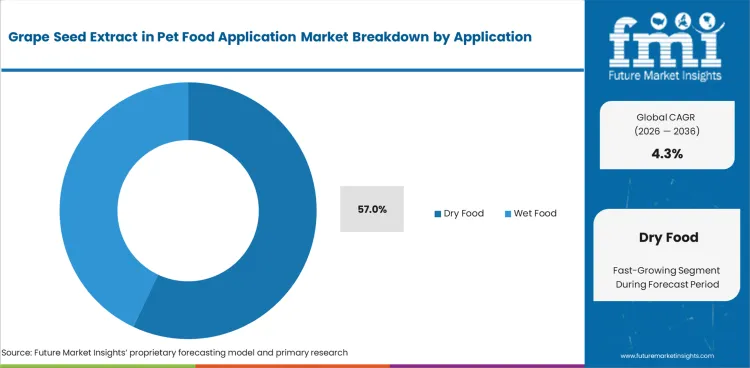
- Dry food is expected to represent 57.0% share of application demand in 2026. Kibble needs fat protection during storage and distribution, which makes antioxidant stability important.
- Wet food uses lower relative volumes because the format depends more on processing and packaging controls. Brands compare grape seed extract with wider antioxidant systems before choosing dose and form. Treats and snacks remain label-sensitive niches for botanical ingredient claims.
Insights into the Dog Pet Type Segment
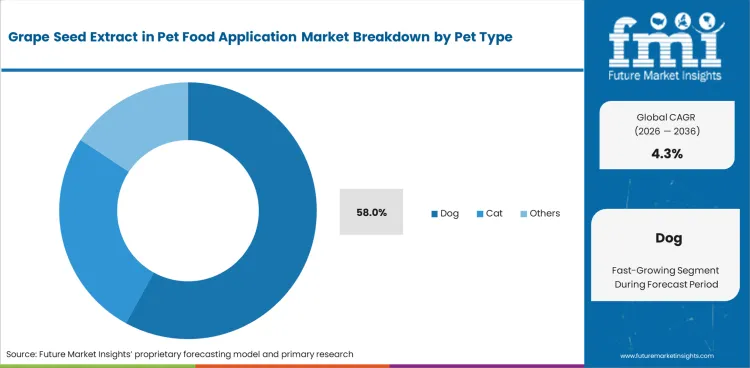
- Dog food is forecast to account for 58.0% share of pet type demand in 2026. Dog formulas use larger batch volumes and more dry food formats than other companion animal groups.
- Cat food offers a premium route in specialized recipes but flavor acceptance needs careful work. Other pets form a small pool due to limited formula volume.
Insights into the Ingredient Distributor Route Segment
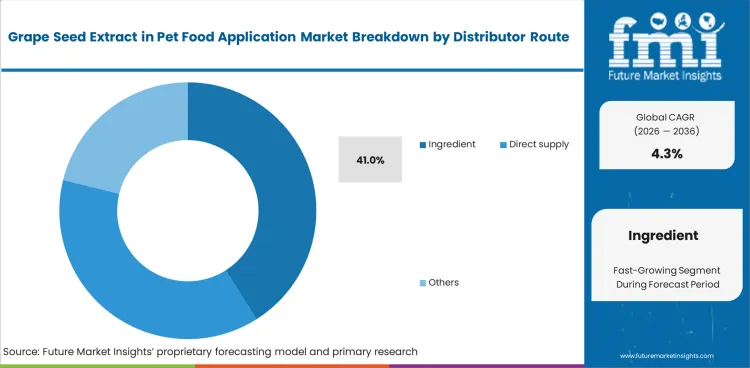
- Ingredient distributors are estimated to account for 41.0% share of distribution route demand in 2026. Small and mid-sized pet food brands rely on distributors for technical documents and reliable supply.
- Direct supply is stronger with large brands that approve ingredients through corporate formulation teams. Online business channels mainly serve trial orders and smaller recipe developers.
Insights into the Premium Kibble Formulation Tier Segment
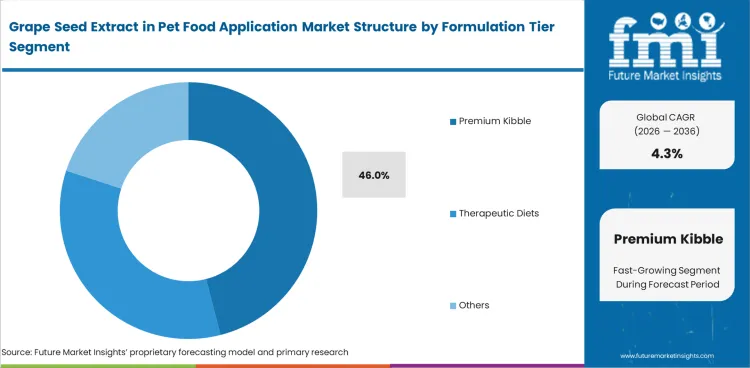
- Premium kibble is projected to account for 46.0% share of formulation tier demand in 2026. The segment uses clean label antioxidants to support shelf life and wellness claims.
- Therapeutic diets need stricter evidence before adopting grape seed extract in large volume. Standard diets use the ingredient selectively when price and claim value both work.
Grape Seed Extract in Pet Food Application Market Drivers, Restraints, and Opportunities
- Clean label preservation is pushing dry food brands toward botanical antioxidant systems.
- Dose validation slows adoption because pet food makers need safety and stability proof before formula approval.
- Upcycled grape streams create opportunity when extract suppliers document origin and polyphenol consistency.
A primary driver propelling the sector is the need to protect pet food fats without relying only on synthetic antioxidant names. Pet Food Institute reported that United States dog food used over 3 million tons of upcycled ingredients in 2024. Cat food used over 1 million tons of upcycled ingredients during the same year. That buying pattern supports grape seed extract when suppliers connect wine byproducts with reliable preservation performance.
Dose Approval Slows Formula Entry
The main restraint is the approval work behind every pet food formula. The United States Food and Drug Administration received about 1,300 adverse event reports for Purina pet foods from November 2023 to April 2024. It selected 107 reports for follow-up because those cases carried enough detail. Brand owners therefore apply tighter checks before adding any functional botanical ingredient into national formulas.
Upcycling Creates Supplier Value
A lucrative opportunity is in standardized extracts made from wine byproducts. Alvinesa states that its Vintera range uses upcycled grape sources and water-based extraction in Spain. Such positioning gives pet food makers a clear sustainability story without moving away from familiar plant-based ingredient language. Suppliers that pair this story with batch data can win premium kibble trials.
Analysis of Grape Seed Extract in Pet Food Application Market by Key Countries
.webp "Top Country Growth Comparison Grape Seed Extract In Pet Food Application Market Cagr (2026 2036)")
| Country | CAGR |
|---|---|
| United States | 23.8% |
| India | 15.4% |
| Japan | 13.4% |
| Germany | 7.5% |
| China | 7.1% |
| United Kingdom | 6.4% |
| Brazil | 5.9% |
Source: Future Market Insights analysis, 2026.
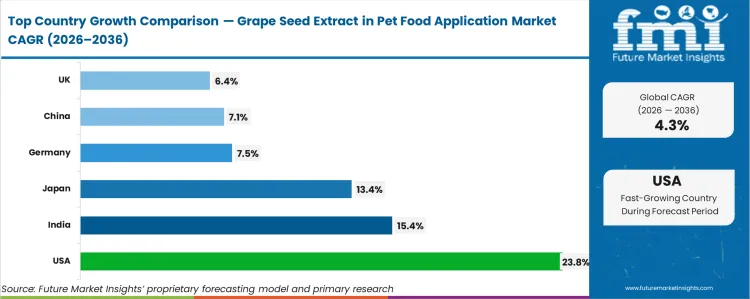
Grape Seed Extract in Pet Food Application Market CAGR Analysis by Country
- The United States is projected to record a 23.8% CAGR through 2036 as premium dry food uses scale quickly.
- India is expected to expand at 15.4% CAGR through 2036 as urban pet ownership lifts demand for packaged formulas.
- Japan is forecast to grow at 13.4% CAGR through 2036 as aging pet care supports functional ingredient interest.
- Germany is expected to advance at 7.5% CAGR through 2036 as clean label pet food maintains stable use.
- China is projected to rise at 7.1% CAGR through 2036 as functional pet products expand across online channels.
- The United Kingdom is forecast at 6.4% CAGR through 2036 as premium pet food maintains steady botanical use.
- Brazil is expected to post 5.9% CAGR through 2036 as local pet food output supports natural ingredient trials.
Country-level analysis covers markets where premium pet food usage, pet ownership depth and ingredient distribution capacity support adoption. The United States and India track above global CAGR due to faster premiumization and stronger dry food momentum. Germany and the United Kingdom expand closer to the global average because clean label adoption is already established.
Demand Outlook for Grape Seed Extract in Pet Food Application Market in the United States
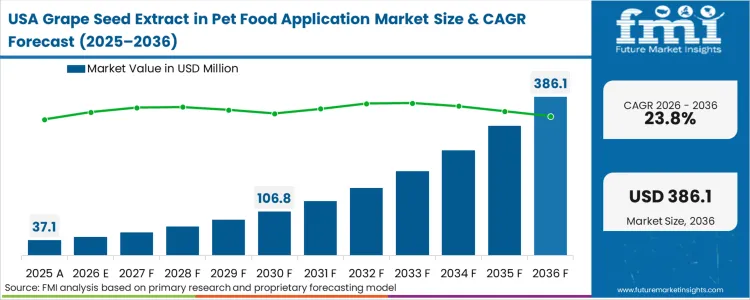
The United States is projected to record 23.8% CAGR through 2036 as premium dry food brands test botanical antioxidants. Pet Food Institute reported USD 51.7 billion in pet food sales during 2024. Ingredient adoption moves through large brand approval systems before broad rollout. The practical result is a high-value route for standardized dry extract suppliers.
- Dry dog food brands can use grape seed extract when fat preservation and clean label wording both matter.
- Ingredient distributors need allergen files, batch certificates and stability notes before supplier shortlisting starts.
- Premium treat makers can test botanical claims on smaller runs before moving into national kibble formulas.
Demand Outlook for Grape Seed Extract in Pet Food Application Market in India
India is expected to expand at 15.4% CAGR through 2036 as packaged pet food moves deeper into urban households. India’s food processing ministry identifies natural foods, functional foods and treats as pet food opportunities in its sector profile. This supports early use of botanical ingredients in premium formulas. Local brands will need stable import channels until domestic extract supply becomes more consistent.
- Mumbai and Bengaluru brands can use botanical antioxidants to support premium dry dog food claims.
- Ingredient distributors need simple technical sheets that explain dose, storage and heat behavior for local formulators.
- Treat and snack producers can test grape seed extract in small batches before shifting to larger formula runs.
Future Outlook for Grape Seed Extract in Pet Food Application Market in Japan
Japan is forecast at 13.4% CAGR through 2036 as owners spend on aging pet care and small-pack premium diets. The Japanese grape seed extracts route benefits from local familiarity with botanical ingredients. Pet food makers will prefer low-dose extracts that do not change taste in sensitive cat and dog formulas. This makes sensory testing and batch consistency more important than broad label claims.
- Tokyo pet nutrition brands can position grape seed extract around aging pets and premium small-pack recipes.
- Ingredient suppliers need palatability support because Japanese formulas often target careful portion control.
- Dry and semi-moist pet food lines can adopt polyphenol extracts once flavor impact is limited.
Opportunity Analysis for Grape Seed Extract in Pet Food Application Market in Germany
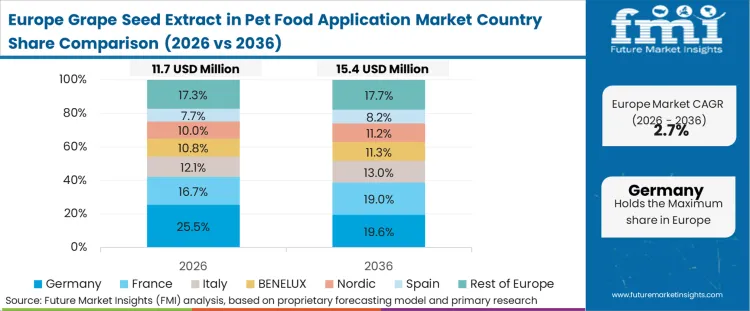
Germany is expected to advance at 7.5% CAGR through 2036 as pet food brands maintain clean label and sustainability focus. FEDIAF reported EUR 29.2 billion in European pet food sales in June 2025. German buyers are likely to ask for traceable sourcing and compliance files before commercial approval. European formulators also monitor EU grape seed extract demand and Mediterranean pet nutrition ingredient blends for regional positioning. This gives organized extract suppliers an advantage over spot traders.
- German private-label producers need documented botanical origin before adding extract into recurring recipes.
- Premium dog food brands can pair grape seed extract with rosemary and mixed tocopherol blends for broader antioxidant systems.
- Ingredient houses need supply continuity across crop years to serve large retailers with repeat formulas.
Sales Analysis of Grape Seed Extract in Pet Food Application Market in China
China is projected to rise at 7.1% CAGR through 2036 as online pet nutrition channels widen formula choice. The United States Department of Agriculture reported China’s pet consumer segment at RMB 302 billion in 2024. Pet food accounted for 52.8% of that value. Botanical ingredients can gain trial use through premium online brands before wider retail adoption.
- Shanghai and Shenzhen brands can test botanical extracts through online launches and limited formula runs.
- Suppliers need Chinese-language technical files and stable import support for formula approval discussions.
- Dry dog and cat foods can use grape seed extract when brands want antioxidant claims with plant origin.
Future Outlook for Grape Seed Extract in Pet Food Application Market in the United Kingdom
The United Kingdom is forecast at 6.4% CAGR through 2036 as premium pet food brands keep using natural preservation language. UK Pet Food reported 17.2 million households owned pets in 2024. That ownership pool supports steady demand for premium dry diets and treats. Grape seed extract will grow when suppliers prove label value without raising formulation cost too sharply.
- UK premium dog food makers can use functional pet ingredients and plant-based pet food cues to separate recipes in a crowded retail shelf.
- Private-label producers need predictable pricing before adding grape seed extract into supermarket pet food ranges.
- Treat brands can test grape seed extract where antioxidant claims need clear plant origin wording.
Sales Outlook for Grape Seed Extract in Pet Food Application Market in Brazil
Brazil is expected to post 5.9% CAGR through 2036 as local pet food production supports natural ingredient trials. The United States Department of Agriculture reported Brazil’s pet industry at BRL 47.01 billion in 2023. Pet food represented 78% of that industry value. Domestic producers can use botanical antioxidants when premium dry food moves beyond imported brands.
- Brazilian pet food makers can test grape seed extract in dry dog food for shelf-life positioning.
- Local distributors need reliable import documentation as botanical extract use grows in premium formulas.
- Treat and snack makers can use smaller inclusion volumes to test label value before large dry food adoption.
Competitive Landscape and Strategic Positioning
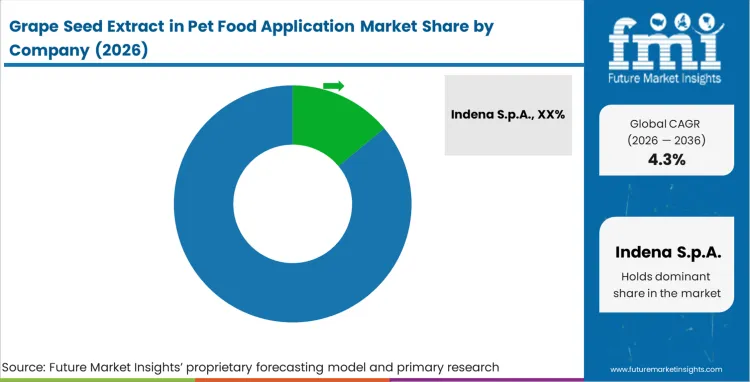
Competition is shaped by polyphenol standardization and pet food documentation rather than ingredient origin alone. Indena S.p.A. positions Enovita as a proprietary grape seed extract rich in oligomeric proanthocyanidins and made from white wine production byproducts. That type of detail matters because pet food brands need repeatable input quality before formula approval. Suppliers with clear assay data and stability support will sit closer to premium dry food programs.
Nexira and Naturex under Givaudan give the sector wider botanical extract reach. Nexira launched VinOgrape Plus in May 2024 as a grape extract rich in OPC and anthocyanins. Givaudan’s pet food presence supports flavor and wellbeing links around botanical inputs. Kemin Industries is relevant through pet feed antioxidant authorization, which shows how regulatory support shapes trust in natural preservation ingredients.
Smaller extract suppliers can gain trials when they solve narrow problems for formulators. Botanic Innovations and Polyphenolics support the grape seed ingredient pool, while Hunan NutraMax adds China-based extract supply. Alvinesa supports the upstream story through upcycled grape sources and water-based extraction. Buyers will compare these suppliers on documentation depth, supply reliability and fit with pet food ingredients.
Key Companies in the Grape Seed Extract in Pet Food Application Market
- Standardized Extract Suppliers: Indena S.p.A. and Nexira lead on standardized grape seed extract positioning. Naturex under Givaudan adds botanical extract depth and access to pet nutrition formulation channels.
- Pet Nutrition Ingredient Specialists: Kemin Industries connects natural antioxidant systems with animal nutrition regulatory knowledge. Polyphenolics and Botanic Innovations support grape-based ingredient supply for premium formulations.
- Regional and Upstream Suppliers:Hunan NutraMax and Alvinesa Natural Ingredients serve regional extract or upstream grape byproduct routes. Their role is strongest when buyers need supply options and circular sourcing support
Competitive Benchmarking: Grape Seed Extract in Pet Food Application Market
| Company | Polyphenol Standardization Depth | Heat Stability Support | Pet Nutrition Documentation | Geographic Footprint |
|---|---|---|---|---|
| Indena S.p.A. | High | Strong | Medium | Europe centered with global nutraceutical reach |
| Nexira | High | Medium | Medium | Europe centered with global botanical ingredient sales |
| Naturex under Givaudan | High | Strong | Strong | Global with taste and wellbeing channels |
| Kemin Industries | Medium | Strong | Strong | Global animal nutrition footprint |
| Polyphenolics | High | Medium | Low | United States centered grape extract supplier |
| Botanic Innovations | Medium | Medium | Low | United States centered specialty oil and extract supplier |
| Hunan NutraMax | Medium | Medium | Medium | China centered with global ingredient exports |
| Alvinesa Natural Ingredients | Medium | Medium | Medium | Spain centered with upcycled grape ingredient depth |
Source: Future Market Insights competitive analysis, 2026. Ratings reflect relative positioning based on standardization, stability support and pet nutrition documentation.
Key Developments in Grape Seed Extract in Pet Food Application Market
- In July 2024, Omya partnered with Alvinesa to distribute upcycled grape-derived products in the United States and Canada. The partnership improves access to grape seed and grape skin extract ingredients.
- In December 2024, General Mills completed the USD 1.45 billion acquisition of Whitebridge Pet Brands. The deal shows continued investment in premium cat feeding and pet treating formats.
- In March 2026, Nestlé Purina opened a wet pet food factory in Brazil with BRL 2.5 billion investment. Local capacity can widen ingredient opportunities in Latin American pet food.
Key Players in the Grape Seed Extract in Pet Food Application Market
Standardized Extract Suppliers
- Indena S.p.A.
- Nexira
- Naturex SA under Givaudan
- Polyphenolics
- Botanic Innovations LLC
Pet Nutrition Ingredient Specialists
- Kemin Industries
- Givaudan
Regional and Upstream Suppliers
- Hunan NutraMax Inc.
- Alvinesa Natural Ingredients
Report Scope and Coverage
| Parameter | Details |
|---|---|
| Quantitative Units | USD 50.4 million to USD 90.4 million at 4.3% CAGR |
| Market Definition | Grape seed extract used as a pet food ingredient in companion animal formulas |
| Product Type | Dry extract, Liquid extract |
| Application | Dry food, Wet food, Treats and snacks |
| Pet Type | Dog, Cat, Others |
| Distribution Route | Ingredient distributors, Direct supply, Online business channels |
| Formulation Tier | Premium kibble, Therapeutic diets, Standard diets |
| Regions Covered | North America, Latin America, Western Europe, Eastern Europe, East Asia, South Asia and Pacific, Middle East and Africa |
| Countries Covered | United States, India, Japan, Germany, China, United Kingdom, Brazil and 30+ countries |
| Key Companies Profiled | Indena S.p.A., Nexira, Naturex SA, Kemin Industries, Polyphenolics, Botanic Innovations LLC, Hunan NutraMax Inc., Alvinesa Natural Ingredients |
| Forecast Period | 2026 to 2036 |
| Approach | Hybrid bottom-up and top-down methodology using FMI values, pet food output signals, grape supply checks and supplier activity |
Source: Future Market Insights, 2026.
Grape Seed Extract in Pet Food Application Market Breakdown By Product Type, Application, Pet Type, Distribution Route, Formulation Tier and Region
Grape Seed Extract in Pet Food Application Market Segmented by Product Type:
- Dry extract
- Liquid extract
Grape Seed Extract in Pet Food Application Market Segmented by Application:
- Dry food
- Wet food
- Treats and snacks
Grape Seed Extract in Pet Food Application Market Segmented by Pet Type:
- Dog
- Cat
- Others
Grape Seed Extract in Pet Food Application Market Segmented by Distribution Route:
- Ingredient distributors
- Direct supply
- Online business channels
Grape Seed Extract in Pet Food Application Market Segmented by Formulation Tier:
- Premium kibble
- Therapeutic diets
- Standard diets
Grape Seed Extract in Pet Food Application Market by Region:
- North America
- United States
- Canada
- Mexico
- Latin America
- Brazil
- Chile
- Rest of Latin America
- Western Europe
- Germany
- United Kingdom
- Italy
- Spain
- France
- Nordic
- BENELUX
- Rest of Western Europe
- Eastern Europe
- Russia
- Poland
- Hungary
- Balkan and Baltic
- Rest of Eastern Europe
- East Asia
- China
- Japan
- South Korea
- South Asia and Pacific
- India
- ASEAN
- Australia and New Zealand
- Rest of South Asia and Pacific
- Middle East and Africa
- Kingdom of Saudi Arabia
- Other GCC Countries
- Turkiye
- South Africa
- Other African Union
- Rest of Middle East and Africa
Research Sources and Bibliography
- Pet Food Institute. (2025, March). 3 key takeaways from the 2025 pet food production and ingredient analysis report.
- FEDIAF. (2025, June). Facts and figures. European Pet Food Industry Federation.
- International Organisation of Vine and Wine. (2025, April). State of the world vine and wine sector in 2024.
- United States Department of Agriculture Foreign Agricultural Service. (2025, May 16). China pet food market update.
- United States Department of Agriculture Foreign Agricultural Service. (2024, June 27). Paw-sitive outlook for the pet food industry in Brazil.
- UK Pet Food. (2025). Pet population data.
- Agriculture and Agri-Food Canada. (2025). Sector trend analysis: Pet food trends in Australia.
- United States Food and Drug Administration. (2024, July). Summary of Purina pet food adverse event reports.
- Kemin Industries. (2024, May 2). Kemin secures European Union authorization for liquid rosemary extract as an antioxidant feed additive.
- Nexira. (2024, May). VinOgrape Plus.
- Omya. (2024, July 23). Omya and Alvinesa Natural Ingredients forge partnership to introduce upcycled ingredients to the United States and Canada.
- General Mills. (2024, December 18). General Mills completes acquisition of Whitebridge Pet Brands.
- Nestlé. (2026, March 4). Nestlé Purina opens wet pet food factory in Brazil.
- Symrise Pet Food. (2026, April 15). Symrise invests in Bond Pet Foods to accelerate sustainable innovation in pet nutrition.
- Big Idea Ventures. (2025, June 3). Big Idea Ventures and Mars Petcare launch 2025 Global Pet Food Innovation Program.
The bibliography is provided for reader reference and uses primary non-commercial government, regulatory, academic, trade body and official company publications.
Frequently Asked Questions
What is the global demand for grape seed extract in pet food applications in 2026?
In 2026, global demand is expected to reach USD 50.4 million as premium pet food brands use botanical antioxidants.
How big will the grape seed extract in pet food application sector be in 2036?
By 2036, the sector is expected to reach USD 90.4 million as dry food and premium treats use more botanical preservation.
How fast is grape seed extract demand in pet food expected to expand?
Demand is projected to expand at 4.3% CAGR from 2026 to 2036 as clean label preservation gains formula space.
Which product type is expected to lead grape seed extract in pet food applications?
Dry extract is projected to lead product type demand with 64.7% share in 2026 due to easier premix handling.
Which application is expected to lead grape seed extract use in pet food?
Dry food is expected to lead application demand with 57.0% share in 2026 as kibble needs oxidation control.
Which country is forecast to grow fastest in grape seed extract pet food applications?
The United States is expected to record 23.8% CAGR through 2036 as premium dry food programs test botanical antioxidants.
What does the grape seed extract in pet food application scope include?
The scope includes dry and liquid grape seed extracts used in dog food, cat food and other companion animal formulas.
How does FMI estimate the grape seed extract in pet food forecast?
FMI combines pet food output, extract pricing, inclusion rates, country adoption signals and supplier activity to validate the forecast.
Why are pet food makers interested in grape seed extract?
Pet food makers use grape seed extract when they need natural antioxidant support and clearer label language for premium recipes.
What is the main restraint for grape seed extract in pet food?
The main restraint is formula approval work because brands need safety, stability and palatability proof before national adoption.
Which companies are important in grape seed extract for pet food?
Indena S.p.A., Nexira, Naturex under Givaudan and Kemin Industries are important due to extract and pet nutrition expertise.
Why does upcycled grape sourcing matter in this sector?
Upcycled grape sourcing gives brands a circular ingredient story and helps suppliers separate standardized extracts from commodity botanicals.
Preview the report firsthand - request a free sample
Get SampleGet the brochure for pricing and purchase details.
Get PDFTable of Content
- Key Takeaways
- Market Size and CAGR
- Top Growth Driver
- Fastest Growing Segment
- Leading Region
- Key Companies
- Emerging Opportunities
- Executive Summary
- Global Market Outlook
- Demand-side Trends
- Supply-side Trends
- Technology Roadmap Analysis
- Analysis and Recommendations
- Analyst Perspective (What is happening? Why now? What should investors know?)
- Key Questions Answered
- How large is the market?
- What is the CAGR?
- What are key trends?
- Which region dominates?
- Who are the leaders?
- Market Overview
- Market Coverage / Taxonomy
- Market Definition / Scope / Limitations
- Research Methodology
- Chapter Orientation
- Analytical Lens and Working Hypotheses
- Market Structure, Signals, and Trend Drivers
- Benchmarking and Cross-market Comparability
- Market Sizing, Forecasting, and Opportunity Mapping
- Research Design and Evidence Framework
- Desk Research Programme (Secondary Evidence)
- Expert Input and Fieldwork (Primary Evidence)
- Tooling, Models, and Reference Databases
- Data Engineering and Model Build
- Quality Assurance and Audit Trail
- Market Background
- Market Dynamics (Drivers, Restraints, Opportunity, Trends)
- Scenario Forecast (Optimistic, Likely, Conservative)
- Impact Analysis
- AI Impact
- Sustainability Impact
- Regulatory Impact
- Technology Impact
- Consumer / Buyer Analysis
- Purchase Drivers
- Adoption Barriers
- Buyer Journey
- Opportunity Map Analysis
- Product Life Cycle Analysis
- Supply Chain Analysis
- Investment Feasibility Matrix
- Value Chain Analysis
- PESTLE and Porter's Analysis
- Regulatory Landscape
- Regional Parent Market Outlook
- Production and Consumption Statistics
- Import and Export Statistics
- Global Market Analysis and Forecast, 2021 to 2036
- Historical Market Size Value (USD Million) Analysis, 2021 to 2025
- Current and Future Market Size Value (USD Million) Projections, 2026 to 2036
- Y-o-Y Growth Trend Analysis
- Absolute $ Opportunity Analysis
- Global Market Pricing Analysis, 2021 to 2036
- Global Market Analysis and Forecast, By Product Type, 2021 to 2036
- Introduction / Key Findings
- Historical Market Size Value (USD Million) Analysis By Product Type, 2021 to 2025
- Current and Future Market Size Value (USD Million) Analysis and Forecast By Product Type, 2026 to 2036
- Dry extract
- Liquid extract
- Dry extract
- Y-o-Y Growth Trend Analysis By Product Type, 2021 to 2025
- Absolute $ Opportunity Analysis By Product Type, 2026 to 2036
- Global Market Analysis and Forecast, By Application, 2021 to 2036
- Introduction / Key Findings
- Historical Market Size Value (USD Million) Analysis By Application, 2021 to 2025
- Current and Future Market Size Value (USD Million) Analysis and Forecast By Application, 2026 to 2036
- Dry food
- Wet food
- Treats and snacks
- Dry food
- Y-o-Y Growth Trend Analysis By Application, 2021 to 2025
- Absolute $ Opportunity Analysis By Application, 2026 to 2036
- Global Market Analysis and Forecast, By Pet Type, 2021 to 2036
- Introduction / Key Findings
- Historical Market Size Value (USD Million) Analysis By Pet Type, 2021 to 2025
- Current and Future Market Size Value (USD Million) Analysis and Forecast By Pet Type, 2026 to 2036
- Dog
- Cat
- Others
- Dog
- Y-o-Y Growth Trend Analysis By Pet Type, 2021 to 2025
- Absolute $ Opportunity Analysis By Pet Type, 2026 to 2036
- Global Market Analysis and Forecast, By Distribution Route, 2021 to 2036
- Introduction / Key Findings
- Historical Market Size Value (USD Million) Analysis By Distribution Route, 2021 to 2025
- Current and Future Market Size Value (USD Million) Analysis and Forecast By Distribution Route, 2026 to 2036
- Ingredient distributors
- Direct supply
- Online business channels
- Ingredient distributors
- Y-o-Y Growth Trend Analysis By Distribution Route, 2021 to 2025
- Absolute $ Opportunity Analysis By Distribution Route, 2026 to 2036
- Global Market Analysis and Forecast, By Formulation Tier, 2021 to 2036
- Introduction / Key Findings
- Historical Market Size Value (USD Million) Analysis By Formulation Tier, 2021 to 2025
- Current and Future Market Size Value (USD Million) Analysis and Forecast By Formulation Tier, 2026 to 2036
- Premium kibble
- Therapeutic diets
- Standard diets
- Premium kibble
- Y-o-Y Growth Trend Analysis By Formulation Tier, 2021 to 2025
- Absolute $ Opportunity Analysis By Formulation Tier, 2026 to 2036
- Global Market Analysis and Forecast, By Region, 2021 to 2036
- Introduction
- Historical Market Size Value (USD Million) Analysis By Region, 2021 to 2025
- Current Market Size Value (USD Million) Analysis and Forecast By Region, 2026 to 2036
- North America
- Latin America
- Western Europe
- Eastern Europe
- East Asia
- South Asia and Pacific
- Middle East & Africa
- Market Attractiveness Analysis By Region
- North America Market Analysis and Forecast, By Country, 2021 to 2036
- Historical Market Size Value (USD Million) Trend Analysis By Market Taxonomy, 2021 to 2025
- Market Size Value (USD Million) Forecast By Market Taxonomy, 2026 to 2036
- By Country
- USA
- Canada
- By Product Type
- By Application
- By Pet Type
- By Distribution Route
- By Formulation Tier
- By Country
- Market Attractiveness Analysis
- By Country
- By Product Type
- By Application
- By Pet Type
- By Distribution Route
- By Formulation Tier
- Key Takeaways
- Latin America Market Analysis and Forecast, By Country
- Historical Market Size Value (USD Million) Trend Analysis By Market Taxonomy, 2021 to 2025
- Market Size Value (USD Million) Forecast By Market Taxonomy, 2026 to 2036
- By Country
- Brazil
- Mexico
- Chile
- Rest of Latin America
- By Product Type
- By Application
- By Pet Type
- By Distribution Route
- By Formulation Tier
- By Country
- Market Attractiveness Analysis
- By Country
- By Product Type
- By Application
- By Pet Type
- By Distribution Route
- By Formulation Tier
- Key Takeaways
- Western Europe Market Analysis and Forecast, By Country
- Historical Market Size Value (USD Million) Trend Analysis By Market Taxonomy, 2021 to 2025
- Market Size Value (USD Million) Forecast By Market Taxonomy, 2026 to 2036
- By Country
- Germany
- UK
- Italy
- Spain
- France
- Nordic
- BENELUX
- Rest of Western Europe
- By Product Type
- By Application
- By Pet Type
- By Distribution Route
- By Formulation Tier
- By Country
- Market Attractiveness Analysis
- By Country
- By Product Type
- By Application
- By Pet Type
- By Distribution Route
- By Formulation Tier
- Key Takeaways
- Eastern Europe Market Analysis and Forecast, By Country
- Historical Market Size Value (USD Million) Trend Analysis By Market Taxonomy, 2021 to 2025
- Market Size Value (USD Million) Forecast By Market Taxonomy, 2026 to 2036
- By Country
- Russia
- Poland
- Hungary
- Balkan & Baltic
- Rest of Eastern Europe
- By Product Type
- By Application
- By Pet Type
- By Distribution Route
- By Formulation Tier
- By Country
- Market Attractiveness Analysis
- By Country
- By Product Type
- By Application
- By Pet Type
- By Distribution Route
- By Formulation Tier
- Key Takeaways
- East Asia Market Analysis and Forecast, By Country
- Historical Market Size Value (USD Million) Trend Analysis By Market Taxonomy, 2021 to 2025
- Market Size Value (USD Million) Forecast By Market Taxonomy, 2026 to 2036
- By Country
- China
- Japan
- South Korea
- By Product Type
- By Application
- By Pet Type
- By Distribution Route
- By Formulation Tier
- By Country
- Market Attractiveness Analysis
- By Country
- By Product Type
- By Application
- By Pet Type
- By Distribution Route
- By Formulation Tier
- Key Takeaways
- South Asia and Pacific Market Analysis and Forecast, By Country
- Historical Market Size Value (USD Million) Trend Analysis By Market Taxonomy, 2021 to 2025
- Market Size Value (USD Million) Forecast By Market Taxonomy, 2026 to 2036
- By Country
- India
- ASEAN
- Australia & New Zealand
- Rest of South Asia and Pacific
- By Product Type
- By Application
- By Pet Type
- By Distribution Route
- By Formulation Tier
- By Country
- Market Attractiveness Analysis
- By Country
- By Product Type
- By Application
- By Pet Type
- By Distribution Route
- By Formulation Tier
- Key Takeaways
- Middle East & Africa Market Analysis and Forecast, By Country
- Historical Market Size Value (USD Million) Trend Analysis By Market Taxonomy, 2021 to 2025
- Market Size Value (USD Million) Forecast By Market Taxonomy, 2026 to 2036
- By Country
- Kingdom of Saudi Arabia
- Other GCC Countries
- Türkiye
- South Africa
- Other African Union
- Rest of Middle East & Africa
- By Product Type
- By Application
- By Pet Type
- By Distribution Route
- By Formulation Tier
- By Country
- Market Attractiveness Analysis
- By Country
- By Product Type
- By Application
- By Pet Type
- By Distribution Route
- By Formulation Tier
- Key Takeaways
- Key Countries Market Analysis
- USA
- Pricing Analysis
- Market Share Analysis, 2025
- By Product Type
- By Application
- By Pet Type
- By Distribution Route
- By Formulation Tier
- Canada
- Pricing Analysis
- Market Share Analysis, 2025
- By Product Type
- By Application
- By Pet Type
- By Distribution Route
- By Formulation Tier
- Mexico
- Pricing Analysis
- Market Share Analysis, 2025
- By Product Type
- By Application
- By Pet Type
- By Distribution Route
- By Formulation Tier
- Brazil
- Pricing Analysis
- Market Share Analysis, 2025
- By Product Type
- By Application
- By Pet Type
- By Distribution Route
- By Formulation Tier
- Chile
- Pricing Analysis
- Market Share Analysis, 2025
- By Product Type
- By Application
- By Pet Type
- By Distribution Route
- By Formulation Tier
- Germany
- Pricing Analysis
- Market Share Analysis, 2025
- By Product Type
- By Application
- By Pet Type
- By Distribution Route
- By Formulation Tier
- UK
- Pricing Analysis
- Market Share Analysis, 2025
- By Product Type
- By Application
- By Pet Type
- By Distribution Route
- By Formulation Tier
- Italy
- Pricing Analysis
- Market Share Analysis, 2025
- By Product Type
- By Application
- By Pet Type
- By Distribution Route
- By Formulation Tier
- Spain
- Pricing Analysis
- Market Share Analysis, 2025
- By Product Type
- By Application
- By Pet Type
- By Distribution Route
- By Formulation Tier
- France
- Pricing Analysis
- Market Share Analysis, 2025
- By Product Type
- By Application
- By Pet Type
- By Distribution Route
- By Formulation Tier
- India
- Pricing Analysis
- Market Share Analysis, 2025
- By Product Type
- By Application
- By Pet Type
- By Distribution Route
- By Formulation Tier
- ASEAN
- Pricing Analysis
- Market Share Analysis, 2025
- By Product Type
- By Application
- By Pet Type
- By Distribution Route
- By Formulation Tier
- Australia & New Zealand
- Pricing Analysis
- Market Share Analysis, 2025
- By Product Type
- By Application
- By Pet Type
- By Distribution Route
- By Formulation Tier
- China
- Pricing Analysis
- Market Share Analysis, 2025
- By Product Type
- By Application
- By Pet Type
- By Distribution Route
- By Formulation Tier
- Japan
- Pricing Analysis
- Market Share Analysis, 2025
- By Product Type
- By Application
- By Pet Type
- By Distribution Route
- By Formulation Tier
- South Korea
- Pricing Analysis
- Market Share Analysis, 2025
- By Product Type
- By Application
- By Pet Type
- By Distribution Route
- By Formulation Tier
- Russia
- Pricing Analysis
- Market Share Analysis, 2025
- By Product Type
- By Application
- By Pet Type
- By Distribution Route
- By Formulation Tier
- Poland
- Pricing Analysis
- Market Share Analysis, 2025
- By Product Type
- By Application
- By Pet Type
- By Distribution Route
- By Formulation Tier
- Hungary
- Pricing Analysis
- Market Share Analysis, 2025
- By Product Type
- By Application
- By Pet Type
- By Distribution Route
- By Formulation Tier
- Kingdom of Saudi Arabia
- Pricing Analysis
- Market Share Analysis, 2025
- By Product Type
- By Application
- By Pet Type
- By Distribution Route
- By Formulation Tier
- Türkiye
- Pricing Analysis
- Market Share Analysis, 2025
- By Product Type
- By Application
- By Pet Type
- By Distribution Route
- By Formulation Tier
- South Africa
- Pricing Analysis
- Market Share Analysis, 2025
- By Product Type
- By Application
- By Pet Type
- By Distribution Route
- By Formulation Tier
- USA
- Market Structure Analysis
- Competition Dashboard
- Competition Benchmarking
- Market Share Analysis of Top Players
- By Regional
- By Product Type
- By Application
- By Pet Type
- By Distribution Route
- By Formulation Tier
- Emerging Startups
- Innovation Benchmarking
- Competition Analysis
- Competition Deep Dive
- Indena S.p.A.
- Overview
- Product Portfolio
- Profitability by Market Segments
- Sales Footprint
- Strategy Overview
- Marketing Strategy
- Product Strategy
- Channel Strategy
- Nexira
- Naturex SA under Givaudan
- Polyphenolics
- Botanic Innovations LLC
- Indena S.p.A.
- Case Studies
- Success Stories
- Recent Developments
- Competition Deep Dive
- Assumptions & Acronyms Used


