

- CAGR (2025 to 2035)
- 3.5%
High-Density Polyethylene Bottle Market Size and Share Forecast Outlook (2025 to 2035)
The high-density polyethylene bottle market is witnessing rapid growth because the material is robust, flexible, and environment friendly. HDPE bottles are greatly used in food and beverages, pharmaceutical, personal care, and consumer goods applications. The global market for HDPE bottles is expected to cross over USD 80 billion by the end of 2035 at a CAGR of 3.5%.
In this sense, companies focus more on the sustainable manufacturing process while innovating their designs with an increasing need of customers as well as that in the market. As the pressure to make packaging recyclable and reusable increases, HDPE bottles have become the go-to for their lightness, durability, and high recyclability. Strategic partnerships and technological innovations are pushing the market forward.
| Attribute | Details |
|---|---|
| Projected Value by 2035 | USD 80 billion |
| CAGR during the period 2025 to 2035 | 3.5% |
Overview of the Global High-Density Polyethylene (HDPE) Bottle Market
HDPE bottles are a sustainable and practical solution for packaging needs.
Key benefits include
- Durability: High resistance to impact and chemical degradation.
- Recyclability: Highly recyclable, in line with global sustainability objectives.
- Versatility: Suitable for a wide range of applications, from beverages to industrial products.
- Cost-Effectiveness: Affordable production costs without compromising quality.
Key market trends include
- Sustainability Initiatives: Increased focus on using recycled HDPE (rHDPE).
- Innovative Designs: Enhanced bottle shapes for better branding and usability.
- Technological Advancements: Adoption of advanced blow molding techniques for precise manufacturing.
Vendor Performance Analysis in the HDPE Bottle Manufacturing Sector
Global Market Share & Industry Share (%)
| Category | Market Share (%) |
|---|---|
| Top 3 Players | 16% |
| Rest of Top 5 Players | 06% |
| Next 5 of Top 10 Players | 07% |
Type of Player & Industry Share (%)
| Type of Player | Market Share (%) |
|---|---|
| Top 10 Players | 29% |
| Next 20 Players | 45% |
| Remaining Players | 26% |
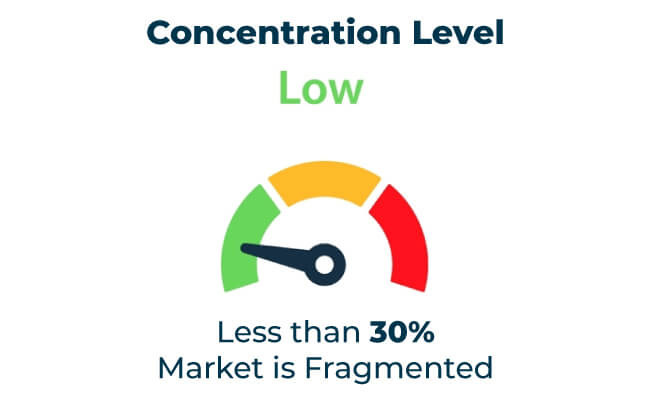
Market Structure and Concentration Across Global HDPE Bottle Suppliers
Export Opportunities for HDPE Bottles in Personal Care, Industrial, and Food Sectors
The emerging markets in Africa, Southeast Asia, and Latin America are highly promising for HDPE bottles. Urbanization, industrial growth, and a growing demand for sustainable packaging solutions are some of the drivers for HDPE bottles in these regions. Companies offering cost-effective and eco-friendly solutions are well-placed to benefit from these opportunities.
Market Context Across FMCG, Chemical, and Healthcare Applications
The HDPE bottle market demonstrates strong regional dynamics. North America leads with 35% market share, driven by advanced recycling infrastructures and high adoption across industries. Asia-Pacific follows with 30%, supported by rapid industrialization and rising consumer demand. Europe accounts for 25%, benefiting from stringent environmental regulations and strong sustainability initiatives. The remaining 10% is captured by emerging markets focusing on cost-effective and durable packaging solutions.
Recommendations for Technology Suppliers in HDPE Bottle Innovation
- Invest in Recycled Materials: Expand the use of rHDPE to meet sustainability goals.
- Partner with Key Industries: Collaborate with food, pharmaceutical, and personal care sectors for tailored solutions.
- Focus on Emerging Markets: Target high-growth regions with cost-effective and innovative offerings.
Future Roadmap for Product Diversification and Sustainability in HDPE Bottles
Innovation, sustainability, and scalability are the futures of the HDPE bottle market. Companies with priorities toward recycled materials, advanced manufacturing technologies, and greater presence in emerging economies will dominate the market. Using digital tools to enhance production optimization and lifecycle analysis will further reinforce their positions in the market.
Market KPIs Tracking Growth, Performance, and Recycling Integration
- Regional Revenue Growth: Track performance in high-growth regions like Asia-Pacific and Latin America.
- Sustainability Metrics: Monitor rHDPE adoption in production.
- Industry-Specific Demand: Monitor growth in food and beverage, personal care, and pharmaceuticals.
Who Shaped the Year – Key Contributors to HDPE Bottle Market Growth
- Berry Global: Innovation with sustainable HDPE solutions and advanced manufacturing technologies.
- Amcor: High-quality recyclable HDPE bottle production.
- Plastipak Holdings: rHDPE adoption and innovative bottle designs.
Key Players Operating in the Global HDPE Bottle Industry
Tier-Wise Vendor Classification
| Tier | Key Companies |
|---|---|
| Tier 1 | Berry Global, Amcor, Plastipak Holdings |
| Tier 2 | Alpla, Graham Packaging |
| Tier 3 | Silgan Holdings, RPC Group |
Key Vendor Initiatives Enhancing Design, Durability, and Recyclability
- Berry Global: Expands production capabilities with recycled HDPE solutions
- Amcor: Weight saving and recyclability bottle
- Plastipak Holdings: Innovations through enhanced blow molding technologies
Conclusion on Market Trends, Strategic Developments, and Forecast Outlook
The HDPE bottle market is expected to boom on sustainability, versatility, and technological advances. Companies that innovate with recycled materials, collaborate with key industries, and expand into emerging markets will shape the future of this dynamic market. Digital tools and advanced manufacturing processes will further enhance competitiveness and drive efficiency.
Appendix – Data Sources, Methodological Notes, and Assumptions
Key Definitions
- HDPE Bottle: A lightweight, durable, and recyclable bottle made from high-density polyethylene.
- rHDPE: The reprocessed HDPE material, which is being used in the new products.
- Blow Molding: A process of manufacturing hollow plastic bottles and containers.
Research Methodology
This report consolidates the primary interviews, secondary research, and data modeling validated by industry experts to provide actionable insights.
Market Definition – Scope, Resin Grade, and Industry Use Cases for HDPE Bottles
HDPE Bottle market will be the designing, manufacturing, and selling of high-density polyethylene bottles in food and beverages, personal care, pharmaceutical, and house product companies.
Segmentation of the HDPE Bottle Market by Application, End Use, Bottle Type, and Region
By Region:
- North America
- Asia-Pacific
- Europe
Frequently Asked Questions
What is Growth factors in the HDPE bottle market?
Rising demand for recyclable and durable packaging solutions drives growth.
What is Market size expected by 2035?
It is estimated to be over USD 80 billion and is expected to grow at a CAGR of 3.5%.
Who are the Market leaders?
Berry Global, Amcor, and Plastipak Holdings are at the forefront of innovative solutions.
What are the challenges in the market?
The major challenge is high material costs and the need for regulation compliance.
What emerging opportunities are identified?
Growth of emerging markets as well as progress in recycled material are significant.
Preview the report firsthand - request a free sample
Get SampleGet the brochure for pricing and purchase details.
Get PDFTable of Content
- Executive Summary
- Market Overview
- Growth Drivers
- Market Size & Forecast
- Vendor Performance
- Global Market Share & Industry Share
- Type of Player & Industry Share
- Market Concentration
- Technology Trends in the Market
- Sustainability Trends
- Consumer Trends
- Regulatory Insights
- Export Opportunities
- Challenges & Opportunities
- Challenges
- Opportunities
- Market Context
- Regional Analysis
- End-Use Industry Segments
- Recommendations for Technology Suppliers
- Future Roadmap
- Market KPIs
- Who Shaped the Year
- Key Players
- Key Vendor Initiatives
- Conclusion
- FAQs


