

Lactase Market Size and Share Analysis Forecast Outlook 2035
The global lactase market is a moderate monopoly with most of the global share taken by a handful of dominant multinationals. The top five players, Novozymes, DuPont/IFF, DSM-Firmenich, Chr. Hansen, and Advanced Enzymes, combined, hold 91% of the total market share.
These companies focus on the production of highly efficient lactase enzymes through proprietary fermentation technologies, research and development investments, and well-developed supply chain networks. Novozymes controls the largest market share, 26.8%, which is driven mainly by technological advancement in enzyme optimization and collaborative partnerships with several of the leading manufacturers of dairy products.
The following is DuPont/IFF at 24.2% owing to its diversified enzyme portfolio and customer base in dairy and plant-based beverage sectors. DSM-Firmenich owns 18.5% and mainly supplies high-performance lactase for infant formula and specialized nutrition products. The remaining 9% of the players have diverse regional or niche manufactures.
Market Share by Key Players in the Lactase Market
| Market Structure | Top 5 Players |
|---|---|
| Industry Share (%) | 91% |
| Key Companies | Novozymes, DuPont/IFF, DSM-Firmenich, Chr. Hansen, Advanced Enzymes |
| Market Structure | Smaller Regional Players |
|---|---|
| Industry Share (%) | 6% |
| Key Companies | Amano Enzyme, Enzyme Development Corporation |
| Market Structure | Small-Scale Players |
|---|---|
| Industry Share (%) | 3% |
| Key Companies | Antozyme Biotech, Creative Enzymes, Aumgene Biosciences |
The market is moderately fragmented, as both the global and regional players have considerably contributed to the overall dynamics of the market.
Segment Analysis
By Source
Fungi-derived lactase leads with 52% market share because it holds high stability under varying pH levels and temperature changes. These contribute to its commercial value; both DSM-Firmenich and Chr. Hansen use fungus strains in their offerings of lactase to the customers in the dairies and in the nutraceutical industries. Yeast-derived lactase (35%) exists in strong competition since it efficiently degrades the lactose under acid conditions, making it favorable for beverages that are fermented dairy and plant. Danone, a leading dairy company, prefers using yeast-based lactase for the lactose-free yogurt products. Bacterial lactase (13%) is a growing niche market whose application remains limited in specialized pharmaceutical as well as probiotic uses. Companies such as DuPont/IFF offer bacterial strains to their customers for the development of functional food formulation.
By Application
Dairy manufacturing products account for 68% of the market since lactase enzymes can be used in lactose-free milk, cheese, and yogurt. The brands Lactaid, Arla, and Fairlife are reliant on solutions provided by Novozymes and DSM-Firmenich on lactase. The production of infant formula accounts for 17% due to increased demand on the part of consumers for lactose-free as well as hypoallergenic formulas. Nestlé (using Gerber Good Start), Abbott (Similac), and Mead Johnson (Enfamil) have lactases that have been specially designed to generate infant-friendly products. According to 15%, beverage processing includes composing lactose-free sports drinks, protein shakes, or milks with alternative sources, such as plants. Some examples are Silk (Danone), Alpro (Danone), and Ripple Foods that use lactase's addition to improve their products in terms of digestibility.
Who Shaped the Year
The Global Lactase Market witnessed developments aplenty in 2024-from new product launches to strategic acquisitions to technological innovations.
- Novozymes Broadens Enzyme Portfolio: The next-generation lactase enzyme that is more stable was launched by the company allowing dairy processors to reduce time and costs.
- DuPont/IFF Creates Acid-Stabilised Lactase: The new yeast-derived lactase launched is meant for acidic beverages, which include lactose-free fruit-based protein shakes and further extends its applications beyond the dairy sector.
- DSM-Firmenich Accelerates Enzyme Effectiveness: Used this high-performing fungal lactase, which enhances speed of hydrolysis, for lowering the costs of production for lactose-free dairy brands.
- Acquisition of Biotech Start-Up by Chr. Hansen: Acquired a biotechnology firm specialized in bacteria lactase, promoting the stronghold in probiotic and nutraceutical applications.
- Advanced Enzymes Signs Tie-Up with Dairy Giants: Strategic agreements were entered into with the Amul of India and Yili Group of China to supply lactase for their increasing lactose-free lines.
- Amano Enzyme Innovates Lactose-Free Desserts: Launched a specialized lactase enzyme designed intended for frozen dairy alternatives, imparting improvement to texture and sweetness perception.
- Antozyme Biotech Concentrates on Clean-Label Solutions: Offering non-GMO lactase enzyme solutions to target organic and natural food formulated brands that appeal to clean-label consumers.
- Aumgene Biosciences Forays into the European Market: The easy entry into Western Europe had established partnerships with medium-sized dairy producers looking for economical lactase solutions.
Key Highlights from the Forecast
- Expansion of plant-based dairies: The increasing consumer shift towards plant-based milk alternatives will, therefore, push lactase suppliers to develop formulations for oat, almond, and pea-based beverages- a cash cow for companies like Danone (Alpro) and Ripple Foods.
- Acid-stable enzyme applications: The development of lactase suited for acidic conditions would augment its use in protein shakes based on fruit juice, where heavy investments are being placed by DuPont/IFF and Chr. Hansen and fermented dairy beverages.
- Regional market growth in Asia-Pacific: The lactose-free dairy industry is growing in China and India, and lactase solutions, which can be manufactured at lower costs, are in demand, with the likes of Advanced Enzymes and Aumgene Biosciences producing locally.
- Strategic Acquisitions and Partnerships: Mergers and acquisitions in the enzyme industry would continue, as leading firms buy smaller biotech companies to round out their enzyme offerings, exemplified by Chr. Hansen's recent entry into probiotic lactase solutions.
- HoReCa States are More Earning Options for Lactose Free Dairy: Hotels, restaurants, and cafes (HoReCa) have already established an incorporation of lactose-free dairy, opening new opportunities for customized lactase solutions tailored for bulk and food service packaging.
- Growth in Sports Nutrition: Lactase is expanding its role in sports nutrition as lactose-free protein supplements and performance beverages find more traction with Silk and Arla launching lactose-free protein shakes. For those with lactose intolerance, options will inevitably multiply.
Tier-Wise Company Classification 2025
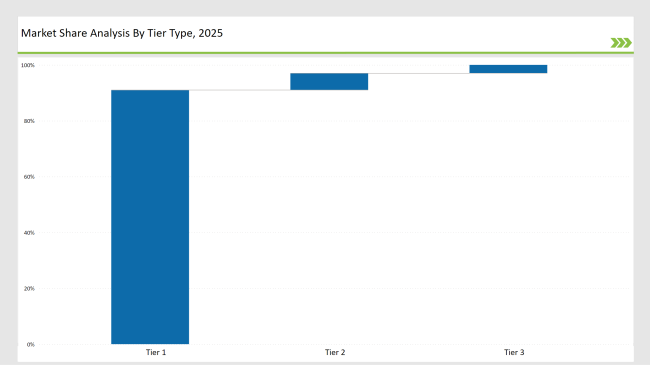
| By Tier Type | Tier 1 |
|---|---|
| Market Share (%) | 91% |
| Example of Key Players | Novozymes, DuPont/IFF, DSM-Firmenich, Chr. Hansen, Advanced Enzymes |
| By Tier Type | Tier 2 |
|---|---|
| Market Share (%) | 6% |
| Example of Key Players | Amano Enzyme, Enzyme Development Corporation |
| By Tier Type | Tier 3 |
|---|---|
| Market Share (%) | 3% |
| Example of Key Players | Antozyme Biotech, Creative Enzymes, Aumgene Biosciences |
Key Company Initiatives
| Brand | Key Focus |
|---|---|
| Novozymes | Developed high-speed lactase enzyme to reduce dairy processing time by 20%. |
| DuPont/IFF | Introduced acid-stable lactase for fermented dairy and functional beverages. |
| DSM-Firmenich | Strengthened enzyme production for lactose-free infant formula applications. |
| Chr. Hansen | Acquired a probiotic enzyme company to expand in gut health and dairy formulations. |
| Advanced Enzymes | Expanded partnerships with Amul and Yili Group for cost-effective lactase supply. |
| Amano Enzyme | Launched lactase for lactose-free frozen desserts, enhancing texture and sweetness. |
| Enzyme Development Corporation | Increased production capacity by 20% to meet rising demand. |
| Antozyme Biotech | Introduced non-GMO lactase enzymes, targeting clean-label brands. |
| Creative Enzymes | Developed customized lactase solutions for small dairy manufacturers. |
| Aumgene Biosciences | Expanded into Western Europe, securing new supply agreements with mid-sized dairy firms. |
Recommendations for Brands
- Diversifying Applications Beyond Dairy: This mainly means extending lactase applications into sports nutrition, plant-based beverages, and functional food. Lac-free proteins went for demand outside the dairy in companies such as Silk and Arla, further aiding in revenue streams.
- Develop Acid Stable Enzymes for Functional Beverages: There has been an increasing demand for fruit protein shakes or fermentations and dairy alternatives; this might require acid-stable lactase enzymes. Putting more faith and investment into research and development of solutions for high-performance lactase can help these companies get in on this sort of high-growth market, as seen in recent enzyme launches with DuPont/IFF.
- Strengthen Market Presence in Asia-Pacific: The demand for lactose-free dairy is growing in both China and India. This is a good opportunity for the manufacturer. Localized partnerships can facilitate moving forward with dairy names like Yili Group (China) and Amul (India), thus driving lactose-economics in those markets.
- Target Infant Formula and Medical Nutrition: Hypoallergenic, lactose-free infant formulas and medical nutritional products are growing in demand. A market segment may be developed by producing specialized lactase enzymes for low-lactose medical diets, potentially putting manufacturers as leaders in this growing segment.
Future Roadmap
The sports and performance nutrition area are seeing a rush in lactose-free protein drinks. Players invested in high-digestibility lactase enzymes will be in good stead, with growing milkshakes free from lactose being introduced by registered brands such as Silk and Arla. The expanding nature of lactose-free dairy in China, India, and Brazil poses prospects for lactase enzyme manufacturers who will partner with local dairy companies to benefit from this high-growth trend, just as did Advanced Enzymes in Asia.
The demand for low-lactose yogurt, probiotic drinks, and fortified dairy is increasing. Companies that develop tailored lactase enzyme solutions for specific pH conditions and dairy formulations will lead to functional dairy innovation. Large-scale dairy manufacturers are looking for cost-effective and high-efficiency lactase solutions. Enzyme companies that guarantee bulk enzyme supply contracts to dairy processors like Danone and Nestlé will be fostering long-term strategic ties.
The eco-conscious aspect will determine the future of the lactase market in respect to green enzymes manufacturing and carbon neutrality. The brands that will invest in biodegradable packaging to launch these enzymes and develop renewable fermentation processes will be securing their leadership in the markets concerned with sustainability.
Top Segments Studied in the Lactase Market Outlook
By Source:
- Fungi-Derived Lactase
- Yeast-Derived Lactase
- Bacterial Lactase
By Application:
- Dairy Manufacturing
- Infant Formula
- Beverage Processing
Frequently Asked Questions
What is the market concentration in the global lactase market?
The global lactase market is moderately consolidated, with the top five players controlling 91% of the industry. Smaller regional and niche players make up the remaining 9%, serving specialized applications.
Which segment dominates the global lactase market?
The powdered lactase segment holds the largest share at 75%, mainly due to its higher enzyme stability, ease of storage, and suitability for commercial dairy processing.
How is the demand for lactase enzymes evolving in plant-based dairy alternatives?
Lactase enzymes are increasingly used in plant-based dairy beverages, particularly in oats, almonds, and pea-based formulations, to improve sweetness and digestibility.
Which companies are leading in lactase enzyme production?
The top five companies—Novozymes, DuPont/IFF, DSM-Firmenich, Chr. Hansen, and Advanced Enzymes—control most of the market due to their technological advancements and strong supply chains.
What role does lactase play in the infant formula industry?
Lactase is used in hypoallergenic and lactose-free infant formulas, allowing major brands like Nestlé (Gerber), Abbott (Similac), and Mead Johnson (Enfamil) to produce digestible milk-based formulas.
Why are acid-stable lactase enzymes gaining importance?
Acid-stable lactase enzymes are essential for fermented dairy and fruit-based protein drinks, where standard lactase enzymes break down inefficiently in low-pH environments.
Preview the report firsthand - request a free sample
Get SampleGet the brochure for pricing and purchase details.
Get PDFTable of Content
- Executive Summary
- Market Overview
- Key Growth Drivers
- Company Performance
- Market Concentration
- Segmented Analysis
- Who Shaped the Year
- Key Highlights from the Forecast
- Tier-Wise Company Classification
- Key Company Initiatives
- Recommendations for Brands
- Future Roadmap


