

- Market Size (2026)
- USD 1179.2 Mn
- Forecast (2036)
- USD 3229.6 Mn
- CAGR (2026 to 2036)
- 10.6%
How big is Pediatric Neurosurgery XR Solutions Market in 2026?
USD 1,179.2 million in 2026 and USD 3,229.6 million by 2036 at a 10.6% CAGR.
Demand for pediatric neurosurgery XR solutions is projected to expand at 10.6% CAGR from 2026 to 2036, supported by multidisciplinary planning and navigation requirements. Industry valuation is forecast to rise from USD 1179.2 million in 2026 to USD 3229.6 million by 2036, reflecting broader use across planning and communication workflows. Pediatric hospitals justify spending through interactive three-dimensional imaging that changes a named planning decision or reduces interpretation differences across multidisciplinary reviews. Stanford Medicine Children's Health describes Surgical Theater as a three-dimensional virtual-reality platform used for planning and family education in pediatric neurosurgery. Hospitals therefore compare surgical navigation systems with planning software and headset hardware through separate clinical acceptance tests. Commercial conversion depends on validated image fidelity plus specialist training and service support that remains available throughout complex pediatric cases. A purchase becomes defensible once the implementation plan assigns registration checks and data ownership plus fallback procedures to named hospital teams.
United States procurement follows FDA clearance and hospital capital review, while Japanese adoption often enters through certified software and institution-led evaluation. British hospitals emphasize multidisciplinary case discussion inside publicly commissioned services whereas German institutions also test interoperability with national digital records. South Korean tertiary centers combine pediatric surgery reimbursement changes with domestic development across augmented-reality surgical tools. The FDA medical-device list current in June 2026 includes recent authorizations for Medivis and Brainlab across radiology or neurology panels. The same list also includes Surgical Theater and Avatar Medical among systems used for visualization or surgical guidance. Purchasing teams must separate cranial navigation platforms from visualization tools because regulatory clearance does not establish pediatric workflow suitability. Market entry therefore requires local service coverage plus training and cybersecurity support throughout a long hospital procurement cycle.
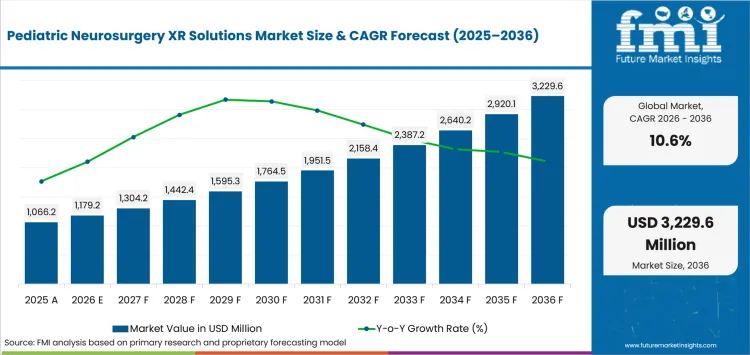
Key Takeaways of the Pediatric Neurosurgery XR Solutions Market
- Complex pediatric anatomy and multi-team planning requirements drive XR adoption where conventional imaging leaves spatial relationships open to differing clinical interpretations; hardware is estimated to hold 40.1% of component demand in 2026, reflecting the weight of stereoscopic viewing equipment, computing resources, and device management costs that software subscriptions cannot replace.
- Preoperative planning is projected to account for 33.4% of application demand in 2026, supported by repeated use across case preparation, multidisciplinary review, and family communication, with Avatar Medical receiving CE marking in March 2025 for software enabling three-dimensional and virtual-reality surgical planning.
- Virtual reality is forecast to represent 33.0% of technology demand in 2026, valued for immersive anatomical review outside the operating room, with ImmersiveTouch offering an FDA-cleared planning platform for cranial and craniofacial procedures using patient-specific models.
- Pediatric hospitals are anticipated to capture 30.4% of end-user demand in 2026, supported by concentrated specialist teams and formal technology governance that can assign clinical and technical ownership across planning and operative environments.
- South Korea leads country-level growth at a 13.0% CAGR through 2036, driven by expanding pediatric surgery reimbursement, while the UK follows at 12.2% CAGR as specialist networks evaluate collaborative planning within public care pathways.
- Brainlab and Surgical Theater lead through workflow-oriented clinical visualization, while ImmersiveTouch, Avatar Medical, Medivis, Holoeyes, and apoQlar compete across planning communication, navigation, and certified surgical training applications.
Analyst Perspective
"The pediatric neurosurgery XR solutions market is increasingly evaluated on clinical utility rather than immersive capability alone. Hospitals are assessing registration accuracy, workflow efficiency, and technical reliability across complex pediatric procedures. Suppliers that provide structured training, dependable software support, and clear responsibility for system integration will be better positioned to expand adoption across specialized neurosurgical centers."
- Anurag Sharma, Principal Analyst at Future Market Insights
Source: FMI's proprietary forecasting model and primary research
How is the Pediatric Neurosurgery XR Solutions Market segmented?
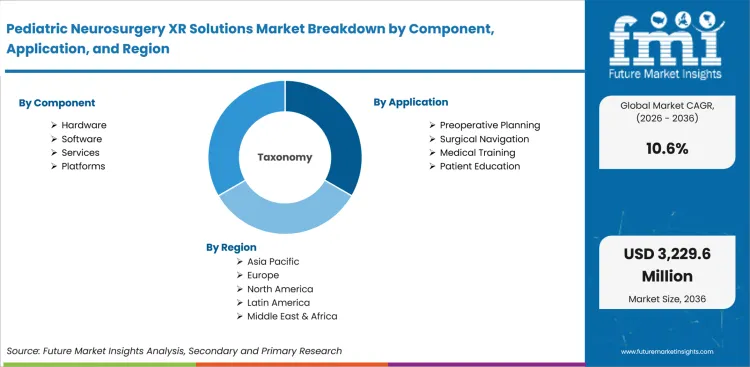
The pediatric neurosurgery XR solutions market is segmented by component, application, technology, end user, and region.
Component analysis separates hardware from software and services plus platforms that deliver a complete XR workflow. Application categories distinguish preoperative planning from surgical navigation and professional training plus patient education across the care pathway. Technology separates virtual reality from augmented reality and mixed reality plus broader extended reality systems. End-user analysis distinguishes pediatric hospitals from neurosurgery centers and academic medical centers plus specialty clinics. Regional coverage compares adoption through national regulation and care delivery plus specialist service availability across different hospital systems.
How does hardware influence pediatric XR deployment within the component category?
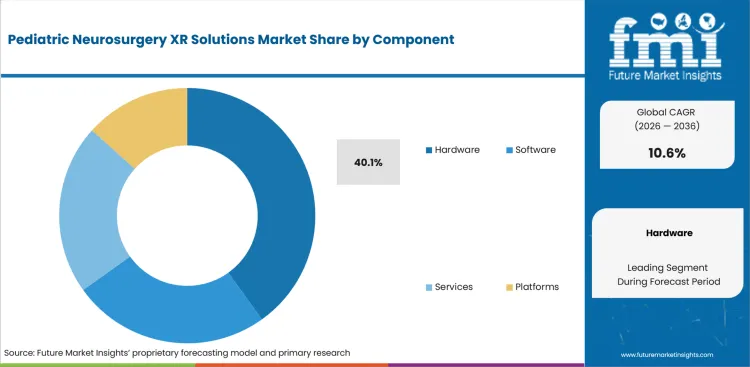
Hardware determines whether patient-specific anatomy can be viewed with sufficient depth and stable interaction during clinical review. Headsets and computing equipment also require cleaning protocols plus device management and protected access to hospital imaging systems. Brainlab states that its Mixed Reality Viewer works with Brainlab Elements and Magic Leap 2 for patient-specific neurosurgical planning. Hospitals comparing augmented reality hardware must therefore test ergonomics and image stability alongside compatibility with local security controls.
- By component, hardware is estimated to hold 40.1% share in 2026, attributable to stereoscopic viewing equipment and reliable image-interaction requirements. The position also reflects replacement exposure and accessories plus computing resources that software subscriptions cannot eliminate.
- Biomedical engineering teams favor modular hardware that supports controlled replacement without forcing a complete platform migration. Pediatric programs gain operational value through headsets that fit different clinicians and remain serviceable between scheduled procedures. Device standardization also reduces setup variation across operating rooms and planning spaces during routine pediatric case preparation.
What supports demand for preoperative planning within the application category?
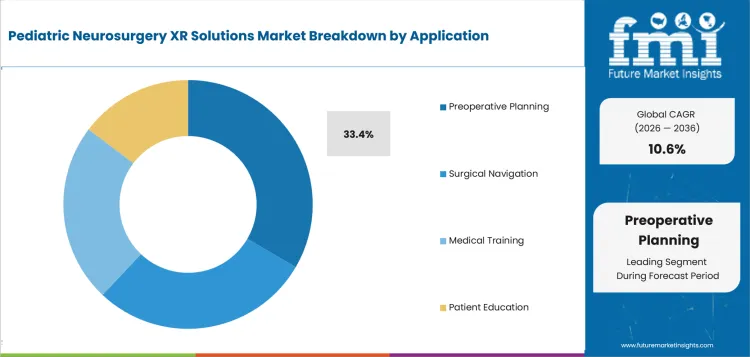
Preoperative planning helps pediatric teams examine narrow corridors and changing anatomy before entering a high-consequence surgical environment. Patient-specific models can support rehearsal and multidisciplinary discussion while leaving final clinical judgment with the operating surgeon. Planning systems also preserve a shared visual reference for neuroradiology and anesthesia plus family communication. Commercial comparison with medical imaging software depends on preparation time and segmentation quality plus access across approved devices.
- Preoperative planning is projected to account for 33.4% share of application in 2026, driven by repeated use across case preparation and team review. Avatar Medical announced CE marking in March 2025 for software supporting three-dimensional review and virtual-reality surgical planning.
- Pediatric neurosurgeons select planning tools that reveal lesion relationships without requiring a headset throughout every clinical conversation. Adoption strengthens when models can be revisited during consent and teaching plus final operative preparation. Reusable access also supports repeated case review without rebuilding the complete patient model for each multidisciplinary meeting cycle.
How do pediatric neurosurgery teams evaluate virtual reality within the technology category?
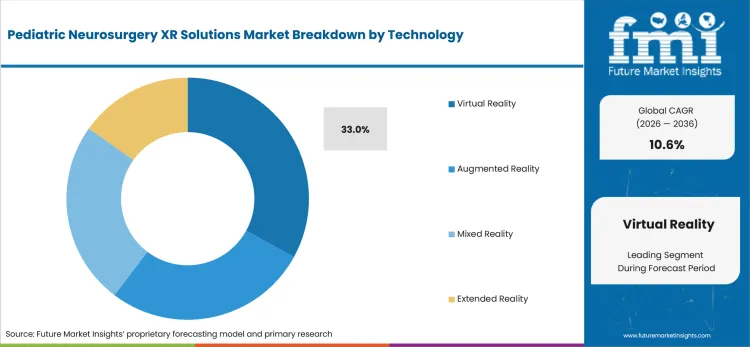
Virtual reality creates an immersive planning space that removes surrounding visual distractions and supports close inspection of complex anatomy. The technology fits scheduled review sessions more naturally than continuous intraoperative guidance because clinicians enter a separate visual environment. Clinical teams can compare immersive depth against headset tolerance and the time required to prepare each model. Hospital evaluations should compare extended reality systems through model preparation and clinician comfort plus repeatability across different headsets.
- Virtual reality is forecast to represent 33.0% share of technology in 2026, supported by its established role in immersive planning and simulation. The category can deliver detailed spatial review without requiring patient registration inside the operating room. Planning-focused virtual reality deployments reduce implementation burden by remaining outside registered intraoperative guidance workflows during initial hospital evaluations.
- Academic neurosurgery programs use virtual reality for case rehearsal and resident teaching across uncommon pediatric anatomy. ImmersiveTouch presents ImmersiveView as an FDA-cleared planning platform for cranial and craniofacial procedures using patient-specific anatomy. Routine use depends on a simple launch process and reusable content plus clear limits between education and clinical decision support.
What makes pediatric hospitals central to the end user category?
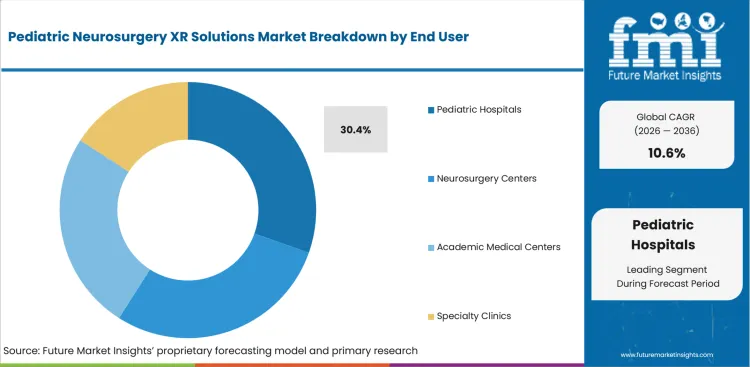
Pediatric hospitals concentrate neurosurgeons and neuroradiologists plus specialized anesthesia teams around complex cases that benefit from shared spatial review. Their technology committees can also assign clinical and technical ownership across planning and operating environments. King's College Hospital reported in December 2025 that its pediatric neuro-oncology network was assessed across 168 points and commended for imaging training. Institutions comparing mixed reality surgery must connect technology evaluation with established quality programs rather than isolated demonstrations.
- Pediatric hospitals are anticipated to capture 30.4% share in 2026, owing to concentrated specialist teams and formal technology governance. Their procedure mix can support repeated planning use across tumors and vascular conditions plus craniofacial cases. Concentrated imaging expertise can also reduce patient-model preparation delays across tightly scheduled pediatric surgical planning sessions.
- Hospital digital committees adopt XR platforms through staged reviews that include clinicians and biomedical engineers plus information-security specialists. A scalable program requires training coverage and documented device support alongside measurable use across more than one surgical service. Hospital governance must assign responsibility for technical exceptions and replacement equipment throughout routine clinical service operations.
What are the drivers, restraints, and opportunities in the Pediatric Neurosurgery XR Solutions Market?
Complex pediatric anatomy supports demand for spatial planning; accuracy and cybersecurity requirements restrain routine deployment; collaborative platforms create a practical service opportunity.
- Driver: Multidisciplinary teams need one patient-specific spatial reference that reduces interpretation differences before complex pediatric procedures.
- Restraint: Hospitals cannot expand XR use without validated registration and cybersecurity controls plus dependable technical support.
- Opportunity: Device-flexible collaboration can extend specialist case review and training across hospitals without transferring operative responsibility.
Demand increases through pediatric cases that require several specialists to interpret anatomy and agree on a safe surgical corridor. XR planning can place tumor margins and vessels plus cranial structures inside one interactive view before the operative schedule begins. An August 2025 Journal of Neurosurgery: Pediatrics study documented augmented-reality guidance during pediatric craniofacial procedures performed through a multidisciplinary clinical workflow. Hospitals assessing holographic medical imaging therefore need evidence that spatial review changes a named decision rather than providing another display.
Routine deployment faces a prominent constraint through image-registration risk and connected-device exposure inside protected hospital networks. A technically impressive model has limited clinical value if the headset drifts or patient data cannot enter the approved cybersecurity process. Hospitals comparing mixed reality navigation must also maintain a fallback workflow that preserves care during software or hardware interruptions. FDA guidance issued in February 2026 recommends cybersecurity design and documentation for devices carrying cyber risk during premarket review.
Remote specialist review creates a credible opportunity for platforms that share patient-specific anatomy across controlled clinical teams. Avatar Medical announced in June 2026 that UHealth had begun deploying glasses-free three-dimensional visualization within neurological surgery consultations. The use case supports medical holography for education and collaborative planning without presenting remote discussion as proof of commercial adoption. Technology providers must package secure access and headset training plus local clinical ownership to convert collaboration into repeatable service.
Which country CAGRs are profiled in the Pediatric Neurosurgery XR Solutions Market?
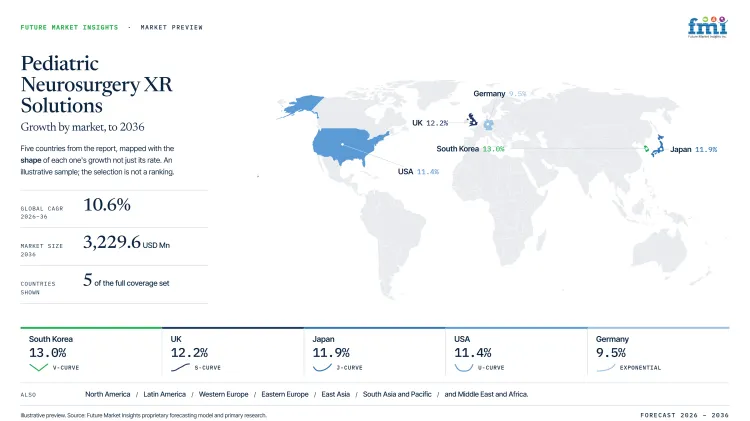
| Country | CAGR |
|---|---|
| USA | 11.4% |
| UK | 12.2% |
| Germany | 9.5% |
| Japan | 11.9% |
| South Korea | 13.0% |
How do country-level CAGRs compare in the Pediatric Neurosurgery XR Solutions Market?
The profiled CAGRs span 3.6 percentage points and show several distinct adoption routes rather than one uniform national pattern. The UK and Japan form a close pair separated by 0.4 percentage point through public specialist pathways and domestic software evaluation. The USA sits 0.4 percentage point below Japan and follows a clearance-led procurement route with strong hospital capital review. South Korea stands 0.8 percentage point above the UK through reimbursement support and concentrated tertiary infrastructure. Germany remains 2.0 percentage points below the USA because interoperability and payment requirements create a more measured commercial route.
- South Korea outlook is reinforced by broader reimbursement and concentrated technology development across tertiary centers.
- The UK is supported by nationally commissioned specialist services and focused collaborative planning evaluation.
- Expansion in Japan is linked to certified domestic visualization software and structured institutional purchasing.
- The USA demand outlook is shaped by regulated clearance and hospital investment processes requiring service responsibility.
- Germany is predicted to grow, influenced by digital integration requirements across hospitals and contracted technology providers.
Similar rates can produce different entry conditions because service distance and training capacity affect whether approved systems operate reliably. Financing and cybersecurity review also change project timing even across countries with comparable specialist demand.The full report provides country-level CAGR analysis across North America, Latin America, Europe, East Asia, South Asia, Oceania and the Middle East and Africa.
Country-wise Analysis
- United States children's hospitals combine specialist neurosurgery programs with formal capital review and device cybersecurity governance. The United States pediatric neurosurgery XR solutions market is projected to grow at 11.4% CAGR through 2036, supported by clearance-led purchasing. Avatar Medical announced FDA clearance in April 2026 for software processing CT and MR data across screens and virtual-reality environments. Regulated availability provides a direct enabler for planning adoption while pediatric validation remains a material local friction. Hospital contracts need training and service terms plus a documented fallback process for procedures that cannot tolerate interrupted visualization.
- United Kingdom pediatric neuroscience services operate through nationally commissioned pathways that concentrate complex cases within specialist hospitals. Demand for pediatric neurosurgery XR solutions in the UK is forecast to rise at 12.2% CAGR during the forecast period, shaped by public clinical evaluation. Imperial College Healthcare NHS Trust reported a remote mixed-reality neurosurgical case discussion with a United States team in February 2025. Concentrated expertise enables collaborative planning while public procurement evidence requirements can slow wider purchasing across regional contracts. Providers need secure deployment and structured training plus service support that fits NHS information-governance responsibilities.
- German hospitals purchase digital surgical tools inside an environment that increasingly requires interoperability with national health infrastructure. Germany's pediatric neurosurgery XR solutions market is estimated to post 9.5% CAGR from 2026 to 2036, influenced by integration discipline. The Federal Ministry of Health stated in December 2025 that nonconforming ePA software systems could no longer support billable services from January 2026. The digital infrastructure creates an adoption enabler while integration testing and reimbursement alignment remain material local frictions. Manufacturers need German-language support and documented compatibility plus regional maintenance coverage for long hospital evaluation cycles.
- Japanese hospitals can evaluate domestic certified visualization software through institutional purchasing routes that emphasize documented clinical use. Adoption of pediatric neurosurgery XR solutions in Japan is anticipated to expand at 11.9% CAGR over the assessment period, enabled by local product certification. Holoeyes reported in April 2026 that Tokyo recognized Holoeyes MD under its trial procurement program for innovative products. The program provides a purchasing enabler while reimbursement scope and specialist training remain practical local frictions. Technology providers need dependable DICOM preparation and domestic service support plus clear device requirements across participating hospitals.
- South Korean tertiary hospitals combine dense digital infrastructure with specialist pediatric surgery programs and active domestic XR development. The South Korea pediatric neurosurgery XR solutions market is predicted to advance at 13.0% CAGR by 2036, reinforced by improved pediatric surgery reimbursement. The Ministry of Health and Welfare added 319 complex surgery items for children under six in February 2025 and created a 100% add-on across 487 procedures for older children. Expanded payment provides a direct enabler while tertiary concentration and limited specialist training remain material frictions outside major centers. Commercial entry requires local clinical education and maintenance coverage plus evidence that XR improves one reimbursed surgical workflow.
Who are the notable companies in the Pediatric Neurosurgery XR Solutions Market?
Brainlab; Surgical Theater; Medivis; ImmersiveTouch; Holoeyes; apoQlar; Avatar Medical; and Novarad are the notable companies shaping this market.
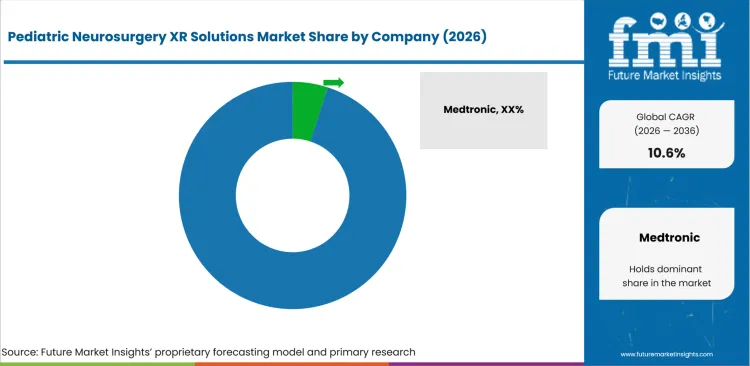
The competitive structure separates patient-specific planning platforms from registered navigation systems and communication tools with different clinical responsibilities. Brainlab and Medivis connect spatial imaging with surgical guidance while Surgical Theater emphasizes planning and immersive case review. ImmersiveTouch and Avatar Medical support shared three-dimensional interpretation across clinical consultations and structured patient communication sessions. Holoeyes and apoQlar provide certified software for planning and education across several device environments used by multidisciplinary teams. Novarad links patient-specific planning with augmented-reality navigation and documented pediatric craniofacial use across selected clinical sites. Hospitals comparing minimally invasive neurosurgery devices need evidence for the named procedure plus local training and service coverage rather than corporate scale.
- Brainlab and Surgical Theater offer patient-specific three-dimensional planning that supports multidisciplinary review and preparation for complex neurosurgical procedures.
- Medivis and Novarad provide augmented-reality navigation functions that require verified registration workflows and clear operating responsibility inside the hospital.
- ImmersiveTouch and Avatar Medical plus Holoeyes and apoQlar emphasize planning communication and education across different certified visualization environments.
Competitive Benchmarking: Pediatric Neurosurgery XR Solutions Market
| Company | Pediatric Planning Fit | XR Navigation | Training and Communication | Geographic Reach |
|---|---|---|---|---|
| Brainlab | High | High | Medium | Global |
| Surgical Theater | High | High | High | North America and selected global hospitals |
| Medivis | High | High | Medium | United States and selected markets |
| ImmersiveTouch | High | Medium | High | North America |
| Holoeyes | High | Medium | High | Japan and selected Asian markets |
| apoQlar | High | Medium | High | Europe and selected international markets |
| Avatar Medical | High | Medium | High | United States and Europe |
| Novarad | Medium | High | Medium | North America and selected markets |
Key Developments in the Pediatric Neurosurgery XR Solutions Market
- In December 2025, Medivis received FDA 510(k) clearance for its Cranial Navigation platform and described the system as augmented-reality guidance for cranial neurosurgery. The clearance expands the commercial comparison from planning visualization toward registered intraoperative guidance and gives hospitals another portable option for procedures requiring direct spatial alignment. Procurement reviews can now compare registration controls and support requirements against established cranial navigation systems.
- In September 2025, Brainlab announced FDA clearance and a United States launch for Spine Mixed Reality Navigation. The system combines optical navigation with mixed-reality visualization inside the surgeon's field of view and strengthens Brainlab's current navigation evidence across minimally invasive procedures. Hospital review must separate the cleared spine use from pediatric cranial suitability during procedure-specific governance and training.
- In January 2026, Holoeyes released Holoeyes MD version 3.2 with a Library function and expanded Navi view support across Meta Quest and Apple Vision Pro. The update broadens device choice and enables approved users to review consented reference models alongside patient-specific content for planning or education. Broader headset support can reduce replacement exposure across institutions using different approved computing environments and procurement standards.
- In May 2025, Novarad documented a VisAR-guided spinal procedure in Mallorca that used combined silhouette and X-ray registration without a navigation tower inside the operating room. The deployment illustrates a lower-footprint route for augmented-reality guidance while leaving pediatric cranial use dependent on procedure-specific evidence and regulatory scope. Hospitals can test portable workflow economics without treating one adult spine deployment as pediatric adoption proof.
Key Players in the Pediatric Neurosurgery XR Solutions Market
XR Planning and Navigation Providers
- Brainlab
- Surgical Theater
- Medivis
- Novarad
Immersive Planning and Education Platforms
- ImmersiveTouch
- Avatar Medical
Medical Visualization Platform Providers
- Holoeyes
- apoQlar
Pediatric Neurosurgery XR Solutions Market - Report Scope
| Coverage field | Report scope |
|---|---|
| Market breakdown | Component, application, technology, end user, and region. |
| Quantitative Units | Revenue in USD Million, CAGR in %. |
| Market Definition | Hardware, software, services, and platforms used to visualize patient-specific anatomy for pediatric neurosurgical planning, navigation, training, or patient education. |
| Regions Covered | North America, Latin America, Western Europe, Eastern Europe, East Asia, South Asia and Pacific, and Middle East and Africa. |
| Countries Covered | USA, UK, Germany, Japan, and South Korea. |
| Key Companies Profiled | Brainlab, Surgical Theater, Medivis, ImmersiveTouch, Holoeyes, apoQlar, Avatar Medical, and Novarad. |
| Forecast Period | 2026 to 2036. |
| Approach | Hybrid bottom-up and top-down market sizing supported by primary interviews and official desk research. |
Pediatric Neurosurgery XR Solutions Market - Research Methodology
| Method | Approach |
|---|---|
| Primary Research | FMI analysts gathered input from manufacturers, service providers, technology developers, distributors, end users, sourcing teams, and subject-matter experts. Interviews examined purchasing decisions, product or service evaluation, adoption barriers, approval requirements, pricing considerations, and expectations for technical or commercial support. Respondents were also asked what evidence is required before a trial, pilot, or initial order develops into regular purchasing. |
| Desk Research | Desk research covered government statistics, regulatory publications, trade data, industry associations, technical literature, standards, company filings, product information, and official corporate announcements. Sources were reviewed for relevance, publication date, geographic coverage, and consistency with the defined market scope. Claims relating to performance, applications, approvals, capacity, investment, and commercial activity were retained only when supported by credible public evidence. |
| Market Sizing and Forecasting | The market model combined the baseline value with historical performance, segment structure, pricing and volume indicators, adoption levels, company participation, and country-level demand conditions. Forecast assumptions considered economic activity, investment trends, regulatory developments, technology adoption, purchasing cycles, supply availability, and barriers to wider market use. Segment and regional estimates were reconciled before the final market total was calculated. |
| Data Validation | Estimates were checked against multiple independent indicators, including public data, company activity, trade patterns, industry developments, and findings from primary interviews. Validation also tested whether products, services, applications, and company revenues fell within the defined market boundaries. Adjacent categories, unsupported claims, overlapping revenues, and activities without direct market relevance were excluded to reduce double counting and maintain consistency across segments and countries. |
Pediatric Neurosurgery XR Solutions Market by Segments
Pediatric Neurosurgery XR Solutions Market segmented by Component:
- Hardware
- Software
- Services
- Platforms
Pediatric Neurosurgery XR Solutions Market segmented by Application:
- Preoperative Planning
- Surgical Navigation
- Medical Training
- Patient Education
Pediatric Neurosurgery XR Solutions Market segmented by Technology:
- Virtual Reality
- Augmented Reality
- Mixed Reality
- Extended Reality
Pediatric Neurosurgery XR Solutions Market segmented by End User:
- Pediatric Hospitals
- Neurosurgery Centers
- Academic Medical Centers
- Specialty Clinics
Pediatric Neurosurgery XR Solutions Market by Region:
- North America
- United States
- Canada
- Latin America
- Brazil
- Mexico
- Argentina
- Chile
- Western Europe
- Germany
- France
- United Kingdom
- Italy
- Spain
- Benelux
- Nordics
- Eastern Europe
- Poland
- Czech Republic
- Romania
- Hungary
- East Asia
- China
- Japan
- South Korea
- South Asia and Pacific
- India
- ASEAN
- Australia and New Zealand
- Middle East and Africa
- GCC Countries
- South Africa
- Türkiye
- Israel
Research Sources and Bibliography
- Stanford Medicine Children's Health. (n.d.). Surgical Theater Technology.
- Ruggiero, F., Cercenelli, L., Tarsitano, A., Emiliani, N., Stradiotti, S., Babini, M., Gardenghi, B., Lefosse, M., Marcelli, E., & Zucchelli, M. (2025, August 29). Augmented reality in pediatric craniofacial surgery: clinical experience. Journal of Neurosurgery: Pediatrics, 36(5), 657-663.
- USA Food and Drug Administration. (2026, June 16). Augmented Reality and Virtual Reality in Medical Devices.
- Brainlab. (n.d.). Mixed Reality Viewer for Neurosurgery: View brain anatomy at every angle.
- Surgical Theater. (n.d.). PlanXR™.
- ImmersiveTouch. (n.d.). Precision and speed redefined: revolutionize virtual surgical planning with ImmersiveView 5™.
- King's College Hospital NHS Foundation Trust. (2025, December 4). King’s paediatric neurosurgical oncology service receives Tessa Jowell Centre of Excellence accreditation.
- USA Food and Drug Administration. (2026, February 3). Cybersecurity in Medical Devices: Quality Management System Considerations and Content of Premarket Submissions.
- Imperial College Healthcare NHS Trust. (2025, February 28). UK and US neurosurgeons in mixed reality first.
- Avatar Medical. (2025, March 11). Avatar Medical Vision Receives CE Marking.
- Avatar Medical. (2026, June 25). University of Miami Health System to Deploy Avatar Medical and Barco’s Eonis Vision for Patient Consultations.
- Avatar Medical. (2026, April 28). Avatar Medical Receives FDA 510(k) Clearance for Avatar Medical Vision, the First Software Cleared for Use with Glasses-Free 3D Medical Displays.
- Federal Ministry of Health. (2025, December 19). Changes in the areas of health and long-term care in 2026.
- Holoeyes. (2026, April 22). 「Holoeyes MD」[Holoeyes MD medical image-processing software was certified under the Tokyo trial procurement program for fiscal 2026].
- Ministry of Health and Welfare. (2025, February 27). [Higher reimbursement for complex surgery and continued expansion of rare-disease coverage].
- SKIA. (n.d.). SKIA Neuro.
- Medivis. (2025, December 16). Medivis First to Receive FDA Clearance for Augmented Reality Navigation in Neurosurgery.
- Brainlab. (2025, September 18). Brainlab Announces FDA 510(k) Clearance and US Launch of Spine Mixed Reality Navigation.
- Holoeyes. (2026, January 27). Holoeyes MD[Holoeyes MD adds a new Library function].
- Novarad. (2025, May 6). Guided Spinal Navigation Landmark Surgery Opens the Door to Cost-Effective 3D Augmented Reality.
- Novarad. (n.d.). Increase accuracy with Novarad’s Augmented Reality Surgical Navigation Solutions.
This bibliography is provided for reader reference and is not exhaustive. The full report contains the complete reference list and detailed citations.
This Report Answers
- How large is the pediatric neurosurgery XR solutions market in 2026 and 2036?
- Which clinical pressures support investment in patient-specific pediatric neurosurgery XR workflows?
- Why is hardware estimated to hold 40.1% share of the component category in 2026?
- How does preoperative planning support multidisciplinary decision-making before complex pediatric procedures?
- Why is virtual reality positioned as the primary technology focus during 2026?
- How do country growth rates differ across the USA, UK, Germany, Japan, and South Korea?
- Which companies provide planning, navigation, communication, or education platforms for pediatric neurosurgery?
- What limits adoption across image registration, cybersecurity, service coverage, and clinical training?
- How should pediatric hospitals evaluate return on investment across repeated clinical workflows?
Frequently Asked Questions
How big is the Pediatric Neurosurgery XR Solutions Market in 2026?
The pediatric neurosurgery XR solutions market is valued at USD 1179.2 million in 2026 and is forecast to reach USD 3229.6 million by 2036.
What is the CAGR of the Pediatric Neurosurgery XR Solutions Market from 2026 to 2036?
The pediatric neurosurgery XR solutions market is projected to grow at a CAGR of 10.6% between 2026 and 2036, supported by multidisciplinary teams needing one patient-specific spatial reference that reduces interpretation differences before complex pediatric procedures.
Which component leads the Pediatric Neurosurgery XR Solutions Market?
Hardware accounts for 40.1% of the pediatric neurosurgery XR solutions market by component in 2026, driven by stereoscopic viewing equipment and reliable image-interaction requirements including headsets, computing equipment, and protected clinical accessories.
Which country is growing fastest in the Pediatric Neurosurgery XR Solutions Market?
South Korea is the fastest-growing country in the pediatric neurosurgery XR solutions market, expanding at a 13.0% CAGR through 2036, ahead of the market average of 10.6%, reinforced by broader pediatric surgery reimbursement and concentrated tertiary hospital infrastructure supporting domestic XR development.
Who are the leading companies in the Pediatric Neurosurgery XR Solutions Market?
Leading companies in the pediatric neurosurgery XR solutions market include Brainlab, Surgical Theater, Medivis, ImmersiveTouch, Holoeyes, apoQlar, Avatar Medical, and Novarad, competing across XR planning and navigation platforms, immersive planning and education systems, and certified medical visualization tools.
Preview the report firsthand - request a free sample
Get SampleGet the brochure for pricing and purchase details.
Get PDFTable of Content
- Key Takeaways
- Market Size and CAGR
- Top Growth Driver
- Fastest Growing Segment
- Leading Region
- Key Companies
- Emerging Opportunities
- Executive Summary
- Global Market Outlook
- Demand-side Trends
- Supply-side Trends
- Technology Roadmap Analysis
- Analysis and Recommendations
- Analyst Perspective (What is happening? Why now? What should investors know?)
- Key Questions Answered
- How large is the market?
- What is the CAGR?
- What are key trends?
- Which region dominates?
- Who are the leaders?
- Market Overview
- Market Coverage / Taxonomy
- Market Definition / Scope / Limitations
- Research Methodology
- Chapter Orientation
- Analytical Lens and Working Hypotheses
- Market Structure, Signals, and Trend Drivers
- Benchmarking and Cross-market Comparability
- Market Sizing, Forecasting, and Opportunity Mapping
- Research Design and Evidence Framework
- Desk Research Programme (Secondary Evidence)
- Expert Input and Fieldwork (Primary Evidence)
- Tooling, Models, and Reference Databases
- Data Engineering and Model Build
- Quality Assurance and Audit Trail
- Market Background
- Market Dynamics (Drivers, Restraints, Opportunity, Trends)
- Scenario Forecast (Optimistic, Likely, Conservative)
- Impact Analysis
- AI Impact
- Sustainability Impact
- Regulatory Impact
- Technology Impact
- Consumer / Buyer Analysis
- Purchase Drivers
- Adoption Barriers
- Buyer Journey
- Opportunity Map Analysis
- Product Life Cycle Analysis
- Supply Chain Analysis
- Investment Feasibility Matrix
- Value Chain Analysis
- PESTLE and Porter's Analysis
- Regulatory Landscape
- Regional Parent Market Outlook
- Production and Consumption Statistics
- Import and Export Statistics
- Global Market Analysis and Forecast, 2021 to 2036
- Historical Market Size Value (USD Million) Analysis, 2021 to 2025
- Current and Future Market Size Value (USD Million) Projections, 2026 to 2036
- Y-o-Y Growth Trend Analysis
- Absolute $ Opportunity Analysis
- Global Market Pricing Analysis, 2021 to 2036
- Global Market Analysis and Forecast, By Component, 2021 to 2036
- Introduction / Key Findings
- Historical Market Size Value (USD Million) Analysis By Component, 2021 to 2025
- Current and Future Market Size Value (USD Million) Analysis and Forecast By Component, 2026 to 2036
- Hardware
- Software
- Services
- Platforms
- Hardware
- Y-o-Y Growth Trend Analysis By Component, 2021 to 2025
- Absolute $ Opportunity Analysis By Component, 2026 to 2036
- Global Market Analysis and Forecast, By Application, 2021 to 2036
- Introduction / Key Findings
- Historical Market Size Value (USD Million) Analysis By Application, 2021 to 2025
- Current and Future Market Size Value (USD Million) Analysis and Forecast By Application, 2026 to 2036
- Preoperative Planning
- Surgical Navigation
- Medical Training
- Patient Education
- Preoperative Planning
- Y-o-Y Growth Trend Analysis By Application, 2021 to 2025
- Absolute $ Opportunity Analysis By Application, 2026 to 2036
- Global Market Analysis and Forecast, By Technology, 2021 to 2036
- Introduction / Key Findings
- Historical Market Size Value (USD Million) Analysis By Technology, 2021 to 2025
- Current and Future Market Size Value (USD Million) Analysis and Forecast By Technology, 2026 to 2036
- Virtual Reality
- Augmented Reality
- Mixed Reality
- Extended Reality
- Virtual Reality
- Y-o-Y Growth Trend Analysis By Technology, 2021 to 2025
- Absolute $ Opportunity Analysis By Technology, 2026 to 2036
- Global Market Analysis and Forecast, By End User, 2021 to 2036
- Introduction / Key Findings
- Historical Market Size Value (USD Million) Analysis By End User, 2021 to 2025
- Current and Future Market Size Value (USD Million) Analysis and Forecast By End User, 2026 to 2036
- Pediatric Hospitals
- Neurosurgery Centers
- Academic Medical Centers
- Specialty Clinics
- Pediatric Hospitals
- Y-o-Y Growth Trend Analysis By End User, 2021 to 2025
- Absolute $ Opportunity Analysis By End User, 2026 to 2036
- Global Market Analysis and Forecast, By Region, 2021 to 2036
- Introduction
- Historical Market Size Value (USD Million) Analysis By Region, 2021 to 2025
- Current Market Size Value (USD Million) Analysis and Forecast By Region, 2026 to 2036
- North America
- Latin America
- Western Europe
- Eastern Europe
- East Asia
- South Asia and Pacific
- Middle East & Africa
- Market Attractiveness Analysis By Region
- North America Market Analysis and Forecast, By Country, 2021 to 2036
- Historical Market Size Value (USD Million) Trend Analysis By Market Taxonomy, 2021 to 2025
- Market Size Value (USD Million) Forecast By Market Taxonomy, 2026 to 2036
- By Country
- USA
- Canada
- By Component
- By Application
- By Technology
- By End User
- By Country
- Market Attractiveness Analysis
- By Country
- By Component
- By Application
- By Technology
- By End User
- Key Takeaways
- Latin America Market Analysis and Forecast, By Country
- Historical Market Size Value (USD Million) Trend Analysis By Market Taxonomy, 2021 to 2025
- Market Size Value (USD Million) Forecast By Market Taxonomy, 2026 to 2036
- By Country
- Brazil
- Mexico
- Chile
- Rest of Latin America
- By Component
- By Application
- By Technology
- By End User
- By Country
- Market Attractiveness Analysis
- By Country
- By Component
- By Application
- By Technology
- By End User
- Key Takeaways
- Western Europe Market Analysis and Forecast, By Country
- Historical Market Size Value (USD Million) Trend Analysis By Market Taxonomy, 2021 to 2025
- Market Size Value (USD Million) Forecast By Market Taxonomy, 2026 to 2036
- By Country
- Germany
- UK
- Italy
- Spain
- France
- Nordic
- BENELUX
- Rest of Western Europe
- By Component
- By Application
- By Technology
- By End User
- By Country
- Market Attractiveness Analysis
- By Country
- By Component
- By Application
- By Technology
- By End User
- Key Takeaways
- Eastern Europe Market Analysis and Forecast, By Country
- Historical Market Size Value (USD Million) Trend Analysis By Market Taxonomy, 2021 to 2025
- Market Size Value (USD Million) Forecast By Market Taxonomy, 2026 to 2036
- By Country
- Russia
- Poland
- Hungary
- Balkan & Baltic
- Rest of Eastern Europe
- By Component
- By Application
- By Technology
- By End User
- By Country
- Market Attractiveness Analysis
- By Country
- By Component
- By Application
- By Technology
- By End User
- Key Takeaways
- East Asia Market Analysis and Forecast, By Country
- Historical Market Size Value (USD Million) Trend Analysis By Market Taxonomy, 2021 to 2025
- Market Size Value (USD Million) Forecast By Market Taxonomy, 2026 to 2036
- By Country
- China
- Japan
- South Korea
- By Component
- By Application
- By Technology
- By End User
- By Country
- Market Attractiveness Analysis
- By Country
- By Component
- By Application
- By Technology
- By End User
- Key Takeaways
- South Asia and Pacific Market Analysis and Forecast, By Country
- Historical Market Size Value (USD Million) Trend Analysis By Market Taxonomy, 2021 to 2025
- Market Size Value (USD Million) Forecast By Market Taxonomy, 2026 to 2036
- By Country
- India
- ASEAN
- Australia & New Zealand
- Rest of South Asia and Pacific
- By Component
- By Application
- By Technology
- By End User
- By Country
- Market Attractiveness Analysis
- By Country
- By Component
- By Application
- By Technology
- By End User
- Key Takeaways
- Middle East & Africa Market Analysis and Forecast, By Country
- Historical Market Size Value (USD Million) Trend Analysis By Market Taxonomy, 2021 to 2025
- Market Size Value (USD Million) Forecast By Market Taxonomy, 2026 to 2036
- By Country
- Kingdom of Saudi Arabia
- Other GCC Countries
- Türkiye
- South Africa
- Other African Union
- Rest of Middle East & Africa
- By Component
- By Application
- By Technology
- By End User
- By Country
- Market Attractiveness Analysis
- By Country
- By Component
- By Application
- By Technology
- By End User
- Key Takeaways
- Key Countries Market Analysis
- USA
- Pricing Analysis
- Market Share Analysis, 2025
- By Component
- By Application
- By Technology
- By End User
- Canada
- Pricing Analysis
- Market Share Analysis, 2025
- By Component
- By Application
- By Technology
- By End User
- Mexico
- Pricing Analysis
- Market Share Analysis, 2025
- By Component
- By Application
- By Technology
- By End User
- Brazil
- Pricing Analysis
- Market Share Analysis, 2025
- By Component
- By Application
- By Technology
- By End User
- Chile
- Pricing Analysis
- Market Share Analysis, 2025
- By Component
- By Application
- By Technology
- By End User
- Germany
- Pricing Analysis
- Market Share Analysis, 2025
- By Component
- By Application
- By Technology
- By End User
- UK
- Pricing Analysis
- Market Share Analysis, 2025
- By Component
- By Application
- By Technology
- By End User
- Italy
- Pricing Analysis
- Market Share Analysis, 2025
- By Component
- By Application
- By Technology
- By End User
- Spain
- Pricing Analysis
- Market Share Analysis, 2025
- By Component
- By Application
- By Technology
- By End User
- France
- Pricing Analysis
- Market Share Analysis, 2025
- By Component
- By Application
- By Technology
- By End User
- India
- Pricing Analysis
- Market Share Analysis, 2025
- By Component
- By Application
- By Technology
- By End User
- ASEAN
- Pricing Analysis
- Market Share Analysis, 2025
- By Component
- By Application
- By Technology
- By End User
- Australia & New Zealand
- Pricing Analysis
- Market Share Analysis, 2025
- By Component
- By Application
- By Technology
- By End User
- China
- Pricing Analysis
- Market Share Analysis, 2025
- By Component
- By Application
- By Technology
- By End User
- Japan
- Pricing Analysis
- Market Share Analysis, 2025
- By Component
- By Application
- By Technology
- By End User
- South Korea
- Pricing Analysis
- Market Share Analysis, 2025
- By Component
- By Application
- By Technology
- By End User
- Russia
- Pricing Analysis
- Market Share Analysis, 2025
- By Component
- By Application
- By Technology
- By End User
- Poland
- Pricing Analysis
- Market Share Analysis, 2025
- By Component
- By Application
- By Technology
- By End User
- Hungary
- Pricing Analysis
- Market Share Analysis, 2025
- By Component
- By Application
- By Technology
- By End User
- Kingdom of Saudi Arabia
- Pricing Analysis
- Market Share Analysis, 2025
- By Component
- By Application
- By Technology
- By End User
- Türkiye
- Pricing Analysis
- Market Share Analysis, 2025
- By Component
- By Application
- By Technology
- By End User
- South Africa
- Pricing Analysis
- Market Share Analysis, 2025
- By Component
- By Application
- By Technology
- By End User
- USA
- Market Structure Analysis
- Competition Dashboard
- Competition Benchmarking
- Market Share Analysis of Top Players
- By Regional
- By Component
- By Application
- By Technology
- By End User
- Emerging Startups
- Innovation Benchmarking
- Competition Analysis
- Competition Deep Dive
- Medtronic
- Overview
- Product Portfolio
- Profitability by Market Segments
- Sales Footprint
- Strategy Overview
- Marketing Strategy
- Product Strategy
- Channel Strategy
- Brainlab
- Surgical Theater
- Augmedics
- Medivis
- ImmersiveTouch
- Philips
- Siemens Healthineers
- Stryker
- EchoPixel
- Medtronic
- Case Studies
- Success Stories
- Recent Developments
- Competition Deep Dive
- Assumptions & Acronyms Used


