

- Industry Size (2026)
- USD 69.7 Bn
- Forecast (2036)
- USD 142.2 Bn
- CAGR (2026 to 2036)
- 7.4%
Seamless Apparel Market Forecast and Outlook 2026 to 2036
Seamless apparel industry valuation is set to reach USD 69.7 billion in 2026, driven by escalating consumer preference for comfort-driven clothing and growing adoption of athleisure fashion trends. Revenue from the sales of seamless garments is projected to expand at a robust CAGR of 7.4% through 2036, pushing total sector worth beyond USD 142.2 billion by the conclusion of this assessment period. Rising health consciousness and expanding active lifestyle adoption act as primary catalysts for this financial trajectory.
Manufacturers are channeling substantial investment into advanced knitting technologies, aiming to eliminate seam visibility through innovative circular knitting methodologies without compromising fabric durability. Product developers are shifting focus from basic seamless construction to engineered compression zones, redefining fit dynamics across performance-driven segments. Such technological advances encourage apparel companies to introduce comprehensive seamless product ranges utilizing multi-directional stretch capabilities.
Increasing focus on body-positive fashion continues to fuel demand for seamless undergarments, creating sustained opportunities for intimate apparel companies. Government health initiatives targeting active lifestyle promotion are facilitating wider adoption of performance wear in wellness programs. Companies are witnessing robust growth potential in emerging markets, where urbanization and fitness culture adoption align with increased disposable income among health-conscious populations.
Quick Stats for Seamless Apparel Market
- Seamless Apparel Industry Value (2026): USD 69.7 Billion
- Seamless Apparel Industry Forecast Value (2036): USD 142.2 Billion
- Seamless Apparel Industry Forecast CAGR: 7.4%
- Seamless Apparel Industry Leading Product: Sports Bra (34.6%)
- Seamless Apparel Industry Key Growth Regions: China, India, Germany
- Seamless Apparel Industry Key Players: Nike/VF Corp., Puma, Skechers, H&M Sport, Columbia Sportswear
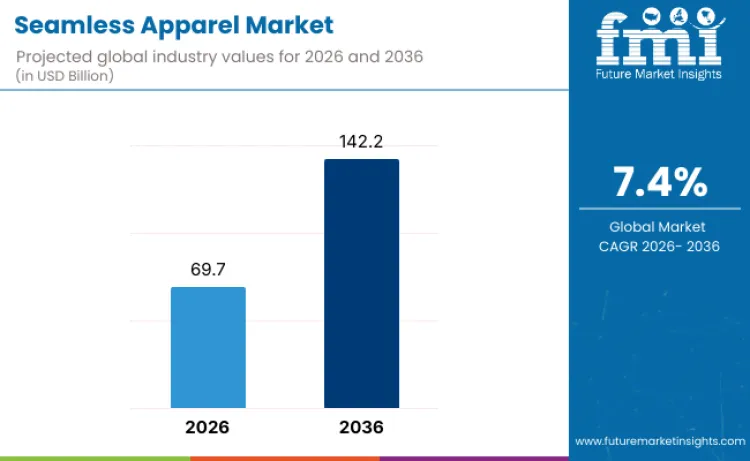
Researchers are combining fabric construction insights with compression technology to improve performance profiles. Development of polyester-based seamless systems is gaining momentum, addressing durability challenges in high-frequency washing. Focus is shifting toward comprehensive fit optimization approaches that combine multiple fiber technologies. Advancements in circular knitting enable manufacturers to create zone-specific compression precisely, enhancing athletic performance while reducing material waste costs. These innovations are pivotal in shaping a future where seamless apparel achieves superior comfort experiences.
Seamless Apparel Market Key Takeaways
| Metric | Value |
|---|---|
| Industry Size (2026) | USD 69.7 Billion |
| Industry Value (2036) | USD 142.2 Billion |
| CAGR (2026-2036) | 7.4% |
Source: Future Market Insights’ proprietary forecasting model and primary research
What Drivers Are Accelerating Sports Bra Adoption?
Shift toward active lifestyle participation is serving as a significant catalyst for broader acceptance of performance-engineered undergarments. Recent breakthroughs in seamless sports bra construction have complemented athletic protocols by maintaining support levels during high-impact activities effectively. This performance approach appeals to athletes seeking reliable chest support without traditional seam discomfort. Research success of moisture-wicking integration in seamless designs has expanded usage possibilities among endurance sports categories.
Education programs highlighting the biomechanical advantages of seamless construction are driving fitness instructor recommendations. Athletic wear manufacturers are capitalizing on these trends by introducing specialized bra variants in performance-tested formulations for competitive market segments. Integrating graduated compression zones into seamless production systems is becoming standard practice, ensuring consistent support delivery without compromising movement flexibility.
How Is the Seamless Apparel Market Segmented Across Key Categories?
Global landscape is intricately segmented to address diverse requirements of the textile industry, categorizing sector by product type, material composition, application focus, and distribution channel. Structural division allows stakeholders to identify specific performance targets, such as rising demand for sports bra formats in athletic applications or preference for legging constructions in lifestyle segments.
By analyzing these segments, producers can tailor manufacturing capabilities to meet distinct needs of professional athletes versus casual fitness consumers. Segmentation also highlights shift from traditional seamed approaches to engineered seamless constructions. As industry matures, granular segmentation becomes essential for understanding performance requirements and material optimization, ensuring product development aligns with evolving athletic preferences.
Why Do Sports Bra Products Maintain Dominance?
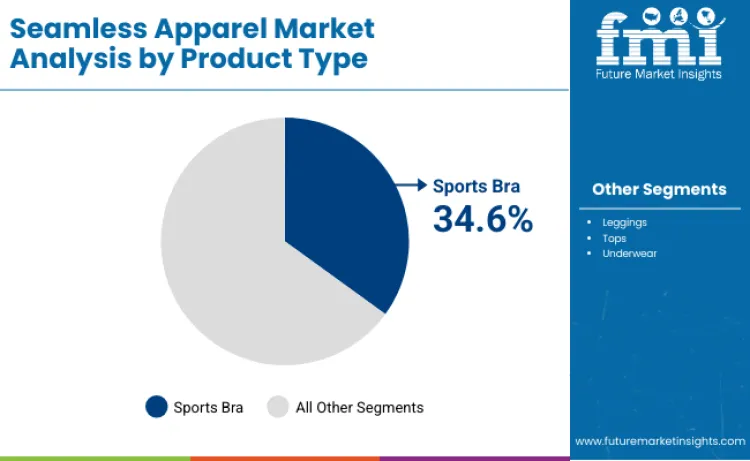
Sports bra accounts for 34.6% of product share in 2026, driven by extensive fitness participation across female demographics and superior comfort characteristics. Leadership position is underpinned by established manufacturing processes yielding consistent support specifications year-round. Segment benefits from continuous construction improvements, such as seamless knitting technology eliminating chafing concerns. Research focused on sports bra compression mapping is renewing interest among athletic apparel companies.
Critical role in fitness routine formulations further solidifies standing, as these garments deliver targeted support at minimal weight levels. As athletic guidelines prioritize comfort-first approaches, demand for performance-grade sports bra supplies is expected to remain robust.
Why Are Lifestyle Applications the Preferred Usage?
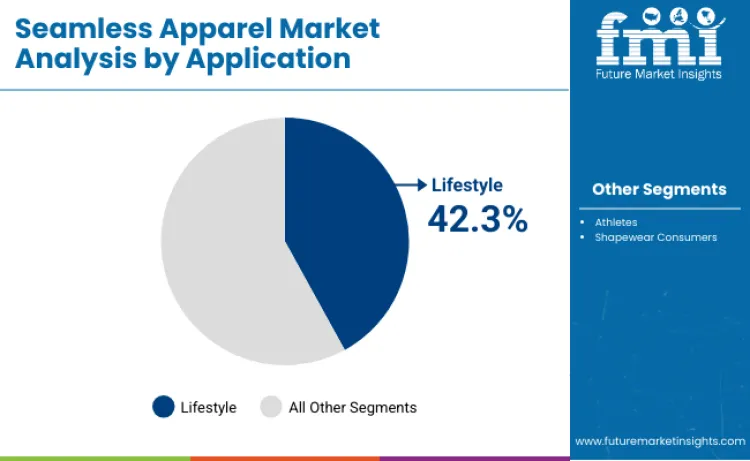
Lifestyle command 42.3% share of sector in 2026, reflecting consumer preference for versatile wearing solutions with comfort clarity. Dominance is linked to superior adaptability compared to specialized alternatives in everyday wearing environments. Consumers rely on seamless technology to ensure smooth appearance underneath various clothing matrices. These applications are essential for delivering consistent comfort profiles to mainstream fashion channels, driving priority status among ready-to-wear brands.
Relentless pursuit of versatility innovation ensures products designed for multi-occasion wear remain primary choice. High volume requirements necessitate dynamic manufacturing capacity, bolstering sustained revenue streams for textile suppliers.
Why Does Polyester Lead Material Categories?
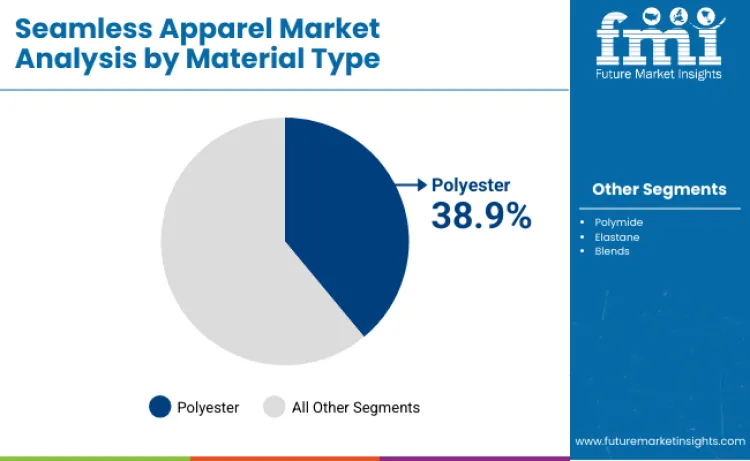
Polyester captures 38.9% of material share in 2026, owing to widespread textile manufacturer acceptance requiring reliable performance characteristics. Dominance stems from technical guidelines recommending polyester integration across multiple garment categories for durability optimization. Textile technologists prefer these materials for their predictable behavior and established processing profiles. Usage in moisture-management development drives continuous volume growth among activewear companies. Compatibility with various knitting conditions allows for application flexibility across different manufacturing systems. Manufacturers focusing on polyester-based formulations for these high-performance applications secure significant partnerships with garment production operations.
Market Dynamics
How Will Fitness Culture Impact Consumer Demand?
Fitness culture evolution is set to reshape purchasing patterns by demanding performance-validated seamless alternatives. As wellness trends evolve, consumers access garments with documented comfort profiles for extended wearing integration. Shift toward informed garment selection creates demand for transparent labeling addressing multiple comfort concerns simultaneously. Manufacturers failing to position products as performance-beneficial risk losing visibility among fitness-focused consumers. Availability of biomechanical research options for movement enhancement drives complementary product adoption patterns. Rise of personalized fitness usage stimulates innovation, with companies differentiating offerings through athletic performance validation.
How Will Manufacturing Technology Integration Transform Production?
Advanced knitting technology is revolutionizing seamless construction by enabling precision fiber placement systems. Integration with automated manufacturing allows real-time tension monitoring throughout production cycles. Quality control protocols are driving standardized fiber usage, with textile engineers implementing specific compositions through digital platforms. Processing equipment channels are expanding rapidly, offering enhanced seamless capabilities compared to traditional cut-and-sew systems. Manufacturing applications featuring construction consistency monitoring and fit tracking create sustained efficiency improvements with apparel production programs.
How Will Fashion Evolution Affect Market Growth?
Changing fashion frameworks are creating both opportunities and challenges for seamless apparel producers. Stricter comfort standards demand higher manufacturing investments while improving consumer confidence in garment performance. Style approvals from fashion authorities enable companies to market specific benefits, differentiating products in competitive markets. International harmonization of seamless construction facilitates global market expansion for established techniques. Performance evidence requirements are increasing, forcing manufacturers to invest in wear testing validating comfort claims.
How Will the Seamless Apparel Industry Evolve in Major Nations?
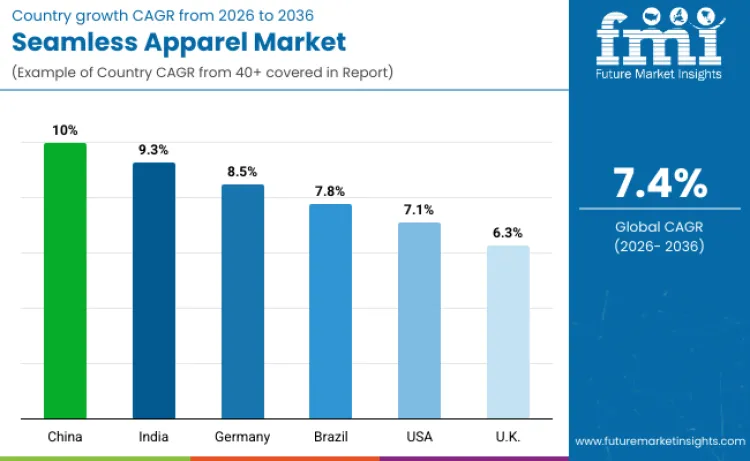
Global landscape for seamless apparel is characterized by diverse manufacturing environments, influenced by textile production systems and consumer acceptance patterns. Established markets prioritize technologically-advanced construction and performance-grade manufacturing, whereas emerging economies focus on accessible pricing and basic seamless functionality. Asia-Pacific is emerging as rapid growth hub due to increasing athleisure consumption and expanding fitness industries. Conversely, North American sectors pivot towards specialized performance wear and technical construction formulations. Government initiatives in developing nations supporting textile modernization ensure sustained demand for advanced manufacturing across all demographic segments.
| Country | CAGR (2026 to 2036) |
|---|---|
| China | 10.0% |
| India | 9.3% |
| Germany | 8.5% |
| Brazil | 7.8% |
| USA | 7.1% |
| U.K. | 6.3% |
Source: Future Market Insights – analysis driven by proprietary forecasting models and primary research
Why is the Seamless Apparel Industry in China Growing?
Sales of seamless apparel in China are set to grow at 10.0% CAGR through 2036. Expansion is underpinned by rapid urbanization and increasing athleisure manufacturing among industrial sectors. Growth is fueled by government textile modernization emphasizing advanced knitting technology and performance enhancement management. Rising disposable incomes drive premium seamless adoption per capita among quality-conscious apparel manufacturers.
Presence of major international brands establishing local production capabilities streamlines manufacturing supply chains and reduces export dependencies. Emphasis on traditional textile innovation with performance-conscious construction continues to be primary driver, maintaining China's position as critical growth engine for seamless applications.
Why is the Seamless Apparel Sector in India Expanding?
Demand for seamless apparel in India is projected to rise at 9.3% CAGR during assessment period. Initiatives emphasizing fitness promotion and wellness lifestyle foster favorable environment for performance wear adoption. Increasing investment in textile manufacturing infrastructure creates production channels for seamless-constructed products. Rising middle-class population requiring affordable fitness options prompts domestic companies to develop cost-effective seamless solutions. Shift is supported by government policies encouraging textile technology programs, accelerating uptake of seamless apparel across urban centers and fueling sector expansion through improved product availability.
Why is the Seamless Apparel Industry in Germany Showing Potential?
Seamless apparel industry in Germany is poised to expand at 8.5% CAGR. Growth is largely attributed to increasing awareness of performance wear benefits among active populations. Government focus on health initiatives addressing sedentary lifestyle encourages consumers to adopt athletic clothing strategies. Increasing partnerships between local textile companies and international fiber suppliers ensure availability of high-quality seamless materials. Economic stability combined with growing fitness emphasis attracts significant investment in performance apparel products. Strong manufacturing framework ensuring construction quality and performance further drives consumer confidence in seamless apparel consumption.
Why is the Seamless Apparel Industry in Brazil Growing?
Sales of seamless apparel in Brazil are set to grow at 7.8% CAGR. Expansion is underpinned by growing fitness culture recognizing consumer demand for comfortable athletic wear. Growth is fueled by increasing wellness awareness driving consumers toward performance-based clothing measures. Widespread adoption of active lifestyle and fitness participation creates steady demand for specialized seamless garments. High standards of textile manufacturing and quality oversight prompt brands to invest in proven seamless formulations. Emphasis on comfort-based fashion and athletic validation continues to be primary driver, maintaining Brazil position as innovation adopter in seamless applications.
Why is the Seamless Apparel Sector in USA Expanding?
Revenue from seamless apparel in USA is set to grow at 7.1% CAGR. Expansion is underpinned by mature apparel industry recognition of performance wear benefits. Growth is fueled by increasing health consciousness driving awareness of comfort-related clothing advantages among consumer populations. Moderate adoption of technical athleticwear and performance garments drives revenue generation in fitness-focused market segments. Presence of established apparel companies ensures high-quality construction standards and manufacturing compliance. Emphasis on evidence-based performance guidelines and comfort validation continues to be primary driver, maintaining USA position as quality-focused market for seamless apparel.
What is the Competitive Outlook for the Seamless Apparel Market?
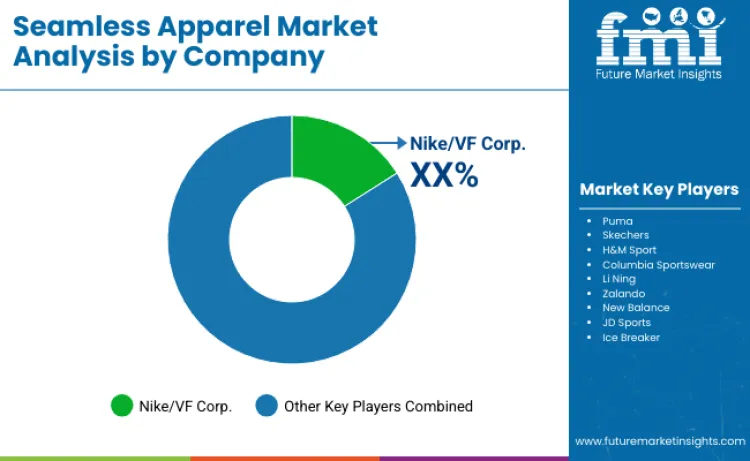
Market participants are increasingly prioritizing construction innovation as a key strategy to differentiate their seamless solutions and strengthen brand positioning. Major companies such as Nike/VF Corp. and Puma are expanding investments in knitting technology and forming collaborations with textile engineering institutes to optimize seamless formulations and improve wearing performance. A notable trend is the development of hybrid construction platforms, designed to balance comfort expectations with functional requirements such as compression support, moisture management, and cost efficiency.
Companies are also building strategic partnerships with leading retail and fitness chains to ensure wider integration of these seamless garments across mainstream athletic categories. Innovation remains a major competitive battleground, with providers exploring advanced knitting techniques to improve durability, stretch recovery, and washing performance. Consolidation activity is moderate, led by specialty apparel firms acquiring manufacturing assets to improve quality control and strengthen supply chain resilience. Nike/VF Corp. continues to hold a strong share, supported by deep technical capabilities and a well-established global distribution network.
Key Players in Seamless Apparel Market
- Nike/VF Corp.
- Puma
- Skechers
- H&M Sport
- Columbia Sportswear
- Li Ning
- Zalando
- New Balance
- JD Sports
- Ice Breaker
Scope of Report
| Items | Values |
|---|---|
| Quantitative Units | USD Billion |
| Product Segments | Sports Bra; Leggings; Tops; Underwear |
| Material Categories | Polyester; Polymide; Elastane; Blends |
| Application Categories | Lifestyle; Athletes; Shapewear Consumers |
| Distribution Channel Types | Direct Sales; Retail Stores; Online Channels; Specialty Athletics; Department Stores |
| Regions Covered | North America, Europe, East Asia, South Asia, Latin America, Middle East & Africa |
| Key Countries | China, India, Germany, Brazil, USA, U.K. |
| Key Companies Profiled | Nike/VF Corp.; Puma; Skechers; H&M Sport; Columbia Sportswear; Li Ning; Zalando; New Balance; JD Sports; Ice Breaker |
| Additional Attributes | Dollar sales measured for seamless apparel used in athletic performance and lifestyle applications, specified by construction type (sports bra, leggings, tops, underwear), material composition (polyester, polymide, elastane), application focus (lifestyle, athletic, shapewear), end-user preference (consumers vs. professionals), distribution model (retail vs. online), and compliance alignment with evolving comfort standards and performance regulations. |
Seamless Apparel Market by Segments
Product Type
- Sports Bra
- Leggings
- Tops
- Underwear
Material
- Polyester
- Polymide
- Elastane
- Blends
Application
- Lifestyle
- Athletes
- Shapewear Consumers
Distribution Channel
- Direct Sales
- Retail Stores
- Online Channels
- Specialty Athletics
- Department Stores
Bibliography
- American Apparel & Footwear Association. (2024). Seamless garment construction technologies: Manufacturing standards, quality frameworks, and performance labeling practices.
- International Textile Manufacturers Federation. (2024). Global seamless apparel production trends, knitting technology adoption, and fiber innovation pathways.
- World Federation of the Sporting Goods Industry. (2024). Athleisure and performancewear market practices: Product performance expectations, retail channel dynamics, and consumer adoption drivers.
Frequently Asked Questions
How big is the seamless apparel market in 2026?
The seamless apparel industry is valued at USD 69.7 billion in 2026.
What will be the size of the seamless apparel market in 2036?
The seamless apparel market is projected to reach USD 142.2 billion by 2036.
How much will the seamless apparel market grow between 2026 and 2036?
The market is expected to expand at a CAGR of 7.4% during the 2026 to 2036 forecast period.
Which product segment leads the seamless apparel market?
Sports Bra leads the product category, accounting for 34.6% share in 2026.
Which application segment holds the dominant share in the seamless apparel market?
Lifestyle applications dominate the market landscape with a 42.3% share in 2026.
Preview the report firsthand - request a free sample
Get SampleGet the brochure for pricing and purchase details.
Get PDFTable of Content
- Executive Summary
- Global Market Outlook
- Demand-side Trends
- Supply-side Trends
- Technology Roadmap Analysis
- Analysis and Recommendations
- Market Overview
- Market Coverage / Taxonomy
- Market Definition / Scope / Limitations
- Market Background
- Market Dynamics
- Drivers
- Restraints
- Opportunity
- Trends
- Scenario Forecast
- Demand in Optimistic Scenario
- Demand in Likely Scenario
- Demand in Conservative Scenario
- Opportunity Map Analysis
- Product Life Cycle Analysis
- Supply Chain Analysis
- Investment Feasibility Matrix
- Value Chain Analysis
- PESTLE and Porter’s Analysis
- Regulatory Landscape
- Regional Parent Market Outlook
- Production and Consumption Statistics
- Import and Export Statistics
- Market Dynamics
- Global Market Analysis 2020 to 2025 and Forecast, 2026 to 2036
- Historical Market Size Value (USD Million) Analysis, 2020 to 2025
- Current and Future Market Size Value (USD Million) Projections, 2026 to 2036
- Y-o-Y Growth Trend Analysis
- Absolute $ Opportunity Analysis
- Global Market Pricing Analysis 2020 to 2025 and Forecast 2026 to 2036
- Global Market Analysis 2020 to 2025 and Forecast 2026 to 2036, By Product Type
- Introduction / Key Findings
- Historical Market Size Value (USD Million) Analysis By Product Type, 2020 to 2025
- Current and Future Market Size Value (USD Million) Analysis and Forecast By Product Type, 2026 to 2036
- Sports Bra
- Leggings
- Tops
- Underwear
- Y-o-Y Growth Trend Analysis By Product Type, 2020 to 2025
- Absolute $ Opportunity Analysis By Product Type, 2026 to 2036
- Global Market Analysis 2020 to 2025 and Forecast 2026 to 2036, By Material
- Introduction / Key Findings
- Historical Market Size Value (USD Million) Analysis By Material, 2020 to 2025
- Current and Future Market Size Value (USD Million) Analysis and Forecast By Material, 2026 to 2036
- Polyester
- Polymide
- Elastane
- Blends
- Y-o-Y Growth Trend Analysis By Material, 2020 to 2025
- Absolute $ Opportunity Analysis By Material, 2026 to 2036
- Global Market Analysis 2020 to 2025 and Forecast 2026 to 2036, By Application
- Introduction / Key Findings
- Historical Market Size Value (USD Million) Analysis By Application, 2020 to 2025
- Current and Future Market Size Value (USD Million) Analysis and Forecast By Application, 2026 to 2036
- Lifestyle
- Athletes
- Shapewear Consumers
- Y-o-Y Growth Trend Analysis By Application, 2020 to 2025
- Absolute $ Opportunity Analysis By Application, 2026 to 2036
- Global Market Analysis 2020 to 2025 and Forecast 2026 to 2036, By Distribution Channel
- Introduction / Key Findings
- Historical Market Size Value (USD Million) Analysis By Distribution Channel, 2020 to 2025
- Current and Future Market Size Value (USD Million) Analysis and Forecast By Distribution Channel, 2026 to 2036
- Direct Sales
- Retail Stores
- Online Channels
- Specialty Athletics
- Department Stores
- Y-o-Y Growth Trend Analysis By Distribution Channel, 2020 to 2025
- Absolute $ Opportunity Analysis By Distribution Channel, 2026 to 2036
- Market Structure Analysis
- Competition Dashboard
- Competition Benchmarking
- Market Share Analysis of Top Players
- By Regional
- By Product Type
- By Material
- By Application
- By Distribution Channel
- Competition Analysis
- Competition Deep Dive
- Nike/VF Corp.
- Overview
- Product Portfolio
- Profitability by Market Segments (Product/Material/Sales Channel/Region)
- Sales Footprint
- Strategy Overview
- Marketing Strategy
- Product Strategy
- Channel Strategy
- Puma
- Skechers
- H&M Sport
- Columbia Sportswear
- Li Ning
- Zalando
- New Balance
- JD Sports
- Ice Breaker
- Nike/VF Corp.
- Competition Deep Dive
- Assumptions & Acronyms Used
- Research Methodology


