

- Industry Size (2026)
- USD 18.4 Mn
- Forecast (2036)
- USD 25.3 Mn
- CAGR (2026 to 2036)
- 3.2%
Demand for Cottonseed Hulls in South Korea Forecast and Outlook 2026 to 2036
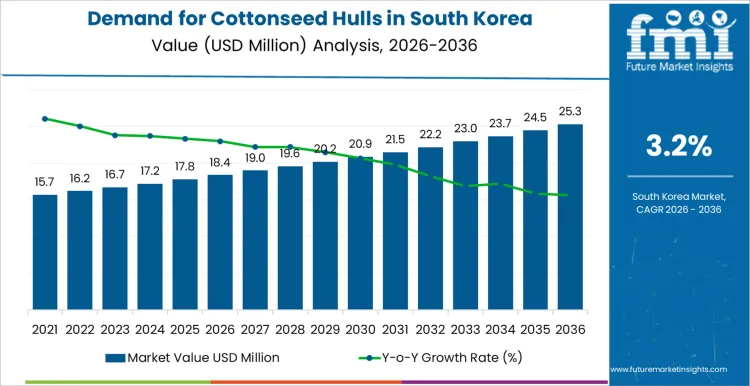
Expenditure on cottonseed hulls in South Korea is projected to reach USD 18.4 million by the end of 2026. Financial valuations for this agricultural byproduct sector are anticipated to climb to USD 25.3 million by 2036, progressing at a compound annual growth rate of 3.2%. The South Korean agricultural landscape is witnessing a steady shift toward high-efficiency substrates for mushroom cultivation, particularly for popular varieties like oyster and shiitake mushrooms. Local farmers are increasingly replacing traditional sawdust and rice straw with nutrient-dense alternatives that offer faster mycelial colonization rates. This operational pivot allows cultivators to maximize yield per square meter, a critical factor given the limited arable land available on the peninsula.
Expansion is continually supported by the robust demand from the livestock industry, specifically for the premium Hanwoo beef cattle sector which requires high-fiber roughage to maintain rumen health. Feed millers are actively sourcing pelleted hulls to optimize logistics and reduce storage space requirements compared to loose bulk material. The national drive towards "Circular Economy" practices is encouraging the upcycling of imported agricultural residues into high-value chemical precursors like furfural. Industrial players are exploring these lignocellulosic materials as sustainable feedstocks for bio-based solvents, aligning with the government's broader carbon reduction mandates.
Quick Stats for Demand for Cottonseed Hulls in South Korea
- Demand for Cottonseed Hulls in South Korea Industry Value (2026): USD 18.4 million
- Demand for Cottonseed Hulls in South Korea Industry Forecast Value (2036): USD 25.3 million
- Demand for Cottonseed Hulls in South Korea Forecast CAGR: 3.2%
- Demand for Cottonseed Hulls in South Korea Leading Form: Bulk (69.0%)
- Demand for Cottonseed Hulls in South Korea Leading End Use: Fungal Cultivation (40.0%)
- Demand for Cottonseed Hulls in South Korea Key Growth Regions: Jeju, South Gyeongsang, South Jeolla, North Jeolla
- Demand for Cottonseed Hulls in South Korea Key Players: Mamta Cotton Industries, Pramoda Exim Corporation, Prem International, Shree Ram Proteins Ltd., SMM TRADERS
Technological adoption involves advanced pelletizing processes that increase the bulk density of the hulls without compromising their nutritional profile. Research institutes are collaborating with private importers to standardize the fiber content of incoming shipments, ensuring consistent quality for sensitive fungal strains. The integration of plant based feed ingredients into aquaculture diets is another emerging avenue, where processed hulls serve as a cost-effective fiber source. This diversification of end-use applications ensures that the sector remains resilient against fluctuations in the traditional livestock feed sector through 2036.
Demand for Cottonseed Hulls in South Korea Key Takeaways
| Metric | Value |
|---|---|
| Industry Size (2026) | USD 18.4 million |
| Industry Value (2036) | USD 25.3 million |
| CAGR (2026 to 2036) | 3.2% |
What Factors Are Fueling Substrate Innovation?
A primary catalyst for growth is the thriving export economy for Korean mushrooms, which necessitates high-quality growth media to ensure export-grade produce. Cottonseed hulls provide excellent aeration and water retention properties that are superior to local agricultural residues, leading to their preference among commercial growers. The intense competition in the domestic beef industry drives farmers to seek nutritional ingredients in animal feed that improve marbling and digestion efficiency. Strict environmental regulations regarding wastewater discharge are prompting industrial facilities to investigate low-cost, bio-based adsorbents. Hulls have shown promise in filtering heavy metals and dyes from industrial effluent, creating a niche but valuable technical application.
How is the Sector Structured Across Key Segments?
The sector is segmented to address the logistical needs of importers and the functional requirements of end-users. It is primarily categorized by form, reflecting the physical state of the material upon entry. The end use segment highlights the diverse industrial verticals consuming these byproducts. Each segment plays a vital role, where bulk shipments drive volume through lower unit costs and fungal cultivation drives value through consistent consumption cycles.
Why Does Bulk Form Dominate Imports?
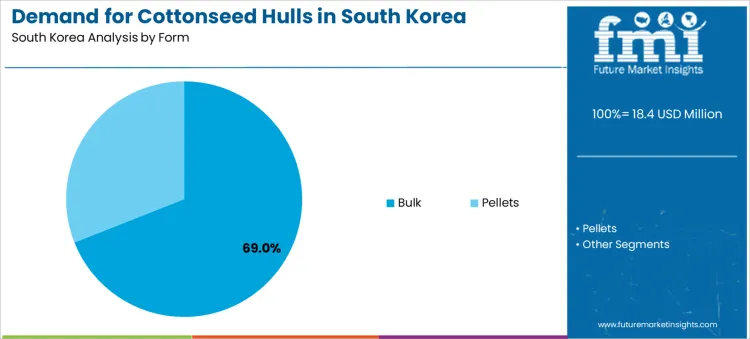
Bulk form commands a 69.0% share of the industry. This prevalence is attributed to the cost-sensitivity of the mushroom farming and general livestock sectors. Importers prefer loose hulls as they are cheaper to procure and offer flexibility for on-site mixing with other substrates like cottonseed meal or sawdust. Large-scale mushroom farms possess the necessary infrastructure to handle and store bulk material, making it the most economic choice for high-volume operations.
How Are Pellets Solving Logistical Challenges?
Pellets account for 26.0% of the volume. The densification of hulls into pellets significantly reduces shipping costs and minimizes dust generation, a key concern for worker safety in feed mills. This form is particularly favored by the premium animal nutrition segment, where automated feeding systems require uniform particle sizes to prevent clogging. The higher density also prevents segregation when mixed with other liquid feed supplements, ensuring that cattle receive a balanced diet with every mouthful.
Why is Fungal Cultivation the Leading Application?
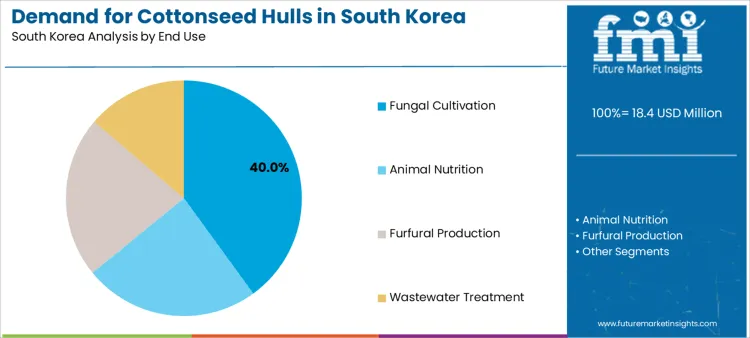
Fungal Cultivation represents the dominant end use segment with 40.0% of the total value. South Korea's mushroom industry is highly industrialized, utilizing climate-controlled facilities for year-round production. Cottonseed hulls are rich in lignocellulose, which serves as an ideal energy source for saprophytic fungi. The consistent texture of the hulls allows for optimal mycelial run, reducing the incubation period and increasing the number of harvest cycles per year. This efficiency gain drives the continuous procurement of hulls over cheaper but less effective local straws.
Is Furfural Production Expanding?
The Furfural Production segment holds a notable 18.9% share. As South Korea invests in green chemistry, the demand for bio-based platform chemicals is rising. Hulls are a rich source of pentosans, which can be converted into furfural, a solvent used in refining lubricating oils and producing plastics. This industrial application provides a value-added outlet for hulls that may not meet the strict quality standards required for animal feed or mushroom substrates.
Will Sustainability Trends Impact Sourcing?
A significant trend is the scrutiny of supply chain carbon footprints. South Korean importers are increasingly looking for suppliers who use sustainable processing methods. There is a growing preference for non-GMO hulls or those certified as organic to meet the standards of the premium "clean label" mushroom sector. Suppliers who can provide traceability data and ensure their products are free from pesticide residues stand to gain a competitive advantage. This shift aligns with the consumer demand for safer, eco-friendly food products.
Does Import Reliance Pose a Risk?
The most significant restraint is the total dependence on imports, primarily from India, China, and the United States. Geopolitical tensions or poor harvest seasons in these source countries can lead to immediate price spikes and supply shortages in South Korea. Overcoming this requires diversification of supply partners and the maintenance of strategic stockpiles. Feed mills are also experimenting with feed enzymes to improve the digestibility of local alternatives, creating a hedge against volatility in the international cottonseed hull trade.
How Can Wastewater Treatment Unlock Value?
The emerging field of eco-remediation presents a frontier of opportunity. Research indicates that modified cottonseed hulls can effectively remove pollutants from textile and industrial wastewater. Suppliers who market specialized, treated hull variants for filtration applications can tap into the environmental services sector. This application aligns with South Korea's strict industrial discharge norms, offering factories a low-cost, biodegradable solution for effluent management.
How is the Demand Landscape Evolving Across South Korea's Regions?
The regional sphere shows a distinct pattern where agricultural provinces drive substrate consumption, while industrial zones utilize hulls for chemical and livestock applications. High-growth areas are characterizing their development by integrating smart farming techniques. As distinct provinces implement local agricultural support programs, the utilization of imported byproducts is becoming tailored to regional farming specialties.
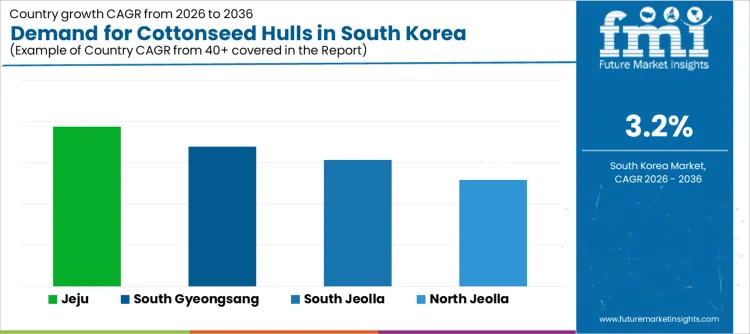
| Region | CAGR (2026 to 2036) |
|---|---|
| Jeju | 3.9% |
| South Gyeongsang | 3.4% |
| South Jeolla | 3.1% |
| North Jeolla | 2.6% |
Why is Eco-Farming Driving Demand in Jeju?
Adoption of organic substrates in Jeju is projected to expand at a CAGR of 3.9%. The island's commitment to "Clean Jeju" agriculture restricts the use of chemical fertilizers, driving farmers toward organic composts and substrates. The demand is driven by the premium mushroom sector, which supplies the tourist industry and export markets. Local cooperatives are pooling resources to import high-quality hulls that meet the island's strict biosecurity and organic standards.
How is Livestock Density Influencing South Gyeongsang?
Sales of feed ingredients in South Gyeongsang are likely to reach a CAGR of 3.4%. This region is a major hub for Hanwoo cattle farming. The demand is fueled by the need for consistent, high-fiber roughage to support herd health and meat quality. Feed mills in the region are major purchasers of pelleted hulls, integrating them into total mixed rations. The proximity to major ports like Busan facilitates the cost-effective transport of bulk shipments to local farms.
What Role Does Agriculture Play in South Jeolla?
The hull sector in South Jeolla is anticipated to rise at a CAGR of 3.1%. As a traditional agricultural stronghold, the region utilizes hulls for both soil conditioning and fungal cultivation. The focus is on increasing the productivity of aging farm households through high-yield substrates. Government subsidies for modernizing mushroom houses are accelerating the shift from log cultivation to bag cultivation, which relies heavily on nutrient-rich media like cottonseed hulls.
How is Industrial Processing Shaping North Jeolla?
Deployment of raw materials in North Jeolla is expected to increase at a CAGR of 2.6%. The region hosts the National Food Cluster and various biochemical pilots. The demand is driven by research into extracting value-added compounds like natural cotton extract or furfural from agricultural byproducts. Industrial zones in Gunsan are exploring the use of hulls in biomass boilers and chemical synthesis, diversifying the consumption base beyond traditional agriculture.
What Strategies Define Leadership in Hull Supply?
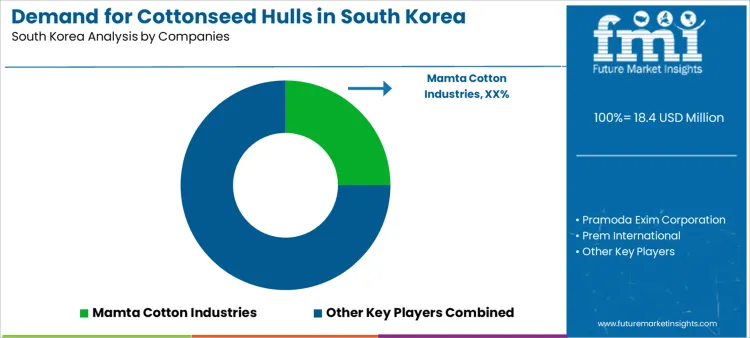
The competitive landscape is dominated by Indian exporters like Mamta Cotton Industries, which commands a notable 25.0% share of the import volume. Their strategy centers on maintaining consistent quality and reliable shipping schedules, which are critical for South Korean distributors who operate on tight inventory margins. These companies differentiate themselves by offering distinct grades of hulls, delinted vs. undelinted, tailored to specific end-uses like pelleting or direct application. Competitors like Pramoda Exim are countering by providing flexible packaging options, from container liners to small bags, catering to smaller wholesalers.
How Are Importers Securing Market Position?
Local South Korean distributors are securing their position by forming exclusive supply agreements with foreign crushers. A key trend is the vertical integration of import logistics, where distributors own the warehousing and bagging facilities at Korean ports. This allows them to control quality checks and offer "just-in-time" delivery to mushroom farms and feed mills. Domestic players are also diversifying their portfolios to include cotton bags and other byproducts, mitigating the risk of relying solely on one commodity.
Key Companies
- Mamta Cotton Industries
- Pramoda Exim Corporation
- Prem International
- Shree Ram Proteins Ltd.
- SMM TRADERS
- N.K. Proteins
- Om Shree International
- Scoular
- Cargill (Cotton Business)
- Louis Dreyfus Company
Scope of Report
| Items | Values |
|---|---|
| Quantitative Units | USD Million |
| Form | Bulk, Pellets |
| End Use | Fungal Cultivation, Animal Nutrition, Furfural Production, Wastewater Treatment |
| Regions Covered | Jeju, South Gyeongsang, South Jeolla, North Jeolla |
| Key Companies Profiled | Mamta Cotton Industries, Pramoda Exim, Prem International, Shree Ram Proteins, SMM TRADERS, and others. |
Demand for Cottonseed Hulls in South Korea by Segments
By Form
- Bulk
- Pellets
By End Use
- Fungal Cultivation
- Animal Nutrition
- Furfural Production
- Wastewater Treatment
Bibliography
- Rural Development Administration. (2025, April 30). Opening a pathway for upcycling agricultural byproducts through integrated regulatory and institutional support for startups. Rural Development Administration, Republic of Korea.
- Rural Development Administration. (2025, September 10). Additional regulatory sandbox approvals to accelerate the upcycling of agricultural byproducts. Rural Development Administration, Republic of Korea.
- Rural Development Administration. (2025, May 27). Eco-circulation technology development for agricultural byproducts selected as a national R&D project for 2025 to 2029. Rural Development Administration, Republic of Korea.
- Korea International Trade Association. (2025, October 31). K-Stat trade statistics. Korea International Trade Association, Republic of Korea.
- Korea Rural Economic Institute. (2025, May). Mushroom observation: Cultivation trends and outlook. Korea Rural Economic Institute, Republic of Korea.
Frequently Asked Questions
How big is the demand for Cottonseed Hulls in South Korea in 2026?
The demand for cottonseed hulls in South Korea is estimated to be valued at USD 18.4 million in 2026.
What will be the size of Cottonseed Hulls in South Korea in 2036?
The industry size for the cottonseed hulls in South Korea is projected to reach USD 25.3 million by 2036.
How much will be the demand for Cottonseed Hulls in South Korea growth between 2026 and 2036?
The demand for cottonseed hulls in South Korea is expected to grow at a 3.2% CAGR between 2026 and 2036.
What are the key product types in the Cottonseed Hulls in South Korea?
The key product types in cottonseed hulls in South Korea are bulk and pellets.
Which end user segment is expected to contribute significant share in the Cottonseed Hulls in South Korea in 2026?
In terms of end use, the fungal cultivation segment is expected to command 40.0% share in the cottonseed hulls in South Korea in 2026.
Preview the report firsthand - request a free sample
Get SampleGet the brochure for pricing and purchase details.
Get PDFTable of Content
- Executive Summary
- South Korea Market Outlook
- Demand-side Trends
- Supply-side Trends
- Technology Roadmap Analysis
- Analysis and Recommendations
- Market Overview
- Market Coverage / Taxonomy
- Market Definition / Scope / Limitations
- Market Background
- Market Dynamics
- Drivers
- Restraints
- Opportunity
- Trends
- Scenario Forecast
- Demand in Optimistic Scenario
- Demand in Likely Scenario
- Demand in Conservative Scenario
- Opportunity Map Analysis
- Product Life Cycle Analysis
- Supply Chain Analysis
- Investment Feasibility Matrix
- Value Chain Analysis
- PESTLE and Porter’s Analysis
- Regulatory Landscape
- Regional Parent Market Outlook
- Production and Consumption Statistics
- Import and Export Statistics
- Market Dynamics
- South Korea Market Analysis 2021 to 2025 and Forecast, 2026 to 2036
- Historical Market Size Value (USD Million) Analysis, 2021 to 2025
- Current and Future Market Size Value (USD Million) Projections, 2026 to 2036
- Y-o-Y Growth Trend Analysis
- Absolute $ Opportunity Analysis
- South Korea Market Pricing Analysis 2021 to 2025 and Forecast 2026 to 2036
- South Korea Market Analysis 2021 to 2025 and Forecast 2026 to 2036, By Form
- Introduction / Key Findings
- Historical Market Size Value (USD Million) Analysis By Form , 2021 to 2025
- Current and Future Market Size Value (USD Million) Analysis and Forecast By Form , 2026 to 2036
- Bulk
- Pellets
- Bulk
- Y-o-Y Growth Trend Analysis By Form , 2021 to 2025
- Absolute $ Opportunity Analysis By Form , 2026 to 2036
- South Korea Market Analysis 2021 to 2025 and Forecast 2026 to 2036, By End Use
- Introduction / Key Findings
- Historical Market Size Value (USD Million) Analysis By End Use, 2021 to 2025
- Current and Future Market Size Value (USD Million) Analysis and Forecast By End Use, 2026 to 2036
- Fungal Cultivation
- Animal Nutrition
- Furfural Production
- Wastewater Treatment
- Fungal Cultivation
- Y-o-Y Growth Trend Analysis By End Use, 2021 to 2025
- Absolute $ Opportunity Analysis By End Use, 2026 to 2036
- Market Structure Analysis
- Competition Dashboard
- Competition Benchmarking
- Market Share Analysis of Top Players
- By Regional
- By Form
- By End Use
- Competition Analysis
- Competition Deep Dive
- Mamta Cotton Industries
- Overview
- Product Portfolio
- Profitability by Market Segments (Product/Age /Sales Channel/Region)
- Sales Footprint
- Strategy Overview
- Marketing Strategy
- Product Strategy
- Channel Strategy
- Pramoda Exim Corporation
- Prem International
- Shree Ram Proteins Ltd.
- SMM TRADERS
- Mamta Cotton Industries
- Competition Deep Dive
- Assumptions & Acronyms Used
- Research Methodology


